

 Download PDF
 Download PDF
Market Overview
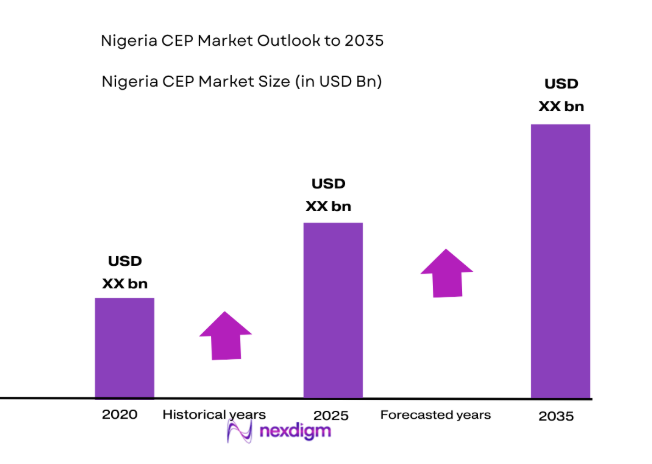
Nigeria CEP market size is billion ~ USD based on a recent historical assessment supported by data from the Universal Postal Union and national logistics industry reports analyzing courier, express, and parcel distribution services. The market expansion is driven by rapid digital commerce adoption, increasing parcel volumes generated by online retail platforms, and growing demand for fast delivery services among businesses and consumers. Logistics operators expand urban distribution hubs, digital tracking platforms, and delivery fleets to manage increasing shipment volumes efficiently. The rising number of small online merchants and social commerce sellers significantly strengthens demand for reliable parcel transportation infrastructure across the country.
Lagos remains the dominant logistics hub within the Nigeria CEP market due to its extensive port infrastructure, dense population, and concentration of major e-commerce warehouses and distribution centers. Abuja also plays a critical role because national administrative institutions and corporate headquarters generate strong demand for document and parcel deliveries. Port Harcourt contributes significantly due to its industrial activity and oil sector logistics demand. Cross-border shipments are frequently processed through international gateways located in Lagos where major courier operators maintain air cargo connections linking Nigeria to global logistics networks.
Market Segmentation
By Product Type
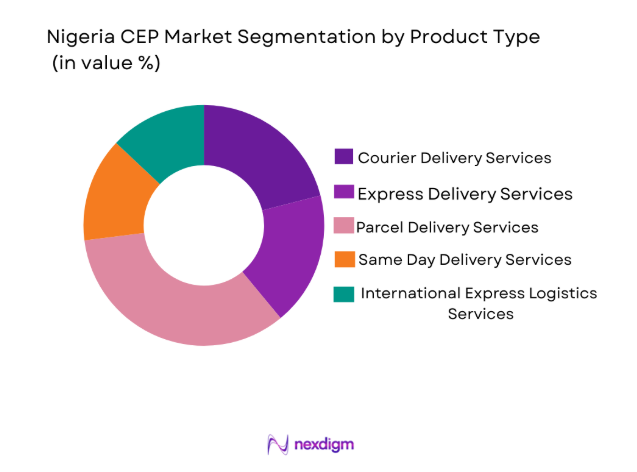
Nigeria CEP market is segmented by product type into courier delivery services, express delivery services, parcel delivery services, same day delivery services, and international express logistics services. Recently, parcel delivery services has a dominant market share due to strong growth in e-commerce shipments requiring cost-efficient transportation of small packages from distribution centers to residential consumers. Large online marketplaces, digital retail platforms, and social media commerce sellers generate high volumes of lightweight parcels daily across metropolitan areas. Logistics companies therefore prioritize parcel sorting hubs, automated warehouse operations, and route optimization systems capable of handling thousands of packages daily. Expanding consumer demand for doorstep deliveries strengthens the operational importance of parcel distribution networks supporting Nigeria’s digital retail ecosystem.
By Platform Type
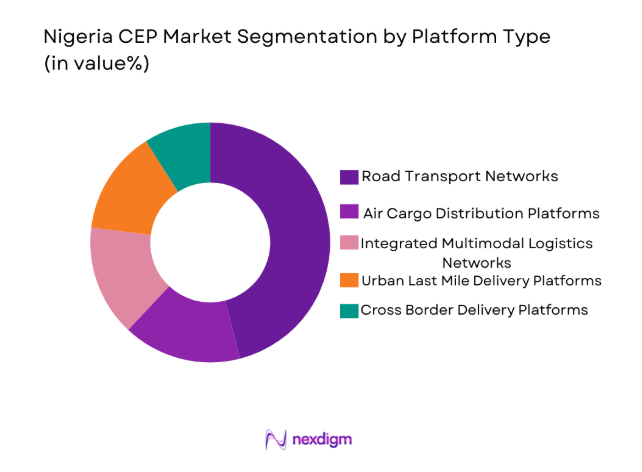
Nigeria CEP market is segmented by platform type into road transport networks, air cargo distribution platforms, integrated multimodal logistics networks, urban last mile delivery platforms, and cross border delivery platforms. Recently, road transport networks has a dominant market share because the majority of domestic parcel movement occurs through extensive road logistics connecting warehouses, sorting hubs, and residential delivery locations. Courier companies operate large fleets of vans, motorcycles, and light commercial vehicles to navigate urban congestion and reach densely populated residential neighborhoods efficiently. Road logistics infrastructure also connects major distribution hubs located near ports, airports, and industrial zones, allowing CEP operators to coordinate nationwide parcel distribution through centralized logistics networks.
Competitive Landscape
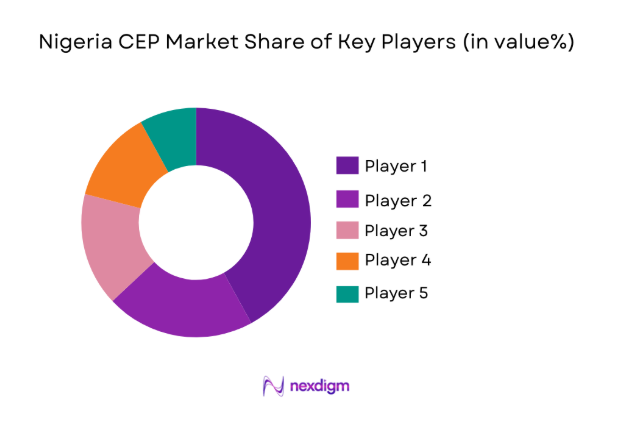
Nigeria CEP market demonstrates moderate consolidation where international logistics corporations and large domestic courier operators compete across parcel distribution networks, cross border shipping, and express delivery services. Global companies leverage advanced logistics technologies and international transport infrastructure, while regional firms maintain strong urban delivery networks and local operational expertise. Competition increasingly focuses on delivery speed, digital parcel tracking systems, fleet expansion, and integration with e-commerce fulfillment platforms.
| Company Name | Establishment Year | Headquarters | Technology Focus | Market Reach | Key Products | Revenue | Logistics Fleet Size |
| DHL Express Nigeria | 1969 | Bonn, Germany | ~ | ~ | ~ | ~ | ~ |
| FedEx Corporation | 1971 | Memphis, United States | ~ | ~ | ~ | ~ | ~ |
| UPS Nigeria | 1907 | Atlanta, United States | ~ | ~ | ~ | ~ | ~ |
| GIG Logistics | 2012 | Lagos, Nigeria | ~ | ~ | ~ | ~ | ~ |
| Red Star Express | 1992 | Lagos, Nigeria | ~ | ~ | ~ | ~ | ~ |
Nigeria CEP Market Analysis
Growth Drivers
Expansion of E Commerce Platforms and Digital Retail Logistics Demand
Nigeria’s digital retail ecosystem generates significant demand for courier express and parcel logistics capable of transporting large volumes of packages from fulfillment centers to residential customers across metropolitan and regional markets. Online marketplaces such as Jumia and numerous social commerce sellers continuously increase parcel shipment volumes through daily online transactions conducted via smartphones and digital payment platforms. Retailers depend on reliable CEP operators capable of delivering packages quickly while maintaining real time tracking transparency for consumers expecting accurate delivery information. Logistics companies therefore invest heavily in automated parcel sorting systems advanced warehouse management technologies and route optimization platforms designed to manage increasing shipment volumes efficiently. Expanding urban population centers and growing smartphone adoption further stimulate online purchasing behavior that directly increases parcel movement across national logistics networks. Delivery operators also expand urban distribution hubs and deploy motorcycle delivery fleets capable of navigating dense city traffic efficiently. Retail companies increasingly integrate omnichannel distribution strategies where physical retail outlets operate as local fulfillment centers supporting online order dispatch. These structural developments position CEP networks as critical infrastructure supporting Nigeria’s rapidly evolving digital retail economy.
Growth of SME Digital Commerce and Social Media Retail Channels
Nigeria’s entrepreneurial ecosystem increasingly adopts digital commerce platforms including social media marketplaces where small businesses sell fashion products electronics cosmetics and household goods directly to consumers nationwide. Thousands of independent sellers operate online storefronts through social media messaging platforms and digital marketplaces that require reliable courier services capable of transporting small parcels between sellers and customers across different cities. CEP logistics companies therefore experience rapidly increasing parcel volumes generated by these small merchants who rely on affordable shipping services to reach customers beyond their local markets. Courier operators expand pickup services centralized sorting hubs and nationwide distribution networks enabling small businesses to ship packages efficiently across urban and regional markets. Digital payment platforms further strengthen this ecosystem by enabling secure remote transactions between buyers and sellers across the country. As small enterprises scale their operations through digital commerce channels their dependence on parcel logistics infrastructure continues increasing significantly. Logistics firms therefore introduce simplified shipping interfaces automated pickup scheduling and integrated tracking systems designed specifically for small business merchants operating online stores. These structural changes significantly strengthen demand for courier and parcel logistics across Nigeria’s expanding digital entrepreneurship landscape.
Market Challenges
Poor Transportation Infrastructure and Urban Traffic Congestion
Nigeria’s courier express and parcel logistics sector faces operational constraints due to limited road infrastructure capacity and severe traffic congestion in densely populated metropolitan areas such as Lagos. Delivery vehicles frequently encounter long travel times caused by road bottlenecks infrastructure maintenance issues and limited alternative transport routes connecting industrial zones residential areas and commercial districts. These transportation inefficiencies increase delivery times and operational costs for logistics companies responsible for distributing thousands of parcels daily across urban environments. Courier operators must therefore allocate additional delivery vehicles and drivers to maintain delivery timelines which increases operational expenditure significantly. Rural delivery operations also encounter infrastructure limitations because many remote communities remain connected through poorly maintained road networks that restrict vehicle accessibility. Logistics companies therefore rely on motorcycle couriers or informal distribution arrangements to complete last mile deliveries in certain regions. These structural infrastructure limitations create operational complexity for parcel delivery networks responsible for maintaining consistent delivery schedules nationwide. As parcel shipment volumes continue increasing the logistics sector requires major infrastructure investments to support efficient nationwide distribution systems.
Security Risks and Parcel Theft in Logistics Operations
Courier and parcel distribution networks operating across Nigeria frequently encounter security risks including cargo theft, parcel loss, and unauthorized package interception during transportation and delivery operations. Logistics vehicles transporting high volumes of parcels may become targets for theft particularly in areas with limited security monitoring along transportation corridors. Delivery personnel operating motorcycle fleets across urban neighborhoods also encounter operational risks while distributing packages directly to residential consumers. These security challenges increase insurance costs and operational risk management requirements for logistics companies responsible for protecting customer shipments. Courier operators therefore invest in digital parcel tracking technologies real time delivery confirmation systems and centralized monitoring platforms designed to improve shipment visibility and reduce theft incidents. Partnerships with security service providers and local law enforcement agencies further strengthen cargo protection strategies across high risk delivery routes. Logistics firms also adopt secure warehouse management systems that maintain strict inventory tracking throughout parcel sorting and dispatch processes. Despite these measures security risks remain an operational challenge affecting logistics reliability and operational cost structures across the CEP sector.
Opportunities
Expansion of Same Day and Hyperlocal Delivery Services
Rapid urbanization across Nigeria creates significant opportunities for CEP companies to expand same day delivery networks serving densely populated cities where consumers increasingly expect faster delivery timelines for online purchases. Retailers selling fashion electronics groceries and pharmaceuticals rely on logistics partners capable of completing deliveries within hours rather than days. Logistics operators therefore develop hyperlocal distribution hubs located close to residential neighborhoods allowing packages to travel shorter distances before final delivery. Motorcycle delivery fleets and digital dispatch systems enable courier companies to navigate congested urban streets efficiently while maintaining rapid delivery timelines. E-commerce platforms integrate same day delivery options into online checkout systems encouraging consumers to purchase products requiring immediate fulfillment. Restaurants grocery retailers and pharmacy chains also rely on hyperlocal courier networks for rapid order dispatch to nearby customers. Logistics companies therefore invest in technology platforms capable of coordinating thousands of deliveries simultaneously across urban districts. These structural developments create significant opportunities for courier firms specializing in rapid urban parcel distribution services.
Integration of Advanced Logistics Technology and Digital Tracking Platforms
Courier express and parcel operators across Nigeria increasingly deploy advanced digital logistics technologies designed to improve operational efficiency and enhance shipment visibility for customers and businesses. Real time parcel tracking systems automated route optimization software and artificial intelligence powered logistics planning tools significantly improve delivery coordination across complex urban distribution networks. These technologies allow logistics companies to analyze traffic patterns delivery demand and fleet performance data to optimize delivery schedules and reduce operational costs. Retailers and consumers increasingly demand transparent delivery information including estimated arrival times digital delivery confirmation and real time shipment status updates accessible through mobile applications. Logistics companies therefore invest in integrated technology platforms connecting warehouse management systems fleet tracking sensors and customer facing parcel monitoring applications. Digital logistics infrastructure also supports cross border parcel shipments by enabling documentation management customs clearance coordination and international shipment tracking across multiple logistics partners. Technology integration therefore presents significant opportunities for logistics providers capable of offering advanced digital delivery services within Nigeria’s expanding e commerce ecosystem.
Future Outlook
Nigeria CEP market is expected to expand steadily as digital retail adoption continues strengthening demand for fast and reliable parcel delivery services. Logistics companies will increasingly deploy automation technologies advanced tracking systems and route optimization software to manage higher parcel volumes efficiently. Government infrastructure development programs focusing on transportation networks and logistics hubs will further support parcel distribution networks. Expanding e-commerce participation among small businesses and rising smartphone penetration will continue stimulating parcel shipment demand across urban and regional markets.
Major Players
- DHL Express Nigeria
- FedEx Corporation
- UPS Nigeria
- GIG Logistics
- Red Star Express
- CourierPlus Nigeria
- EMS Speedpost Nigeria
- Tranex Limited
- Kwik Delivery
- Sendbox Logistics
- Jumia Logistics Services
- Kobo360 Logistics
- ABC Transport Logistics
- Libmot Logistics
- SkyNet Worldwide Express
Key Target Audience
- E-commerce platform operators
- Logistics and transportation companies
- Retail distribution companies
- Manufacturing and industrial enterprises
- Investments and venture capitalist firms
- Government and regulatory bodies
- Technology platform providers
Research Methodology
Step 1: Identification of Key Variables
Researchers identified key variables influencing the Nigeria CEP market including parcel volume growth digital commerce activity logistics infrastructure development and courier service demand across urban and regional markets. Industry data sources and logistics performance indicators were examined to establish market boundaries and operational scope.
Step 2: Market Analysis and Construction
Extensive secondary research combined with logistics industry databases, international postal statistics, and company financial reports were used to construct a comprehensive market model representing courier express and parcel distribution networks operating across Nigeria.
Step 3: Hypothesis Validation and Expert Consultation
Industry specialists including logistics operators supply chain managers and transportation analysts were consulted to validate shipment volume trends operational structures and infrastructure developments shaping the Nigeria CEP logistics ecosystem.
Step 4: Research Synthesis and Final Output
All collected data points were synthesized through structured analytical models to produce consistent market insights covering segmentation competitive landscape operational dynamics and future growth patterns within Nigeria’s CEP logistics sector.

- Executive Summary
- Research Methodology (Definitions, Scope, Industry Assumptions, Market Sizing Approach, Primary & Secondary Research Framework, Data Collection & Verification Protocol, Analytic Models & Forecast Methodology, Limitations & Research Validity Checks)

- Market Definition and Scope
- Value Chain & Stakeholder Ecosystem
- Regulatory / Certification Landscape
- Sector Dynamics Affecting Demand
- Strategic Initiatives & Infrastructure Growth

- Growth Drivers
Rapid Expansion of E Commerce Platforms Across Nigeria
Increasing Demand for Fast Parcel Delivery Across Urban Retail Networks
Growth of SME Digital Commerce and Social Media Retail Channels - Market Challenges
Poor Transportation Infrastructure and Road Congestion
High Fuel Costs and Logistics Operating Expenses
Security Risks and Parcel Theft During Transit - Market Opportunities
Expansion of Same Day Delivery Services in Major Nigerian Cities
Adoption of Digital Logistics Platforms and Route Optimization Software
Growth of Cross Border E Commerce Shipments in West Africa - Trends
Adoption of Real Time Parcel Tracking Technologies
Expansion of Electric and Low Emission Delivery Vehicles - Government Regulations
- SWOT Analysis
- Porter’s Five Forces

- By Market Value, 2020-2025
- By Installed Units, 2020-2025
- By Average System Price, 2020-2025
- By System Complexity Tier, 2020-2025

- By System Type (In Value%)
Courier Delivery Services
Express Delivery Services
Parcel Delivery Services
Same Day Delivery Services
International Courier and Express Services - By Platform Type (In Value%)
Road Based Delivery Networks
Air Cargo Logistics Networks
Integrated Multimodal Logistics Platforms
Urban Last Mile Delivery Networks
Cross Border Delivery Networks - By Fitment Type (In Value%)
Business to Business Deliveries
Business to Consumer Deliveries
Consumer to Consumer Deliveries
Hybrid Delivery Networks - By End User Segment (In Value%)
Commerce and Online Retailers
Manufacturing and Industrial Enterprises
Financial and Professional Service Firms

- Market Share Analysis
- Cross Comparison Parameters (Service Portfolio, Delivery Speed, Geographic Coverage, Technology Integration, Fleet Size, Pricing Structure, Cross Border Capability)
- SWOT Analysis of Key Competitors
- Pricing & Procurement Analysis
- Key Players
- DHL Express Nigeria
FedEx Corporation
United Parcel Service Nigeria
GIG Logistics
Red Star Express
CourierPlus Nigeria
EMS Speedpost Nigeria
Tranex Limited
Kwik Delivery
Sendbox Logistics
Jumia Logistics Services
Kobo360 Logistics
ABC Transport Logistics
Libmot Logistics
SkyNet Worldwide Express

- Online Retailers Increasing Dependence on Reliable Parcel Delivery Networks
- Manufacturers Using Courier Services for Spare Parts and Small Shipments
- Financial Institutions Requiring Secure Document and Parcel Delivery Services
- SME Businesses Leveraging CEP Networks for Nationwide Product Distribution

- Forecast Market Value, 2026-2035
- Forecast Installed Units, 2026-2035
- Price Forecast by System Tier, 2026-2035
- Future Demand by Platform, 2026-2035


 Request a Sample
 Ask for Customization
 Get a Quote
 Enquire Now