

 Download PDF
 Download PDF
Market Overview
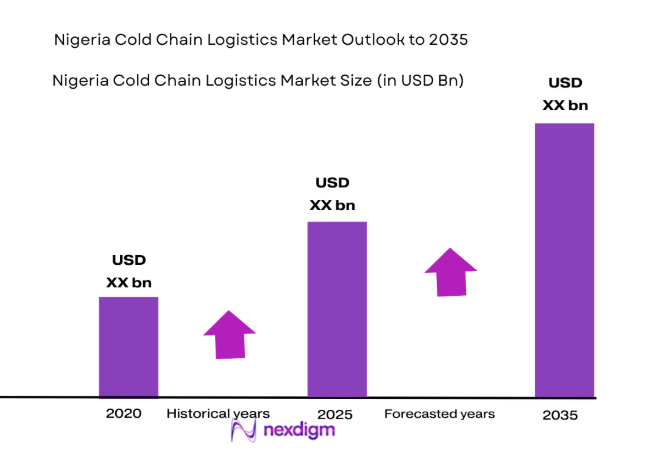
The Nigeria cold chain logistics market is valued at USD ~ billion. based on a recent historical assessment, supported by expanding pharmaceutical distribution networks, vaccine transportation infrastructure, and increasing demand for temperature-controlled food logistics. Rising urban consumption of perishable foods, growth in organized retail supply chains, and expanding pharmaceutical imports requiring controlled temperature handling continue to strengthen demand for refrigerated storage facilities and refrigerated transport fleets. Data published by the Food and Agriculture Organization and Nigeria Bureau of Statistics highlights increasing dependence on modern cold storage logistics to reduce post-harvest losses and maintain food quality across supply chains.
Lagos dominates the Nigeria cold chain logistics ecosystem because it functions as the country’s primary commercial and maritime gateway supported by Apapa and Tin Can Island ports, advanced logistics infrastructure, and strong pharmaceutical distribution activity. Abuja also emerges as a major logistics coordination center due to healthcare supply chains serving government hospitals and national immunization programs. Port Harcourt plays an important role in supporting seafood processing and energy sector logistics requiring specialized refrigerated storage. These urban hubs benefit from stronger transportation infrastructure, major logistics operators, and concentrated consumer demand for temperature-sensitive goods.
Market Segmentation
By Product Type
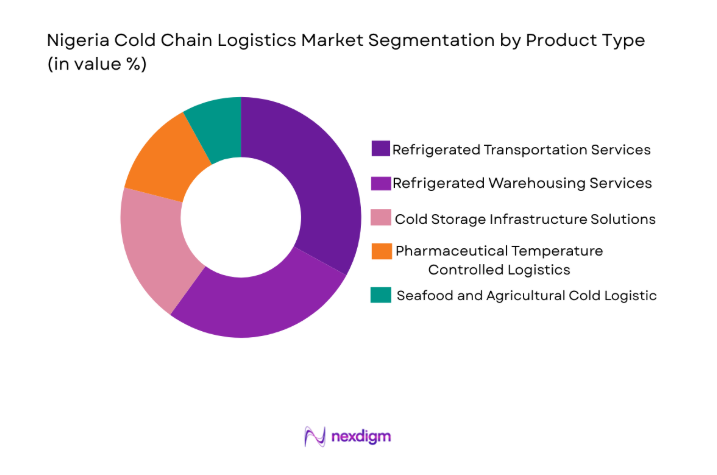
Nigeria Cold Chain Logistics market is segmented by product type into refrigerated transportation services, refrigerated warehousing services, cold storage infrastructure solutions, pharmaceutical temperature-controlled logistics, and seafood and agricultural cold logistics. Recently, refrigerated transportation services has a dominant market share due to increasing demand for moving temperature-sensitive products across long domestic distances between agricultural production zones, ports, and urban consumption centers. The expansion of pharmaceutical distribution networks, vaccine logistics programs, and seafood export supply chains also strengthens demand for refrigerated truck fleets capable of maintaining consistent temperature conditions across national transportation corridors.
By Platform Type
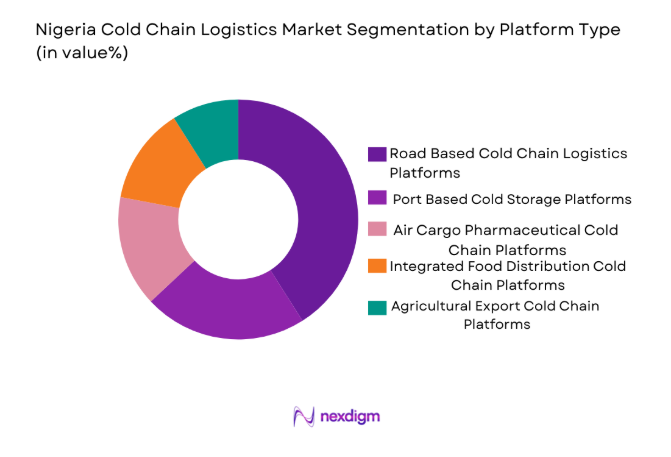
Nigeria Cold Chain Logistics market is segmented by platform type into road-based cold chain logistics platforms, port-based cold storage platforms, air cargo pharmaceutical cold chain platforms, integrated food distribution cold chain platforms, and agricultural export cold chain platforms. Recently, road-based cold chain logistics platforms has a dominant market share because road transportation remains the primary freight movement system across Nigeria’s domestic supply chain network connecting farms, food processing facilities, seaports, and urban retail markets. Limited rail cold logistics infrastructure and dependence on trucking fleets significantly increase reliance on refrigerated road transport systems for nationwide distribution.
Competitive Landscape
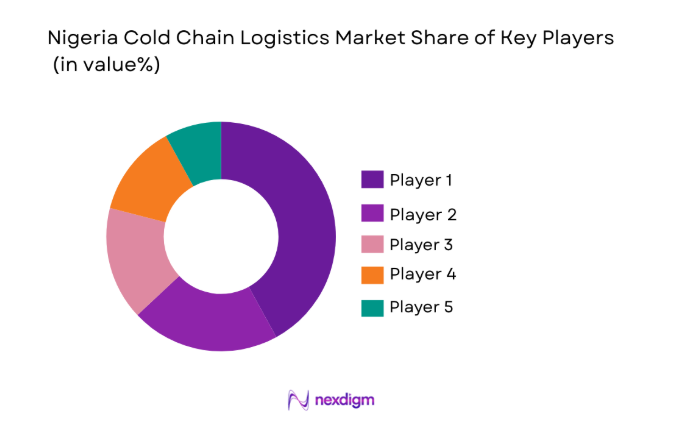
The Nigeria cold chain logistics market shows a moderately fragmented structure where international logistics companies operate alongside emerging domestic cold storage infrastructure providers. Global freight and logistics companies influence technology adoption through advanced refrigerated transport fleets and temperature monitoring systems, while local companies focus on last-mile cold distribution and agricultural cold storage infrastructure. Strategic partnerships between food exporters, pharmaceutical distributors, and logistics firms strengthen network expansion and improve temperature-controlled supply chains across major commercial corridors and port-connected logistics hubs.
| Company Name | Establishment Year | Headquarters | Technology Focus | Market Reach | Key Products | Revenue | Cold Storage Capacity |
| ColdHubs Limited | 2015 | Owerri, Nigeria | ~ | ~ | ~ | ~ | ~ |
| Frigoglass Group | 1996 | Athens, Greece | ~ | ~ | ~ | ~ | ~ |
| DHL Supply Chain | 1969 | Bonn, Germany | ~ | ~ | ~ | ~ | ~ |
| Kuehne + Nagel | 1890 | Schindellegi, Switzerland | ~ | ~ | ~ | ~ | ~ |
| Sifax Logistics | 1988 | Lagos, Nigeria | ~ | ~ | ~ | ~ | ~ |
Nigeria Cold Chain Logistics Market Analysis
Growth Drivers
Expansion of Pharmaceutical Distribution and Vaccine Logistics Infrastructure
Nigeria’s healthcare distribution system increasingly depends on advanced temperature controlled logistics infrastructure capable of transporting vaccines biologics insulin and specialty pharmaceuticals across hospitals clinics and pharmacies nationwide. National immunization programs and rising pharmaceutical imports significantly increase demand for validated cold chain transportation and storage systems that can maintain strict temperature ranges required for medicine safety and regulatory compliance. Pharmaceutical products including vaccines insulin and monoclonal antibody therapies require continuous temperature monitoring during distribution because even minor temperature deviations can reduce therapeutic effectiveness. Healthcare logistics providers therefore invest heavily in refrigerated warehouses validated packaging containers temperature sensors and digital monitoring systems capable of ensuring medicine integrity during long distance transportation. Government supported vaccination campaigns and partnerships with international health organizations also expand cold chain capacity across regional distribution hubs and rural healthcare facilities. Pharmaceutical manufacturers distributors and healthcare providers increasingly rely on specialized logistics operators that possess regulatory compliant infrastructure capable of managing sensitive medical shipments across complex supply chains. The expansion of biotechnology medicines clinical trial distribution and specialty drug logistics further increases demand for highly controlled pharmaceutical cold chain networks. As healthcare access expands nationwide the requirement for reliable temperature controlled medicine distribution infrastructure continues strengthening cold chain logistics demand.
Growth of Perishable Food Supply Chains and Agricultural Export Logistics
Nigeria’s expanding food supply chains increasingly require reliable cold chain infrastructure capable of preserving perishable agricultural products seafood dairy products and processed food items throughout transportation and storage. Rapid urban population growth significantly increases consumption of fresh fruits vegetables dairy products poultry and seafood which require refrigerated storage and transportation to maintain quality and food safety standards. Agricultural exporters also depend on temperature controlled logistics systems capable of transporting perishable produce to international markets while maintaining strict quality requirements demanded by global buyers. Logistics operators therefore expand refrigerated warehouses cold storage hubs and temperature controlled trucking fleets designed to support agricultural trade and domestic food distribution networks. Food processing companies and retail supermarket chains increasingly invest in refrigerated logistics infrastructure to ensure consistent food supply across large urban consumption centers. Modern cold storage facilities located near farms food processing plants and seaports improve supply chain efficiency by reducing spoilage and maintaining product quality during transportation. Agricultural cooperatives exporters and logistics providers also collaborate to develop integrated cold chain infrastructure capable of supporting seafood meat dairy and horticultural exports. These structural developments significantly strengthen cold chain logistics demand across Nigeria’s evolving food distribution ecosystem.
Market Challenges
Unstable Power Supply Affecting Refrigerated Storage Reliability
Cold chain logistics operations require uninterrupted electricity supply to maintain strict temperature conditions within refrigerated warehouses cold storage facilities and refrigerated transportation units throughout the supply chain. Nigeria’s electricity infrastructure however experiences frequent power interruptions which create major operational challenges for cold storage operators responsible for maintaining stable temperature environments for pharmaceutical products and perishable foods. Temperature fluctuations caused by power outages can significantly damage pharmaceutical medicines vaccines and food products leading to financial losses regulatory risks and reduced supply chain reliability. Cold chain logistics providers therefore depend heavily on diesel powered backup generators which substantially increase operating costs and reduce profitability for cold storage facility operators. Fuel price volatility further increases operational expenditure because large refrigeration units require continuous power generation during grid outages. Smaller logistics companies often struggle to finance reliable backup energy systems which limits expansion of cold storage capacity across several regions. The absence of consistent electricity infrastructure also discourages large scale investment in modern refrigerated warehouses particularly within rural agricultural production zones. These structural energy supply constraints therefore remain one of the most critical operational barriers limiting the growth of cold chain logistics infrastructure nationwide.
Limited Cold Chain Infrastructure Across Agricultural Production Regions
Nigeria’s agricultural sector produces significant volumes of fruits vegetables seafood poultry and dairy products yet the supporting cold chain logistics infrastructure across many rural production regions remains underdeveloped. Farmers and agricultural exporters often lack access to refrigerated storage facilities capable of preserving harvested crops before transportation to urban markets or export terminals. Without proper cold storage infrastructure perishable food products frequently experience spoilage during transportation leading to substantial post harvest losses across agricultural supply chains. Logistics companies face logistical difficulties transporting perishable goods from remote farming regions because temperature controlled warehouses and refrigerated consolidation hubs remain limited outside major cities. Poor road infrastructure across certain rural areas further increases transportation time which increases risk of product spoilage even when refrigerated trucks are available. Agricultural exporters therefore struggle to maintain consistent product quality required for international trade particularly when exporting seafood fruits vegetables and horticultural produce. The absence of integrated cold chain logistics networks across farming regions also discourages private investment in large scale agricultural processing and export infrastructure. These limitations significantly restrict the efficiency and growth potential of Nigeria’s agricultural cold chain logistics ecosystem.
Opportunities
Expansion of Pharmaceutical Manufacturing and Biologics Distribution Networks
Nigeria’s pharmaceutical industry continues expanding as healthcare demand grows and government policies encourage domestic medicine manufacturing and pharmaceutical distribution networks across the country. Many pharmaceutical products including vaccines insulin biologics and temperature sensitive medicines require advanced cold chain logistics capable of maintaining precise temperature ranges throughout storage and transportation. Pharmaceutical companies therefore increasingly depend on specialized logistics providers capable of offering validated cold storage facilities pharmaceutical grade packaging and real time temperature monitoring technologies. Healthcare infrastructure expansion including new hospitals medical distribution centers and regional medicine warehouses further increases demand for reliable pharmaceutical cold chain logistics networks. International pharmaceutical manufacturers also distribute large volumes of medicines into Nigeria through import channels requiring temperature controlled transportation from ports and airports to hospitals pharmacies and medical distributors. Cold chain logistics companies therefore have opportunities to develop pharmaceutical compliant refrigerated warehouses and specialized healthcare logistics services capable of supporting complex pharmaceutical supply chains. Partnerships between healthcare providers logistics companies and international pharmaceutical firms further strengthen demand for temperature controlled logistics infrastructure nationwide. The rapid development of biotechnology medicines specialty pharmaceuticals and vaccine distribution networks continues expanding the long term demand for pharmaceutical cold chain logistics services.
Development of Agricultural Export Corridors and Integrated Cold Storage Infrastructure
Nigeria possesses significant agricultural production capacity across horticulture seafood poultry dairy and fruit farming sectors which creates strong opportunities for expanding temperature controlled export logistics infrastructure. International markets increasingly demand high quality fresh agricultural products which require strict temperature controlled transportation and storage systems capable of preserving freshness during long distance export distribution. Agricultural exporters therefore require modern refrigerated warehouses pre cooling facilities and temperature controlled transport systems located close to farming regions processing facilities and export terminals. Government initiatives supporting agricultural export diversification and food supply chain modernization also encourage investment in cold chain infrastructure capable of supporting international trade. Logistics companies have opportunities to develop integrated cold storage hubs located near major seaports airports and agricultural production zones to strengthen export logistics capabilities. Food processing companies seafood exporters and horticultural producers increasingly collaborate with logistics operators to build specialized cold chain distribution systems capable of meeting international food safety requirements. Improved cold chain logistics infrastructure can significantly reduce post harvest losses while improving product quality for export markets. These developments create substantial opportunities for logistics companies to expand cold storage capacity and integrated agricultural export logistics networks across Nigeria.
Future Outlook
The Nigeria Cold Chain Logistics Market is expected to experience steady expansion over the coming years as demand for temperature controlled logistics continues rising across pharmaceutical distribution, food retail supply chains, and agricultural exports. Investments in modern refrigerated warehouses, digital temperature monitoring technologies, and specialized pharmaceutical logistics networks are strengthening logistics infrastructure nationwide. Government initiatives supporting food security and healthcare distribution systems further encourage development of integrated cold chain facilities. Growing urban consumption of perishable foods and increasing biotechnology medicine distribution are also expected to significantly expand demand for reliable cold storage and refrigerated transportation systems.
Major Players
- ColdHubs Limited
- Frigoglass Group
- Maersk Logistics Nigeria
- DHL Supply Chain
- UPS Healthcare Logistics
- Bolloré Logistics
- Agility Logistics
- Kuehne + Nagel
- DB Schenker
- Lineage Logistics
- Americold Logistics
- Chiltern Cold Storage Nigeria
- Fidelity Cold Chain Logistics
- Sifax Logistics
- Lagos Cold Chain Logistics
Key Target Audience
- Pharmaceutical Manufacturers
- Food Processing Companies
- Agricultural Exporters
- Logistics and Supply Chain Operators
- Investments and Venture Capitalist Firms
- Government and Regulatory Bodies
- Retail and Supermarket Chains
Research Methodology
Step 1: Identification of Key Variables
The research process begins with identifying critical market variables including cold storage infrastructure capacity, pharmaceutical logistics demand, food supply chain distribution, and agricultural export logistics requirements. Industry reports, government trade statistics, and logistics infrastructure data are examined to determine the major factors influencing the Nigeria Cold Chain Logistics Market.
Step 2: Market Analysis and Construction
Data collected from trade organizations, logistics operators, healthcare supply chain reports, and agricultural distribution networks are analyzed to construct the market framework. The analysis focuses on demand drivers, infrastructure distribution, logistics platforms, and sector specific adoption of cold chain systems across Nigeria.
Step 3: Hypothesis Validation and Expert Consultation
Preliminary research findings are validated through consultation with logistics professionals, cold storage infrastructure operators, pharmaceutical distributors, and agricultural export specialists. Expert insights help verify market assumptions, refine infrastructure demand patterns, and strengthen the credibility of analytical findings.
Step 4: Research Synthesis and Final Output
All collected data and validated insights are integrated into a structured market model representing supply chain dynamics, logistics infrastructure development, and sector demand drivers. The final research output provides a comprehensive analysis of the Nigeria Cold Chain Logistics Market including segmentation, competitive landscape, and long term growth outlook.

- Executive Summary
- Research Methodology (Definitions, Scope, Industry Assumptions, Market Sizing Approach, Primary & Secondary Research Framework, Data Collection & Verification Protocol, Analytic Models & Forecast Methodology, Limitations & Research Validity Checks)

- Market Definition and Scope
- Value Chain & Stakeholder Ecosystem
- Regulatory / Certification Landscape
- Sector Dynamics Affecting Demand
- Strategic Initiatives & Infrastructure Growth

- Growth Drivers
Expansion of Pharmaceutical Distribution and Vaccine Logistics Infrastructure
Growth of Agricultural Export Supply Chains Requiring Temperature Controlled Transport
Increasing Urban Demand for Refrigerated Food Distribution Networks - Market Challenges
High Capital Costs for Refrigerated Infrastructure Development
Unstable Power Supply Affecting Temperature Controlled Storage Facilities
Limited Cold Chain Infrastructure Across Rural Agricultural Regions - Market Opportunities
Expansion of Vaccine Distribution and Healthcare Cold Chain Infrastructure
Growth in Seafood and Agricultural Export Cold Storage Demand
Private Sector Investment in Modern Refrigerated Warehousing Networks - Trends
Adoption of IoT Enabled Temperature Monitoring and Logistics Tracking Systems
Growth of Integrated Cold Storage Facilities Near Major Ports and Airports - Government Regulations
- SWOT Analysis
- Porter’s Five Forces

- By Market Value, 2020-2025
- By Installed Units, 2020-2025
- By Average System Price, 2020-2025
- By System Complexity Tier, 2020-2025

- By System Type (In Value%)
Refrigerated Warehousing Systems
Temperature Controlled Transportation Fleets
Pharmaceutical Cold Storage Systems
Food and Beverage Cold Storage Infrastructure
Integrated Cold Chain Monitoring Systems - By Platform Type (In Value%)
Road Based Refrigerated Logistics Networks
Air Cargo Cold Chain Platforms
Port Based Cold Storage and Distribution Platforms
Integrated Pharmaceutical Distribution Platforms
Agricultural Export Cold Chain Platforms - By Fitment Type (In Value%)
Standalone Refrigerated Storage Facilities
Integrated Cold Chain Logistics Facilities
Modular Cold Storage Units
Mobile Refrigerated Container Systems - By End User Segment (In Value%)
Pharmaceutical and Healthcare Companies
Food Processing and Retail Companies
Agricultural Exporters and Fisheries

- Market Share Analysis
- Cross Comparison Parameters (Cold Storage Capacity, Refrigerated Fleet Size, Temperature Monitoring Technology, Pharmaceutical Handling Capability, Geographic Distribution Network, Port and Airport Connectivity, Service Portfolio Diversity)
- SWOT Analysis of Key Competitors
- Pricing & Procurement Analysis
- Key Players
ColdHubs Limited
Frigoglass Group
Maersk Logistics Nigeria
DHL Global Forwarding
UPS Healthcare Logistics
Bolloré Logistics
Agility Logistics
Kuehne + Nagel
DB Schenker
Lineage Logistics
Americold Logistics
Chiltern Cold Storage Nigeria
Fidelity Cold Chain Logistics
Sifax Logistics
Lagos Cold Chain Logistics

- Pharmaceutical Companies Increasing Investment in Temperature Controlled Medicine Distribution
- Food Retail Chains Expanding Refrigerated Supply Chains for Urban Consumers
- Agricultural Exporters Strengthening Cold Storage for International Trade Compliance
- Healthcare Institutions Requiring Reliable Vaccine and Biologics Storage Infrastructure

- Forecast Market Value, 2026-2035
- Forecast Installed Units, 2026-2035
- Price Forecast by System Tier, 2026-2035
- Future Demand by Platform, 2026-2035


 Request a Sample
 Ask for Customization
 Get a Quote
 Enquire Now