
 Download PDF
Market Overview
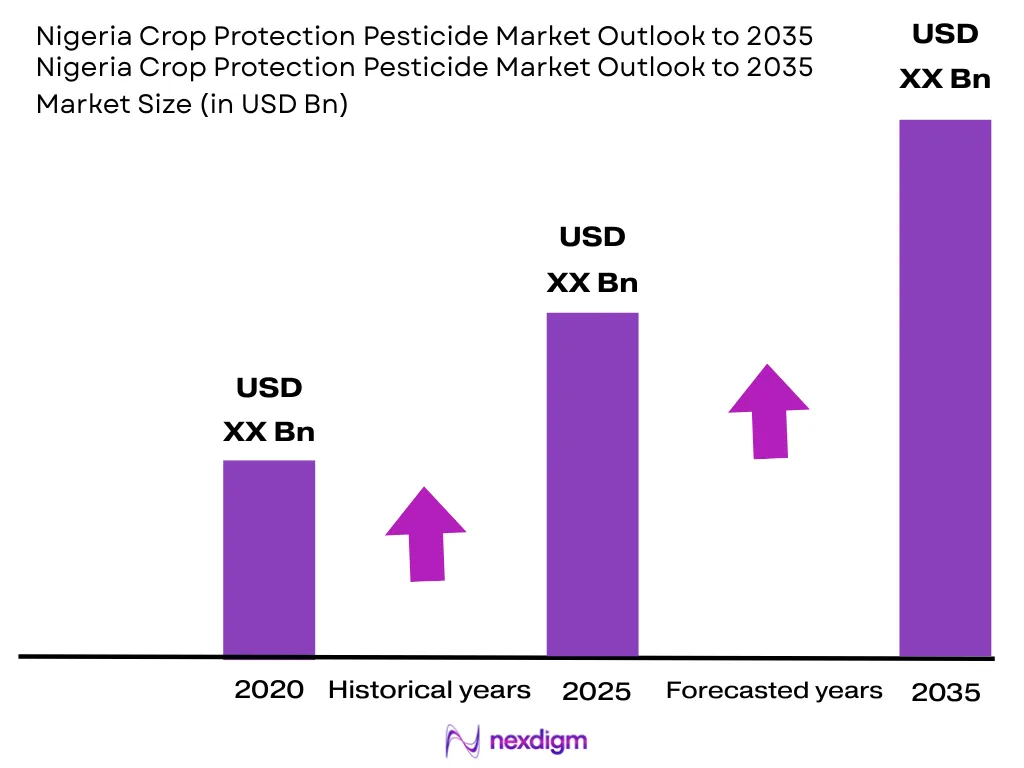
Nigeria Crop Protection Pesticides Market is valued at USD ~ Billion based on a comprehensive historical assessment of pesticide sales across agricultural production systems. The market is primarily driven by Nigeria’s position as Africa’s most populous nation and largest economy, with agriculture contributing approximately 22-25% of GDP and employing over 70% of the rural population, while maize, rice, cassava, sorghum, cocoa, and oil palm cultivation spans tens of millions of hectares across the country’s diverse agro-ecological zones, according to the Federal Ministry of Agriculture and Food Security and the National Bureau of Statistics. The country’s high tropical pest pressure, increasing incidence of fall armyworm, expanding commercial farming investments, and the government’s food import substitution agenda continue to stimulate pesticide consumption across smallholder and large-scale farming systems.
Market Segmentation
By Product Type
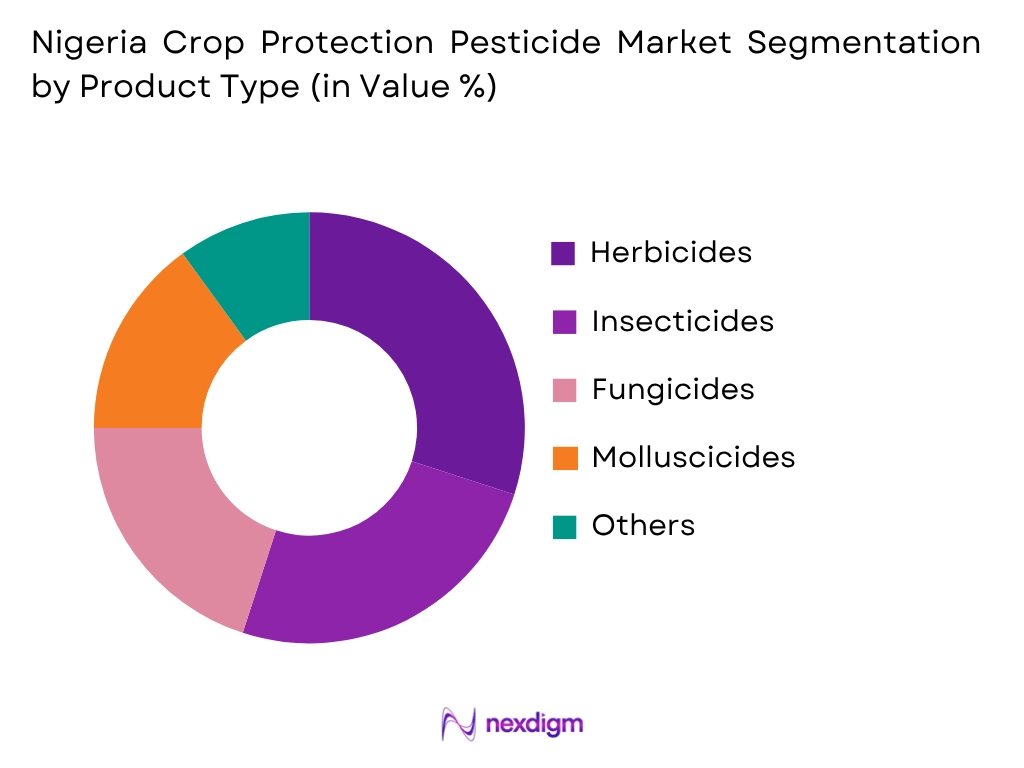
The herbicides segment dominates the Nigeria Crop Protection Pesticides Market due to the country’s extensive cultivation of maize, rice, cassava, and sorghum, where weed management represents the single largest production cost and labor burden for smallholder farmers. Nigeria’s humid tropical and Guinea Savanna climatic zones encourage aggressive weed growth throughout multiple cropping seasons, making herbicide application a critical agronomic practice for both subsistence and commercial farmers. The widespread adoption of glyphosate and 2,4-D-based products among smallholder farmers, combined with rising demand for selective pre-emergence and post-emergence herbicides among large commercial rice and maize producers, has strengthened the herbicide segment’s dominant market position. Labor shortages in rural farming communities, rising agricultural wage rates, and increasing cultivated area under mechanized farming systems are further accelerating herbicide adoption as a cost-effective substitute for manual weeding across all major crop types. Continuous innovation in selective herbicides, resistance management programs, and affordable formulation technologies tailored to smallholder purchasing capacity has enabled growers to improve productivity while reducing dependence on manual labor, reinforcing herbicides as the largest product category within the market.
By Crop Type
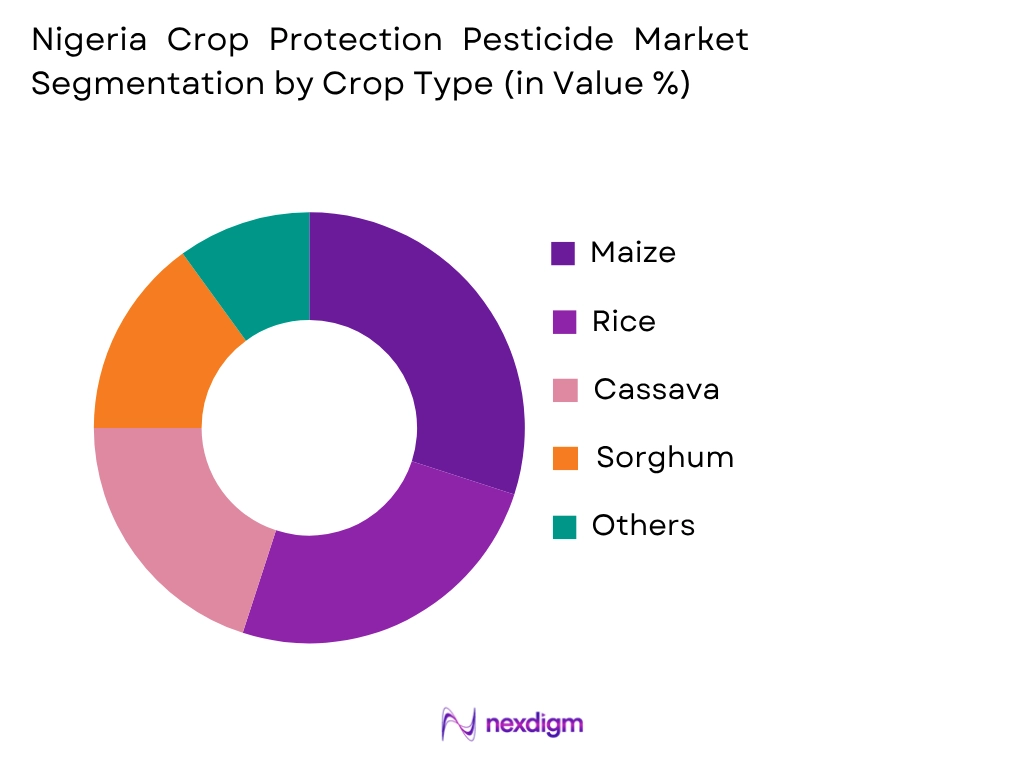
Maize accounts for the largest share of pesticide consumption owing to Nigeria’s position as the largest maize producer in West Africa and the crop’s critical role in both food security and industrial raw material supply for flour milling, animal feed, and beverage manufacturing. Large commercial farms and smallholder growers across Kaduna, Kano, Benue, Plateau, and Oyo states require integrated crop protection against weeds, fall armyworm, stem borers, fungal diseases including aflatoxin-producing moulds, and storage pests throughout the cultivation and post-harvest cycle. The fall armyworm, which became established across Nigeria’s maize belt from 2016 onwards, has dramatically increased insecticide consumption as farmers manage repeated infestations across successive cropping seasons. Export-oriented and contract farming systems serving flour millers and animal feed manufacturers demand consistent crop protection to maintain grain quality and reduce mycotoxin contamination risks. Continuous expansion of maize cultivation area under government anchor borrowers programs, adoption of improved seed varieties, and investments in mechanized farming further strengthen maize’s dominant position within Nigeria’s pesticide market.
Competitive Landscape
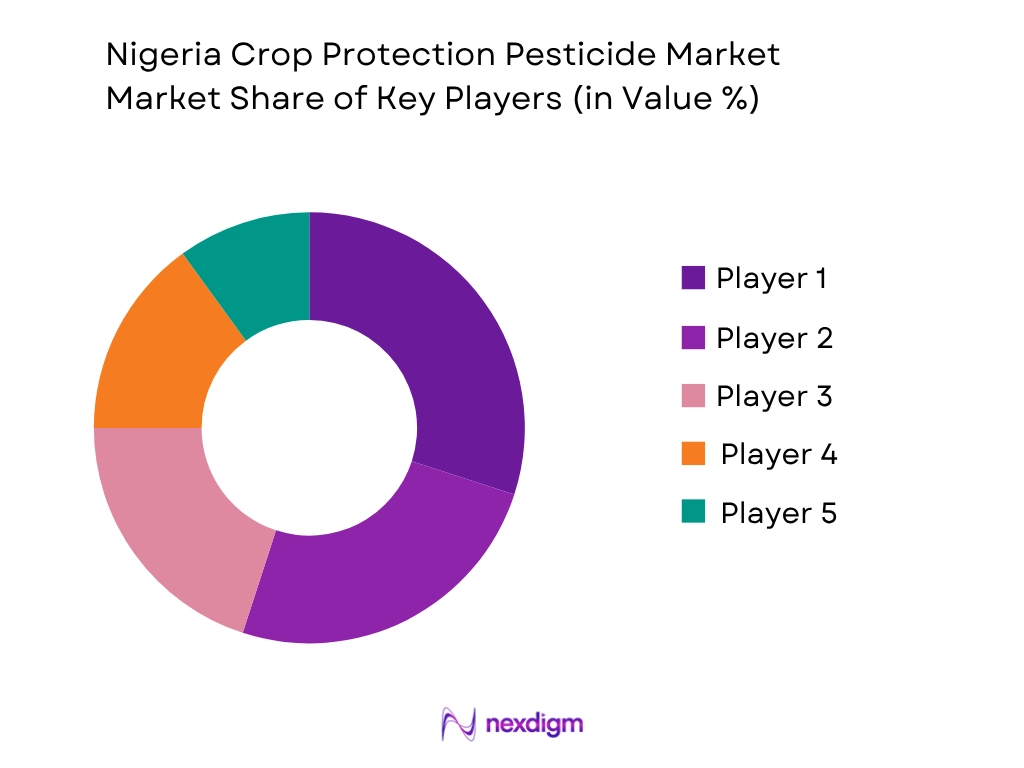
The Nigeria Crop Protection Pesticides Market is characterized by a combination of multinational agrochemical companies operating through local subsidiary offices and authorized distributors, alongside influential indigenous firms with deep rural distribution networks. Leading firms including Jubaili Agrotec, Dizengoff Nigeria, and WACOT Limited have established dominant market positions through extensive pan-Nigeria distribution infrastructure, agro-dealer network development, and farmer education programs tailored to smallholder purchasing behavior. Multinational companies such as Bayer Crop Science, Syngenta, BASF, and UPL compete through product registration portfolios, technical agronomic support, and commercial farm partnerships, while counterfeit and substandard product infiltration remains a persistent market integrity challenge. Competition increasingly focuses on affordable formulation packaging suited to smallholder budgets, integrated crop protection solutions for maize and rice, extension services, and digital input procurement platforms to address the fragmented distribution landscape across Nigeria’s diverse farming regions.
| Company | Establishment Year | Headquarters | Product Portfolio | Biological Products
|
Manufacturing Presence | Major Crop Focus | Distribution Network | R&D Focus |
| Bayer Crop Science | 1863 | ~ | ~ | ~ | ~ | ~ | ~ | ~ |
| Jubaili Agrotec | 1990 | ~ | ~ | ~ | ~ | ~ | ~ | ~ |
| Dizengoff Nigeria | 1960 | ~ | ~ | ~ | ~ | ~ | ~ | ~ |
| WACOT Limited | 1978 | ~ | ~ | ~ | ~ | ~ | ~ | ~ |
| UPL Limited | 1969 | ~ | ~ | ~ | ~ | ~ | ~ | ~ |
Nigeria Crop Protection Pesticide Market Analysis
Growth Drivers
Expansion of Smallholder and Commercial Crop Cultivation
Nigeria’s rapidly expanding agricultural sector remains the primary growth driver for the Crop Protection Pesticides Market, underpinned by a large and growing rural farming population, government food security policies, and rising private investment in commercial agribusiness across the country’s diverse agro-ecological zones. The Federal Government’s Anchor Borrowers Programme has supported maize, rice, wheat, and soybean production by providing subsidized inputs including seeds and crop protection products to smallholder farmers affiliated with anchor processing companies, directly increasing pesticide procurement and application rates across targeted farming communities. Maize production exceeds 10 million metric tonnes annually, while rice paddy production has expanded significantly following government import restriction policies, and cassava output remains the world’s largest at over 59 million metric tonnes, collectively representing enormous cultivated areas requiring continuous weed, pest, and disease management. Cocoa production in Ondo, Osun, Cross River, and Ekiti states generates substantial foreign exchange and requires consistent fungicide and insecticide programs to manage black pod disease, cocoa capsid bugs, and other yield-reducing pests. Oil palm cultivation is expanding across Rivers, Cross River, Imo, and Edo states under government rehabilitation programs, creating additional demand for herbicides and pest management products. Rising domestic food demand driven by Nigeria’s population exceeding 220 million people, urban dietary diversification, and growth in agro-processing industries continue to incentivize expansion of cultivated area and intensification of crop protection practices across both smallholder and commercial farming systems.
Rising Pest Pressure and Fall Armyworm Incidence
The establishment and rapid spread of fall armyworm across Nigeria’s maize production regions since 2016 has fundamentally transformed pesticide demand patterns, driving significant increases in insecticide consumption across smallholder and commercial maize farms in virtually every producing state. Fall armyworm infestations cause yield losses estimated at 20-50% in untreated maize fields, creating an urgent and recurring demand for pyrethroids, organophosphates, diamides, and spinosad-based insecticides throughout the primary and secondary cropping seasons. Stem borer infestations in maize and sorghum, aphid pressure in cowpea and groundnut production, and locust bean pod borer damage in legume cultivation further contribute to rising insecticide demand across Nigeria’s diverse farming systems. Fungal disease pressure, particularly aflatoxin-producing Aspergillus species in maize and groundnuts, anthracnose and black pod in cocoa, and blast in upland rice production, continues to drive fungicide consumption across high-value crop segments. Weed pressure remains severe across Nigeria’s humid tropical farming zones, where warm temperatures and abundant rainfall support year-round weed emergence that competes aggressively with food crops unless managed through herbicide programs. Rising awareness of crop losses attributable to pest and disease damage, combined with expanding extension service reach and mobile digital advisory platforms, is improving farmer recognition of integrated pest management and increasing willingness to invest in crop protection products across both subsistence and commercial farming communities.
Market Challenges
Proliferation of Counterfeit and Substandard Agrochemicals
The proliferation of counterfeit, adulterated, and substandard agrochemical products represents the most pervasive and damaging challenge facing the Nigeria Crop Protection Pesticides Market, undermining farmer confidence, reducing crop protection efficacy, and creating significant financial losses across smallholder farming communities. Estimates suggest that counterfeit and substandard pesticides account for a substantial share of products sold through informal rural agro-dealer networks, open markets, and unregulated distribution channels across all geopolitical zones. Farmers who purchase counterfeit or diluted products experience crop protection failures, increased pest and disease damage, and financial losses that discourage future pesticide investment and undermine the adoption of modern integrated pest management practices. The National Agency for Food and Drug Administration and Control faces significant enforcement resource constraints in monitoring the vast number of pesticide products, importers, formulators, and retail outlets operating across Nigeria’s complex agricultural input supply chain. Substandard product proliferation also creates unfair competitive pressure on legitimate pesticide manufacturers and distributors who invest in product registration, quality assurance, and regulatory compliance. Addressing counterfeit agrochemicals requires strengthened regulatory enforcement, enhanced border control of illegal pesticide imports, farmer education programs on product authentication, and industry-wide stewardship initiatives to protect market integrity and support sustainable pesticide adoption across Nigeria’s agricultural sector.
Infrastructure Deficits and Rural Distribution Gaps
Poor rural road infrastructure, limited cold chain logistics, unreliable electricity supply, and fragmented last-mile distribution networks represent fundamental structural challenges that constrain pesticide market development and limit timely product access for smallholder farmers across Nigeria’s vast agricultural hinterland. Nigeria’s road network condition deteriorates significantly beyond major urban centers, making seasonal transport of agricultural inputs to rural farming communities expensive, unreliable, and sometimes impossible during peak rainy season planting periods when pesticide demand is highest. Smallholder farmers operating on one to five hectares in remote communities often lack convenient access to properly stocked and technically knowledgeable agro-dealer outlets, forcing them to purchase whatever products are available locally rather than optimally suited crop protection solutions. Limited rural financial services infrastructure restricts farmers’ ability to purchase pesticides on credit or through input financing schemes, constraining uptake of higher-value fungicides, seed treatments, and biological products that require upfront investment. Digital agricultural input platforms and mobile payment solutions are beginning to address last-mile distribution challenges in some regions, but connectivity limitations, low digital literacy among older farming populations, and logistics constraints continue to restrict their penetration across Nigeria’s most remote farming communities. Strengthening rural distribution infrastructure, expanding agro-dealer network capacity, and developing innovative smallholder input financing mechanisms remain critical priorities for sustainable pesticide market development across Nigeria.
Market Opportunities
Expansion of Biological Crop Protection Solutions
Growing emphasis on sustainable agriculture and the increasing availability of affordable biological crop protection products present substantial market development opportunities in Nigeria, particularly for managing fall armyworm, stem borers, post-harvest storage pests, and soil-borne disease pathogens in maize, rice, cocoa, and vegetable production systems. Nigeria’s cocoa rehabilitation program across Ondo, Osun, and Cross River states creates specific demand for biocontrol agents targeting Phytophthora black pod disease and cocoa capsid bugs, where biological alternatives can complement conventional fungicide programs while reducing residue risks on export-quality beans. Smallholder vegetable producers supplying urban markets in Lagos, Abuja, Kano, and Port Harcourt are progressively adopting biopesticides and botanical insecticides to manage soil nematodes, aphids, and whitefly infestations as urban consumer awareness of pesticide residues on fresh produce increases. The Anchor Borrowers Programme and Growing Africa’s Agriculture joint initiatives create structured channels for introducing biological seed treatments and microbial pest management products into smallholder farming systems through subsidized input distribution. Continuous advances in biological formulation stability under Nigeria’s tropical climatic conditions, improved shelf life, and affordable pricing are enhancing the commercial viability of biological products. Development finance institutions including the African Development Bank and the International Finance Corporation are supporting agricultural input sector investments that create opportunities for biological crop protection manufacturers to scale distribution and farmer education programs across West Africa’s largest agricultural market.
Growth of Digital Agriculture and Input Access Platforms
The rapid expansion of mobile internet penetration, digital financial services, and agricultural technology platforms across Nigeria provides significant opportunities for improving pesticide market efficiency, smallholder input access, and agronomic advisory services that support greater crop protection product adoption. Nigeria’s mobile subscriber base exceeds 200 million connections, with smartphone penetration growing rapidly among farming communities, creating the digital infrastructure necessary for e-commerce agricultural input platforms, mobile advisory services, and pest monitoring applications to reach previously underserved rural markets. Agritech companies including Farmcrowdy, ThriveAgric, Releaf, and similar platforms are integrating pesticide procurement into broader input financing and off-take arrangements that allow smallholder farmers to access quality crop protection products without immediate cash payment, addressing a critical adoption barrier. Digital pest identification applications powered by artificial intelligence, satellite-based crop monitoring services, and SMS-delivered agronomic advisory systems are improving farmer awareness of pest thresholds, optimal application timing, and product selection across major cropping systems. Large commercial farms and nucleus farming enterprises operating across Kaduna, Niger, Benue, and Ogun states are increasingly adopting drone-based aerial application services for maize and rice fields, improving application coverage uniformity while reducing labor costs and pesticide wastage. The continued expansion of mobile money platforms, digital agro-dealer networks, and farm management applications creates long-term opportunities for pesticide manufacturers and distributors to integrate crop protection products with digital distribution, precision advisory, and traceability solutions tailored to Nigeria’s diverse smallholder and commercial farming landscape.
Future Outlook
The Nigeria Crop Protection Pesticides Market is expected to maintain robust growth over the forecast period due to continued population growth driving food demand, sustained government investment in agricultural input support programs, increasing commercial farming investment, and rising awareness of crop protection’s role in improving agricultural productivity and food security. Sustainable agricultural practices, biological crop protection products, digital input access platforms, and fall armyworm management technologies are expected to reshape the competitive landscape. Regulatory modernization under NAFDAC, strengthened enforcement against counterfeit products, and investment in rural distribution infrastructure are anticipated to accelerate the adoption of quality crop protection products. Furthermore, continued growth in maize, rice, cocoa, and oil palm cultivation, coupled with increasing smallholder access to input financing and digital advisory services, will support long-term market expansion across Nigeria’s major agricultural regions.
Major Players
- Bayer Crop Science
- Syngenta
- BASF
- FMC Corporation
- UPL Limited
- Jubaili Agrotec
- Dizengoff Nigeria
- WACOT Limited
- Nufarm
- Corteva Agriscience
- Arysta LifeScience
- Technos International
- MultiShield Limited
- ADAMA Agricultural Solutions
- Rainbow Agro
Key Target Audience
- Crop Protection Product Manufacturers
- Agricultural Cooperatives and Farmer Groups
- Commercial Farming Enterprises and Agribusiness Groups
- Agrochemical Distributors, Agro-Dealers and Retail Chains
- Biological Crop Protection Manufacturers
- Investments and Venture Capitalist Firms
- Government and Regulatory Bodies (NAFDAC, Federal Ministry of Agriculture and Food Security, National Agricultural Seeds Council, CBN Anchor Borrowers Programme)
- Precision Agriculture and AgTech Solution Providers
Research Methodology
Step 1: Identification of Key Variables
The initial phase involves constructing an ecosystem map covering pesticide manufacturers, active ingredient suppliers, distributors, agro-dealer networks, commercial farms, government agencies, and development finance organizations within the Nigeria Crop Protection Pesticides Market. Extensive secondary research using public databases, company reports, agricultural statistics, and proprietary industry sources is undertaken to identify the variables influencing market performance.
Step 2: Market Analysis and Construction
Historical information relating to pesticide production, imports, exports, crop acreage, pesticide consumption, application intensity, pricing trends, and farmer purchasing behavior is compiled and analyzed. Market revenues are estimated through both supply-side production analysis and demand-side crop-wise pesticide consumption, ensuring comprehensive market sizing and segmentation.
Step 3: Hypothesis Validation and Expert Consultation
Market assumptions are validated through structured interviews with pesticide manufacturers, distributors, agro-dealers, agricultural cooperatives, agronomists, regulatory experts, and large commercial farmers. Computer-assisted telephone interviews (CATIs) and executive discussions provide operational insights that strengthen the accuracy of market estimates and competitive assessments.
Step 4: Research Synthesis and Final Output
The final phase integrates insights from primary interviews with secondary research findings using bottom-up and top-down estimation techniques. Cross-validation ensures consistency across market segments, competitive analysis, pricing benchmarks, and future projections, resulting in a comprehensive and reliable assessment of the Nigeria Crop Protection Pesticides Market.

- Executive Summary
- Research Methodology (Market Definitions and Assumptions, Abbreviations, Market Sizing Approach, Top-Down Analysis, Bottom-Up Analysis, Demand-Side Assessment, Supply-Side Assessment, Primary Industry Interviews, Channel Partner Validation, Distributor-Level Assessment, Data Triangulation, Forecasting Framework, Limitations and Future Conclusions)

- Definition and Scope
- Market Evolution and Industry Genesis
- Timeline of Major Industry Developments
- Nigeria Crop Protection Industry Value Chain Analysis
- Crop Protection Pesticides Supply Chain Analysis

- Growth Drivers (Expansion of Maize and Rice Cultivation, Rising Pest and Fall Armyworm Pressure, Increasing Smallholder Farmer Access to Inputs, Growth in Agribusiness and Commercial Farming, Rising Demand for Food Security and Import Substitution, Expansion of Precision Agriculture Initiatives, Adoption of Biological Crop Protection Solutions)
- Market Challenges (Counterfeit and Substandard Agrochemicals, Active Ingredient Price Volatility, Poor Rural Infrastructure and Distribution Gaps, Resistance Management Issues, Regulatory Enforcement Weaknesses, Post-Harvest Losses and Storage Pest Pressure)
- Market Opportunities (Bio-Based Crop Protection Products, Drone Spraying Services, Precision Agriculture Integration, Digital Pest Monitoring Platforms, Sustainable Integrated Pest Management, Premium Seed Treatment Solutions)
- Market Trends (Shift Towards Biologicals, Herbicide Resistance Management Programs, Tank Mix Optimization, Smart Spraying Technologies, Low-Dose High-Efficiency Molecules, Sustainable Formulation Technologies, AI-Based Pest Forecasting)
- Government Regulations (NAFDAC Registration Framework, Federal Ministry of Agriculture and Food Security Guidelines, National Agricultural Seeds Council, Maximum Residue Limits, Good Agricultural Practices Compliance, Integrated Pest Management Guidelines, Traceability Requirements)
- PESTLE Analysis
- SWOT Analysis
- Porter’s Five Forces Analysis
- Stakeholder Ecosystem
- Competition Ecosystem

- By Market Value (2020-2025)
- By Volume Consumption (2020-2025)
- By Average Selling Price (2020-2025)

- By Product Type (In Value %)
Herbicides
Insecticides
Fungicides
Seed Treatment Chemicals
Plant Growth Regulators
Biological Crop Protection Products
Nematicides
Molluscicides
Rodenticides
Adjuvants and Spray Additives - By Chemical Origin (In Value %)
Synthetic Crop Protection Products
Biological Crop Protection Products
Botanical Pesticides
Microbial Pesticides
Biochemical Pesticides - By Active Ingredient Class (In Value %)
Glyphosate-Based Products
Glufosinate-Based Products
2,4-D Products
Atrazine Products
Pyrethroids
Neonicotinoids
Organophosphates
Triazoles
Strobilurins
SDHI Fungicides
Diamides
Copper-Based Products
Sulfonylureas - By Crop Type (In Value %)
Maize (Corn)
Rice
Cassava
Sorghum
Cocoa
Cotton
Soybeans
Groundnuts
Vegetables
Yam
Oil Palm
Wheat - By Region (In Value %)
Northwest Nigeria
Northeast Nigeria
North Central Nigeria
Southwest Nigeria
Southeast Nigeria

- Market Share of Major Players (By Value, Volume, Product Type, Crop Type, Biological Products, Distribution Network)
- Cross Comparison Parameters (Registered Active Ingredients Portfolio, Biological Product Portfolio, Distribution Network Strength, Manufacturing Capacity in Nigeria, R&D Pipeline for New Molecules, Seed Treatment Portfolio Strength, Digital Agriculture & Precision Farming Solutions, Crop Coverage Across Major Nigerian Crops)
- SWOT Analysis of Major Players
- Pricing Analysis by Active Ingredient, Formulation Type and Crop Segment
- Product Portfolio Benchmarking
- Detailed Profiles of Major Companies
Bayer Crop Science
Syngenta
BASF
FMC Corporation
UPL Limited
Jubaili Agrotec
Dizengoff Nigeria
WACOT Limited
Nufarm
Corteva Agriscience
Arysta LifeScience
Technos International
MultiShield Limited
ADAMA Agricultural Solutions
Rainbow Agro

- Crop Protection Product Consumption Analysis (Application Frequency, Seasonal Usage, Crop-Wise Consumption Intensity, Pest Pressure)
- Farmer Demographic Analysis (Farm Size, Commercial Orientation, Mechanization Level, Irrigated vs Rainfed Farming)
- Input Spending Analysis
- Purchase Decision Parameters
- Brand Loyalty Assessment

- By Market Value (2026-2035)
- By Volume Consumption (2026-2035)
- By Average Selling Price (2026-2035)


 Request a Sample
 Ask for Customization
 Get a Quote
 Enquire Now