
 Download PDF
Market Overview
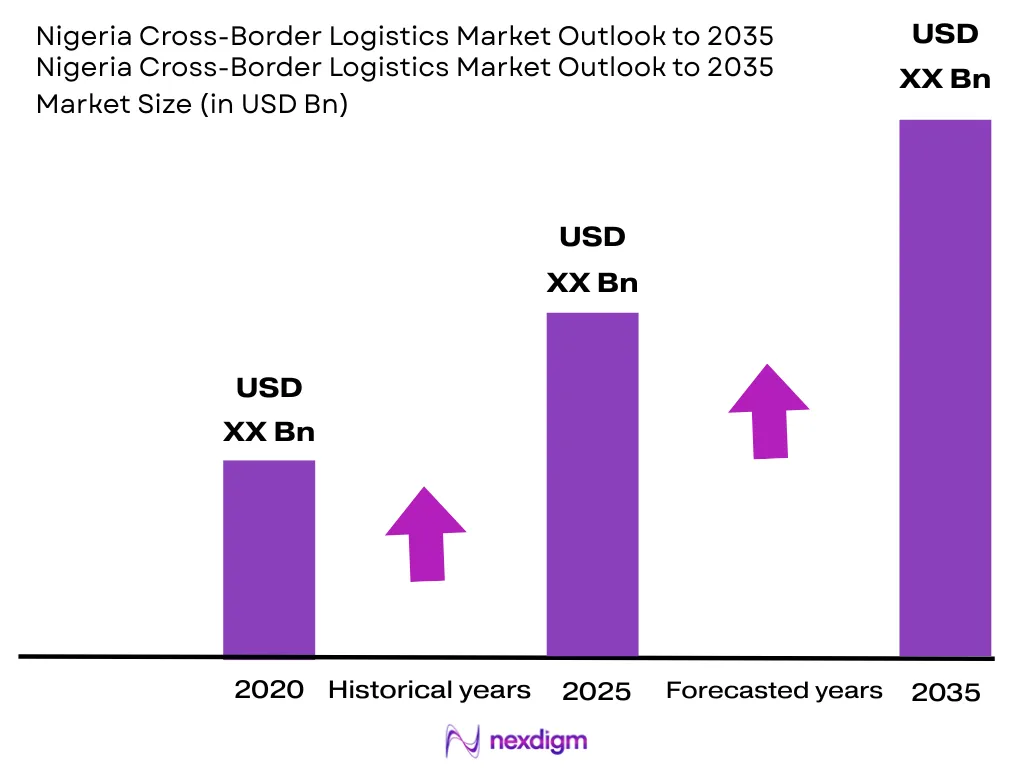
The Nigeria Cross-Border Logistics Market was valued at USD ~ Billion in 2024 and is anticipated to expand at a CAGR of ~ % during 2026–2035. The market is primarily driven by AfCFTA implementation and preferential tariff access, rapid growth of e-commerce and last-mile delivery demand, and expansion of inland dry port and deep sea port capacity. According to Mordor Intelligence, the Nigeria Freight and Logistics Market was estimated at USD 15.45 billion in 2024 and is expected to reach USD 20.58 billion by 2029, growing at a CAGR of 5.90 percent, while the Nigeria Third-Party Logistics (3PL) Market, a core enabler of cross-border freight movement, was valued at approximately USD 2 billion in 2024 and is projected to grow at a CAGR of 12.5 percent through 2032. Nigeria’s e-commerce transaction value is climbing toward USD 75 billion by 2025, according to Mordor Intelligence, intensifying last-mile and cross-border delivery needs across Lagos, Abuja, Port Harcourt, and Kano.
Market Segmentation
By Mode of Transport
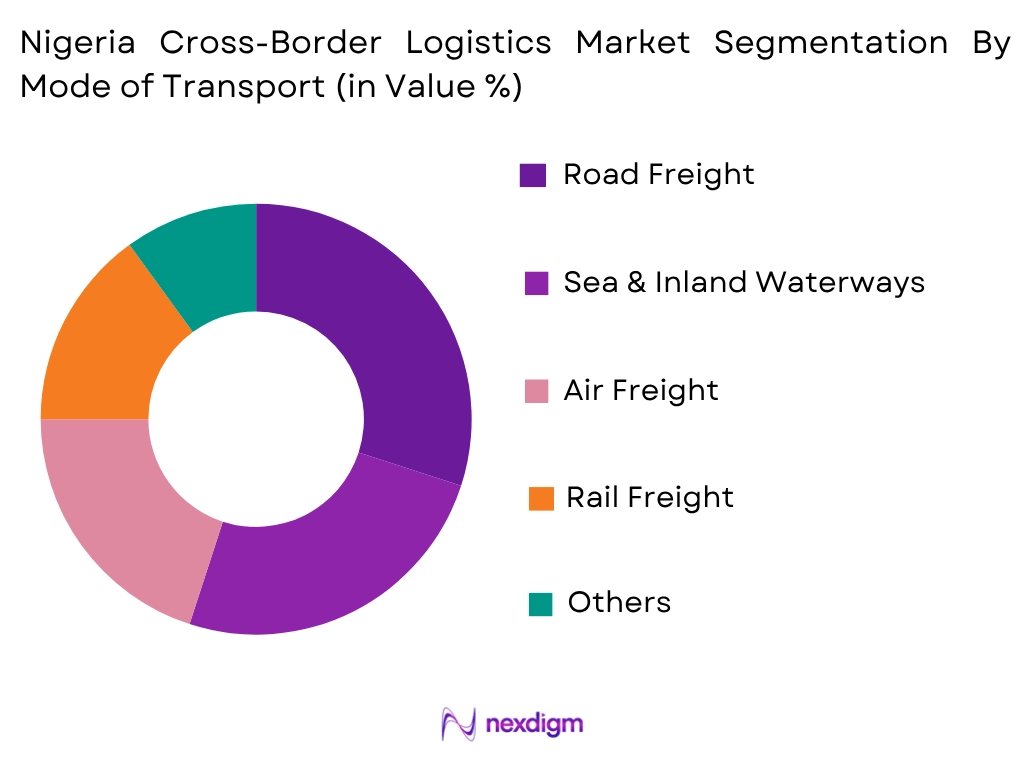
Among these, Road Freight holds the largest share of the Nigeria Cross-Border Logistics Market, capturing 61.35 percent of segmental revenue in 2025 owing to point-to-point flexibility across the country’s road network connecting Lagos, Abuja, Kano, and neighboring ECOWAS states, according to Mordor Intelligence. However, average haul costs climbed 18 percent during 2024 because of diesel spikes and security escorts, prompting shippers to test rail services where available. At the same time, Sea and Inland Waterways represent the fastest-growing transport mode, registering a 7.05 percent CAGR between 2026 and 2031 as the Lekki Deep Sea Port scales operations and dredging on the Niger-Benue route resumes seasonal services. The Dala Inland Dry Port in Kano, operational since 2024, reduces Lagos port dwell time by enabling on-arrival rail transfers, reflecting a clear structural shift toward multi-modal corridor efficiency.
By Trade Corridor
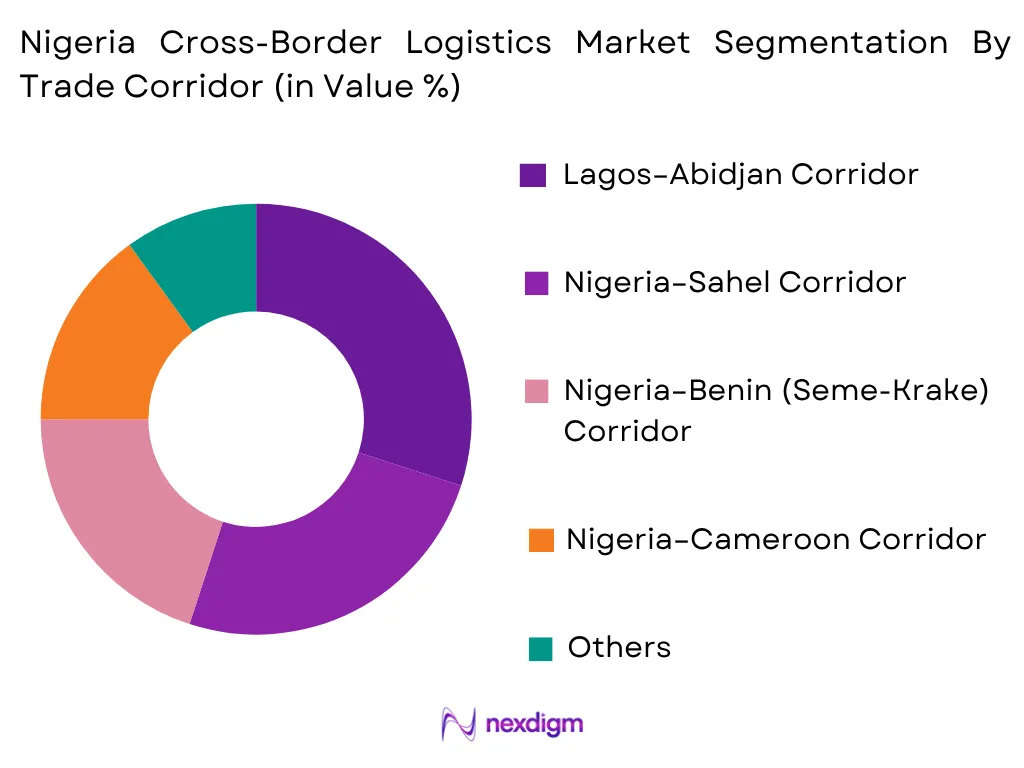
The Lagos–Abidjan Corridor holds a leading share, widely regarded as one of West Africa’s busiest trade routes and playing a critical role in regional commerce under ECOWAS trade liberalisation protocols. The Nigeria Customs Service’s Seme Area Command has intensified efforts to eliminate trade bottlenecks along this corridor, collaborating with traditional institutions, security agencies, and cross-border authorities to enhance the free movement of goods. The Seme-Krake Joint Border Post between Nigeria and the Republic of Benin similarly plays a critical role in intra-African trade under the African Continental Free Trade Area, with Nigeria and Benin deploying satellite geospatial technology in 2026 to identify illegal bush paths and hidden staging areas used by smuggling syndicates. Meanwhile, the Nigeria-Sahel corridor remains heavily informal, with approximately 95 percent of cross-border trade conducted through barter according to a trade logistics adviser’s industry brief, generating no paper trail, VAT receipts, or bankable transaction records, effectively excluding traders from AfCFTA’s formal benefits. In early 2026, Nigeria launched a dedicated air cargo corridor to East and Southern Africa through a partnership with Uganda Airlines and the United Nations Development Programme, offering freight rates 50 to 75 percent below prevailing market prices for agro-processed goods, cosmetics, and textiles.
Competitive Landscape
The Nigeria Cross-Border Logistics Market is moderately consolidated, combining global integrators with domestic and regional specialists. DHL International GmbH differentiates via customs brokerage depth and cross-border African lane specialization, while SIFAX Logistics anchors its position through integrated port-to-warehouse operations at Lagos and Onne terminals. GIG Logistics leverages its nationwide hub network to dominate temperature-sensitive distribution corridors, and Kobo360, a tech-enabled freight management platform, managed over 500,000 deliveries across Nigeria and West Africa in 2023, having integrated blockchain for supply chain transparency and raised funding for cross-border logistics expansion under AfCFTA. Strategic mergers continue reshaping the competitive landscape, with Q Logistics completing its acquisition of Aramex in July 2025, giving the combined entity a footprint in 65 countries, while A.P. Moller-Maersk pledged USD 600 million in Nigerian port upgrades in 2024, deepening its end-to-end offering and locking in berth priority.
| Company | Established | Headquarters | Primary Service Portfolio | Cross-Border Corridor Coverage | Fleet & Terminal Capacity | Major End-Use Industries | Key Strategic Focus | Key Strategic Focus |
| DHL International GmbH | 1969 | ~
|
~ | ~ | ~ | ~ | ~ | ~ |
| SIFAX Logistics | 1980 | ~
|
~ | ~ | ~ | ~ | ~ | ~ |
| GIG Logistics | 2012 | ~
|
~ | ~ | ~ | ~ | ~ | ~ |
| Bollore Transport and Logistics | 1822 | ~
|
~ | ~ | ~ | ~ | ~ | ~ |
| Kobo360 | 2017 | ~
|
~ | ~ | ~ | ~ | ~ | ~ |
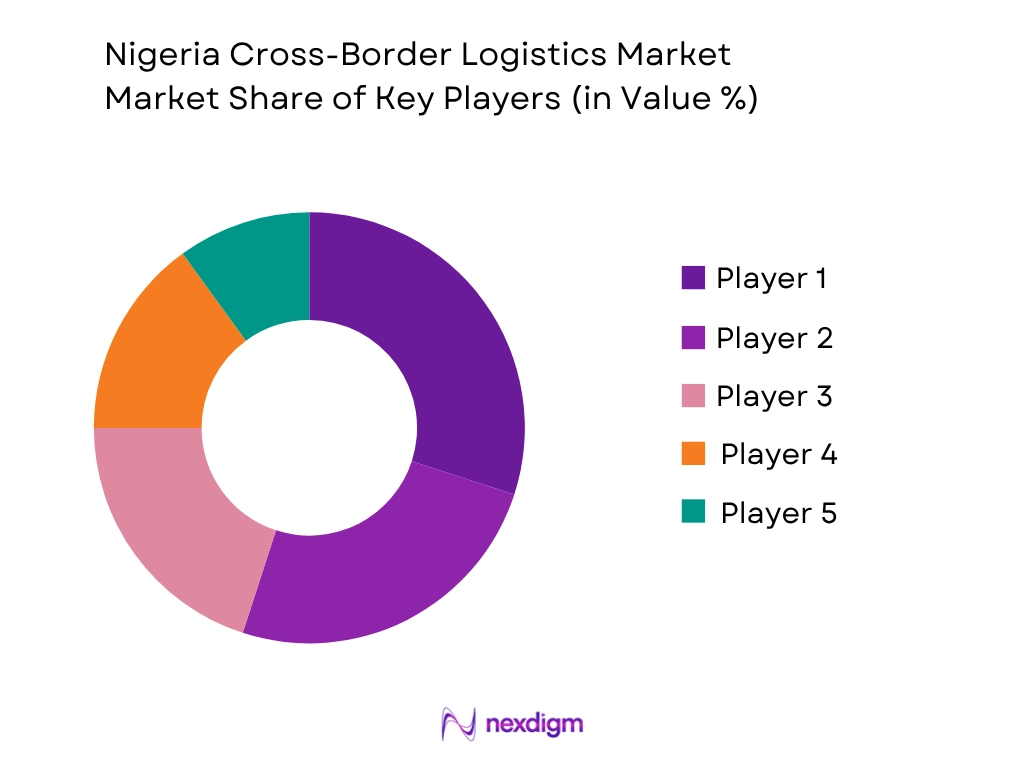
Nigeria Cross-Border Logistics Market Analysis
Growth Drivers
AfCFTA Implementation and Preferential Trade Access
Nigeria’s cross-border logistics market is experiencing sustained growth due to accelerating AfCFTA implementation and preferential trade access opportunities. Tariff schedules have moved into force and logistics interventions are lowering trade costs on specific routes, with digital trade rules no longer theoretical, according to Finance in Africa. Nigeria’s most consequential AfCFTA intervention has been the creation of a functioning export corridor that lowers freight costs, exemplified by the dedicated air cargo corridor to East and Southern Africa launched through a partnership with Uganda Airlines and UNDP, offering freight rates 50 to 75 percent below prevailing market prices. China has also approved zero-tariff access for exports from 53 African countries including Nigeria, opening a preferential window into the world’s second-largest economy and creating further impetus for formalizing Nigeria’s cross-border trade infrastructure and logistics capacity.
Rapid Growth of E-Commerce and Last-Mile Delivery Demand
The rapid growth of e-commerce continues to accelerate outsourced logistics adoption as fulfillment complexity rises across Nigeria, according to MarkWide Research. Nigeria’s e-commerce transaction value is climbing toward USD 75 billion by 2025, a trend that intensifies last-mile delivery needs in Lagos, Abuja, Port Harcourt, and Kano, according to Mordor Intelligence. Speedaf, backed by Chinese investors, recorded a 40 percent increase in B2C delivery volumes in 2023 and launched a 12-hour intra-city delivery service in Lagos and Ibadan, while Kobo360 managed over 500,000 deliveries across Nigeria and West Africa in the same year. The Central Bank of Nigeria’s cashless policy and digital payment infrastructure push are further reshaping last-mile delivery requirements, sustaining strong demand for cross-border and domestic freight capacity.
Market Challenges
Infrastructure Deficits and Bureaucratic Customs Documentation
Despite steady demand growth, the Nigeria cross-border logistics market remains constrained by infrastructure deficits, governance weaknesses, and bureaucratic customs documentation processes. Infrastructure deficits, governance weaknesses, security concerns, smuggling, counterfeit goods, and border closure policies collectively constrain cross-border trade at critical nodes such as the Seme-Krake Joint Border Post, according to a peer-reviewed study on AfCFTA trade facilitation challenges. Bureaucratic delays in documentation and the manual nature of many clearance processes add layers of uncertainty to cross-border operations, making it difficult for third-party logistics providers to plan reliable transit times, according to Verified Market Research. Inconsistent operational alignment and regulatory fragmentation across border posts further undermine efficiency, despite proactive enforcement and community engagement efforts supporting compliance and intelligence gathering.
Persistence of Informal Trade and Currency Volatility
The persistence of informal and barter-based cross-border trade presents a significant structural challenge for Nigeria’s logistics market. Approximately 95 percent of cross-border trade in the Nigeria-Sahel corridor is conducted through trade by barter, according to a trade logistics adviser’s industry brief, a system that generates no paper trail, no VAT receipts, no customs data, and no bankable transaction records, effectively rendering traders invisible to formal financial systems and excluding them from the benefits of AfCFTA. This near-total absence of formal trade systems at the grassroots level costs Nigeria and Africa billions in potential revenue, according to industry experts. In addition, currency volatility and foreign exchange exposure continue to affect logistics providers’ cost structures, particularly for cross-border operators reliant on imported fleet components, fuel, and equipment priced in foreign currency.
Market Opportunities
Rising Investment in Digital Customs and Trade Facilitation Technology
Nigeria’s growing digitalization of trade facilitation processes creates significant opportunities for logistics providers investing in digital customs and single window trade systems. The Authorized Economic Operator (AEO) program, piloted in April 2024 by the Nigeria Customs Service, signals a structural shift toward faster border clearance for certified operators. Nigeria and Benin’s deployment of satellite geospatial technology to secure trade corridors, formally cemented during a strategic summit at the Seme-Krake Joint Border Post, offers a replicable model for other high-traffic, vulnerable borders across Africa. Blockchain pilots that log temperature and location data every five minutes, trialed in 2024, are extending to perishable exports in 2025, creating opportunities for logistics providers offering technology-enabled supply chain transparency and compliance solutions across Nigeria’s cross-border trade network.
Expansion of Inland Dry Ports and Dedicated Export Corridors
Nigeria’s expanding inland dry port network and dedicated export corridor development create substantial long-term opportunities for cross-border logistics providers. The Dala Inland Dry Port in Kano, operational since 2024, reduces Lagos port dwell time by enabling on-arrival rail transfers, while the National Shippers’ Council has undertaken complementary initiatives including the promotion of Inland Dry Ports in Kaduna, Dala, and Funtua, alongside the development of Vehicle Transit Areas to improve corridor efficiency. Abuja benefits from dual airport cargo terminals that expedite perishables and pharmaceuticals, cutting lead times to Accra and Kigali. As mid-tier operators with specialized cold-chain or cross-border expertise emerge as attractive consolidation targets for equity funds, logistics providers investing in inland dry ports, rail-linked terminals, and dedicated air cargo corridors are well positioned to capture growing demand across Nigeria’s formalizing trade infrastructure.
Future Outlook
The Nigeria Cross-Border Logistics Market is expected to witness sustained expansion over the forecast period, supported by continued AfCFTA implementation, expanding e-commerce and last-mile delivery demand, and increasing government investment in multi-modal transport and digital customs infrastructure. Continued investment in inland dry ports, dedicated export air cargo corridors, and blockchain-enabled supply chain transparency will further accelerate formalization across the industry. The market is also likely to benefit from Nigeria’s position as Africa’s largest economy and a pivotal player in AfCFTA execution, enabling greater investment in advanced, compliant, and cost-competitive cross-border logistics technologies capable of serving both regional and continental trade corridors.
Major Players
- DHL International GmbH
- SIFAX Logistics
- GIG Logistics
- Bollore Transport and Logistics
- Kobo360
- A.P. Moller – Maersk
- CMA CGM Group (Including CEVA Logistics)
- DP World (Including Imperial Logistics)
- Aramex Nigeria (Q Logistics)
- ABC Transport
- Redline Logistics
- UPS Nigeria
- Schenker Nigeria
- Speedaf
- Creseada International Limited
Key Target Audience
- Freight Forwarders and Customs Brokers
- Manufacturing and FMCG Companies
- E-Commerce and Retail Platforms
- Pharmaceutical and Cold-Chain Distributors
- Port, Terminal and Inland Dry Port Operators
- Investment and Venture Capitalist Firms
- Government and Regulatory Bodies (Nigeria Customs Service (NCS), National Shippers’ Council, National Agency for Food and Drug Administration and Control (NAFDAC))
- Fleet, Trucking and Warehousing Infrastructure Providers
Research Methodology
Step 1: Identification of Key Variables
The research process begins with identifying the complete ecosystem of the Nigeria Cross-Border Logistics Market, including freight forwarders, customs brokers, port and terminal operators, e-commerce and manufacturing shippers, trucking and fleet providers, and regulatory authorities. Extensive secondary research is conducted using company annual reports, government publications, trade associations, customs statistics, industry journals, and proprietary databases to determine the variables influencing market demand, pricing, corridor volumes, and technological developments.
Step 2: Market Analysis and Construction
Historical market information is collected and analyzed to estimate market size, freight volumes, corridor-level trade activity, and pricing trends. A combination of top-down and bottom-up approaches is used to estimate market revenues and validate segment-level performance. Consumption patterns across manufacturing, FMCG, e-commerce, and pharmaceutical cold-chain corridors are evaluated to establish an accurate representation of the industry.
Step 3: Hypothesis Validation and Expert Consultation
The preliminary findings are validated through Computer-Assisted Telephone Interviews (CATIs) and structured discussions with freight forwarders, customs brokers, port operators, fleet managers, regulatory experts, and senior executives operating within the Nigerian cross-border logistics industry. These interviews help verify market assumptions, competitive developments, technology adoption trends, pricing dynamics, and future investment opportunities while refining the overall market estimates.
Step 4: Research Synthesis and Final Output
The final stage integrates insights obtained from primary interviews with quantitative information collected through secondary sources. Data triangulation techniques are applied to reconcile differences between supply-side and demand-side estimates, ensuring robust market forecasting. The report is then reviewed through multiple quality assurance checkpoints to deliver a comprehensive analysis covering market size, segmentation, competitive landscape, future outlook, and strategic recommendations for industry stakeholders.

- Executive Summary
- Research Methodology (Market Definitions and Assumptions, Abbreviations, Market Sizing Approach, Top-Down Analysis, Bottom-Up Analysis, Demand-Side Assessment, Supply-Side Assessment, Primary Industry Interviews, Secondary Research Validation, Data Triangulation, Forecasting Framework, Limitations and Future Conclusions)

- Definition and Scope
- Market Evolution and Industry Genesis
- Timeline of Major Industry Developments
- Cross-Border Logistics Industry Value Chain Analysis
- Supply Chain Analysis

- Growth Drivers (AfCFTA Implementation and Preferential Tariff Access, Rapid Growth of E-Commerce and Last-Mile Delivery Demand, Expansion of Inland Dry Ports and Deep Sea Port Capacity, Government Investment in Multi-Modal Transport Infrastructure, Rising Private Capital Investment in Fleet and Trucking Capacity, Growing Formalization of Regional Trade Corridors)
- Market Challenges (Infrastructure Deficits and Poor Road Conditions, Bureaucratic and Manual Customs Documentation Processes, Persistence of Informal and Barter-Based Cross-Border Trade, Security Concerns, Smuggling and Counterfeit Goods, Currency Volatility and Foreign Exchange Exposure, Regulatory Fragmentation Across Border Posts)
- Market Opportunities (Investment in Digital Customs and Single Window Trade Systems, Growth in Cold-Chain and Pharmaceutical Logistics Infrastructure, Expansion of Inland Dry Port and Rail-Linked Terminal Networks, Consolidation Through Mergers and Acquisitions, Blockchain-Enabled Supply Chain Transparency, Development of Dedicated Air Cargo Export Corridors)
- Market Trends (Rising Adoption of IoT and Real-Time Fleet Monitoring, Growth in Compressed Natural Gas (CNG) Truck Fleets, Satellite and Geospatial Border Security Technology, Strategic Mergers Expanding Regional Footprints, Rail and Inland Waterway Modal Shift, Authorized Economic Operator (AEO) Program Adoption)
- Government Regulations (Nigeria Customs Service (NCS) Requirements, Authorized Economic Operator (AEO) Program, African Continental Free Trade Area (AfCFTA) Implementation, ECOWAS Trade Liberalisation Protocols, National Transport Policy, NAFDAC Cold-Chain Compliance Enforcement)
- Import and Export Analysis (Trade Volume, Major Import Sources, Export Destinations, HS Code Analysis, Trade Balance)
- Raw Material and Infrastructure Availability Analysis (Trucking Fleet Capacity, Port and Terminal Infrastructure, Warehousing Capacity, Fuel and Compressed Natural Gas Availability)
- Technology Landscape (Digital Customs and Single Window Systems, IoT and Real-Time Fleet Monitoring, Blockchain-Enabled Supply Chain Transparency, Satellite and Geospatial Border Security, Cold-Chain Monitoring Systems)
- Sustainability Assessment (Compressed Natural Gas (CNG) Fleet Transition, Fuel Efficiency and Emissions Reduction, Solar Hybrid Power for Warehousing, Local Truck Assembly and Manufacturing, Circular Economy Integration)
- PESTLE Analysis
- SWOT Analysis
- Porter’s Five Forces Analysis
- Stakeholder Ecosystem
- Competition Ecosystem

- By Market Value (2020-2025)
- By Volume Consumption (2020-2025)
- By Average Selling Price (2020-2025)

- By Service Type (In Value %)
Freight Forwarding
Customs Brokerage & Clearance
Warehousing & Distribution
Last-Mile and Cross-Border Parcel Delivery
Value-Added Services (Packaging & Labeling) - By Mode of Transport (In Value %)
Road Freight
Sea & Inland Waterways
Air Freight
Rail Freight - By Trade Corridor (In Value %)
Lagos–Abidjan Corridor
Nigeria–Benin (Seme-Krake) Corridor
Nigeria–Sahel Corridor
Nigeria–Cameroon Corridor
Air Cargo Corridors to East & Southern Africa - By End-Use Industry (In Value %)
Manufacturing & Industrial Goods
Fast-Moving Consumer Goods (FMCG)
E-Commerce & Retail
Pharmaceuticals & Cold Chain
Oil & Gas / Energy - By Region (In Value %)
Lagos & South West
Abuja & North Central
Kano & North Port Harcourt & South
South
Rest of Nigeria

- Market Share of Major Players (By Value, Volume, Service Type, Corridor Coverage, End-Use Industry)
- Cross Comparison Parameters (Service Portfolio Breadth, Corridor and Network Coverage, Customs Brokerage Capability, Cold-Chain and Technical Support Capability, Fleet and Terminal Capacity, Regulatory Compliance & Certifications, Customer Base Across Industries, Innovation & Technology Adoption Frequency)
- SWOT Analysis of Major Players
- Pricing Analysis by Service Category and Corridor
- Fleet and Terminal Capacity Analysis
- Network and Corridor Footprint Analysis
- Distribution and Hub Network Analysis
- Innovation Benchmarking
- Detailed Profiles of Major Companies
DHL International GmbH
SIFAX Logistics
GIG Logistics
Bollore Transport and Logistics
Kobo360
A.P. Moller – Maersk
CMA CGM Group (Including CEVA Logistics)
DP World (Including Imperial Logistics)
Aramex Nigeria (Q Logistics)
ABC Transport
Redline Logistics
UPS Nigeria
Schenker Nigeria
Speedaf
Creseada International Limited

- Consumption Pattern Analysis (Industrial Usage, Shipment Volume, Corridor Penetration, Seasonal Demand, Route Diversification Activity)
- Purchasing Criteria (Transit Time Reliability, Cost Efficiency, Customs Clearance Speed, Cargo Security, Regulatory Compliance, Real-Time Tracking Capability)
- Procurement and Provider Selection Analysis
- Sustainable Logistics Adoption Assessment
- Premium vs Standard Freight Service Demand
- Service Attribute Preference Analysis (Transit Reliability, Documentation Accuracy, Cold-Chain Integrity, Real-Time Visibility, Corridor Coverage, Cost Competitiveness)
- Trade Formalization and Digital Customs Influence on Provider Selection
- Pain Point Analysis
- Decision-Making Process

- By Market Value (2026-2035)
- By Volume Consumption (2026-2035)
- By Average Selling Price (2026-2035)


 Request a Sample
 Ask for Customization
 Get a Quote
 Enquire Now