
 Download PDF
Market Overview
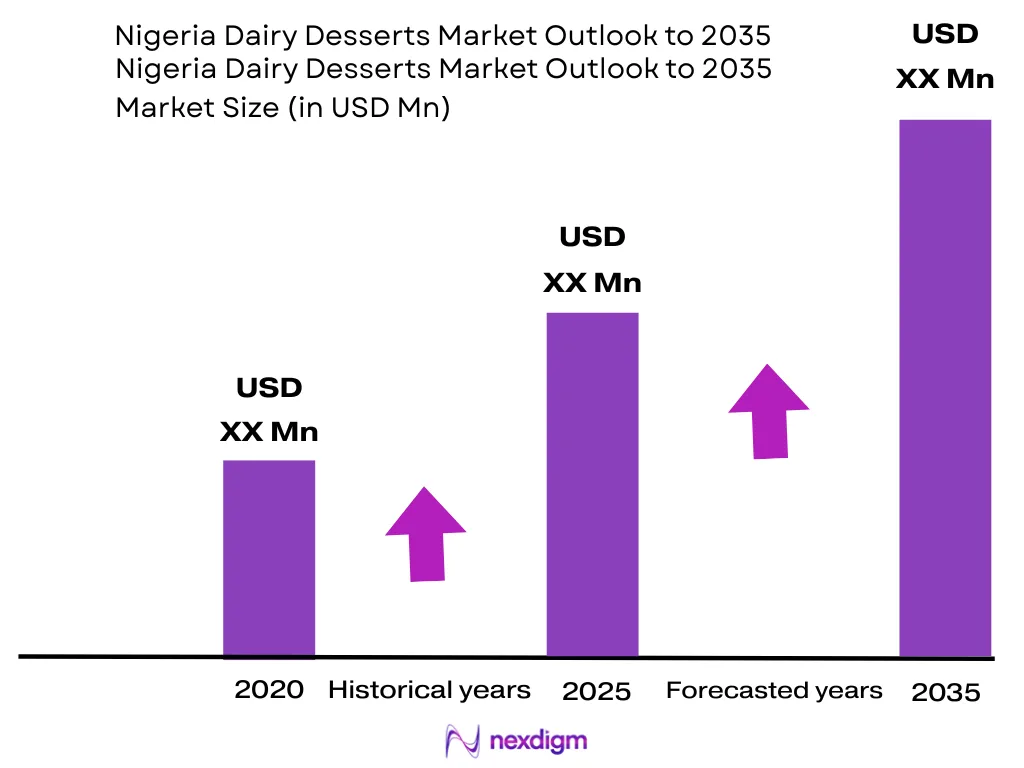
The Nigeria Dairy Desserts Market was valued at approximately USD ~ Million in 2024 and expanded from USD ~ Million in 2023, supported by increasing consumption of packaged dairy products and growing urbanization. Nigeria’s population exceeded 223 million people, creating substantial demand for convenient food categories. Rising penetration of modern retail formats, increasing household expenditure on processed foods, and the expansion of dairy processing activities by companies such as FrieslandCampina WAMCO, Chi Limited, and Promasidor have contributed to market development. Growth in refrigerated distribution infrastructure and rising demand for ready-to-eat snacks continue to support category expansion.
Market Segmentation
By Product Type
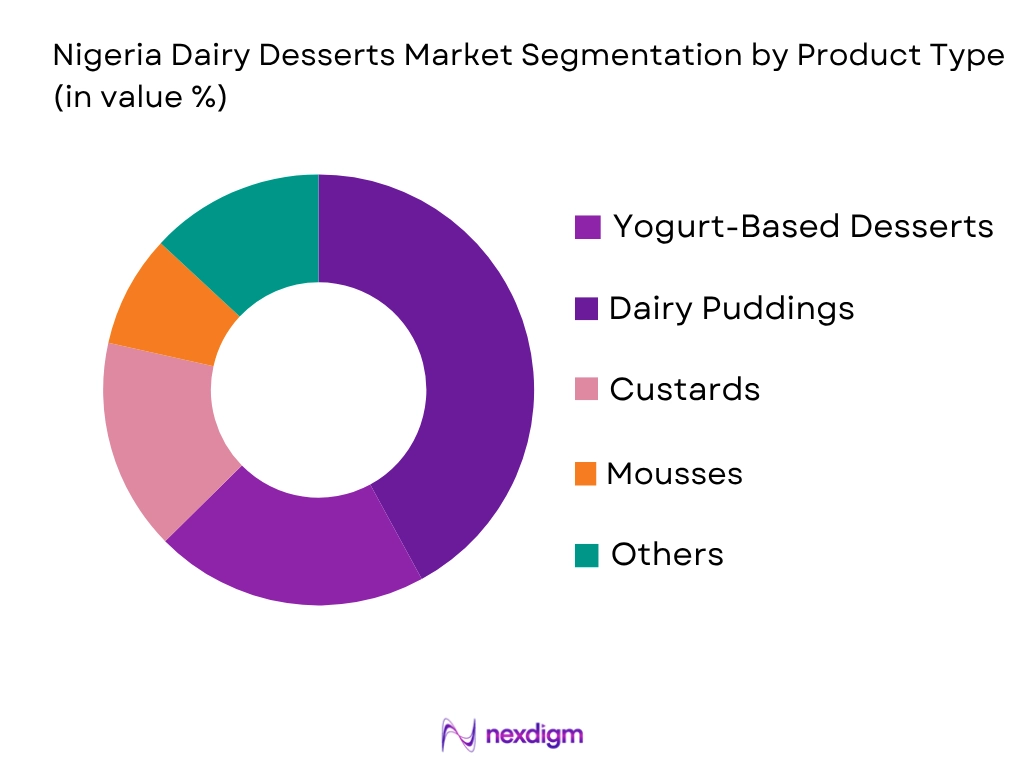
By Product Type, the Nigeria Dairy Desserts Market is segmented into Yogurt-Based Desserts, Dairy Puddings, Custards, Mousses, Flans, Cream-Based Desserts, Cheesecakes & Premium Dairy Desserts, and Others. Recently, Yogurt-Based Desserts have maintained a dominant market share due to their widespread consumer acceptance and strong association with health, nutrition, and convenience. Nigerian consumers increasingly seek products that combine taste with perceived digestive and nutritional benefits. Companies such as Hollandia, Fan Milk, and Peak have expanded flavored yogurt offerings across urban markets, strengthening category penetration. Yogurt desserts are widely available through supermarkets, convenience stores, and neighborhood retailers, making them accessible to a broad consumer base. The segment also benefits from increasing awareness regarding probiotics and protein-rich snacks. Compared with premium dairy desserts, yogurt products remain relatively affordable, which further supports high-volume consumption across middle-income households and younger consumers.
By Distribution Channel
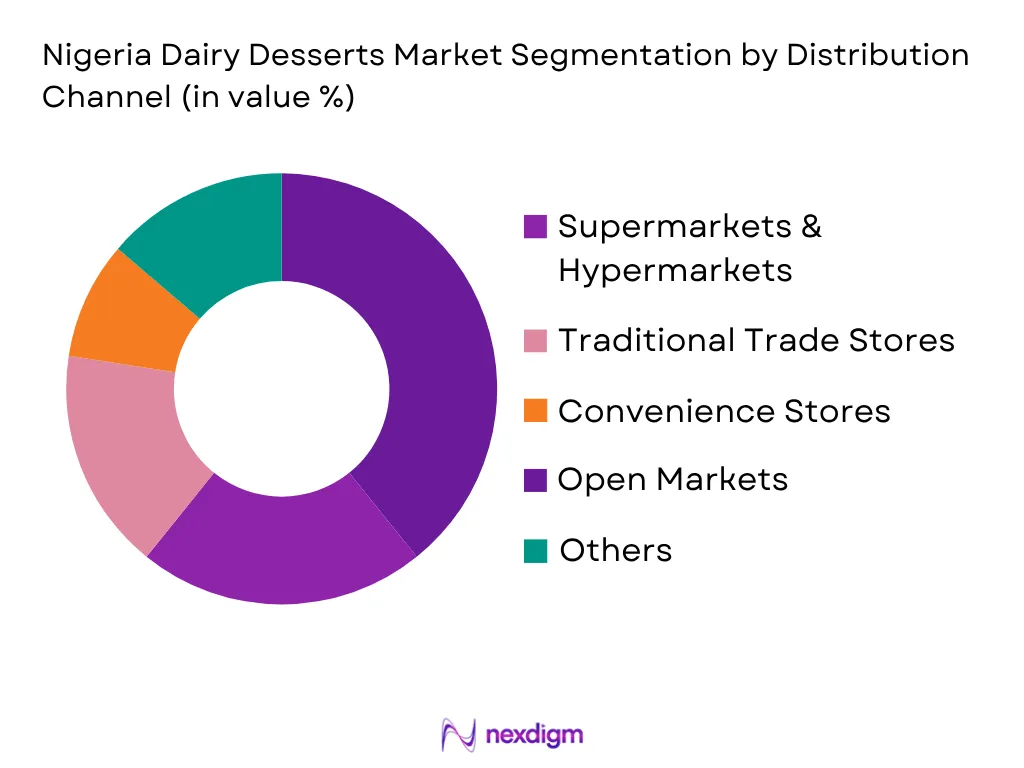
By Distribution Channel, the Nigeria Dairy Desserts Market is segmented into Supermarkets & Hypermarkets, Traditional Trade Stores, Convenience Stores, Open Markets, Online Retail, Foodservice & HORECA, and Specialty Stores. Supermarkets and Hypermarkets currently dominate the market due to their ability to maintain refrigeration standards and offer a wider assortment of dairy dessert products. Retail chains such as Shoprite, Spar, Justrite, Market Square, and Hubmart have expanded chilled food offerings, providing consumers with convenient access to premium and mass-market dairy desserts. Modern retail outlets also facilitate product visibility through promotions, branded displays, and sampling activities. Consumers perceive products sold through organized retail channels as safer and fresher due to better storage practices. The growth of urban retail infrastructure and increasing consumer preference for one-stop shopping experiences continue to reinforce the dominance of this segment within the market.
Competitive Landscape
The Nigeria Dairy Desserts Market is moderately concentrated, with a mix of multinational dairy companies and strong domestic food manufacturers competing across chilled dairy categories. Market participants compete through product innovation, distribution reach, affordability, cold-chain capabilities, and brand recognition. Established dairy brands benefit from strong consumer trust, nationwide distribution networks, and diversified dairy portfolios.
| Company | Establishment Year | Headquarters | Manufacturing Facilities | Product Portfolio | Distribution Reach | Cold Chain Strength | Innovation Focus | Brand Recognition |
| FrieslandCampina WAMCO | 1973 | ~ | ~ | ~ | ~ | ~ | ~ | ~ |
| Chi Limited | 1980 | ~ | ~ | ~ | ~ | ~ | ~ | ~ |
| Promasidor Nigeria | 1979 | ~ | ~ | ~ | ~ | ~ | ~ | ~ |
| Nestlé Nigeria | 1961 | ~ | ~ | ~ | ~ | ~ | ~ | ~ |
| Danone Fan Milk Nigeria | 1960 | ~ | ~ | ~ | ~ | ~ | ~ | ~ |
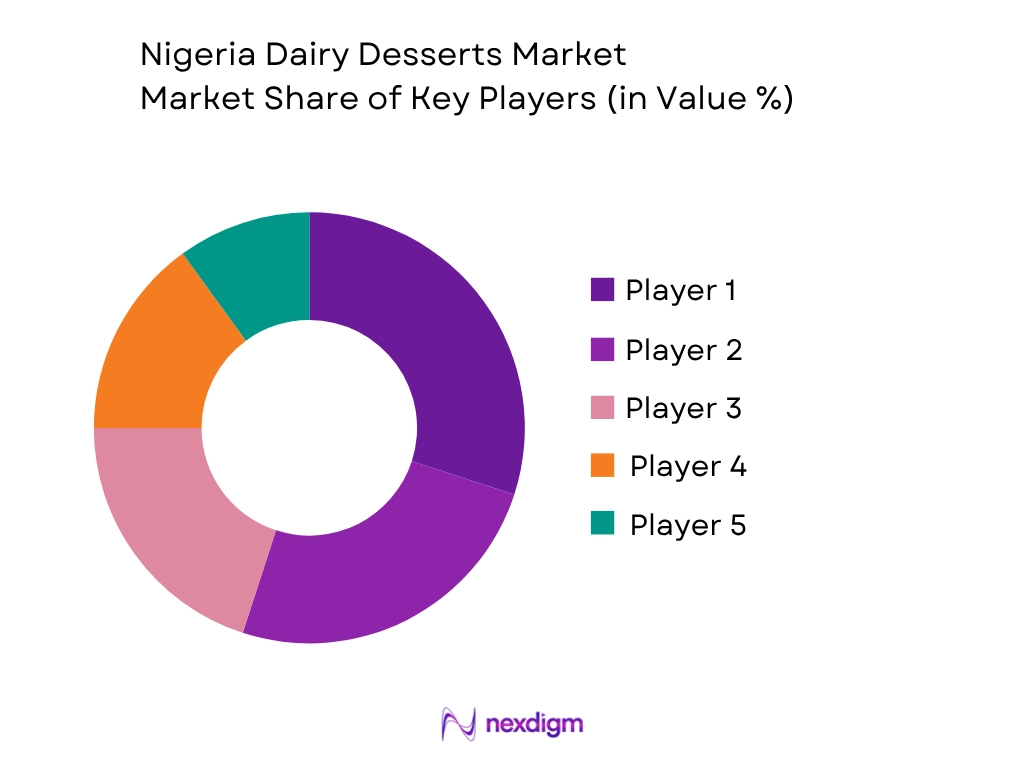
Nigeria Dairy Desserts Market Analysis
Growth Drivers
Rising Urban Population and Expansion of Modern Retail
Nigeria Dairy Desserts Market is benefiting from rapid urbanization and the increasing concentration of consumers in major metropolitan centers. According to the World Bank, Nigeria’s population exceeded 227 million people in 2024, making it the most populous country in Africa. The United Nations projects that urban residents account for more than 120 million people, creating a large consumer base for packaged and ready-to-eat dairy products. Lagos alone accommodates over 20 million residents, while Abuja, Port Harcourt, and Kano continue to witness rising demand for refrigerated food products. The IMF estimates Nigeria’s nominal GDP at more than USD 250 billion in 2024, reflecting expanding consumer spending despite inflationary pressures. Modern retail development has accelerated through supermarket chains, convenience stores, and neighborhood grocery formats equipped with refrigeration facilities. Increased female workforce participation and longer working hours have encouraged demand for convenient dairy snacks such as yogurt desserts, puddings, and flavored dairy cups. Furthermore, Nigeria recorded household final consumption expenditure exceeding USD 170 billion, indicating strong consumer spending potential. The combination of demographic expansion, urban migration, and retail modernization directly supports the consumption and distribution of dairy desserts across the country.
Increasing Dairy Consumption and Growth of Food Processing Industry
The expansion of Nigeria’s food and beverage manufacturing sector is significantly contributing to dairy dessert demand. According to the National Bureau of Statistics, manufacturing remains one of the country’s largest non-oil sectors, generating economic output valued at over NGN 10 trillion annually. Nigeria imports more than 1.5 million metric tons of dairy-related products and ingredients each year to support domestic processing and consumer demand. Companies such as FrieslandCampina WAMCO, Promasidor, and Nestlé continue to invest in value-added dairy categories, including yogurt-based desserts and chilled dairy snacks. The World Bank reports that Nigeria’s labor force exceeds 77 million people, creating a large working population with increasing demand for convenience-oriented food products. Rising supermarket penetration in urban areas has improved accessibility to refrigerated dairy offerings. Additionally, Nigeria’s food processing industry supports thousands of distribution points and cold-storage facilities across major cities. The growing preference for packaged foods, increasing awareness of protein-rich snacks, and product innovation in flavored dairy desserts are encouraging category expansion. These factors collectively strengthen demand for dairy desserts while supporting investment in processing, packaging, and distribution infrastructure throughout Nigeria.
Market Challenges
Dependence on Imported Dairy Inputs and Raw Milk Supply Constraints
Nigeria Dairy Desserts Market faces substantial challenges due to limited domestic milk production and continued dependence on imported dairy ingredients. According to the Food and Agriculture Organization, Nigeria produces approximately 700,000 metric tons of milk annually, while national demand exceeds 1.7 million metric tons, creating a considerable supply gap. The country possesses more than 20 million cattle, yet productivity remains relatively low due to inadequate feed quality, limited veterinary services, and fragmented farming practices. The Central Bank of Nigeria has repeatedly highlighted foreign exchange pressures affecting food manufacturers that rely on imported milk powder and dairy ingredients. Nigeria’s import bill for food and agricultural products remains substantial, increasing vulnerability to exchange-rate fluctuations and global commodity disruptions. Dairy dessert manufacturers frequently encounter challenges securing consistent raw material supplies needed for production planning. In addition, transportation constraints between northern livestock-producing regions and southern consumption centers affect supply-chain efficiency. These structural limitations increase operational complexity and can restrict the availability of quality dairy ingredients required for expanding dairy dessert production. Consequently, raw milk shortages remain one of the most significant barriers to sustainable category growth.
Cold Chain Infrastructure Limitations and Distribution Challenges
Efficient cold-chain infrastructure is essential for dairy desserts because these products require strict temperature control throughout transportation and storage. Nigeria continues to face infrastructure constraints that affect refrigerated food distribution. According to the World Bank, access to reliable electricity remains a challenge, with national electricity generation often remaining below 6,000 megawatts for a population exceeding 227 million people. Logistics operators frequently rely on diesel-powered backup systems to maintain refrigeration. Nigeria’s road network extends more than 200,000 kilometers, yet many transport corridors require upgrades, increasing delivery times for temperature-sensitive products. Urban traffic congestion in Lagos and other major cities further complicates distribution efficiency. Dairy desserts typically possess shorter shelf lives than shelf-stable dairy products, making uninterrupted refrigeration critical. Retailers outside major metropolitan areas often lack advanced cold-storage capabilities, limiting category penetration in secondary cities and rural regions. Additionally, rising fuel consumption and transportation complexities affect refrigerated logistics operations. These infrastructure challenges restrict product reach, increase wastage risk, and create barriers for manufacturers seeking nationwide expansion within the dairy desserts segment.
Market Opportunities
Expansion of Functional and Protein-Enriched Dairy Desserts
Growing consumer awareness regarding nutrition and wellness presents a major opportunity for functional dairy dessert products in Nigeria. The World Bank estimates Nigeria’s median age at approximately 18 years, creating a large young consumer population increasingly influenced by global health and nutrition trends. Nigeria’s labor force of more than 77 million people represents a substantial target market for convenient protein-rich snacks. Functional dairy desserts containing probiotics, added vitamins, minerals, and higher protein content align with changing dietary preferences among urban consumers. The National Bureau of Statistics reports continued growth in household expenditure on packaged food products, indicating increasing willingness to purchase value-added food categories. Large urban centers such as Lagos, Abuja, and Port Harcourt are witnessing greater availability of premium dairy products through organized retail channels. Food manufacturers are also investing in product differentiation to address demand for healthier indulgence options. Rising gym participation, increasing health consciousness, and greater exposure to international food trends create favorable conditions for yogurt-based desserts, probiotic dairy snacks, and fortified dairy products. These developments provide substantial growth potential for manufacturers focusing on premium and functional dairy dessert innovation.
Growth of E-Commerce and Organized Retail Channels
Nigeria’s expanding digital economy and organized retail sector create significant opportunities for dairy dessert manufacturers. According to the World Bank, internet users in Nigeria exceed 100 million people, while mobile connectivity continues to expand rapidly across urban regions. The country’s digital commerce ecosystem supports online grocery platforms, quick-commerce operators, and direct-to-consumer delivery models. Lagos, Abuja, and Port Harcourt have become key hubs for app-based grocery shopping, enabling consumers to access chilled and refrigerated food products more conveniently. Nigeria’s services sector contributes over USD 150 billion to national economic activity, supporting continued investment in retail modernization. Organized supermarket chains continue to expand refrigeration capacity and premium food offerings. Improved warehousing facilities, cold-storage investments, and digital payment adoption strengthen the viability of online dairy product sales. Dairy dessert manufacturers can leverage these developments to increase product visibility, improve customer reach, and launch premium offerings targeted at higher-income consumers. As organized retail and e-commerce channels continue to evolve, dairy dessert brands gain new opportunities to strengthen distribution efficiency and expand consumption across Nigeria’s urban markets.
Future Outlook
The Nigeria Dairy Desserts Market is expected to witness substantial expansion over the forecast period, supported by increasing urbanization, rising disposable incomes, and growing demand for convenient dairy-based snacks. Expansion of organized retail and improvements in cold-chain infrastructure are expected to improve product availability across major cities. Manufacturers are likely to focus on protein-enriched, probiotic, and premium dairy dessert products to address evolving consumer preferences. Growth in e-commerce grocery channels and increasing investments in domestic dairy processing are also anticipated to create favorable conditions for market development.
Major Players
- FrieslandCampina WAMCO Nigeria
- Chi Limited
- Nestlé Nigeria
- Promasidor Nigeria
- Danone Fan Milk Nigeria
- Arla Foods Nigeria
- Lactalis Nigeria
- Cway Food & Beverages
- Olympic Milk Nigeria
- Dano Milk Nigeria
- Three Crowns
- Hollandia
- Peak Milk
- Sosaco Nigeria
- Miksi Nigeria
Key Target Audience
- Dairy Dessert Manufacturers
- Dairy Processing Companies
- Supermarket and Retail Chains
- Foodservice and HORECA Operators
- Refrigerated Logistics Providers
- Packaging and Ingredient Suppliers
- Investment and Venture Capitalist Firms
- Government and Regulatory Bodies (NAFDAC, Standards Organisation of Nigeria, Federal Ministry of Agriculture and Food Security)
Research Methodology
Step 1: Identification of Key Variables
The initial phase involves constructing an ecosystem map encompassing all major stakeholders within the Nigeria Dairy Desserts Market. Extensive desk research is conducted through government publications, industry associations, company annual reports, trade databases, and food industry statistics. The objective is to identify key variables influencing demand, production, distribution, and consumer purchasing behavior.
Step 2: Market Analysis and Construction
Historical market information is analyzed to assess dairy consumption trends, retail penetration, consumer preferences, and product category performance. Market segmentation is developed through analysis of product types, distribution channels, packaging formats, and consumer demographics. Both volume and value perspectives are considered to improve estimation accuracy.
Step 3: Hypothesis Validation and Expert Consultation
Research findings are validated through interviews with dairy manufacturers, distributors, retailers, importers, and industry experts. These consultations provide operational insights into consumer trends, supply chain dynamics, product innovation, and competitive positioning. Feedback from industry stakeholders helps refine assumptions and strengthen forecast models.
Step 4: Research Synthesis and Final Output
The final phase combines primary and secondary findings into a consolidated market assessment. Data triangulation techniques are applied to validate market estimates and segment shares. The resulting report provides a comprehensive analysis of market structure, competitive dynamics, opportunities, and future growth prospects.

- Executive Summary
- Research Methodology (Market Definitions and Assumptions, Abbreviations, Market Sizing Approach, Bottom-Up Analysis, Top-Down Validation, Primary Research Framework, Expert Interviews, Demand-Supply Assessment, Data Triangulation Model, Forecasting Methodology, Limitations and Future Conclusions)

- Definition and Scope
- Market Genesis and Evolution
- Timeline of Key Industry Developments
- Nigeria Dairy Industry Overview
- Dairy Desserts Consumption Lifecycle

- Growth Drivers (Rising Urban Population and Middle-Class Expansion, Increasing Consumption of Packaged Dairy Products, Growth of Modern Retail Infrastructure, Expansion of Refrigerated Distribution Networks, Rising Demand for Convenient Ready-to-Eat Snacks)
- Market Challenges (Limited Domestic Milk Production, Cold Chain Infrastructure Gaps, High Import Dependency for Dairy Ingredients, Currency Volatility and Inflationary Pressure, Distribution Challenges Across Rural Regions)
- Market Opportunities (Protein-Enriched Dairy Desserts, Functional and Probiotic Dairy Products, Premium Dessert Innovations, Expansion Through Quick Commerce and E-Commerce, Localization of Flavors and Product Formats)
- Market Trends (Growth of Yogurt-Based Desserts, Premiumization of Dairy Snacks, Reduced-Sugar Product Development, Expansion of Single-Serve Packaging, Fusion of Traditional Nigerian and Western Dessert Formats)
- Government Regulations (NAFDAC Food Safety Regulations, SON Product Quality Standards, Food Labeling Requirements, Dairy Product Import Regulations, Refrigerated Food Storage Standards, Consumer Protection Regulations)
- SWOT Analysis
- Porter’s Five Forces Analysis
- PESTLE Analysis
- Stakeholder Ecosystem
- Competition Ecosystem

- By Market Value (2020-2025)
- By Volume Consumption (2020-2025)
- By Average Selling Price (2020-2025)

- By Product Type (In Value %)
Yogurt-Based Desserts
Dairy Puddings
Custards
Mousses
Flans
Cream-Based Desserts
Cheesecake and Premium Dairy Desserts
Traditional Dairy Dessert Variants - By Flavor Type (In Value %)
Vanilla
Chocolate
Strawberry
Caramel
Mixed Fruit
Coffee
Honey-Based Flavors
Local Nigerian Flavors - By Distribution Channel (In Value %)
Supermarkets and Hypermarkets
Traditional Trade Stores
Convenience Stores
Open Markets
Online Retail and E-Commerce
Specialty Food Stores
Foodservice and HORECA - By Packaging Type (In Value %)
Single-Serve Cups
Multi-Pack Cups
Family Tubs
Pouches
Glass Containers
Premium Dessert Packaging - By Region (In Value %)
Lagos State
South-West Nigeria
South-South Nigeria
South-East Nigeria
North-Central Nigeria
Northern Nigeria
Federal Capital Territory

- Market Share of Major Players (By Value, Volume, Product Category, Distribution Channel )
- Cross Comparison Parameters (Product Portfolio Breadth, Dairy Dessert SKU Count, Production Capacity, Distribution Reach, Cold Chain Capabilities, Brand Visibility, Innovation Pipeline, Local Manufacturing Presence)
- SWOT Analysis of Major Players
- Pricing Analysis by SKU and Product Category
- Detailed Profiles of Major Companies
FrieslandCampina WAMCO Nigeria
Chi Limited
Nestlé Nigeria
Promasidor Nigeria
Danone Fan Milk Nigeria
Arla Foods Nigeria
Lactalis Nigeria
Cway Food & Beverages
Olympic Milk Nigeria
Dano Milk Nigeria
Three Crowns (FrieslandCampina)
Hollandia (Chi Limited)
Peak Milk (FrieslandCampina)
Sosaco Nigeria
Miksi Nigeria

- Consumption Behavior Assessment
- Urban vs Rural Consumption Patterns
- Demographic Consumption Trends
- Household Dairy Expenditure Analysis
- Purchasing Power Assessment
- Consumer Preferences by Product Category
- Brand Awareness and Loyalty Analysis
- Health and Wellness Influence on Purchasing Decisions
- Consumer Pain Point Analysis
- Decision-Making Process Analysis

- By Market Value (2026-2035)
- By Volume Consumption (2026-2035)
- By Average Selling Price (2026-2035)


 Request a Sample
 Ask for Customization
 Get a Quote
 Enquire Now