
 Download PDF
Market Overview
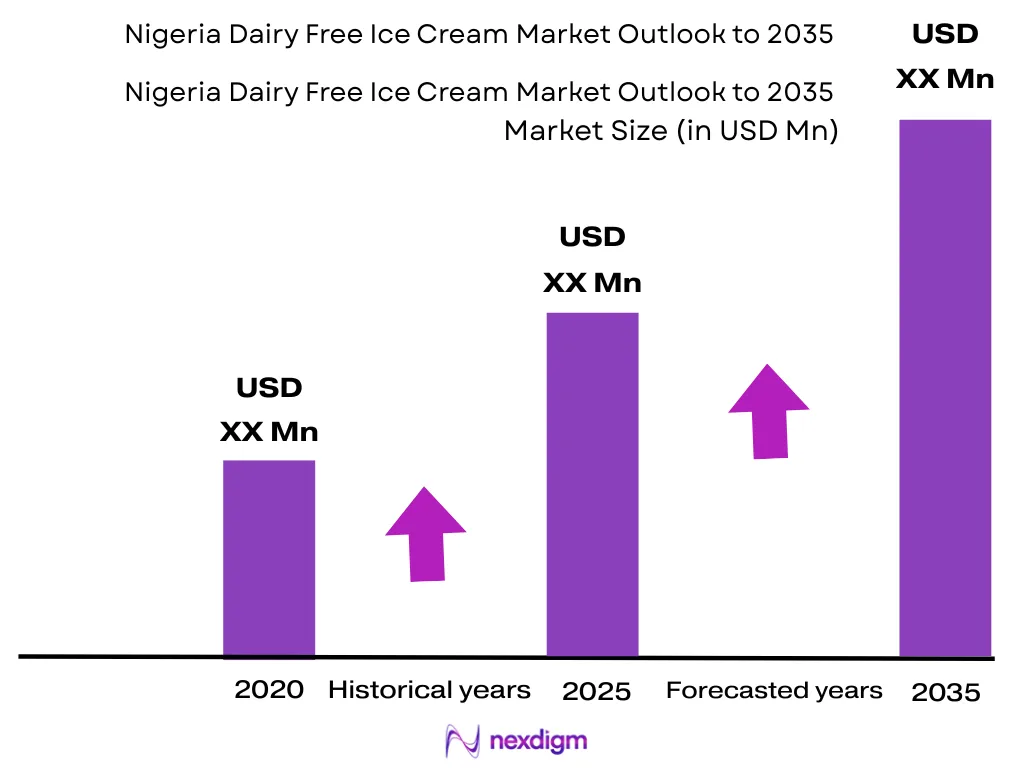
The Nigeria Dairy Free Ice Cream Market was valued at approximately USD ~ million in 2024, compared to USD ~ million in 2023, based on industry-level assessment of plant-based frozen dessert sales and retail distribution trends. The market is driven by increasing awareness regarding lactose intolerance, growing adoption of vegan and flexitarian diets, and rising demand for healthier dessert alternatives. Expansion of modern retail chains, growth in e-commerce grocery platforms, and increasing availability of coconut-, almond-, oat-, and soy-based ice cream products continue to support category expansion across major urban centers.
Market Segmentation
By Base Ingredient Type
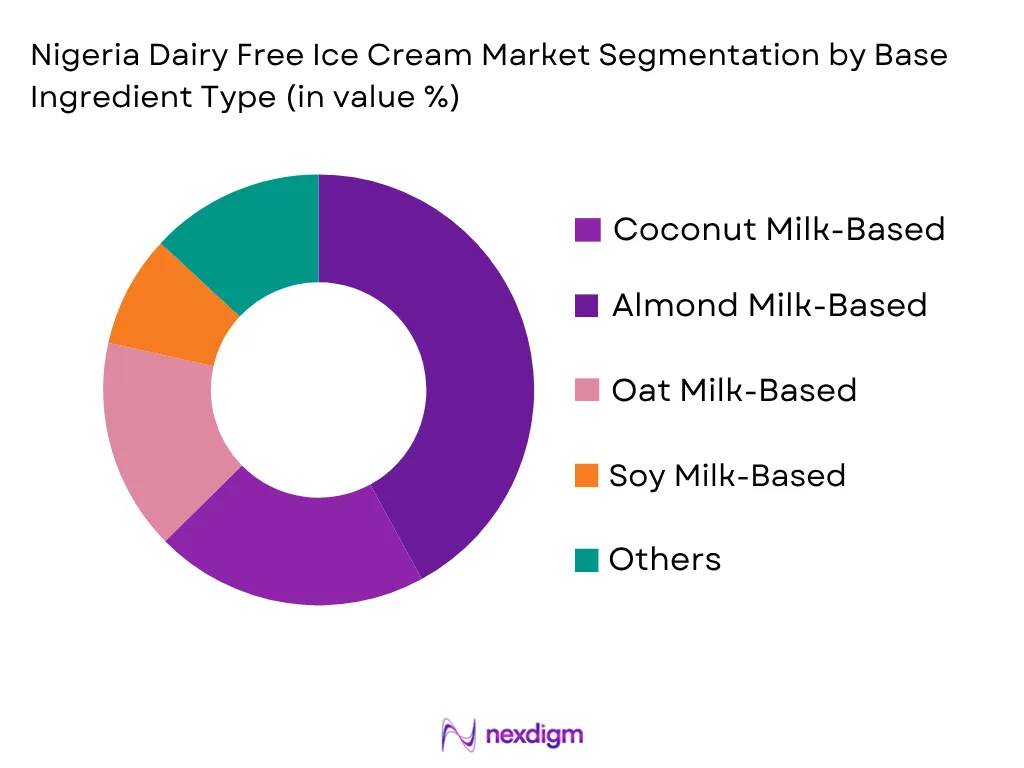
Nigeria Dairy Free Ice Cream Market is segmented by plant-based source into coconut milk-based, almond milk-based, oat milk-based, soy milk-based, cashew milk-based, and mixed plant-based blends. Recently, coconut milk-based dairy-free ice cream has maintained the dominant market share under this segmentation due to its creamy texture, affordability relative to certain imported alternatives, and familiarity among consumers. Coconut-based formulations closely replicate the mouthfeel of traditional dairy ice cream, making them highly attractive to first-time buyers transitioning toward plant-based products. Manufacturers also prefer coconut milk because it supports a wide range of flavor profiles and aligns with clean-label positioning. Additionally, coconut ingredients are widely recognized in African food culture, improving consumer acceptance. The segment benefits from strong compatibility with premium, indulgent, and health-oriented product offerings, contributing to its leadership within Nigeria’s dairy-free frozen dessert category.
By Distribution Channel
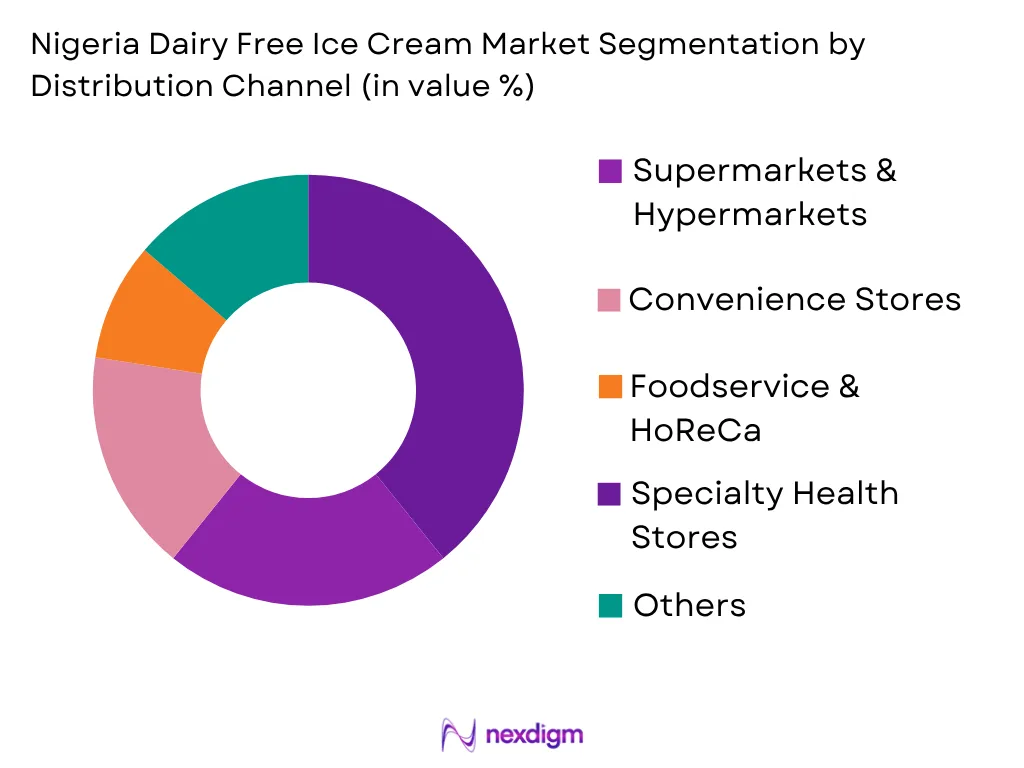
Nigeria Dairy Free Ice Cream Market is segmented by distribution channel into supermarkets & hypermarkets, convenience stores, specialty health stores, online retail & e-commerce, foodservice & HoReCa, and independent grocery stores. Recently, supermarkets & hypermarkets have emerged as the dominant distribution channel due to their extensive product assortment, superior cold-chain capabilities, and strong consumer trust. Large retail chains provide dedicated shelf space for premium and health-focused food products, improving visibility for dairy-free ice cream brands. Consumers also benefit from product comparisons, promotional campaigns, and wider flavor availability. Furthermore, international and domestic brands prioritize supermarket partnerships to achieve scale and reach affluent urban consumers. The continued expansion of organized retail infrastructure in major cities further strengthens the leadership of this segment.
Competitive Landscape
The Nigeria Dairy Free Ice Cream Market remains moderately fragmented, with international dairy-free brands competing alongside emerging regional plant-based food companies. Competition is driven by product innovation, flavor diversification, premium positioning, distribution expansion, and ingredient sourcing strategies. Companies are increasingly focusing on clean-label formulations, sustainable packaging, and enhanced nutritional profiles to differentiate their offerings and strengthen brand loyalty.
| Company | Establishment Year | Headquarters | Plant-Based Base Portfolio | Dairy-Free SKU Count | Distribution Reach | Premium Product Portfolio | Vegan Certification | Packaging Sustainability |
| Alpro | 1980 | ~ | ~ | ~ | ~ | ~ | ~ | ~ |
| Oatly | 1994 | ~ | ~ | ~ | ~ | ~ | ~ | ~ |
| Halo Top Dairy Free | 2012 | ~ | ~ | ~ | ~ | ~ | ~ | ~ |
| So Delicious | 1987 | ~ | ~ | ~ | ~ | ~ | ~ | ~ |
| Coconut Bliss | 2005 | ~ | ~ | ~ | ~ | ~ | ~ | ~ |
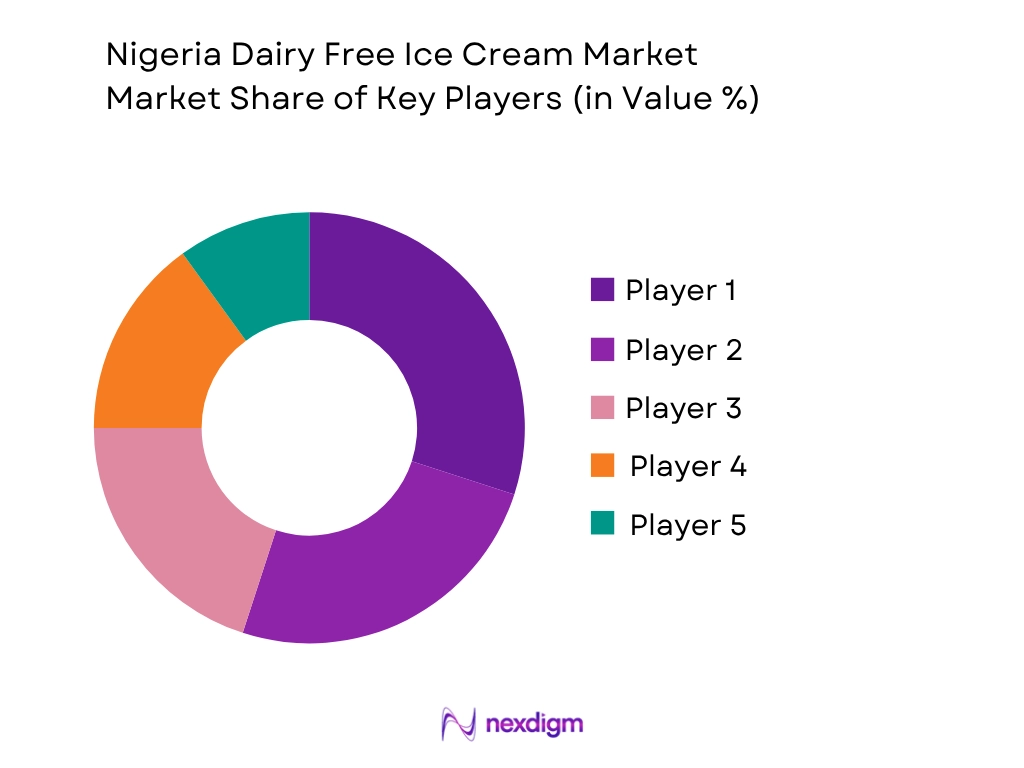
Nigeria Dairy Free Ice Cream Market Analysis
Growth Drivers
Rising Urbanization and Expansion of Modern Retail Infrastructure
Urbanization is a significant driver of the Nigeria Dairy Free Ice Cream Market because plant-based frozen desserts are primarily consumed in urban areas where modern retail channels, cold-chain infrastructure, and premium food products are more accessible. Nigeria’s urban population reached 146.5 million people, while the total population stood at 232.7 million people. Urban population growth remained at 3.4 annually, reflecting continued migration toward cities where dairy-free products have stronger visibility. Major urban centers such as Lagos, Abuja, Port Harcourt, and Ibadan are witnessing expansion of supermarkets, hypermarkets, specialty food stores, and organized grocery chains that stock imported and locally produced dairy-free ice cream products. Additionally, Nigeria’s GDP reached USD 252.3 billion, while GDP growth stood at 4.1, indicating increasing economic activity that supports premium food consumption. Rising urban household exposure to international food trends, vegan diets, and lactose-free alternatives is encouraging retailers to allocate more freezer space to dairy-free products. The combination of a rapidly expanding urban consumer base, improved retail penetration, and growing purchasing power creates favorable conditions for sustained demand for plant-based ice cream products across Nigeria.
Increasing Health Awareness and Growth of Lactose-Free Consumption
Growing consumer awareness regarding digestive health, lactose intolerance, wellness-focused diets, and plant-based nutrition is supporting demand for dairy-free ice cream products across Nigeria. Nigeria’s population reached 232.7 million people, creating a large consumer base for alternative food products. Rising internet accessibility is also accelerating health-related information dissemination, with 41 people out of every 100 Nigerians using the internet. Digital access enables consumers to learn about lactose-free diets, vegan lifestyles, and plant-based nutrition trends. Furthermore, Nigeria received USD 21.3 billion in personal remittances, increasing household spending capacity and supporting purchases of premium food categories. Economic growth also contributes to changing dietary preferences, with GDP growth recorded at 4.1 and GNI per capita reaching USD 1,700. Consumers in middle-income urban households increasingly seek products perceived as healthier, lower in allergens, and environmentally sustainable. As awareness regarding dairy sensitivities and alternative nutrition continues to expand, manufacturers are introducing coconut-, almond-, soy-, and oat-based frozen desserts to address evolving dietary requirements and health-conscious purchasing behavior.
Market Challenges
Inflationary Pressure and Reduced Consumer Purchasing Power
One of the major challenges facing the Nigeria Dairy Free Ice Cream Market is the declining affordability of premium frozen dessert products due to persistent inflationary pressures. Consumer inflation stood at 33.2, while food inflation reached approximately 40 during the period. Dairy-free ice cream products generally depend on imported ingredients such as almond extracts, oat concentrates, stabilizers, flavorings, and specialty plant proteins, making them vulnerable to inflation and currency depreciation. Nigeria’s GDP per capita remained at USD 1,084, highlighting the limited purchasing power of a large portion of consumers. Industry observations indicate that frozen dessert consumption has faced pressure as rising food costs redirected household spending toward essential goods. For dairy-free products, which are often positioned as premium offerings, inflation directly affects consumer willingness to pay. In addition, Nigeria’s population of 232.7 million people includes a substantial lower-income demographic segment, creating affordability constraints for non-essential frozen dessert products. These macroeconomic conditions limit penetration beyond affluent urban consumers and pose challenges for manufacturers attempting to scale distribution nationwide.
Inadequate Cold-Chain and Electricity Infrastructure
The dairy-free ice cream industry depends heavily on uninterrupted refrigeration, transportation, and storage systems. Nigeria continues to face infrastructure limitations that affect frozen food distribution and product quality. Access to electricity covered only 61.2 people out of every 100 residents, leaving a substantial share of consumers and retailers dependent on alternative power sources. The country’s population exceeded 232.7 million people, creating significant logistical requirements for nationwide frozen food distribution. Urban population reached 146.5 million people, yet cold-chain facilities remain concentrated in a limited number of metropolitan regions. Dairy-free ice cream products require temperature-controlled warehousing and transportation to maintain consistency, flavor integrity, and shelf stability. Frequent power interruptions increase operational complexity for manufacturers, distributors, supermarkets, and convenience stores. Additionally, merchandise trade represented 37.5 of GDP, highlighting Nigeria’s reliance on imported food ingredients and products that require efficient logistics systems. The limited reach of advanced cold-chain networks restricts product availability outside major cities and increases wastage risks during transportation and storage. These infrastructure constraints continue to slow wider adoption of dairy-free frozen dessert products across secondary and rural markets.
Market Opportunities
Expansion of E-Commerce and Digital Grocery Platforms
The rapid growth of digital connectivity in Nigeria presents a significant opportunity for dairy-free ice cream brands to reach consumers beyond traditional retail channels. 41 out of every 100 Nigerians use the internet, while mobile cellular subscriptions reached 70.8 per 100 people. These indicators demonstrate increasing digital engagement and smartphone accessibility. Nigeria’s urban population of 146.5 million people provides a substantial customer base for online grocery services and app-based food delivery platforms. E-commerce channels enable dairy-free ice cream manufacturers to target health-conscious consumers directly through specialized promotions, subscription models, and premium product bundles. Furthermore, personal remittances totaling USD 21.3 billion support household spending on premium imported and specialty food products. Online platforms also reduce dependence on limited shelf space in physical stores and allow brands to showcase broader flavor portfolios and plant-based ingredient benefits. As digital payment systems improve and internet penetration expands, e-commerce is becoming an effective channel for increasing accessibility and awareness of dairy-free frozen desserts among younger, urban consumers. This digital transformation creates long-term opportunities for market expansion without requiring extensive physical retail investments.
Rising Demand for Plant-Based and Functional Food Products
The increasing focus on health, wellness, and dietary diversification creates strong opportunities for dairy-free ice cream manufacturers operating in Nigeria. Nigeria’s population of 232.7 million people represents one of the largest consumer markets globally. GDP growth of 4.1 and GNI of USD 396.2 billion indicate continued economic activity that supports consumption of innovative food categories. Additionally, internet penetration of 41 users per 100 people enables greater exposure to global trends involving vegan diets, lactose-free nutrition, and functional foods. Manufacturers can capitalize on this environment by introducing products fortified with plant proteins, vitamins, probiotics, and natural ingredients. Nigeria’s urban population exceeded 146.5 million people, creating concentrated demand centers where premium wellness products gain faster acceptance. The growth of modern grocery retail and specialty food stores further improves visibility for dairy-free offerings. As consumers increasingly prioritize digestive health, allergen-free alternatives, and sustainable consumption patterns, plant-based frozen desserts are well positioned to benefit from broader shifts toward health-oriented food purchasing behavior. Current demographic and economic indicators suggest substantial room for category expansion within Nigeria’s evolving food and beverage landscape.
Future Outlook
The Nigeria Dairy Free Ice Cream Market is expected to demonstrate strong growth throughout the forecast period. Rising urbanization, increasing consumer awareness regarding lactose intolerance, and growing demand for plant-based food products are anticipated to support market expansion. Product innovation involving oat, almond, soy, and coconut-based formulations is likely to increase category penetration. Expansion of organized retail infrastructure, e-commerce grocery platforms, and premium foodservice channels will further strengthen market accessibility. Sustainable packaging and clean-label product positioning are also expected to become increasingly important competitive differentiators.
Major Players
- Oatly
- Alpro
- So Delicious Dairy Free
- Halo Top Dairy Free
- Coconut Bliss
- Ben & Jerry’s Non-Dairy
- Swedish Glace
- Booja-Booja
- Wicked Kitchen
- Cado
- NadaMoo!
- Planet Oat Frozen Desserts
- Van Leeuwen Non-Dairy
- Perfect World Ice Cream
- The Coconut Collaborative
Key Target Audience
- Dairy Free Ice Cream Manufacturers
- Plant-Based Ingredient Suppliers
- Frozen Dessert Brands
- Retail Chains and Supermarkets
- Foodservice & HoReCa Operators
- E-Commerce Grocery Platforms
- Investments and Venture Capitalist Firms
- Government and Regulatory Bodies (National Agency for Food and Drug Administration and Control (NAFDAC), Federal Ministry of Industry, Trade and Investment, Standards Organisation of Nigeria)
Research Methodology
Step 1: Identification of Key Variables
The initial phase involves constructing an ecosystem map encompassing all major stakeholders within the Nigeria Dairy Free Ice Cream Market. Extensive desk research is conducted using industry publications, company reports, trade statistics, and proprietary databases. The objective is to identify critical variables influencing demand, supply, distribution, and consumer purchasing behavior.
Step 2: Market Analysis and Construction
Historical industry information is compiled and analyzed to understand market penetration, retail availability, product innovation trends, and revenue generation mechanisms. Demand-side and supply-side assessments are conducted to develop reliable market estimates. Segment-level analysis is performed to capture differences across product categories and distribution channels.
Step 3: Hypothesis Validation and Expert Consultation
Market hypotheses are validated through computer-assisted telephone interviews (CATIs) and consultations with manufacturers, distributors, retailers, ingredient suppliers, and industry experts. These interactions provide practical insights regarding consumer preferences, operational dynamics, and emerging opportunities within the dairy-free frozen dessert ecosystem.
Step 4: Research Synthesis and Final Output
The final phase involves integrating primary and secondary research findings using triangulation methodologies. Data consistency checks and validation exercises are performed to enhance reliability. The resulting market assessment provides a comprehensive view of market structure, competitive dynamics, growth opportunities, and future outlook.

- Executive Summary
- Research Methodology (Market Definitions and Assumptions, Abbreviations, Market Sizing Approach, Top-Down Analysis, Bottom-Up Analysis, Demand-Side Assessment, Supply-Side Assessment, Primary Industry Interviews, Data Triangulation, Forecasting Framework, Limitations and Future Conclusions)

- Definition and Scope
- Market Evolution and Industry Genesis
- Timeline of Major Industry Developments
- Dairy-Free Frozen Dessert Value Chain Analysis
- Plant-Based Ingredient Supply Chain Analysis

- Growth Drivers (Urban Population Growth, Rising Lactose Intolerance Awareness, Expansion of Modern Retail, Growing Vegan and Flexitarian Trends, Increasing Demand for Premium Frozen Desserts)
- Market Challenges (Cold Chain Infrastructure Gaps, Import Dependency of Plant-Based Ingredients, High Product Premiumization, Limited Consumer Awareness Outside Urban Centers, Currency Volatility)
- Market Opportunities (Coconut-Based Product Innovation, Expansion into Tier-II Cities, Growth of Online Grocery Platforms, Functional and Clean Label Ice Creams, Foodservice Penetration)
- Market Trends (Oat Milk Adoption, Premium Flavor Innovations, Sustainable Packaging, Low-Sugar Formulations, Clean Label Positioning)
- Government Regulations (NAFDAC Product Registration Standards, Food Labeling Regulations, Import Regulations for Food Products, Food Safety Compliance Standards, Packaging and Environmental Requirements)
- SWOT Analysis
- Porter’s Five Forces Analysis
- PESTLE Analysis
- Stakeholder Ecosystem
- Competition Ecosystem

- By Market Value (2020-2025)
- By Volume Consumption (2020-2025)
- By Average Selling Price (2020-2025)

- By Base Ingredient Type (In Value %)
Coconut Milk-Based
Almond Milk-Based
Oat Milk-Based
Soy Milk-Based
Cashew Milk-Based
Rice Milk-Based
Mixed Plant-Based Blends - By Flavor Type (In Value %)
Vanilla
Chocolate
Fruit-Based Flavors
Caramel & Toffee
Coffee
Nut-Based Flavors
Exotic & Premium Flavors - By Distribution Channel (In Value %)
Supermarkets & Hypermarkets
Convenience Stores
Specialty Health & Organic Stores
Online Retail & E-Commerce
Foodservice & HoReCa
Independent Grocery Stores
Modern Trade Chains
Quick Commerce Platforms - By Region (In Value %)
Lagos
Abuja FCT
South West Nigeria
South South Nigeria
South East Nigeria
North Central Nigeria|
Northern Nigeria - By Product Type (In Value %)
Take-Home Tubs
Ice Cream Bars & Sticks
Cones
Ice Cream Sandwiches
Bulk/Scooping Packs
Frozen Dessert Bites
Family Packs
Single-Serve Cups

- Market Share of Major Players (By Value, Volume, Product Category, Distribution Channel)
- Cross Comparison Parameters (Product Portfolio Breadth, Dairy-Free SKU Count, Plant-Based Ingredient Diversity, Retail Distribution Reach, E-Commerce Presence, Manufacturing and Sourcing Capability, Premium Product Positioning, Innovation & New Product Launch Frequency)
- SWOT Analysis of Major Players
- Pricing Analysis by SKU and Pack Size
- Detailed Profiles of Major Companies
Unilever (Ben & Jerry’s Non-Dairy)
Oatly
Alpro
So Delicious Dairy Free
Halo Top Dairy Free
Coconut Bliss
Swedish Glace
Wicked Kitchen
Cado
Planet Oat Frozen Desserts
Van Leeuwen Non-Dairy
Booja-Booja
NadaMoo!
The Coconut Collaborative
Perfect World Ice Cream

- Market Share of Major Players (By Value, Volume, Product Category, Distribution Channel)
- Cross Comparison Parameters (Product Portfolio Breadth, Dairy-Free SKU Count, Plant-Based Ingredient Diversity, Retail Distribution Reach, E-Commerce Presence, Manufacturing and Sourcing Capability, Premium Product Positioning, Innovation & New Product Launch Frequency)
- SWOT Analysis of Major Players
- Pricing Analysis by SKU and Pack Size

- By Market Value (2026-2035)
- By Volume Consumption (2026-2035)
- By Average Selling Price (2026-2035)


 Request a Sample
 Ask for Customization
 Get a Quote
 Enquire Now