

 Download PDF
 Download PDF
Market Overview
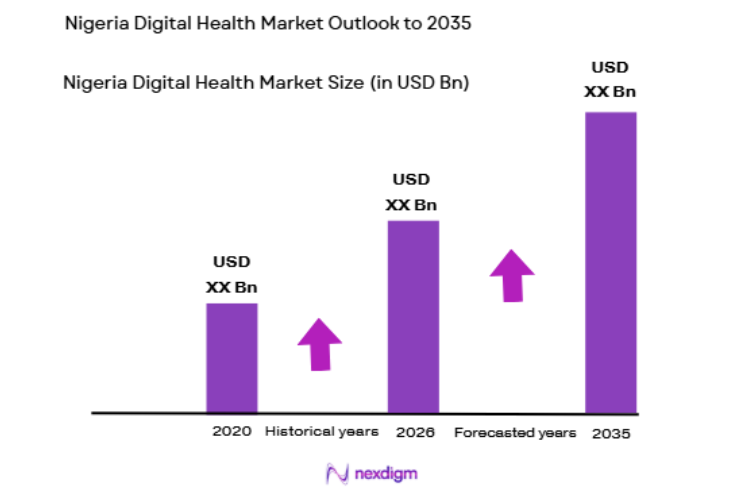
Nigeria’s digital health market is valued at approximately USD ~ billion based on a recent historical assessment, reflecting strong growth driven by expanding mobile connectivity, increasing healthcare demand, and growing digital infrastructure investments. The adoption of telemedicine platforms, electronic medical records, and remote diagnostics has accelerated due to healthcare access gaps and population growth. Government programs promoting health digitization and partnerships between technology companies and healthcare providers further support the expansion of digital platforms delivering accessible and efficient healthcare services across the country.
Major urban centers such as Lagos, Abuja, and Port Harcourt dominate Nigeria’s digital health ecosystem because of stronger telecommunications infrastructure, higher smartphone adoption, and concentration of healthcare facilities and technology startups. Lagos serves as the primary innovation hub where most health technology companies operate, supported by venture funding and startup accelerators. Abuja’s role as the administrative center encourages policy development and digital health initiatives, while Port Harcourt benefits from strong private healthcare investment and growing adoption of digital healthcare platforms by hospitals and clinics.
Market Segmentation
By Product Type
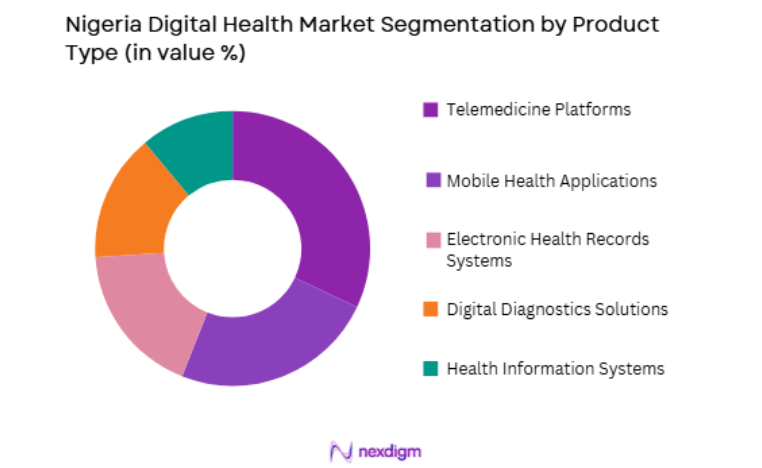
Nigeria Digital Health Market is segmented by product type into Telemedicine Platforms, Mobile Health Applications, Electronic Health Records Systems, Digital Diagnostics Solutions, and Health Information Systems. Recently, Telemedicine Platforms have a dominant market share due to factors such as demand patterns, brand presence, infrastructure availability, and consumer preference. Telemedicine services allow patients to consult healthcare professionals remotely, reducing travel barriers and improving healthcare accessibility. Increasing smartphone penetration and improved internet connectivity have encouraged hospitals and startups to deploy teleconsultation platforms nationwide. Telemedicine also supports rural healthcare delivery where medical professionals are scarce. Government interest in improving healthcare access and the rapid expansion of digital startups further strengthen telemedicine adoption across Nigeria’s healthcare ecosystem.
By End User
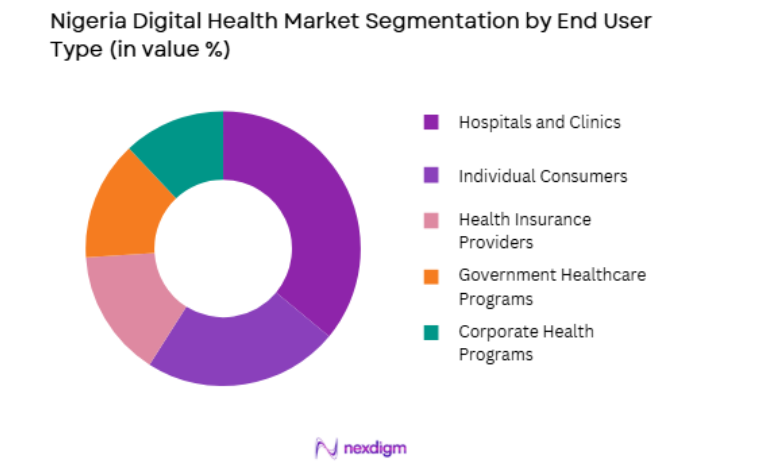
Nigeria Digital Health Market is segmented by end user into Hospitals and Clinics, Individual Consumers, Health Insurance Providers, Government Healthcare Programs, and Corporate Health Programs. Recently, Hospitals and Clinics have a dominant market share due to factors such as demand patterns, brand presence, infrastructure availability, and consumer preference. Healthcare facilities increasingly adopt digital platforms to improve operational efficiency, patient management, and diagnostic coordination. Hospitals utilize telemedicine services, digital patient records, and remote monitoring systems to enhance clinical workflows. Increasing patient loads and demand for efficient healthcare services encourage hospitals to invest in digital infrastructure. Partnerships between healthcare providers and technology companies further accelerate digital platform deployment across hospital networks nationwide.
Competitive Landscape
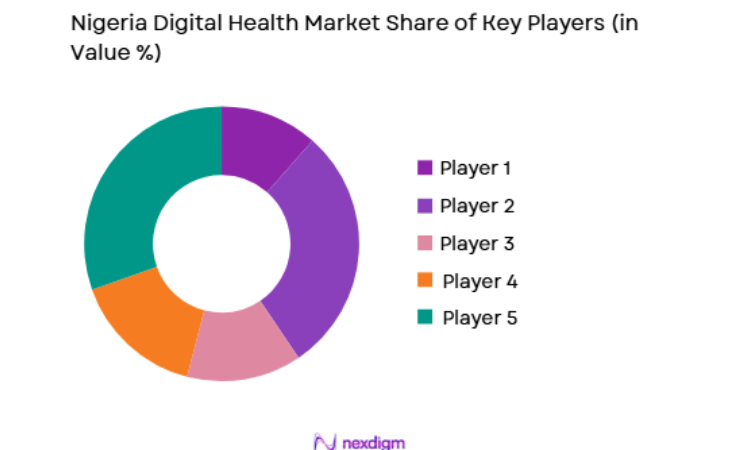
Nigeria’s digital health market is moderately fragmented with the presence of emerging health technology startups alongside established global digital health platforms. Companies focus on telemedicine platforms, digital patient management tools, remote diagnostics, and healthcare data systems. Strategic partnerships between hospitals, telecommunications companies, and technology firms are shaping competition. Venture capital funding and health innovation hubs are encouraging startup growth, while established healthcare technology providers continue expanding their digital healthcare solutions to strengthen market presence across Nigeria.
| Company Name | Establishment Year | Headquarters | Technology Focus | Market Reach | Key Products | Revenue | Digital Health Platform Type |
| Helium Health | 2016 | Lagos, Nigeria | ~ | ~ | ~ | ~ | ~ |
| mDoc Healthcare | 2015 | Lagos, Nigeria | ~ | ~ | ~ | ~ | ~ |
| Reliance Health | 2016 | Lagos, Nigeria | ~ | ~ | ~ | ~ | ~ |
| 54gene Health | 2019 | Lagos, Nigeria | ~ | ~ | ~ | ~ | ~ |
| Doctoora | 2018 | Lagos, Nigeria | ~ | ~ | ~ | ~ | ~ |
Nigeria Digital Health Market Analysis
Growth Drivers
Nigeria’s Rapid Mobile Internet Expansion Enabling Digital Healthcare Delivery
Nigeria’s expanding mobile broadband coverage and smartphone penetration enable digital health platforms to deliver teleconsultations diagnostics access and remote care services across underserved communities nationwide. Strong telecom infrastructure investments by private operators and government connectivity programs improve reliable data availability for health applications supporting continuous patient engagement nationwide healthcare access. This connectivity growth allows telemedicine providers digital pharmacies and remote diagnostic platforms to reach populations previously limited by physical hospital shortages and workforce gaps nationwide. Health startups increasingly integrate artificial intelligence triage systems electronic medical records and virtual consultation tools improving clinical efficiency while reducing travel costs for patients nationwide. Growing acceptance of remote consultations among urban professionals and rural populations strengthens digital health utilization supporting scalable care models across diagnostics services for broader access. International health technology companies partner with Nigerian startups to deploy telehealth infrastructure cloud based medical platforms and remote patient monitoring improving nationwide service availability significantly. Government digital health strategies promoting e health records telemedicine adoption and health data interoperability further stimulate investments encouraging hospitals insurers and technology developers to collaborate. As connectivity affordability improves digital platforms will continue bridging geographic healthcare gaps supporting early diagnosis preventive services and cost efficient treatment delivery across Nigeria nationwide.
Government Initiatives Supporting Digital Healthcare Infrastructure Development
Government health digitization policies and national digital economy strategies increasingly encourage adoption of electronic health systems and telemedicine services across Nigeria’s healthcare sector. Public health agencies are introducing health information exchanges and digital patient records to improve medical data coordination between hospitals clinics laboratories and pharmacies nationwide. Federal programs focusing on expanding healthcare access in rural communities promote telemedicine adoption allowing healthcare providers to remotely deliver consultations diagnostics and monitoring services. National insurance programs are gradually integrating digital platforms to streamline patient registration claims processing and healthcare provider coordination improving administrative efficiency. Partnerships between government health authorities technology firms and telecommunications companies are accelerating deployment of connected healthcare solutions and digital medical platforms. Government backed startup incubators and digital innovation programs are supporting health technology entrepreneurs developing scalable digital healthcare solutions. Regulatory support for telemedicine and digital medical services is creating a favorable environment encouraging healthcare institutions to adopt digital platforms. Continued policy focus on health digitization will strengthen healthcare infrastructure while enabling digital services to expand medical accessibility and operational efficiency across Nigeria.
Market Challenges
Limited Healthcare Infrastructure and Digital Integration Barriers
Nigeria’s healthcare system faces structural infrastructure limitations that restrict the full implementation of digital health solutions across the country. Many healthcare facilities particularly in rural regions operate with limited digital systems connectivity and trained personnel capable of managing advanced health technologies. Hospitals often rely on manual records fragmented information systems and limited interoperability between healthcare providers laboratories and pharmacies. These operational gaps reduce the efficiency of digital platforms that depend on integrated data systems for effective service delivery. Healthcare professionals also require specialized training to adopt telemedicine platforms electronic health records and digital diagnostic technologies effectively. Limited investment in hospital technology infrastructure further slows digital transformation across the healthcare ecosystem. Regulatory and operational inconsistencies between healthcare institutions can create challenges for digital platform integration and interoperability. Without systematic infrastructure improvements and coordinated digital adoption strategies the expansion of nationwide digital healthcare services may face operational barriers.
Data Privacy Concerns and Regulatory Compliance Complexity
Digital health services require secure patient data management systems which presents significant regulatory and privacy challenges within Nigeria’s evolving healthcare technology landscape. Medical platforms collect sensitive patient information including medical history diagnostics and treatment records requiring strong cybersecurity systems and compliance frameworks. Limited awareness regarding digital data protection among healthcare providers and patients can create concerns around privacy and information misuse. Healthcare technology companies must comply with national data protection regulations while ensuring patient confidentiality and secure digital health records. Developing secure digital infrastructures and maintaining compliance frameworks require significant financial investment particularly for emerging startups. Hospitals and health technology firms must also establish standardized protocols for secure patient data exchange across digital platforms. Cybersecurity risks including unauthorized data access and system vulnerabilities remain ongoing concerns in digital healthcare ecosystems. Addressing these regulatory and security challenges is essential for strengthening patient trust and enabling widespread adoption of digital health services nationwide.
Opportunities
Expansion of Telemedicine and Remote Healthcare Services Across Rural Communities
Nigeria’s large rural population with limited access to physical healthcare facilities creates substantial opportunities for digital healthcare platforms delivering remote medical services. Telemedicine solutions allow patients in underserved regions to access professional medical consultations diagnostics and treatment guidance through digital communication platforms. Remote healthcare technologies also enable physicians to monitor chronic disease patients and deliver follow up care without requiring hospital visits. Digital pharmacies and diagnostic platforms can further expand rural healthcare access by connecting patients to medication delivery and laboratory testing services. Telecommunications infrastructure expansion across rural areas supports mobile health platforms that can deliver healthcare services through smartphones and digital applications. Health startups are increasingly developing localized telemedicine solutions tailored to Nigeria’s diverse regional healthcare needs. Government healthcare access initiatives further support the adoption of remote healthcare technologies improving medical coverage nationwide. Continued growth in telemedicine services presents major opportunities for digital health providers to transform healthcare accessibility across Nigeria.
Integration of Artificial Intelligence and Data Analytics in Healthcare Platforms
Artificial intelligence and health data analytics technologies present major opportunities for improving diagnostic accuracy clinical decision making and healthcare service efficiency in Nigeria. AI powered diagnostic systems can analyze medical data imaging results and patient symptoms enabling earlier detection of diseases and more accurate treatment planning. Hospitals and digital health platforms can use predictive analytics to monitor patient health trends and optimize resource allocation within healthcare facilities. Health technology companies are developing AI based triage systems that assist healthcare professionals in prioritizing patient care and improving response times. Data analytics platforms also enable healthcare providers to identify population health trends supporting public health planning and disease prevention initiatives. Integration of digital patient records with AI tools enhances medical research capabilities and treatment innovation. Increasing collaboration between technology developers hospitals and research institutions will accelerate AI adoption across Nigeria’s healthcare ecosystem. These innovations create significant opportunities for digital health platforms to improve healthcare outcomes and operational efficiency nationwide.
Future Outlook
Nigeria’s digital health market is expected to experience strong expansion over the coming years driven by rising smartphone penetration, healthcare digitization programs, and increasing investment in health technology startups. Telemedicine platforms, digital diagnostics, and electronic health records systems will continue transforming healthcare delivery. Government initiatives promoting digital health infrastructure and insurance integration will support adoption across hospitals and clinics. Growing venture capital funding and partnerships between technology companies and healthcare providers will further accelerate innovation and market growth.
Major Players
- Helium Health
- Reliance Health
- mDoc Healthcare
- Doctoora
- 54gene Health
- Zipline Health Nigeria
- LifeBank
- DrugStoc
- Field Intelligence
- Babymigo
- Healthtracka
- TeleMed Nigeria
- CarePoint Nigeria
- Digital Diagnostics Africa
- NucleusIS Nigeria
Key Target Audience
- Healthcare providers and hospital networks
- Pharmaceutical and medical technology companies
- Health insurance companies
- Digital health platform developers
- Investments and venture capitalist firms
- Government and regulatory bodies
- Telecommunications companies
Research Methodology
Step 1: Identification of Key Variables
The research process begins with identifying critical variables influencing the Nigeria Digital Health Market including healthcare infrastructure development, mobile connectivity, telemedicine adoption, government digital health policies, and technology investments shaping the national digital healthcare ecosystem.
Step 2: Market Analysis and Construction
Primary and secondary research sources including government health databases, technology investment reports, and healthcare industry publications are analyzed to construct the overall Nigeria Digital Health Market structure and evaluate sector performance and technology adoption patterns.
Step 3: Hypothesis Validation and Expert Consultation
Industry experts including healthcare professionals, digital health entrepreneurs, hospital administrators, and health technology specialists are consulted to validate assumptions and confirm key trends shaping the Nigeria Digital Health Market landscape.
Step 4: Research Synthesis and Final Output
All validated data points are synthesized to produce comprehensive insights into market size, segmentation, competitive landscape, growth drivers, and future outlook for the Nigeria Digital Health Market.

- Executive Summary
- Research Methodology (Definitions, Scope, Industry Assumptions, Market Sizing Approach, Primary & Secondary Research Framework, Data Collection & Verification Protocol, Analytic Models & Forecast Methodology, Limitations & Research Validity Checks)

- Market Definition and Scope
- Value Chain & Stakeholder Ecosystem
- Regulatory / Certification Landscape
- Sector Dynamics Affecting Demand

- Growth Drivers
Rapid Growth in Mobile Phone and Internet Penetration
Government Initiatives to Expand Digital Healthcare Access
Increasing Demand for Remote Healthcare Services - Market Challenges
Limited Digital Infrastructure in Rural Areas
Data Privacy and Cybersecurity Concerns
Shortage of Skilled Digital Health Professionals - Market Opportunities
Expansion of Mobile Health Solutions in Underserved Regions
Integration of AI and Data Analytics in Healthcare Systems
Growth of Digital Health Startups and Innovation Hubs - Trends
Increasing Adoption of Telehealth and Mobile Health Applications
Integration of Wearables and Remote Monitoring in Healthcare Delivery - Government Regulations
- SWOT Analysis
- Porter’s Five Forces

- By Market Value, 2020-2025
- By Installed Units, 2020-2025
- By Average System Price, 2020-2025
- By System Complexity Tier, 2020-2025

- By System Type (In Value%)
Telemedicine Platforms
Electronic Health Records Systems
Mobile Health Applications
Remote Patient Monitoring Solutions
Health Information Exchange Platforms - By Platform Type (In Value%)
Cloud-Based Digital Health Platforms
Mobile-Based Health Platforms
Web-Based Healthcare Portals
On-Premise Digital Health Systems - By Fitment Type (In Value%)
Standalone Digital Health Solutions
Integrated Hospital Information Systems
Hybrid Cloud Healthcare Platforms
Portable and Wearable Digital Health Systems - By End User Segment (In Value%)
Hospitals and Clinics
Government Healthcare Agencies
Patients and Homecare Users

- Market Share Analysis
- Cross Comparison Parameters (Platform Scalability, Technology Integration Level, Data Security Standards, Pricing Models, Distribution Partnerships, Regulatory Compliance Capability, User Adoption Rate)
- SWOT Analysis of Key Competitors
- Pricing & Procurement Analysis
- Key Players
Helium Health
54gene
Reliance Health
mPharma
Zipline
Babylon Health
Teladoc Health
Amwell
GE HealthCare
Philips Healthcare
Siemens Healthineers
Medtronic
Oracle Health
Cerner Corporation
IBM Watson Health

- Hospitals Integrating Digital Platforms for Patient Management
- Government Agencies Promoting Digital Health Infrastructure
- Private Clinics Adopting Teleconsultation and Remote Monitoring Tools
- Patients Increasingly Using Mobile Health Applications for Care Access

- Forecast Market Value, 2026-2035
- Forecast Installed Units, 2026-2035
- Price Forecast by System Tier, 2026-2035
- Future Demand by Platform, 2026-2035


 Request a Sample
 Ask for Customization
 Get a Quote
 Enquire Now