
 Download PDF
Market Overview
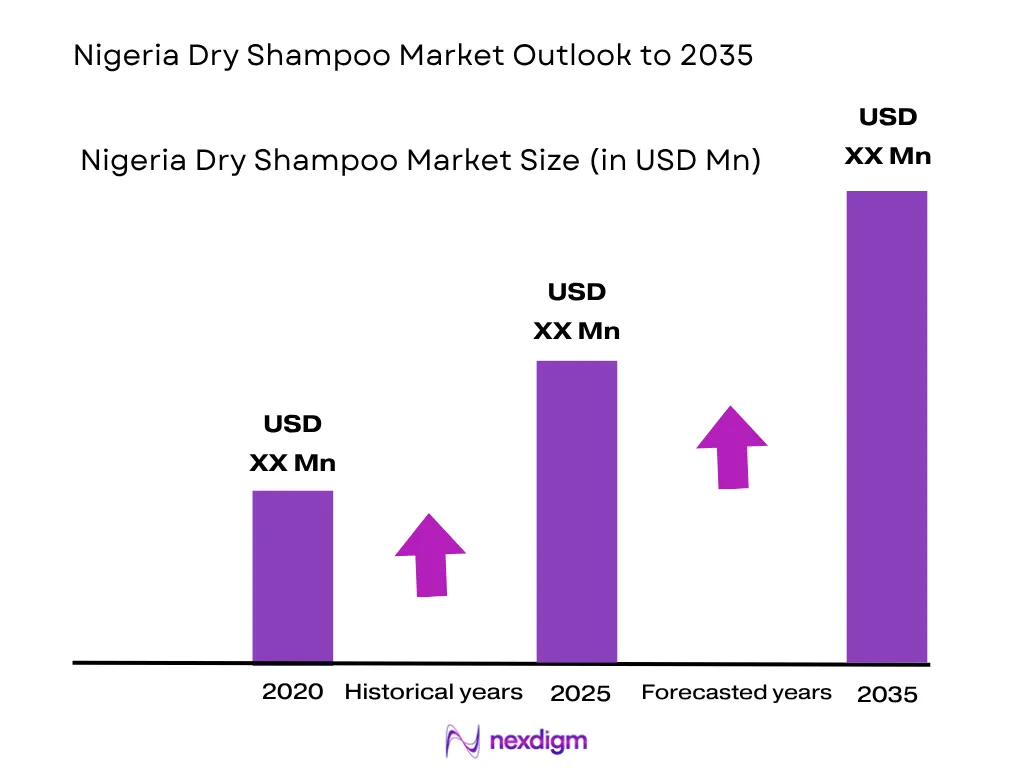
The Nigeria Dry Shampoo Market is valued at approximately USD ~ million for 2025, with analysis showing steady consumption across urban and metro regions driven by rising grooming, convenience preferences, and increased retail availability. Forecast data indicates the Nigeria Dry Shampoo Market is expected to grow at a compound annual growth rate (CAGR) of ~6.54% over the 2026–2035 period, reflecting rising penetration across demographic segments and expansion of retail and online distribution channels. Users increasingly favor dry shampoo for quick oil absorption and style refresh without water, reflecting broader haircare demand patterns in Nigeria that also benefit from urban lifestyle shifts and e‑commerce access.
Market demand is concentrated in major urban centres like Lagos, Abuja, and Port Harcourt, where higher income and greater exposure to international beauty trends shape consumer behaviour. These cities benefit from dense retail networks, stronger modern trade penetration, and more extensive import distribution channels making premium and imported dry shampoo brands more accessible compared to tier‑2 and rural markets.
Market Segmentation
By Form Type
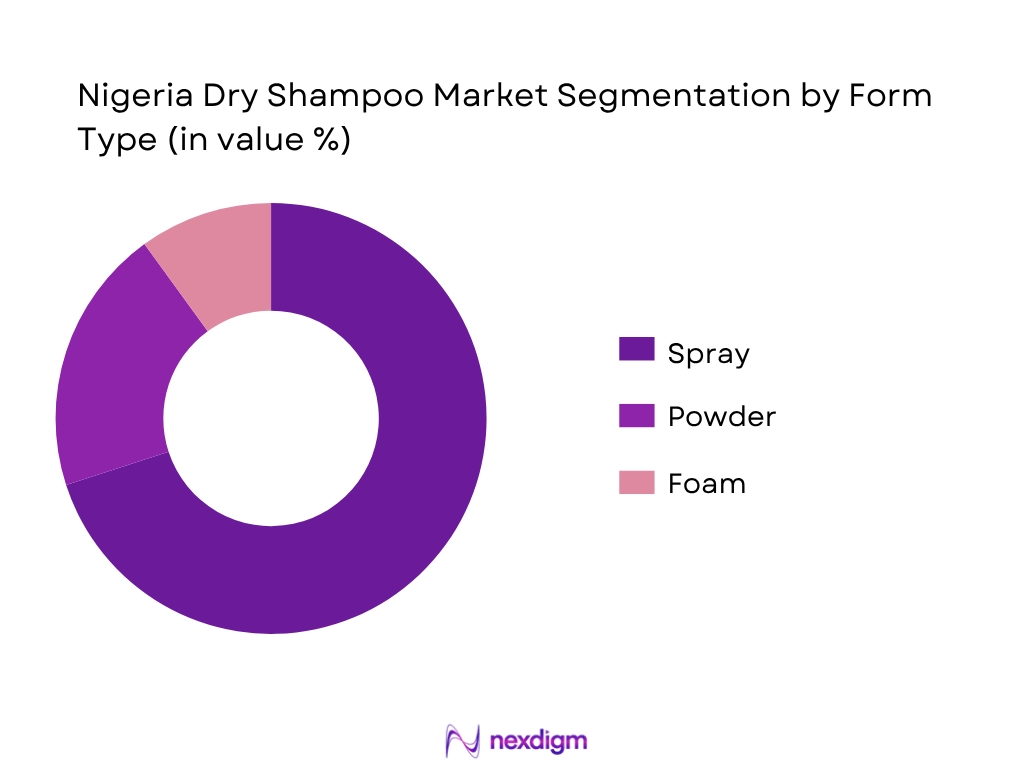
Nigeria Dry Shampoo is segmented into spray and powder variants. The spray form dominates the market share primarily due to ease of application and consumer familiarity with the format. Spray dry shampoos offer a convenient mist that quickly refreshes hair without water, making them especially popular among urban working professionals and youth. Accessibility via pharmacies, supermarkets, and online marketplaces further boosts consumer preference. In contrast, powder form though valued for natural ingredient positioning and sometimes preferred for curly or textured hair has a smaller footprint due to less brand visibility and lower distribution penetration compared to spray. Consumer education and presentation format also tilt preference toward spray, sustaining its market lead.
By Distribution Channel
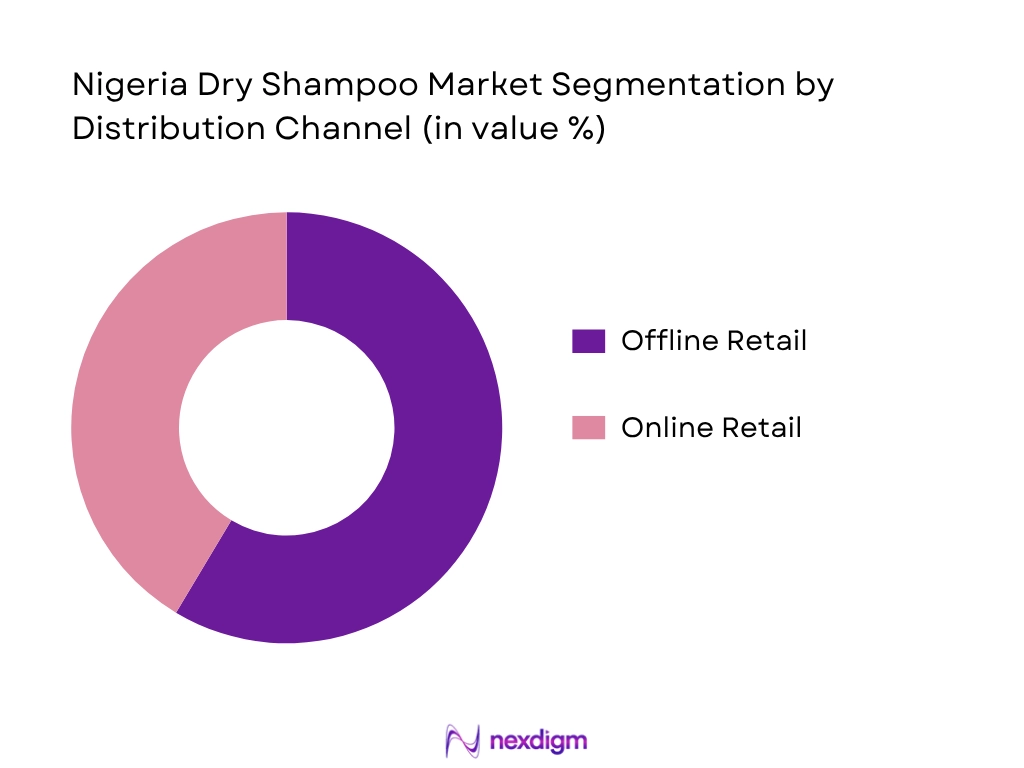
The Nigeria Dry Shampoo Market is segmented into offline and online channels. Offline retail remains the leading segment, driven by consumer habits that favour in‑store discovery and immediate purchase of haircare products. Pharmacies, supermarkets, and beauty specialty stores serve as primary touchpoints where consumers can compare brands, seek advice, and purchase on the spot, maintaining offline’s strong share. However, online retail is rapidly ascending, supported by greater internet penetration, mobile commerce, and improved logistics delivery across urban locations. E‑commerce platforms ease product variety access especially for imported or niche natural variants, and often offer competitive pricing and promotions that appeal to younger, convenience‑oriented consumers. Combined with increasing digital influence via social media and beauty influencers, online sales growth buttresses its significant share.
Competitive Landscape
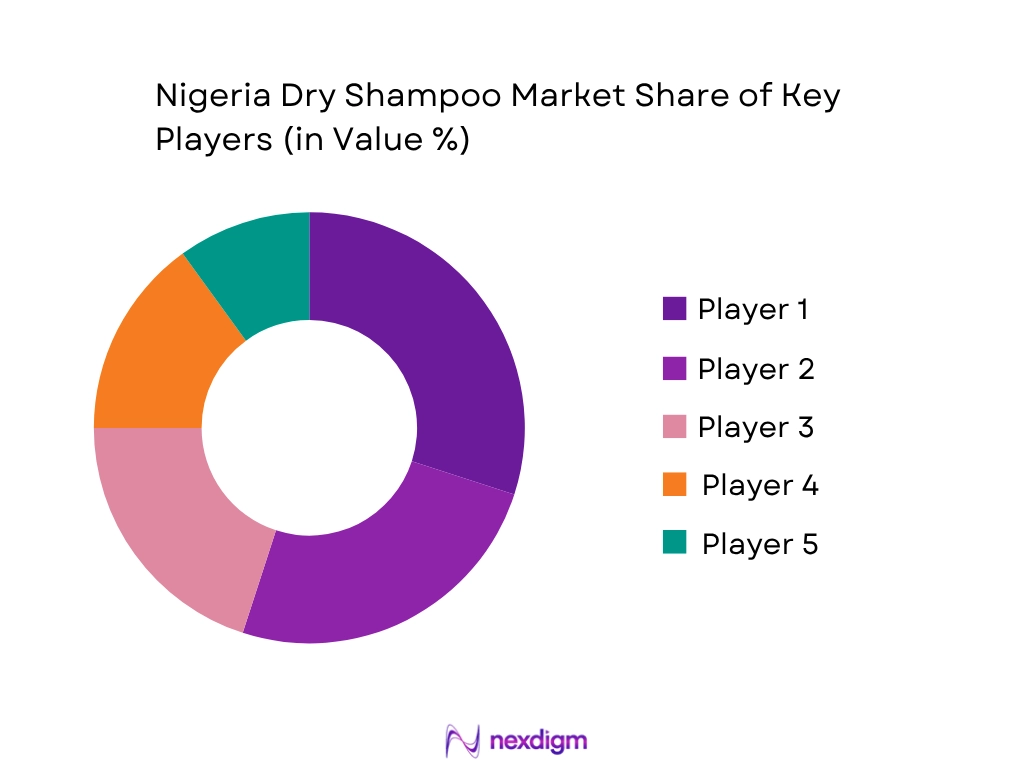
The Nigeria Dry Shampoo Market shows a moderately competitive environment with a mix of multinational personal care brands and local import distributors shaping market dynamics. Core competition stems from global beauty companies with established distribution networks complemented by smaller niche brands attempting penetration through natural or targeted formulations, especially online and salon channels.
| Company | Est. Year | Headquarters | Product Portfolio Breadth | Retail Channel Reach | Price Tier Focus | Distribution Networks | Import Origin |
| Unilever Plc | 1930s | UK/Netherlands | ~ | ~ | ~ | ~ | ~ |
| Procter & Gamble | 1837 | USA | ~ | ~ | ~ | ~ | ~ |
| L’Oréal S.A. | 1909 | France | ~ | ~ | ~ | ~ | ~ |
| Henkel AG & Co. | 1876 | Germany | ~ | ~ | ~ | ~ | ~ |
| Coty Inc. | 1904 | USA | ~ | ~ | ~ | ~ | ~ |
Nigeria Dry Shampoo Market Analysis
Growth Drivers
Urbanisation & Busy Lifestyles
Nigeria’s urban population has been increasing rapidly, driven by internal migration and economic shifts. In 2024, Nigeria’s total urban population reached 109 million people, up from 104 million in 2023, accounting for 51.2% of the total population.This means over half of Nigeria’s roughly 213 million people now live in cities such as Lagos, Abuja, and Port Harcourt. Urban consumers typically have less time for conventional hair care routines and higher exposure to global lifestyle trends. Nigeria’s capital city Lagos alone has a metropolitan population exceeding 15 million people, which translates into millions of potential buyers of quick hair refresh solutions like dry shampoo. Urban centres also concentrate formal employment; Nigeria’s labour force in metropolitan hubs increased by 2.7 million workers between 2023 and 2024 (International Labour Organization), reflecting significant commuter and working adult populations needing low‑water grooming options. This urban concentration directly supports increased relevance of products that save time in daily routines, particularly for white‑collar and shift workers with constrained time for hair washing.
Social Media Influence
Nigeria is one of Africa’s fastest‑growing digital economies, with social media playing a central role in beauty and grooming trends. In 2024, Nigeria had 33.7 million social media users, representing a significant increase from 30.6 million in. Nigerian platforms show high engagement among youth aged 16–35, a key consumer segment for haircare innovations like dry shampoo. Daily time spent on social media in Nigeria averages 2.4 hours per user, which amplifies exposure to haircare influencers demonstrating use‑cases of non‑water hair products. Instagram and TikTok, particularly, are utilized by Nigerian beauty creators to showcase styling hacks, including quick refresh techniques that resonate with time‑pressed urban consumers. Nigeria’s mobile connectivity is also robust: 224 million mobile connections were recorded in 2024,suggesting widespread smartphone access that fuels content consumption. Higher social engagement correlates with brand discovery and purchase behaviour, especially for consumer goods tied to personal grooming and aesthetics. In essence, widespread digital and social media penetration accelerates awareness and normalization of alternative haircare products such as dry shampoo among online communities that shape beauty preferences.
Market Challenges
Import Duties
Nigeria’s trade policy has a direct cost impact on imported personal care products, which commonly include dry shampoos due to limited local manufacturing. Nigeria applies a 10% general import duty on most cosmetic and beauty products, including shampoos and hair care, as stipulated in the Nigerian Customs Service Tariff Book. In addition, an 5% ECOWAS Common External Tariff (CET) is applied, bringing the total baseline duty to roughly 15% on import value before levies and charges. Import duty structures are published by the Nigerian Customs Service and enforced at major ports including Lagos and Tin‑Can Island Ports. On imported personal care consignments, additional charges such as Excise Duty at 10% may be applicable depending on classification, raising landed costs significantly for imported dry shampoo brands. Nigeria also charges a Value Added Tax (VAT) of 7.5% on all imported goods at the point of entry. These cumulative duties increase the retail cost base of products that are not locally manufactured, reinforcing price sensitivity among consumers. Higher landed costs due to duties also discourage mass‑market positioning of imported dry shampoo products in lower‑income urban segments where cost is a dominant factor.
Price Sensitivity
Nigeria’s consumer spending patterns demonstrate high sensitivity to retail price levels, especially for non‑essential personal care items. According to Nigeria’s National Bureau of Statistics (NBS), average monthly household expenditure on personal care and grooming items was approximately NGN 12,480 per month in 2024, reflecting modest discretionary spending capacity. Concurrently, Nigeria’s average monthly household income stood at about NGN 57,200 in 2024, indicating that households allocate limited budgets to non‑essential beauty products. Nigeria’s inflationary environment also affects purchasing behaviour; the Consumer Price Index (CPI) reported by NBS has tracked persistently elevated inflation, with year‑on‑year overall inflation around 26.9% in mid‑2024, exerting downward pressure on discretionary purchases. Elevated food and energy costs constrain disposable income left for grooming categories. Within such a context, products perceived as premium or luxury are frequently deferred or substituted with lower‑priced alternatives. Price sensitivity is particularly acute outside major urban cores, where median incomes are lower and cost‑perceived value weighs heavily. As a result, dry shampoo products must compete not only with traditional shampoo but also with local and lower‑cost substitutes to achieve meaningful absorption in price‑constrained consumer segments.
Opportunities
Natural/Organic Variants
Consumer interest in products featuring natural and organic formulations is a distinct driver within Nigeria’s personal care landscape, supported by broader global wellness trends. Recent household surveys indicate that 67% of middle‑income Nigerian consumers express a preference for products that include natural ingredients or avoid harsh chemicals, according to 2024 consumer sentiment data reported by Nigeria’s National Bureau of Statistics Wellness Module. This preference reflects heightened awareness of hair health and sensitivity issues, prompting shoppers to seek alternatives to conventional formulations perceived as chemically harsh. Ingredients such as rice starch, oat extracts, and botanical powders are increasingly highlighted in product descriptions and promotions. Such positioning resonates strongly with Nigeria’s youth and urban female cohorts in Lagos, Abuja, and Port Harcourt, where lifestyle and wellness awareness is comparatively higher. Retailers also report that “natural” labels influence purchase decisions, even among price‑conscious consumers, as they associate such claims with gentler performance and long‑term hair health benefits. As a result, dry shampoo brands that emphasize botanical or organic ingredient lists can leverage this trend to differentiate in a crowded market and build loyalty among consumers attuned to natural beauty solutions.
Salon & Professional Channel Expansion
The salon and professional services segment is expanding in Nigeria’s major cities, increasing the touchpoints for dry shampoo adoption beyond traditional retail. According to Nigeria’s National Bureau of Statistics Business Establishment Data, there were approximately 18,400 registered beauty salons and professional hair care establishments operating in Lagos, Kano, Abuja, and Port Harcourt in 2024 a 9% increase compared to 2023 levels. Salons increasingly integrate products like dry shampoo into service menus for clients seeking quick refresh services between conventional shampoo sessions. This trend is amplified by urban demand for grooming solutions that deliver convenience without compromising hairstyle structure. Professional channels also support product trials, training, and brand awareness, creating avenues for manufacturers to engage stylists as influencers of consumer preference. In addition, trade associations for cosmetology and salon services report higher investment in professional haircare tools and products among mid‑tier salons, reflecting a broader shift toward diversified service offerings that include waterless treatments. As a result, salon partnerships afford dry shampoo brands direct visibility among aspirational consumers and bolster adoption through professional endorsement and demonstration.
Future Outlook
The Nigeria Dry Shampoo Market is poised for steady expansion over the forecast period, driven by increasing grooming awareness, deeper penetration of modern trade and online channels, and demographic tailwinds from Nigeria’s large youth population. As consumer preferences evolve toward convenience and waterless haircare solutions, product innovations, especially in natural and premium segments will gain traction. Expansion of digital commerce and influencer‑led marketing will further strengthen adoption across diverse consumer cohorts. Strategic partnerships with local distributors and salons can unlock further reach in non‑urban regions, supporting long‑term growth.
Major Players in the Market
- Unilever Plc
- Procter & Gamble
- L’Oréal S.A.
- Henkel AG & Co.
- Coty Inc.
- Shiseido Co.
- Revlon Inc.
- Church & Dwight Co., Inc.
- Avon Products
- Kao Corporation
- New Avon
- OUAI Dry Shampoo
- Bumble and bumble Dry Shampoo
- Aveda Dry Shampoo (Estée Lauder)
- LUSH No Drought Dry Shampoo
Key Target Audience
- Consumer Packaged Goods (CPG) Haircare & Beauty Brands
- Retail Chains & Modern Trade Buyers
- E‑commerce & Digital Beauty Platforms
- Investments and Venture Capitalist Firms
- Government and Regulatory Bodies (NAFDAC – National Agency for Food and Drug Administration and Control)
- Import/Export Trade Associations
- Beauty & Salon Chain Operators
- Retail Buying Consortiums
Research Methodology
Step 1: Market Definition & Variable Identification
We define the Nigeria Dry Shampoo Market in terms of revenue streams, product forms, and distribution channels. Secondary research through industry reports and databases establishes the core variables influencing market demand and competitive structures.
Step 2: Data Compilation & Market Construction
Historical revenue data for dry shampoo and haircare supplements are compiled to quantify market size. We validate distribution channels across retail formats and online platforms to refine channel share projections.
Step 3: Expert Validation & Qualitative Insight Gathering
Market hypotheses and trends are cross‑verified through expert interviews with haircare category managers, salon distributors, and import partners. Insights on consumer behaviour and formulation preferences support qualitative validation.
Step 4: Synthesis & Forecast Generation
Analytical models including bottom‑up revenue projection and trend analysis generate future growth estimates. Integration of macroeconomic indicators and retail adoption rates refines the forecast, ensuring a comprehensive market outlook.

- Executive Summary
- Research Methodology (Market Definition & Assumptions; Data Sources & Quality; Market Sizing & Forecasting Methodology; Formulation & Fusion of Primary & Secondary Inputs; Trade Flow, Import‑Export Data Calibration; Reliability & Risk Assessment)

- Definition and Scope
- Market Genesis and Adoption Lifecycle
- Supply Chain and Value Chain Dynamics (Import Share, Distribution Density)
- Industry Life Cycle Index (Emerging to Growth Phase)
- Regulatory Landscape & Compliance Framework (Nigerian Standards, Import Tariffs)

- Growth Drivers (Urbanisation & Busy Lifestyles; Social Media Influence; Rising Grooming Awareness in Youth Cohorts)
- Market Challenges (Import Duties; Price Sensitivity; Limited Local Manufacturing)
- Emerging Opportunities (Natural/Organic Variants; Salon & Professional Channel Expansion)
- Trend Analysis (Spray Dominance; Powder Growth Velocity; E‑Commerce Adoption)
- Regulatory Environment (NAFDAC Compliance, Import Certification, Labeling/Claims, VOC/Propellant Limits, Advertising Rules, Packaging Standards, Health/Safety, Salon Licensing)
- Porter’s Five Forces Analysis (New Entrants – Moderate; Supplier Power – Moderate/High; Buyer Power – High; Substitutes – Traditional Shampoos; Rivalry – Intense)
- SWOT Analysis (Market Level) (Strengths: Urban Adoption, Convenience; Weaknesses: Price Sensitivity, Awareness Gaps; Opportunities: Natural/Organic, Online Channels, Salon Partnerships; Threats: Import Tariffs, Counterfeits, Regulatory Constraints)
- Value Chain & Supply Chain Analysis (Raw Materials – Talc, Starches, Propellants, Natural Extracts; Import vs Local; Manufacturing Lines; Logistics – Ports & Inland; Channels – Modern Trade, Pharmacies, Online; Quality & Compliance; Salon Distribution)
- Consumer Purchase Behavior & Retail Analytics (Purchase Frequency, Basket Affinity, Brand Loyalty, Online vs In-Store, Social Media Influence, Urban vs Tier-2/3 Behavior, Salon Recommendations)

- By Market Value (2020-2025)
- By Market Volume (2020-2025)
- By Price Benchmarking by Form & Function (2020-2025)

- By Form (In Value%)
Aerosol Spray (form factor share)
Powder/Dry Powder (growth rate)
Foam/Cream/Non‑aerosol Pump (innovation uptake) - By Functionality (In Value%)
Anti‑Dandruff
Color Protection
Hair Loss
Refresh & Volume
Premium/Natural - By Demographic (In Value%)
Male
Female
Kids/Youth
Professional Users/Salons - By Distribution Channel (In Value%)
Modern Trade
Specialty Stores
Pharmacies/Drug Stores
Online Retailers
Informal Retail - By Import Source (In Value%)
China
South Africa
Canada
France
Japan - By Ingredient Type (In Value%)
Conventional
Natural/Organic

- Market Share & Positioning (Value & Volume Shares, Domestic vs Imported, Mass vs Premium Segment, Top 15 Players)
- Cross‑Comparison Parameters (Brand Positioning; Product Portfolio Depth; SKU Count; Price Tier Distribution; Channel Penetration; Import Origination; Marketing Spend; Formulation Claims (e.g., Anti‑Dandruff, Natural); Retail Visibility; Distribution Network Strength; E‑Commerce Performance; Local Partnerships)
- Cross-Comparison Parameters (Brand Positioning, Product Portfolio, SKU Count, Price Tier, Channel Penetration, Import Origin, Marketing Spend, Distribution Strength)
- SWOT Analysis of Major Players (Strengths, Weaknesses, Opportunities, Threats – Brand, Distribution, Product Innovation, Regulatory Compliance)
- Pricing Benchmarking & SKU Analysis (ASP by Segment – Value/Mid/Premium, Channel Price Variance, Promotions, Trade Allowances, Online vs Offline Pricing, Margin Insights)
- Company Profiles of Key Players
Unilever Plc Nigeria Dry Shampoo Brands
Procter & Gamble (Dry Shampoo Presence)
L’Oréal S.A.
Henkel AG & Co.
Revlon Inc.
Church & Dwight Co., Inc.
Coty Inc.
Shiseido Co.
Local Import Distributors
Niche & Indie Brands
Living Proof Dry Shampoo
OUAI Dry Shampoo
Bumble and bumble Dry Shampoo
Aveda Dry Shampoo (Estée Lauder)
LUSH No Drought Dry Shampoo

- Usage Patterns & Frequency (Daily vs Weekly Use, Occasional vs Salon Use, Urban vs Tier-2/3 Consumption, Gender-Based Preferences)
- Price Sensitivity & Value Perception (Low vs Mid vs Premium Segments, Cost vs Quality Trade-Off, Promotional Impact, Private Label Appeal)
- Brand Loyalty & Switching Behavior (Established Brands vs New Entrants, Influence of International vs Local Brands, Repeat Purchase Rates, Salon Recommendations)
- Purchase Channels & Decision Triggers (Modern Trade, Pharmacies/Drug Stores, Online Retail, Informal Retail; Convenience, Promotions, Peer Influence, Social Media Recommendations)
- Awareness & Education (Knowledge of Dry Shampoo Benefits, Hair-Type Suitability Awareness, Natural/Organic Claims Recognition, Instruction & Application Familiarity)
- Consumer Demographics (Age Groups – Youth, Working Adults; Gender – Male/Female; Income Cohorts; Professional Users/Salon Clients)
- Behavioral Drivers (Busy Lifestyle Convenience, Hair Health Focus, Social Media Trends, Seasonal/Occasional Needs, Peer & Influencer Recommendations)
- Retail Analytics & Insights (Basket Size, Cross-Sell with Hair Care & Styling Products, Online vs Offline Purchase Share, Promotional Redemption, Brand Visibility Impact)

- By Market Value (2026-2035)
- By Market Volume (2026-2035)
- By Price Benchmarking by Form & Function (2026-2035)


 Request a Sample
 Ask for Customization
 Get a Quote
 Enquire Now