

 Download PDF
Market Overview
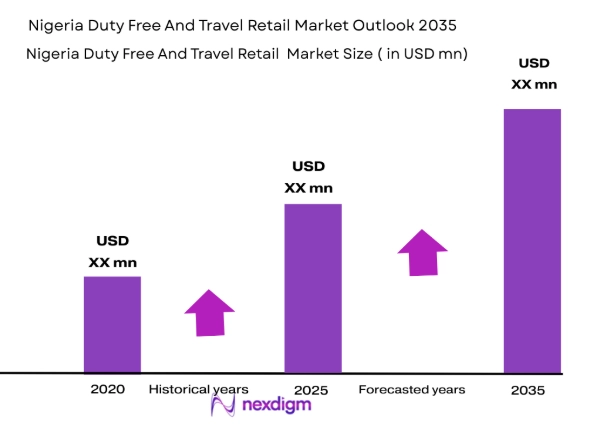
The Nigeria Duty Free and Travel Retail market is valued at USD ~ million in 2024, based on sales across airports, border retail points, and travel retail channels. Growth is underpinned by rising international and domestic passenger traffic through major hubs such as Murtala Muhammed International Airport (Lagos) and Nnamdi Azikiwe International Airport (Abuja), increasing tourist arrivals, and expanding middle‑class spending on premium products. Premium retail offerings in fragrances, cosmetics, and luxury goods attract higher per‑traveler expenditure, while enhancements in retail infrastructure and consumer affinity for duty‑advantaged pricing further support market performance.
Lagos, Abuja, and Port Harcourt dominate Nigeria’s duty free and travel retail landscape due to their strategic positions as major air travel gateways and economic centers. Lagos, as the busiest international port of entry, captures the largest share of inbound and outbound travelers, facilitating strong retail turnover. Abuja benefits from political and business travel demand, while Port Harcourt’s regional significance supports both domestic and cross‑border retail traffic. These cities also see higher concentrations of luxury brand demand and premium spending compared with other regions.
Market Segmentation
By Product Type
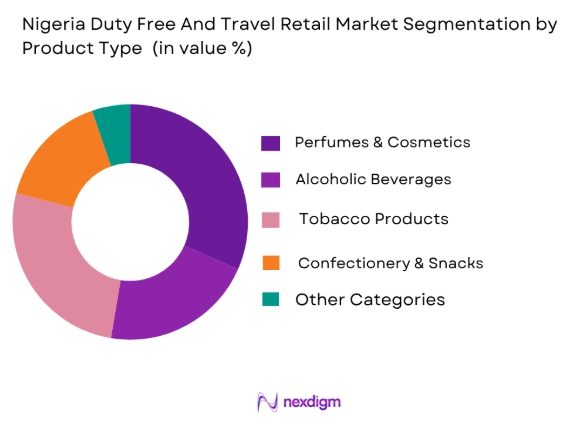
The market is also segmented by product type into Perfumes & Cosmetics, Wines & Spirits, Tobacco Products, Fashion & Accessories, Electronics & Gifts, and Food & Confectionery. In 2024, Perfumes & Cosmetics held the largest share due to strong demand among travelers seeking premium beauty brands and exclusive duty‑free offerings. Wines & Spirits are high‑value categories supported by gifting and luxury preferences among international and affluent domestic travellers. Perfumes & Cosmetics dominate because travelers often purchase beauty and fragrance products at duty‑advantaged pricing that offers better value than regular retail, while Wines & Spirits attract high spend from premium segments and gift buyers.
By Distribution Channel
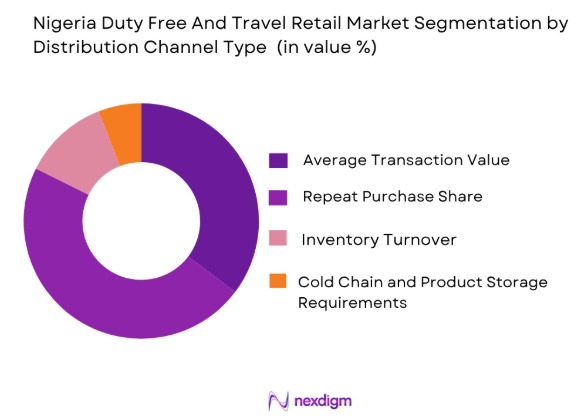
The Nigeria Duty Free and Travel Retail market is segmented by distribution channel into Airport Duty Free, Border Retail, Onboard Airline Retail, and Other Travel Retail Channels. Airport Duty Free dominates the market due to high passenger volumes at international and domestic terminals, comprehensive retail offerings, and greater space for premium product displays. These outlets attract both international tourists and domestic travelers with a broad assortment of duty‑free goods. Airport Duty Free leads because of larger retail footprints and higher dwell times, especially at Lagos and Abuja airports, enabling more extensive product exposure and higher conversion rates. Border retail contributes through cross‑border shoppers in neighboring regions, while airline onboard and other channels offer convenience retail with limited assortments.
Competitive Landscape
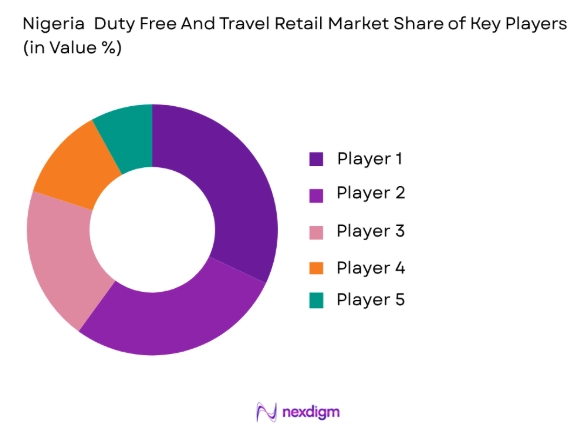
The Nigeria Duty Free and Travel Retail market includes a mix of global and regional travel retail operators, domestic concession holders, and local specialty retailers competing for prime spaces in airport terminals and travel channels. Competition focuses on securing premium international brand partnerships, enhancing shopper experience, and integrating digital solutions such as online pre‑order platforms and loyalty programs. The market is shaped by strategic retail concessions at major airports and cross‑border points, where operators curate broad assortments of luxury and travel‑exclusive products. Emphasis on curated brand portfolios, enhanced service delivery, and localized marketing supports retention of high‑value travelers and repeat purchases, positioning leading players to capture a growing share of Nigeria’s travel retail potential.
| Company | Establishment Year | Headquarters | Retail Footprint | Product Portfolio Coverage | Brand Partnerships | Digital Integration | Loyalty Programs | Retail Experience |
| Dufry AG | 1865 | Switzerland | ~ | ~ | ~ | ~ | ~ | ~ |
| WH Smith Travel Retail | 1848 | UK | ~ | ~ | ~ | ~ | ~ | ~ |
| Lagardère Travel Retail | 1994 | France | ~ | ~ | ~ | ~ | ~ | ~ |
| Heinemann Duty Free | 1879 | Germany | ~ | ~ | ~ | ~ | ~ | ~ |
| Local Concessionaires | 2000+ | Nigeria | ~ | ~ | ~ | ~ | ~ | ~ |
Nigeria Duty Free and Travel Retail Market Analysis
Growth Drivers
Increasing International and Domestic Passenger Traffic
Nigeria’s duty-free and travel retail market is benefiting from rising passenger volumes at key airports such as Murtala Muhammed International (Lagos), Nnamdi Azikiwe International (Abuja), and Mallam Aminu Kano International (Kano). Expansion of domestic and regional flight networks has improved connectivity, increasing traveler footfall and retail opportunities. International travel growth also drives demand for luxury goods, cosmetics, electronics, and beverages at airport and seaport outlets. Higher passenger traffic allows retailers to capitalize on impulse purchases and premium product offerings. Improved airport facilities and modernization projects support longer dwell times, enhancing the potential for sales growth across the duty-free sector in Nigeria.
Expansion of Airport Retail Infrastructure
Investment in airport retail infrastructure is creating significant opportunities for Nigeria’s duty-free sector. Modernized terminals, upgraded lounges, and enhanced passenger amenities improve the shopping experience and facilitate increased spending. Retailers can capitalize on expanded retail space and improved store layouts to showcase a wider assortment of luxury, branded, and convenience products. Infrastructure development also enables the introduction of technology-enabled solutions such as digital kiosks, mobile pre-ordering, and personalized marketing. As airports continue to evolve into integrated lifestyle and shopping destinations, duty-free operators can leverage these enhancements to attract travelers, boost sales, and strengthen the overall retail ecosystem.
Market Challenges
Regulatory Licensing Complexity
Nigeria’s duty-free market faces challenges due to complex regulatory and licensing requirements. Retail operators must comply with multiple government agencies, customs regulations, and import procedures, which can delay product availability and increase administrative costs. Frequent changes in trade or taxation policies add further uncertainty and operational complexity. International brands entering the market require specialized expertise to navigate these regulations effectively. Non-compliance or delays can reduce profitability, disrupt supply chains, and limit the ability to respond to market demand. Retailers must adopt robust compliance processes and maintain close communication with regulatory authorities to operate efficiently and sustainably within Nigeria’s duty-free environment.
Limited Cold Chain and Infrastructure Constraints
A key challenge for Nigeria’s duty-free sector is limited cold chain and logistics infrastructure, which affects storage and handling of perishable goods such as beverages, food, and certain cosmetics. Supply chain inefficiencies and high compliance costs may lead to delays, spoilage, or product unavailability. Retailers also face competition from domestic markets and informal channels, which often offer lower prices and bypass regulatory controls. These constraints limit operational efficiency and can reduce customer satisfaction. Investments in cold chain logistics, warehouse management, and optimized inventory processes are required to mitigate these challenges and ensure consistent product quality in the Nigerian duty-free retail ecosystem.
Market Opportunities
Expansion of Retail Footprint Across Airports and Borders
Nigeria presents opportunities for duty-free operators to expand their retail presence across major airports and border crossings. Increased passenger volumes and cross-border trade create demand for luxury goods, cosmetics, electronics, and travel essentials. Developing additional retail points in high-traffic terminals, seaports, and land borders can diversify revenue streams and enhance market reach. Expansion efforts should prioritize strategic locations, customer convenience, and modernized store layouts to maximize sales. By increasing the footprint, duty-free operators can capture a broader traveler base, enhance brand visibility, and strengthen Nigeria’s position as a growing travel retail market in West Africa.
Integration of Local and Pan‑African Brands
Promoting Nigerian and Pan-African products at duty-free outlets offers opportunities for differentiation and cultural engagement. Items such as local crafts, beverages, textiles, and specialty foods appeal to international travelers seeking authentic experiences. Retailers can create themed zones emphasizing regional heritage and partner with local manufacturers to boost visibility and sales. Integration of Pan-African brands diversifies product offerings, supports regional trade, and enhances Nigeria’s duty-free retail value proposition. By combining local authenticity with high-quality premium products, operators can attract both international and domestic travelers while strengthening cultural and commercial appeal.
Future Outlook
The Nigeria Duty Free and Travel Retail market is expected to grow steadily through 2035, driven by continued expansion in air travel, rising tourism demand, and increasing consumer preference for premium and duty‑exclusive products. Improvements in airport infrastructure, expansion of retail concession spaces, and broader adoption of digital retail platforms will support higher conversion rates and increased average spend per traveler. Retailers are expected to adopt omnichannel strategies, loyalty integration, and experiential retail formats to enhance shopper engagement and capture incremental demand.
Major Players
- Dufry AG
- WH Smith Travel Retail
- Lagardère Travel Retail
- Heinemann Duty Free
- Duty Free Americas
- King Power International
- Aer Rianta International
- Lotte Duty Free
- World Duty Free
- Nuance Group
- Local Duty Free Concessionaires
- Travel Retail Specialists
- International Brand Retail Partners
- Regional Retail Operators
Key Target Audience
- Airport Operators and Retail Concession Management Teams
- Duty Free and Travel Retail Operators
- Luxury Brand Owners and Distributors
- Investments and Venture Capitalist Firms
- Government and Regulatory Bodies
- Travel and Hospitality Revenue Strategists
- Airline Ancillary and Retail Revenue Teams
- Digital Retail and Omnichannel Solution Providers
Research Methodology
Step 1: Identification of Key Variables
The initial stage involved mapping Nigeria’s duty free and travel retail ecosystem, including passenger volumes, retail concession structures, product category demand, and regional trade dynamics. Secondary research from aviation data, tourism figures, and retail performance indicators was used to identify variables influencing market growth.
Step 2: Market Analysis and Construction
Historical retail and passenger traffic data were examined to estimate the 2024 market size. Revenue streams were segmented by distribution channels and product types, with bottom‑up modeling applied to derive market valuation and share across segments.
Step 3: Hypothesis Validation and Expert Consultation
Preliminary findings were validated through consultation with airport retail managers, travel retail operators, and brand representatives. Insights helped refine assumptions on retail performance, category demand, and future growth projections.
Step 4: Research Synthesis and Final Output
Quantitative data and expert insights were consolidated to produce a validated market forecast, segmentation analysis, and competitive landscape narrative, ensuring consistency and reliability in projections through 2035.

- Executive Summary
- Research Methodology (Market Definitions and Assumptions, Abbreviations, Research Framework, Bottom‑Up Market Estimation, Top‑Down Validation, Airport and Border Retail Mapping, Duty‑Free Trade Flow Analysis, Primary Interviews with Retailers, Operators, and Distributors, Forecasting Model, Limitations and Assumptions)

- Definition and Scope
- Evolution of Duty‑Free and Travel Retail in Nigeria
- Industry Ecosystem and Stakeholder Mapping
- Supply Chain and Value Chain Analysis
- Retail Infrastructure and Airport/Border Concessions Landscape
- Import, Licensing, and Regulatory Flow

- Growth Drivers
Increasing International and Domestic Passenger Traffic
Expansion of Airport Retail Infrastructure
Rising Demand for Premium and Luxury Goods
Growth of Digital and E‑Commerce Platforms - Market Challenges
Regulatory Licensing Complexity
Import Duties and Compliance Costs
Limited Cold Chain Infrastructure
Competition from Domestic and Informal Retail Channels - Market Opportunities
Expansion of Retail Footprint Across Airports and Borders
Integration of Local and Pan‑African Brands
Premiumization and Exclusive Product Offerings
Digital Engagement and Loyalty Programs - Market Trends
Smart Retail Technologies (Cashless Payments, IoT)
Sustainability and Ethical Sourcing Initiatives
Experiential Retail Concepts
Omni‑Channel Duty‑Free Retailing - Government Regulations
Duty‑Free Licensing and Compliance Regulations
Import and Customs Policy Framework
Product Category Restrictions and Standards
Export and Trade Agreements Affecting Duty‑Free - Porter’s Five Forces Analysis
- PESTLE Analysis
- Pricing Analysis
- Competitive Ecosystem

- By Value, 2020–2025
- By Volume, 2020–2025
- By Product Category Revenue, 2020–2025
- By Average Transaction Value, 2020–2025

- By Product Category (in Value %)
Perfumes & Cosmetics
Alcoholic Beverages
Tobacco Products
Confectionery & Snacks
Other Categories - By Retail Channel (in Value %)
Airport Duty‑Free Concessions
Border Posts and Land Ports
Seaports and Cruise Terminals
Online Travel Retail Platforms - By Consumer Type (in Value %)
International Travelers
Domestic Travelers
Business vs Leisure Segments - By Distribution Channel (in Value %)
Average Transaction Value
Repeat Purchase Share
Inventory Turnover
Cold Chain and Storage Requirements - By Geography (in Value %)
Lagos (Murtala Muhammed International Airport)
Abuja (Nnamdi Azikiwe International Airport)
Port Harcourt (Port Harcourt International Airport)
Other Regions

- Market Share Analysis of Major Operators (Revenue and Footfall)
- Cross‑Comparison Parameters ( Retail Footprint and Concession Rights, Product Portfolio Breadth, Digital and Omni‑Channel Capabilities, Value‑Added Services and Loyalty Programs, Supply Chain and Inventory Management, EBITDA Margins and Revenue Mix, Strategic Partnerships and Alliances, Competitive Benchmarking Matrix, SWOT Analysis of Major Players, Pricing Analysis by Product Category and Channel)
- Competitive Benchmarking Matrix
- SWOT Analysis of Major Players
- Pricing Analysis by Product Category and Retail Location
- Detailed Profiles of Major Companies
Dufry Nigeria
Alpha Flight Services Nigeria
International Duty Free Group (IDFG) Nigeria
Bidvest Travel Retail (Nigeria Operations)
Lekker Retail Duty Free Nigeria
Mona Lisa Duty Free Nigeria
House of Tara Duty Free Division
Konga Travel Retail Division
Jumia Travel Retail Partnership
Puma Energy Duty Free & Retail Nigeria
GTBank Travel Retail Concessions
UBA Travel Retail Concessions
Airpeace Airport Retail Partners
Africrest Duty Free & Retail Services
Airport Services Nigeria Concession Partners

- Traveler Demographics and Purchasing Behavior
- Purchase Frequency and Basket Size Analysis
- Price Sensitivity and Brand Preferences
- Digital Engagement and Loyalty Behavior

- By Value, 2026–2035
- By Volume, 2026–2035
- By Product Category Revenue, 2026–2035
- By Average Transaction Value, 2026–2035


 Request a Sample
 Ask for Customization
 Get a Quote
 Enquire Now