

 Download PDF
Market Overview
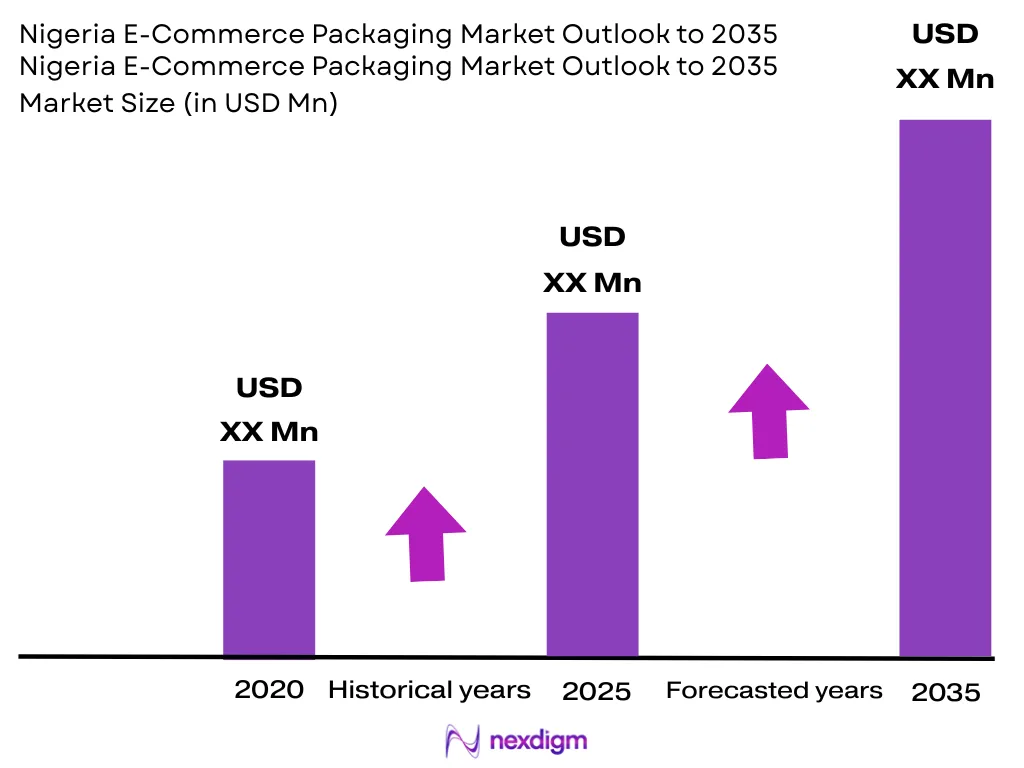
The Nigeria E-Commerce Packaging Market was valued at USD ~ Million in 2024 and is anticipated to expand at a CAGR of ~ % during 2026–2035. The market is primarily driven by rapid growth of mobile commerce and social platform checkout, expansion of marketplace logistics and fulfillment infrastructure, and rising youth population and smartphone penetration. According to Mordor Intelligence, the Nigeria e-commerce market size is expected to grow from USD 9.35 billion in 2025 to USD 10.49 billion in 2026 and is forecast to reach USD 18.68 billion by 2031, at a 12.23 percent CAGR. Jumia, Konga, and Temu jointly accounted for approximately 54 percent of Nigeria’s e-commerce gross merchandise value in 2024, with Jumia alone processing 21.3 million orders in 2023, sustaining consistent demand for durable, damage-resistant packaging across fashion, electronics, groceries, and beauty e-commerce categories.
Market Segmentation
By Product Type
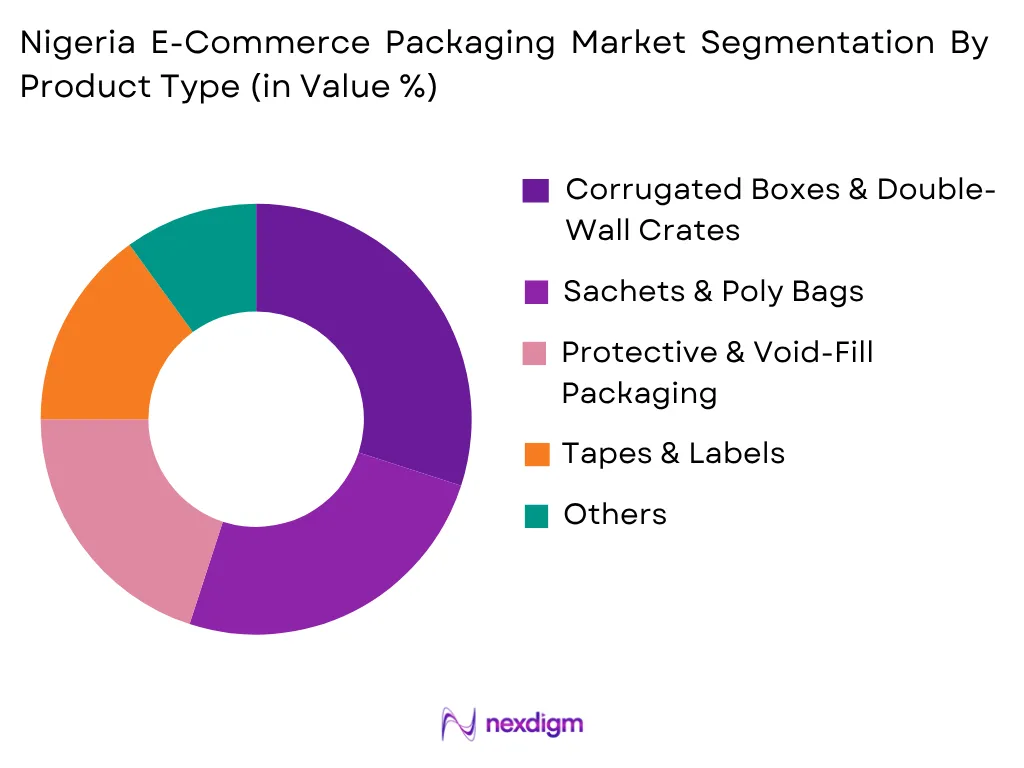
Among these, Corrugated Boxes & Double-Wall Crates hold a significant and growing share of the Nigeria E-Commerce Packaging Market, reflecting the country’s distinctive infrastructure challenges. With 12 percent of parcels historically damaged on pothole-ridden roads, shippers over-engineer secondary packs, fueling uptake of double-wall board and rigid crates, according to Mordor Intelligence. The Nigeria Flexible Packaging Market, valued at USD 3.04 billion in 2024 and forecast to reach USD 3.70 billion by 2030, is also directly supported by e-commerce growth, with Jumia’s June 2024 launch of an integrated warehouse and logistics facility in Isolo, Lagos, spanning 30,000 square meters with over 17,000 square meters dedicated to storage, highlighting continued investment in logistics infrastructure that increases demand for both flexible and rigid packaging formats across Nigeria’s e-commerce supply chain.
By End-Use Category
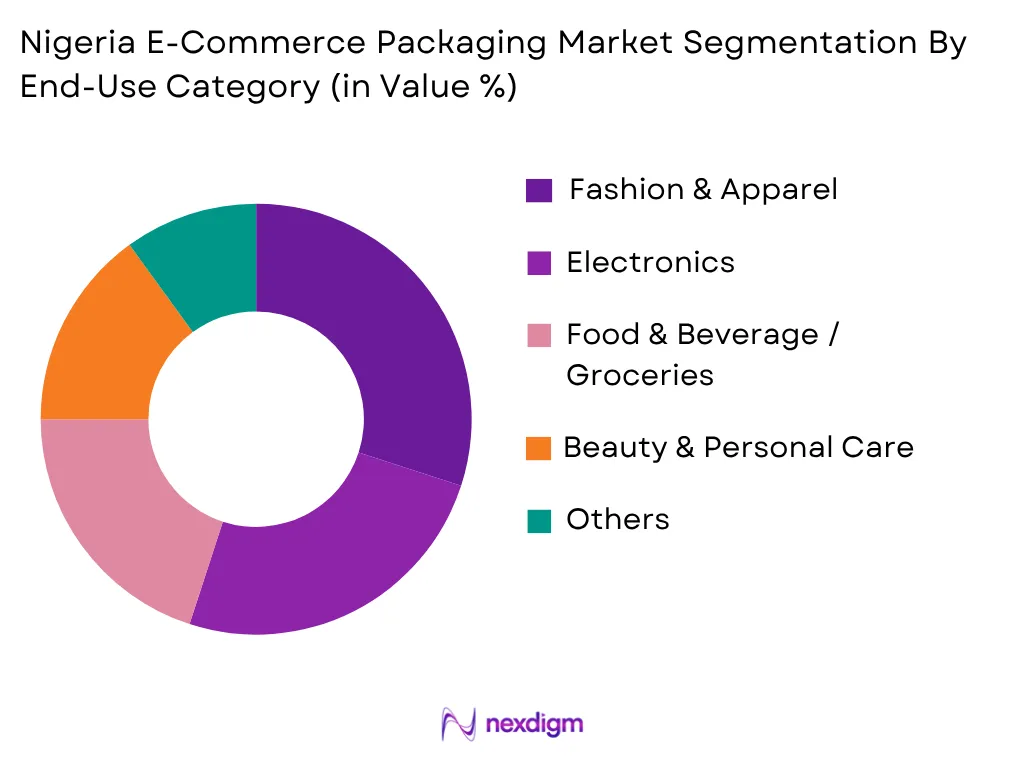
The Fashion & Apparel segment holds a leading share of the Nigeria E-Commerce Packaging Market, consistent with the category’s dominance across most e-commerce markets, supported by growing mobile commerce penetration where mobile orders now account for more than four-fifths of online transactions, according to Mordor Intelligence. Meanwhile, Electronics packaging remains significant, with Konga defending market share through private-label electronics and marketplace diversification, requiring robust protective packaging for fragile, high-value goods. A 2024 survey showed 84.1 percent of shoppers in Ekiti State buying sachets of toothpaste and seasoning cubes to limit spoilage, a trend that scales water-sachet output to 50 to 60 million units per day in Lagos, according to Mordor Intelligence, reflecting the continued relevance of affordable, single-serve packaging formats even within Nigeria’s growing e-commerce and general merchandise delivery ecosystem.
Competitive Landscape
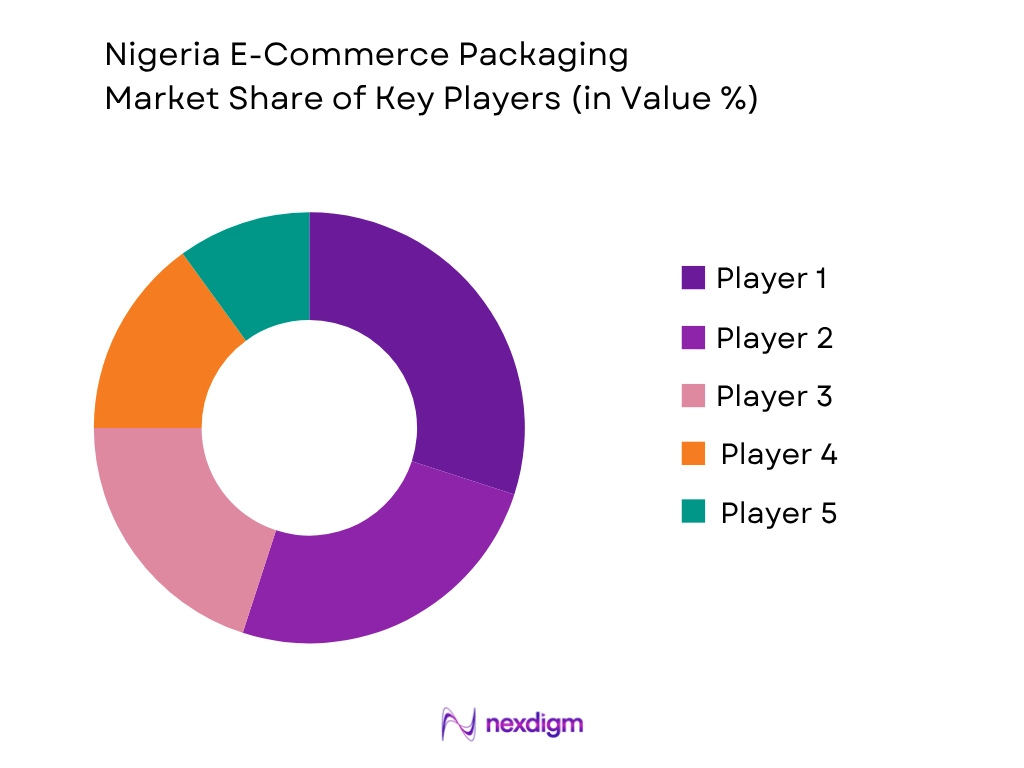
The Nigeria E-Commerce Packaging Market is moderately fragmented, with domestic converters, regional West African manufacturers, and multinational packaging companies competing across plastic, corrugated, and flexible formats. Avon Crowncaps & Containers Nigeria Limited, Beta Glass Plc, Nampak Ltd, Greif, Inc., and Twinstar Industries Limited are identified among the major companies operating in Nigeria’s broader packaging market, according to Mordor Intelligence. The Nigeria First Policy directs ministries to prioritize locally boxed products, diverting a slice of e-commerce packaging flow to domestic converters, while large box makers dovetail carton design with robotic picking systems to secure recurring orders as the market deepens its link with online retail. Converters installing mechanical recycling lines continue to battle scarce clean feedstock, suppressing throughput and dampening returns across the competitive landscape.
| Company | Established | Headquarters | Primary Product Portfolio | Natural Color Portfolio | Manufacturing Presence | Major End-Use Industries | Key Strategic Focus | Certifications & Compliance |
| Nampak Nigeria | 1968 | ~ | ~ | ~ | ~ | ~ | ~ | ~ |
| Beta Glass Plc | 1976 | ~ | ~ | ~ | ~ | ~ | ~ | ~ |
| Avon Crowncaps & Containers Nigeria Limited | 1961 | ~ | ~ | ~ | ~ | ~ | ~ | ~ |
| Greif, Inc. | 1877 | ~ | ~ | ~ | ~ | ~ | ~ | ~ |
| Twinstar Industries Limited | 1995 | ~ | ~ | ~ | ~ | ~ | ~ | ~ |
Nigeria E-Commerce Packaging Market Analysis
Growth Drivers
Rapid Growth of Mobile Commerce and Marketplace Competition
Nigeria’s e-commerce packaging market is experiencing sustained growth due to rapid expansion of mobile commerce and intensifying competition among e-commerce marketplaces. Rapid smartphone adoption, stronger payment rails, and a wider logistics footprint continue to expand digital retail penetration in both urban and semi-urban centres, according to Mordor Intelligence, with mobile commerce now accounting for more than four-fifths of online orders. WorldPay projects that by 2026, 13 percent of Nigeria’s total sales will occur online, with mobile shopping dominating at 77 percent of all online retail activities. Temu’s late-2024 entry injected aggressive price competition backed by global sourcing efficiencies, joining Jumia and Konga to command an estimated 54 percent of gross merchandise value in 2024, sustaining sharp growth in parcel volumes and corresponding packaging demand across the country.
Expansion of Fulfillment Infrastructure and Nigeria First Policy Support
The steady expansion of marketplace fulfillment infrastructure and government-backed local content policies remain major drivers for e-commerce packaging consumption in Nigeria. Jumia invests in proprietary delivery vehicles and pick-up stations, exemplified by its June 2024 launch of an integrated warehouse and logistics facility in Isolo, Lagos, covering 30,000 square meters with over 17,000 square meters for storage. The Nigeria First Policy directs ministries to prioritize locally boxed products, diverting a slice of e-commerce flow to domestic converters, according to Mordor Intelligence. By dovetailing carton design with robotic picking systems, large box makers secure recurring orders as the Nigeria packaging market deepens its link with online retail, creating sustained investment momentum across the country’s e-commerce fulfillment and packaging supply chain.
Market Challenges
High Rate of Parcel Damage and Naira Volatility
Despite steady demand growth, the Nigeria e-commerce packaging market faces significant challenges from poor road infrastructure and currency volatility. With 12 percent of parcels historically damaged on pothole-ridden roads, shippers over-engineer secondary packs, fueling uptake of double-wall board and rigid crates, according to Mordor Intelligence, adding material cost relative to standard single-wall formats. The naira plunged 371 percent between 2019 and 2025, escalating USD-denominated resin bills and pushing manufacturing input costs up 67 percent in the first half of 2024. With the policy rate at 27.5 percent, converters fund working capital at punitive levels, often passing hikes to brand owners or absorbing margin hits, creating significant cost pressure across Nigeria’s e-commerce packaging supply chain.
Regulatory Compliance Complexity and Feedstock Scarcity
Nigeria’s evolving regulatory framework for plastic packaging presents a significant compliance challenge for e-commerce packaging manufacturers. NESREA’s newly gazetted National Environmental (Plastic Waste Control) Regulations 2026 introduce a phased recycled PET content mandate for packaging manufacturers, requiring continuous investment in compliance infrastructure. Converters installing mechanical recycling lines still battle scarce clean feedstock, suppressing throughput and dampening returns in the Nigeria packaging market, according to Mordor Intelligence. In addition, Nigeria’s absence of a domestic petrochemical cracker network has historically left the packaging market exposed to global resin price volatility, though the new Dangote polypropylene complex is expected to curb import exposure over the coming years as domestic resin supply capacity expands.
Market Opportunities
Rising Investment in Domestic Resin Supply and Damage-Resistant Packaging
Nigeria’s expanding domestic petrochemical capacity and growing e-commerce parcel volumes create significant opportunities for investment in domestic resin supply and damage-resistant packaging formats. Domestic resin supply from the new Dangote polypropylene complex is set to curb import exposure, according to Research and Markets, while tighter monetary rules push converters to deepen local sourcing. Investors that align with recycling infrastructure, barrier solutions for agro-exports, and anti-counterfeit closures are best positioned to capture long-term value in the Nigeria packaging market. As double-wall board and rigid crate adoption continues to rise in response to Nigeria’s road infrastructure challenges, manufacturers investing early in damage-resistant, cost-efficient packaging formats are positioned to capture growing demand from e-commerce marketplaces and fulfillment providers.
Expansion of Robotic Picking-Compatible and Locally Sourced Packaging
Nigeria’s growing marketplace competition and government-backed local content policies create substantial long-term opportunities for e-commerce packaging manufacturers. By dovetailing carton design with robotic picking systems, large box makers secure recurring orders as the Nigeria packaging market deepens its link with online retail, according to Mordor Intelligence. The Nigeria First Policy directs ministries to prioritize locally boxed products, creating favorable conditions for domestic converters to capture e-commerce packaging demand previously served by imports. As Jumia, Konga, and Temu continue expanding fulfillment infrastructure and competing for market share, packaging manufacturers offering robotic picking-compatible, locally sourced, and damage-resistant packaging formats are well positioned to capture growing demand across Nigeria’s rapidly expanding e-commerce sector.
Future Outlook
The Nigeria E-Commerce Packaging Market is expected to witness sustained expansion over the forecast period, supported by continued growth in mobile commerce and marketplace competition, expanding fulfillment infrastructure investment, and increasing government support for locally sourced packaging under the Nigeria First Policy. Continued investment in domestic resin supply, damage-resistant packaging formats, and robotic picking-compatible carton design will further accelerate innovation across the industry. The market is also likely to benefit from Nigeria’s position as a significant regional e-commerce and manufacturing hub for West Africa, enabling greater investment in advanced, cost-competitive packaging technologies capable of serving both domestic marketplaces and regional export markets.
Major Players
- Nampak Nigeria
- Beta Glass Plc
- Avon Crowncaps & Containers Nigeria Limited
- Greif, Inc.
- Twinstar Industries Limited
- Victor Oscar Company
- Flexipack Plastics Ltd
- PrimePak Industries Nigeria Ltd
- Quantum Plastic Nigeria Ltd
- Tempo Paper Pulp & Packaging Ltd
- Tetra Pak Nigeria
- Revolution Plastics
- Multivac Nigeria
- Amcor plc
- Smurfit WestRock
Key Target Audience
- E-Commerce Packaging Manufacturers
- Online Retailers and Marketplace Operators
- Social Commerce and Mobile-First Retail Platforms
- Third-Party Logistics and Fulfillment Providers
- Last-Mile Delivery Companies
- Investment and Venture Capitalist Firms
- Government and Regulatory Bodies (National Environmental Standards and Regulations Enforcement Agency (NESREA), Standards Organisation of Nigeria (SON), Federal Ministry of Industry, Trade and Investment)
- Packaging Material Suppliers and Industrial Raw Material Distributors
Research Methodology
Step 1: Identification of Key Variables
The research process begins with identifying the complete ecosystem of the Nigeria E-Commerce Packaging Market, including raw material and resin suppliers, packaging converters and manufacturers, online retailers and marketplaces, third-party logistics providers, last-mile delivery companies, and regulatory authorities. Extensive secondary research is conducted using company annual reports, government publications, trade associations, customs statistics, industry journals, and proprietary databases to determine the variables influencing market demand, pricing, production, consumption, and technological developments.
Step 2: Market Analysis and Construction
Historical market information is collected and analyzed to estimate market size, production volumes, import-export activity, application-wise demand, and pricing trends. A combination of top-down and bottom-up approaches is used to estimate market revenues and validate segment-level performance. Consumption patterns across fashion, electronics, groceries, and beauty e-commerce categories are evaluated to establish an accurate representation of the industry.
Step 3: Hypothesis Validation and Expert Consultation
The preliminary findings are validated through Computer-Assisted Telephone Interviews (CATIs) and structured discussions with e-commerce packaging manufacturers, procurement managers, fulfillment operations executives, logistics experts, and senior executives operating within the Nigerian e-commerce packaging industry. These interviews help verify market assumptions, competitive developments, technology adoption trends, pricing dynamics, and future investment opportunities while refining the overall market estimates.
Step 4: Research Synthesis and Final Output
The final stage integrates insights obtained from primary interviews with quantitative information collected through secondary sources. Data triangulation techniques are applied to reconcile differences between supply-side and demand-side estimates, ensuring robust market forecasting. The report is then reviewed through multiple quality assurance checkpoints to deliver a comprehensive analysis covering market size, segmentation, competitive landscape, future outlook, and strategic recommendations for industry stakeholders.

- Executive Summary
- Research Methodology (Market Definitions and Assumptions, Abbreviations, Market Sizing Approach, Top-Down Analysis, Bottom-Up Analysis, Demand-Side Assessment, Supply-Side Assessment, Primary Industry Interviews, Secondary Research Validation, Data Triangulation, Forecasting Framework, Limitations and Future Conclusions)

- Definition and Scope
- Market Evolution and Industry Genesis
- Timeline of Major Industry Developments
- E-Commerce Packaging Industry Value Chain Analysis
- Supply Chain Analysis

- Growth Drivers (Rapid Growth of Mobile Commerce and Social Platform Checkout, Expansion of Marketplace Logistics and Fulfillment Infrastructure, Rising Youth Population and Smartphone Penetration, Growth of Same-Day Fulfilment and Embedded Finance, Nigeria First Policy Favoring Locally Boxed Products, Increasing Investment in Domestic Resin Supply)
- Market Challenges (High Rate of Parcel Damage on Poor Road Infrastructure, Naira Volatility and Rising Import-Denominated Resin Costs, High Cost of Working Capital Under Elevated Policy Rates, Regulatory Compliance Complexity Under NESREA Requirements, Scarce Clean Feedstock for Mechanical Recycling, Last-Mile Logistics and Delivery Cost Pressures)
- Market Opportunities (Investment in Double-Wall and Damage-Resistant Packaging Formats, Growth in Domestic Resin Supply from New Petrochemical Capacity, Expansion of Robotic Picking-Compatible Carton Design, Recycling Infrastructure and Barrier Solutions for Agro-Exports, Anti-Counterfeit and Track-and-Trace Packaging Technologies, Export-Oriented Packaging Manufacturing for West Africa)
- Market Trends (Rising Adoption of Double-Wall Board and Rigid Crates, Growth in Sachet and Single-Serve E-Commerce Packaging, Nigeria First Policy-Driven Local Sourcing, Domestic Resin Supply from the Dangote Polypropylene Complex, Robotic Picking-Compatible Carton Design, Industry Consolidation Through Investment)
- Government Regulations (National Environmental (Plastic Waste Control) Regulations 2026, NESREA Extended Producer Responsibility (EPR) Requirements, Nigeria First Policy for Local Content Procurement, Standards Organisation of Nigeria (SON) Requirements, State-Level Single-Use Plastic Bans, Import Compliance and Customs Regulations)
- Import and Export Analysis (Trade Volume, Major Import Sources, Export Destinations, HS Code Analysis, Trade Balance)
- Raw Material Availability Analysis (Plastic Resins, Domestic Polypropylene Supply, Corrugated Board and Linerboard, Recycled Paper Fiber)
- Technology Landscape (Robotic Picking-Compatible Carton Design, Double-Wall Corrugated Manufacturing, Sachet Filling and Sealing Technology, Anti-Counterfeit and Track-and-Trace Packaging, Automated Sortation Systems)
- Sustainability Assessment (Recyclability and Post-Consumer Recycled Content, Mechanical Recycling Feedstock Development, Carbon Footprint Reduction, Plastic Waste Reduction, Circular Economy Integration)
- PESTLE Analysis
- SWOT Analysis
- Porter’s Five Forces Analysis
- Stakeholder Ecosystem
- Competition Ecosystem

- By Market Value (2020-2025)
- By Volume Consumption (2020-2025)
- By Average Selling Price (2020-2025)

- By Material (In Value %)
Plastics
Corrugated Board & Paper
Metal
Other Materials - By Product Type (In Value %)
Corrugated Boxes & Double-Wall Crates
Sachets & Poly Bags
Protective & Void-Fill Packaging
Tapes & Labels - By Packaging Function (In Value %)
Primary & Retail-Ready Packaging
Protective Packaging
Shipping & Transit Packaging - By End-Use Category (In Value %)
Fashion & Apparel
Electronics
Food & Beverage / Groceries
Beauty & Personal Care
General Merchandise - By Region (In Value %)
Lagos & South West
Abuja & North Central
South East
South South
Rest of Nigeria

- Market Share of Major Players (By Value, Volume, Material Type, Application Industry, Product Category)
- Cross Comparison Parameters (Material Portfolio Breadth, Sustainable Packaging Portfolio, Damage-Resistance Capability, Application Technical Support Capability, Manufacturing Capacity, Regulatory Compliance & Certifications, E-Commerce Customer Base, Innovation & New Product Launch Frequency)
- SWOT Analysis of Major Players
- Pricing Analysis by Product Category and SKU
- Production Capacity Analysis
- Manufacturing Footprint Analysis
- Distribution Network Analysis
- Innovation Benchmarking
- Detailed Profiles of Major Companies
Nampak Nigeria
Beta Glass Plc
Avon Crowncaps & Containers Nigeria Limited
Greif, Inc.
Twinstar Industries Limited
Victor Oscar Company
Flexipack Plastics Ltd
PrimePak Industries Nigeria Ltd
Quantum Plastic Nigeria Ltd
Tempo Paper Pulp & Packaging Ltd
Tetra Pak Nigeria
Revolution Plastics
Multivac Nigeria
Amcor plc
Smurfit WestRock

- Consumption Pattern Analysis (Industrial Usage, Batch Size, Product Category Penetration, Seasonal Demand, Reformulation Activity)
- Purchasing Criteria (Damage Protection Performance, Affordability, Cost Efficiency, Recyclability, Regulatory Compliance, Brand and Unboxing Experience)
- Procurement and Supplier Selection Analysis
- Sustainable Packaging Adoption Assessment
- Premium vs Standard Packaging Demand
- Product Attribute Preference Analysis (Damage Protection, Cube Efficiency, Recyclability, Tamper-Evidence, Print Quality, Unboxing Appeal)
- Consumer Affordability and Delivery Experience Influence on Packaging Design
- Pain Point Analysis
- Decision-Making Process

- By Market Value (2026-2035)
- By Volume Consumption (2026-2035)
- By Average Selling Price (2026-2035)


 Request a Sample
 Ask for Customization
 Get a Quote
 Enquire Now