
 Download PDF
 Download PDF
Market Overview
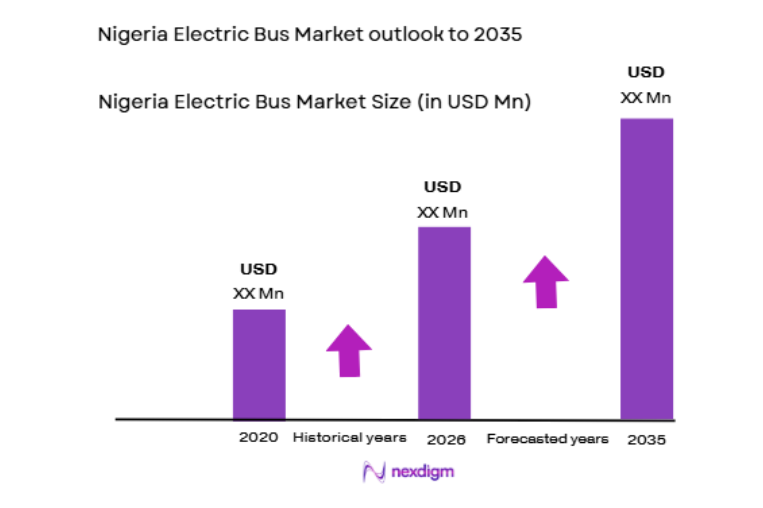
Nigeria’s electric bus market has begun emerging within the broader African electric mobility landscape, with a recent historical assessment indicating a market valuation of approximately USD ~ million based on transport electrification deployment data compiled by the International Energy Agency and African Development Bank mobility transition programs. Market expansion is driven by urban transport modernization initiatives, growing environmental concerns regarding diesel emissions, and increasing investment in sustainable public transport infrastructure supported by international climate finance programs and government mobility reforms.
Lagos, Abuja, and Kano represent the most influential cities shaping the Nigeria electric bus market due to high urban population density, expanding public transit networks, and increasing policy focus on reducing urban transport emissions. Lagos leads deployment because of its large bus rapid transit network and urban mobility initiatives, while Abuja benefits from federal infrastructure investments and pilot electrified transport projects. Kano’s growing urban population and municipal transportation modernization initiatives are also supporting increasing adoption of electric buses.
Market Segmentation
By Propulsion Type
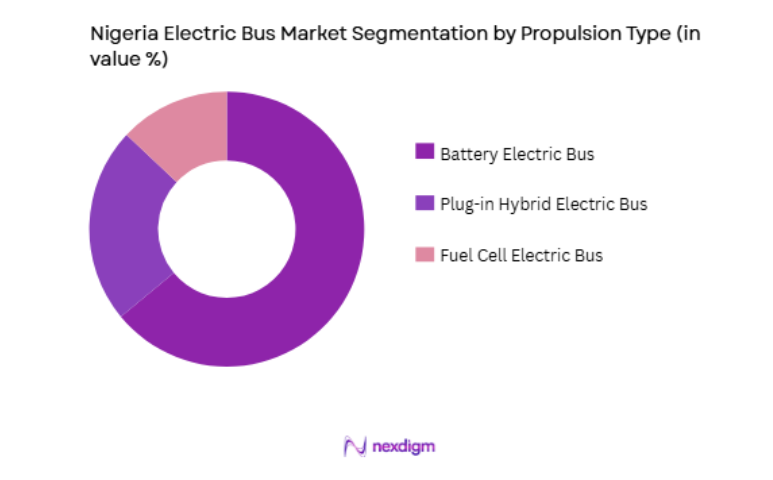
Nigeria Electric Bus Market Outlook to 2035 market is segmented by propulsion type into battery electric buses, plug-in hybrid electric buses, and fuel cell electric buses. Recently, battery electric buses have a dominant market share due to factors such as stronger infrastructure compatibility, lower operational emissions, declining battery costs, and broader manufacturer availability. Battery electric buses are increasingly preferred by transit authorities because they provide zero tailpipe emissions and reduced fuel dependency compared with diesel alternatives. Public transport modernization programs across Nigeria are prioritizing battery electric buses due to their compatibility with depot charging infrastructure and integration with renewable power sources. International development banks supporting sustainable mobility programs also favor battery electric buses because of their proven technology maturity and operational efficiency in urban environments. Furthermore, global electric bus manufacturers offer a wide range of battery electric bus models designed for high-capacity transit routes, improving procurement flexibility for Nigerian transport agencies.
By Bus Length
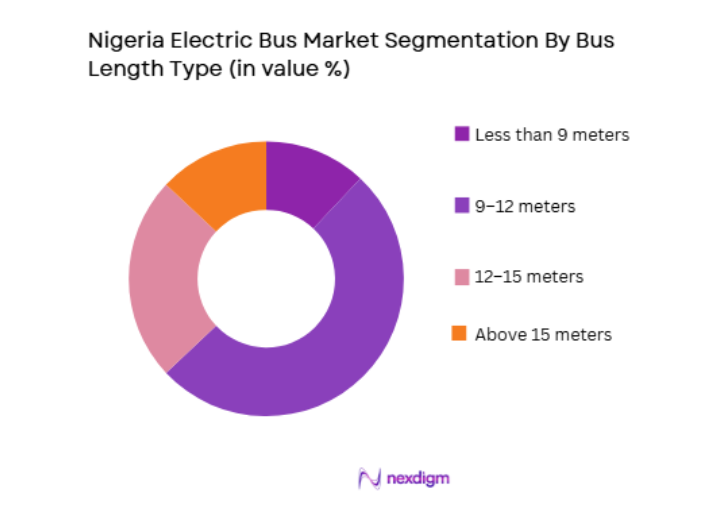
Nigeria Electric Bus Market Outlook to 2035 market is segmented by bus length into less than 9 meters, 9–12 meters, 12–15 meters, and above 15 meters. Recently, 9–12 meter electric buses have a dominant market share due to factors such as compatibility with existing urban bus infrastructure, cost efficiency, and suitability for medium-capacity passenger routes. Transit agencies prefer this size category because it balances passenger capacity with maneuverability across congested city streets and high-density traffic corridors. The 9–12 meter segment also aligns with most bus rapid transit fleet specifications used across Nigerian cities. Additionally, electric bus manufacturers globally design their most commercially mature models within this size category, making procurement and maintenance easier for public transport operators. As cities modernize their urban mobility systems and replace diesel fleets, the 9–12 meter electric bus category continues to dominate fleet acquisition strategies.
Competitive Landscape
The Nigeria electric bus market is currently in a developmental phase characterized by partnerships between global electric vehicle manufacturers, African mobility solution providers, and local public transportation authorities. Large international electric bus manufacturers dominate technology supply while regional transport operators focus on fleet deployment and charging infrastructure development. Market competition is influenced by technological innovation, battery efficiency improvements, and the ability of manufacturers to support integrated charging and fleet management solutions.
| Company Name | Establishment Year | Headquarters | Technology Focus | Market Reach | Key Products | Revenue | Electric Bus Range |
| BYD Auto | 1995 | China | ~ | ~ | ~ | ~ | ~ |
| Yutong Bus | 1963 | China | ~ | ~ | ~ | ~ | ~ |
| Proterra | 2004 | United States | ~ | ~ | ~ | ~ | ~ |
| Volvo Buses | 1928 | Sweden | ~ | ~ | ~ | ~ | ~ |
| Scania Group | 1891 | Sweden | ~ | ~ | ~ | ~ | ~ |
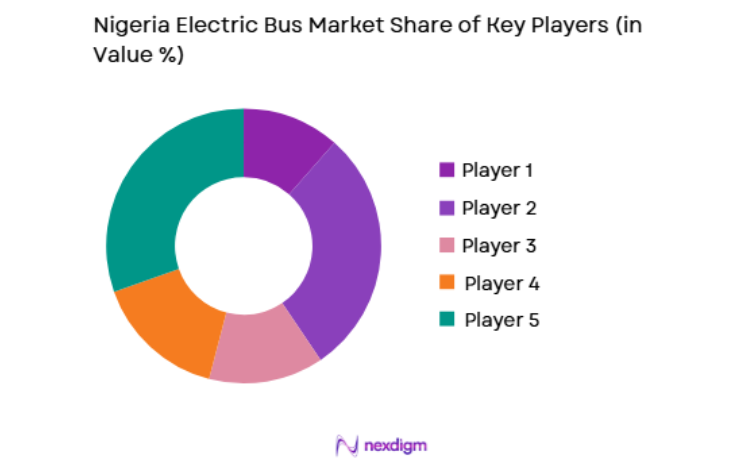
Nigeria Electric Bus Market Analysis
Growth Drivers
Urban Public Transport Electrification Initiatives and Environmental Sustainability Goals
Nigeria’s increasing emphasis on sustainable urban mobility and environmental protection is driving growing interest in electric bus adoption as government authorities and city transport agencies attempt to modernize public transit systems while reducing harmful emissions generated by conventional diesel bus fleets. Rapid urbanization across major Nigerian cities has significantly increased demand for efficient and environmentally sustainable transportation infrastructure capable of supporting large daily passenger volumes while minimizing pollution levels in densely populated urban areas. Electric buses provide an effective solution because they eliminate tailpipe emissions and contribute to improved air quality in urban corridors experiencing heavy vehicular traffic. Municipal governments are increasingly incorporating electrified transport strategies into long-term urban development plans in order to reduce carbon emissions and comply with global climate commitments related to sustainable transportation systems. International development organizations and climate finance institutions are also supporting electric mobility initiatives across Nigeria by funding pilot projects designed to demonstrate the operational feasibility of electric bus fleets within African cities. Such programs provide financial assistance for procurement of electric buses, installation of charging infrastructure, and development of technical expertise required for operating electrified transit networks. Public awareness regarding environmental sustainability is also increasing among policymakers and urban residents, strengthening political support for cleaner transportation technologies. As city authorities attempt to reduce reliance on fossil fuel powered vehicles and improve the efficiency of mass transit networks, electric bus adoption is expected to expand significantly within Nigeria’s evolving public transportation ecosystem.
Declining Global Battery Costs and Advancements in Electric Bus Technology
Continuous improvements in lithium-ion battery technology combined with expanding global electric vehicle manufacturing capacity are significantly reducing the cost of electric buses, making them increasingly competitive with conventional diesel-powered transit vehicles. Battery packs historically represented one of the largest cost components of electric buses, but rapid technological innovation and economies of scale in battery production are steadily lowering manufacturing expenses. Global electric bus manufacturers are investing heavily in research and development to improve battery energy density, charging efficiency, and lifecycle durability, enabling electric buses to travel longer distances while maintaining operational reliability in demanding transit environments. Such technological progress is particularly beneficial for emerging markets like Nigeria where transportation operators require cost-effective and durable vehicles capable of operating under challenging infrastructure conditions. Improved battery management systems and thermal control technologies also enhance vehicle safety and reduce long-term maintenance requirements for transit agencies. Charging infrastructure technology is advancing simultaneously, allowing faster depot charging and opportunity charging solutions that reduce operational downtime for electric bus fleets. These improvements make electric buses more practical for high-frequency urban transit routes where reliability and operational efficiency are critical performance factors. As electric vehicle technology continues evolving and manufacturing costs decline globally, the affordability and performance advantages of electric buses are expected to strengthen their competitiveness within Nigeria’s public transportation sector.
Market Challenges
Limited Charging Infrastructure and Grid Capacity Constraints for Electric Bus Deployment
One of the most significant challenges affecting the Nigeria electric bus market is the limited availability of charging infrastructure combined with structural constraints within the national electricity grid. Electric bus fleets require reliable charging facilities capable of delivering consistent power supply for overnight depot charging or rapid opportunity charging during operational hours. However, many Nigerian cities face electricity supply instability and limited grid capacity, which complicates deployment of large electric bus fleets. Transit authorities considering electrification initiatives must therefore invest simultaneously in charging infrastructure and supporting energy systems, significantly increasing project costs and technical complexity. Electric bus depots require dedicated electrical connections, transformers, and charging stations capable of handling high power loads necessary for charging large battery packs. Without adequate grid reliability, bus operators risk operational disruptions that could affect service continuity across public transit networks. Additionally, many cities lack standardized regulations governing electric vehicle charging infrastructure, creating uncertainty for investors and transit authorities planning electrification projects. The absence of widespread public charging networks further restricts operational flexibility for electric buses operating across extended routes. Addressing these infrastructure limitations requires coordinated investment in power distribution networks, charging technologies, and grid modernization initiatives.
High Initial Procurement Costs and Limited Financing Options for Transit Authorities
Electric buses typically involve higher upfront procurement costs compared with conventional diesel buses, presenting a financial challenge for public transit agencies operating within constrained municipal budgets. While electric buses provide lower operating costs over their lifetime due to reduced fuel and maintenance expenses, the initial purchase price remains a major barrier for transport authorities responsible for managing large vehicle fleets. Many Nigerian municipal transit systems rely heavily on government funding or external financial support to procure new vehicles, making it difficult to invest in advanced electric bus technologies without specialized financing mechanisms. Limited availability of local financing instruments designed specifically for electric mobility infrastructure further complicates procurement planning. Transit operators must also allocate additional capital for charging infrastructure, energy management systems, and technical workforce training required to maintain electric bus fleets effectively. Currency fluctuations affecting imported vehicle components and battery systems can also increase procurement costs and create uncertainty in budgeting for electrification programs. Although international climate finance institutions provide some support for sustainable transportation initiatives, many transit agencies still face challenges securing sufficient funding to implement large-scale electric bus deployments. Overcoming these financial barriers will require innovative financing structures, public-private partnerships, and supportive government policies designed to reduce the capital burden associated with transitioning to electric public transportation.
Opportunities
Expansion of Bus Rapid Transit Electrification Programs in Major Nigerian Cities
The ongoing development of bus rapid transit networks across major Nigerian cities creates a significant opportunity for electric bus deployment as authorities seek to modernize high-capacity urban transportation systems. Bus rapid transit systems are designed to provide efficient and reliable mass transit services through dedicated lanes and optimized route management, making them ideal platforms for integrating electric bus technology. Electrifying bus rapid transit fleets allows cities to reduce emissions while maintaining high passenger throughput across densely populated urban corridors. As governments expand existing transit systems and construct new BRT routes, incorporating electric buses into fleet procurement strategies can significantly reduce long-term operational costs and environmental impact. Electric buses operating on BRT routes benefit from predictable schedules and centralized depot facilities, simplifying charging infrastructure deployment and fleet management. International development banks financing urban mobility projects often encourage adoption of electric bus fleets as part of sustainable transportation initiatives supporting climate mitigation goals. Nigeria’s rapidly growing urban population is expected to increase demand for efficient mass transit services, reinforcing the strategic importance of BRT systems. By integrating electric buses into expanding BRT networks, Nigerian cities can simultaneously improve public transport quality, reduce emissions, and enhance long-term sustainability of urban mobility systems.
Growing International Investment in Sustainable Transportation Infrastructure Across Africa
Increasing global investment in sustainable transportation infrastructure across African countries presents a major opportunity for electric bus adoption within Nigeria’s evolving mobility ecosystem. International climate funds, development banks, and sustainability-focused investors are actively supporting projects designed to reduce carbon emissions from transportation systems while improving urban mobility efficiency. Electric buses align closely with these investment priorities because they contribute to cleaner urban environments and reduce dependence on fossil fuels. Nigeria’s large population and rapidly expanding cities make the country an attractive market for international mobility investors seeking opportunities in emerging electric transport sectors. Financial support from global institutions can help offset the high initial costs associated with electric bus procurement and charging infrastructure development. Such investments also facilitate technology transfer and capacity building for local transit authorities responsible for operating electric vehicle fleets. Private mobility companies and energy providers are increasingly forming partnerships to deploy integrated electric mobility ecosystems combining vehicles, charging infrastructure, and renewable energy generation. As international investment flows into sustainable transportation projects across Africa continue increasing, Nigeria’s electric bus market is well positioned to benefit from new funding sources and technological partnerships supporting large-scale electrification of urban transit systems.
Future Outlook
Nigeria’s electric bus market is expected to expand significantly over the next five years as urban transport modernization and environmental sustainability initiatives gain momentum. Declining battery costs, improved electric vehicle technology, and expanding charging infrastructure will support increased adoption of electric buses across major cities. Government transport policies promoting cleaner mobility solutions and international investment in sustainable transport systems will also accelerate market growth. Urban population expansion and increasing demand for reliable mass transit services will further reinforce long-term market development.
Major Players
- BYD Auto
- Yutong Bus
- Volvo Buses
- Scania Group
- Proterra
- Solaris Bus & Coach
- Tata Motors
- Ashok Leyland
- Hyundai Motor Company
- Daimler Buses
- NFI Group
- Zhongtong Bus
- King Long United Automotive Industry
- Foton Motor Group
- MAN Truck & Bus
Key Target Audience
- Electric Bus Manufacturers
- Public Transport Authorities
- Urban Mobility Operators
- Charging Infrastructure Providers
- Fleet Management Companies
- Investments and venture capitalist firms
- Government and regulatory bodies
- Energy Infrastructure Developers
Research Methodology
Step 1: Identification of Key Variables
Key variables influencing the Nigeria Electric Bus Market Outlook to 2035 include vehicle adoption rates, charging infrastructure development, battery technology trends, urban transportation policies, and investment patterns shaping electric mobility deployment.
Step 2: Market Analysis and Construction
Data collected from international transport databases, electric mobility initiatives, and government transport programs is analyzed to construct market segmentation and identify technology trends influencing the Nigeria Electric Bus Market Outlook to 2035.
Step 3: Hypothesis Validation and Expert Consultation
Industry experts, electric vehicle manufacturers, urban transport planners, and mobility infrastructure specialists are consulted to validate assumptions regarding adoption trends, policy influence, and technology readiness.
Step 4: Research Synthesis and Final Output
Validated insights are synthesized into structured market intelligence covering segmentation, competitive landscape, growth drivers, and long-term market opportunities shaping the Nigeria Electric Bus Market Outlook to 2035.

- Executive Summary
- Research Methodology (Definitions, Scope, Industry Assumptions, Market Sizing Approach, Primary & Secondary Research Framework, Data Collection & Verification Protocol, Analytic Models & Forecast Methodology, Limitations & Research Validity Checks)

- Market Definition and Scope
- Value Chain & Stakeholder Ecosystem
- Regulatory / Certification Landscape
- Sector Dynamics Affecting Demand

- Growth Drivers
Government initiatives promoting low emission public transportation systems
Urban population growth increasing demand for sustainable mass transit solutions
Rising investment in electric mobility and clean energy transport infrastructure - Market Challenges
High upfront cost of electric buses compared to conventional diesel buses
Limited charging infrastructure for large scale public transport electrification
Dependence on imported electric bus components and battery systems - Market Opportunities
Expansion of electric bus deployment in major urban public transport corridors
Partnerships between transport authorities and electric mobility providers
Development of charging depots integrated with renewable energy systems - Trends
Deployment of depot based fast charging infrastructure for bus fleets
Increasing adoption of high capacity lithium iron phosphate battery buses - Government Regulations
National transport electrification policies supporting electric public transit
Urban mobility initiatives encouraging reduction of diesel bus emissions
Regulatory frameworks promoting investment in electric public transportation - SWOT Analysis
- Porter’s Five Forces

- By Market Value, 2020-2025
- By Installed Units, 2020-2025
- By Average System Price, 2020-2025
- By System Complexity Tier, 2020-2025

- By System Type (In Value%)
Battery Electric Buses
Plug In Hybrid Electric Buses
Hydrogen Fuel Cell Electric Buses
Opportunity Charging Electric Buses
Depot Charging Electric Buses - By Platform Type (In Value%)
City Transit Buses
Intercity Electric Buses
Airport Shuttle Electric Buses
School Electric Buses
Tourism and Charter Electric Buses - By Fitment Type (In Value%)
Original Equipment Manufacturer Electric Buses
Retrofitted Electric Buses
Modular Battery Integrated Electric Buses
Fleet Conversion Electric Buses - By End User Segment (In Value%)
Public Transport Authorities
Private Bus Fleet Operators
Airport Transport Services

- Market Share Analysis
- Cross Comparison Parameters (Battery Capacity, Driving Range per Charge, Charging Time, Passenger Seating Capacity, Total Cost of Ownership, Battery Chemistry Type, Energy Consumption per Kilometer)
- SWOT Analysis of Key Competitors
- Pricing & Procurement Analysis
- Key Players
BYD
Yutong Bus
Zhongtong Bus
CRRC Electric Bus
King Long United Automotive
Volvo Buses
Mercedes Benz Buses
MAN Truck and Bus
Scania
Ashok Leyland
Tata Motors
Solaris Bus and Coach
Proterra
New Flyer Industries
VDL Bus and Coach

- Public transport authorities prioritizing electrification to improve urban air quality
- Private fleet operators adopting electric buses to reduce fuel and maintenance costs
- Airport transport services transitioning to electric shuttle fleets for sustainability
- Educational institutions deploying electric buses for student transportation

- Forecast Market Value, 2026-2035
- Forecast Installed Units, 2026-2035
- Price Forecast by System Tier, 2026-2035
- Future Demand by Platform, 2026-2035


 Request a Sample
 Ask for Customization
 Get a Quote
 Enquire Now