
 Download PDF
 Download PDF
Market Overview
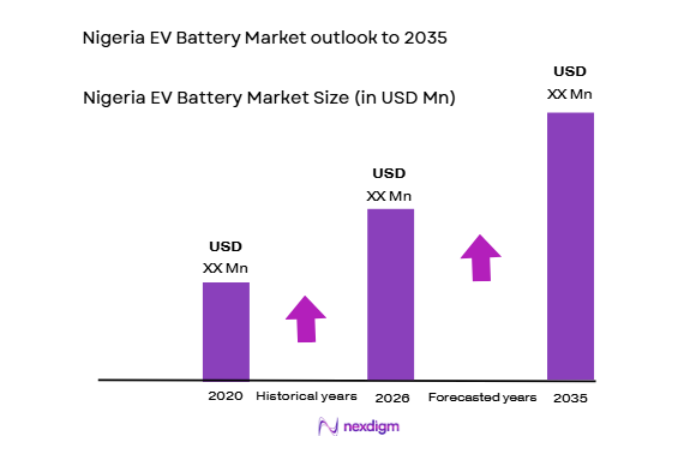
Nigeria EV battery market is gradually developing alongside the early adoption of electric vehicles and electrified mobility initiatives across urban transportation systems. Based on a recent historical assessment, the market size reached approximately USD ~ million, supported by pilot electric vehicle deployments, electric motorcycle projects, and fleet electrification initiatives promoted by clean mobility startups. Growth is driven by increasing interest in lithium-ion battery technology, government-backed sustainability initiatives, and partnerships between automotive technology companies and energy providers working to establish electric mobility ecosystems.
Urban demand is concentrated in Lagos, Abuja, and Port Harcourt due to stronger commercial transport networks and greater presence of electric mobility startups introducing electric motorcycles, buses, and fleet vehicles. Lagos dominates battery demand because of its large ride-hailing and delivery ecosystem transitioning toward electrified fleets. Abuja benefits from policy experimentation and smart city mobility initiatives, while Port Harcourt supports battery demand through industrial transport electrification initiatives and collaborations between energy companies and emerging electric mobility technology providers.
Market Segmentation
By Battery Type
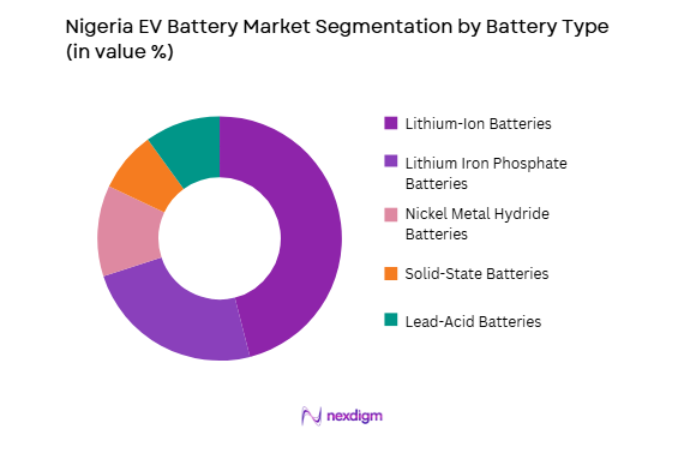
Nigeria EV Battery Market is segmented by battery type into Lithium-Ion Batteries, Lithium Iron Phosphate Batteries, Nickel Metal Hydride Batteries, Solid-State Batteries, and Lead-Acid Batteries. Recently, Lithium-Ion Batteries has a dominant market share due to factors such as demand patterns, brand presence, infrastructure availability, or consumer preference. Lithium-ion battery technology offers higher energy density, longer lifecycle performance, and faster charging capability compared to other battery chemistries, making it highly suitable for electric mobility applications in emerging markets. Electric motorcycles, delivery vehicles, and pilot electric buses introduced in Nigeria primarily utilize lithium-ion battery systems due to their superior performance reliability and weight efficiency.
By Vehicle Type
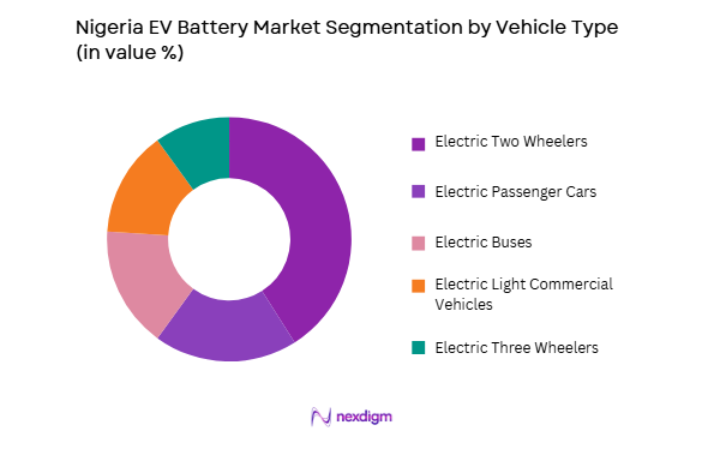
Nigeria EV Battery Market is segmented by vehicle type into Electric Two Wheelers, Electric Passenger Cars, Electric Buses, Electric Light Commercial Vehicles, and Electric Three Wheelers. Recently, Electric Two Wheelers has a dominant market share due to factors such as demand patterns, brand presence, infrastructure availability, or consumer preference. Electric motorcycles and two-wheelers are increasingly adopted by ride-hailing drivers and delivery operators because they offer lower operating costs and greater maneuverability in congested urban areas. Several Nigerian electric mobility startups focus primarily on electric motorcycle fleets for logistics and last-mile delivery services. These vehicles require smaller battery packs that can be swapped quickly, reducing downtime and improving operational efficiency for commercial operators.
Competitive Landscape
Nigeria EV battery market remains in an early development stage characterized by collaboration between global battery manufacturers, automotive companies, and local electric mobility startups. Major global battery technology companies dominate supply chains due to their advanced lithium-ion manufacturing capabilities and established partnerships with electric vehicle manufacturers. Local electric mobility companies participate through fleet electrification programs that integrate imported battery packs into electric motorcycles and commercial vehicles.
| Company Name | Establishment Year | Headquarters | Technology Focus | Market Reach | Key Products | Revenue | Battery Supply Integration |
| CATL | 2011 | China | ~ | ~ | ~ | ~ | ~ |
| LG Energy Solution | 2020 | South Korea | ~ | ~ | ~ | ~ | ~ |
| Panasonic Energy | 1994 | Japan | ~ | ~ | ~ | ~ | ~ |
| BYD | 1995 | China | ~ | ~ | ~ | ~ | ~ |
| MAX.ng | 2015 | Nigeria | ~ | ~ | ~ | ~ | ~ |
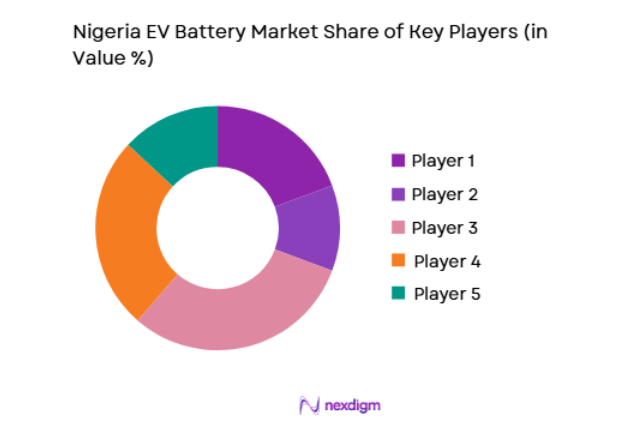
Nigeria EV Battery Market Analysis
Growth Drivers
Expansion of Electric Two-Wheeler and Delivery Fleet Electrification Programs
Rapid growth of ride-hailing services and last-mile delivery platforms across Nigeria is creating significant demand for electric two-wheelers and associated battery technologies. Urban delivery companies increasingly explore electric motorcycles to reduce operational costs associated with gasoline consumption and vehicle maintenance. Electric motorcycles offer improved energy efficiency and lower running costs compared to conventional internal combustion vehicles used for urban logistics operations. Battery technology plays a critical role in enabling electric motorcycle fleets by providing sufficient energy density and durability for daily delivery operations. Electric mobility startups across Lagos and Abuja are actively deploying electric motorcycles equipped with lithium-ion battery packs capable of supporting extended operating cycles. These companies often implement battery swapping systems that allow riders to exchange depleted battery packs for fully charged units within minutes. Battery swapping infrastructure significantly improves fleet efficiency by minimizing charging downtime and maximizing vehicle utilization. Delivery platforms and logistics companies increasingly partner with electric mobility startups to deploy electric fleets supported by centralized battery management systems. Government interest in promoting sustainable urban transportation solutions further strengthens the adoption of electric two-wheelers across major Nigerian cities.
Growing Renewable Energy Integration with Electric Mobility Infrastructure
Nigeria’s increasing investment in renewable energy technologies is encouraging integration between solar power systems and electric mobility infrastructure. Battery systems used in electric vehicles can be combined with solar-powered charging stations to reduce reliance on unstable electricity grid infrastructure. Renewable energy integration improves operational reliability for electric vehicle charging networks while reducing electricity costs associated with battery charging cycles. Several clean mobility projects in Nigeria deploy solar-assisted charging infrastructure capable of supporting electric motorcycles and electric buses. Renewable powered charging stations often include battery energy storage systems that store solar energy during daylight hours and supply electricity to vehicles during charging cycles. These integrated energy systems help mitigate power outages and voltage instability that frequently affect grid electricity supply across urban areas. Renewable energy developers increasingly collaborate with electric mobility startups to design solar-powered charging hubs supporting battery-powered transportation systems. Development finance institutions and climate investment funds also support renewable energy integration projects that combine transportation electrification with sustainable electricity generation. As renewable power generation continues expanding across Nigeria, battery systems will play a critical role in enabling reliable energy storage and electric mobility operations simultaneously.
Market Challenges
Limited Electric Vehicle Adoption and Early Stage Market Development
Nigeria EV battery market faces structural challenges associated with the limited adoption of electric vehicles across the broader automotive ecosystem. Electric vehicle penetration remains relatively low due to high upfront vehicle costs and limited consumer awareness regarding electric mobility technologies. Most electric mobility initiatives currently focus on pilot projects and small fleet deployments rather than large-scale vehicle adoption. Battery demand therefore remains concentrated within a limited number of electric motorcycles and pilot electric bus programs operating in major urban areas. The absence of widespread electric passenger vehicle adoption significantly reduces battery demand growth potential in the near term. Automotive dealerships and vehicle distributors have not yet widely introduced electric vehicle models within the Nigerian consumer market. Consumers often remain hesitant to adopt electric vehicles due to concerns about charging infrastructure availability and long-term battery replacement costs. These market conditions slow the expansion of battery demand across passenger car segments. Battery manufacturers and technology suppliers may therefore prioritize larger global markets before allocating substantial production capacity to Nigeria.
Dependence on Imported Battery Technology and Limited Domestic Manufacturing
Nigeria currently relies heavily on imported battery cells and battery pack technologies supplied by international manufacturers. Domestic battery manufacturing infrastructure remains limited, resulting in strong dependence on foreign supply chains for lithium-ion cells and battery management components. Importing battery technology increases product costs due to shipping expenses, customs duties, and foreign exchange volatility. Currency fluctuations can significantly influence battery pricing and affect affordability for electric vehicle operators and fleet owners. Local assembly of battery packs exists within certain electric mobility startups, but large-scale battery cell production facilities have not yet been established within the country. The absence of domestic manufacturing capabilities limits technological knowledge transfer and industrial capacity development. Battery recycling infrastructure also remains underdeveloped, creating potential environmental management challenges as battery adoption increases. Establishing local battery production facilities would require substantial capital investment and technical expertise across the battery manufacturing value chain. Without domestic manufacturing expansion, Nigeria may continue depending on international battery suppliers for electric mobility projects.
Opportunities
Development of Battery Swapping Networks for Electric Motorcycle Fleets
Battery swapping technology represents a major opportunity for accelerating electric vehicle adoption across Nigeria’s urban transport ecosystem. Electric motorcycle operators require rapid battery replacement solutions that allow vehicles to remain operational without lengthy charging downtime. Battery swapping stations allow riders to exchange depleted battery packs for fully charged units within minutes, significantly improving fleet efficiency. Electric mobility startups in Nigeria increasingly deploy swapping stations across major urban transport corridors supporting ride-hailing and delivery services. These networks require large inventories of standardized battery packs managed through centralized battery monitoring systems. Battery manufacturers and technology providers can collaborate with mobility startups to develop modular battery systems designed specifically for swapping applications. Battery swapping infrastructure also reduces range anxiety concerns by ensuring continuous access to fully charged battery units. Investors view battery swapping networks as scalable infrastructure capable of supporting thousands of electric motorcycles operating within dense urban areas. Government support for sustainable transportation initiatives may also encourage expansion of battery swapping programs within major cities. As battery swapping networks expand across Nigeria, the demand for high-performance lithium-ion battery packs is expected to increase substantially, creating new growth opportunities for battery manufacturers and energy technology providers.
Strategic Investment in Local Battery Assembly and Recycling Infrastructure
Establishing local battery assembly and recycling facilities offers significant long-term growth potential for Nigeria’s EV battery ecosystem. Local assembly operations could reduce reliance on imported battery packs by integrating locally assembled battery modules with imported lithium-ion cells. Domestic battery assembly facilities would create industrial employment opportunities while strengthening supply chain resilience within the electric mobility sector. Recycling infrastructure could also recover valuable battery materials such as lithium, nickel, and cobalt from used battery packs, supporting circular economy initiatives. Battery recycling facilities would help manage environmental risks associated with battery disposal while providing a secondary supply of raw materials for battery manufacturing. International battery manufacturers may explore joint ventures with Nigerian energy companies to establish regional battery assembly operations serving West African electric mobility markets. Renewable energy companies and electric mobility startups could collaborate with battery technology providers to develop integrated energy storage systems supporting electric transportation infrastructure. Government incentives supporting local manufacturing and technology transfer may further accelerate investment in battery production facilities.
Future Outlook
Nigeria EV battery market is expected to expand steadily as electric mobility adoption increases within commercial fleets and urban transport systems. Technological advancements in lithium-ion battery performance and battery swapping infrastructure will support broader deployment of electric motorcycles and commercial electric vehicles. Government interest in sustainable transportation and renewable energy integration may further stimulate electric vehicle adoption. Partnerships between international battery manufacturers, renewable energy developers, and local electric mobility startups are likely to drive long-term market development.
Major Players
- CATL
- LG Energy Solution
- Panasonic Energy
- BYD
- Samsung SDI
- Tesla Energy
- SK On
- AESC
- Toshiba Battery
- Amara Raja Batteries
- Exide Industries
- Farasis Energy
- Gotion High Tech
- SVOLT Energy
- MAX.ng
Key Target Audience
- Electric vehicle manufacturers
- Automotive battery suppliers
- Energy utilities and electricity distribution companies
- Electric mobility startups
- Renewable energy developers
- Automotive component manufacturers
- Investments and venture capitalist firms
- Government and regulatory bodies
Research Methodology
Step 1: Identification of Key Variables
The research process begins by identifying key market variables such as electric vehicle adoption levels, battery demand by vehicle segment, charging infrastructure expansion, and renewable energy integration trends within Nigeria’s electric mobility ecosystem.
Step 2: Market Analysis and Construction
Extensive secondary research using government energy publications, international automotive databases, corporate financial reports, and mobility technology studies is conducted to build a structured understanding of battery demand patterns.
Step 3: Hypothesis Validation and Expert Consultation
Industry insights are validated through consultations with electric mobility entrepreneurs, battery technology specialists, energy sector professionals, and transportation policy experts familiar with Nigeria’s emerging EV ecosystem.
Step 4: Research Synthesis and Final Output
Quantitative findings and qualitative insights are synthesized into a comprehensive analytical framework describing battery technology adoption, infrastructure requirements, investment drivers, and future market development scenarios.

- Executive Summary
- Research Methodology (Definitions, Scope, Industry Assumptions, Market Sizing Approach, Primary & Secondary Research Framework, Data Collection & Verification Protocol, Analytic Models & Forecast Methodology, Limitations & Research Validity Checks)

- Market Definition and Scope
- Value Chain & Stakeholder Ecosystem
- Regulatory / Certification Landscape
- Sector Dynamics Affecting Demand

- Growth Drivers
Increasing adoption of electric mobility to reduce dependence on imported fuel
Government initiatives encouraging low emission transportation technologies
Rising investment in local EV assembly and battery ecosystem development - Market Challenges
Limited domestic battery manufacturing infrastructure
High import dependency for lithium ion battery components
Inadequate charging infrastructure slowing EV adoption - Market Opportunities
Establishment of local battery assembly and pack integration facilities
Partnerships with international battery manufacturers for technology transfer
Growth of battery recycling and second life energy storage solutions - Trends
Adoption of lithium iron phosphate batteries for cost efficient EV applications
Emergence of battery swapping models for commercial electric mobility - Government Regulations
Electric mobility policy initiatives encouraging EV and battery ecosystem growth
Import duty structures affecting battery component supply chains
Environmental standards governing battery recycling and disposal - SWOT Analysis
- Porter’s Five Forces

- By Market Value, 2020-2025
- By Installed Units, 2020-2025
- By Average System Price, 2020-2025
- By System Complexity Tier, 2020-2025

- By System Type (In Value%)
Lithium Iron Phosphate Batteries
Nickel Manganese Cobalt Batteries
Nickel Cobalt Aluminum Batteries
Solid State Batteries
Lithium Titanate Batteries - By Platform Type (In Value%)
Electric Passenger Vehicles
Electric Two Wheelers
Electric Buses
Electric Commercial Vehicles
Electric Delivery Vans - By Fitment Type (In Value%)
Original Equipment Manufacturer Batteries
Aftermarket Replacement Batteries
Battery Swapping Compatible Packs
Modular Battery Pack Systems - By End User Segment (In Value%)
Private Electric Vehicle Owners
Commercial Fleet Operators
Public Transportation Authorities

- Market Share Analysis
- Cross Comparison Parameters (Battery Chemistry Type, Energy Density, Charging Time, Cycle Life Durability, Cost per kWh, Thermal Stability, Battery Pack Capacity, Safety Performance Standards, Supply Chain Integration, Recycling & Second Life Capability)
- SWOT Analysis of Key Competitors
- Pricing & Procurement Analysis
- Key Players
CATL
LG Energy Solution
BYD
Panasonic Energy
Samsung SDI
SK On
EVE Energy
CALB
Gotion High Tech
Farasis Energy
Toshiba Battery
SVOLT Energy Technology
Amperex Technology Limited
Contemporary Amperex Technology Systems
AESC

- Private EV owners increasing demand for reliable long range battery systems
- Commercial fleet operators prioritizing durable and fast charging compatible batteries
- Public transport electrification programs creating demand for high capacity battery packs
- Logistics companies exploring battery swapping to improve operational efficiency

- Forecast Market Value, 2026-2035
- Forecast Installed Units, 2026-2035
- Price Forecast by System Tier, 2026-2035
- Future Demand by Platform, 2026-2035


 Request a Sample
 Ask for Customization
 Get a Quote
 Enquire Now