
 Download PDF
 Download PDF
Market Overview
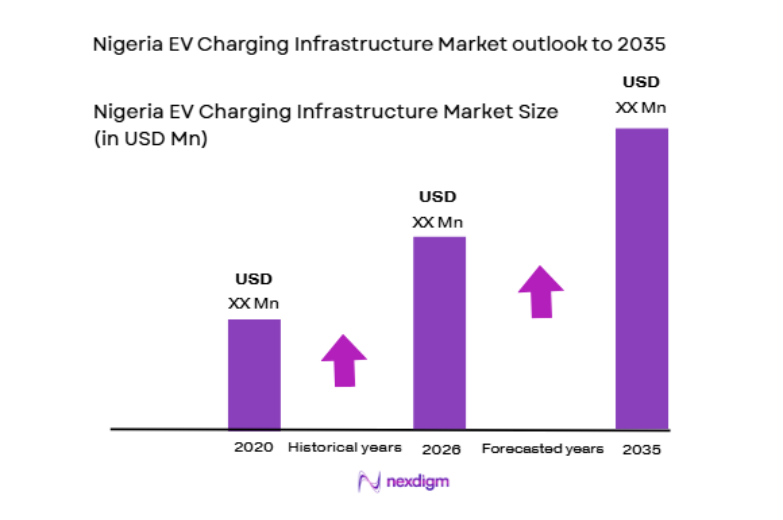
Nigeria EV charging infrastructure market is emerging alongside gradual electric mobility adoption, supported by urban transport electrification initiatives and pilot charging deployments. Based on a recent historical assessment, the market size reached approximately USD ~ million, reflecting infrastructure investments from government-backed clean mobility programs and early private sector charging operators. Expansion is primarily driven by urban fleet electrification pilots, renewable energy integration initiatives, and infrastructure partnerships between utilities, technology firms, and electric mobility startups establishing early charging networks.
Urban deployment is concentrated in Lagos, Abuja, and Port Harcourt due to stronger electricity distribution networks, higher electric mobility pilot adoption, and greater commercial vehicle electrification activity. Lagos dominates infrastructure installations because of dense transport demand, corporate fleet electrification programs, and the presence of clean mobility startups building charging corridors. Abuja benefits from government-backed smart mobility projects and regulatory experimentation, while Port Harcourt’s industrial transport demand and energy-sector investment ecosystem support early-stage charging infrastructure development.
Market Segmentation
By Charging Type
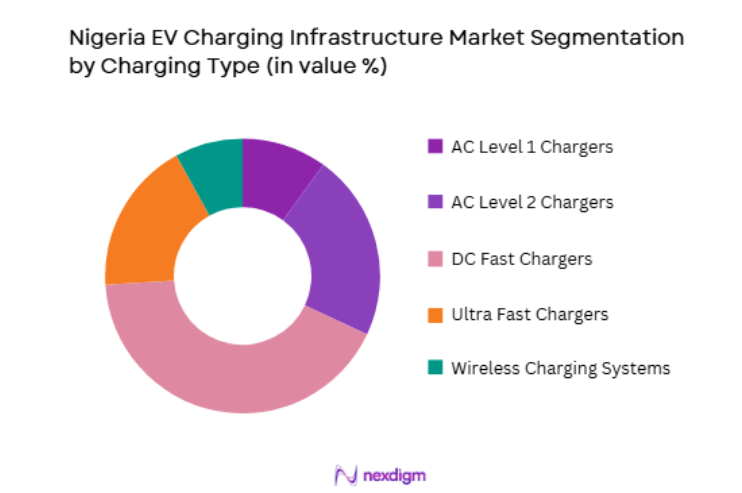
Nigeria EV Charging Infrastructure Market is segmented by charging type into AC Level 1 Chargers, AC Level 2 Chargers, DC Fast Chargers, Ultra Fast Chargers, and Wireless Charging Systems. Recently, DC Fast Chargers has a dominant market share due to factors such as demand patterns, brand presence, infrastructure availability, or consumer preference. Commercial fleet operators and pilot electric bus operators prioritize fast turnaround times to maximize vehicle utilization and operational efficiency. Urban mobility projects in Lagos and Abuja deploy DC fast charging stations along major transit corridors to support ride-hailing fleets and delivery vehicles transitioning toward electrification. Charging network operators also prefer DC fast chargers because fewer stations can support higher vehicle throughput, improving infrastructure economics. Additionally, corporate fleets and logistics operators require rapid charging to maintain tight delivery schedules. Government-supported smart mobility pilots often prioritize fast charging technologies to demonstrate feasibility and accelerate adoption.
By End User
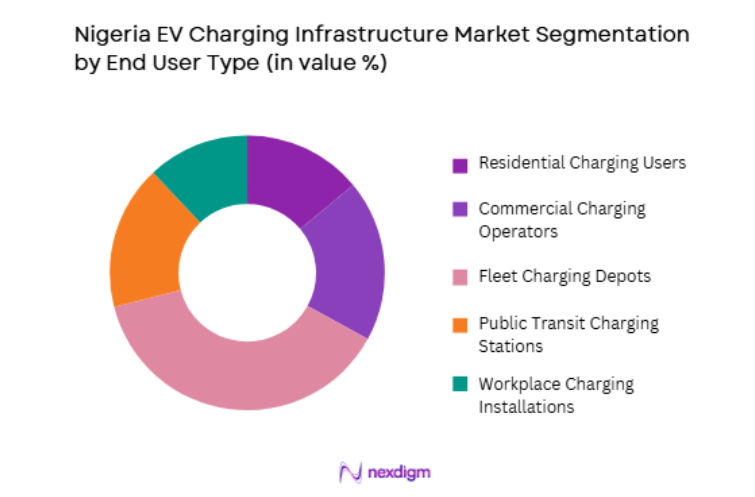
Nigeria EV Charging Infrastructure Market is segmented by end user into Residential Charging Users, Commercial Charging Operators, Fleet Charging Depots, Public Transit Charging Stations, and Workplace Charging Installations. Recently, Fleet Charging Depots has a dominant market share due to factors such as demand patterns, brand presence, infrastructure availability, or consumer preference. Commercial fleet electrification pilots led by logistics companies, ride-hailing services, and delivery operators drive concentrated charging demand within centralized depot environments. Fleet charging infrastructure allows operators to control electricity consumption, schedule charging cycles overnight, and optimize fleet utilization. Many Nigerian electric mobility startups deploy charging stations within private depots to mitigate grid instability and ensure reliable vehicle operations.
Competitive Landscape
Nigeria EV charging infrastructure market remains moderately concentrated with a mix of international technology providers and local electric mobility startups establishing early charging networks. Infrastructure development is driven by partnerships between renewable energy firms, mobility startups, and technology integrators that deploy solar-assisted charging stations to mitigate grid reliability issues. Large energy companies and engineering firms also participate through pilot charging deployments supporting fleet electrification projects and smart mobility programs. Competition increasingly revolves around technology reliability, solar integration capability, and charging network expansion.
| Company Name | Establishment Year | Headquarters | Technology Focus | Market Reach | Key Products | Revenue | Charging Network Strategy |
| Shell Recharge | 2017 | Netherlands | ~ | ~ | ~ | ~ | ~ |
| Siemens | 1847 | Germany | ~ | ~ | ~ | ~ | ~ |
| ABB | 1988 | Switzerland | ~ | ~ | ~ | ~ | ~ |
| NIO Power | 2017 | China | ~ | ~ | ~ | ~ | ~ |
| Qoray Mobility | 2021 | Nigeria | ~ | ~ | ~ | ~ | ~ |
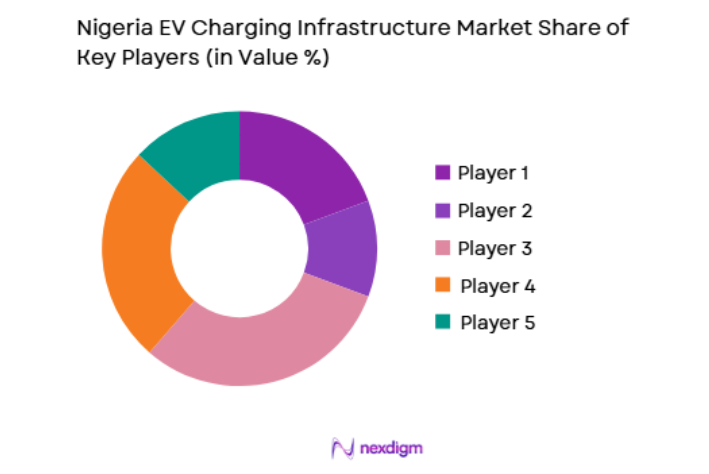
Nigeria EV Charging Infrastructure Market Analysis
Growth Drivers
Electric Mobility Adoption Driven by Urban Transport Electrification Programs
Rapid urbanization in Nigeria is increasing demand for sustainable transport systems capable of reducing air pollution and fuel dependency across major metropolitan areas such as Lagos and Abuja. Urban transportation authorities increasingly support electric mobility initiatives designed to modernize public transit systems and reduce reliance on imported fossil fuels. Several electric bus pilot programs and fleet electrification initiatives have emerged through collaborations between clean mobility startups, government agencies, and international development organizations. These initiatives require dedicated charging infrastructure capable of supporting high vehicle utilization rates and centralized fleet charging operations. Ride-hailing operators and logistics companies also experiment with electric vehicles to reduce operational costs associated with gasoline price volatility. Urban air quality improvement programs further encourage municipal authorities to support charging infrastructure installation within city transport networks. Infrastructure providers respond by developing fast charging hubs capable of supporting fleet vehicles and public transit systems simultaneously. Government interest in sustainable urban mobility strengthens investor confidence and encourages private sector participation in charging infrastructure deployment. As electric mobility gradually scales across commercial transport sectors, the demand for reliable charging infrastructure becomes a foundational component of Nigeria’s broader transportation modernization strategy.
Renewable Energy Integration with EV Charging Infrastructure Deployment
Nigeria’s electricity reliability challenges create a strong incentive for integrating renewable energy technologies with electric vehicle charging infrastructure systems. Charging operators increasingly deploy solar-powered charging stations combined with battery energy storage to ensure stable electricity supply independent of grid fluctuations. Solar-assisted charging hubs reduce operational costs by leveraging abundant solar resources while minimizing reliance on diesel generators commonly used for backup electricity generation. Renewable energy integration also aligns with sustainability objectives promoted by international development organizations financing clean mobility projects across emerging markets. Many charging startups collaborate with renewable energy developers to build integrated solar charging systems capable of supporting electric vehicles while stabilizing power availability. Hybrid energy systems combining solar generation, battery storage, and grid electricity provide operational flexibility necessary for consistent charging service. Renewable-powered charging infrastructure also improves environmental benefits associated with electric mobility by reducing lifecycle carbon emissions from vehicle charging activities. Development finance institutions and climate investment funds increasingly support renewable charging infrastructure projects that combine clean electricity generation with transportation electrification initiatives. These financing mechanisms help mitigate early infrastructure investment risks while accelerating deployment of distributed charging networks.
Market Challenges
Electric Grid Reliability Constraints Affecting Charging Infrastructure Deployment
Nigeria EV charging infrastructure market faces a major structural challenge associated with inconsistent electricity supply across many urban and rural regions. Power outages, voltage fluctuations, and distribution network limitations complicate the deployment of reliable charging networks required for electric vehicle operations. Charging stations require stable electricity availability to maintain predictable charging times and operational reliability for fleet operators and individual EV users. Frequent grid disruptions force charging providers to invest in backup power systems such as diesel generators or battery storage solutions. These additional infrastructure components increase capital expenditure requirements and extend the financial payback period for charging network investments. Electricity distribution capacity constraints in densely populated urban centers further limit the number of high-capacity charging stations that can be deployed within existing power infrastructure. Charging network operators must collaborate closely with local electricity distribution companies to secure sufficient grid connections and energy supply agreements. In some regions, grid upgrades may be necessary before fast charging stations can be installed, delaying infrastructure expansion. These challenges increase operational complexity for charging infrastructure developers attempting to scale nationwide networks. Without continued improvements in electricity distribution reliability, charging infrastructure deployment may remain concentrated within select urban areas where grid capacity and energy availability are more stable.
High Initial Capital Investment Requirements for Charging Infrastructure Networks
Establishing a functional EV charging network requires substantial upfront investment in charging hardware, grid connection upgrades, energy management systems, and physical site development. Fast charging stations capable of supporting commercial fleets involve high equipment costs due to advanced power electronics, cooling systems, and network connectivity requirements. Charging network developers must also secure suitable locations for charging hubs, including land leasing agreements and construction permits. Additional investment is required for integrating renewable energy systems and battery storage technologies used to mitigate grid instability challenges. Early-stage EV markets such as Nigeria face slower infrastructure utilization rates because electric vehicle adoption remains limited during initial development phases. Lower utilization reduces revenue generation for charging operators and increases financial risk associated with infrastructure deployment. Financing institutions may view early-stage charging networks as higher risk investments due to uncertain demand growth patterns. Infrastructure providers therefore depend heavily on government incentives, development finance institutions, and strategic partnerships with mobility operators to offset capital costs. Long infrastructure payback periods may discourage smaller private investors from entering the market. These financial barriers slow charging network expansion and create a gradual infrastructure rollout trajectory until electric vehicle adoption reaches a level capable of sustaining profitable charging operations.
Opportunities
Commercial Fleet Electrification Across Logistics and Ride-Hailing Platforms
Nigeria’s rapidly growing logistics, ride-hailing, and delivery sectors present a significant opportunity for EV charging infrastructure development. Commercial fleet operators prioritize operational efficiency and cost optimization, creating incentives to adopt electric vehicles capable of reducing fuel expenditures and maintenance costs. Large urban fleets operating within predictable routes can rely on centralized charging depots, simplifying infrastructure planning and improving charging station utilization rates. Charging network providers increasingly partner with logistics companies and ride-hailing platforms to deploy dedicated fleet charging facilities integrated with fleet management software. These partnerships provide infrastructure developers with predictable electricity demand and long-term service contracts supporting financial sustainability. Delivery companies operating electric motorcycles and vans also require reliable charging infrastructure located near distribution hubs. Fleet electrification initiatives supported by international climate finance institutions further strengthen investment opportunities for charging network developers. Government interest in reducing urban air pollution and transportation emissions may also encourage incentives for fleet electrification programs. Charging infrastructure integrated with fleet operations can scale rapidly because centralized depots allow multiple vehicles to charge simultaneously during scheduled operational downtime. As commercial fleets transition toward electric mobility solutions, charging infrastructure providers can expand network coverage while securing stable revenue streams through long-term fleet charging contracts.
Solar Powered Charging Corridors Supporting Intercity Electric Mobility
Solar powered charging corridors represent a promising opportunity for expanding electric vehicle adoption beyond urban centers across Nigeria. Renewable energy powered charging stations can be deployed along major highway routes connecting Lagos, Abuja, Port Harcourt, and other economic hubs. Solar charging infrastructure reduces dependence on unstable grid electricity while enabling reliable long distance electric vehicle travel. Charging corridor projects often combine photovoltaic generation systems, battery energy storage, and high power charging equipment capable of supporting passenger vehicles and commercial transport fleets. Renewable powered charging networks also attract financing from climate investment funds and international sustainability initiatives focused on reducing transportation emissions. Strategic placement of solar charging stations along highways supports electric buses, intercity logistics vehicles, and private EV users traveling between metropolitan regions. These corridors could significantly improve consumer confidence in electric mobility by addressing range anxiety concerns associated with limited charging availability. Solar infrastructure also allows charging networks to operate in remote areas where grid connectivity is limited or unreliable. Energy companies and renewable developers increasingly explore integrated projects combining solar farms with EV charging facilities.
Future Outlook
Nigeria EV charging infrastructure market is expected to experience gradual expansion as electric mobility adoption increases within commercial fleets and urban transport systems. Infrastructure deployment will likely focus on fast charging hubs integrated with renewable energy solutions to mitigate electricity reliability challenges. Government policies supporting clean mobility and urban air quality improvements may encourage private investment in charging networks. Partnerships between energy companies, mobility startups, and international development institutions will play a crucial role in scaling nationwide charging coverage.
Major Players
- ABB
- Siemens
- Shell Recharge
- Tesla
- ChargePoint
- NIO Power
- Schneider Electric
- EVBox
- Blink Charging
- Tritium
- Qoray Mobility
- BMW Charging
- Hyundai Charging Solutions
- Delta Electronics
- Eaton
Key Target Audience
- Electric vehicle manufacturers
- Charging infrastructure developers
- Energy utilities and electricity distribution companies
- Renewable energy project developers
- Automotive component manufacturers
- Logistics and ride hailing fleet operators
- Investments and venture capitalist firms
- Government and regulatory bodies
Research Methodology
Step 1: Identification of Key Variables
The research process begins with identification of critical market variables including charging infrastructure installations, EV adoption patterns, energy infrastructure capacity, and regulatory policies influencing electric mobility deployment across Nigeria’s transportation ecosystem.
Step 2: Market Analysis and Construction
Comprehensive secondary research is conducted using government publications, international energy databases, corporate disclosures, and mobility reports to construct an integrated understanding of charging infrastructure demand and investment trends.
Step 3: Hypothesis Validation and Expert Consultation
Industry experts including charging infrastructure developers, electric mobility startups, utility operators, and transportation analysts validate research assumptions and provide insights regarding technological deployment and operational challenges.
Step 4: Research Synthesis and Final Output
All quantitative findings and qualitative insights are synthesized into structured analytical frameworks, producing an integrated market report outlining infrastructure deployment patterns, investment drivers, competitive dynamics, and future growth potential.

- Executive Summary
- Research Methodology (Definitions, Scope, Industry Assumptions, Market Sizing Approach, Primary & Secondary Research Framework, Data Collection & Verification Protocol, Analytic Models & Forecast Methodology, Limitations & Research Validity Checks)

- Market Definition and Scope
- Value Chain & Stakeholder Ecosystem
- Regulatory / Certification Landscape
- Sector Dynamics Affecting Demand

- Growth Drivers
Rising electric vehicle adoption supported by urban mobility electrification initiatives
Government interest in reducing fuel import dependency and promoting clean transportation
Expansion of renewable energy powered charging stations across urban centers - Market Challenges
Limited grid reliability and electricity distribution constraints in several regions
High initial capital expenditure for charging infrastructure deployment
Low awareness and limited EV ecosystem maturity among consumers - Market Opportunities
Development of solar powered EV charging hubs to address grid limitations
Partnerships between energy companies and mobility service providers
Expansion of charging networks along interstate transport corridors - Trends
Integration of smart charging software and energy management platforms
Growing deployment of renewable energy integrated EV charging stations - Government Regulations
Electric mobility policies supporting EV charging infrastructure development
Standards for charging connectors and grid interconnection compliance
Incentive frameworks encouraging clean energy transport investments - SWOT Analysis
- Porter’s Five Forces

- By Market Value, 2020-2025
- By Installed Units, 2020-2025
- By Average System Price, 2020-2025
- By System Complexity Tier, 2020-2025

- By System Type (In Value%)
AC Slow Charging Systems
DC Fast Charging Systems
Ultra-Fast High Power Charging Systems
Wireless Inductive Charging Systems
Battery Swapping Charging Systems - By Platform Type (In Value%)
Public Charging Infrastructure
Private Residential Charging Infrastructure
Commercial Fleet Charging Infrastructure
Highway Corridor Charging Infrastructure
Workplace Charging Infrastructure - By Fitment Type (In Value%)
Standalone Charging Stations
Integrated Smart Charging Systems
Portable Charging Units
Networked Charging Infrastructure - By End User Segment (In Value%)
Passenger Electric Vehicle Owners
Commercial Fleet Operators
Public Transport Authorities

- Market Share Analysis
- Cross Comparison Parameters (Charging Technology Type, Power Output Capacity, Connector Standard Compatibility, Smart Charging & Network Integration, Installation Model, Pricing Structure, Energy Source Integration, Maintenance & Service Support, Interoperability with EV Platforms, Deployment Environment)
- SWOT Analysis of Key Competitors
- Pricing & Procurement Analysis
- Key Players
ABB
Siemens
Schneider Electric
ChargePoint
Shell Recharge Solutions
EVBox
Delta Electronics
Tritium
Enel X
BP Pulse
TotalEnergies Charging Solutions
Eaton
Huawei Digital Power
Arnergy Solar
Daystar Power

- Passenger EV owners driving demand for residential and destination charging solutions
- Fleet operators adopting centralized fast charging infrastructure for operational efficiency
- Public transport agencies exploring electrified bus charging networks in urban corridors
- Corporate campuses installing workplace charging to support employee EV adoption

- Forecast Market Value, 2026-2035
- Forecast Installed Units, 2026-2035
- Price Forecast by System Tier, 2026-2035
- Future Demand by Platform, 2026-2035


 Request a Sample
 Ask for Customization
 Get a Quote
 Enquire Now