

 Download PDF
Market Overview
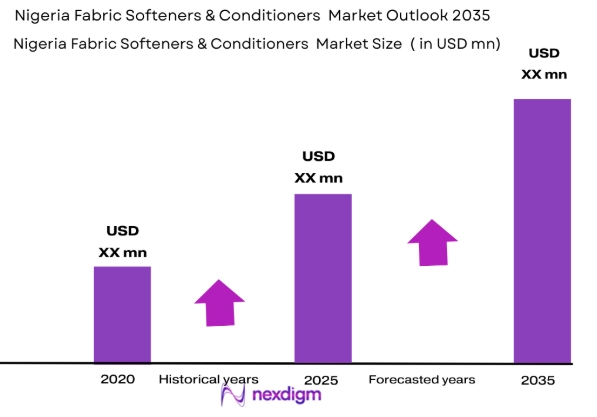
The Nigeria fabric softeners and conditioners market is valued at approximately USD ~ million in 2025, supported by strong demand from household consumers and expanding urban lifestyles. Nigeria’s population exceeds 220 million, creating a large consumer base for daily-use home care products. The broader laundry care industry continues to expand due to rising awareness of hygiene and improved living standards.
The market is concentrated in urban centers such as Lagos, Abuja, and Port Harcourt, where higher income levels and better retail infrastructure drive product adoption. Lagos dominates due to its dense population and commercial activity. Abuja contributes through rising middle-class consumption, while Rivers State supports demand through industrial and service sector growth. Increasing penetration of washing machines and modern retail outlets is further supporting market expansion.
Market Segmentation
By Product Type
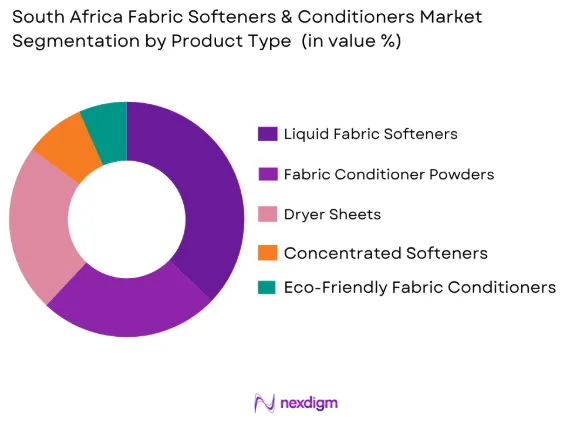
The Nigeria fabric softeners and conditioners market is segmented into liquid softeners, powder-based conditioners, dryer sheets, concentrated variants, and eco-friendly products. Liquid fabric softeners dominate the market due to their ease of use and affordability. Consumers prefer liquid formats for their fragrance retention and compatibility with both hand and machine washing. Additionally, sachet packaging has increased accessibility among price-sensitive consumers, strengthening demand for liquid variants.
By Ingredient Type
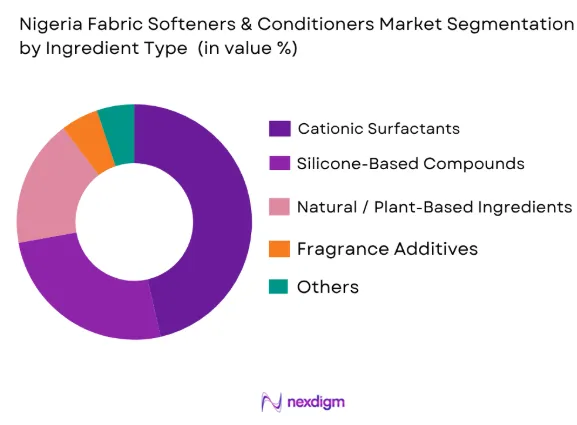
The market is segmented into cationic surfactants, silicone-based compounds, plant-based ingredients, fragrance additives, and others. Cationic surfactants dominate due to their effectiveness in softening fabrics and reducing static. However, there is a gradual shift toward plant-based ingredients as awareness of environmental and health concerns increases.
Competitive Landscape
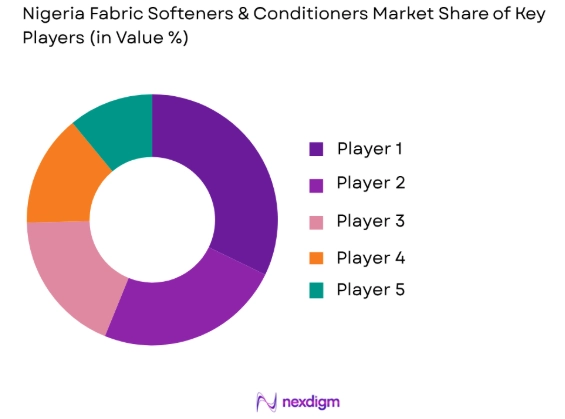
The Nigeria fabric softeners and conditioners market is moderately fragmented, with a mix of multinational and local players. International brands dominate premium segments due to strong brand presence and product quality, while local companies compete through affordability and wide distribution networks.
| Company | Establishment Year | Headquarters | Product Focus | Distribution Network | Competitive Advantage |
| Procter & Gamble | 1837 | USA | ~ | ~ | ~ |
| Unilever | 1929 | UK/Netherlands | ~ | ~ | ~ |
| Reckitt Benckiser | 1999 | UK | ~ | ~ | ~ |
| Eko Supreme Nigeria Ltd | 1996 | Nigeria | ~ | ~ | ~ |
| Aspira Nigeria Ltd | 2009 | Nigeria | ~ | ~ | ~ |
Nigeria Fabric Softeners & Conditioners Market Analysis
Growth Drivers
Rapid Urbanization and Population Growth
Nigeria’s fabric softeners and conditioners market is supported by rapid urbanization and a large, growing population. As more consumers move into cities, laundry routines become more structured, with greater use of branded detergents, washing machines, and fabric care products. Urban households are more exposed to supermarkets, open markets, brand promotions, and modern FMCG distribution, which improves awareness of fabric conditioners. Population growth also increases the size of the addressable consumer base, especially among young families and working households. In urban areas, consumers often seek products that make clothes softer, fresher, and easier to manage after washing. Although affordability remains important, rising city-based consumption creates long-term demand potential for fabric softeners across both value and mid-range product segments.
Expansion of Laundry Services and Urban Lifestyles
The expansion of laundry services in Nigerian cities is creating additional demand for fabric softeners and conditioners. Busy urban lifestyles, smaller living spaces, and limited time for household chores are encouraging more consumers to use laundromats, dry cleaners, and neighborhood laundry services. These businesses use fabric care products to improve the softness, fragrance, and finish of clothing, helping them differentiate their services. Fabric conditioners are especially useful for customers who expect freshly scented clothes, bedding, and uniforms. As urban employment grows and consumers outsource more domestic tasks, commercial laundry operators are likely to become an important user group. This trend supports bulk purchasing opportunities and creates demand for affordable, reliable, and long-lasting fragrance products suited to frequent laundry use.
Market Challenges
High Price Sensitivity in Mass Market
High price sensitivity is a major challenge for Nigeria’s fabric softeners and conditioners market. Many consumers prioritize essential household items such as food, detergent, electricity, and transport before buying fabric conditioners. As a result, fabric softeners may be viewed as optional rather than necessary, especially among lower-income households. Inflation and reduced purchasing power can further limit regular usage. Consumers may buy smaller quantities, choose cheaper alternatives, dilute products, or skip conditioners entirely. This creates pressure on brands to offer affordable pack sizes and strong value-for-money claims. Without accessible pricing, the category may struggle to expand beyond urban middle-income consumers. Companies must balance affordability with fragrance, softness, and product quality to build repeat demand in the mass market.
Limited Penetration in Rural Areas
Fabric softeners and conditioners have limited penetration in many rural areas of Nigeria due to lower disposable income, weaker distribution networks, and limited awareness of specialized laundry care products. Many rural households rely on traditional washing methods and may prioritize basic detergent or bar soap over fabric conditioners. Retail access can also be inconsistent, with fewer supermarkets and modern trade outlets compared with urban centers. Smaller shops may avoid stocking fabric softeners if turnover is slow or consumer demand is uncertain. This limits market reach and slows category adoption outside major cities. To expand rural demand, brands need affordable sachets, small bottles, education-driven marketing, and stronger wholesale distribution. Rural growth will likely depend on proving clear value, convenience, and fragrance benefits.
Opportunities
Rising Demand for Affordable Small-Pack Products
Affordable small-pack products offer a strong opportunity in Nigeria’s fabric softeners and conditioners market. Because many consumers are highly price-sensitive, smaller bottles or sachets can make fabric conditioners more accessible for first-time and low-income buyers. These formats reduce the upfront purchase cost while allowing consumers to test the product before committing to larger packs. Small packs are also suitable for informal retail channels, kiosks, and open markets where daily or weekly household purchases are common. Brands can use this strategy to increase trial, build familiarity, and encourage repeat use. Clear messaging around number of washes, fragrance strength, and softness benefits can improve adoption. Small-pack formats can help fabric conditioners move from a premium urban product toward broader mass-market consumption.
Increasing Adoption in Commercial Laundry Services
Commercial laundry services present a growing opportunity for fabric softeners and conditioners in Nigeria. As urban consumers increasingly use laundromats, dry cleaners, and neighborhood laundry operators, these businesses need products that improve clothing softness, freshness, and customer satisfaction. Fabric conditioners can help laundry services differentiate through long-lasting fragrance and better fabric feel, especially for uniforms, bedding, towels, and everyday clothing. Bulk formats and cost-effective concentrates are particularly attractive for commercial users because they reduce cost per wash and support frequent usage. Brands can target this segment with larger packs, wholesale pricing, and reliable supply through distributors. As more consumers outsource laundry in major cities, commercial laundry demand can become an important growth channel for fabric conditioner manufacturers.
Future Outlook
Over the next decade, the Nigeria fabric softeners and conditioners market is expected to grow steadily due to population growth, urbanization, rising household hygiene awareness, and increasing adoption of modern laundry practices. Demand will be supported by expanding middle-income households, higher use of branded laundry care products, and stronger consumer preference for fragrance, softness, and freshness benefits.
Improved distribution networks, expansion of supermarkets, convenience stores, open-market retail, and e-commerce channels will further support market growth. Product innovation in concentrated fabric conditioners, refill pouches, sachets, baby-safe variants, and long-lasting fragrance formulations is expected to increase penetration across urban and semi-urban households. Commercial laundries, hotels, hospitals, and institutional buyers will also contribute to demand for bulk and value-pack fabric conditioner products.
Major Players
- Procter & Gamble Nigeria
- Unilever Nigeria
- Reckitt Benckiser
- Henkel
- Church & Dwight
- Eko Supreme Nigeria Ltd
- Aspira Nigeria Ltd
- SC Johnson
- Multipro Consumer Products Ltd
Key Target Audience
- Household consumers
- Commercial laundry operators
- Hospitality sector
- Retail and wholesale distributors
- Supermarkets and convenience stores
- Open-market traders
- E-commerce platforms
- Packaging suppliers
- Fragrance and specialty chemical suppliers
- Investors and private equity firms
- Government and regulatory authorities
Research Methodology
Step 1: Identification of Key Variables
The initial phase involves identifying key stakeholders in the Nigeria fabric softeners and conditioners market, including manufacturers, importers, distributors, wholesalers, retailers, e-commerce platforms, household consumers, commercial laundries, and hospitality buyers. Secondary sources such as government data, trade statistics, company disclosures, retail information, and FMCG industry reports are used to identify variables influencing market demand.
Step 2: Market Analysis and Construction
Historical data is analyzed to understand household laundry habits, population growth, urbanization, retail penetration, product pricing, packaging preferences, and regional consumption trends. The study evaluates fabric conditioner usage across households, laundromats, hotels, hospitals, and institutional buyers to construct a reliable market model.
Step 3: Hypothesis Validation and Expert Consultation
Industry experts are consulted to validate market assumptions and provide insights into category dynamics. These include FMCG distributors, supermarket category managers, open-market wholesalers, commercial laundry operators, hospitality procurement teams, and product formulation specialists. These consultations help refine estimates related to market size, pricing, consumer behavior, competitive positioning, and future growth.
Step 4: Research Synthesis and Final Output
The final phase integrates primary and secondary research findings to deliver a validated market assessment. Data triangulation ensures consistency across market size, segmentation, growth drivers, challenges, opportunities, competitive landscape, and future outlook.

- Executive Summary
- Research Methodology (Market Definitions and Assumptions, Abbreviations, Market Sizing Approach, Consolidated Research Approach, Understanding Market Potential Through In-Depth Industry Interviews, Primary Research Approach, Limitations and Future Conclusions)

- Definition and Scope
- Market Dynamics Overview
- Market Genesis
- Major Players and Market Timeline
- Business Cycle and Trends
- Supply Chain and Value Chain Analysis

- Growth Drivers
Rapid Urbanization and Population Growth
Increasing Awareness of Hygiene and Fabric Care
Expansion of Laundry Services and Urban Lifestyles
Growth in Retail Distribution and FMCG Penetration - Market Challenges
High Price Sensitivity in Mass Market
Competition from Traditional Washing Methods
Limited Penetration in Rural Areas
Supply Chain and Distribution Constraints
- Opportunities
Rising Demand for Affordable Small-Pack Products
Growth in Eco-Friendly and Natural Fabric Softeners
Expansion of Organized Retail and E-commerce
Increasing Adoption in Commercial Laundry Services - Key Trends
Shift toward liquid and easy-to-use formats
Growing popularity of fragrance-enhanced products
Rising demand for plant-based and skin-safe formulations
Expansion of sachet packaging for affordability - Government Regulations
- SWOT Analysis
- Porter’s Five Forces

- By Value, 2020–2025
- By Volume, 2020–2025
- By Average Price, 2020–2025

- By Product Type (In Value %)
Liquid Fabric Softeners
Fabric Conditioner Powders
Dryer Sheets
Concentrated Softeners
Eco-Friendly / Herbal Variants - By Ingredient Type (In Value %)
Cationic Surfactants
Silicone-Based Compounds
Plant-Based Ingredients
Fragrance Additives
Others - By Application (In Value %)
Household
Commercial Laundry Services
Hospitality Sector
Healthcare Institutions - By Distribution Channel (In Value %)
Open Markets and Informal Retail
Supermarkets and Hypermarkets
Online Channels
Wholesale Distributors
Direct Sales - By Region (In Value %)
Lagos
Abuja (FCT)
Kano
Rivers State
Rest of Nigeria

- Market Share of Major Players by Value/Volume
- Market Share of Major Players by Product Type
- Cross Comparison Parameters (Company Overview, Business Strategies, Recent Developments, Strength, Weakness, Organizational Structure, Revenues, Distribution Channels, Margins, Production Capacity, and Unique Value Offering)
- SWOT Analysis of Major Players
- Pricing Analysis Based on Product Categories for Major Players
- Detailed Profiles of Major Companies
Procter & Gamble Nigeria
Unilever Nigeria
Reckitt Benckiser
Henkel
Church & Dwight
Eko Supreme Nigeria Ltd
Aspira Nigeria Ltd
SC Johnson
Multipro Consumer Products Ltd
Local FMCG Distributors

- Market Demand and Utilization
- Purchasing Power and Spending Behavior
- Regulatory and Compliance Requirements
- Needs, Preferences, and Pain Points
- Decision-Making Process

- By Value, 2026–2035
- By Volume, 2026–2035
- By Average Price, 2026–2035


 Request a Sample
 Ask for Customization
 Get a Quote
 Enquire Now