

 Download PDF
Market Overview
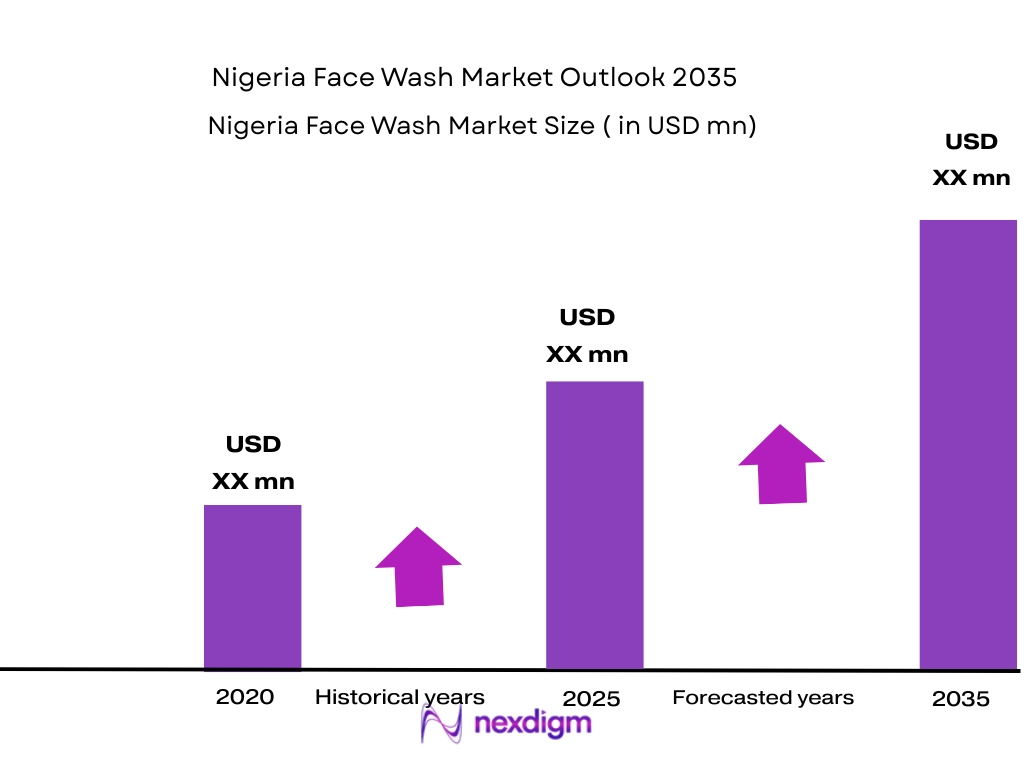
The Nigeria Face Wash market is valued at USD ~ million, reflecting steady growth from USD 345 million in 2024, based on recent industry analysis. This expansion is largely driven by increasing consumer awareness regarding skincare, growing disposable income among urban populations, and the rising penetration of e-commerce platforms. The market is also fueled by heightened demand for specialized face wash products targeting acne, anti-aging, and sensitive skin, which are increasingly being adopted by both male and female consumers.
Lagos, Abuja, and Rivers dominate the Nigeria Face Wash market due to their large urban population, higher income levels, and concentration of retail and modern trade outlets. Lagos serves as the commercial hub with access to international and local brands, while Abuja’s growing middle-class population supports premium product adoption. Rivers benefits from industrialization and exposure to urban lifestyle trends. The dominance of these cities is reinforced by the widespread presence of e-commerce platforms, which facilitate easy access to skincare products for urban consumers.
Market Segmentation
By Product Type
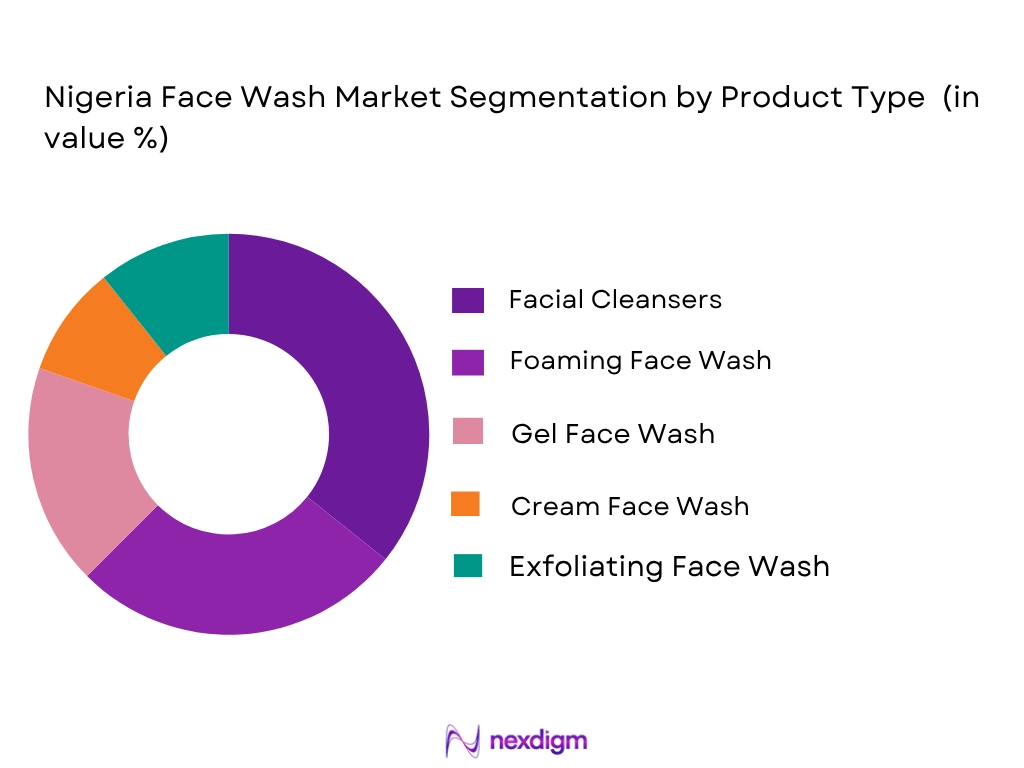
Nigeria Face Wash market is segmented by product type into foaming face wash, gel face wash, cream face wash, exfoliating face wash, and facial cleansers. Recently, foaming face wash has gained dominant market share due to its popularity among young consumers seeking effective daily cleansing solutions that remove excess oil and impurities. The preference for foaming products is driven by convenience, ease of use, and strong marketing campaigns by brands targeting urban millennials. Local and international brands have also positioned foaming face washes as suitable for both daily skincare routines and problem-specific treatment, reinforcing their market dominance.
By Skin Type
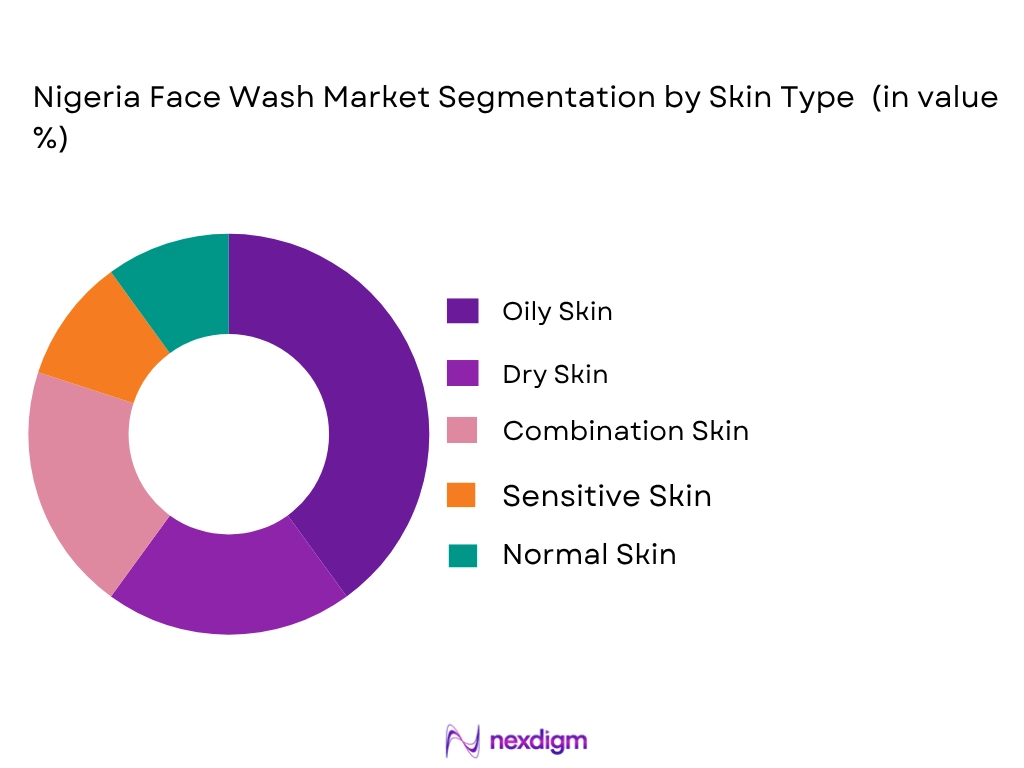
The market is segmented by skin type into oily skin, dry skin, combination skin, sensitive skin, and normal skin. Products for oily skin dominate the market due to the high prevalence of oily and combination skin types in Nigeria. Consumers prefer face wash products that reduce oiliness, prevent acne, and provide a refreshed feel. International brands often promote formulations tailored for oily skin, emphasizing deep cleansing and antibacterial benefits. Urban consumers particularly favor products with innovative ingredients such as salicylic acid and tea tree oil, which enhance effectiveness and appeal to skincare-conscious buyers.
Competitive Landscape
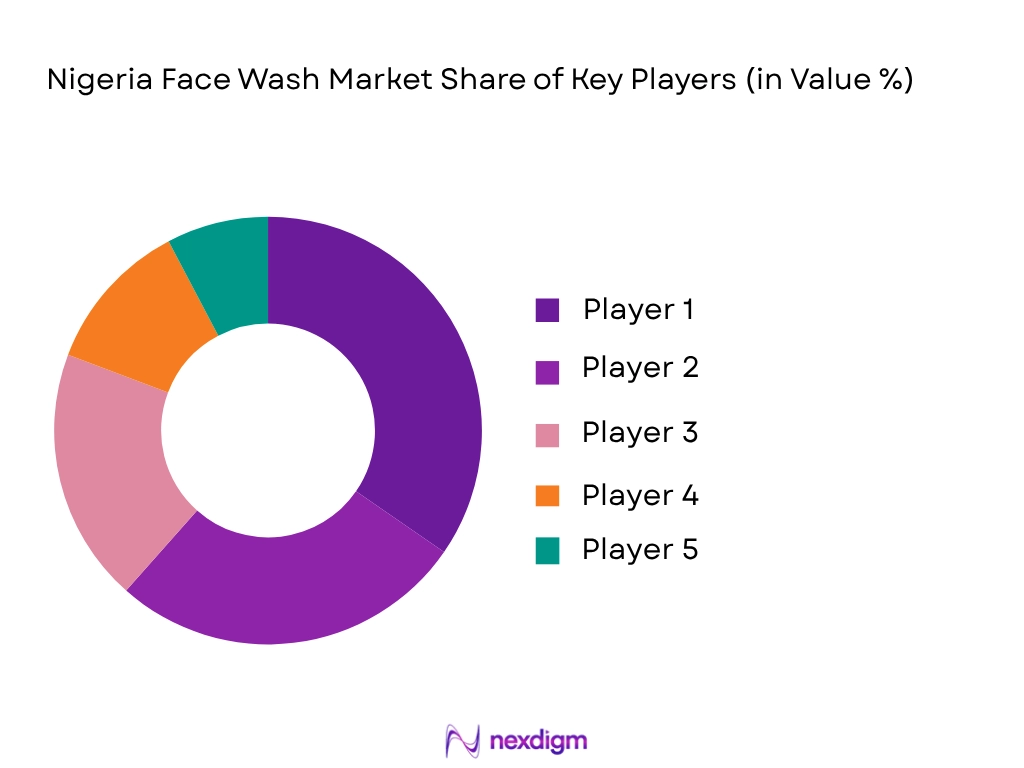
The Nigeria Face Wash market is dominated by a few major multinational and local players, including Unilever Nigeria and Procter & Gamble Nigeria. These companies maintain strong brand recognition, extensive distribution networks, and comprehensive product portfolios. Their dominance reflects consolidated market influence and the ability to adapt products to local consumer preferences. Competition among top players emphasizes marketing campaigns, product innovations, and retail presence, which directly influence consumer choice.
| Company | Establishment Year | Headquarters | Revenue (USD Million) | Product Range | Number of Distribution Channels | Production Plants | Key Strength |
| Unilever Nigeria | 1923 | Lagos, Nigeria | ~ | ~ | ~ | ~ | ~ |
| Procter & Gamble Nigeria | 1837 | Lagos, Nigeria | ~ | ~ | ~ | ~ | ~ |
| Beiersdorf AG | 1882 | Lagos, Nigeria | ~ | ~ | ~ | ~ | ~ |
| L’Oréal Nigeria | 1909 | Lagos, Nigeria | ~ | ~ | ~ | ~ | ~ |
| Johnson & Johnson Nigeria | 1886 | Lagos, Nigeria | ~ | ~ | ~ | ~ | ~ |
Nigeria Face Wash Market Analysis
Growth Drivers
Expansion of Skincare Awareness and Beauty Industry
In Nigeria, growing awareness of skincare and personal grooming has significantly contributed to face wash market growth. Influences from social media, beauty influencers, and educational campaigns have led consumers to prioritize skin health and hygiene. Both urban and semi-urban populations are increasingly seeking face washes that target specific concerns, such as acne, hyperpigmentation, and oil control. Rising interest in premium and multifunctional products has encouraged brands to innovate with new formulations and specialized offerings. As the beauty industry continues to expand through salons, spas, and wellness centers, consumer access to diverse skincare options grows, creating a favorable environment for face wash sales across multiple price points.
Rising Demand from Young Population and Urban Consumers
Nigeria’s large youth population, combined with increasing urbanization, is driving the demand for skincare products, including face washes. Young, tech-savvy consumers are more informed about skincare trends, product efficacy, and ingredients, leading to higher expectations for quality and performance. Urban centers provide greater exposure to retail outlets and modern shopping experiences, allowing consumers to explore both local and international brands. E-commerce adoption further facilitates convenient access to a wide range of products. This demographic’s willingness to experiment with new products and adopt structured skincare routines positions them as a key driver of market growth, particularly for innovative and lifestyle-aligned face wash offerings.
Market Challenges
High Dependence on Imports
The Nigerian face wash market relies heavily on imported products, which exposes the industry to risks such as foreign exchange fluctuations, shipping delays, and tariff impacts. Dependence on international brands limits local production growth and increases retail prices for consumers, especially in the premium segment. Import reliance also makes supply chains vulnerable to disruptions, affecting product availability and consistency. Brands must navigate these challenges by establishing reliable distribution networks, exploring local manufacturing options, or diversifying sourcing strategies. This dependency remains a structural challenge that impacts pricing, market stability, and long-term growth potential for the face wash segment in Nigeria.
Price Sensitivity and Competitive Market Structure
A significant portion of Nigerian consumers is highly price-conscious, particularly in mass-market segments, which creates challenges for both local and international brands. Intense competition among numerous players, including local manufacturers, private labels, and imported brands, leads to frequent promotions, discounting, and aggressive marketing strategies. Consumers often switch between brands based on affordability rather than loyalty, which can limit the adoption of premium or specialty products. Brands must carefully balance pricing, quality, and product positioning to maintain market share, optimize profitability, and differentiate themselves in a fragmented and cost-sensitive market.
Opportunities
Growth in Local Manufacturing and Private Label Products
The development of local manufacturing capacity and private label products presents a major opportunity in Nigeria’s face wash market. Domestic production reduces dependence on imports, lowers costs, and allows brands to better respond to local consumer preferences. Private label offerings in modern retail chains can provide affordable options that cater to price-sensitive consumers while maintaining quality standards. Local manufacturing also facilitates faster innovation cycles, customization, and marketing campaigns aligned with cultural and regional skincare needs. This trend supports both economic growth and the establishment of competitive domestic brands in the face wash segment.
Increasing Demand for Natural and Organic Face Wash
Nigerian consumers are showing growing interest in natural and organic skincare products due to health, safety, and environmental concerns. Face washes formulated with herbal extracts, essential oils, or sustainably sourced ingredients are perceived as gentler and more beneficial for long-term skin health. This trend creates opportunities for brands to differentiate their offerings, target niche segments, and command premium pricing. Marketing strategies highlighting eco-friendly sourcing, cruelty-free certification, and dermatological testing can enhance credibility and consumer trust. By aligning with this demand, brands can capture emerging opportunities in both urban and affluent markets while supporting sustainable practices.
Future Outlook
Over the next five years, the Nigeria Face Wash market is expected to show significant growth driven by increasing awareness of skincare routines, rising disposable income, and expansion of retail and e-commerce networks. Technological innovation in formulations, including natural and organic ingredients, will further drive adoption among urban consumers. Additionally, rising awareness of male grooming and anti-aging products is likely to create new growth opportunities. The market is projected to maintain a robust CAGR of 7.3% from 2024 to 2030, indicating sustained investment potential and increasing consumer engagement.
Major Players
- Unilever Nigeria
- Procter & Gamble Nigeria
- Beiersdorf AG
- L’Oréal Nigeria
- Johnson & Johnson Nigeria
- Revlon Nigeria
- GlaxoSmithKline Consumer Nigeria
- Avon Nigeria
- Oriflame Nigeria
- Nivea Nigeria
- Avon Products Plc Nigeria
- Medicare Skincare Nigeria
- Medi-Gloves Nigeria
- Safety Nigeria Limited
- Dromex Africa
Key Target Audience
- Brand Managers and Product Developers of Skincare Companies
- Retail Chain Executives and Modern Trade Managers
- Pharmacy and Drugstore Owners
- Investments and Venture Capitalist Firms
- Dermatologists and Skincare Professionals
- Government and Regulatory Bodies
- E-commerce Platform Managers
- Importers and Distributors of Cosmetic Products
Research Methodology
Step 1: Identification of Key Variables
The initial phase involves mapping all major stakeholders in the Nigeria Face Wash Market. Desk research, secondary databases, and industry reports are utilized to identify key factors influencing product demand, pricing, and consumer preferences.
Step 2: Market Analysis and Construction
Historical data from 2020-2024 is compiled, analyzing sales, revenue, and product adoption across regions and channels. Market penetration and consumer behavior trends are assessed to construct a comprehensive market structure.
Step 3: Hypothesis Validation and Expert Consultation
Market hypotheses are validated through structured interviews with industry experts, dermatologists, and retail managers. Insights from these consultations refine market size calculations, growth drivers, and segment dominance.
Step 4: Research Synthesis and Final Output
Data is triangulated using bottom-up and top-down approaches. Interaction with manufacturers, distributors, and retailers validates findings, ensuring accurate projections for 2024-2035 and segment-specific trends.

- Executive Summary
- Research Methodology (Market Definitions and Assumptions, Abbreviations, Market Sizing Approach, Consolidated Research Approach, Understanding Market Potential Through In-Depth Industry Interviews, Primary Research Approach, Limitations and Future Conclusions)

- Definition and Scope
- Market Dynamics Overview
- Market Genesis
- Major Players and Market Timeline
- Business Cycle and Trends
- Supply Chain and Value Chain Analysis

- Growth Drivers
Expansion of Skincare Awareness and Beauty Industry
Rising Demand from Young Population and Urban Consumers
Increasing Focus on Personal Hygiene and Grooming
Growth of E-commerce and Modern Retail Outlets - Market Challenges
High Dependence on Imports
Price Sensitivity and Competitive Market Structure
Fluctuations in Raw Material Supply
Regulatory Compliance and Quality Standards - Opportunities
Growth in Local Manufacturing and Private Label Products
Increasing Demand for Natural and Organic Face Wash
Expansion of Online and Modern Retail Distribution Networks
Rising Adoption of Specialized Face Wash for Acne and Sensitive Skin - Key Trends
Shift toward natural, organic, and herbal formulations
Rising demand for anti-acne and anti-aging face wash
Growth in male grooming and unisex skincare products
Expansion of online sales and direct-to-consumer marketing - Government Regulations
- SWOT Analysis
- Porter’s Five Forces

- By Value, 2020–2025
- By Volume, 2020–2025
- By Average Price, 2020–2025

- By Product Type (In Value %)
Facial Cleansers
Foaming Face Wash
Gel Face Wash
Cream Face Wash
Exfoliating Face Wash - By Skin Type (In Value %)
Oily Skin
Dry Skin
Combination Skin
Sensitive Skin
Normal Skin - By Application (In Value %)
Daily Skincare
Acne Treatment
Anti-Aging
Brightening and Whitening
Sensitive Skin Care - By Distribution Channel (In Value %)
Direct Sales
Distributors and Wholesalers
Retail Pharmacies
Online Channels - By Region (In Value %)
Lagos
Abuja
Rivers
Kano
Rest of Nigeria

- Market Share of Major Players by Value/Volume
- Market Share of Major Players by Product Type
- Cross Comparison Parameters(Company Overview, Business Strategies, Recent Developments, Strength, Weakness, Organizational Structure, Revenues, Revenues by Product Type, Number of Touchpoints, Distribution Channels, Number of Dealers and Distributors, Margins, Production Plant, Capacity, Unique Value Offering and Others)
- SWOT Analysis of Major Players
- Pricing Analysis Based on Product Categories for Major Players
- Detailed Profiles of Major Companies
Unilever Nigeria
Procter & Gamble Nigeria
Beiersdorf AG
L’Oréal Nigeria
Johnson & Johnson Nigeria
Revlon Nigeria
GlaxoSmithKline Consumer Nigeria
Avon Nigeria
Oriflame Nigeria
Nivea Nigeria

- Market Demand and Utilization
- Purchasing Power and Budget Allocations
- Regulatory and Compliance Requirements
- Needs, Desires, and Pain Point Analysis
- Decision-Making Process

- By Value, 2026–2035
- By Volume, 2026–2035
- By Average Price, 2026–2035


 Request a Sample
 Ask for Customization
 Get a Quote
 Enquire Now