
 Download PDF
Market Overview
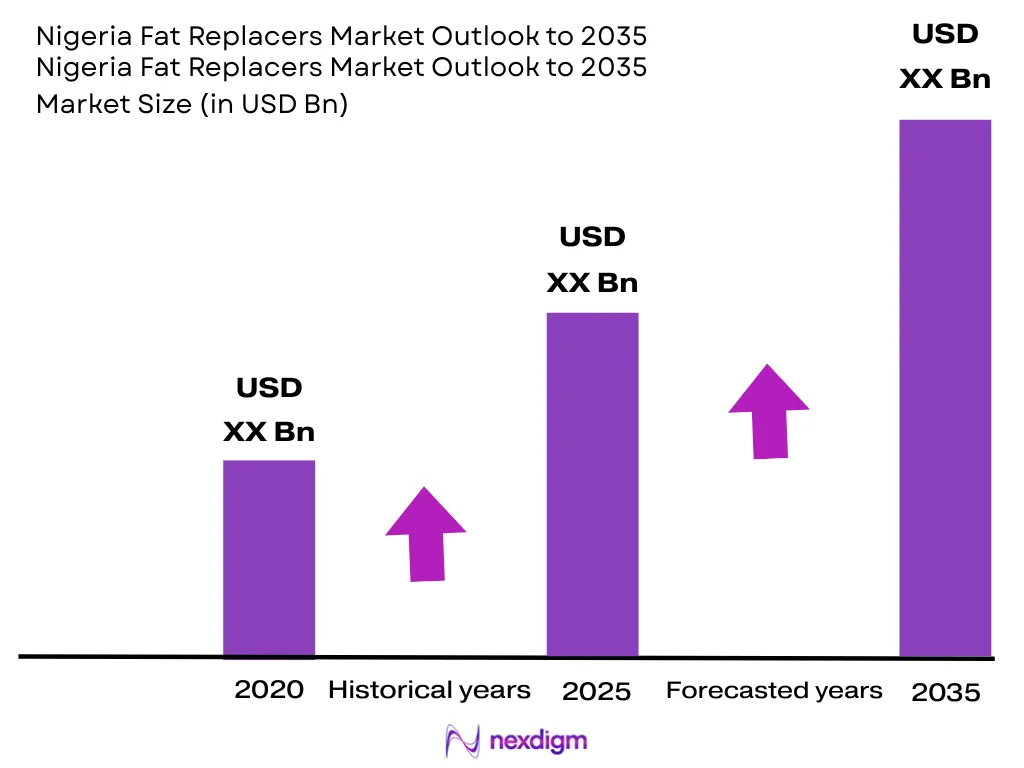
The Nigeria Fat Replacers Market is an emerging and growing segment within the broader Africa fat replacers landscape, which was valued at approximately USD 49.9 million in 2024 and is projected to expand at a CAGR of approximately 6.2% through 2033. Nigeria represents one of the key markets within the African fat replacers industry, alongside South Africa, with both countries together accounting for approximately 60% of the continental market. The Nigeria fat replacers market is driven by the country’s high and rising prevalence of obesity, cardiovascular disease, and type 2 diabetes, the National Agency for Food and Drug Administration and Control’s (NAFDAC) Fats and Oils Regulations 2022 mandating the elimination of industrially produced trans-fatty acids from Nigeria’s food supply, and the rapid expansion of Nigeria’s domestic food processing industry, which recorded a 7.5% increase in output in 2022 according to the Nigerian Bureau of Statistics. In January 2024, Ingredion launched a dedicated line of fat replacers targeting the baking and dairy markets in Egypt and Nigeria, reflecting growing commercial recognition of West Africa’s emerging demand for functional ingredient reformulation solutions. The global fat replacers market was valued at approximately USD 2.74 billion in 2024 and is projected to reach USD 5.31 billion by 2035 at a CAGR of 6.2%, providing strong global supply infrastructure that supports Nigeria’s ingredient import requirements.
Market Segmentation
By Source
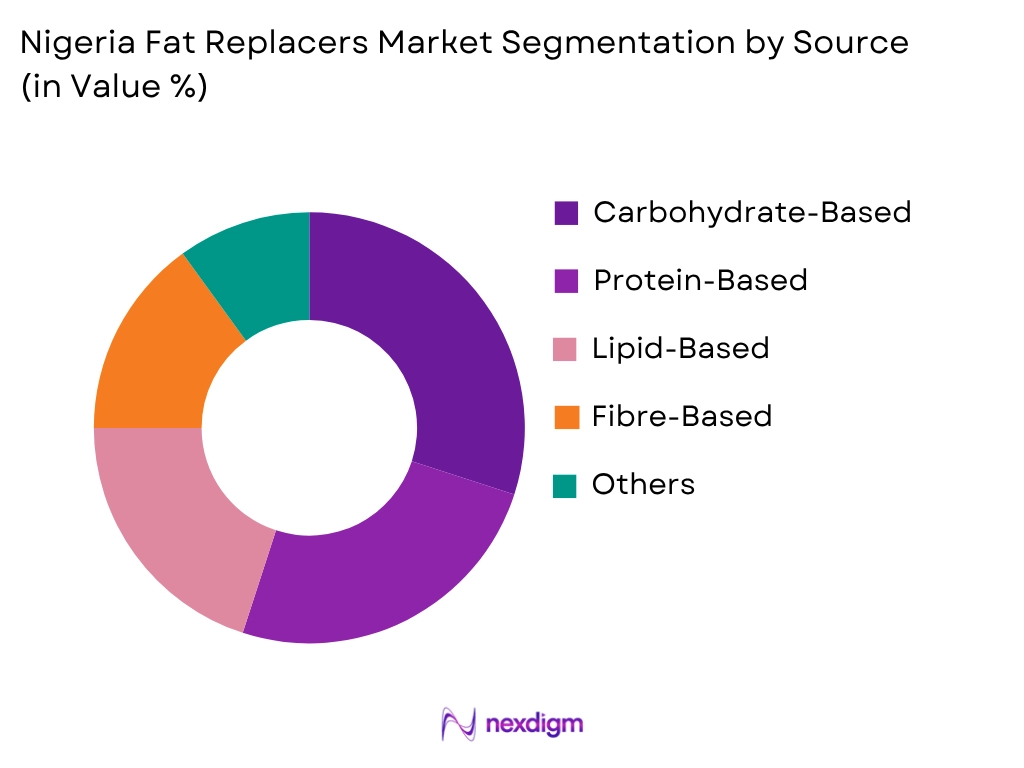
Carbohydrate-based fat replacers dominate the Nigeria fat replacers market owing to their cost-effectiveness, broad availability through established ingredient import channels, wide regulatory acceptance under NAFDAC’s food additive framework, and strong functional performance across bakery, confectionery, and processed food applications relevant to the Nigerian market. Carbohydrate-based ingredients including modified starches, guar gum, xanthan gum, inulin, pectin, and polydextrose are well suited to Nigeria’s cost-sensitive food manufacturing environment, as they provide effective bulk, texture, and moisture retention at lower per-unit cost than protein-based or lipid-based alternatives. Nigeria’s domestic agricultural base offers a strategic long-term advantage in this segment, as cassava, a staple crop produced in large volumes across southern and central Nigeria, is a viable source of native and modified starches that can serve as locally sourced carbohydrate-based fat replacer raw materials. Protein-based fat replacers, including soy protein isolates, whey protein concentrates, and pea protein systems, represent the fastest-growing segment, driven by increasing demand from dairy processors and functional snack producers seeking to develop high-protein, reduced-fat products for Nigeria’s growing health-conscious urban consumer base. Ingredion’s 2024 launch of baking and dairy-focused fat replacer solutions in Nigeria signals growing commercial momentum in this category, alongside continued interest from Corbion, Tate & Lyle, and Ulrick & Short in supplying the West African market.
By Application
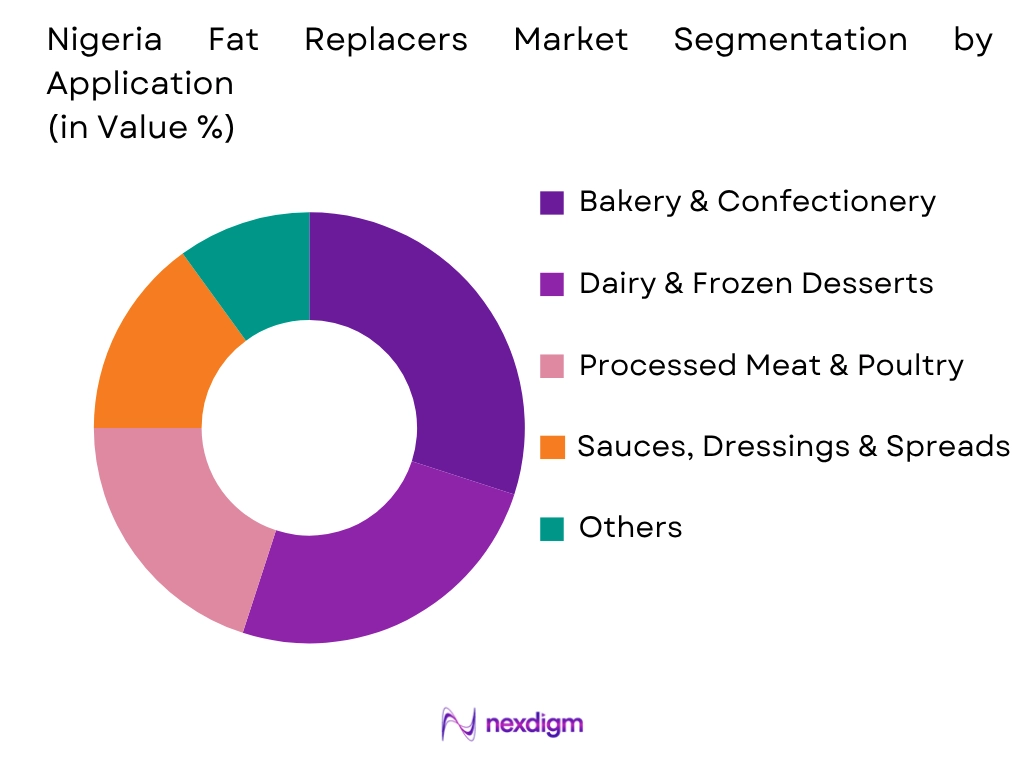
The bakery and confectionery sector accounts for the largest share of fat replacer demand in Nigeria, reflecting the scale of the country’s domestic biscuit, bread, and confectionery manufacturing base and the broad consumer preference for baked goods across all income levels. Cadbury Nigeria, Nestlé Nigeria, Beloxxi Industries, and several other domestic manufacturers are progressively reformulating baked and confectionery products to comply with NAFDAC’s trans-fat elimination regulations while maintaining the taste, texture, and affordability expected by Nigerian consumers. Carbohydrate-based fat replacers including modified starches and dietary fibers are the primary tools used in bakery reformulation, given their functional compatibility with existing production processes and their ability to maintain moisture retention and shelf stability at acceptable cost levels. The dairy and beverage segment represents a growing application area, driven by rising demand for low-fat yogurt, flavored dairy beverages, and fortified drinks among Nigeria’s urban middle-class consumers. The processed meat and poultry segment is also expanding as companies including Tanmiah-associated processors and domestic meat producers respond to NAFDAC nutritional requirements and seek to reduce fat content in processed sausage, burger, and chicken products. The convenience food and snack segment is experiencing growing reformulation interest as multinational and domestic food companies seek to align affordable sachet-format snack products with improving nutritional standards within Nigeria’s evolving food regulatory environment.
Competitive Landscape
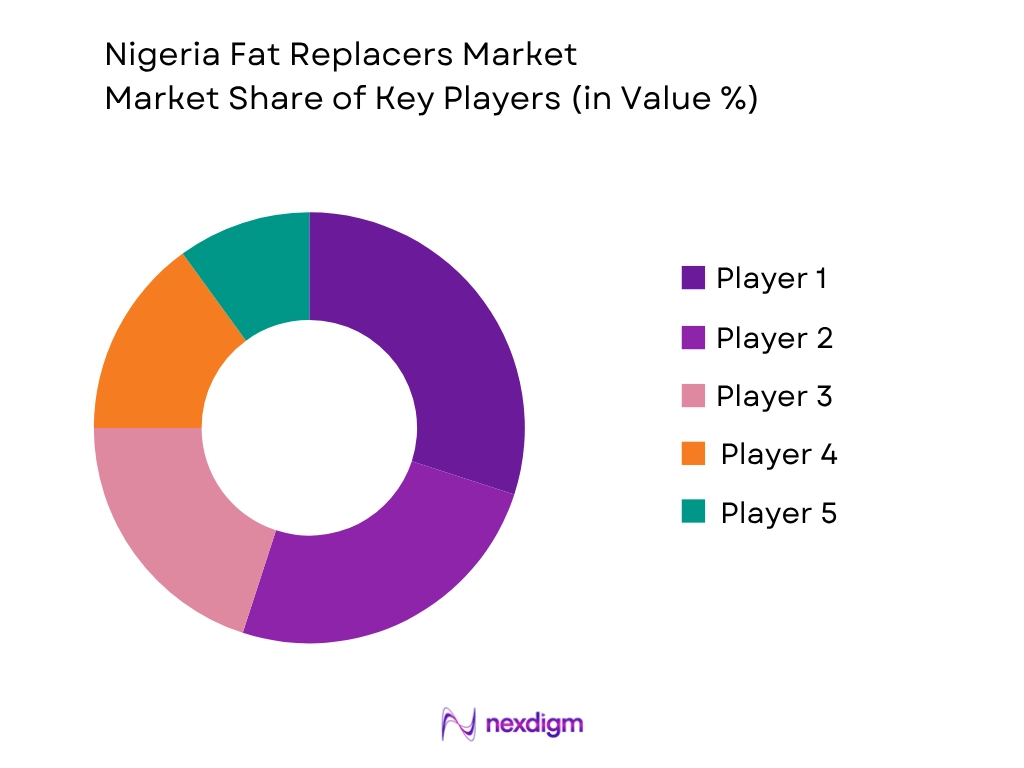
The Nigeria Fat Replacers Market is served primarily by multinational specialty ingredient companies operating through regional distribution networks, ingredient trading partners, and direct commercial relationships with major food manufacturers in Lagos, Ogun State industrial clusters, and Abuja. The market reflects the broader Africa fat replacers competitive landscape, where multinational suppliers including Ingredion, Cargill, Tate & Lyle, Corbion, and ADM hold strong positions by offering broad ingredient portfolios, technical application expertise, and established import supply chains into West Africa. Competitive differentiation in the Nigerian market centers on cost-optimized ingredient formulations suited to price-sensitive mass market food categories, NAFDAC compliance documentation support, technical reformulation advisory services, and the ability to supply reliable volumes of specialty ingredients through established Nigerian distribution partners despite ongoing foreign exchange and logistics challenges.
| Company | Establishment Year | Headquarters | Primary Fat Replacer Portfolio | Key Application Industries
|
Manufacturing Presence | R&D Capability | Distribution Network | Clean Label Solutions |
| Ingredion Incorporated | 1906 | ~ | ~ | ~ | ~ | ~ | ~ | ~ |
| Cargill Nigeria | 1865 | ~ | ~ | ~ | ~ | ~ | ~ | ~ |
| Tate & Lyle | 1859 | ~ | ~ | ~ | ~ | ~ | ~ | ~ |
| Corbion N.V. | 1919 | ~ | ~ | ~ | ~ | ~ | ~ | ~ |
| Archer Daniels Midland (ADM) | 1902 | ~ | ~ | ~ | ~ | ~ | ~ | ~ |
Nigeria Confectionary Market Analysis
Growth Drivers
NAFDAC Trans-Fat Elimination Mandate and Rising Non-Communicable Disease Burden
Nigeria’s escalating burden of non-communicable diseases, combined with NAFDAC’s landmark regulatory reform of the country’s fat and oil standards, represents the most critical structural growth driver for the fat replacers market. NAFDAC gazetted the Fats and Oils Regulations 2022 and the Fats and Oils Pre-Packaged Food Labelling Regulations 2022 in August 2023, implementing a binding prohibition on industrially produced trans-fatty acids exceeding 2 grams per 100 grams of fat or oil in products intended for human consumption in Nigeria, aligned with the World Health Organization’s REPLACE programme framework. Corporate bodies found in breach of these regulations face fines of NGN 5 million, alongside individual criminal liability for officers who aided non-compliance, creating strong enforcement incentives for domestic food manufacturers to actively reformulate their product portfolios using compliant fat replacer ingredients. The WHO estimates that non-communicable diseases including heart disease, stroke, cancer, diabetes, and chronic lung disease collectively account for 74% of all deaths globally, a burden that is increasingly reflected in Nigeria’s epidemiological profile. Research published in the NigeFE study found that 50% of Nigerians consume unhealthy foods, with 23% and 32% of the population reporting daily consumption of instant noodles and soft drinks respectively, highlighting the scale of dietary reform required. Nigeria’s food processing sector recorded a 7.5% increase in output in 2022 according to the Nigerian Bureau of Statistics, with Africa’s food and beverage market projected by the FAO to reach USD 1 trillion by 2030, providing a rapidly expanding industrial base for fat replacer ingredient adoption as manufacturers reformulate to meet new NAFDAC standards.
Expanding Urban Middle Class and Growing Processed Food Manufacturing Investment
Nigeria’s rapidly expanding urban middle class and accelerating food processing investment are creating sustained new demand for functional ingredient systems including fat replacers across bakery, dairy, and convenience food categories. Nigeria’s urban population has been growing consistently, with major metropolitan areas including Lagos, Abuja, Kano, and Port Harcourt generating rising demand for processed and packaged food products that are progressively incorporating healthier ingredient profiles. The top ten FMCG companies in Nigeria generated approximately NGN 3.71 trillion in revenue in the first half of 2025, a 50% increase year-on-year, reflecting strong commercial momentum across Nigeria’s food and beverage manufacturing sector following a period of foreign exchange stabilization. Ingredion Incorporated recognized this commercial opportunity by launching a dedicated fat replacer product line targeting the Nigerian baking and dairy markets in January 2024, citing the country’s high obesity rates and increasing consumer appetite for healthier indulgence options as key rationale for market entry. Nigeria’s expanding network of industrial parks and food processing clusters in Ogun State, Lagos, and Kaduna provides infrastructure for food manufacturers to invest in reformulated product lines that incorporate fat replacer ingredients. The growing international presence of multinational food companies including Nestlé Nigeria, Cadbury Nigeria (Mondelez), and UAC Foods provides a commercial anchor for premium ingredient suppliers seeking to establish distribution relationships in the West African market, as these companies progressively align their Nigerian product portfolios with global reformulation programs.
Market Challenges
Currency Depreciation, Import Dependency, and High Ingredient Procurement Costs
Nigeria’s fat replacers market faces significant structural challenges arising from the country’s near-total dependence on imported specialty ingredients and persistent naira depreciation that substantially inflates the landed cost of imported fat replacer systems. All major fat replacer types, including carbohydrate-based modified starches, protein-based whey and soy isolates, and lipid-based structured lipid systems, are currently procured from international suppliers in North America, Europe, and Southeast Asia, with import costs denominated in foreign currency. The naira’s sustained depreciation against the US dollar has significantly increased the effective cost of imported food ingredients for Nigerian manufacturers, compressing reformulation program budgets and making premium fat replacer systems cost-prohibitive for smaller and medium-scale food processors. High production costs represent one of the most significant impediments to growth in the Nigerian fat replacer market, as advanced methods and specific ingredients required for clean-label and natural fat replacer alternatives necessitate complex processing procedures that raise overall manufacturing and import costs. Nigeria’s Logistics Performance Index rankings reflect ongoing bottlenecks in trade facilitation, customs clearance, and warehousing infrastructure that further add to procurement timelines and costs for food ingredient importers. These constraints reduce the ability of smaller domestic food manufacturers to access a reliable supply of certified fat replacer ingredients at commercially viable prices, limiting adoption rates in cost-sensitive bakery and snack categories where margin pressure is most acute.
Low Consumer Awareness and Price Sensitivity in Mass Market Segments
Consumer awareness of fat replacer ingredients and the health benefits of reduced-fat food products remains limited across Nigeria’s predominantly price-sensitive mass market, representing a structural demand-side constraint on the growth of health-oriented reformulated food products. A significant share of Nigerian consumers across traditional trade channels and semi-urban and rural markets prioritize price and caloric sufficiency over nutritional profile when making food purchasing decisions, limiting the commercial premium that manufacturers can charge for fat-reduced reformulated products that incorporate more expensive specialty ingredient systems. Traditional Nigerian cuisine is rich in palm oil, groundnut oil, and other locally produced fats that are deeply embedded in cooking culture and consumer taste expectations, creating consumer resistance toward reformulated reduced-fat versions of familiar products that may deliver a perceptibly different taste or texture experience. NAFDAC food labeling compliance among pre-packaged foods in Nigeria has historically been uneven, with enforcement capacity varying across the distribution landscape, reducing the regulatory pressure on smaller manufacturers to invest in compliant reformulation. The informal and open-market distribution channels that account for a large share of food sales in Nigeria further complicate the implementation and monitoring of nutritional improvement programs, as products sold through these channels may not consistently meet NAFDAC labeling and formulation standards, potentially undermining the commercial rationale for compliant manufacturers investing in fat replacer ingredient adoption.
Market Opportunities
Cassava and Local Agricultural Raw Material Integration
Nigeria’s position as one of the world’s largest producers of cassava, alongside substantial domestic production of soybeans, palm kernel, and other agricultural commodities, creates a distinctive long-term opportunity for the development of locally sourced, cost-competitive fat replacer ingredients that can reduce the market’s current import dependency. Cassava-derived native and modified starches represent particularly compelling raw materials for carbohydrate-based fat replacer development, as Nigeria produces over 50 million metric tons of cassava annually, providing a stable and cost-competitive domestic feedstock that could support local fat replacer starch processing with investment in appropriate downstream manufacturing infrastructure. The Africa Fat Replacers Market’s emphasis on plant-derived fat replacers reflects strong global and regional growth trends, with plant-based sources accounting for approximately 67% of global fat replacer market share in 2024 and growing at a CAGR of 6.5%, driven by consumer preferences for natural and sustainable ingredients. Investment in domestic cassava starch processing, soy protein concentrate production, and palm kernel oil-derived structured lipid manufacturing would enable Nigerian ingredient producers to supply the domestic food manufacturing sector with competitively priced fat replacer materials while reducing exposure to foreign currency import costs. Government agricultural value chain programs, including the Central Bank of Nigeria’s Anchor Borrowers Programme targeting staple crop production, provide a policy framework that could support investment in downstream agricultural processing for functional food ingredient production including fat replacer raw material supply chains.
NAFDAC-Aligned Reformulation Partnerships and Functional Food Expansion
The implementation of NAFDAC’s Fats and Oils Regulations 2022 and the accompanying pre-packaged food labelling standards create a compelling commercial opportunity for specialty ingredient suppliers able to position themselves as technical reformulation partners to Nigeria’s food manufacturing sector. Food companies seeking to reformulate existing product lines to comply with trans-fat elimination requirements, disclose nutritional information transparently, and develop reduced-fat product variants for Nigeria’s emerging health-conscious consumer segment represent a growing buyer base for fat replacer ingredient systems. The Africa fat replacers market is projected to grow at a CAGR of between 5.2% and 7.2%, with Nigeria identified as a rapidly growing market closely following South Africa in terms of commercial development and ingredient adoption pace. Multinational ingredient companies including Ingredion, Cargill, and Tate & Lyle are already establishing dedicated market development programs in Nigeria, creating competitive pressure that will progressively improve the availability, affordability, and technical support infrastructure for fat replacer adoption among domestic manufacturers. The expansion of Nigeria’s functional food sector, driven by rising health awareness among urban consumers in Lagos and Abuja, represents an additional growth avenue for premium fat replacer systems used in protein-enriched dairy beverages, reduced-fat baked snacks, and fortified convenience food products that align with NAFDAC’s evolving nutritional standards.
Future Outlook
The Nigeria Fat Replacers Market is expected to experience sustained growth through the 2035 forecast period, driven by NAFDAC’s trans-fat elimination regulatory mandate, increasing domestic food manufacturing investment, rising health consciousness among Nigeria’s expanding urban middle class, and growing recognition of the commercial opportunities in reduced-fat product formulation by both multinational and domestic food companies. The long-term opportunity to develop locally sourced carbohydrate-based fat replacer ingredients from Nigeria’s abundant cassava and soybean agricultural base offers a pathway to reduce import dependency and improve ingredient cost competitiveness. Continued investment in distribution infrastructure, ingredient supplier market development programs, and NAFDAC regulatory enforcement will progressively strengthen the commercial environment for fat replacer adoption across Nigeria’s bakery, dairy, processed meat, and convenience food manufacturing sectors through 2035.
Major Players
- Ingredion Incorporated
- Cargill Incorporated
- Tate & Lyle PLC
- Corbion N.V.
- Archer Daniels Midland Company (ADM)
- Kerry Group PLC
- DuPont Nutrition & Biosciences (IFF)
- DSM-Firmenich
- BENEO GmbH
- Ulrick & Short Limited
- Lesaffre
- Wilmar International Ltd.
- Olam International
- Ashland Global Holdings
- CP Kelco (Anadolu Group)
Key Target Audience
- Food & Beverage Manufacturers and Ingredient Procurement Teams
- Bakery, Dairy, and Processed Food Producers
- Specialty Food Ingredient Distributors and Traders
- Functional Food and Nutraceutical Companies
- Foodservice Operators and HoReCa Chains
- Agricultural Value Chain and Starch Processing Investors
- Investments and Venture Capitalist Firms
- Government and Regulatory Bodies (National Agency for Food and Drug Administration and Control (NAFDAC), Federal Ministry of Industry, Trade and Investment, Nigerian Bureau of Statistics (NBS), Standards Organisation of Nigeria (SON))
Research Methodology
Step 1: Identification of Key Variables
The research begins by identifying the major stakeholders across the Nigeria fat replacers value chain, including specialty ingredient manufacturers and importers, ingredient distributors, food processing companies, regulatory agencies, and end-user sectors. Extensive secondary research is conducted using NAFDAC regulatory publications, Federal Ministry of Industry trade statistics, Nigerian Bureau of Statistics data, company reports, industry associations, and proprietary ingredient market databases to establish the key variables influencing demand, pricing, and competitive dynamics within the market.
Step 2: Market Analysis and Construction
Historical market information is compiled and analyzed to estimate the overall fat replacers market size by type, source, form, application, and end user. Ingredient import statistics, food processing sector output data, regulatory compliance trends, and consumer health behavior research are integrated using both bottom-up and top-down market sizing approaches to ensure comprehensive coverage of all demand-generating segments within the Nigerian market.
Step 3: Hypothesis Validation and Expert Consultation
Preliminary market estimates are validated through Computer Assisted Telephone Interviews (CATIs) and structured discussions with ingredient procurement managers, food technologists, regulatory affairs specialists, distributor executives, and food industry associations operating within Nigeria. These consultations provide critical commercial insights into reformulation trends, ingredient adoption rates, NAFDAC compliance dynamics, currency risk management practices, and the competitive landscape among international and regional ingredient suppliers serving the West African market.
Step 4: Research Synthesis and Final Output
The final stage integrates primary research findings with secondary data to develop a comprehensive market assessment covering market size, segmentation, regulatory landscape, competitive positioning, consumer and end-user demand analysis, and future growth opportunities. Multiple validation techniques including data triangulation and cross-verification against NAFDAC, Nigerian Bureau of Statistics, and industry association data sources are employed to ensure the consistency, accuracy, and credibility of the final market report.

- Executive Summary
- Research Methodology (Market Definitions and Assumptions, Abbreviations, Market Taxonomy, Market Sizing Approach, Top-Down Analysis, Bottom-Up Analysis, Demand-Side Assessment, Supply-Side Assessment, Primary Industry Interviews, Secondary Research Validation, Data Triangulation, Forecasting Framework, Limitations and Future Conclusions)

- Definition and Scope
- Market Evolution and Industry Genesis
- Timeline of Major Industry Developments
- Fat Replacer Industry Value Chain Analysis
- Supply Chain Analysis

- Growth Drivers (Rising Obesity and Non-Communicable Disease Prevalence, NAFDAC Trans-Fat Elimination Regulations, Growing Demand for Low-Fat Food Products, Expanding Processed Food and Bakery Manufacturing Sector, Urbanization and Changing Dietary Habits, Rising Demand for Functional and Clean-Label Ingredients, Increasing Foodservice and HoReCa Sector Expansion, Growing Middle-Class Health Consciousness)
- Market Challenges (Limited Domestic Ingredient Manufacturing, High Import Dependency and Currency Volatility, Consumer Affordability and Price Sensitivity, Regulatory Enforcement Gaps, Low Consumer Awareness of Fat Replacer Ingredients, Cold Chain and Logistics Infrastructure Constraints, Competition from Traditional High-Fat Local Foods)
- Market Opportunities (Cassava and Local Starch-Based Fat Replacer Development, Plant-Based Fat Replacer Innovation, Protein-Based Fat Replacer Growth in Dairy, Functional Food Integration, Clean-Label Reformulation Programs, Affordable Single-Serve Reformulated Product Formats, Digital Ingredient Sourcing Platforms, NAFDAC-Aligned Product Reformulation Partnerships)
- Market Trends (Clean-Label Fat Replacers, Locally Sourced Starch and Fiber Ingredients, Multifunctional Ingredient Systems, Plant-Based and Vegan-Friendly Solutions, Fiber-Enriched Food Formulations, Low-Calorie Dairy Reformulation, Reduced-Fat Snack Innovation, Cost-Optimized Fat Replacer Formulations)
- Government Regulations (NAFDAC Fats and Oils Regulations 2022, Trans-Fatty Acid Elimination Mandate, Pre-Packaged Food Labelling Regulations 2022, Food Additive Approval Framework, Nutritional Disclosure Requirements, Allergen Declaration Standards, Import Certification Requirements, Good Manufacturing Practice Standards)
- NAFDAC Regulatory Framework Analysis (Trans-Fat Elimination Implementation, Fats and Oils Regulations 2022, Nutritional Labelling Compliance, Food Additive Permitted Lists, Novel Ingredient Approval Processes, Import Documentation Requirements)
- Obesity and Lifestyle Disease Impact Analysis (Obesity and Overweight Prevalence in Nigeria, Cardiovascular Disease Burden, Diabetes Incidence, Non-Communicable Disease Mortality, Government Health Expenditure, WHO REPLACE Programme Impact)
- Food Processing Industry Assessment (Bakery Sector Growth, Dairy Processing Capacity, Processed Meat Industry, Convenience Food Manufacturing, Snack Food Production, FMCG Sector Expansion)
- Ingredient Import Analysis (Import Volumes by Type, Key Sourcing Countries, Import Price Trends, Currency Risk Impact, Logistics and Warehousing Constraints)
- Local Raw Material Opportunity Analysis (Cassava Starch Potential, Soy Protein Availability, Palm Oil Derivatives, Local Fiber Sources, Agricultural Value Chain Integration)
- SWOT Analysis
- Porter’s Five Forces Analysis
- PESTLE Analysis
- Stakeholder Ecosystem
- Competition Ecosystem

- By Market Value (2020-2025)
- By Volume Consumption (2020-2025)
- By Average Selling Price (2020-2025)

- By Source (In Value %)
Carbohydrate-Based Fat Replacers
Polydextrose
Protein-Based Fat Replacers
Whey Protein Concentrates & Isolates
Soy Protein Isolates
Pea Protein
Egg White Protein
Lipid-Based Fat Replacers
Structured Lipids - By Application (In Value %)
Bakery & Confectionery
Dairy & Frozen Desserts
Processed Meat & Poultry
Sauces, Dressings & Spreads
Convenience Foods & Ready Meals
Beverages
Snacks
Functional Foods - By End User (In Value %)
Food & Beverage Manufacturers
Bakery Producers
Dairy Processors
Meat Processors
Foodservice & HoReCa
Retail Consumers - By Distribution Channel (In Value %)
Direct Sales to Food Manufacturers
Ingredient Distributors & Traders
Specialty Ingredient Suppliers
Online B2B Platforms - By Region (In Value %)
Lagos & South-West Nigeria
Abuja & North-Central Nigeria
South-South Nigeria
South-East Nigeria
Northern Nigeria

- Market Share Analysis (By Value, Volume, Type, Application, Distribution Channel)
- Cross Comparison Parameters (Product Portfolio Breadth, Carbohydrate-Based Solutions, Protein-Based Solutions, Lipid-Based Solutions, Local Sourcing Capability, Plant-Based Offering, Technical Application Support, Nigeria Distribution Network, Clean-Label Positioning)
- SWOT Analysis of Major Players
- Pricing Analysis (By Type, By Form, By Application, By Pack Size, Domestic vs Import Pricing)
- Detailed Profiles of Major Companies
Ingredion Incorporated
Cargill Incorporated
Tate & Lyle PLC
Corbion N.V.
Archer Daniels Midland Company (ADM)
Kerry Group PLC
DuPont Nutrition & Biosciences (IFF)
DSM-Firmenich
BENEO GmbH
Ulrick & Short Limited
Lesaffre
Wilmar International Ltd.
Olam International
Ashland Global Holdings
CP Kelco (Anadolu Group)

- Food Manufacturer Demand Analysis (Bakery, Dairy, Meat, Snacks, Convenience Foods)
- Reformulation Frequency Analysis (By Product Category, By Regulatory Driver, By Health Positioning)
- Fat Replacer Adoption Rate by Food Category
- Clean-Label vs Functional Ingredient Preference Analysis
- Affordability and Cost-per-Formulation Analysis

- By Market Value (2026-2035)
- By Volume Consumption (2026-2035)
- By Average Selling Price (2026-2035)


 Request a Sample
 Ask for Customization
 Get a Quote
 Enquire Now