
 Download PDF
Market Overview
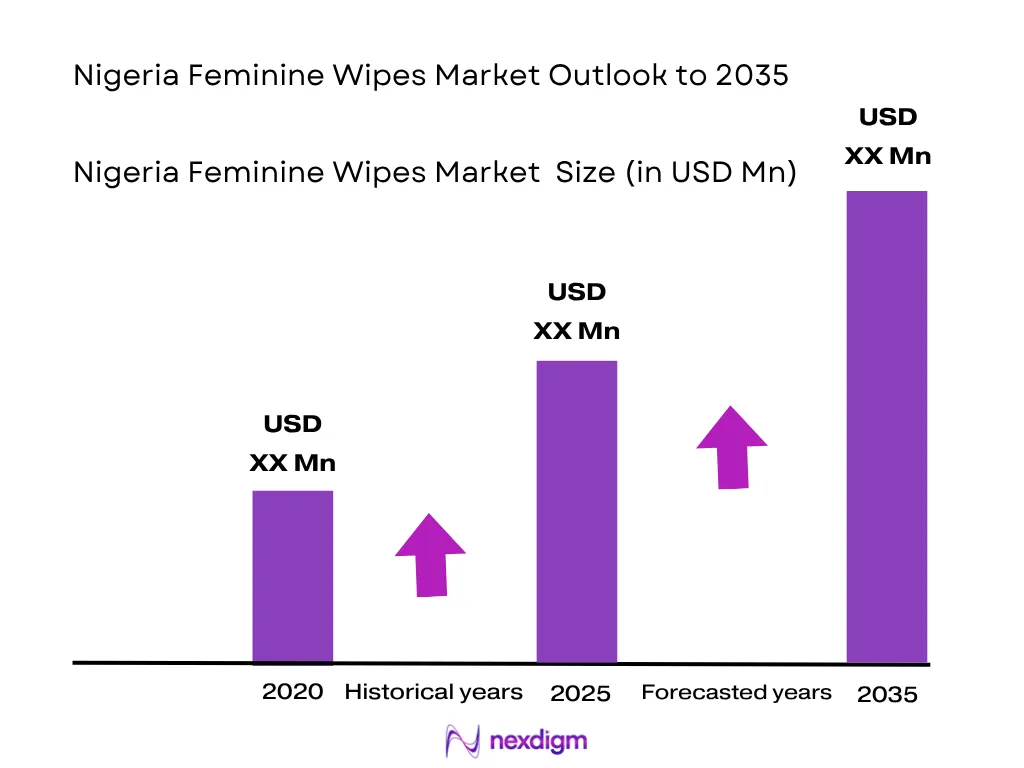
The Nigeria Feminine Wipes market is valued at approximately USD ~ million in 2025, based on related revenue for the Nigeria flushable wet wipes segment, where the overall market was valued at USD ~ million in 2024 and the feminine hygiene wipes sub‑segment was identified as the fastest growth area in that category. This suggests a substantial market for intimate hygiene wipes in the context of Nigeria’s broader wipes demand. The market’s current size has been propelled by rising urbanization, a growing female middle class, and increasing consumer awareness of intimate hygiene and convenience products.
Economic and demographic drivers such as rapid urban population growth and expanding female workforce participation shape demand patterns. Larger urban centres such as Lagos, Abuja, and Port Harcourt dominate the feminine wipes market due to higher disposable incomes, greater retail modernisation with pharmacies and organised retail chains, and stronger e‑commerce penetration. These cities also benefit from better infrastructure and broader access to imported products, enabling a wider selection of premium and mid‑tier personal care hygiene SKUs compared to rural regions.
Market Segmentation
By Product Type
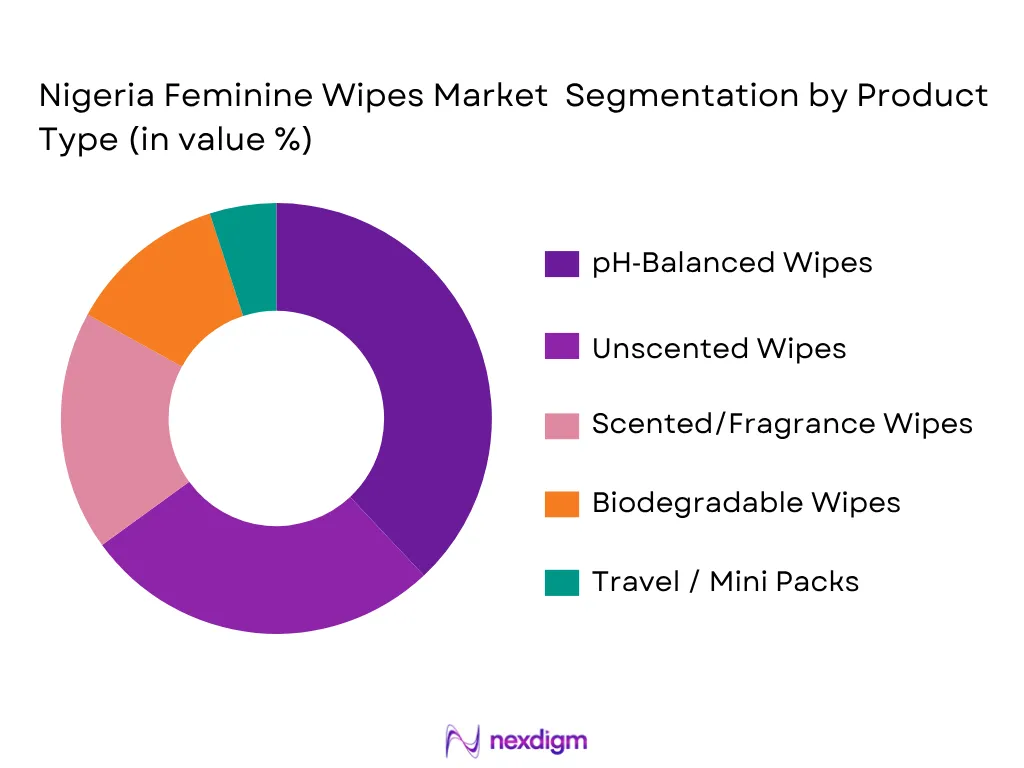
Nigeria’s feminine wipes market is segmented into pH‑balanced/sensitive‑skin wipes, unscented wipes, scented wipes, biodegradable environment‑friendly wipes, and travel/mini packs. Among these, pH‑balanced/sensitive‑skin wipes hold the largest share, driven by consumer preference for products formulated to minimise irritation and support genital health in a warm, humid climate. Urban consumers, in particular, choose pH‑balanced options due to heightened hygiene awareness and frequent usage occasions beyond menstruation, including post‑workout and on‑the‑go freshening. Unscented wipes follow as a significant sub‑segment due to their perception as gentler and less likely to cause allergic reactions. Sustainability‑oriented biodegradable wipes and compact travel formats are emerging as smaller but fast‑growing niches as global environmental concerns and mobile lifestyles shape purchase decisions.
By Distribution Channel
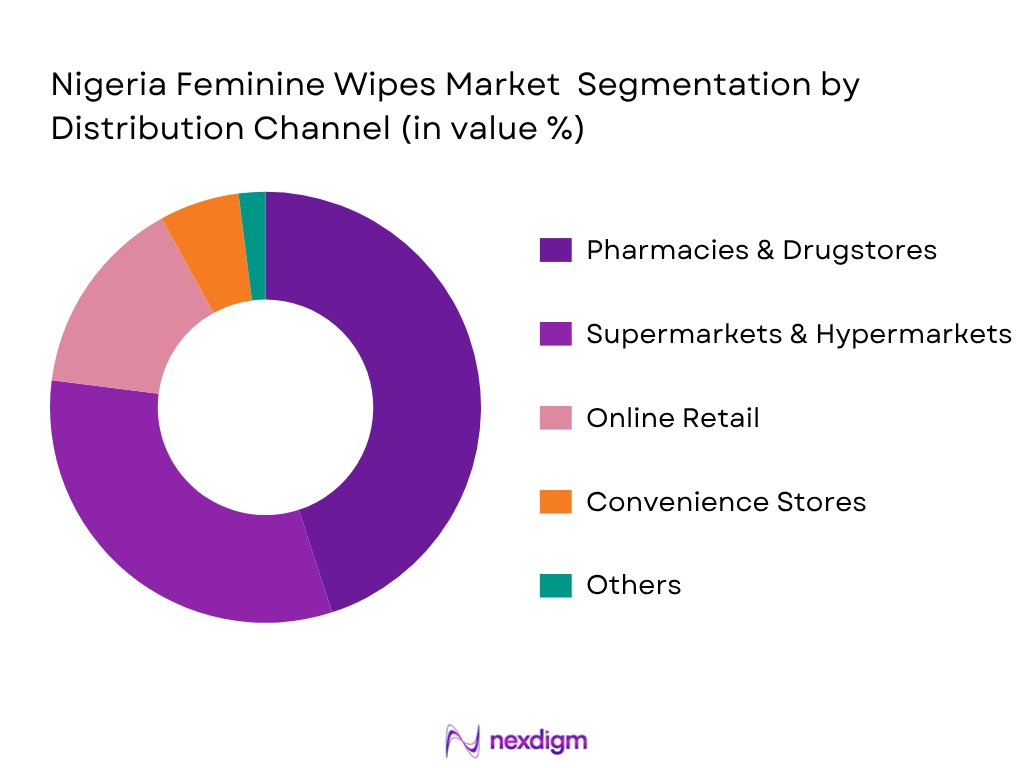
Nigeria feminine wipes market is also segmented by distribution channel: pharmacies & drugstores, supermarkets & hypermarkets, online/e‑commerce, convenience stores, and other retail routes. Pharmacies & drugstores dominate, largely because intimate hygiene products are often purchased in conjunction with other women’s healthcare items, and consumers trust pharmacists for product guidance. Supermarkets and hypermarkets hold the next largest share, offering broad product assortments and visibility, especially in urban centres. Online and e‑commerce channels are rapidly growing, powered by increasing smartphone penetration, expanding logistics support, and convenience‑centric purchasing behaviour among younger urban consumers. While convenience stores and traditional retail play roles in last‑mile access, their share remains comparatively smaller due to limited SKUs and product differentiation.
Competitive Landscape
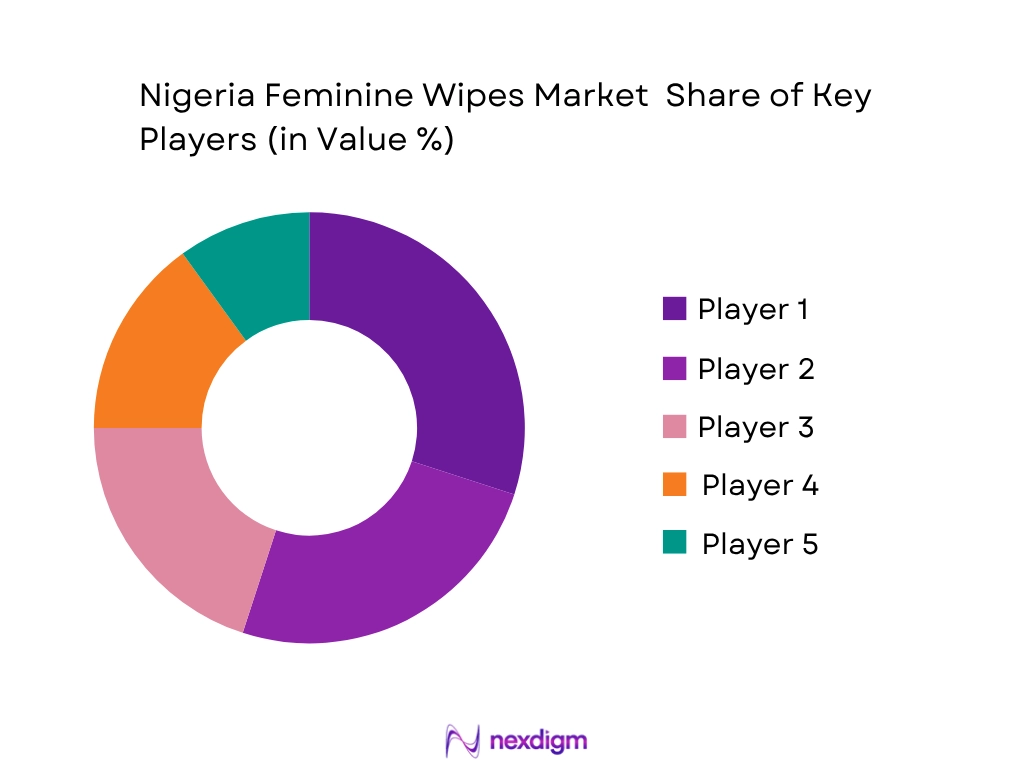
The Nigeria Feminine Wipes market exhibits a mix of multinational brands, imported product lines, and evolving local players. Competition is shaped by product formulations, distribution footprint, pricing strategies, and brand positioning. The market shows consolidation in retail pharmacy channels and fragmentation in traditional trade and informal markets. The Nigeria feminine wipes market consists of several key branded and imported players alongside emerging local and private‑label offerings. This reflects industry consolidation among larger FMCG importers and niche personal care brands, with strong competition on product differentiation (e.g., pH‑balanced, fragrance‑free, eco‑friendly) and multi‑channel availability. For assessment purposes, attributes include years in market, headquarters location, product portfolio breadth, distribution coverage, channel partnerships, quality/safety certifications, prevalence in online retail platforms, and price tier positioning.
| Company | Est. Year | Headquarters | Product Portfolio | Distribution Reach | Certification/Quality Credentials | Online Presence | Price Tier Focus | Promotional Visibility |
| Procter & Gamble | 1837 | USA | ~ | ~ | ~ | ~ | ~ | ~ |
| Kimberly‑Clark | 1872 | USA | ~ | ~ | ~ | ~ | ~ | ~ |
| Femina Hygienical Products Nigeria | 1990s | Nigeria | ~ | ~ | ~ | ~ | ~ | ~ |
| Hayat Holding A.S. | 1960 | Turkey | ~ | ~ | ~ | ~ | ~ | ~ |
| Guangzhou Livi Import & Export | 2000s | China | ~ | ~ | ~ | ~ | ~ | ~ |
Nigeria Feminine Wipes Market Analysis
Growth Drivers
Urban Convenience
Nigeria’s rapid urbanisation directly supports increased adoption of convenience products such as feminine wipes. In 2024, 128,043,517 people lived in urban areas in Nigeria, indicating a large concentration of consumers in cities with better access to retail outlets, pharmacies, supermarkets, and delivery services in contrast to rural areas. Urban dwellers often have higher disposable income and more exposure to modern hygienic products. The total urban population in 2024 rose from approximately 123,701,699 in 2023, showing continued migration towards cities where convenience products are more affordable and accessible, driving demand. Nigeria’s total population was about 232,679,478 in 2024, and with women constituting 115,005,707 of that population, the sizeable female demographic in dense urban clusters has a concentrated influence on the uptake of intimate hygiene products like feminine wipes. This urban consumer base prioritises accessible hygiene solutions that fit busy lifestyles, making convenience a key growth driver for the feminine wipes market.
Working Women Growth
The increase in female participation in the labour force enhances demand for portable, convenient hygiene products an essential segment for working women. According to World Bank–derived data, 48.4 % of Nigeria’s labour force in 2024 was female, meaning nearly half of those economically active are women engaging in formal and informal sectors nationwide. The overall labour force totalled 113,349,564 persons in 2024, up from 110,183,277 in the prior year, signalling growth in employment opportunities including service, retail, and informal urban sectors where personal hygiene needs are more pronounced throughout the day. For many working women, particularly those in metropolitan hubs with long commutes or extended workplace hours, discrete and on‑the‑go solutions like feminine wipes address personal care gaps that traditional products cannot. This macro trend is further supported by Nigeria’s broad female population share of 49.43 % of the total, highlighting the substantial consumer base for female‑oriented hygiene products. With female labour participation high, convenient products such as feminine wipes naturally gain traction to meet the needs of women balancing professional responsibilities and daily mobility.
Market Challenges
Environmental Waste
Nigeria faces significant environmental challenges from municipal solid waste, which directly impacts the adoption and perception of single‑use hygiene products like feminine wipes. Urban waste streams in major cities such as Lagos often exceed infrastructure capacity for effective disposal and recycling. Reports show that Nigerian urban centres generate 27.3 million tonnes of municipal solid waste per year, of which plastics constitute a meaningful component of the waste stream. Within this total, only about 11.2 million tonnes is collected, meaning a large proportion of disposable waste remains unmanaged in landfills or open environments, contributing to pollution. Given that plastic‑based wipes add to this rising volume of solid waste, this challenge could lead to consumer and regulatory pushback against products perceived as exacerbating environmental waste problems without strong end‑of‑life management solutions or recycling support. Companies entering or operating in this market must contend with these macro challenges, as ineffective waste collection infrastructure and high plastic waste generation in urban regions create negative environmental externalities that may dampen consumer sentiment and policy support for plastic‑intensive products.
Price Sensitivity
Economic conditions influence consumer purchasing decisions for discretionary hygiene products such as feminine wipes in Nigeria’s price‑sensitive markets. The country’s macroeconomic environment in 2024 shows a GDP of USD 252.26 billion and a per‑capita income of USD 1,084.2, indicating modest average income levels across the population. Inflation remains high at 33.2 %, significantly eroding purchasing power and affecting consumers’ ability to afford non‑essential hygiene products. Despite economic growth, a large share of Nigerians still struggles with economic vulnerability; approximately 41.8 % lived below the poverty threshold of USD 3.00/day (PPP) as of 2022. In this context, feminine wipes may be considered discretionary compared with essential goods, making price a critical determinant of adoption. Consumers may opt for lower‑cost alternatives or traditional hygiene practices when disposable incomes tighten. High inflation and constrained household budgets can limit repeated purchases of premium hygiene products, pressuring manufacturers on pricing strategy and value positioning to maintain volume in a market where many consumers prioritise affordability over convenience.
Opportunities
Biodegradable & Eco‑Friendly Solutions
Nigeria’s environmental context presents an opportunity for eco‑friendly and biodegradable feminine wipes. With urban areas generating over 27 million tonnes of municipal solid waste annually, of which plastics are a significant share, there is increasing recognition of the environmental impacts of disposable products. Research indicates Nigeria could generate 32 million tonnes of solid waste, often inadequately managed due to insufficient waste handling infrastructure. This situation creates space for biodegradable hygiene products that align with sustainability priorities and regulatory pressures. A shift to biodegradable wipes can address growing concerns in urban centres, particularly among environmentally conscious consumers and NGOs advocating waste reduction, driving demand for products with lower environmental footprints. By differentiating through sustainable formulations and materials, manufacturers can tap into consumers’ desire to reduce plastic pollution while addressing the inadequacies of traditional waste streams. This trend positions eco‑friendly wipes as a credible alternative in markets where environmental awareness is rising, enabling brands to innovate with materials that degrade more easily and align with evolving consumer preferences in Nigeria’s large urban populations.
pH/Sensitive Skin Positioning
The Nigerian personal care consumer increasingly values products tailored to sensitive skin and intimate hygiene, presenting an opportunity for pH‑balanced feminine wipes. With female population totalling over 115 million individuals, there is a large base of potential users seeking hygienic solutions that minimise irritation or discomfort—especially in warm climates typical across key Nigerian cities. Urban consumers, particularly working women exposed to diverse environmental conditions throughout the day, show preference for products emphasising dermatological safety and gentle formulations. As access to global product information grows through internet connectivity (with internet usage at 41 % of the population), consumers become better educated on personal health and skin sensitivity issues. This awareness enhances demand for specialised wipes that advertise pH neutrality and suitability for sensitive skin over generic options, enabling firms to capture discerning segments within the feminine hygiene category. Positioning products on these clinical and functional benefits enhances perceived value and distinguishes offerings in a market where consumer education and health awareness are steadily rising, supporting product premiumisation and deeper penetration among health‑conscious buyers.
Future Outlook
Looking forward, the Nigeria Feminine Wipes market is expected to maintain robust growth throughout the forecast period, underpinned by continued urbanisation, rising female workforce participation, and increasing hygiene awareness. Continued expansion of organised retail, combined with rapid adoption of e‑commerce and digital health education campaigns, will enhance product accessibility. Innovations in biodegradable materials, pH‑balanced formulations, and value‑added formats (e.g., travel and subscription bundles) are likely to shape competitive strategies. Retailers’ focus on category visibility and targeted promotions will further stimulate penetration among younger and convenience‑oriented consumer segments.
Major Players
- Procter & Gamble
- Kimberly‑Clark Corporation
- Femina Hygienical Products Nigeria Ltd.
- Hayat Holding A.S.
- Guangzhou Livi Import & Export Co., Ltd.
- Guangzhou Sunda International Trading Co., Ltd.
- Sankin Nigeria Ltd.
- Kenvue Inc.
- Globe Spinning Mills Nigeria Ltd. (Bhojson Group)
- Goonite (NG) Hygiene Products FZE
- Wemy Industries Ltd.
- Quest Personal Care Global Ltd.
- Private Label Retail Brands (selected supermarkets)
- E‑commerce Native Personal Care Brands
- Emerging Sustainable/Organic Wipe Brands
Key Target Audience
- FMCG and personal care product manufacturers
- Retail pharmacy and modern trade chain buyers
- Distributors and wholesalers of personal care products
- Investments and venture capitalist firms (consumer goods & personal hygiene focus)
- Government and regulatory bodies (e.g., National Agency for Food and Drug Administration and Control – NAFDAC)
- E‑commerce platforms and franchise buyers
- Private equity funds targeting consumer staples
- International import/export trade analysts
Research Methodology
Step 1: Identification of Key Variables
This phase involves constructing a market structure map that includes suppliers, importers, distributors, retail channels, and consumer segments within the Nigeria feminine wipes ecosystem. Desk research from proprietary and secondary databases is used to define variables that influence demand, pricing and distribution.
Step 2: Market Analysis and Construction
Historical data on revenue and volume consumption is compiled to analyse past market trends. This includes tracking import patterns, retail penetration, channel contributions, and product mix performance to estimate current market size. Reliability checks ensure alignment with industry flows and Nigeria macro indicators.
Step 3: Hypothesis Validation and Expert Consultation
Hypotheses regarding growth drivers and constraints are developed and validated through expert interviews with industry practitioners, including brand managers, distributors and retail category managers. These insights enrich quantitative estimates with practical market intelligence.
Step 4: Research Synthesis and Final Output
The final stage synthesises all quantitative and qualitative inputs to validate market size and projections. Engagement with supply chain stakeholders, retailers and importers ensures consistency. Final outputs include market segmentation analysis, competitive benchmarking and validated forecasts tailored for strategic decision‑making.

- Executive Summary
- Research Methodology (Market Definitions and Scope, Estimation & Forecasting Standards, Data Validation Protocols, Primary vs Secondary Intelligence Sources, Nigeria Market Economic Indicators, Limitations and Assumptions)

- Market Genesis and Adoption Curve
- Product Definition & Hygiene Specifications
- Sector Value Chain
- Porter’s Five Forces
- Regulatory & Safety Standards

- Growth Drivers (urban convenience, working women growth, intimate freshness, exposure to global standards, on‑the‑go use, e‑commerce reach, rising disposable income, intimate health awareness)
- Market Challenges (environmental waste, price sensitivity, limited rural distribution, hygiene stigma, import dependence, alternative hygiene methods, quality perception, shelf-space limits)
- Opportunities (biodegradable & eco-friendly, pH/sensitive skin positioning, travel/mini packs, subscription bundles, pharmacy education campaigns, postpartum kits, NGO partnerships, private label growth)
- Trends (unscented/dermatologist‑friendly, natural extracts, micro/travel packs, social commerce, multipack pricing, resealable packs, urban millennials focus, quality-based differentiation)
- Government Regulation (import compliance, labelling & safety, waste guidelines, consumer protection, mislabelling triggers, import duties)
- SWOT Analysis (brand equity, formulation trust, import competition, regulatory & stigma risk, price elasticity, foreign supply dependence, sustainability credibility, private‑label pressure)
Stakeholder Ecosystem (brand owners, FMCG importers, substrate suppliers, formulation houses, packaging converters, pharmacies, modern trade, e‑commerce, informal retailers, women’s health advocates, regulators) - Porter’s Five Forces (supplier power, buyer power, threat of substitutes, new entrants, branded/private‑label rivalry)
- PESTLE Analysis (political regulation, economic sensitivity, social awareness, tech innovation, legal compliance, environmental concerns)
- Price and Promotion Analysis (per-wipe pricing, multipack discounts, retailer loyalty pricing, e‑commerce competition, private-label anchors, premium pack pricing, seasonal promotions)
- Supply Chain and Manufacturing Analysis (import reliance, logistics costs, contract manufacturing, quality control, converting processes, retail hubs, e‑commerce fulfilment)

- By Market Revenue (2020-2025)
- By Volume Consumption (2020-2025)
- By Channel‑Weighted Average Selling Price (2020-2025)
- By Import Export Trade Statistics (2020-2025)

- By Product Type (In Value%)
Intimate Refresh‑PH Balanced
Unscented / Scented
Biodegradable / Non‑biodegradable
- By Sales Channel (In Value%)
Retail Pharmacies & Drugstores
Supermarkets & Hypermarkets
Convenience Stores
E‑commerce/Direct‑to‑Consumer
Institutional/Corporate Bulk
- By Price Tier (In Value%)
Economy
Mid‑Range
Premium - By Packaging Format (In Value%)
Pack Sizes & Dispensing Formats
Sachet
Resealable Pack
Travel Pack - By Consumer Demographics (In Value%)
Urban Women
Rural Women
Youth Cohort
Working Professionals

- Market Share (value & volume by leading brands, branded vs private-label, urban vs rural penetration, top-selling SKUs)
- Competitive Positioning (premium vs economy, PH/sensitive-skin positioning, biodegradable vs conventional, fragrance vs unscented, retail vs e-commerce focus)
- Cross Comparison Parameters (Product Portfolio Breadth (Intimate / PH / Scent Options, Distribution Network Strength, Channel Partnerships & E‑commerce Presence, Pricing Tiers Managed, Brand Awareness & Consumer Loyalty Metrics, Supply Chain Footprint (Import Circuits / Local Assembly), Sustainability Positioning (Biodegradables), Quality / Safety Certifications)
- SWOT of Major Players (brand equity, formulation trust, regulatory exposure, price competitiveness, distribution dependency, sustainability credibility, private-label threat, innovation capability)
- Pricing & Promotion Analysis (per-wipe pricing, multipack offers, loyalty schemes, e-commerce discounts, private-label anchors, premium pack pricing, pharmacy promotions)
- Company Profiles of Major Players
Procter & Gamble (P&G)
Kimberly‑Clark Corporation
Femina Hygienical Products Nigeria Limited
BORDAR Group
Hayat Holding A.S.
Guangzhou Livi Import & Export Co., Ltd.
Guangzhou Sunda International Trading Co., Ltd.
Sankin Nigeria Ltd.
Kenvue Inc.
Globe Spinning Mills Nigeria Limited (Bhojson Group)
Goonite (NG) Hygiene Products FZE
Wemy Industries Limited
Quest Personal Care Global Ltd.
Private Label Retailers & Market Entrants
Emerging E‑commerce Native Brands

- Usage Patterns (daily hygiene, menstrual support, travel/on-the-go, post-workout r
- Purchase Drivers (price sensitivity, PH/sensitive skin preference, brand trust, packaging convenience, fragrance choice, e-commerce availability, peer recommendations, health awareness)
- Consumer Demographics (urban women, rural women, young adults, working professionals, students, postpartum mothers)
- Pain Points (limited availability in rural areas, product affordability, hygiene stigma, irritations/allergic reactions, confusion over pH/scented options, disposal concerns, packaging leakage)
- Decision-Making Factors (price vs quality trade-off, brand reputation, ingredient transparency, packaging size/format, convenience of purchase channel, promotional offers, peer/online reviews)
- Adoption Barriers (traditional hygiene practices, limited awareness of feminine wipes, cultural perceptions, skepticism on imported vs local brands, lack of subscription/e-commerce access)
- Trends in Consumer Behaviour (shift to biodegradable options, preference for unscented/dermatologist-tested wipes, multi-pack and travel pack adoption, e-commerce purchase growth, influencer-led product discovery, peer recommendations)
- Brand Loyalty & Switching Triggers (loyalty based on quality & PH balance, switching triggered by price, packaging convenience, availability, perceived irritations, or peer/online reviews)
- Consumer Education & Awareness (impact of social media campaigns, pharmacy counselling, health influencer advocacy, menstrual hygiene programs, product sampling initiatives)

- By Market Revenue (2026-2035)
- By Volume Consumption (2026-2035)
- By Channel‑Weighted Average Selling Price (2026-2035)
- By Import Export Trade Statistics (2026-2035)


 Request a Sample
 Ask for Customization
 Get a Quote
 Enquire Now