

 Download PDF
Market Overview
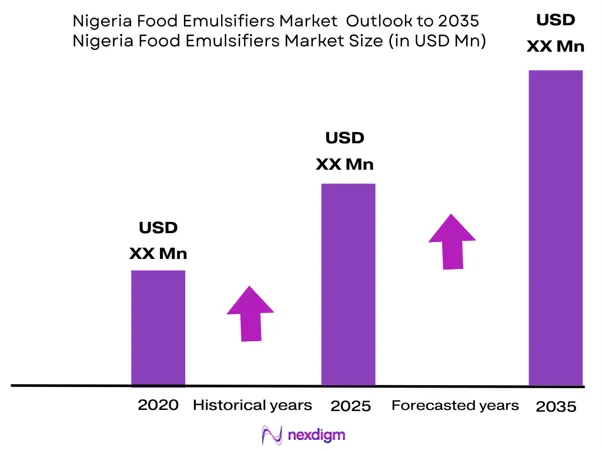
The Nigeria Food Emulsifiers Market is valued at USD ~ million, based on a five-year historical analysis, and is forecast to grow at % CAGR during the forecast period. Demand is driven by bakery, bread, biscuits, instant noodles, seasonings, bouillon cubes, powdered drinks, dairy, frozen desserts and sauces. Nigeria’s population reached 233 million, GDP per capita stood at USD 1,084.16, and GDP reached USD 252.26 billion, supporting high-volume packaged food demand. The Nigeria Food Emulsifiers Market is dominated by Lagos, Ogun, Ibadan, Kano, Kaduna, Abuja, Port Harcourt, Onitsha and Aba. Lagos and Ogun dominate through industrial food manufacturing, ports, ingredient imports and FMCG distribution; Kano supports noodles and open-market ingredient trade; Onitsha and Aba support wholesale channels. Nigeria’s manufacturing sector recorded real growth of 1.28 units per 100 in Q2 2024, while manufacturing contributed 8.46 units per 100 to real GDP.
Market Segmentation
By Emulsifier Type
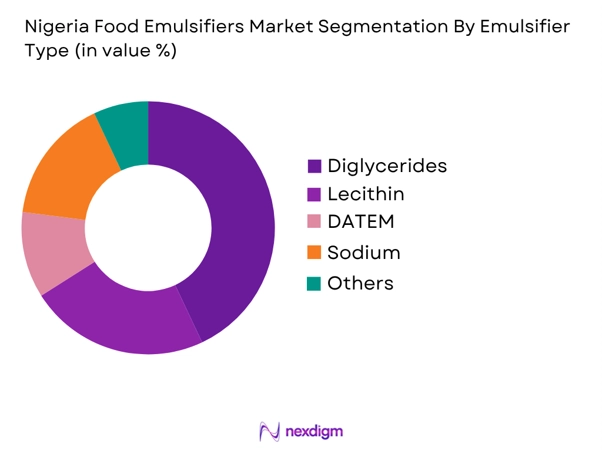
Nigeria Food Emulsifiers Market is segmented by emulsifier type into mono- and diglycerides, lecithin, DATEM, sodium stearoyl lactylate, calcium stearoyl lactylate, polysorbates, sorbitan esters, PGPR, sucrose esters, polyglycerol esters and customized emulsifier blends. Recently, mono- and diglycerides have a dominant market share in Nigeria under the emulsifier type segmentation because they are widely used in bread, buns, cakes, biscuits, margarine, spreads, whipped toppings, instant mixes and frozen desserts. Their dominance is linked to strong cost-in-use efficiency, broad fat compatibility and multifunctional performance across dough conditioning, aeration, fat dispersion, crumb softness, anti-staling and emulsion stability. These functions are important in Nigeria because large bakeries, noodle processors, seasoning manufacturers and open-market suppliers require stable product quality across heat, logistics variation and long retail distribution cycles.
By Application
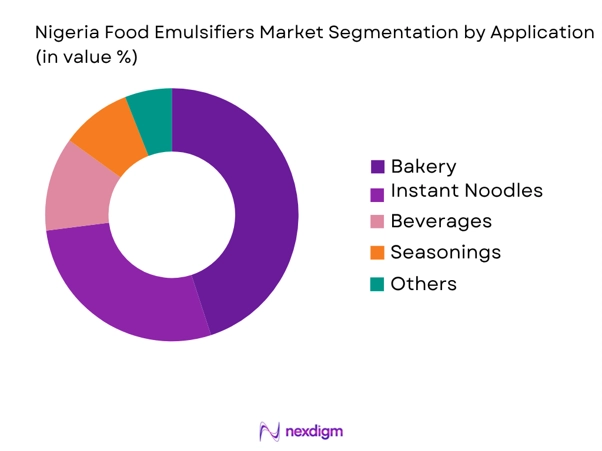
Nigeria Food Emulsifiers Market is segmented by application into bakery, bread, buns, instant noodles, pasta, seasonings, bouillon cubes, biscuits, snacks, savoury foods, dairy, frozen desserts, beverages, powdered drinks, confectionery, chocolate, sauces, spreads and nutritional foods. Recently, bakery, bread and buns have a dominant market share in Nigeria under the application segmentation because emulsifiers are essential for dough tolerance, loaf volume, crumb softness, moisture retention and shelf-life stability. Industrial bakeries use mono- and diglycerides, DATEM, SSL, CSL, lecithin and enzyme-emulsifier systems to manage flour variability and maintain quality in high-volume production. Nigeria’s large population base of 233 million people creates continuous demand for affordable flour-based foods, while formal and informal distribution through Lagos, Ogun, Kano, Onitsha and Aba strengthens demand for ingredients that improve texture and reduce product failure.
Competitive Landscape
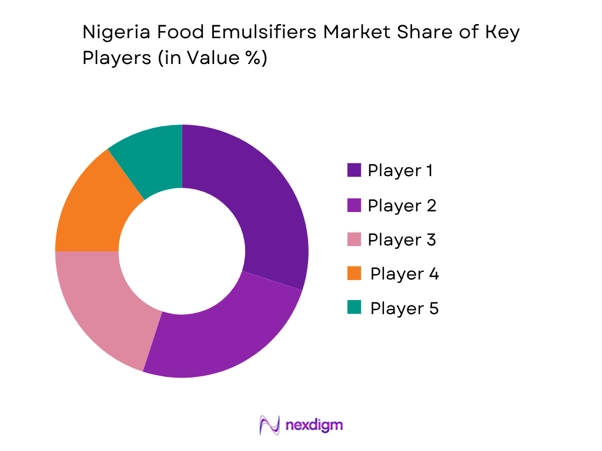
The Nigeria Food Emulsifiers Market is served by global ingredient companies, West Africa distributors, bakery improver suppliers, specialty chemical importers, open-market ingredient traders and local food formulation partners. The market is import-dependent and documentation-sensitive because processors require NAFDAC registration support, SON compliance, certificates of analysis, allergen files, halal documents and batch consistency. Large bakeries, noodle manufacturers, seasoning producers, biscuit companies and beverage processors prefer suppliers that can provide local stockholding, formulation support and predictable delivery across Lagos-Ogun-Kano-Port Harcourt corridors.
| Company | Establishment Year | Headquarters | Core Emulsifier Focus | Nigeria Market Role | Key Applications | Distribution Strength | Compliance Capability | Market-Specific Capability |
| Cargill Nigeria | 1865 | Wayzata, USA | ~ | ~ | ~ | ~ | ~ | ~ |
| Kerry Ingredients Nigeria | 1972 | Tralee, Ireland | ~ | ~ | ~ | ~ | ~ | ~ |
| Brenntag Nigeria | 1874 | Essen, Germany | ~ | ~ | ~ | ~ | ~ | ~ |
| Ingredion Nigeria | 1906 | Westchester, USA | ~ | ~ | ~ | ~ | ~ | ~ |
| Ita Food Improvers | 1981 | Lagos, Nigeria | ~ | ~ | ~ | ~ | ~ | ~ |
Nigeria Food Emulsifiers Market Analysis
Growth Drivers
Urban packaged food demand and flour-based consumption
Nigeria Food Emulsifiers Market is driven by urban demand for bread, buns, biscuits, cakes, instant noodles, seasoning cubes, powdered drinks, margarine, spreads and affordable packaged foods. World Bank data recorded Nigeria’s population at 233 million and GDP per capita at USD 1,084.16 in 2024, while GDP stood at USD 252.26 billion, giving food manufacturers a large domestic base for mass-market products. For emulsifier suppliers, this supports demand for mono- and diglycerides, DATEM, SSL, CSL, lecithin and polysorbates used in dough conditioning, crumb softness, fat dispersion, emulsion stability and anti-staling. Lagos, Ogun, Kano, Ibadan, Onitsha and Aba remain important because they combine industrial food manufacturing, wholesale ingredient trading, open-market distribution and national retail flow. Bread and noodle processors need ingredients that can maintain texture and shelf life despite heat, transport variation and informal retail handling. Emulsifiers therefore function as manufacturing stabilizers, helping producers manage flour variability, oil dispersion and product consistency across high-volume distribution channels.
Food, beverage and tobacco manufacturing activity
Nigeria Food Emulsifiers Market is supported by manufacturing activity in food, beverages and tobacco, where emulsifiers are required in bakery, biscuits, noodles, sauces, dairy, powdered drinks, confectionery and snack processing. The National Bureau of Statistics reported manufacturing real growth of 1.28 units per 100 in Q2 2024 and manufacturing’s real GDP contribution at 8.46 units per 100, while a Q1 2025 government-reported update recorded manufacturing real growth of 1.69 units per 100, with food, beverage and tobacco growing 3.48 units per 100. These indicators show that food-linked processing remains one of the active components of Nigeria’s non-oil economy. Emulsifiers are relevant because high-speed bakeries, noodle factories and seasoning producers need repeatable dough handling, fat dispersion, powder flowability, cube binding, sauce stability and mouthfeel control. Industrial buyers increasingly prefer suppliers that provide formulation trials, certificates of analysis, NAFDAC-ready documentation and batch consistency, rather than commodity trading alone. This strengthens demand for technical-service-led emulsifier supply in Lagos-Ogun manufacturing corridors and northern noodle-processing hubs.
Market Challenges
NAFDAC registration, labelling and compliance documentation burden
Nigeria Food Emulsifiers Market faces a regulatory challenge because food processors must manage NAFDAC registration, ingredient declaration, pre-packaged food labelling, certificates of analysis, import documentation, allergen disclosure and customer-specific compliance files. NAFDAC’s mandate covers the manufacture, importation, exportation, distribution, advertisement, sale and use of regulated food products, while its food regulations portal provides the framework for food-related regulatory documents. This matters commercially because Nigeria’s population reached 233 million and GDP stood at USD 252.26 billion in 2024, creating a large market in which compliance errors can affect national distribution of bread, biscuits, noodles, seasonings, powdered beverages, sauces and dairy products. Emulsifier suppliers must therefore support mono- and diglycerides, lecithin, DATEM, SSL, CSL, polysorbates, sorbitan esters and PGPR with clear specifications, permitted-use guidance, batch traceability and label-ready information. Smaller processors often struggle with documentation quality, while larger FMCG buyers require stricter supplier approval. This raises entry barriers for weakly documented imported emulsifiers and open-market ingredient supply.
Import dependency, FX exposure and technical reformulation risk
Nigeria Food Emulsifiers Market is constrained by import dependence and formulation risk because specialty emulsifiers such as lecithin, PGPR, polysorbates, sorbitan esters, DATEM and customized bakery blends are often sourced through international ingredient channels. World Bank data recorded GDP per capita at USD 1,084.16 in 2024, indicating a highly price-sensitive consumer environment, while NBS reported manufacturing real growth of only 1.28 units per 100 in Q2 2024. This combination pressures processors to control cost-in-use while maintaining product performance. Reformulation is technically risky because a change in emulsifier can alter bread softness, loaf volume, biscuit bite, noodle oil distribution, seasoning cube binding, sauce separation, powdered drink dispersion, chocolate viscosity and frozen dessert aeration. Import lead times, customs clearance, foreign exchange availability and inconsistent open-market traceability can further disrupt production schedules. Large food manufacturers need validated dosage guidance, trial support and warehouse stock, while smaller bakeries often buy through traders without full documentation. This gap creates quality variation across the emulsifier supply chain.
Market Opportunities
NAFDAC-ready, traceable and technically supported B2B ingredient supply
Nigeria Food Emulsifiers Market has a strong opportunity in documentation-ready emulsifier supply because food processors need reliable ingredients that can pass regulatory, buyer and production checks. Nigeria’s population of 233 million and GDP of USD 252.26 billion in 2024 support a broad demand base for bread, noodles, seasonings, biscuits, powdered beverages and sauces. At the same time, NAFDAC’s regulatory role over food manufacture, importation, distribution and sale makes documentation a commercial differentiator. Suppliers can build future growth by offering NAFDAC-ready certificates of analysis, allergen statements, ingredient-origin files, halal documents, non-GMO documents, label-support data and batch traceability for mono- and diglycerides, lecithin, DATEM, SSL, CSL, PGPR and polysorbates. This opportunity is especially relevant in Lagos, Ogun, Kano and Onitsha, where industrial processors and open-market ingredient channels overlap. Better-documented supply can reduce approval delays for organized manufacturers and reduce quality risks for regional bakeries, noodle processors and seasoning producers. Companies that combine local warehousing with technical application support can move beyond commodity import trading into higher-value formulation partnerships.
Application-specific systems for bakery, noodles, seasonings and powdered drinks
Nigeria Food Emulsifiers Market has a growth opportunity in application-specific systems because processors increasingly need functional blends tailored to bread, noodles, bouillon, biscuits, powdered beverages, sauces and dairy products. NBS reported that manufacturing contributed 8.46 units per 100 to real GDP in Q2 2024, while Q1 2025 reporting showed food, beverage and tobacco growing 3.48 units per 100, indicating continued activity in food-linked manufacturing. Suppliers can target bakery improvers for softness, anti-staling and dough tolerance; noodle systems for oil dispersion and sheet handling; seasoning and bouillon blends for fat encapsulation, cube binding and powder flow; powdered drink emulsifiers for instantization and oil-soluble flavour dispersion; and dairy systems for smoothness and aeration. This opportunity is not based on future projections but on the current scale of Nigeria’s food manufacturing ecosystem and the size of its consumer base. Firms with formulation labs, trial batches, hot-climate shelf-life testing and distributor stock in Lagos-Ogun-Kano corridors can support processors that need lower product failure, better batch repeatability and NAFDAC-aligned documentation.
Future Outlook
Over the forecast period, the Nigeria Food Emulsifiers Market is expected to grow through bakery, bread, biscuits, noodles, seasonings, bouillon cubes, dairy, powdered drinks, snacks, sauces and foodservice demand.
Emulsifiers will remain critical for dough conditioning, aeration, fat dispersion, anti-staling, emulsion stability, viscosity control, instantization, powder flowability and mouthfeel improvement.
Bakery will remain the strongest application anchor because bread, buns, cakes and biscuits require softness, volume, moisture retention and longer shelf life across hot and variable distribution conditions.
Instant noodles and seasonings will remain important because emulsifiers support oil distribution, seasoning dispersion, cube binding, powder flow, fat encapsulation and product consistency.
Dairy, frozen desserts and powdered drinks will support demand for emulsifier-stabilizer systems that improve smoothness, aeration, freeze-thaw stability, instantization and protein-fat-water interaction.
NAFDAC documentation, SON compliance, halal certification, import reliability and batch traceability will remain central to supplier approval.
Suppliers with Lagos or Ogun warehousing, pilot-trial support, NAFDAC-ready documents and bakery/noodle technical expertise will be better positioned than commodity importers.
Major Players
- Cargill Nigeria
- ADM West Africa
- Palsgaard West Africa
- Corbion West Africa
- BASF West Africa
- Kerry Ingredients Nigeria
- Ingredion Nigeria
- International Flavors & Fragrances Nigeria
- AAK West Africa
- Bunge West Africa
- Brenntag Nigeria
- Barentz West Africa
- IMCD Nigeria
- Ita Food Improvers
- Matna Foods Company Limited
Key Target Audience
- Food emulsifier manufacturers
- Bakery, biscuit and snack manufacturers
- Noodle, pasta, seasoning and bouillon manufacturers
- Dairy, frozen dessert and beverage manufacturers
- Sauce, spread, margarine and confectionery manufacturers
- Ingredient distributors and specialty ingredient importers
- Investments and venture capitalist firms
- Government and regulatory bodies (National Agency for Food and Drug Administration and Control, Standards Organisation of Nigeria, Federal Ministry of Health and Social Welfare, Federal Ministry of Agriculture and Food Security, Federal Competition and Consumer Protection Commission, Nigeria Customs Service)
Research Methodology
Step 1: Identification of Key Variables
The initial phase involves constructing an ecosystem map covering emulsifier manufacturers, importers, specialty ingredient distributors, open-market ingredient traders, bakery ingredient suppliers, noodle premix suppliers, dairy stabilizer providers and food processors. This step uses desk research, regulatory review, trade indicators and company-level mapping. The objective is to define variables such as emulsifier type, source, form, functionality, application, end user and distribution channel.
Step 2: Market Analysis and Construction
In this phase, historical data is compiled across food manufacturing activity, bakery demand, noodle production, seasoning and bouillon demand, beverage production, dairy processing, ingredient imports and regulatory requirements. The top-down approach evaluates macro and manufacturing indicators, while the bottom-up approach assesses emulsifier usage across bakery, noodles, seasonings, dairy, beverages, sauces and confectionery. This supports value, volume and segment-level modelling.
Step 3: Hypothesis Validation and Expert Consultation
Market hypotheses are validated through computer-assisted telephone interviews with emulsifier suppliers, importers, bakery technologists, noodle processors, seasoning manufacturers, dairy formulators, beverage specialists and ingredient distributors. These consultations help verify mono- and diglycerides dominance, lecithin demand, NAFDAC documentation needs, open-market supply risks and application-level usage. Expert inputs refine segmentation, competitive positioning and future outlook.
Step 4: Research Synthesis and Final Output
The final phase integrates secondary research, NAFDAC regulatory review, company benchmarking, import-channel analysis, distributor checks and expert consultations into a consolidated market model. Data triangulation is applied across manufacturer demand, distributor movement, application usage and functional requirements. The final output includes market size, segmentation, competitive landscape, future outlook and strategic recommendations for Nigeria Food Emulsifiers Market participants.

- Executive Summary
- Research Methodology (Market Definitions and Assumptions, Abbreviations, INS/E-Number Mapping, NAFDAC Food Additive Mapping, SON Food Standard Mapping, Pre-Packaged Food Labelling Review, Codex and JECFA Cross-Reference, HS Code Mapping, Market Sizing Approach, Top-Down Analysis, Bottom-Up Analysis, Demand-Side Assessment, Supply-Side Assessment, Import-Export Assessment, Food Processor Procurement Checks, Bakery and Dairy Formulator Interviews, Ingredient Distributor Interviews, Primary Industry Interviews, Data Triangulation, Forecasting Framework, Limitations and Future Conclusions)

- Definition and Scope
- Market Evolution and Industry Genesis
- Timeline of Major Industry Developments
- Role of Emulsifiers in Nigeria Packaged Food Manufacturing
- NAFDAC and SON Food Additive Regulatory Framework

- Growth Drivers (Industrial Bakery and Bread Consumption, Flour-Based Food Manufacturing, Instant Noodle and Pasta Demand, Seasoning and Bouillon Production, Dairy and Frozen Dessert Manufacturing, Beverage and Powdered Drink Production, Urban Packaged Food Consumption, Open-Market and Modern Retail Distribution)
- Market Challenges (NAFDAC Product Registration Complexity, SON Standard Compliance Requirements, Import Dependency for Specialty Emulsifiers, FX and Customs Clearance Exposure, Clean-Label Pressure on Synthetic Emulsifiers, Soy Allergen and GMO Sensitivity, Open-Market Traceability Risk, Application-Specific Reformulation Challenges)
- Market Opportunities (Sunflower Lecithin and Non-GMO Emulsifier Expansion, Clean-Label Bakery and Dairy Systems, Enzyme-Based Bakery Emulsifier Replacement, Noodle and Seasoning Premix Systems, Fortified Food Emulsifier Blends, Local Palm and Oilseed-Derived Emulsifier Potential, Foodservice and QSR Premix Solutions, Documentation-Ready B2B Ingredient Supply)
- Market Trends (Shift from Commodity Emulsifiers to Customized Blends, Clean-Label Replacement of Synthetic Emulsifiers, Increased Use of Enzyme-Based Dough Systems, Growth of Powdered and Instantized Emulsifier Systems, Demand for NAFDAC-Ready Documentation, Lecithin Source Differentiation, Technical Service-Led Ingredient Selling, Distributor Consolidation in Lagos and Ogun)
- SWOT Analysis
- Porter’s Five Forces Analysis
- PESTLE Analysis

- By Market Value (2020-2025)
- By Consumption Volume (2020-2025)
- By Domestic Production Demand (2020-2025)

- By Emulsifier Type (In Value %)
Mono- and Diglycerides
Lecithin
DATEM
Sodium Stearoyl Lactylate
Calcium Stearoyl Lactylate
Polysorbates
Sorbitan Esters - By Source Type (In Value %)
Soy-Based Emulsifiers
Sunflower-Based Emulsifiers
Egg-Based Emulsifiers
Palm-Based Emulsifiers
Rapeseed/Canola-Based Emulsifiers - By Distribution Channel (In Value %)
Direct Sales to Food Manufacturers
Ingredient Distributors
Specialty Chemical Distributors
Bakery Ingredient Suppliers
Dairy Ingredient Suppliers
Confectionery Ingredient Suppliers - By Region (In Value %)
South West
North West
North Central
South South
South East
North East

- Market Share of Major Players (By Value, Volume, Emulsifier Type, Source Type, Application, End User, Region, Distribution Channel, Domestic vs Imported Portfolio)
- Cross Comparison Parameters (Emulsifier Portfolio Breadth, Lecithin Source Diversity, NAFDAC Documentation Strength, SON Compliance Capability, Clean-Label and Non-GMO Product Range, Bakery and Noodle Application Expertise, Nigeria Warehousing and Distributor Footprint, Technical Support and Pilot Trial Capability)
- SWOT Analysis of Major Players
- Detailed Profiles of Major Companies
Cargill Nigeria
ADM West Africa
Palsgaard West Africa
Corbion West Africa
BASF West Africa
Kerry Ingredients Nigeria
Ingredion Nigeria
International Flavors & Fragrances Nigeria
AAK West Africa
Bunge West Africa
Brenntag Nigeria
Barentz West Africa
IMCD Nigeria
Ita Food Improvers
Matna Foods Company Limited

- Industrial Bakery Manufacturer Analysis
- Biscuit and Snack Manufacturer Analysis
- Instant Noodle and Pasta Manufacturer Analysis
- Seasoning and Bouillon Manufacturer Analysis
- Confectionery and Chocolate Manufacturer Analysis
- Dairy and Ice Cream Manufacturer Analysis

- By Market Value (2026-2035)
- By Consumption Volume (2026-2035)
- By Domestic Production Demand (2026-2035)


 Request a Sample
 Ask for Customization
 Get a Quote
 Enquire Now