
 Download PDF
Market Overview
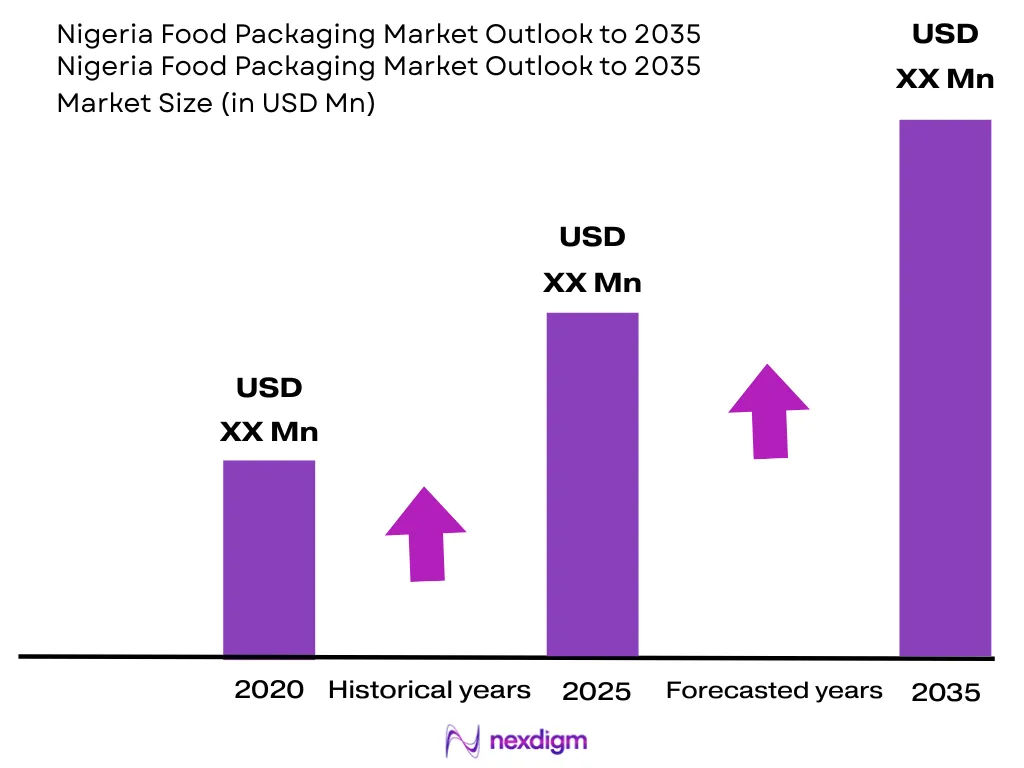
The Nigeria Food Packaging Market was valued at USD ~ Million in 2024 and is anticipated to expand at a CAGR of ~ % during 2026–2035. The market is primarily driven by rising demand for convenience and ready-to-eat foods, rapid urban population growth, and continued expansion of the country’s food and beverage processing industry. According to Deep Market Insights, the Nigeria food packaging market was valued at approximately USD ~ million in 2025 and is projected to reach USD ~ million by 2034, representing around 0.61 percent of the overall global food packaging market. Meanwhile, food remained the largest outlet within Nigeria’s broader packaging industry, accounting for a 28.18 percent share in 2025, spanning categories from tomato-paste cans to powdered-milk pouches, sustaining consistent demand for functional packaging solutions across beverages, dairy, bakery, and processed food applications.
Market Segmentation
By Material
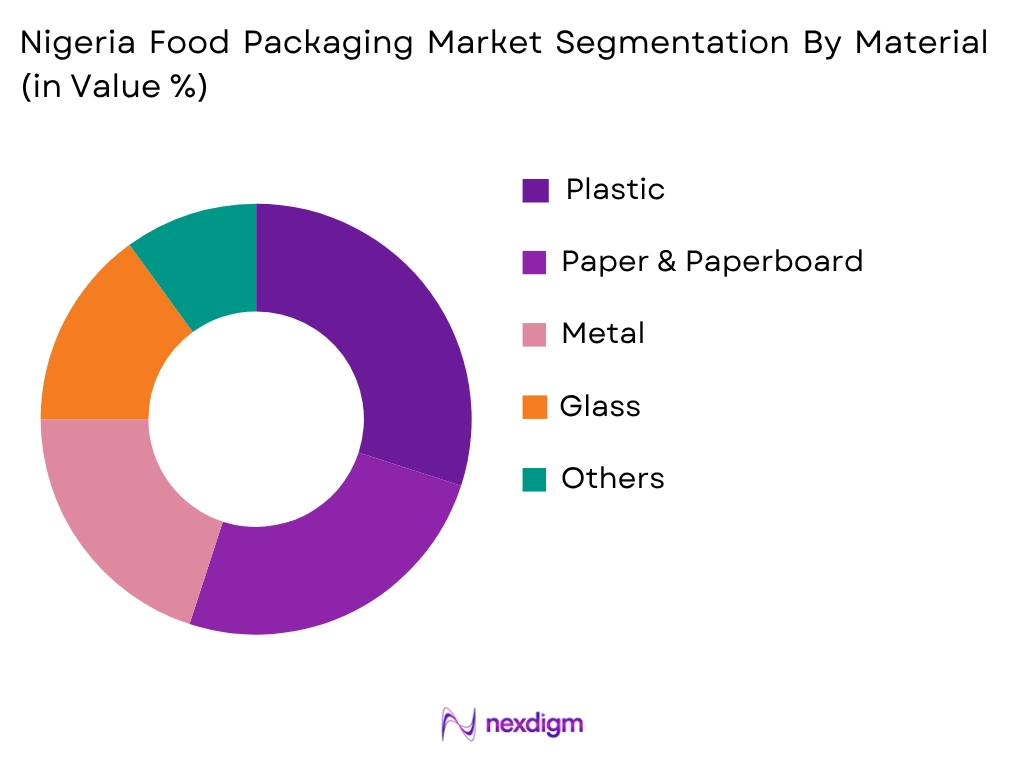
Among these, Plastic Packaging holds the largest share of the Nigeria Food Packaging Market, retaining approximately 53.45 percent share of the broader Nigeria packaging market in 2025, buoyed by polyethylene terephthalate bottles, high-density polyethylene jerry cans, and low-density polyethylene sachets that serve Nigeria’s cost-sensitive mass-market consumer base. Sachet-based packaging formats remain particularly significant given Nigeria’s large population, where more than 60 percent of consumers are under the age of 25 and favor low-cost, single-serve packaging for products priced below NGN 100. At the same time, Paper & Paperboard Packaging is advancing at a faster rate, supported by retailer bans on non-recyclable laminates and eco-label preferences aligned with updated food-contact rules. This shift is reinforced by NESREA’s National Environmental (Plastic Waste Control) Regulations 2026, which mandate recycled PET content in packaging beginning at 25 percent from January 2028 and rising to 50 percent from January 2030, accelerating investment in recyclable and fiber-based alternatives across the industry.
By Application
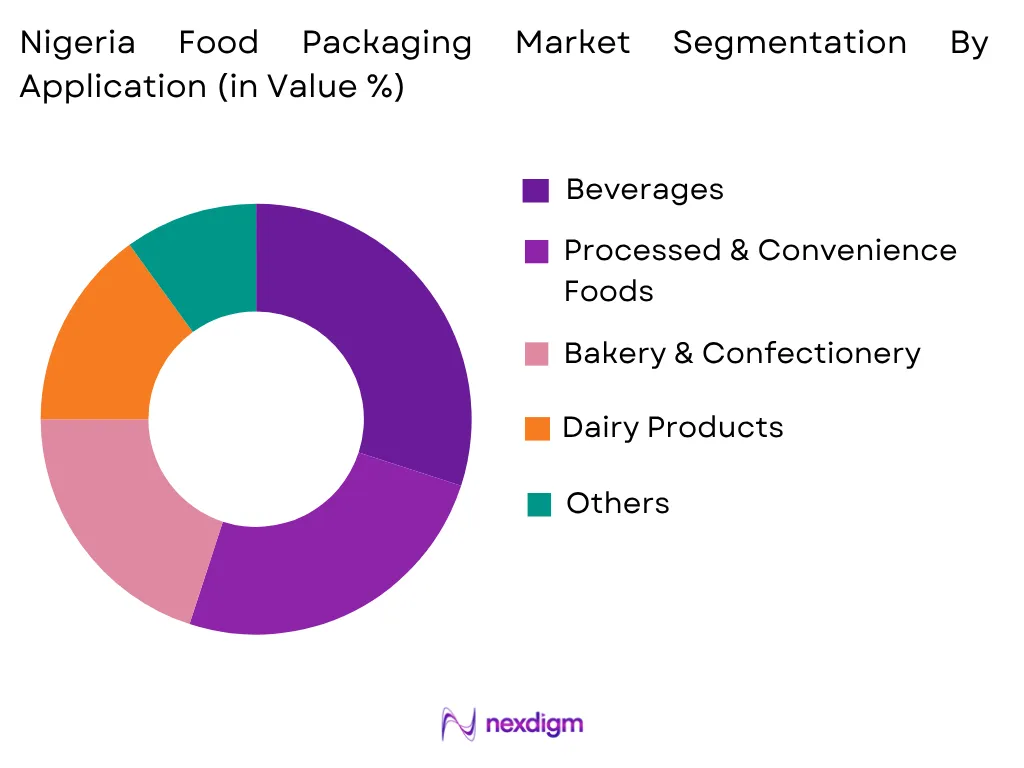
The Beverages segment holds a leading share, supported by ongoing capacity expansions across Nigeria’s soft-drink bottling industry, with more than USD 1 billion in soft-drink expansion investments elevating PET bottle demand and sustaining glass conversion volumes. Nampak Nigeria, one of the country’s leading packaging companies, announced in November 2024 a significant investment to expand its Lagos manufacturing factory, increasing production capacity by 30 percent with an emphasis on creative and sustainable packaging solutions for the food and beverage industry. Processed and convenience food packaging is also expanding rapidly, supported by rising urbanization and the growth of online meal delivery platforms, while smart packaging innovations, such as UACN Property Development Company’s August 2024 launch of QR-code-enabled traceable packaging for frozen food goods, illustrate the industry’s growing focus on freshness verification and consumer engagement across dairy, bakery, and confectionery applications.
Competitive Landscape
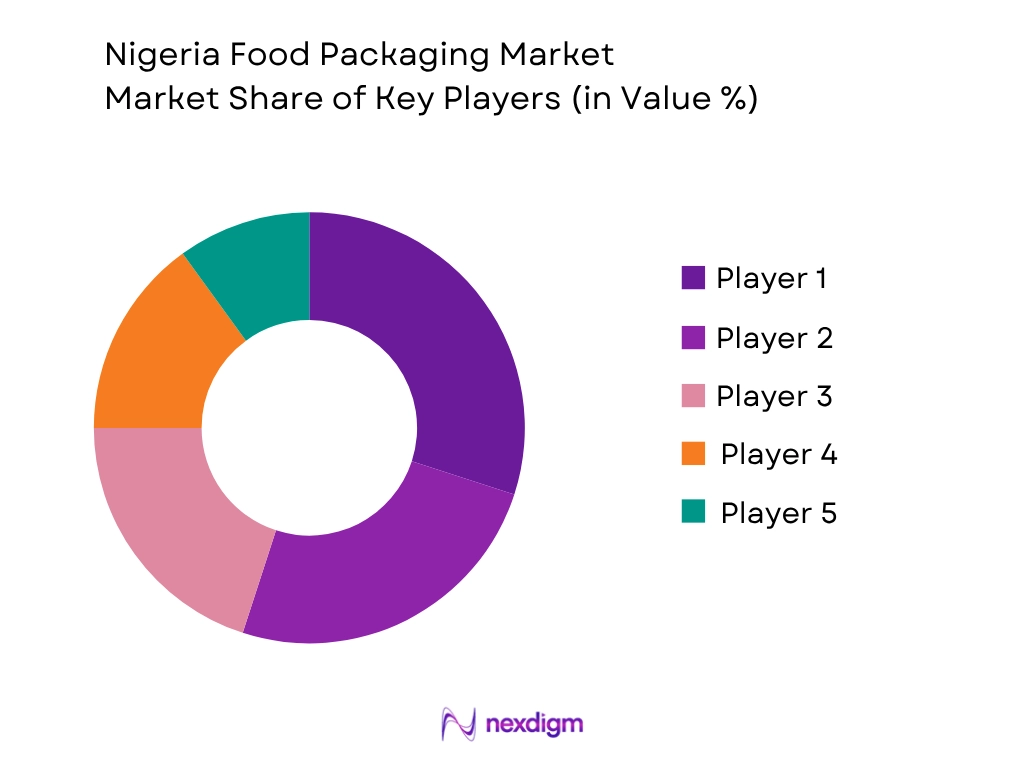
The Nigeria Food Packaging Market is moderately fragmented, with domestic converters, regional West African manufacturers, and multinational packaging companies competing across plastic, paper, glass, and metal formats. Competition is primarily based on cost efficiency, affordability for mass-market sachet formats, regulatory compliance, and the ability to serve both domestic retail and export-oriented food processors across the Economic Community of West African States (ECOWAS) region. Lagos and the surrounding South West zone remain the dominant manufacturing hub, supported by port infrastructure and concentrated food and beverage processing capacity, though persistent congestion at the Apapa and Tin Can ports, with average dwell times of 19 days in 2025, adds significant demurrage costs equivalent to roughly 10 percent of cargo value. Companies are increasingly investing in recycled PET processing, sachet-format innovation, and local resin sourcing to strengthen supply chain resilience and comply with NESREA’s emerging Extended Producer Responsibility framework.
| Company | Establishment Year | Headquarters | Primary Product Portfolio | Food Packaging Portfolio
|
Manufacturing Presence | Major End-Use Industries | Key Strategic Focus | Certifications & Compliance |
| Nampak Nigeria | 1968 | ~ | ~ | ~ | ~ | ~ | ~ | ~ |
| Beta Glass Plc | 1976 | ~ | ~ | ~ | ~ | ~ | ~ | ~ |
| Avon Crowncaps & Containers Nigeria Limited | 1961 | ~ | ~ | ~ | ~ | ~ | ~ | ~ |
| Greif, Inc. | 1877 | ~ | ~ | ~ | ~ | ~ | ~ | ~ |
| Twinstar Industries Limited | 1995 | ~ | ~ | ~ | ~ | ~ | ~ | ~ |
Nigeria Food Packaging Market Analysis
Growth Drivers
Growing Demand for Convenience Foods and E-Commerce Delivery
Nigeria’s food packaging market is experiencing sustained growth due to increasing preference for convenience foods and rapid growth of e-commerce and online food delivery platforms. WorldPay projects that by 2026, approximately 13 percent of Nigeria’s total sales will occur online, with mobile shopping dominating at 77 percent of all online retail activity. E-commerce platforms continue to strengthen their logistics infrastructure, exemplified by Jumia’s launch of a cutting-edge integrated warehouse and logistics facility in June 2024. Nigeria’s flexible plastic packaging market alone surpassed USD 1.2 billion in 2024 in food-related applications, driven by the country’s growing food processing industry and the popularity of online meal delivery. With Abuja’s population expected to approach 5.5 million by the end of 2024, growing at an annual rate of roughly 8 to 10 percent, and similar urbanization trends across Lagos and other major cities, demand continues to rise for lightweight, durable, and cost-effective packaging solutions across dairy, snacks, and ready-to-eat meal categories.
Expansion of Food and Beverage Processing Investment
The steady expansion of Nigeria’s food and beverage processing industry remains a major driver for food packaging consumption. Major multinational and domestic food companies continue to invest in local manufacturing capacity, exemplified by Nestle Nigeria’s 2024 introduction of Golden Morn breakfast cereal in environmentally friendly plastic packaging and Nampak Nigeria’s 30 percent capacity expansion of its Lagos factory. Beverage packaging benefits from more than USD 1 billion in soft-drink industry expansion investments, elevating demand for PET bottles and sustaining glass conversion volumes across the country’s major bottling operations. Pharmaceutical serialization rules that took effect in 2024 have also raised broader packaging sector sophistication, indirectly supporting quality and traceability standards adopted across food packaging as well. These structural developments continue to strengthen long-term demand for advanced food packaging solutions throughout Nigeria.
Market Challenges
Port Congestion and Import Dependency for Packaging Raw Materials
Despite steady demand growth, the Nigeria food packaging market remains constrained by significant port congestion and logistics delays affecting the import of packaging raw materials. Port dwell times at Apapa and Tin Can averaged 19 days in 2025, layering demurrage charges worth approximately 10 percent of cargo value onto packaging converters reliant on imported resins and specialty materials. Nigeria’s absence of a domestic petrochemical cracker network leaves the food packaging market exposed to global resin price volatility and import costs, with the market expected to remain constrained until the planned polypropylene unit tied to the country’s 2024 refinery expansion reaches commercial scale, projected for post-2028. These import dependencies collectively increase production planning complexity and cost exposure for companies operating within Nigeria’s food packaging industry.
Regulatory Fragmentation and Emerging Extended Producer Responsibility Compliance
Nigeria’s evolving regulatory framework for plastic packaging presents a significant compliance challenge for food packaging manufacturers. Regulatory oversight is currently shared across multiple institutions, including the National Agency for Food and Drug Administration and Control (NAFDAC), the Standards Organisation of Nigeria (SON), the Federal Competition and Consumer Protection Commission (FCCPC), and the National Environmental Standards and Regulations Enforcement Agency (NESREA), creating compliance risk from divergent agency directives. NESREA’s newly gazetted National Environmental (Plastic Waste Control) Regulations 2026 introduce a phased recycled PET content mandate beginning at 25 percent from January 2028 and rising to 50 percent from January 2030, sourced from certified food-grade domestic producers. The Manufacturers Association of Nigeria has raised concerns regarding the pace and cost implications of the regulations, requiring packaging manufacturers to continuously monitor implementation guidance and invest in compliance infrastructure, including producer reporting templates and traceability systems.
Market Opportunities
Rising Investment in Domestic Recycled PET and Circular Packaging
Nigeria’s emerging Extended Producer Responsibility framework creates significant opportunities for investment in domestic recycled PET production and circular packaging infrastructure. NESREA’s mandate requiring recycled PET content to be sourced locally from certified food-grade producers is specifically designed to boost Nigeria’s domestic recycling industry and conserve foreign exchange, creating favorable conditions for investment in collection, sorting, and recycling infrastructure. Initiatives such as the Plastic Reboot Nigeria Programme, supported by UNEP and the Global Environment Facility, alongside private-sector bodies such as the Food and Beverage Recycling Alliance (FBRA), are institutionalizing structured packaging recovery systems. As the polluter-pays principle becomes embedded in Nigerian packaging policy, manufacturers investing early in recycled content processing and Producer Responsibility Organisation participation are positioned to capture premium compliance-driven contracts from food and beverage brand owners.
Expansion of Domestic Petrochemical Capacity and Sachet Format Innovation
Nigeria’s planned expansion of domestic petrochemical and polypropylene production capacity, tied to the country’s 2024 refinery development, creates substantial long-term opportunities for packaging manufacturers seeking reduced reliance on imported resins. In the near term, Nigeria’s distinctive sachet economy, which serves a population in which more than 60 percent are under 25 years old and highly price-sensitive, continues to offer opportunities for manufacturers who can reformulate affordable packaging formats using recycled or bio-based inputs to align with sustainability requirements without compromising affordability. Nampak Nigeria’s 30 percent Lagos capacity expansion and UACN’s introduction of QR-enabled smart packaging for frozen foods both illustrate growing investment momentum in innovative, differentiated packaging formats. Continued investment in food processing facilities and modern retail expansion further strengthens production capacity for value-added food packaging formats across Nigeria.
Future Outlook
The Nigeria Food Packaging Market is expected to witness sustained expansion over the forecast period, supported by continued growth in convenience and ready-to-eat food consumption, expanding e-commerce and food delivery channels, and increasing regulatory pressure to adopt recycled and sustainable packaging materials. Continued investment in domestic recycled PET production, paperboard substitution, and petrochemical feedstock capacity will further accelerate innovation across the industry. The market is also likely to benefit from Nigeria’s position as a regional manufacturing hub for West Africa, enabling greater integration between domestic converters and international food and beverage brands seeking compliant, cost-competitive packaging solutions.
Major Players
- Nampak Nigeria
- Beta Glass Plc
- Avon Crowncaps & Containers Nigeria Limited
- Greif, Inc.
- Twinstar Industries Limited
- PrimePak Industries Nigeria Ltd
- Flexipack Plastics Ltd
- Quantum Plastic Nigeria Ltd
- Tempo Paper Pulp & Packaging Ltd
- Victor Oscar Company
- Sonnex Packaging
- All Time Packaging
- Tetra Pak Nigeria
- Amcor plc
- Mondi plc
Key Target Audience
- Food Packaging Manufacturers
- Food & Beverage Processing Companies
- Foodservice Operators and Quick-Service Restaurants
- Retail and Modern Trade Chains
- E-Commerce and Online Food Delivery Companies
- Investment and Venture Capitalist Firms
- Government and Regulatory Bodies (National Environmental Standards and Regulations Enforcement Agency (NESREA), National Agency for Food and Drug Administration and Control (NAFDAC), Standards Organisation of Nigeria (SON))
- Packaging Material Suppliers and Industrial Raw Material Distributors
Research Methodology
Step 1: Identification of Key Variables
The research process begins with identifying the complete ecosystem of the Nigeria Food Packaging Market, including raw material and resin suppliers, packaging converters and manufacturers, food and beverage processors, retailers, foodservice operators, and regulatory authorities. Extensive secondary research is conducted using company annual reports, government publications, trade associations, customs statistics, industry journals, and proprietary databases to determine the variables influencing market demand, pricing, production, consumption, and technological developments.
Step 2: Market Analysis and Construction
Historical market information is collected and analyzed to estimate market size, production volumes, import-export activity, application-wise demand, and pricing trends. A combination of top-down and bottom-up approaches is used to estimate market revenues and validate segment-level performance. Consumption patterns across beverages, dairy, bakery, processed foods, and sauces are evaluated to establish an accurate representation of the industry.
Step 3: Hypothesis Validation and Expert Consultation
The preliminary findings are validated through Computer-Assisted Telephone Interviews (CATIs) and structured discussions with packaging manufacturers, procurement managers, converters, food technologists, regulatory experts, and senior executives operating within the Nigerian food packaging industry. These interviews help verify market assumptions, competitive developments, technology adoption trends, pricing dynamics, and future investment opportunities while refining the overall market estimates.
Step 4: Research Synthesis and Final Output
The final stage integrates insights obtained from primary interviews with quantitative information collected through secondary sources. Data triangulation techniques are applied to reconcile differences between supply-side and demand-side estimates, ensuring robust market forecasting. The report is then reviewed through multiple quality assurance checkpoints to deliver a comprehensive analysis covering market size, segmentation, competitive landscape, future outlook, and strategic recommendations for industry stakeholders.

- Executive Summary
- Research Methodology (Market Definitions and Assumptions, Abbreviations, Market Sizing Approach, Top-Down Analysis, Bottom-Up Analysis, Demand-Side Assessment, Supply-Side Assessment, Primary Industry Interviews, Secondary Research Validation, Data Triangulation, Forecasting Framework, Limitations and Future Conclusions)

- Definition and Scope
- Market Evolution and Industry Genesis
- Timeline of Major Industry Developments
- Food Packaging Industry Value Chain Analysis
- Supply Chain Analysis

- Growth Drivers (Rising Demand for Convenience and Ready-to-Eat Foods, Growth of E-Commerce and Online Food Delivery, Rapid Urban Population Growth, Expansion of Food and Beverage Processing Industry, Rising Sachet and Affordable Packaging Formats, Increasing Foreign Investment in Manufacturing Capacity)
- Market Challenges (Port Congestion and Logistics Delays, Volatility in Imported Resin and Raw Material Prices, Absence of Domestic Petrochemical Feedstock Base, Regulatory Compliance Complexity Under NESREA EPR Rules, Limited Domestic Recycling Infrastructure, Foreign Exchange and Import Dependency Risks)
- Market Opportunities (Investment in Domestic Recycled PET Production, Growth in Paper-Based and Fiber Packaging, Expansion of Domestic Petrochemical and Polypropylene Capacity, Smart and QR-Enabled Packaging Technologies, Sachet Economy Reformulation for Sustainability, Export-Oriented Packaging Manufacturing for West Africa)
- Market Trends (Shift Toward Recycled PET and Circular Plastics, Rising Adoption of Sachet and Affordable Packaging Formats, Growth in Paper and Paperboard Substitution, Smart Packaging with QR-Based Traceability, Industry Capacity Expansion Through Investment, Producer Responsibility Organisation Formation)
- Government Regulations (National Environmental (Plastic Waste Control) Regulations 2026, NESREA Extended Producer Responsibility (EPR) Requirements, NAFDAC Food Contact Material Safety Standards, Standards Organisation of Nigeria (SON) Requirements, Recycled PET Content Mandates, Federal Competition and Consumer Protection Commission (FCCPC) Oversight)
- Import and Export Analysis (Trade Volume, Major Import Sources, Export Destinations, HS Code Analysis, Trade Balance)
- Raw Material Availability Analysis (Plastic Resins, Virgin and Recycled Paperboard, Aluminum, Glass, Recycled PET)
- Technology Landscape (Recycled PET Processing, Smart and QR-Enabled Packaging, Modified Atmosphere Packaging, Sachet Filling and Sealing Technology, Barrier Coating Technologies)
- Sustainability Assessment (Recyclability and Compostability, Post-Consumer Recycled Content, Carbon Footprint Reduction, Plastic Waste Reduction, Circular Economy Integration)
- PESTLE Analysis
- SWOT Analysis
- Porter’s Five Forces Analysis
- Stakeholder Ecosystem
- Competition Ecosystem

- By Market Value (2020-2025)
- By Volume Consumption (2020-2025)
- By Average Selling Price (2020-2025)

- By Material (In Value %)
Plastic Packaging
Paper & Paperboard Packaging
Metal Packaging
Glass Packaging
Sustainable & Biodegradable Packaging - By Product Type (In Value %)
Sachets & Pouches
Bottles & Jars
Cans & Jerry Cans
Trays & Containers
Cartons & Boxes - By Food Application (In Value %)
Beverages
Dairy Products
Processed & Convenience Foods
Bakery & Confectionery
Sauces, Seasonings & Condiments
Meat, Poultry & Seafood - By End Use (In Value %)
Food Processing Companies
Foodservice & Quick-Service Restaurants
Retail & Modern Trade
E-Commerce & Online Food Delivery - By Region (In Value %)
Lagos & South West
Abuja & North Central
South East
South South
Rest of Nigeria

- Market Share of Major Players (By Value, Volume, Material Type, Application Industry, Product Category)
- Cross Comparison Parameters (Material Portfolio Breadth, Sustainable Packaging Portfolio, Barrier Performance Capability, Application Technical Support Capability, Manufacturing Capacity, Regulatory Compliance & Certifications, Food & Beverage Customer Base, Innovation & New Product Launch Frequency)
- SWOT Analysis of Major Players
- Pricing Analysis by Product Category and SKU
- Production Capacity Analysis
- Manufacturing Footprint Analysis
- Distribution Network Analysis
- Innovation Benchmarking
- Detailed Profiles of Major Companies
Nampak Nigeria
Beta Glass Plc
Avon Crowncaps & Containers Nigeria Limited
Greif, Inc.
Twinstar Industries Limited
PrimePak Industries Nigeria Ltd
Flexipack Plastics Ltd
Quantum Plastic Nigeria Ltd
Tempo Paper Pulp & Packaging Ltd
Victor Oscar Company
Sonnex Packaging
All Time Packaging
Tetra Pak Nigeria
Amcor plc
Mondi plc

- Consumption Pattern Analysis (Industrial Usage, Batch Size, Product Category Penetration, Seasonal Demand, Reformulation Activity)
- Purchasing Criteria (Affordability, Barrier Performance, Cost Efficiency, Shelf-Life Extension, Regulatory Compliance, Print and Brand Presentation)
- Procurement and Supplier Selection Analysis
- Sustainable Packaging Adoption Assessment
- Premium vs Conventional Packaging Demand
- Product Attribute Preference Analysis (Barrier Properties, Resealability, Portion Control, Recyclability, Print Quality, Shelf Appeal)
- Consumer Affordability and Sachet Format Influence on Packaging Design
- Pain Point Analysis
- Decision-Making Process

- By Market Value (2026-2035)
- By Volume Consumption (2026-2035)
- By Average Selling Price (2026-2035)


 Request a Sample
 Ask for Customization
 Get a Quote
 Enquire Now