
 Download PDF
Market Overview
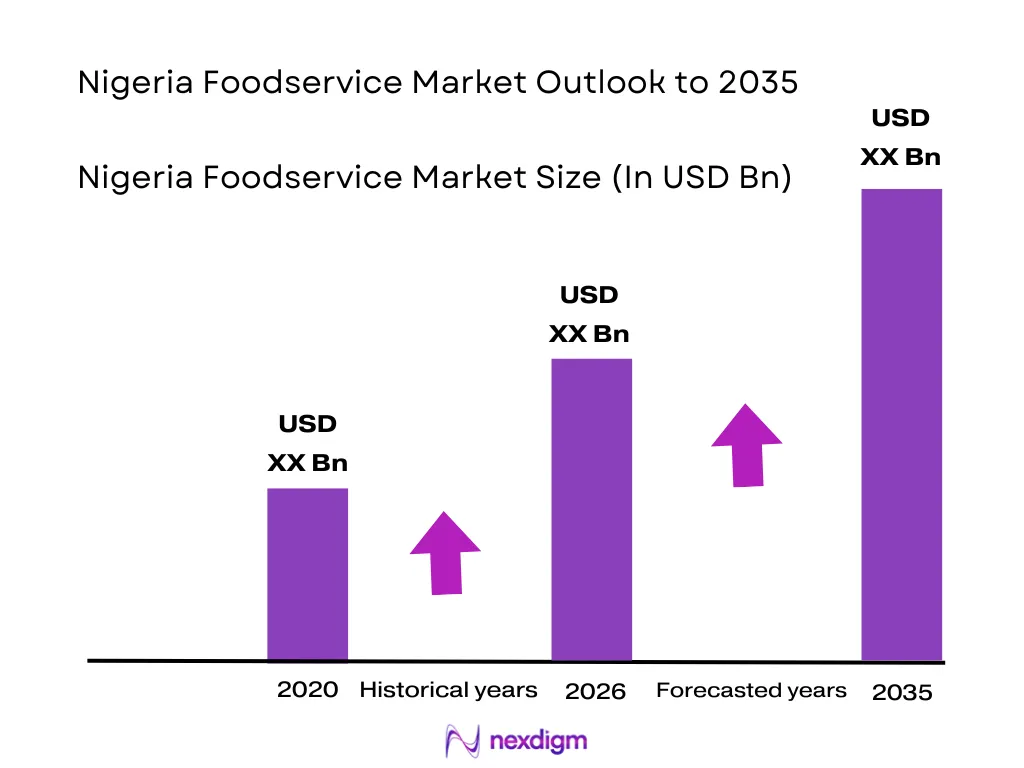
The Nigeria Foodservice Market is supported by rapid urbanization, increasing digital payment adoption, and rising demand for convenience dining across major metropolitan cities. The market generated nearly USD ~ billion in consumer foodservice revenue, supported by expanding quick-service restaurant penetration and rising mobile ordering transactions. Organized restaurant chains continue to strengthen their presence through franchise expansion, cloud kitchen deployment, and delivery integration. Increasing urban employment and rising consumer spending on ready-to-eat meals are accelerating demand across dine-in, takeaway, and home delivery channels throughout Nigeria’s leading commercial centers.
Cities such as Lagos, Abuja, Port Harcourt, and Ibadan dominate the Nigeria Foodservice Market due to their high population concentration, growing middle-income consumer base, and stronger commercial infrastructure. Lagos remains the primary foodservice hub because of its nightlife economy, higher disposable income levels, and concentration of multinational businesses and hospitality establishments. Abuja has emerged as a premium dining and institutional catering center due to strong government presence and expatriate population. Southern commercial regions continue witnessing organized restaurant expansion because of increasing urban migration, digital connectivity, and higher adoption of app-based food delivery services.
Market Segmentation
By Foodservice Type
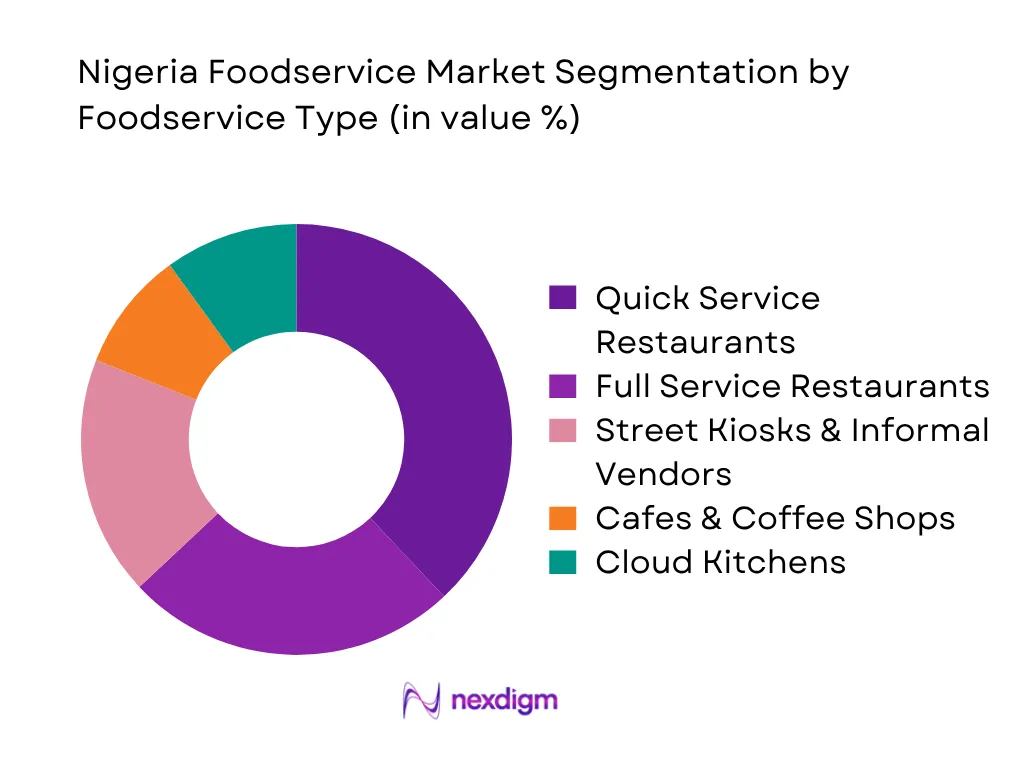
The Nigeria Foodservice Market is segmented by foodservice type into quick service restaurants, full service restaurants, cafes and coffee shops, cloud kitchens, bakery chains, street kiosks and informal vendors, and institutional catering services. Quick service restaurants dominate the market because of affordability, operational scalability, and rising consumer preference for convenient meal options across urban centers. Strong penetration near transit hubs, shopping malls, educational institutions, and business districts has strengthened customer accessibility. Additionally, increasing digital ordering integration and localized menu offerings continue supporting high repeat purchase frequency and stronger customer retention among younger urban consumers.
By Service Mode
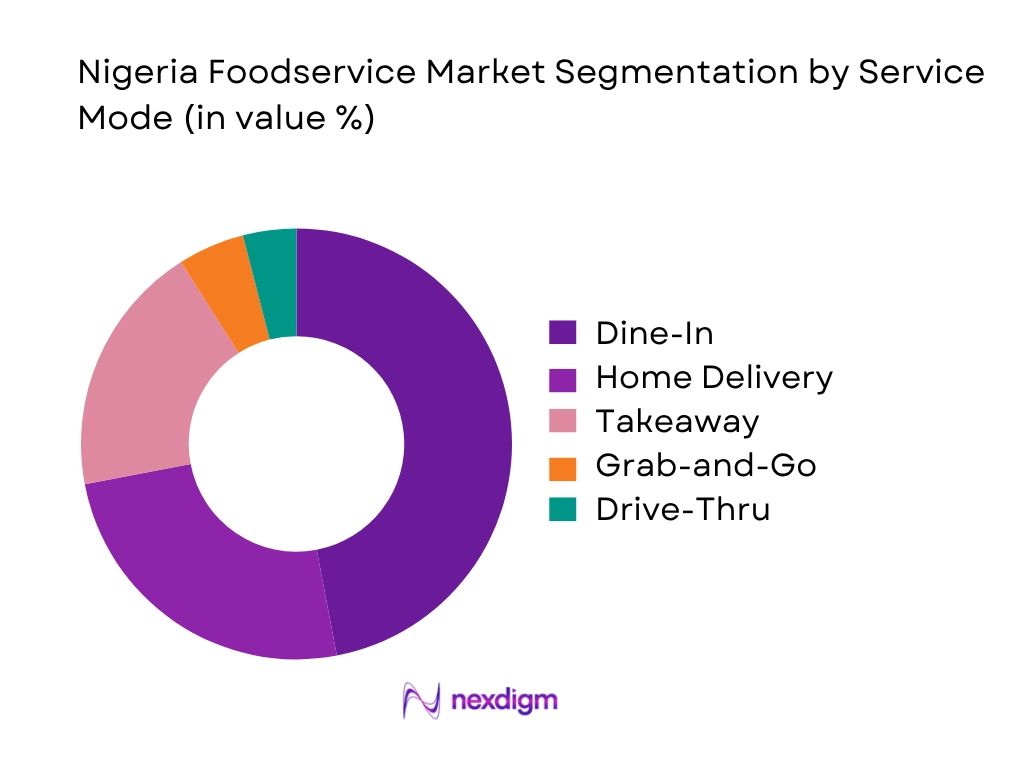
The Nigeria Foodservice Market is segmented by service mode into dine-in, takeaway, home delivery, drive-thru, and grab-and-go services. Dine-in services dominate the market because restaurants continue serving as social gathering destinations for family occasions, corporate meetings, and entertainment activities. Premium restaurants and lounges located across Lagos and Abuja continue attracting affluent consumers seeking experiential dining environments. Operators are also enhancing ambiance, loyalty programs, and live entertainment offerings to increase customer engagement and average spending per visit. While delivery services continue expanding rapidly through aggregator platforms, dine-in remains dominant because of consumer preference for freshly prepared meals and limited delivery infrastructure outside major urban areas.
Competitive Landscape
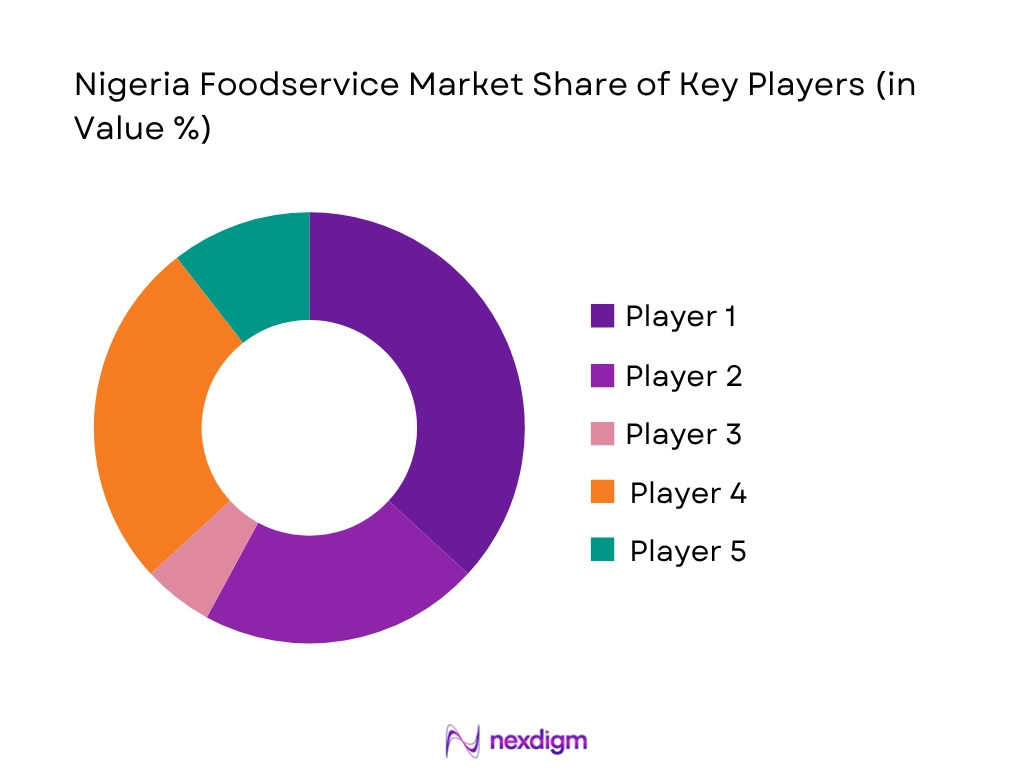
The Nigeria Foodservice Market is moderately consolidated, with competition led by organized quick-service restaurant chains, casual dining operators, and emerging cloud kitchen brands. Companies are increasingly focusing on outlet expansion, menu localization, mobile ordering applications, and delivery partnerships to strengthen their competitive positioning. The market is also witnessing increased investments in digital loyalty programs, kitchen automation, and cloud kitchen infrastructure to improve operational efficiency and customer retention across urban centers.
| Company | Establishment Year | Headquarters | Key Cuisine Focus | Outlet Presence | Delivery Integration | Franchise Expansion | Digital Ordering Capability | Price Positioning |
| Chicken Republic | 2004 | Lagos, Nigeria | ~ | ~ | ~ | ~ | ~ | ~ |
| Domino’s Pizza Nigeria | 2012 | Lagos, Nigeria | ~ | ~ | ~ | ~ | ~ | ~ |
| KFC Nigeria | 2009 | Lagos, Nigeria | ~ | ~ | ~ | ~ | ~ | ~ |
| The Place Restaurant | 2006 | Lagos, Nigeria | ~ | ~ | ~ | ~ | ~ | ~ |
| Kilimanjaro Restaurants | 2004 | Port Harcourt, Nigeria | ~ | ~ | ~ | ~ | ~ | ~ |
Nigeria Foodservice Market Analysis
Growth Drivers
Rapid Urbanization and Expansion of Working-Class Population
Nigeria’s urban population exceeded 111 million residents, creating a substantial consumer base for organized foodservice operators and convenience dining formats. Lagos alone accommodates more than 15 million residents, making it one of Africa’s largest urban food consumption centers. The National Bureau of Statistics reported Nigeria’s services sector generated more than NGN 43 trillion in economic activity, supported by hospitality, trade, and restaurant operations. Increasing workforce participation and longer commuting hours across metropolitan areas continue driving demand for ready-to-eat meals, quick-service restaurants, and takeaway formats among working professionals and younger consumers.
Expansion of Digital Payments and Mobile Internet Penetration
Nigeria recorded more than 163 million active internet subscriptions, significantly accelerating digital food ordering and app-based restaurant transactions. Electronic payment volumes surpassed 11 billion transactions through expanding fintech and mobile banking infrastructure. Rapid smartphone penetration and increasing digital wallet usage are enabling restaurants to integrate mobile applications, loyalty programs, and online ordering systems into daily operations. Food aggregators and cloud kitchen operators are benefiting from stronger digital infrastructure, especially across Lagos, Abuja, and Port Harcourt, where digitally connected consumers increasingly prefer app-based convenience dining services.
Market Challenges
Food Inflation and Declining Consumer Purchasing Power
Nigeria’s food inflation exceeded 40, significantly affecting restaurant operating costs and consumer dining frequency across organized foodservice outlets. Rising prices of rice, poultry, cooking oil, bread, and imported ingredients continue increasing operational pressure on restaurants and cloud kitchen operators. Currency depreciation and declining household purchasing power are forcing operators to adjust menu pricing, reduce portion sizes, and delay expansion activities. These inflationary conditions also affect discretionary spending patterns, limiting frequency of premium dining and entertainment-based foodservice consumption among middle-income households.
Inadequate Power Supply and Rising Energy Dependency
Frequent electricity shortages continue creating operational inefficiencies across Nigeria’s foodservice sector, particularly for restaurants dependent on refrigeration, cold-chain storage, and air-conditioning infrastructure. Businesses increasingly rely on diesel-powered generators to maintain uninterrupted kitchen operations and food safety compliance. Rising fuel dependency increases operating expenses and logistics complexity for organized restaurant chains and delivery-focused operators. Infrastructure limitations also reduce scalability for cloud kitchens and premium dine-in establishments operating across major commercial cities and urban clusters.
Market Opportunities
Rising Youth Population and Expanding Consumer Base for Convenience Dining
Nigeria’s population exceeded 223 million residents, with more than 140 million individuals below the age of 25. This young demographic structure creates strong long-term demand for convenience dining, fast food, and digitally enabled restaurant services. Urban migration and increasing tertiary education enrollment continue expanding the concentration of digitally connected consumers across Lagos, Abuja, and other metropolitan areas. Younger consumers increasingly prefer affordable quick-service meals, social dining experiences, and mobile-based ordering systems, encouraging aggressive expansion by organized restaurant operators and cloud kitchen providers.
Growth in Tourism, Hospitality, and Commercial Real Estate Development
Nigeria’s travel and tourism activities contributed more than NGN 12 trillion to the economy through hospitality, transportation, and entertainment-related spending. Rising investments in shopping malls, hotels, mixed-use developments, and entertainment districts are creating new demand for premium restaurants, cafes, and institutional catering operators. Lagos and Abuja continue witnessing increasing commercial real estate development, strengthening foodservice opportunities within airports, corporate parks, and high-footfall urban locations. Expanding hospitality infrastructure is also supporting international restaurant franchise expansion across key metropolitan cities.
Future Outlook
The Nigeria Foodservice Market is expected to witness substantial expansion over the coming years due to rapid urbanization, increasing digitalization, and evolving consumer dining preferences. Rising adoption of mobile ordering applications and food delivery platforms is expected to strengthen organized foodservice penetration across major cities. Restaurant operators are likely to expand aggressively through franchise models, cloud kitchens, and technology-enabled delivery systems to improve scalability and operational efficiency. Growing youth population, increasing commercial infrastructure, and stronger digital payment ecosystems are expected to accelerate demand for quick-service restaurants, casual dining outlets, and premium foodservice experiences. Operators are also expected to focus heavily on localized menu innovation, loyalty programs, and sustainable packaging solutions to strengthen customer retention and profitability.
Major Players
- Chicken Republic
- KFC Nigeria
- Domino’s Pizza Nigeria
- Cold Stone Creamery Nigeria
- The Place Restaurant
- Sweet Sensation
- Tantalizers Plc
- Bukka Hut
- Kilimanjaro Restaurants
- Mega Chicken
- Mama Cass
- Johnny Rockets Nigeria
- Shiro Restaurant & Bar
- Hard Rock Cafe Lagos
- FoodCo Nigeria
Key Target Audience
- Restaurant Chain Operators
- Cloud Kitchen and Delivery Startups
- Institutional Catering Companies
- Food Aggregator Platforms
- Retail Foodservice Franchise Investors
- Investments and Venture Capitalist Firms
- Government and Regulatory Bodies
- Cold Chain and Food Logistics Providers
Research Methodology
Step 1: Identification of Key Variables
The initial stage involved identifying critical variables influencing the Nigeria Foodservice Market, including urbanization trends, digital ordering penetration, consumer dining behavior, restaurant expansion, and delivery infrastructure development. Extensive secondary research was conducted through government databases, trade publications, company disclosures, and industry reports to understand the market ecosystem and operational structure.
Step 2: Market Analysis and Construction
Historical market analysis was conducted using foodservice transaction trends, outlet expansion statistics, consumer spending data, and hospitality sector performance. Market estimations were developed through bottom-up calculations based on restaurant categories, service modes, regional demand, and digital ordering penetration across urban centers in Nigeria.
Step 3: Hypothesis Validation and Expert Consultation
Preliminary findings were validated through interviews with restaurant operators, food delivery executives, franchise owners, procurement managers, and hospitality industry professionals. These consultations provided insights regarding operational efficiency, consumer preferences, pricing strategies, expansion plans, and evolving delivery models within the Nigeria Foodservice Market.
Step 4: Research Synthesis and Final Output
The final stage involved consolidating quantitative and qualitative findings to produce a comprehensive market assessment. Cross-validation was conducted using trade statistics, operator-level information, and economic indicators to ensure consistency and reliability of market estimates, segmentation analysis, and long-term outlook for the Nigeria Foodservice Market.

- Executive Summary
- Research Methodology (Market Definitions and Assumptions, Abbreviations, Research Framework, Bottom-Up Market Estimation, Top-Down Validation, Consumer Spending Mapping, Foodservice Traffic Analysis, Trade Flow Assessment, Primary Interviews with Restaurant Operators and Aggregators, Forecasting Model, Limitations and Assumptions)

- Definition and Scope
- Evolution of Nigeria’s Foodservice Industry
- Industry Ecosystem and Stakeholder Mapping
- Foodservice Business Cycle Analysis
- Supply Chain and Value Chain Analysis
- Food Procurement and Distribution Landscape

- Growth Drivers
Rapid Urbanization and Expansion of Working-Class Population
Expansion of Digital Payments and Mobile Internet Penetration
Increasing Female Workforce Participation
Growth in Convenience Dining Culture
Expansion of Organized Restaurant Chains - Market Challenges
Food Inflation and Declining Consumer Purchasing Power
Inadequate Power Supply and Rising Energy Dependency
Supply Chain Fragmentation
High Rental Costs Across Prime Urban Locations
Regulatory Compliance Complexity - Market Opportunities
Rising Youth Population and Expanding Consumer Base for Convenience Dining
Growth in Tourism, Hospitality, and Commercial Real Estate Development
Expansion of Cloud Kitchen Models
Increasing Adoption of AI-Enabled Restaurant Operations
Growth in Institutional Catering Services - Market Trends
Expansion of Delivery-Only Brands
Digital Loyalty and Subscription Programs
Menu Engineering and Dynamic Pricing
Contactless Dining Adoption
Sustainable Packaging Integration - Government Regulations
Food Safety and Hygiene Regulations
Taxation and VAT Compliance
Import Restrictions on Food Inputs
Environmental and Waste Disposal Policies
Labor and Employment Regulations - Porter’s Five Forces Analysis
- Pricing Analysis
- Competition Ecosystem

- By Value, 2020-2025
- By Transaction Volume, 2020-2025
- By Number of Foodservice Outlets, 2020-2025
- By Average Order Value, 2020-2025
- By Consumer Spending Per Visit, 2020-2025

- By Foodservice Type (in Value %)
Outlet Density
Average Ticket Size
Consumer Footfall
Delivery Penetration - By Cuisine Type (in Value %)
Menu Localization Rate
Consumer Preference Index
Dining Frequency
Basket Composition - By Service Mode (in Value %)
Dine-In Utilization
Order Fulfillment Time
Convenience Index
Capacity Utilization - By Ordering Channel (in Value %)
Digital Ordering Penetration
Mobile App Usage
Aggregator Dependency
Online Conversion Rate - By End User Demographics (in Value %)
Income-Based Spending
Dining Frequency
Brand Affinity
Urban Consumption Trends - By Location Type (in Value %)
Footfall Density
Commercial Real Estate Presence
Outlet Productivity
Consumer Catchment Area - By Region (in Value %)
South West
South South
South East
North Central
North West
North East

- Market Share Analysis of Major Players on the Basis of Revenue, Outlets, and Order Volume
- Cross Comparison Parameters (Company Overview, Outlet Network Strength, Menu Diversification, Delivery Fulfillment Efficiency, Mobile App Capabilities, Franchise Expansion Strategy, Customer Loyalty Programs, Kitchen Automation Adoption, Regional Presence, Store-Level EBITDA Margins, Procurement Strength, Marketing Reach, Consumer Retention Rate, Expansion Pipeline, Strategic Partnerships, Operational Efficiency)
- Competitive Benchmarking Matrix
- SWOT Analysis of Major Players
- Pricing Analysis by Meal Category and Combo Offerings
- Detailed Profiles of Major Companies
Chicken Republic
KFC Nigeria
Domino’s Pizza Nigeria
Cold Stone Creamery Nigeria
The Place Restaurant
Sweet Sensation
Tantalizers Plc
Bukka Hut
Kilimanjaro Restaurants
Mega Chicken
Mama Cass
Johnny Rockets Nigeria
Shiro Restaurant & Bar
Hard Rock Cafe Lagos
FoodCo Nigeria

- Consumption Frequency Analysis
- Consumer Spending and Basket Analysis
- Digital Ordering Behavior
- Brand Loyalty and Repeat Purchase Analysis
- Dining Occasion Mapping
- Consumer Preference for Local vs International Cuisine

- By Value, 2026-2035
- By Transaction Volume, 2026-2035
- By Number of Foodservice Outlets, 2026-2035
- By Average Order Value, 2026-2035
- By Consumer Spending Per Visit, 2026-2035


 Request a Sample
 Ask for Customization
 Get a Quote
 Enquire Now