
 Download PDF
Market Overview
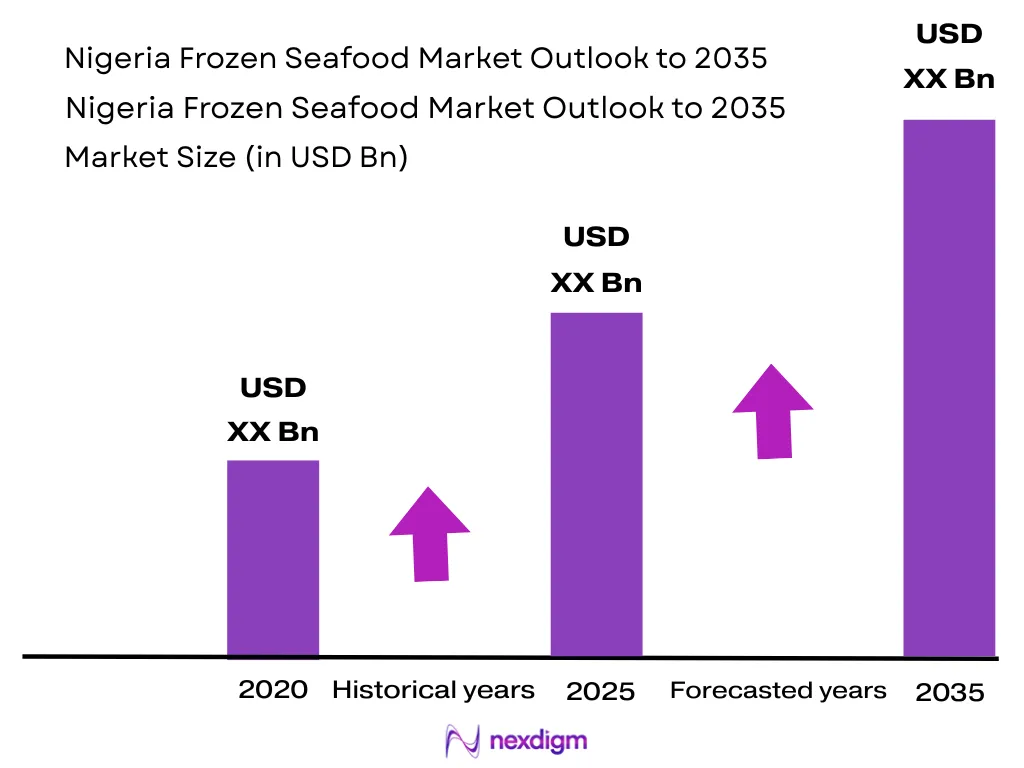
Nigeria Frozen Seafood Market is sized at 24.55 Ktons, after 46.92 Ktons in the preceding annual cycle, with frozen fish remaining the core commercial product. Demand is driven by imported mackerel, herring, horse mackerel, sardine-type fish and croaker, as domestic fish production of around 1.2 million metric tons does not meet consumption needs. WorldFish records fish imports worth around USD ~ billion annually, accounting for 45% of national supply. Lagos dominates because Apapa and Tin Can port access, cold-room clusters, reefer container clearance, open-market trade and formal retail distribution converge there. Port Harcourt and Warri support southern seafood redistribution and oilfield catering, while Abuja, Kano and Ibadan anchor inland demand. Nigeria’s urban population is 128,043,517 people, and national GDP is USD ~ billion, supporting large-volume frozen fish movement through wholesale, retail and foodservice channels.
Market Segmentation
By Product Type
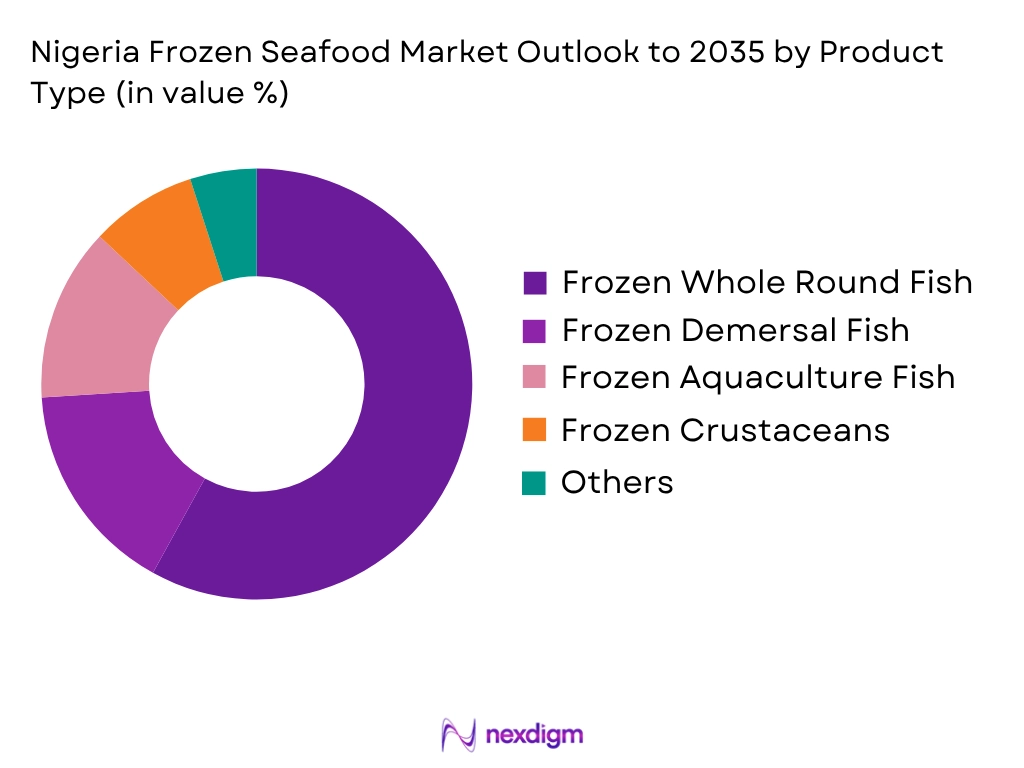
Nigeria Frozen Seafood Market is segmented by product type into frozen whole round fish, frozen demersal fish, frozen aquaculture fish, frozen crustaceans and frozen molluscs/seafood mix. Frozen whole round fish holds the dominant market share because imported mackerel, herring, horse mackerel and sardine-type fish are widely accepted in Nigerian households, open markets and fish-smoking businesses. These species are easier to move through cold-room wholesalers, carton traders and market resellers than premium seafood products. They are also suitable for frying, boiling, soups, stews and smoking, which makes them more adaptable to Nigerian cooking habits. Frozen croaker and demersal fish serve higher-income urban consumers, while catfish and tilapia are increasingly relevant as domestic aquaculture alternatives. Shrimp and prawns remain important but are more concentrated in premium retail, export-linked supply and HoReCa procurement.
By Distribution Channel
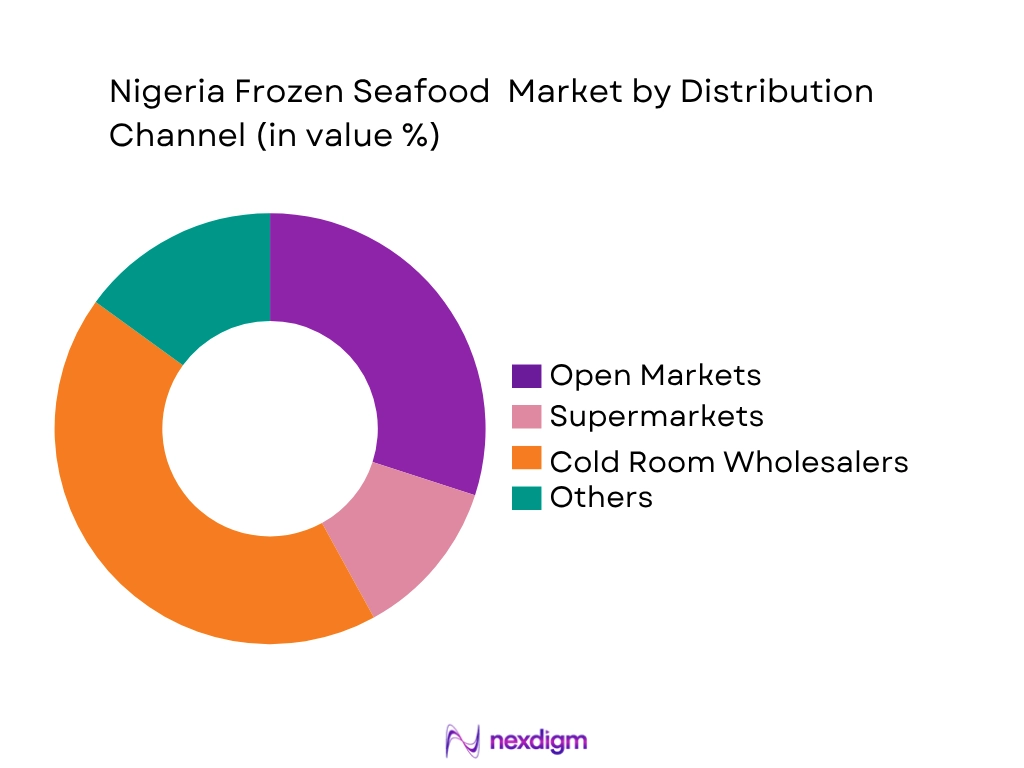
Nigeria Frozen Seafood Market is segmented by distribution channel into cold-room wholesalers, open markets, supermarkets/hypermarkets, foodservice distributors and online/direct-to-consumer platforms. Cold-room wholesalers dominate because frozen seafood is mainly handled through importer-led bulk storage, carton dispatch, inland redistribution and trader resale. The market is still more wholesale-led than supermarket-led because consumers often buy split cartons, cut fish and daily-use portions from open markets. Cold-room operators also supply fish smokers, small retailers, restaurants, caterers and regional traders. Supermarkets are gaining relevance in Lagos, Abuja and Port Harcourt through packaged fillets, frozen catfish, shrimp packs and premium seafood, but they remain secondary to the cold-room and open-market ecosystem. Foodservice distributors are important for hotels, restaurants, quick-service outlets and institutional kitchens requiring consistent carton supply.
Competitive Landscape
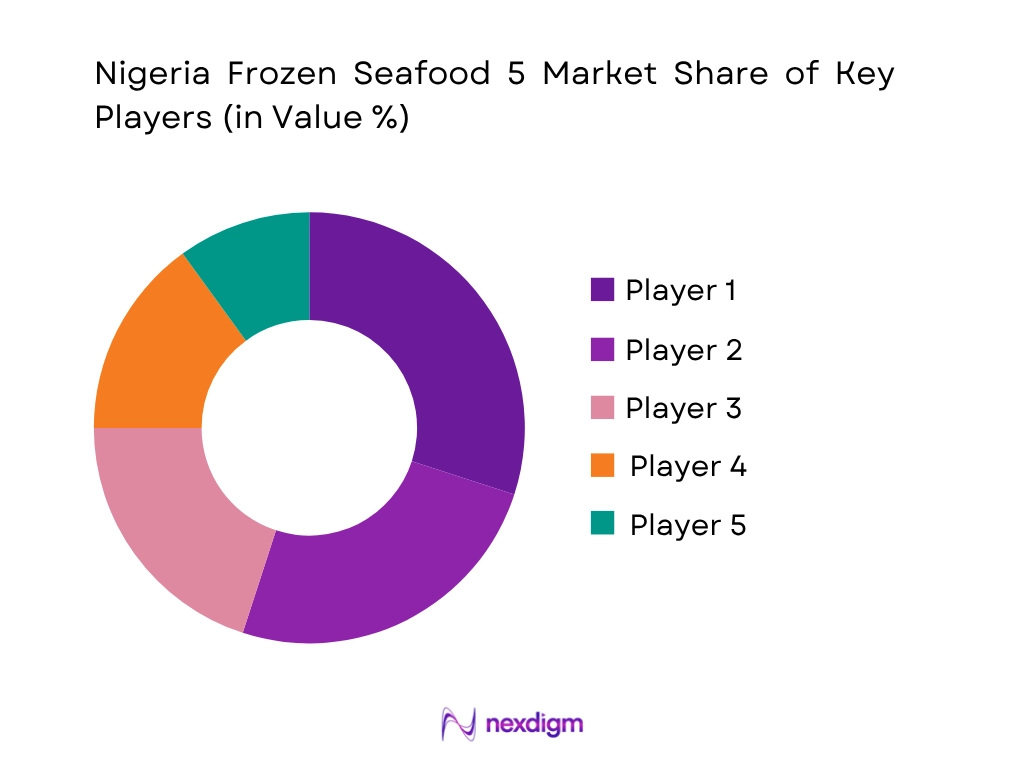
Nigeria Frozen Seafood Market is fragmented but led by a combination of large frozen fish importers, diversified agribusiness groups, aquaculture companies, seafood traders, retail chains and cold-chain infrastructure providers. Stallion Group, Solem Agro Ventures, Baracuda Sea Foods, Atlantic Shrimpers and Triton Aqua Africa are prominent because they cover different parts of the value chain, including frozen fish imports, tilapia and catfish farming, shrimp operations, cold storage, bulk distribution and formal retail supply. Solem Agro Ventures supplies mackerel, horse mackerel, blue whiting, sardinella, croaker and herring across Nigeria through cold storage and distribution networks, while Baracuda Sea Foods imports frozen fish and buys bulk supply from importers using reefer vessels and containers.
| Company | Establishment Year | Headquarters | Core Frozen Seafood Portfolio | Sourcing/Production Base | Cold-Chain Capability | Channel Strength | Species Focus | Strategic Positioning |
| Stallion Group | 1969 | Dubai/Lagos operations | ~ | ~ | ~ | ~ | ~ | ~ |
| Solem Agro Ventures Limited | 2018 seafood division | Nigeria | ~ | ~ | ~ | ~ | ~ | ~ |
| Baracuda Sea Foods Limited | NA | Nigeria | ~ | ~ | ~ | ~ | ~ | ~ |
| Atlantic Shrimpers Limited | NA | Lagos | ~ | ~ | ~ | ~ | ~ | ~ |
| Triton Aqua Africa | NA | Lagos | ~ | ~ | ~ | ~ | ~ | ~ |
Nigeria Frozen Seafood Market
Growth Drivers
Urban Consumption Base Supporting Frozen Seafood Distribution
Nigeria Frozen Seafood Market is supported by a large urban consumption base that makes frozen fish commercially viable through cold-room wholesalers, open markets, supermarkets, foodservice distributors and informal traders. The World Bank records Nigeria’s GDP at USD 252.26 billion and GDP per capita at USD 1,084.2 in 2024, indicating a large mass-consumption economy where affordable fish protein remains relevant for households and food vendors. Nigeria’s urban population reached 128,043,517 people in 2024, creating dense demand centres for frozen mackerel, horse mackerel, herring, sardine-type fish, croaker, catfish and tilapia. Lagos, Abuja, Kano, Ibadan, Port Harcourt and Onitsha are particularly important because frozen seafood moves from ports and cold rooms into wholesale markets before being split into smaller retail portions. This urban structure supports high-volume carton movement and frequent cold-room turnover. Nigeria’s current population is also reported by IMF at 242.578 million in 2026, reinforcing long-term protein demand pressure.
Domestic Fish Supply Gap Sustaining Frozen Fish Imports
Nigeria Frozen Seafood Market is driven by the gap between fish consumption needs and domestic fish output. The Federal Government reported local fish production rising from 1.1 million metric tons to 1.4 million metric tons in 2025, while national fish consumption is stated at 3.6 million metric tons annually. This gap directly supports demand for imported frozen mackerel, horse mackerel, herring, blue whiting, sardine-type fish and croaker, which are distributed through cold rooms and open markets. For frozen seafood operators, the structural deficit creates continuous demand for reefer imports, cold storage, bulk cartons, inland distribution and fish-smoker supply. The World Bank records Nigeria’s GDP at USD 252.26 billion and GDP growth at 4.1 in 2024, showing that frozen seafood demand is tied to a large economy with rising non-oil food distribution needs. IMF also records Nigeria’s 2026 population at 242.578 million, reinforcing the scale of protein demand.
Market Challenges
Cold-Chain Reliability and Electricity Access Constraints
Nigeria Frozen Seafood Market faces a major challenge from cold-chain reliability because frozen fish must remain temperature-controlled from reefer containers to port cold rooms, city depots, open-market freezers, foodservice distributors and household storage. The World Bank reports Nigeria’s GDP at USD 252.26 billion and GDP per capita at USD 1,084.2 in 2024, indicating a broad consumer base but limited purchasing capacity for premium cold-chain products. The World Bank also highlights a follow-on energy-access project intended to provide more than 17.5 million Nigerians with new or improved electricity access through distributed renewable energy solutions. This matters for frozen seafood because unreliable electricity raises the operational burden for cold-room operators, who rely on generators, diesel backup and insulated handling to avoid thawing losses. Frozen mackerel, herring, croaker, catfish cuts and shrimp packs are particularly vulnerable because product quality deteriorates rapidly after temperature abuse. For inland markets, the challenge is more severe because electricity, reefer trucks and reliable storage are less concentrated than in Lagos port-linked clusters.
Domestic Production Still Below National Consumption Requirement
Nigeria Frozen Seafood Market is constrained by domestic fish production that remains below national consumption requirements, forcing the country to rely on frozen imports and bulk cold-room distribution. The Federal Government stated that local fish production reached 1.4 million metric tons in 2025 after rising from 1.1 million metric tons, but this remains below the stated annual consumption requirement of 3.6 million metric tons. The deficit affects frozen seafood because importers must fill the supply gap with mackerel, horse mackerel, herring, sardinella, blue whiting and croaker, while domestic aquaculture cannot yet replace imported volumes. This exposes wholesalers and retailers to port congestion, foreign sourcing disruption, documentation delays and cold-room stock volatility. The World Bank records Nigeria’s GDP per capita at USD 1,084.2 in 2024, meaning many consumers remain highly price-sensitive and cannot easily absorb supply shocks. IMF reports Nigeria’s population at 242.578 million in 2026, making the production gap more commercially significant for frozen seafood channels.
Market Opportunities
Aquaculture-Based Frozen Catfish and Tilapia Expansion
Nigeria Frozen Seafood Market has a growth opportunity in aquaculture-based frozen products, especially catfish and tilapia cuts, because local production is already increasing but remains below national consumption needs. The Federal Government reports that fish production rose from 1.1 million metric tons to 1.4 million metric tons in 2025, creating an additional 300,000 metric tons of local output that can support processing, freezing, cutting, filleting and retail packing. This opportunity is market-specific because catfish and tilapia can be sold as frozen steaks, smoked-frozen fish, cleaned cuts and supermarket-ready packs, reducing reliance on imported whole round fish. Nigeria’s GDP is recorded by the World Bank at USD 252.26 billion in 2024, while the urban population reached 128,043,517 people, giving local processors a large addressable base for packaged frozen fish. IMF’s 2026 population figure of 242.578 million further supports the need for domestic fish alternatives. Operators that link farms with cold rooms, processors and supermarkets can capture demand from both formal retail and open-market supply chains.
Inland Cold-Room and Market-Level Freezer Infrastructure
Nigeria Frozen Seafood Market has an opportunity in inland cold-room expansion because demand is no longer limited to Lagos port-adjacent markets. The World Bank records Nigeria’s urban population at 128,043,517 people in 2024, creating large demand corridors across Abuja, Kano, Kaduna, Ibadan, Benin City, Onitsha, Aba and Port Harcourt. The World Bank’s energy-access initiative aims to provide more than 17.5 million Nigerians with new or improved electricity access, which can support decentralized cold storage, solar freezers, fish-market preservation and aquaculture aggregation. This opportunity reflects future growth because frozen seafood operators can reduce thawing losses, increase inland stock rotation and supply more consistent product to restaurants, traders and supermarkets. Nigeria’s GDP of USD 252.26 billion in 2024 and IMF’s population figure of 242.578 million in 2026 show the economic and demographic base for wider frozen seafood distribution. The most relevant products for inland cold-chain growth are mackerel cartons, horse mackerel, herring, croaker, catfish cuts, tilapia portions and shrimp packs.
Future Outlook
Over the next phase of development, Nigeria Frozen Seafood Market is expected to remain import-led, but the structure of demand will become more diversified. Imported mackerel, herring, horse mackerel and croaker will continue to support mass consumption, while domestic catfish and tilapia will become more relevant in frozen cuts, steaks and fillet formats. Cold-room modernization, solar cold storage, inland distribution and supermarket freezer expansion will influence category formalization. Growth will depend on stable import access, currency availability, port efficiency, aquaculture scaling, food safety controls and the ability of operators to reduce thawing losses in fragmented retail channels. The forecast outlook indicates a 6.71% CAGR during the forward period from 2026, supported by population scale, urban protein demand, rising retail freezer penetration and the need to fill the domestic fish supply gap.
Major Players
- Stallion Group
- Solem Agro Ventures Limited
- Baracuda Sea Foods Limited
- Windek Fisheries Limited
- Atlantic Shrimpers Limited
- CIC Nigeria Limited
- Triton Aqua Africa
- Durante Fish Industries Limited
- Premium Aquaculture Limited
- Choice Farms Nigeria
- Chi Farms
- ColdHubs
- Shoprite Nigeria
- SPAR Nigeria
- Ocean Basket Nigeria
Key Target Audience
- Frozen fish importers
- Cold-room wholesalers and freezer warehouse operators
- Aquaculture companies and fish processors
- Seafood distributors and open-market wholesale networks
- Supermarket and hypermarket category teams
- Foodservice distributors and HoReCa procurement teams
- Investments and venture capitalist firms
- Government and regulatory bodies, including Federal Department of Fisheries and Aquaculture, Nigerian Ports Authority, Nigeria Customs Service, National Agency for Food and Drug Administration and Control, Standards Organisation of Nigeria, Federal Competition and Consumer Protection Commission
Research Methodology
Step 1: Identification of Key Variables
The initial phase involves constructing an ecosystem map of the Nigeria Frozen Seafood Market, covering importers, cold-room operators, port agents, aquaculture producers, wholesalers, supermarkets, foodservice buyers and regulators. The key variables include species mix, import dependence, cold-room capacity, frozen fish volume, channel structure, domestic aquaculture output and regional distribution flow.
Step 2: Market Analysis and Construction
In this phase, historical data is compiled from trade indicators, fishery profiles, company disclosures, import-linked market tracking and public macroeconomic sources. The analysis covers frozen whole round fish, croaker, catfish, tilapia, shrimp, prawns and mixed seafood. Channel-level construction is developed through cold-room wholesale mapping, open-market flow analysis and retail freezer checks.
Step 3: Hypothesis Validation and Expert Consultation
Market hypotheses are developed and validated through computer-assisted interviews with frozen fish importers, cold-room operators, aquaculture producers, supermarket buyers, seafood traders and foodservice procurement teams. These consultations help refine assumptions on product movement, preferred species, carton sizes, port bottlenecks, cold-chain failure points and regional demand clusters.
Step 4: Research Synthesis and Final Output
The final phase combines top-down fish consumption and import-dependency indicators with bottom-up company, channel and product-level intelligence. This process validates market structure, segmentation, competitive positioning, growth outlook and strategic recommendations. The final output is designed for investors, operators, retailers, distributors and policy-linked stakeholders evaluating the Nigeria Frozen Seafood Market.

- Executive Summary
- Research Methodology (Market Definitions, Frozen Fish Scope, Import-Tonnage Mapping, Retail Freezer Audits, Wholesale Channel Checks, Cold-Chain Interviews, Top-Down and Bottom-Up Market Sizing, Limitations)

- Definition and Scope
- Market Genesis
- Supply Chain and Value Chain Analysis
- Import Dependency Analysis
- Cold-Chain and Storage Infrastructure
- Regulatory and Import Permit Ecosystem

- Growth Drivers (Urban Protein Demand, Import-Led Supply, Cold-Room Distribution, Aquaculture Expansion, Supermarket Freezer Growth, Fish Smoking Industry, Foodservice Consumption, Population Expansion)
- Market Challenges (Foreign Exchange Exposure, Import Permit Delays, Port Congestion, High Energy Requirement, Cold-Chain Breakage, Informal Quality Risks, Consumer Price Sensitivity, Raw Material Supply Gaps)
- Market Opportunities (Local Aquaculture Freezing, Cold-Room Modernization, Solar Cold Storage, Value-Added Catfish, Retail Pack Development, Inland Distributor Expansion, Institutional Procurement, Seafood E-Commerce)
- Market Trends (Whole Round Fish Dominance, Catfish Freezing, Retail Pack Migration, Import Source Diversification, Cold-Room Clustering, Supermarket Private Label, Off-Grid Cold Storage, Foodservice Bulk Procurement)
- Government Regulation (Federal Fisheries Regulation, Import Permit Process, NAFDAC Registration, SON Quality Standards, Customs Documentation, Port Health
- SWOT Analysis
- Stakeholder Ecosystem
- Porter’s Five Forces Analysis
- PESTLE Analysis
- Competition Ecosystem

- By Value (2020-2025)
- By Volume (2020-2025)
- By Frozen Fish Import Volume (2020-2025)

- By Product Type (In Value %)
Frozen Mackerel
Frozen Herring
Frozen Horse Mackerel
Frozen Sardines
Frozen Croaker - By Distribution Channel (In Value %)
Open Markets
Cold-Room Wholesalers
Supermarkets
HoReCa
Online Grocery - By End User (In Value %)
Households
Foodservice
Institutional Buyers
Fish Processors
Retailers - By Region (In Value %)
Lagos
Rivers
Kano
Abuja FCT
Oyo
Delta

- Market Share of Major Players (Value Share, Volume Share, Imported Frozen Fish Share, Aquaculture-Based Frozen Fish Share, Retail Channel Share, Foodservice Share)
- Cross Comparison Parameters (Species Portfolio: Mackerel/Horse Mackerel/Herring/Croaker/Catfish/Tilapia/Shrimp; Import and Sourcing Capability: Europe/Asia/Africa/Reefer Containers; Cold-Room and Storage Footprint: Port Cold Stores/Inland Depots/Freezer Capacity; Distribution Reach: Lagos/North/South-East/South-South/Abuja Corridors; Channel Presence: Open Market/Supermarket/Foodservice/Institutional/Online; Processing Capability: Cutting/Filleting/Smoking/Packaging/IQF/Value Addition; Aquaculture Integration: Catfish Farms/Tilapia Farms/Hatchery/Feed Linkages; Regulatory and Quality Compliance: NAFDAC/SON/Customs/Fisheries Permits/Cold-Chain Controls)
- SWOT Analysis of Major Players
- Pricing Analysis Basis SKUs
- Detailed Profiles of Major Companies
Stallion Group
Solem Agro Ventures Limited
Baracuda Sea Foods
Windek Fisheries Limited
Atlantic Shrimpers Limited
CIC Nigeria Limited
Triton Aqua Africa
Durante Fish Industries Limited
Premium Aquaculture Limited
Choice Farms Nigeria
Chi Farms
ColdHubs
Shoprite Nigeria
SPAR Nigeria
Ocean Basket Nigeria

- Household Demand Analysis
- Open-Market Trader Analysis
- Fish Smoker and Processor Analysis
- Foodservice and HoReCa Analysis
- Institutional Buyer Analysis

- By Value (2026-2035)
- By Volume (2026-2035)
- By Imported Frozen Seafood Volume (2026-2035)


 Request a Sample
 Ask for Customization
 Get a Quote
 Enquire Now