
 Download PDF
Market Overview
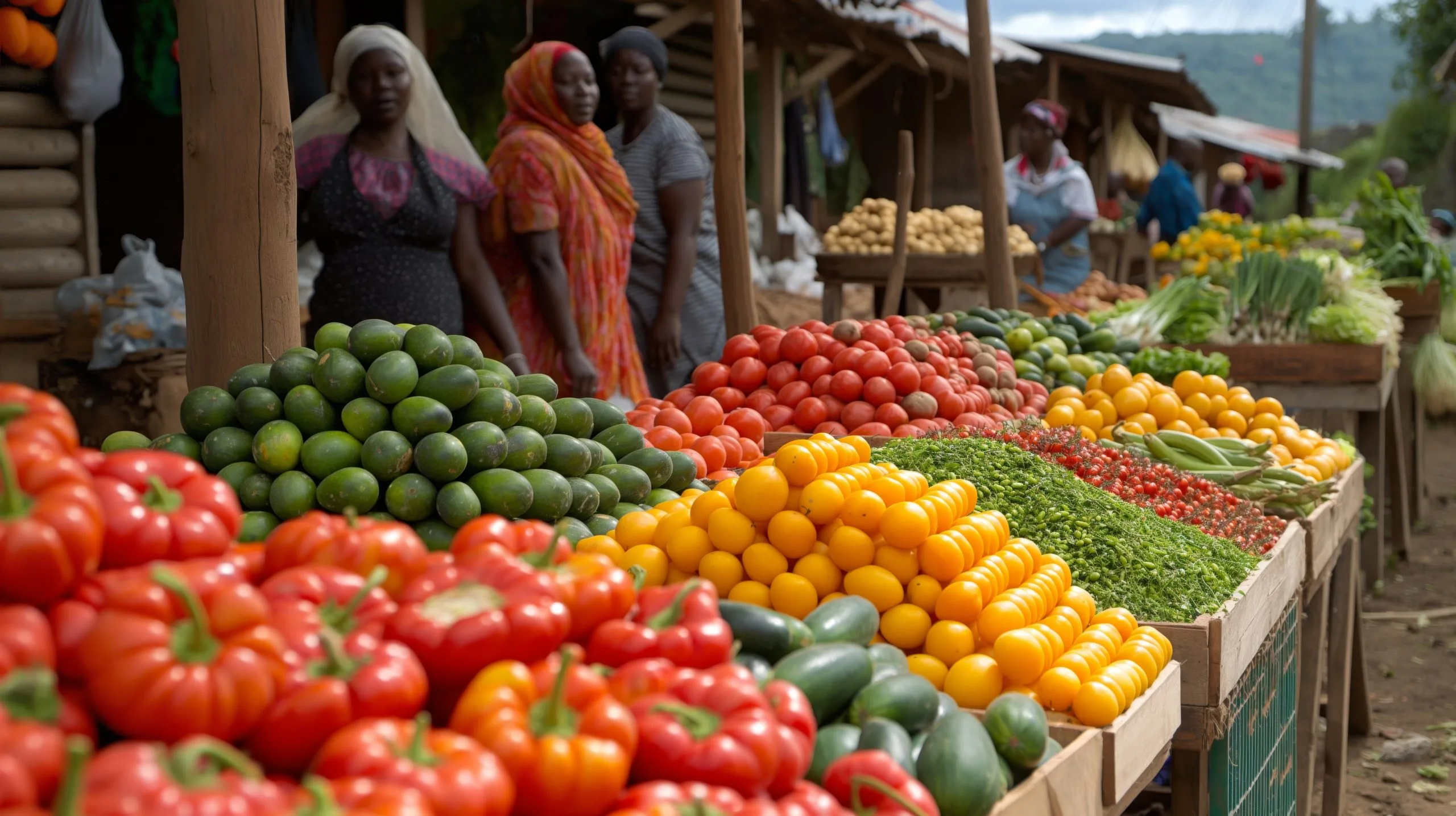
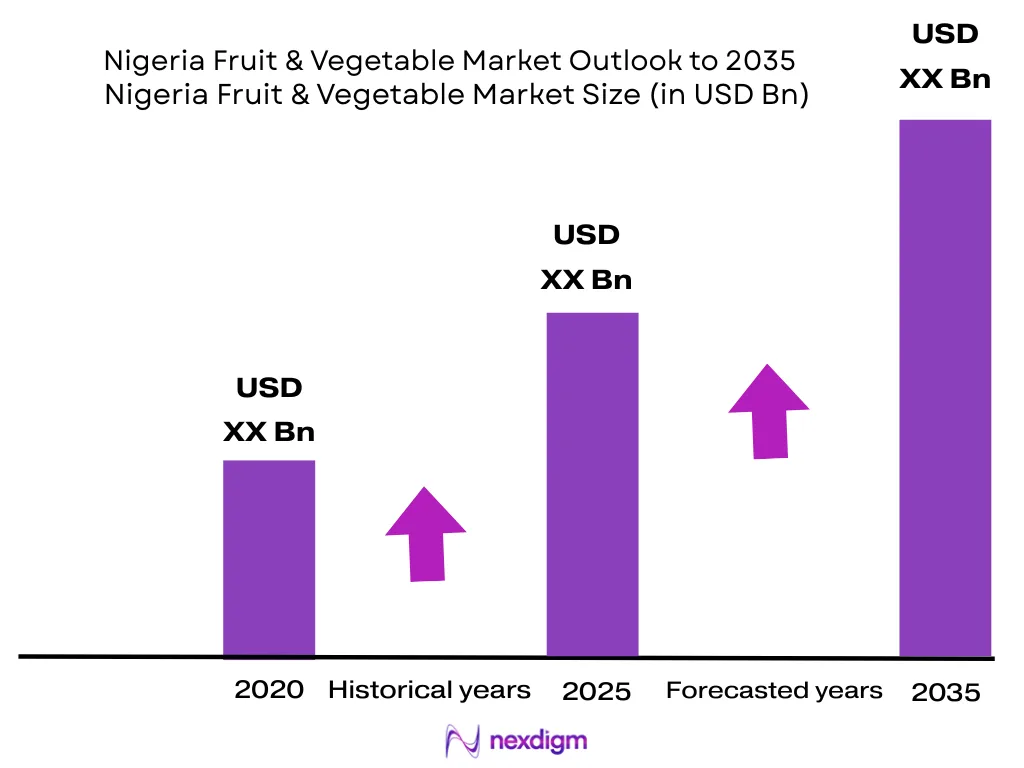
Nigeria Fruit & Vegetable Market is valued at USD ~ billion, based on a five-year historical analysis, and is forecast to grow at 5.17% CAGR across the 2026-2035 outlook period, aligned with the latest Nigeria-specific long-range benchmark. The market is driven by fresh household cooking demand, open-market distribution, tomato-pepper-onion consumption, plantain and banana supply, and growing processing demand. Nigeria’s population reached 232,679,478, while GDP reached USD 252.26 billion, supporting a large food-consumption base. Lagos, Kano, Kaduna, Plateau, Benue, Oyo, Abuja FCT and Rivers dominate Nigeria Fruit & Vegetable Market because they connect major farming belts with high-density urban consumption corridors. Lagos is led by Mile 12 and modern retail demand; Kano anchors northern produce aggregation; Plateau supplies tomatoes and vegetables; Benue, Nasarawa and Kogi support citrus, yam-linked produce and vegetables. Most fruits and vegetables are traded through informal channels, while wholesale traders link producers to consumers.
Market Segmentation
By Product Type
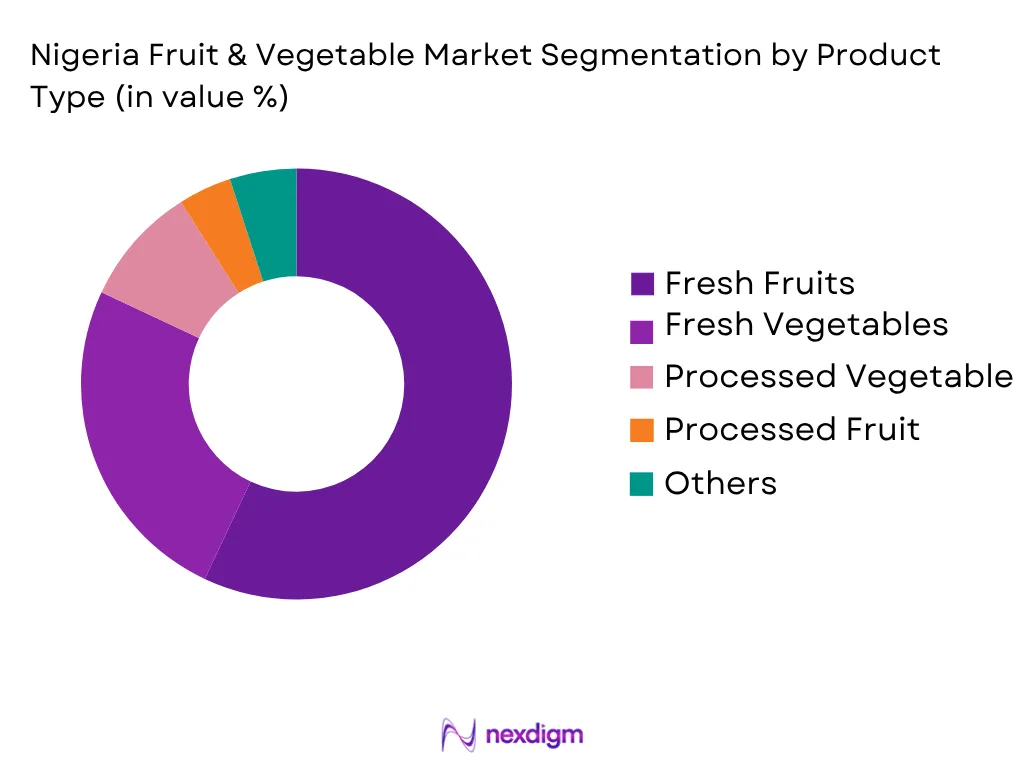
Nigeria Fruit & Vegetable Market is segmented by product type into fresh vegetables, fresh fruits, processed vegetables, processed fruits, and frozen, dried and fresh-cut produce. Recently, fresh vegetables have a dominant market share in Nigeria under the segmentation product type, it is due to their deep role in daily household meals, open-market purchases, street food, catering and restaurant cooking. Tomato, onion, pepper, okra, ugu, amaranth, cabbage, carrot, cucumber, garden egg and leafy vegetables are purchased frequently in small quantities through open markets and informal retailers. Nigeria is also the second-largest tomato producer in Africa, while only about 20% of tomato production is processed, leaving fresh-market channels structurally important.
By Distribution Channel
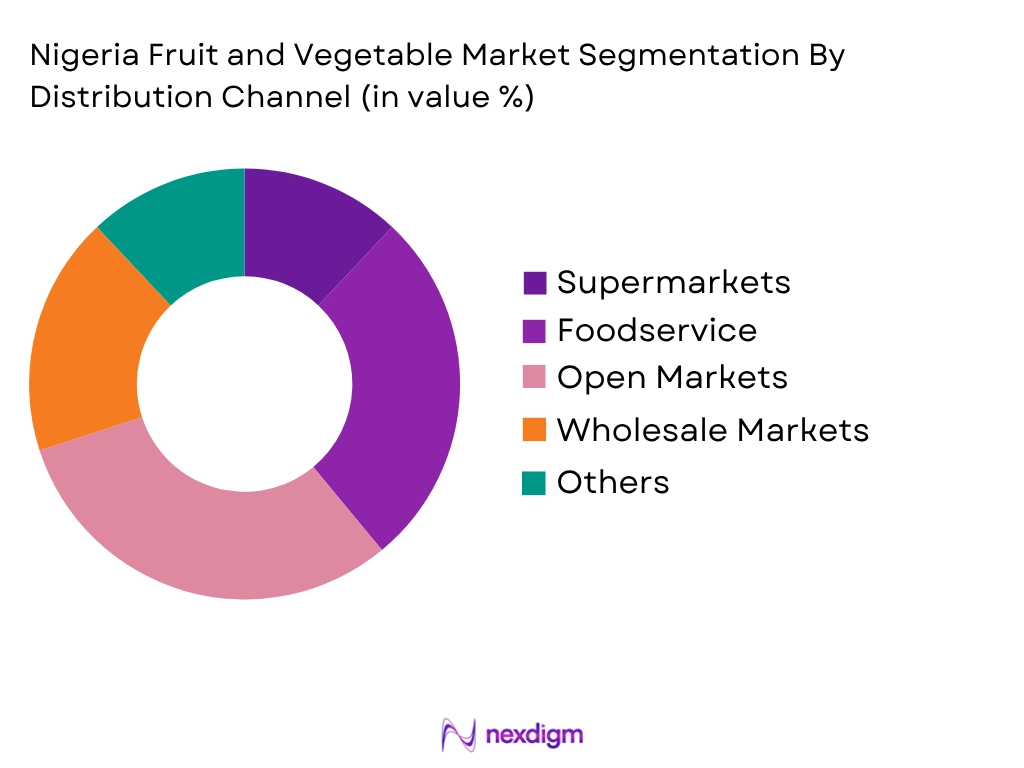
Nigeria Fruit & Vegetable Market is segmented by distribution channel into open markets and informal retailers, wholesale markets and aggregators, supermarkets and modern retail, foodservice and institutional buyers, and processors/online grocery/direct farm channels. Recently, open markets and informal retailers have a dominant market share in Nigeria under the segmentation distribution channel, it is due to daily cash purchases, price flexibility, neighbourhood proximity and reliance on loose produce. WUR’s Nigeria fruits and vegetables scoping study estimates that most fruits and vegetables are traded through informal markets, with wholesale traders holding a dominant position between producers and consumers. Mile 12 in Lagos, Dawanau in Kano, Farin Gada in Plateau, Bodija in Ibadan and Garki in Abuja remain critical fresh produce redistribution nodes.
Competitive Landscape
Nigeria Fruit & Vegetable Market is fragmented across smallholder farmers, aggregators, open-market traders, processors, supermarket chains and agritech platforms. Processing companies such as Tomato Jos, GBfoods Nigeria, Sonia Foods, Erisco Foods and Teragro are influential because they create demand for tomato, pepper, fruit pulp, juice inputs and packaged produce ingredients. Modern retailers and online grocery players are smaller in volume but important in premium imported fruits, sorted vegetables, packaged produce and urban delivery. Competition is shaped by farmer access, aggregation capability, processing capacity, cold-chain reach, open-market distribution, NAFDAC compliance and ability to reduce post-harvest losses.
| Company | Establishment Year | Headquarters | Key Categories | Business Model | Key Channel | Market-Specific Capability | Supply Footprint | Competitive Advantage |
| Tomato Jos | 2014 | Kaduna | ~ | ~ | ~ | ~ | ~ | ~ |
| GBfoods Nigeria | 2009 | Lagos | ~ | ~ | ~ | ~ | ~ | ~ |
| Sonia Foods Industries | 2006 | Lagos | ~ | ~ | ~ | ~ | ~ | ~ |
| Erisco Foods | 2004 | Lagos | ~ | ~ | ~ | ~ | ~ | ~ |
| Teragro Commodities | 2008 | Benue | ~ | ~ | ~ | ~ | ~ | ~ |
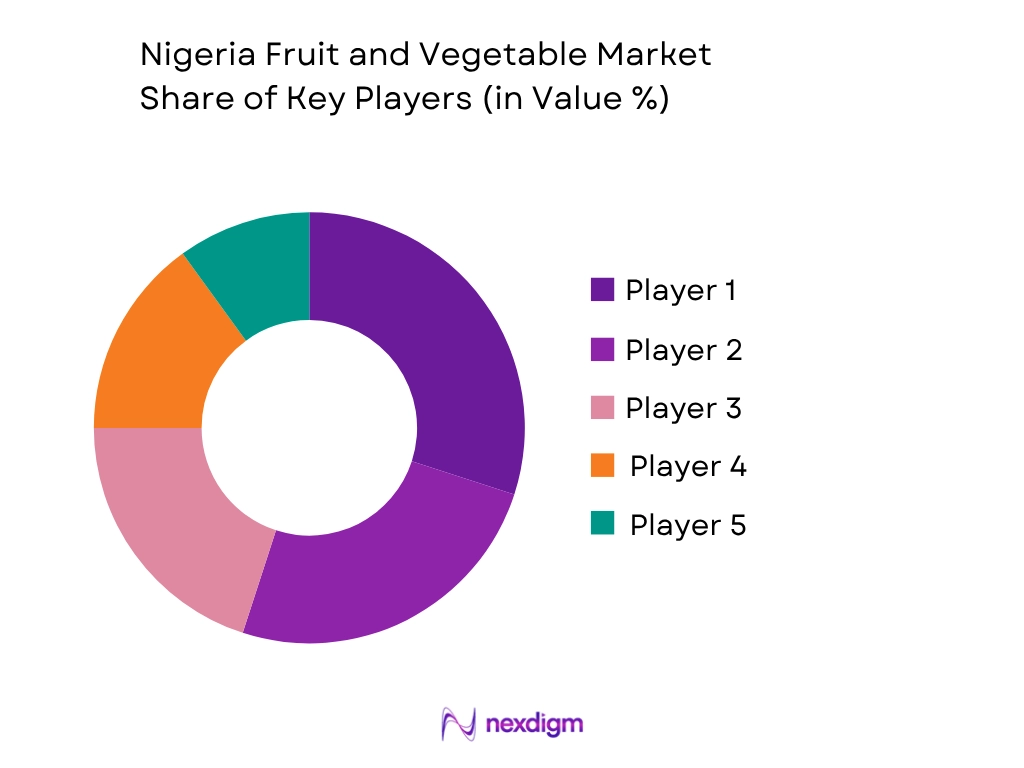
Nigeria Fruit Vegetable Market Analysis
Growth Drivers
Large Population Base Sustains Daily Demand for Tomato, Onion, Pepper and Leafy Vegetables
Nigeria Fruit Vegetable Market is supported by a large food-consumption base and frequent household cooking demand. World Bank data records Nigeria’s population at 232,679,478 people, GDP at USD 252.26 billion and GDP per capita at USD 1,084.2 in 2024, creating broad demand for affordable fresh produce across open markets, street retail, foodservice and household kitchens. The market is especially tied to tomato, onion, pepper, okra and leafy vegetables because these products are core inputs in soups, stews, sauces and rice-based meals. FAO’s 2024 Nigeria Hand-in-Hand profile identifies Nigeria as the second-largest tomato producer in Africa, confirming the importance of tomato within the country’s horticulture base. This driver is market-specific because Lagos, Kano, Kaduna, Plateau, Benue, Oyo and Abuja fresh produce corridors rely on continuous bulk movement from farms to wholesale markets, open stalls, food vendors and neighbourhood retailers.
Tomato Processing Gap Creates Structured Demand for Aggregation and Industrial Offtake
Nigeria Fruit Vegetable Market is driven by the gap between large tomato production and limited industrial processing. World Bank data shows Nigeria’s GDP at USD 252.26 billion, GDP per capita at USD 1,084.2 and population at 232,679,478 people in 2024, supporting mass-market consumption of tomato-based foods through households, restaurants, caterers and packaged food processors. FAO’s 2024 Nigeria Hand-in-Hand profile states that only 20 parts of every 100 parts of tomato production are processed, while post-harvest losses in the tomato value chain can reach 50 parts of every 100 parts. This creates demand for farmer aggregation, plastic crates, sorting hubs, paste lines, puree lines, drying units and processor-linked offtake contracts. The driver is market-specific because tomato, pepper and onion are not discretionary categories in Nigeria; they are high-frequency cooking inputs that flow daily through Mile 12, Dawanau, Farin Gada, Bodija and Garki markets.
Market Challenges
Post-Harvest Losses Weaken Tomato, Pepper, Mango and Leafy Vegetable Value Chains
Nigeria Fruit Vegetable Market faces a major post-harvest challenge because many crops are moved through open trucks, baskets, sacks and informal handling systems with limited pre-cooling. World Bank data records Nigeria’s population at 232,679,478 people and GDP per capita at USD 1,084.2 in 2024, showing a large consumer base but limited average purchasing capacity for absorbing loss-driven inefficiency. FAO’s 2024 Nigeria profile reports that post-harvest losses in the tomato value chain can reach 50 parts of every 100 parts, mainly linked to weak processing infrastructure and quality-standard gaps. A 2025 evidence review on Nigerian tomato farms also cites tomato production at about 3.6 million tons across roughly 0.8 million hectares, underscoring how large the exposed crop base is when handling, storage and transport systems are weak. This challenge directly affects tomato, pepper, leafy vegetables, mango and plantain supply chains.
Power Reliability and Cold-Chain Constraints Limit Perishable Produce Quality
Nigeria Fruit Vegetable Market is constrained by weak cold-chain continuity because fruits and vegetables require cooling, ripening rooms, packhouses, refrigerated transport and stable market-level storage. World Bank data records Nigeria’s GDP at USD 252.26 billion and population at 232,679,478 people in 2024, but electricity-system constraints continue to affect refrigerated logistics for tomatoes, mangoes, leafy vegetables, premium fruits and processed produce. Reuters reported that Nigeria has 12,500 megawatts of installed electricity capacity but produces only about 1 quarter of that level, leaving businesses reliant on generators. The same power-sector reporting noted plans to procure 3.5 million electricity meters in 2024, with 7 million out of about 13 million customers still unmetered, showing continuing distribution-system weakness. This challenge is market-specific because cold rooms, juice plants, tomato processors, fruit importers and online grocery platforms need stable power to protect shelf life and reduce spoilage.
Market Opportunities
Tomato, Pepper and Onion Processing Can Convert Seasonal Gluts into Value-Added Products
Nigeria Fruit Vegetable Market has a clear opportunity in tomato, pepper and onion processing because current losses and low processing penetration create room for structured industrial offtake. World Bank data records Nigeria’s GDP at USD 252.26 billion, GDP per capita at USD 1,084.2 and population at 232,679,478 people in 2024, supporting a large base for packaged tomato paste, puree, pepper paste, dried pepper and onion flakes. FAO’s 2024 Nigeria Hand-in-Hand profile identifies Nigeria as the second-largest tomato producer in Africa, but states that only 20 parts of every 100 parts of tomato production are processed and losses can reach 50 parts of every 100 parts. These current figures support future growth in processing clusters, crate-based aggregation, industrial tomato varieties, B2B processor contracts and cold storage near Kano, Kaduna, Plateau, Benue and Lagos. The opportunity is strongest where tomato-pepper-onion flows already serve open markets and food manufacturers.
Export and Regional Trade Platforms Can Strengthen Onion and Vegetable Aggregation
Nigeria Fruit Vegetable Market has future growth potential in formal aggregation and regional trade, especially for onions, dried vegetables and selected fresh produce. World Bank data records Nigeria’s population at 232,679,478 people and GDP at USD 252.26 billion in 2024, supporting a large agricultural base with scope to serve both domestic and regional demand. World Integrated Trade Solution data shows that importers bought 45,128,200 kg of fresh or chilled onions and shallots from Nigeria in 2024 through Côte d’Ivoire, while Niger imported 2,612,840 kg, Benin 34,350 kg, Burkina Faso 440,000 kg and Senegal 11,182 kg. These current trade flows indicate opportunity for better sorting, grading, mesh-bag packaging, phytosanitary documentation and exporter aggregation. The opportunity is market-specific because northern onion corridors in Kano, Sokoto, Kebbi and Kaduna already connect with ECOWAS demand, while formal compliance can improve buyer access and reduce informal trade leakage.
Future Outlook
Over the next five years, Nigeria Fruit & Vegetable Market is expected to grow through stronger tomato, onion, pepper, plantain, banana, citrus, mango and leafy vegetable demand across households, open markets, foodservice and processors. The 2026-2035 outlook is supported by population expansion, urban food demand, agro-processing, cold-chain investment, plastic crate adoption, farm aggregation and online grocery penetration. Tomato, pepper and onion will remain the most strategic vegetable value chain because they are central to Nigerian cooking and face high post-harvest loss exposure.
Plantain, banana, orange, mango, pineapple, watermelon and pawpaw will remain high-volume fruit categories, while apples, grapes, pears and berries will remain premium imported supermarket SKUs. Fresh vegetables will retain the largest domestic role because Nigerian households buy tomato, onion, pepper, okra and leafy vegetables frequently through open markets. The biggest structural issue will remain post-harvest loss, especially in tomato, where FAO notes that losses in Nigeria’s tomato value chain can reach up to 50% and processing remains limited.
Processing will be a major opportunity because domestic tomato production is large but modern processing remains underdeveloped. Tomato paste, puree, pepper paste, dried pepper, onion flakes, mango pulp, pineapple juice, dried mango and banana chips will gain relevance as processors seek to reduce seasonal gluts and improve shelf-life. Fruit and vegetable processing is also supported by local manufacturing policy, NAFDAC regulation and demand from packaged food companies.
Open markets will continue to dominate distribution because most fresh produce is still traded informally. However, supermarkets, online grocery platforms and B2B fresh delivery companies will increase demand for sorted, graded, traceable and packaged produce. The shift will be gradual because informal markets remain cheaper, more accessible and deeply embedded in daily food purchasing. The strongest commercial opportunities will be in cold rooms, solar cold storage, plastic crates, aggregation hubs, tomato processing, fruit pulp plants, retail-ready produce packs, last-mile delivery and direct sourcing from farmer clusters. Lagos, Kano, Kaduna, Plateau, Benue, Oyo, Ogun, Abuja and Rivers will remain priority locations for investment because they combine production, redistribution, processing and high-density consumption.
Major Players
- Tomato Jos
- GBfoods Nigeria
- Sonia Foods Industries
- Erisco Foods
- Teragro Commodities
- CHI Limited
- Saro Agrosciences
- ThriveAgric
- AFEX Commodities Exchange
- Farmcrowdy
- VeggieVictory
- Shoprite Nigeria
- SPAR Nigeria
- Justrite Superstores
- Pricepally
Key Target Audience
- Fruit and vegetable farmers and producer cooperatives
- Fresh produce aggregators and wholesale traders
- Tomato, pepper, fruit juice and vegetable processors
- Supermarkets, modern grocery retailers and open-market operators
- Online grocery, B2B food supply and fresh delivery platforms
- Cold-chain, storage, packaging and logistics companies
- Investments and venture capitalist firms
- Government and regulatory bodies (Federal Ministry of Agriculture and Food Security, National Bureau of Statistics, NAFDAC, Standards Organisation of Nigeria, Nigeria Agricultural Quarantine Service, Nigeria Customs Service)
Research Methodology
Step 1: Identification of Key Variables
The initial phase involves constructing an ecosystem map encompassing all major stakeholders within the Nigeria Fruit Vegetable Market. This includes farmers, aggregators, market traders, processors, supermarkets, online grocery platforms, foodservice buyers, cold-chain providers and regulators. The objective is to identify critical variables such as crop production, informal trade flow, processing capacity, post-harvest loss and urban demand.
Step 2: Market Analysis and Construction
In this phase, historical data is compiled and analyzed for Nigeria Fruit Vegetable Market revenue, crop output, wholesale flow, open-market distribution, modern retail penetration and processing demand. The model combines top-down market sizing with bottom-up crop assessment across tomato, onion, pepper, plantain, banana, citrus, mango and leafy vegetables. Distribution-channel modelling is weighted toward informal trade.
Step 3: Hypothesis Validation and Expert Consultation
Market hypotheses are validated through computer-assisted telephonic interviews with farmers, aggregators, market traders, processors, modern retailers, foodservice buyers and logistics providers. These consultations provide operational insight into sourcing corridors, spoilage, packaging, transport constraints, processing-grade requirements, consumer purchasing patterns and cold-chain availability. The expert inputs are used to refine segmentation and competitive mapping.
Step 4: Research Synthesis and Final Output
The final phase integrates secondary research, official statistics, company profiling and expert validation into a structured market report. The output provides market size, segmentation, competitive landscape, future outlook, target audience mapping and strategic recommendations. This ensures the Nigeria Fruit Vegetable Market analysis reflects open-market realities, production fragmentation and processing-led growth potential.

- Executive Summary
- Research Methodology (Market Definitions and Assumptions, Fresh and Processed Produce Classification, Farm-Gate and Wholesale Valuation, Open Market and Retail Valuation, FAOSTAT Production Mapping, National Bureau of Statistics Food and Agriculture Data Review, FMARD Policy Review, Nigeria Customs Trade Mapping, Bottom-Up Crop Output Model, Top-Down Consumption and Channel Model, Primary Interviews with Farmers, Aggregators, Market Traders, Cold-Chain Operators, Retailers, Processors and Foodservice Buyers, Limitations and Forecast Assumptions)

- Definition and Scope
- Market Genesis and Evolution
- Nigeria Horticulture Production Landscape
- Role of Fruits and Vegetables in Household Food Consumption
- Role of Open Markets and Informal Retail Channels

- Growth Drivers (Large Population Base, Urban Food Demand, Tomato-Onion-Pepper Staple Demand, Plantain Consumption, Open Market Scale, Agro-Processing Demand, Supermarket Expansion, Digital Farm Aggregation)
- Market Challenges (Post-Harvest Losses, Cold-Chain Deficit, Insecurity in Farming Corridors, Poor Rural Roads, Fuel Cost, Fragmented Farming, Market Intermediation, Price Volatility)
- Market Opportunities (Cold-Chain Investment, Tomato Processing, Pepper and Onion Dehydration, Fruit Juice Processing, Plastic Crate Adoption, Farm Aggregation, Urban Fresh Delivery, Retail Packaged Produce)
- Trends (Plastic Crate Transition, Informal-to-Formal Aggregation, Imported Premium Fruit Demand, Urban Salad Consumption, Tomato Paste Import Substitution, Greenhouse Farming, Digital Price Discovery, Women Trader Participation)
- SWOT Analysis
- Porter’s Five Forces

- By Value (2020-2025)
- By Volume (2020-2025)
- By Average Realization (2020-2025)

- By Product Category (In Value %)
Fresh Vegetables
Fresh Fruits
Processed Fruits
Processed Vegetables
Value-Added Produce - By Fruit Type (In Value %)
Plantain and Banana
Citrus Fruits
Mango, Pineapple and Pawpaw
Watermelon and Melons
Imported and Premium Fruits - By Distribution Channel (In Value %)
Open Markets
Wholesale Markets
Informal Street Retailers
Supermarkets and Hypermarkets
Online Grocery - By Geography (In Value %)
Lagos
Kano
Kaduna
Plateau
Benue

- Market Share of Major Players (Value Share, Volume Share, Product Category Share, Channel Share, Processing Share, Retail Share)
- Cross Comparison Parameters (Crop and Product Portfolio Depth, Farmer and Aggregator Network, Wholesale and Open Market Reach, Processing and Value-Added Produce Capability, Cold-Chain and Storage Infrastructure, Retail/Foodservice/Online Channel Penetration, Import and Premium Fruit Sourcing Footprint, NAFDAC/SON/NAQS Compliance Infrastructure)
- SWOT Analysis of Major Players
- Pricing and SKU Benchmarking of Major Players
- Detailed Profiles of Major Companies
Tomato Jos
GBfoods Nigeria
Sonia Foods Industries
Erisco Foods
Teragro Commodities
CHI Limited
Saro Agrosciences
ThriveAgric
AFEX Commodities Exchange
Farmcrowdy
VeggieVictory
Shoprite Nigeria
SPAR Nigeria
Justrite Superstores
Pricepally

- Household Consumers
- Open Market Traders
- Supermarkets and Modern Retailers
- Hotels, Restaurants and QSRs
- Institutional Buyers
- Food Processors

- By Value (2026-2035)
- By Volume (2026-2035)
- By Average Realization (2026-2035)


 Request a Sample
 Ask for Customization
 Get a Quote
 Enquire Now