

 Download PDF
Market Overview
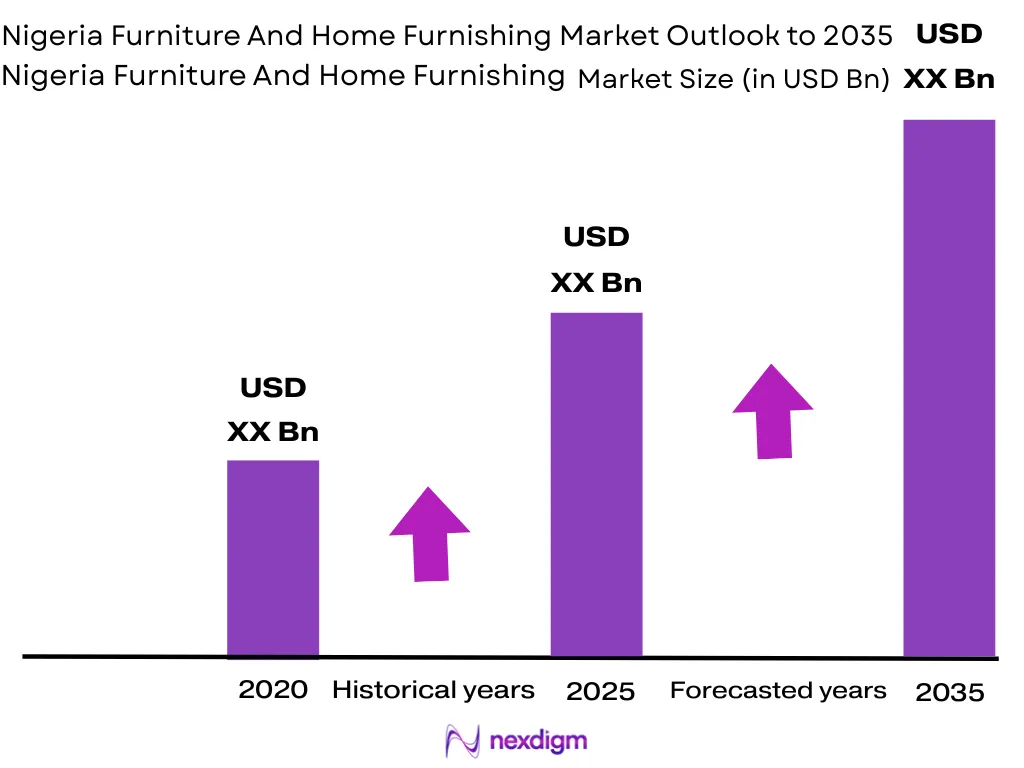
The Nigeria Furniture And Home Furnishing Market is valued at over USD ~ billion, based on late-period industry assessment, while another sector estimate placed furniture value at USD 5.0 billion in the previous base period. The market is driven by urban housing, informal carpentry, imported furniture, office fit-outs, hospitality procurement, mattresses, modular wardrobes and social-commerce retail. Nigeria’s GDP reached USD 252.26 billion, while GDP per capita reached USD 1,084.2, supporting value-led furniture consumption. Lagos, Abuja, Port Harcourt, Kano, Ibadan and Onitsha dominate Nigeria Furniture And Home Furnishing Market because they concentrate households, apartments, gated estates, government procurement, offices, hotels, furniture markets, import warehouses and skilled workshops. Nigeria’s population reached 233 million, supporting large-scale residential furnishing demand. Lagos dominates through premium retail, imported furniture and online sellers, while Abuja leads government, diplomatic and estate-linked furniture demand; Port Harcourt supports oil-and-gas housing and hospitality furnishing.
Market Segmentation
By Product Type
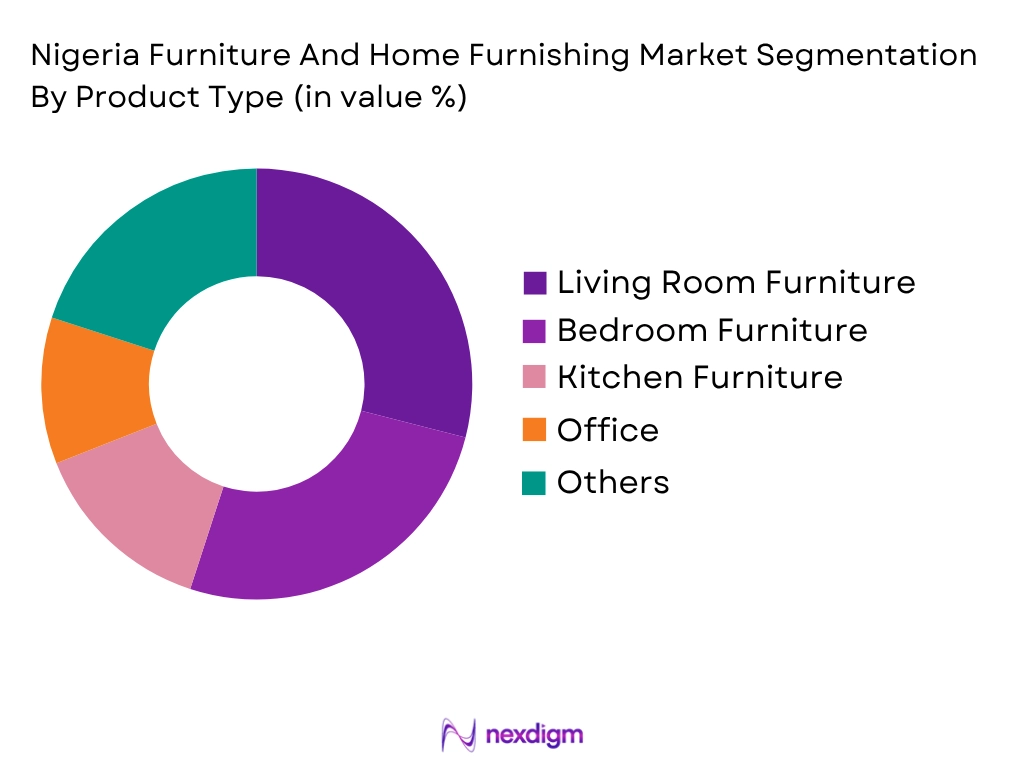
Nigeria Furniture And Home Furnishing Market is segmented by product type into living room furniture, bedroom furniture and mattresses, dining and kitchen furniture, office and commercial furniture, home textiles and soft furnishings, home décor, lighting and accessories, and outdoor and patio furniture. Recently, living room furniture has a dominant market share in Nigeria under the segmentation product type, due to high demand for sofas, lounge sets, sectionals, coffee tables, TV units and accent seating among urban households. The segment is strongly supported by Lagos, Abuja and Port Harcourt households where living rooms are central to family use, guest hosting and aspirational home presentation. Informal workshops, imported furniture showrooms and social-commerce sellers all use sofa sets as anchor products. Living room furniture also supports linked sales in curtains, rugs, lighting, cushions, wall décor and center tables.
By Sales Channel
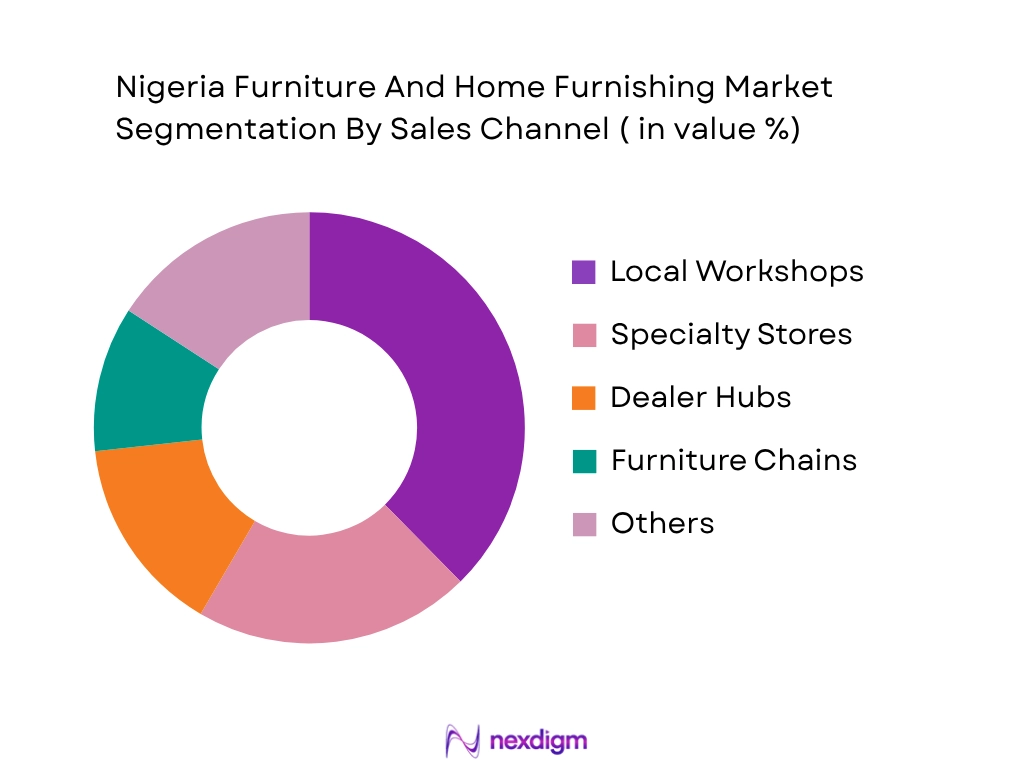
Nigeria Furniture And Home Furnishing Market is segmented by sales channel into informal carpentry and local workshops, furniture specialty stores, furniture markets and dealer hubs, organized furniture chains and large-format retailers, online furniture platforms and social commerce, interior designer and fit-out channels, and hospitality and contract channels. Recently, informal carpentry and local workshops have a dominant market share in Nigeria under the segmentation sales channel, because customers frequently prefer custom-sized wardrobes, kitchen cabinets, beds, sofas, doors and built-in storage made to fit apartments, houses and estate layouts. This channel is strong because it offers flexible payment, material choice, repair capability and proximity to households. Lagos, Abuja, Aba, Onitsha, Ibadan and Kano support dense workshop ecosystems. However, organized stores and online sellers are expanding where consumers want warranty, imported designs, standardized finishes and faster product discovery.
Competitive Landscape
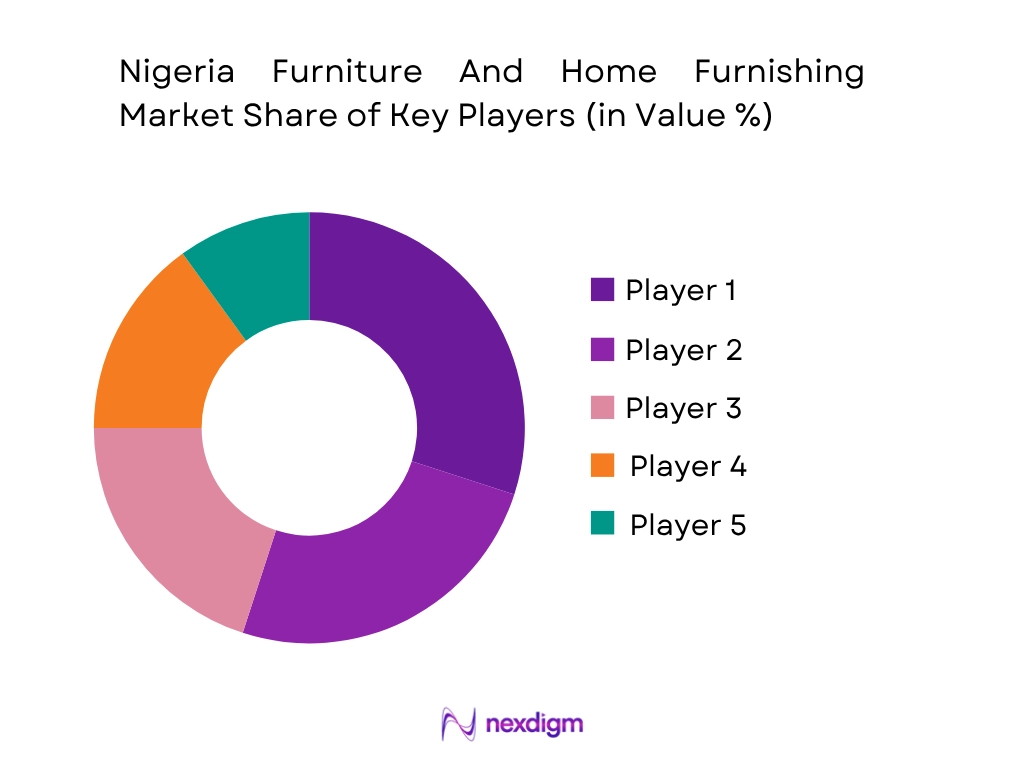
Nigeria Furniture And Home Furnishing Market is fragmented, with local carpentry workshops, imported furniture retailers, organized furniture stores, office furniture manufacturers, digital-first brands and interior solution providers competing across economy, value, mid-market, premium and luxury segments. Lifemate Furniture, Bedmate Furniture, AFP Furniture, Taeillo and Vava Furniture influence the organized market through showroom presence, imported furniture, local manufacturing, modular products, office furniture, urban consumer targeting and digital sales models.
| Company | Establishment Year | Headquarters | Core Positioning | Product Strength | Sales Channel | Fulfillment Model | Price Tier | Market-Specific Capability |
| Lifemate Furniture | 2006 | Lagos | ~ | ~ | ~ | ~ | ~ | ~ |
| Bedmate Furniture | 2002 | Lagos | ~ | ~ | ~ | ~ | ~ | ~ |
| AFP Furniture | 1999 | Abuja / Lagos operations | ~ | ~ | ~ | ~ | ~ | ~ |
| Taeillo | 2018 | Lagos | ~ | ~ | ~ | ~ | ~ | ~ |
| Vava Furniture | 2004 | Lagos | ~ | ~ | ~ | ~ | ~ | ~ |
Nigeria Furniture And Home Furnishing Market Analysis
Growth Drivers
Large Population Base Supporting Residential Furniture Demand
Nigeria Furniture And Home Furnishing Market is supported by a large residential consumer base requiring beds, mattresses, sofas, wardrobes, dining sets, curtains, rugs, lighting, kitchen cabinets and storage furniture. World Bank data recorded Nigeria’s population at 233 million in 2024, GDP at USD 252.26 billion, GDP per capita at USD 1,084.2, and real GDP growth at 4.1. These macro indicators support broad demand for economy and value furniture, especially in Lagos, Abuja, Port Harcourt, Ibadan and Kano. Residential movement, household formation and rented apartment occupancy continue to drive first-time and replacement purchases.
Real Estate and Construction Activity Supporting Furnishing Purchases
Nigeria Furniture And Home Furnishing Market is driven by real estate, construction and apartment development because completed residential units, offices, estates and serviced apartments require sofas, beds, wardrobes, mattresses, doors, kitchen cabinets, workstations and fitted interiors. NBS reported that Real Estate Services in Q1 2024 recorded nominal growth of 126.71, with contribution to nominal GDP at 8.80, compared with 4.46 in Q1 2023. NBS also reported Construction contributed 7.87 to nominal GDP in Q4 2024. These indicators support furniture demand linked to housing delivery, renovation, estate furnishing and commercial fit-outs.
Market Challenges
Inflation and Tight Credit Conditions Affecting Big-Ticket Furniture Purchases
Nigeria Furniture And Home Furnishing Market faces pressure from inflation and tight credit conditions because sofas, bedroom sets, mattresses, wardrobes, office desks and full-home packages are large household purchases. NBS reported headline inflation at 34.60 in November 2024, after 33.88 in October 2024 and 28.92 in December 2023. Reuters reported that the Central Bank of Nigeria raised the benchmark lending rate to 27.50 in November 2024, its sixth rate increase of the year. These conditions weaken discretionary spending, reduce instalment affordability and increase caution among households buying furniture through cash, POS, bank transfer or consumer finance.
Import Dependence and Foreign Trade Exposure Raising Supply Risk
Nigeria Furniture And Home Furnishing Market faces supply-chain risk because imported furniture, fittings, hardware, MDF, plywood, upholstery fabric, lighting, machinery and decorative items are exposed to foreign exchange pressure and port-clearing delays. NBS reported total imports of ₦16,590.51 billion in Q4 2024, up from the previous year, while Q3 2024 imports stood at ₦14,674.05 billion. World Bank WITS recorded Nigeria’s total imports at USD 40,968 million and total trade at USD 93,329 million in 2024. This import exposure affects showroom inventory, project procurement, carpenter input availability and delivery timelines.
Market Opportunities
Digital Access Supporting Online and Social-Commerce Furniture Retail
Nigeria Furniture And Home Furnishing Market has a growth opportunity in online catalogues, Instagram storefronts, WhatsApp sales, marketplace listings, digital quotation, delivery scheduling and showroom-assisted checkout. NCC’s year-end performance report shows broadband movement from December 2023 to December 2024, while NCC-linked reporting recorded active internet subscriptions at 139.28 million in December 2024 and 163.83 million in December 2023, after subscriber clean-up linked to NIN-SIM verification. Broadband connections also reached 96.3 million in December 2024. These indicators support digital furniture discovery among urban renters, young professionals, estate residents and SME office buyers.
Hospitality, Offices and Institutional Procurement Creating Contract Furniture Opportunity
Nigeria Furniture And Home Furnishing Market has future growth opportunity in contract furniture for hotels, guesthouses, serviced apartments, offices, schools, hospitals and public facilities. NBS reported Accommodation and Food Services recorded real growth of 4.44 in Q3 2024, while Transportation and Storage grew 12.15 in real terms, supporting commercial activity and travel-linked demand. NBS also reported Information and Communication contributed 16.35 to real GDP in Q3 2024, strengthening office and digital-service employment clusters. These indicators support demand for hotel beds, restaurant seating, office chairs, workstations, filing cabinets, reception furniture, classroom furniture and institutional storage across Lagos, Abuja and Port Harcourt.
Future Outlook
Nigeria Furniture And Home Furnishing Market is expected to expand through urban housing demand, local carpentry formalization, office furniture procurement, estate development, hospitality refurbishment, imported furniture retail and social-commerce selling. The closest Nigeria-specific public furniture and home furnishing forecast benchmark indicates 5.93% CAGR during the available forecast period, which has been applied as the practical 2035 outlook trajectory. Growth will be led by Lagos, Abuja, Port Harcourt, Ibadan, Kano and Onitsha. Lagos will remain the main retail, import and digital-commerce hub because of its apartment density, premium households, social-commerce sellers, furniture markets, warehouses and interior design ecosystem. Abuja will remain important for government procurement, diplomatic housing, premium estates and corporate offices. The market will continue to depend heavily on informal carpentry, especially for wardrobes, kitchen cabinets, beds, sofas and repairs. However, branded players are expected to gain share by offering standardized finishes, warranties, modular designs, faster delivery and better after-sales support. Future opportunity will also come from import substitution. Naira volatility and import-cost exposure make local manufacturing more relevant for sofas, mattresses, office furniture, wardrobes, kitchen cabinets and wooden furniture. Brands that combine local production with modern designs, online catalogues and installation capability are likely to gain advantage.
Major Players
- Lifemate Furniture
- Bedmate Furniture
- AFP Furniture
- Taeillo
- Vava Furniture
- Alibert Product Nigeria
- IO Furniture
- Cyrus Furniture
- Vento Furniture
- Chair Centre Limited
- NCI Furniture
- Winnyz Interiors
- DecorhubNG
- MDS Furniture
- Alága Collections
Key Target Audience
- Furniture manufacturers and local carpentry workshop operators
- Furniture retailers, showrooms and large-format furniture stores
- Imported furniture distributors and dealer networks
- Online furniture platforms and social-commerce furniture sellers
- Real estate developers, estate managers and serviced-apartment operators
- Investments and venture capitalist firms
- Government and regulatory bodies
- Hospitality procurement teams, office fit-out contractors and furniture logistics providers
Research Methodology
Step 1: Identification of Key Variables
The initial phase involves constructing an ecosystem map for Nigeria Furniture And Home Furnishing Market, covering informal carpenters, furniture retailers, importers, manufacturers, designers, developers, hotels, online sellers and institutional buyers. Key variables include product demand, import reliance, workshop density, urban housing, material mix, sales channels and delivery capability.
Step 2: Market Analysis and Construction
In this phase, historical and current information is compiled across living room furniture, bedroom furniture, mattresses, office furniture, dining furniture, kitchen cabinets, home textiles, lighting and décor. Market construction is conducted through top-down household demand assessment and bottom-up mapping of workshops, retailers, importers, manufacturers, online sellers and contract channels.
Step 3: Hypothesis Validation and Expert Consultation
Market hypotheses are validated through computer-assisted telephone interviews with furniture retailers, carpenters, upholstery producers, importers, office furniture suppliers, developers, interior designers and hospitality procurement teams. These consultations provide insight into product demand, material sourcing, delivery lead times, pricing pressure, informal competition and customer preferences.
Step 4: Research Synthesis and Final Output
The final phase combines desk research, company benchmarking, channel analysis and expert validation into a structured market model. The output assesses market size, future outlook, segmentation, competitive landscape, supply chain structure, end-user behaviour and investment opportunities in Nigeria Furniture And Home Furnishing Market.

- Executive Summary
- Research Methodology (Market Definitions and Assumptions, Abbreviations, Market Sizing Approach, Top-Down Household Demand Mapping, Bottom-Up Retailer and Manufacturer Revenue Assessment, Informal Carpentry Cluster Triangulation, Import Shipment Mapping, Organized Retail Channel Assessment, E-Commerce Sales Estimation, Primary Interviews with Manufacturers/Retailers/Carpenters/Interior Designers/Developers/Procurement Teams, Limitations and Future Conclusions)

- Definition and Scope
- Overview Genesis
- Evolution of Nigeria’s Furniture Retail and Manufacturing Industry
- Timeline of Major Furniture Retail Formats
- Business Cycle
- Supply Chain and Value Chain Analysis

- Growth Drivers (Urbanization, Household Formation, Real Estate Development, Office Expansion, Hospitality Demand, Local Carpentry Strength, Online Retail)
- Market Challenges (Currency Volatility, Import Costs, Informal Competition, Raw Material Access, Power Costs, Quality Variability, Delivery Complexity)
- Opportunities (Local Manufacturing, Affordable Furniture Bundles, Hospitality FF&E, Office Furniture, Online Retail, Modular Kitchens)
- Market Trends (Custom Furniture, Imported Showrooms, Instagram Retail, Flat-Pack Furniture, Office Ergonomics, Local Design)
- SWOT Analysis
- Porter’s Five Forces
- PESTLE Analysis

- By Value (2020-2025)
- By Volume (2020-2025)
- By Average Selling Price (2020-2025)

- By Product Category (In Value %)
Living Room Furniture
Bedroom Furniture
Dining and Kitchen Furniture
Mattresses and Sleep Products - By Sales Channel (In Value %)
Informal Carpentry and Local Workshops
Furniture Specialty Stores
Organized Furniture Chains and Large-Format Retailers
Furniture Markets and Dealer Hubs
Online Furniture Platforms - By End User (In Value %)
Residential Households
Real Estate Developers and Estate Managers
Corporate Offices and Commercial Spaces
Hospitality and Foodservice Buyers - By Region (In Value %)
Lagos State
Federal Capital Territory
South West Nigeria
South East Nigeria
South North Nigeria

- Market Share of Major Players (Value Share, Volume Share, Organized Share, Category Share, Regional Presence, Channel Share)
- Cross Comparison Parameters (Store Footprint, Local Manufacturing Capability, Import and Sourcing Network, Product Category Breadth, Delivery and Installation Network, Office and Institutional Furniture Capability, Online and Social Commerce Presence, Customization and Joinery Capability)
- SWOT Analysis of Major Players
- Pricing Analysis by Key SKUs
- Detailed Profiles of Major Companies
Lifemate Furniture
Bedmate Furniture
AFP Furniture
Taeillo
Vava Furniture
Alibert Product Nigeria
IO Furniture
Cyrus Furniture
Vento Furniture
Chair Centre Limited
NCI Furniture
Winnyz Interiors
DecorhubNG
MDS Furniture
Alága Collections

- Residential Consumer Demand Analysis
- Premium Residential Buyer Analysis
- Commercial and Office Buyer Demand Analysis
- Hospitality Buyer Demand Analysis
- Real Estate Developer and Property Manager Demand Analysis

- By Value (2026-2035)
- By Volume (2026-2035)
- By Average Selling Price (2026-2035)


 Request a Sample
 Ask for Customization
 Get a Quote
 Enquire Now