

 Download PDF
Market Overview
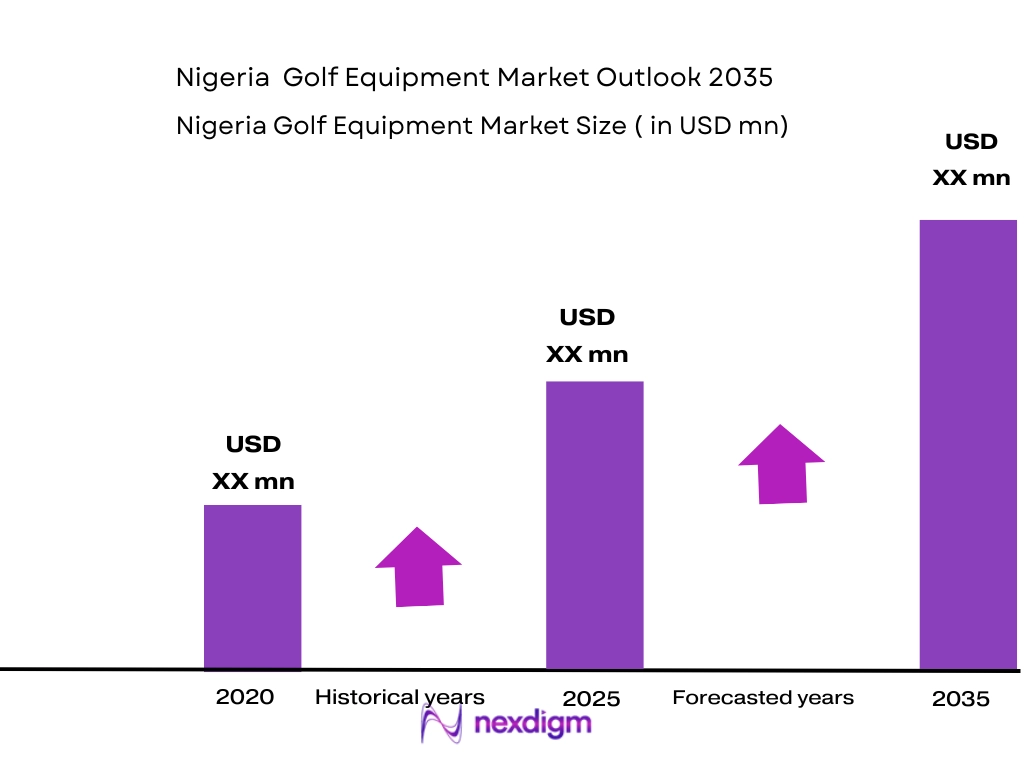
The Nigeria golf equipment market is expected to reach USD ~ million based on a recent historical assessment. This market growth is primarily driven by increasing interest in the sport, which is gaining popularity among both locals and expatriates. Factors such as the expansion of golf courses, the rise of golf tourism, and the increasing demand for high-quality, durable golf products are propelling the market. The evolving consumer preferences, which lean towards premium and technologically advanced golf equipment, are further supporting this growth.
In Nigeria, key cities such as Lagos, Abuja, and Port Harcourt dominate the golf equipment market due to their well-established golf courses and the concentration of affluent consumers. Lagos, as the commercial capital, hosts numerous golf events and attracts international golfers, boosting the demand for high-end golf equipment. Abuja, with its status as the political center, also sees considerable activity in the golf sector. Port Harcourt, known for its oil industry, has witnessed a rise in golf enthusiasts, contributing to the increased demand for golf gear in these cities.
Market Segmentation
By Product Type
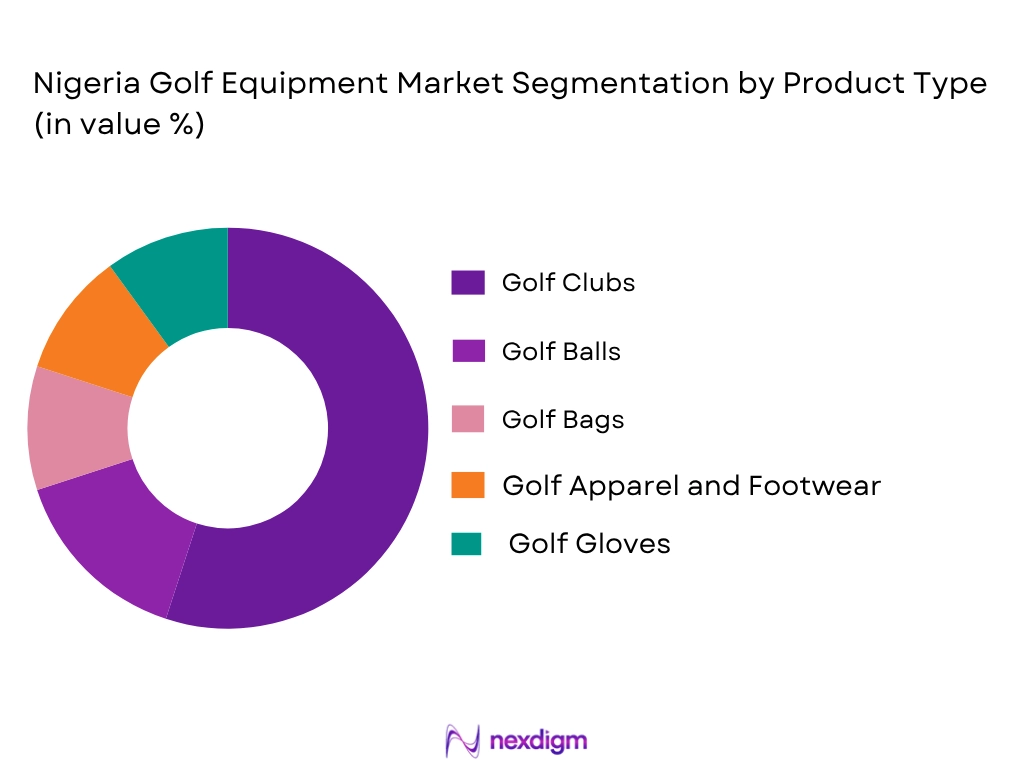
The Nigeria golf equipment market is segmented by product type into golf clubs, golf balls, apparel, and accessories. Recently, golf clubs have had a dominant market share due to factors such as brand presence, product innovation, and consumer demand for performance-enhancing equipment. As Nigerian golfers seek to improve their game, they are more inclined to invest in golf clubs with advanced features like adjustable loft angles and premium shafts. Additionally, the growing participation of golfers in both professional tournaments and recreational events has led to an increased need for specialized golf clubs.
By Distribution Channel
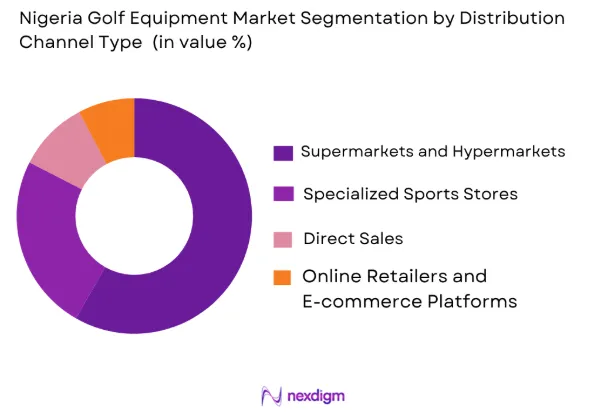
The Nigeria golf equipment market is segmented by distribution channel into offline retail stores and online platforms. Offline retail stores dominate the market, with many consumers preferring to purchase golf equipment from specialty sports stores or golf course pro shops. In Nigeria, the ability to physically test the products, especially for golf clubs, plays a crucial role in the decision-making process. Furthermore, the personal guidance from experts available in these stores makes them the preferred choice for many golfers, especially in urban areas like Lagos and Abuja.
Competitive Landscape
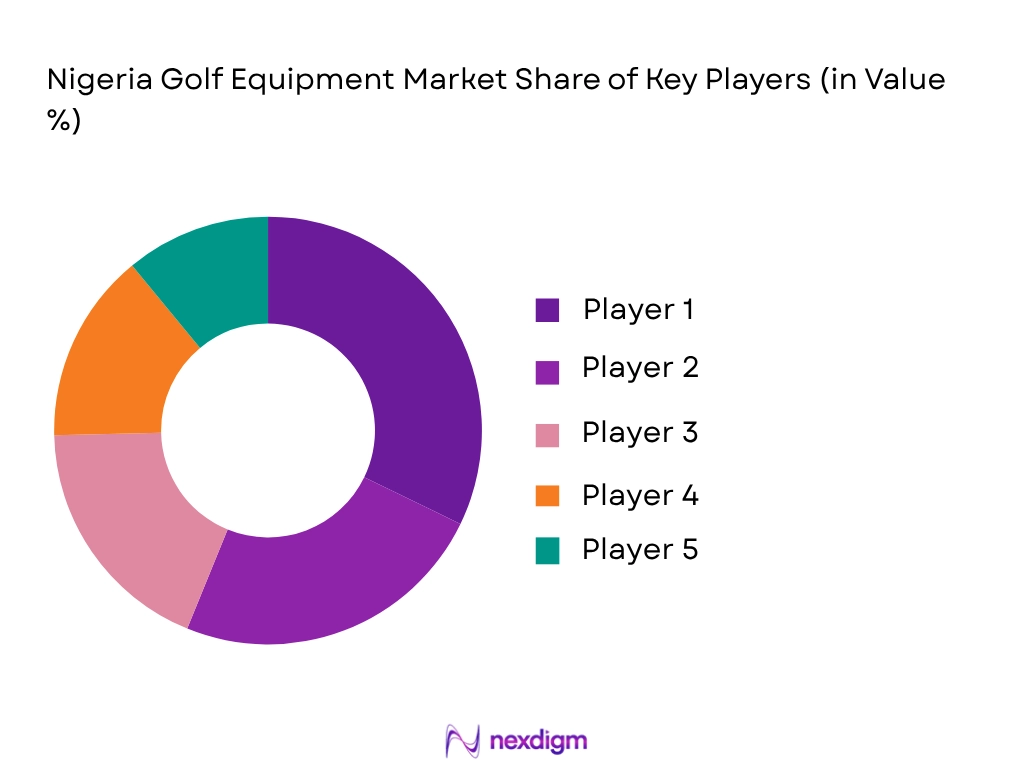
The competitive landscape of the Nigeria golf equipment market is characterized by the presence of global brands and local distributors. Global players, such as Callaway, TaylorMade, and Titleist, have a significant presence in the market through strategic partnerships with local retailers and golf course operators. These brands are focused on expanding their market share by offering a wide range of products, including golf clubs, balls, and accessories. Local distributors are also playing an important role by making these premium products accessible to Nigerian consumers. The market sees occasional consolidation as these global brands collaborate with local players to strengthen their presence in the region.
| Company Name | Establishment Year | Headquarters | Technology Focus | Market Reach | Key Products | Revenue (USD) | Customer Segment |
| Callaway Golf | 1982 | Carlsbad, USA | ~ | ~ | ~ | ~ | ~ |
| TaylorMade Golf | 1979 | Carlsbad, USA | ~ | ~ | ~ | ~ | ~ |
| Titleist | 1935 | Fairhaven, USA | ~ | ~ | ~ | ~ | ~ |
| Srixon | 1930 | Japan | ~ | ~ | ~ | ~ | ~ |
| Ping Golf | 1959 | Phoenix, USA | ~ | ~ | ~ | ~ | ~ |
Nigeria Golf Equipment Market Analysis
Growth Drivers
Rising Interest in Golf Among Nigerians
Golf’s popularity is steadily increasing among Nigerians, especially within urban centers. More people are taking up golf as a recreational activity, and its presence in local media, sports clubs, and social circles is helping to expand interest. Additionally, golf is being increasingly recognized as an effective networking tool, particularly in corporate environments, which is driving demand for golf-related products. As more Nigerians explore golf for both leisure and professional opportunities, golf courses, academies, and events are growing. This surge in interest is paving the way for higher consumption of golf equipment, such as clubs, balls, bags, and accessories, creating a promising outlook for the market.
Technological Advancements in Golf Equipment
Technological innovations are a major driver in the Nigerian golf equipment market, as they provide players with high-performance gear. Features like adjustable drivers, lightweight clubs, and sensor-driven equipment are becoming increasingly popular among tech-savvy golfers. With continuous advancements in equipment technology, including GPS-enabled devices, swing analyzers, and other performance-enhancing tools, golfers now have more ways to track and improve their game. These innovations cater to both experienced players looking to refine their skills and beginners seeking to enhance their experience. As these technologies become more accessible, the demand for smart and high-tech golf equipment is set to rise, driving market growth.
Market Challenges
High Cost of Premium Golf Equipment
Despite growing interest in golf in Nigeria, the high cost of premium golf equipment remains a significant barrier for many potential consumers. Import duties and taxes on international brands drive up the prices of golf clubs, balls, and accessories, making them unaffordable for a large portion of the population. While there is demand for top-tier golf gear, particularly from corporate and professional players, the cost is a deterrent for beginners and those from lower income brackets. The challenge is to make golf more accessible to a wider audience by either lowering equipment costs or offering more affordable alternatives that maintain quality.
Competition from International Brands
International brands dominate the Nigerian golf equipment market, creating challenges for local manufacturers and retailers. Companies like Titleist, TaylorMade, and Callaway have well-established reputations and loyal customer bases, making it difficult for emerging or local brands to compete. These international giants benefit from strong distribution networks, extensive marketing campaigns, and brand recognition, which gives them a competitive edge. While these brands offer high-quality products, the influx of international equipment may limit the market share of domestic manufacturers, creating hurdles for the growth of local golf equipment businesses in Nigeria.
Opportunities
Growth of Junior and Women’s Golfing Markets
The increasing participation of junior and female golfers represents a significant opportunity for the Nigerian golf equipment market. More youth are being introduced to golf through school programs, academies, and golf clubs, creating a growing demand for junior-sized equipment. Similarly, women’s golf is gaining traction as more initiatives and events encourage female participation in the sport. Manufacturers can capitalize on this by developing specialized golf gear designed specifically for juniors and women, such as lightweight clubs, tailored apparel, and gender-specific accessories. Targeting these segments can significantly boost market demand and increase diversity within the sport.
Eco-friendly and Sustainable Golf Equipment Products
As global awareness about environmental sustainability continues to grow, there is an increasing demand for eco-friendly and sustainable products in various industries, including golf. Consumers are becoming more conscious of the environmental impact of the products they buy, including golf equipment. This opens up opportunities for brands to innovate by offering biodegradable tees, recyclable bags, and golf clubs made from sustainable materials. By focusing on eco-friendly solutions, manufacturers and retailers in Nigeria can attract environmentally conscious golfers while aligning with global trends in sustainability, ultimately gaining a competitive edge in the market.
Future Outlook
Over the next five years, the Nigeria golf equipment market is expected to experience steady growth, driven by the increasing participation of younger consumers and the expansion of golf infrastructure across the country. Technological advancements in golf products and a growing interest in women’s golf will further boost demand. Additionally, the rise of golf tourism and more international tournaments in Nigeria will contribute to a stronger market presence. As consumer preferences shift towards premium and innovative products, the market is poised for long-term growth, with new opportunities emerging in previously underserved regions.
Major Players
- Callaway Golf
- TaylorMade Golf
- Titleist
- Srixon
- Ping Golf
- Cobra Golf
- Mizuno
- Wilson Sporting Goods
- Odyssey Golf
- Cleveland Golf
- Adams Golf
- Bridgestone Golf
- Nike Golf
- PXG
- Odyssey Golf
Key Target Audience
- Investments and venture capitalist firms
- Government and regulatory bodies
- Professional golfers
- Golf course owners and operators
- Retailers specializing in sports equipment
- Distributors of sporting goods
- Golf tourism operators
- Affluent golf enthusiasts
Research Methodology
Step 1: Identification of Key Variables
This step involves identifying key market drivers such as product types, distribution channels, and target demographics influencing the Nigeria golf equipment market.
Step 2: Market Analysis and Construction
The market was analyzed by evaluating trends, demand patterns, and market segmentation, with particular attention paid to the competitive environment.
Step 3: Hypothesis Validation and Expert Consultation
The research hypotheses were validated through consultations with industry experts, local distributors, and consumers to refine market insights.
Step 4: Research Synthesis and Final Output
The final step involved synthesizing all gathered information into a comprehensive market report, highlighting key trends, challenges, and growth opportunities in the Nigeria golf equipment market.

- Executive Summary
- Research Methodology (Market Definitions and Scope of Golf Equipment Products, Product Classification Framework, Retail Audit and Consumption Data Utilization Approach, Primary Interviews with Manufacturers, Distributors, Retailers, and Consumers, Bottom-Up Volume and Value Modelling, Top-Down FMCG and Household Spending Validation, Assumptions on Pricing, Product Specifications, and Consumption Frequency, Limitations and Data Triangulation Techniques, TAM/SAM/SOM Modelling Framework Based on Household Penetration and Retail Sales)

- Definition and Scope
- Evolution of Golf Equipment Industry in Nigeria
- Timeline of Market Development and Regulatory Changes
- Golf Equipment Usage Patterns Across Demographics
- Value Chain Analysis
- Stakeholder Ecosystem

- Growth Drivers
Rising Interest in Golf Among Nigerians
Increasing Disposable Income
Golf Course Development and Expansion
Corporate and Leisure Golfing Events
Influence of Global Golfing Trends
Technological Advancements in Golf Equipment - Market Challenges
High Cost of Premium Golf Equipment
Competition from International Brands
Limited Consumer Awareness in Rural Areas
Economic Fluctuations Affecting Discretionary Spending
Availability of Counterfeit or Low-Quality Products
Environmental Sustainability and Packaging Concerns - Opportunities
Growth of Junior and Women’s Golfing Markets
Eco-friendly and Sustainable Golf Equipment Products
Smart and Technologically Enhanced Golf Equipment (GPS, Sensors, etc.)
Customization of Golf Equipment (Fitting, Personalized Gear)
Expansion of Golf Retail into Underserved Areas
Collaboration with Local Influencers and Golf Ambassadors - Market Trends
Shift Towards Technologically Advanced Clubs (e.g., Carbon Fiber Shafts)
Golf Equipment Rental and Second-Hand Market Growth
Focus on Performance-Enhancing Golf Balls
Demand for Golf Apparel as a Lifestyle Product
Online Shopping Growth for Golf Equipment - Government Regulations
Safety Standards and Certifications
Import Regulations and Tariffs
Environmental Regulations on Packaging and Sustainability Initiatives - SWOT Analysis
- Porter’s Five Forces Analysis

- By Value, 2020-2025
- By Volume, 2020-2025
- By Average Selling Price, 2020-2025

- By Product Type (in Value %)
Golf Clubs
Golf Balls
Golf Bags
Golf Apparel and Footwear
Golf Gloves
Golf Accessories (e.g., tees, markers, rangefinders, etc.) - By Brand (in Value %)
Major International Brands (Titleist, TaylorMade, Callaway, etc.)
Local and Regional Brands - By Distribution Channel (in Value %)
Supermarkets and Hypermarkets
Specialized Sports Stores
Online Retailers and E-commerce Platforms
Direct Sales (e.g., through golf courses and pro shops) - By Price Segment (in Value %)
Budget
Mid-range
Premium
Luxury - By End User (in Value %)
Individual Golfers (Male/Female, Amateur/Professional)
Golf Courses and Clubs
Corporate and Institutional Users (Corporate Gifts, Sponsorships)
Hospitality and Leisure (Hotels, Resorts) - By Region (in Value %)
Lagos
Abuja
Port Harcourt
Ibadan
Other Regions

- Market Share of Major Players
By Value
By Volume
By Product Category
By Distribution Reach - Cross Comparison Parameters (Product Portfolio Breadth, Pricing Strategy, Retail Presence, E-commerce Capability, Brand Awareness, Innovation Pipeline, Customer Retention Rate, Sustainability Initiatives)
SWOT Analysis of Major Players - Detailed Profiles of Major Companies
Titleist Nigeria
TaylorMade Golf Nigeria
Callaway Nigeria
Cobra Golf Nigeria
Mizuno Nigeria
Ping Nigeria
Wilson Sporting Goods Nigeria
Srixon Nigeria
Local Golf Equipment Manufacturers
Retail and E-commerce Players

- Golf Equipment Purchase Patterns
- Price Sensitivity and Brand Preferences
- Factors Driving Purchase Decisions
- Loyalty and Retention Strategies for Golf Equipment Brands

- By Value, 2026-2035
- By Volume, 2026-2035
- By Average Selling Price, 2026-2035


 Request a Sample
 Ask for Customization
 Get a Quote
 Enquire Now