
 Download PDF
 Download PDF
Market Overview
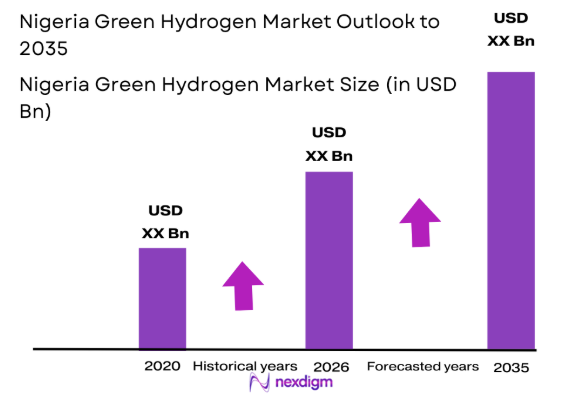
The Nigeria Green Hydrogen market has experienced significant growth driven by the global demand for sustainable and low-carbon energy solutions. The market size, based on a recent historical assessment, is estimated to be valued at over USA ~ billion. Key drivers include the shift toward decarbonization, increased investments in renewable energy infrastructure, and the growing need for alternative energy solutions in industries such as transportation and power generation. Technological advancements in electrolyzer efficiency and fuel cells have also contributed to the market’s expansion.
Countries such as Germany, the United States, Japan, and Australia are at the forefront of green hydrogen development. These nations benefit from strong governmental support, favorable policies, and vast renewable energy resources. Germany’s commitment to green hydrogen as a cornerstone of its energy transition and Japan’s focus on hydrogen in its industrial and transport sectors have solidified their leadership positions. Additionally, Australia’s vast renewable resources make it an emerging hub for green hydrogen production, positioning it as a major player in global hydrogen trade.
Market Segmentation
By Product Type
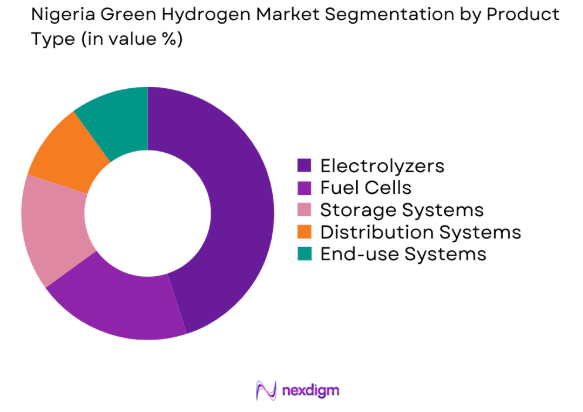
The Nigeria Green Hydrogen market is segmented by product type into electrolyzers, fuel cells, storage systems, distribution systems, and end-use systems. Electrolyzers dominate the market due to their essential role in green hydrogen production. These devices use renewable energy to split water into hydrogen and oxygen, making them a critical technology for scaling up green hydrogen production. Technological advancements in electrolyzer efficiency have significantly reduced production costs, resulting in higher demand across industries seeking clean energy solutions.
By End-User Segment
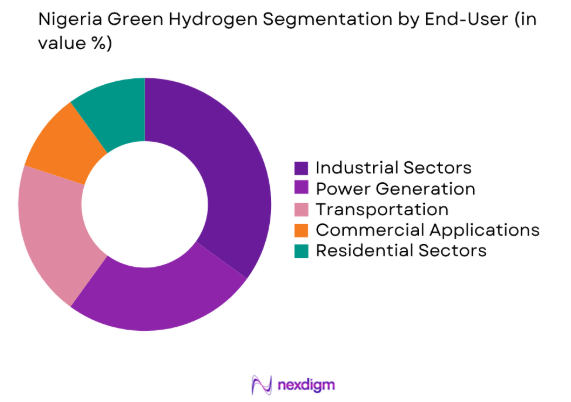
The Nigeria Green Hydrogen market is segmented into industrial sectors, power generation, transportation, commercial applications, and residential sectors. Industrial sectors, especially those in steel and chemical manufacturing, are leading the adoption of green hydrogen due to their high energy demand and commitment to reducing carbon emissions. Green hydrogen provides a viable solution for high-temperature heat applications, making it an attractive alternative to traditional fossil fuels in industrial processes.
Competitive Landscape
The green hydrogen market is characterized by a competitive landscape that includes both established energy companies and new entrants specializing in hydrogen production technologies. Large corporations such as Siemens Gamesa, Linde, and Air Products are leading the market, while several start-ups focus on developing electrolyzers, fuel cells, and storage systems. These companies are investing heavily in hydrogen infrastructure, strategic collaborations, and product development to secure a competitive edge.
| Company Name | Establishment Year | Headquarters | Technology Focus | Market Reach | Key Products | Revenue | Additional Parameter |
| Siemens Gamesa | 1976 | Spain | ~ | ~ | ~ | ~ | ~ |
| Air Products | 1940 | USA | ~ | ~ | ~ | ~ | ~ |
| Linde | 1906 | Germany | ~ | ~ | ~ | ~ | ~ |
| Nel Hydrogen | 1927 | Norway | ~ | ~ | ~ | ~ | ~ |
| Plug Power | 1997 | USA | ~ | ~ | ~ | ~ | ~ |
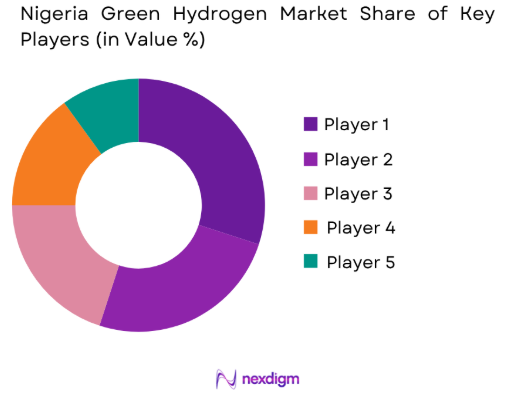
Nigeria Green Hydrogen Market Analysis
Growth Drivers
Government Investments in Clean Energy Solutions
One of the most significant growth drivers for the green hydrogen market is the increasing investment by governments worldwide in clean energy solutions. Many governments, especially in Europe, Asia, and North America, are heavily funding the development of green hydrogen infrastructure and technologies. These investments aim to achieve carbon neutrality targets, reduce dependence on fossil fuels, and transition to more sustainable energy systems. The focus on hydrogen as a clean fuel alternative has resulted in increased funding for research and development, infrastructure projects, and large-scale production facilities. Government incentives and subsidies for hydrogen projects are also helping to drive market growth by making the technology more affordable and accessible.
Technological Advancements in Electrolyzers
Another key driver of growth is the continuous improvement in electrolyzer technologies, which are crucial for green hydrogen production. Electrolyzers use renewable energy to split water into hydrogen and oxygen, and advancements in their efficiency have significantly reduced the cost of green hydrogen production. As electrolyzer efficiency improves, the cost of green hydrogen decreases, making it more competitive with fossil fuel-based hydrogen. Innovations in electrolyzer design, materials, and manufacturing processes are increasing their scale and making them more cost-effective for large-scale deployment. As a result, the market is seeing greater adoption of green hydrogen across multiple sectors, including transportation, power generation, and industrial processes.
Market Challenges
High Capital Expenditure for Infrastructure Development
A significant challenge for the green hydrogen market is the high capital expenditure required to develop the necessary infrastructure. Establishing hydrogen production facilities, storage systems, and distribution networks demands substantial financial investment, which can be a major barrier for both companies and governments. Despite advancements in hydrogen technologies, many regions still lack the infrastructure needed to support large-scale production and distribution of green hydrogen. This infrastructure gap, combined with the high costs of production, hampers market growth. Addressing this challenge will require substantial investments and collaboration between governments, private companies, and other stakeholders to develop and expand the infrastructure required for large-scale hydrogen adoption and distribution.
Regulatory and Policy Uncertainty
Another challenge facing the green hydrogen market is the uncertainty surrounding regulations and policies. While many countries have committed to reducing carbon emissions and supporting the adoption of renewable energy, there is still a lack of consistent regulatory frameworks for green hydrogen. Inconsistent policies across regions can lead to uncertainty for businesses and investors, making it difficult to plan and execute long-term hydrogen projects. Additionally, the lack of standardized certifications and regulations for green hydrogen production and trade can hinder the growth of global hydrogen markets. Clear, stable, and supportive policies are crucial for ensuring the continued growth of the green hydrogen industry.
Opportunities
Expanding Hydrogen Mobility Applications
One of the key opportunities in the green hydrogen market is the increasing demand for hydrogen-powered transportation. As governments tighten emission regulations and the push for decarbonization intensifies, there is a growing demand for clean fuel alternatives in the transportation sector. Hydrogen fuel cell vehicles (FCVs) are gaining traction, particularly in heavy-duty transport applications like buses, trucks, and trains. These vehicles offer the benefit of longer ranges and faster refueling times compared to battery electric vehicles (EVs). The expanding infrastructure for hydrogen refueling stations and the increasing adoption of hydrogen fuel cells by the automotive and transportation industries represent a significant growth opportunity for the green hydrogen market.
Global Export Opportunities
Another opportunity lies in the global export of green hydrogen, especially for countries rich in renewable energy resources. Countries like Australia, Chile, and Saudi Arabia are investing heavily in green hydrogen production, aiming to export hydrogen to regions with high demand for clean energy, such as Europe and Asia. These export opportunities are opening up new markets for green hydrogen, and international trade in hydrogen is expected to grow as countries aim to meet their climate targets. Exporting hydrogen not only boosts market growth but also helps countries diversify their energy exports and become key players in the global clean energy market.
Future Outlook
The future outlook for the green hydrogen market is promising, with significant growth expected in the next five years. Technological advancements in electrolyzers, fuel cells, and hydrogen storage systems will continue to lower production costs and improve efficiency. Additionally, supportive government policies, including subsidies, incentives, and regulations to curb carbon emissions, will drive the market forward. The transportation, power generation, and industrial sectors are expected to be major consumers of green hydrogen, and the development of hydrogen infrastructure will facilitate its widespread adoption. As the market matures, economies of scale and international collaboration will drive further market growth.
Major Players
- Siemens Gamesa
- Air Products
- Linde
- Nel Hydrogen
- Plug Power
- General Electric
- Ballard Power Systems
- ITM Power
- Hydrogenics
- Enel Green Power
- Shell
- BP
- TotalEnergies
- McPhyEnergy
- EDF Group
Key Target Audience
- Investments and venture capitalist firms
- Government and regulatory bodies
- Energy companies
- Environmental advocacy groups
- Hydrogen technology manufacturers
- Industrial sectors looking to decarbonize
- Transportation companies
- Research institutions focusing on energy technologies
Research Methodology
Step 1: Identification of Key Variables
This step involves identifying the critical factors driving the green hydrogen market, such as technological advancements, policy changes, and market demand trends.
Step 2: Market Analysis and Construction
A thorough analysis of the market size, segment growth, and competitive dynamics is conducted to construct an accurate market forecast and trends.
Step 3: Hypothesis Validation and Expert Consultation
Expert consultations are used to validate assumptions and projections regarding market growth and technological developments.
Step 4: Research Synthesis and Final Output
The collected data is synthesized into actionable insights, offering a comprehensive view of the green hydrogen market’s potential.

- Executive Summary
- Research Methodology (Definitions, Scope, Industry Assumptions, Market Sizing Approach, Primary & Secondary Research Framework, Data Collection & Verification Protocol, Analytic Models & Forecast Methodology, Limitations & Research Validity Checks)

- Market Definition and Scope
- Value Chain & Stakeholder Ecosystem
- Regulatory / Certification Landscape
- Sector Dynamics Affecting Demand
- Strategic Initiatives & Infrastructure Growth

- Growth Drivers
Increased Government Investment in Renewable Energy
Technological Advancements in Electrolyzer Efficiency
Rising Global Demand for Clean Hydrogen - Market Challenges
High Capital Expenditure for Infrastructure Development
Regulatory and Policy Uncertainty
Technological Integration and Scalability Issues - Market Opportunities
Emerging Demand for Green Hydrogen in Transportation
Potential for Cross-sector Collaborations in R&D
Growth in Export Markets for Hydrogen Technologies - Trends
Integration of Green Hydrogen with Renewable Energy
Increasing Investment in Hydrogen Mobility
Advances in Hydrogen Storage Technologies - Government Regulations
- SWOT Analysis of Key Competitors
- Porter’s Five Forces

- By Market Value, 2020-2025
- By Installed Units, 2020-2025
- By Average System Price, 2020-2025
- By System Complexity Tier, 2020-2025

- By System Type (In Value%)
Electrolyzers
Fuel Cells
Storage Systems
Distribution Systems
End-use Systems - By Platform Type (In Value%)
Onshore Platforms
Offshore Platforms
Hybrid Platforms
Modular Platforms
Integrated Platforms - By Fitment Type (In Value%)
On-site Solutions
Off-site Solutions
Modular Solutions
Hybrid Solutions
Integrated Solutions - By End User Segment (In Value%)
Industrial Sectors
Power Generation
Transportation
Commercial Applications
Residential Sectors - By Procurement Channel (In Value%)
Direct Procurement
Government Tenders
Private Sector Procurement
Online Bidding Platforms
Third-party Distributors

- Market Share Analysis
- Cross Comparison Parameters (Electrolyzer Efficiency, Fuel Cell Technology, Storage Capabilities, Production Cost, Regulatory Compliance)
- SWOT Analysis of Key Competitors
- Pricing & Procurement Analysis
- Key Players
Siemens Gamesa
General Electric
Nel Hydrogen
Air Products and Chemicals
ThyssenKrupp
Linde
Shell
BP
Plug Power
Orsted
TotalEnergies
EDF Group
Thales
Honeywell
McKinsey & Company

- Growing Industrial Demand for Green Hydrogen
- Nigeria’s Strategic Role in Africa’s Energy Transition
- Private Sector Interest in Renewable Solutions
- Government-led Hydrogen Projects in Key Sectors

- Forecast Market Value, 2026-2035
- Forecast Installed Units, 2026-2035
- Price Forecast by System Tier, 2026-2035
- Future Demand by Platform, 2026-2035


 Request a Sample
 Ask for Customization
 Get a Quote
 Enquire Now