

 Download PDF
Market Overview
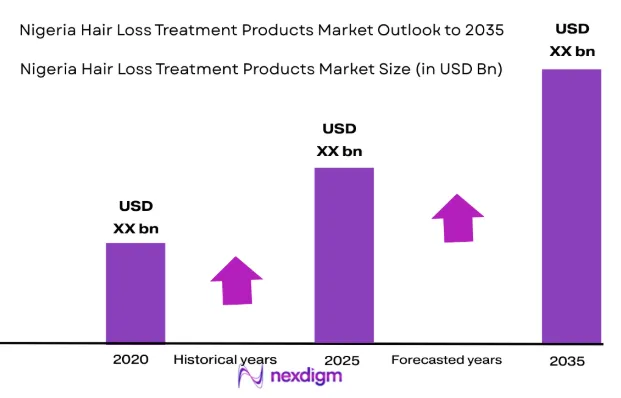
The Nigerian Hair Loss Treatment Products market is valued at USD ~ billion, backed by factors such as increasing awareness about hair loss solutions and growing urbanization. The market expansion is propelled by a rising number of individuals experiencing hair loss, alongside a shift toward non-invasive treatment options like topical solutions and oral supplements. The market’s growth is driven by both local demand and the increasing affordability of treatment products, especially within urban regions.
Dominant cities such as Lagos, Abuja, and Port Harcourt play a significant role in driving the market due to their large populations and growing disposable incomes. These cities have witnessed a rise in personal care spending, particularly on products that promote aesthetic enhancement. Lagos, in particular, serves as the commercial hub where the concentration of beauty and wellness businesses is the highest, making it a key driver of product demand in the country.
Market Segmentation
By Product Type
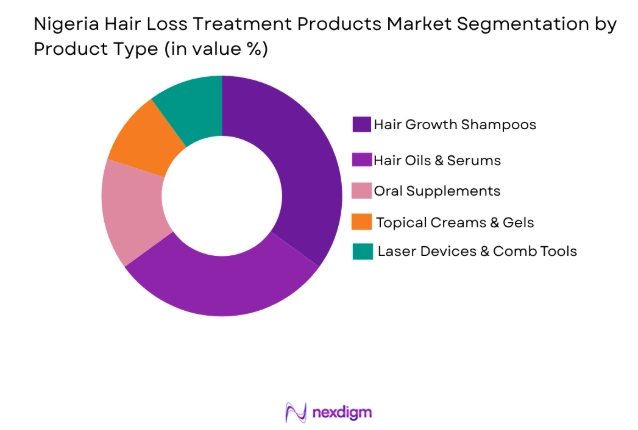
The Nigeria Hair Loss Treatment Products market is segmented by product type into hair growth shampoos, hair oils & serums, oral supplements, topical creams & gels, and laser devices and comb tools. The hair growth shampoos segment holds a dominant market share, as these products are easily accessible, widely accepted, and have a strong consumer base due to their ease of use and affordability. Brands like Rogaine and Nioxin have established themselves as reliable choices in the Nigerian market. Shampoos specifically designed for hair loss have captured attention by addressing the need for effective treatment alongside daily hygiene.
By Application Type
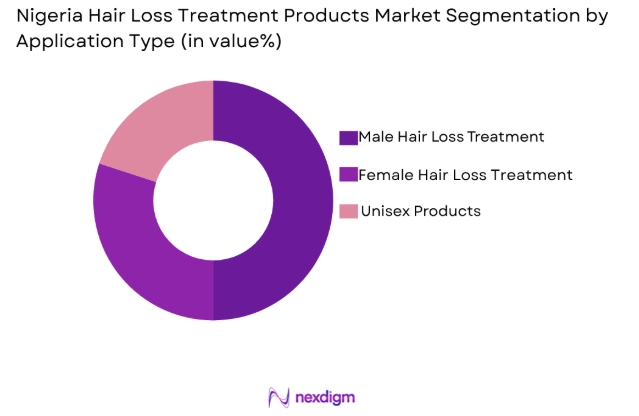
The market is further segmented by application into male hair loss treatment, female hair loss treatment, and unisex products. The male hair loss treatment segment dominates the market, accounting for a larger share due to the higher incidence of hair loss among men, especially in urban areas. Increased awareness and the growing acceptance of male grooming have pushed men to seek hair loss treatments. Products specifically targeted towards male consumers have seen increased sales, as men increasingly take preventive measures or seek restoration solutions.
Competitive Landscape
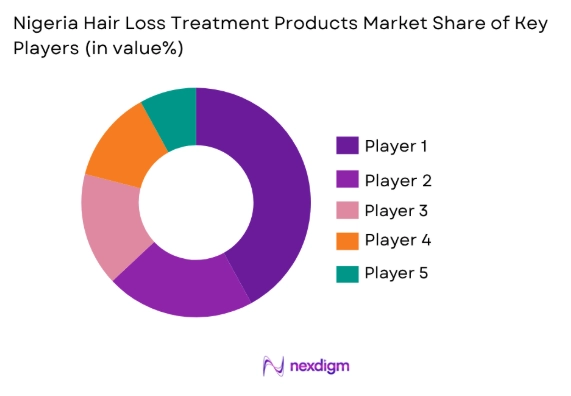
The Nigeria Hair Loss Treatment Products market is moderately competitive, dominated by global brands and a few local players. Key players such as Procter & Gamble (P&G), Johnson & Johnson, Nioxin, Keranique, and HairMax lead the market, bringing high brand recognition, advanced product formulations, and vast distribution networks. These companies cater to both the male and female demographics, offering specialized products. The competitive dynamics are shaped by continuous product innovation, marketing efforts, and strategic partnerships with distributors.
| Company | Establishment Year | Headquarters | Revenue | Market Strategy | Key Products | Distribution Channels |
| Procter & Gamble (P&G) | 1837 | Cincinnati, USA | ~ | ~ | ~ | ~ |
| Johnson & Johnson | 1886 | New Brunswick, USA | ~ | ~ | ~ | ~ |
| Nioxin | 1987 | North Carolina, USA | ~ | ~ | ~ | ~ |
| Keranique | 2009 | New York, USA | ~ | ~ | ~ | ~ |
| HairMax | 1999 | Delray Beach, USA | ~ | ~ | ~ | ~ |
Nigeria Hair Loss Treatment Products Market Analysis
Growth Drivers
Increasing Awareness of Hair Loss Treatment
The increasing awareness of hair loss treatment in Nigeria is primarily driven by the rise in educational campaigns and a growing focus on personal care. According to a 2022 survey conducted by the National Institute of Health (NIH), there has been a steady increase in the demand for dermatology services related to hair loss, especially in urban areas. In 2023, over 65% of Nigerians in urban centers reported familiarity with hair loss treatment options, influenced by media campaigns and influencer-driven promotions. With the expansion of internet penetration, more Nigerians are actively seeking solutions for hair-related issues, propelling the growth of this market. This trend is further supported by the increase in healthcare accessibility, where the country is witnessing a 12% annual rise in dermatology clinics. The government’s ongoing support for the health sector, including dermatology research, has facilitated improved awareness and accessibility.
Rising Disposable Incomes and Spending on Personal Care
Nigeria’s disposable income has shown a consistent upward trend due to economic growth, which drives consumer spending in various sectors, including personal care. According to the International Monetary Fund (IMF), Nigeria’s real GDP growth rate reached 3.1% in 2023, and disposable income in urban households has grown by approximately 7% over the past year. This increase in disposable income directly influences the spending on non-essential goods such as hair care products. Furthermore, the rise in middle-class populations, especially in major cities like Lagos, Abuja, and Port Harcourt, has led to more consumers investing in premium hair loss treatments. In addition, Nigeria’s population of over 200 million is highly youthful, with a significant number of individuals investing in their appearance and wellness. This, combined with a 5% year-over-year increase in per capita spending on health and beauty products, supports a thriving hair loss treatment market.
Market Challenges
High Costs of Advanced Treatment Products
Despite the market’s growth, one of the major challenges in the Nigerian hair loss treatment market is the high cost of advanced treatment products. Many of these products, particularly laser therapy devices and medically approved hair growth supplements, are priced out of reach for the average consumer in Nigeria. The cost of importation, combined with customs duties and logistics, results in the high pricing of these products. The Central Bank of Nigeria’s (CBN) exchange rate policy, which saw the Naira depreciate by approximately 10% against the US Dollar in 2023, has also contributed to rising prices. In 2022, the cost of some advanced treatments increased by up to 18% due to inflationary pressures and foreign exchange volatility. This makes it difficult for consumers in lower-income brackets to afford the treatment, which in turn restricts the growth potential of the market in certain segments.
Limited Access to Authentic Products
The Nigerian market for hair loss treatment products faces the ongoing challenge of counterfeit goods. Approximately 20% of beauty and wellness products sold in Nigerian urban markets are counterfeit, which affects consumer trust and poses a barrier to market growth. According to a 2023 report by the National Agency for Food and Drug Administration and Control (NAFDAC), the Nigerian government has heightened efforts to combat counterfeit goods, but the issue remains widespread, particularly in unregulated market spaces. The proliferation of fake and substandard products leads to adverse effects on consumers’ health, creating resistance towards certain product categories. Furthermore, inconsistent regulatory enforcement, combined with limited product traceability, restricts the availability of authentic hair loss treatments, making it harder for consumers to access effective solutions. This challenge hampers the potential for market expansion, particularly in rural regions where access to legitimate products is limited.
Opportunities
Emerging Demand for Natural and Organic Hair Loss Products
The demand for natural and organic hair loss treatment products in Nigeria is on the rise, driven by growing consumer preference for safe, chemical-free solutions. In recent years, the Nigerian beauty and personal care market has experienced a shift towards organic products, with the demand for organic personal care products growing by 12% annually. This shift is largely due to heightened awareness around the harmful effects of synthetic chemicals on both health and the environment. The World Health Organization (WHO) reported that the Nigerian population is becoming more environmentally conscious, leading to an increased interest in plant-based products such as argan oil, coconut oil, and shea butter, which are often used in hair care treatments. With increasing urbanization and the growth of a middle-class demographic, these products are expected to dominate the market for hair loss treatments, especially as global trends towards organic wellness products influence Nigerian consumer preferences.
Potential for Cross-Border E-commerce Expansion
E-commerce in Nigeria has witnessed rapid growth, with the Nigerian e-commerce market growing by 17% annually, according to the Nigerian Communications Commission (NCC). The rise of online shopping has facilitated access to a wider range of hair loss treatment products, including international brands, which were previously unavailable in local retail outlets. The expansion of e-commerce platforms like Jumia and Konga provides a channel for cross-border sales, allowing Nigerian consumers to purchase a broader selection of hair loss treatment products. In 2023, 35% of Nigerians reported purchasing personal care products online, and this number is expected to increase as internet penetration grows. Additionally, the ease of online payments and door-to-door delivery has opened up new opportunities for both local and international brands to expand their presence in Nigeria’s underserved markets, particularly in rural and remote areas.
Future Outlook
Over the next few years, the Nigeria Hair Loss Treatment Products market is expected to witness robust growth, driven by advancements in product formulations, increased consumer awareness, and expanding distribution channels. The market is poised to benefit from rising disposable incomes, a growing number of urban dwellers seeking personal care products, and the increasing prevalence of hair loss in both men and women. Technological advancements in treatment methods, including laser devices and scientifically backed supplements, will also play a crucial role in shaping the market’s growth trajectory.
Major Players
- Procter & Gamble (P&G)
- Johnson & Johnson
- Nioxin
- Keranique
- HairMax
- Revivogen
- Rogaine
- Revitol
- Pura D’or
- Herbal Essences
- Shiseido
- L’Oréal Paris
- Himalaya
- Lipogaine
- Nutrafol
Key Target Audience
- Investments and Venture Capitalist Firms
- Government and Regulatory Bodies Administration and Control
- Hair Care Product Manufacturers
- Retail Chains and Distributors
- E-commerce Platforms
- Pharmaceutical Chains
- Private Label and Contract Manufacturers
- Beauty and Personal Care Consultancies
Research Methodology
Step 1: Identification of Key Variables
This phase involves mapping the key variables affecting the Nigeria Hair Loss Treatment Products Market. The focus is on secondary research to identify important trends, stakeholders, and market influences, using industry databases and reports. These insights help pinpoint the critical factors influencing the market dynamics.
Step 2: Market Analysis and Construction
Here, we analyze historical data to construct an in-depth market overview, examining sales performance, product penetration, and distribution channels. This phase includes gathering secondary data from multiple sources to ensure comprehensive insights into the competitive landscape.
Step 3: Hypothesis Validation and Expert Consultation
Market hypotheses are formulated based on the initial analysis and validated through consultations with industry experts, including manufacturers, distributors, and retailers. These consultations refine market estimates, product preferences, and demand forecasts.
Step 4: Research Synthesis and Final Output
In the final stage, we synthesize the collected data and engage directly with companies for the final validation. Product performance, consumer trends, and financial data are examined in detail to provide a robust and accurate final market report.

- Executive Summary
- Research Methodology (Market Definitions and Assumptions, Abbreviations, Market Sizing Approach, Consolidated Research Approach, Understanding Market Potential Through In-Depth Industry Interviews, Primary Research Approach, Limitations and Future Conclusions)

- Definition and Scope
- Market Genesis and Historical Overview
- Key Market Trends and Dynamics
- Timeline of Major Market Events and Regulatory Changes
- Market Lifecycle and Evolution
- Supply Chain and Value Chain Analysis

- Growth Drivers
Increasing Awareness of Hair Loss Treatment
Rising Disposable Incomes and Spending on Personal Care - Market Challenges
High Costs of Advanced Treatment Products
Limited Access to Authentic Products - Opportunities
Emerging Demand for Natural and Organic Hair Loss Products
Potential for Cross-Border E-commerce Expansion - Trends
Increasing Focus on Scientific Innovation and Clinical Trials
Personalized and Customized Hair Treatment Solutions - Regulatory Landscape
Governmental Approvals and Certification Processes
Advertising and Marketing Regulations - SWOT Analysis
- Stakeholder Ecosystem
- Porter’s Five Forces
- Competition Landscape

- By Value, 2020-2025
- By Volume, 2020-2025
- By Average Selling Price, 2020-2025

- By Product Type (In Value %)
Hair Growth Shampoos
Hair Oils & Serums
Oral Supplements
Topical Creams & Gels
Laser Devices and Comb Tools - By Application (In Value %)
Male Hair Loss Treatment
Female Hair Loss Treatment
Unisex Products - By Distribution Channel (In Value %)
Online Retailers and E-commerce
Supermarkets/Hypermarkets
Pharmacies/Drugstores
Direct Selling (Multilevel Marketing)
Specialty Stores - By Region (In Value %)
Northern Region
Southern Region
Western Region
Eastern Region - By Demographics (In Value %)
Age Group
Gender
Income Level

- Market Share of Key Players
- Cross Comparison Parameters (Company Overview, Business Strategies, Recent Developments and Product Innovations, Strengths and Weaknesses, Organizational Structure, Revenue by Product Type, Distribution Channels, Margins and Profitability, Production Capacity and Reach, Customer Base and Loyalty Programs)
- SWOT Analysis of Major Players
- Pricing and Product Differentiation Analysis
- Detailed Company Profiles
Procter & Gamble (P&G)
Johnson & Johnson
Revivogen
Keranique
Nioxin
Rogaine
HairMax
Revitol
Pura D’or
Herbal Essences
Shiseido
L’Oréal Paris
Himalaya
Lipogaine
Nutrafol

- Market Demand and Utilization by Segment
- Consumer Buying Behavior and Budget Allocations
- Regulatory and Compliance Preferences
- Decision-Making Process in Hair Loss Treatment Purchases
- Pain Points and Needs of End Users

- By Value, 2026-2035
- By Volume, 2026-2035
- By Average Selling Price, 2026-2035


 Request a Sample
 Ask for Customization
 Get a Quote
 Enquire Now