

 Download PDF
Market Overview
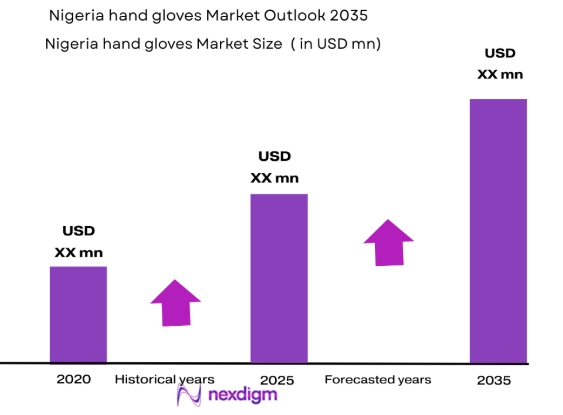
The Nigeria hand gloves market is valued at approximately USD ~ million in 2025, supported by strong demand from healthcare, oil & gas, and industrial sectors. Nigeria’s population exceeds 223 million, creating significant demand for hygiene and medical consumables. The country operates over 44,000 healthcare facilities, including primary health centers and hospitals, ensuring continuous glove consumption. Nigeria’s GDP reached USD 477 billion, while healthcare expenditure crossed USD 10 billion, reflecting institutional demand. Additionally, the labor force of over 70 million supports industrial glove usage across construction, manufacturing, and oil & gas operations.
The Nigeria hand gloves market is concentrated in Lagos, Abuja, and Rivers State due to strong healthcare infrastructure, industrial activities, and trade networks. Lagos dominates as the commercial hub, handling over 70% of Nigeria’s imports through its ports, supporting glove distribution. Abuja contributes through government healthcare institutions and procurement activities. Rivers State supports demand through oil & gas operations, requiring industrial safety gloves. These regions benefit from high population density, economic activities, and infrastructure, making them key consumption centers for gloves.
Market Segmentation
By Product Type
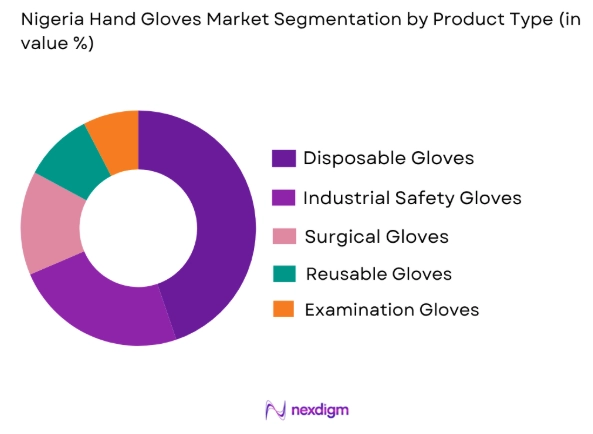
Nigeria hand gloves market is segmented by product type into disposable gloves, reusable gloves, surgical gloves, examination gloves, and industrial safety gloves. Disposable gloves dominate the market due to their widespread use in healthcare, food handling, and cleaning services. Hospitals and clinics require single-use gloves for infection prevention, especially in high-patient-volume environments. Additionally, food processing and retail sectors use disposable gloves to maintain hygiene standards. The convenience, cost-effectiveness, and compliance with health regulations make disposable gloves the preferred choice. Industrial safety gloves are also significant, particularly in oil & gas and construction, but disposable gloves lead due to continuous consumption in healthcare and hygiene-driven sectors.
By Material Type
Nigeria hand gloves market is segmented by material type into nitrile gloves, latex gloves, vinyl gloves, neoprene gloves, and polyethylene gloves. Nitrile gloves dominate the market due to their superior durability, chemical resistance, and hypoallergenic properties. Healthcare providers prefer nitrile gloves to avoid latex allergies, while industrial sectors require durable gloves for handling hazardous materials. Nigeria’s oil production exceeding 1.5 million barrels per day drives demand for industrial safety gloves. Additionally, nitrile gloves offer better puncture resistance and longer usability, making them suitable for both medical and industrial applications. This combination of safety, performance, and versatility contributes to the dominance of nitrile gloves in the market.

Competitive Landscape
The Nigeria hand gloves market is moderately fragmented, with strong participation from international manufacturers and local distributors. Global companies dominate due to advanced product quality and strong supply chains, while local distributors focus on cost efficiency and regional reach. The presence of oil & gas and healthcare sectors increases competition, as suppliers cater to diverse industry needs.
| Company | Establishment Year | Headquarters | Product Focus | Distribution Network | Key Industries Served | Import/Local Presence | Competitive Advantage |
| Ansell Limited | 1893 | Australia | ~ | ~ | ~ | ~ | ~ |
| Top Glove Corporation | 1991 | Malaysia | ~ | ~ | ~ | ~ | ~ |
| Hartalega Holdings | 1988 | Malaysia | ~ | ~ | ~ | ~ | ~ |
| 3M Nigeria | 1902 | USA | ~ | ~ | ~ | ~ | ~ |
| Jubaili Medical | 2005 | UAE | ~ | ~ | ~ | ~ | ~ |

Nigeria Hand Gloves Market Analysis
Growth Drivers
Expansion of Healthcare Infrastructure and Medical Services
Nigeria hand gloves demand is supported by the expansion of healthcare services and medical infrastructure requiring continuous use of surgical and examination gloves. The Federal Ministry of Health reports over 44,000 healthcare facilities across the country, including primary, secondary, and tertiary centers. World Bank data shows Nigeria’s population at 223,804,632, creating a large patient base and increasing hospital visits. Health expenditure reached USD 10.78 billion, supporting procurement of medical consumables. The National Health Insurance Authority continues to expand coverage, increasing access to healthcare services and driving demand for gloves across hospitals, clinics, laboratories, and diagnostic centers.
Rising Demand from Oil and Gas and Industrial Safety Applications
Nigeria hand gloves demand is strongly influenced by oil and gas and industrial activities where worker safety equipment is essential. Nigeria’s crude oil production averaged 1.55 million barrels per day, according to OPEC data, supporting large-scale operations requiring protective gloves. The National Bureau of Statistics reports over 70 million people in the labor force, including workers in construction, manufacturing, and industrial sectors. Manufacturing output reached ₦17.67 trillion, reflecting active industrial operations. These industries require gloves for handling chemicals, machinery, and hazardous materials, creating consistent demand for industrial safety gloves across operational environments.
Market Challenges
High Dependence on Imports
Nigeria hand gloves market faces challenges due to reliance on imported gloves and raw materials. World Bank WITS data shows Nigeria imported 3,214,870 kg of surgical gloves, with major suppliers including Malaysia at 1,487,620 kg, China at 1,026,450 kg, and Thailand at 482,310 kg. This import dependency exposes the market to currency fluctuations, shipping delays, and supply chain disruptions. Limited domestic production capacity increases vulnerability to external factors, affecting availability and pricing stability. Import reliance also restricts the development of local manufacturing capabilities, making the market dependent on international suppliers for both medical and industrial gloves.
Regulatory Compliance and Quality Standards
Nigeria hand gloves market is impacted by regulatory frameworks governing medical and industrial products. The National Agency for Food and Drug Administration and Control regulates medical devices, ensuring compliance with safety standards. Nigeria’s healthcare system, with over 44,000 facilities, requires certified gloves for infection control and patient safety. Industrial sectors also follow occupational safety regulations, increasing compliance requirements for suppliers. World Bank governance indicators highlight regulatory improvements in Nigeria’s healthcare and industrial sectors. Compliance processes, including product registration and quality certification, can delay market entry and increase operational costs for suppliers operating in the country.
Opportunities
Growth in Local Manufacturing and Distribution Networks
Nigeria hand gloves market has opportunities in local manufacturing due to strong domestic demand and regional trade potential. Nigeria’s GDP reached USD 477 billion, indicating a large economic base supporting industrial investment. The African Continental Free Trade Area enables Nigeria to export products to other African countries, strengthening regional distribution networks. Nigeria exported rubber products worth USD 123 million, indicating potential for downstream glove manufacturing. Developing local production facilities can reduce import dependence, improve supply chain efficiency, and create employment opportunities while supporting domestic and regional demand for gloves
Rising Adoption of Industrial Safety Gloves in Oil and Gas and Manufacturing
Nigeria hand gloves market shows strong potential in industrial safety gloves due to expanding workforce and industrial output. The National Bureau of Statistics reports manufacturing output at ₦17.67 trillion and construction sector output at ₦10.21 trillion, indicating active industrial operations. Oil and gas production of 1.55 million barrels per day requires protective equipment for workers handling hazardous materials. With over 70 million workers in the labor force, industrial sectors continue to demand durable gloves for safety compliance. Increasing awareness of occupational safety and regulatory enforcement supports the adoption of high-performance gloves across industries.
Future Outlook
Over the next five years, the Nigeria hand gloves market is expected to grow steadily due to expanding healthcare services, industrial development, and increasing hygiene awareness. Government initiatives to improve healthcare infrastructure will boost demand for medical gloves.The oil & gas sector and construction industry will continue to drive demand for industrial safety gloves, while the food processing and retail sectors will support disposable glove consumption. Increasing adoption of nitrile gloves and improvements in distribution networks will further contribute to market growth.
Major Players
- Ansell Limited
- Top Glove Corporation
- Hartalega Holdings Berhad
- Kossan Rubber Industries
- Supermax Corporation
- Kimberly-Clark Corporation
- 3M Nigeria
- Medicom Group
- Sempermed
- AMMEX Corporation
- Jubaili Medical
- Fine Hygienic Holding
- Medi-Gloves Nigeria
- Safety Nigeria Limited
- Dromex Africa
Key Target Audience
- Healthcare providers and hospital procurement departments
- Oil and gas companies
- Industrial and manufacturing companies
- Food processing and retail businesses
- Construction companies
- Retail and wholesale distributors
- Investments and venture capitalist firms
- Government and regulatory bodies (Federal Ministry of Health Nigeria, National Agency for Food and Drug Administration and Control)
Research Methodology
Step 1: Identification of Key Variables
The initial phase involves mapping stakeholders in the Nigeria hand gloves market, including manufacturers, distributors, healthcare providers, and industrial users. Secondary data sources such as government publications and trade statistics are used to identify key variables influencing market demand.
Step 2: Market Analysis and Construction
Historical data is analyzed to understand consumption patterns, industrial output, and healthcare utilization. The study evaluates glove usage across sectors to construct a reliable market model.
Step 3: Hypothesis Validation and Expert Consultation
Industry experts are consulted to validate assumptions and provide insights into market dynamics. These interactions help refine demand estimates and identify growth drivers.
Step 4: Research Synthesis and Final Output
The final phase integrates primary and secondary research findings to deliver a validated market assessment. Data triangulation ensures accuracy and consistency in the analysis.

- Executive Summary
- Research Methodology (Market Definitions and Assumptions, Abbreviations, Market Sizing Approach, Consolidated Research Approach, Understanding Market Potential Through In-Depth Industry Interviews, Primary Research Approach, Limitations and Future Conclusions)

- Definition and Scope
- Market Dynamics Overview
- Market Genesis
- Major Players and Market Timeline
- Business Cycle and Trends
- Supply Chain and Value Chain Analysis

- Growth Drivers
Expansion of Healthcare Infrastructure and Medical Services
Rising Demand from Oil and Gas and Industrial Safety Applications
Increasing Focus on Workplace Safety and Hygiene
Growth of Food Processing and Pharmaceutical Industries - Market Challenges
High Dependence on Imports
Price Sensitivity and Competitive Market Structure
Fluctuations in Raw Material Supply
Regulatory Compliance and Quality Standards - Opportunities
Growth in Local Manufacturing and Distribution Networks
Increasing Demand for Nitrile and Powder-Free Gloves
Expansion of Healthcare Procurement and Medical Supply Chains
Rising Adoption of Industrial Safety Gloves in Oil and Gas and Manufacturing
- Key Trends
Shift toward nitrile and synthetic gloves
Rising demand for disposable single use gloves
Growth in healthcare and hygiene awareness
Expansion of industrial safety glove applications - Government Regulations
- SWOT Analysis
- Porter’s Five Forces

- By Value, 2020–2025
- By Volume, 2020–2025
- By Average Price, 2020–2025

- By Product Type (In Value %)
Disposable Gloves
Reusable Gloves
Surgical Gloves
Examination Gloves
Industrial Safety Gloves - By Material Type (In Value %)
Latex
Nitrile
Vinyl
Neoprene
Polyethylene
- By Application (In Value %)
Healthcare
Oil and Gas
Industrial Manufacturing
Food Processing
Household and Cleaning - By Distribution Channel (In Value %)
Direct Sales
Distributors and Wholesalers
Retail Pharmacies
Online Channels - By Region (In Value %)
Lagos
Abuja
Rivers
Kano
Rest of Nigeria

- Market Share of Major Players by Value/Volume
- Market Share of Major Players by Product Type
- Cross Comparison Parameters (Company Overview, Business Strategies, Recent Developments, Strength, Weakness, Organizational Structure, Revenues, Revenues by Product Type, Number of Touchpoints, Distribution Channels, Number of Dealers and Distributors, Margins, Production Plant, Capacity, Unique Value Offering and Others)
- SWOT Analysis of Major Players
- Pricing Analysis Based on Product Categories for Major Players
- Detailed Profiles of Major Companies
Ansell Limited
Top Glove Corporation
Hartalega Holdings Berhad
Kossan Rubber Industries
Supermax Corporation
Kimberly-Clark Corporation
3M Nigeria
Medicom Group
Sempermed
AMMEX Corporation
Jubaili Medical
Fine Hygienic Holding
Medi-Gloves Nigeria
Safety Nigeria Limited
Dromex Africa

- Market Demand and Utilization
- Purchasing Power and Budget Allocations
- Regulatory and Compliance Requirements
- Needs, Desires, and Pain Point Analysis
- Decision-Making Process

- By Value, 2026–2035
- By Volume, 2026–2035
- By Average Price, 2026–2035


 Request a Sample
 Ask for Customization
 Get a Quote
 Enquire Now