

 Download PDF
Market Overview
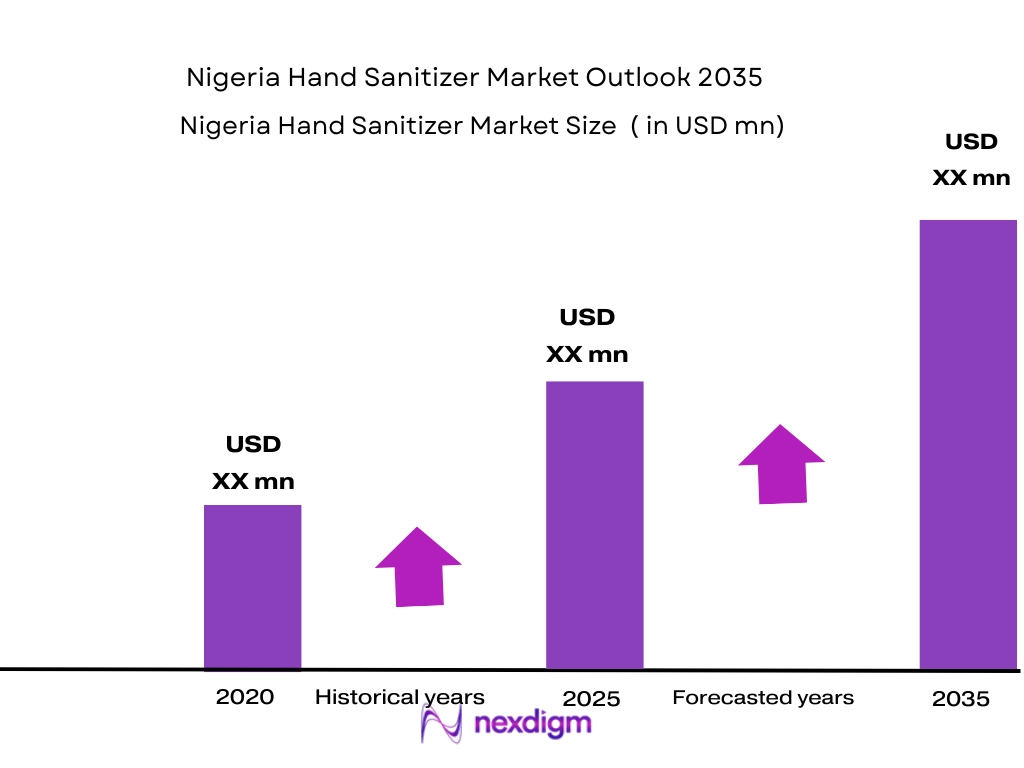
The Nigeria Hand Sanitizer Market has seen rapid growth, with the market size reaching USD ~ million in 2024, propelled by heightened awareness of health and hygiene. The increased adoption of hand sanitizers, especially in public spaces, healthcare institutions, and industrial settings, has been a key factor. A rising population, urbanization, and improved distribution networks have further driven this demand. Additionally, product diversification, such as the growth of organic and alcohol-free sanitizers, is expanding the market beyond traditional hand hygiene solutions. The market has witnessed continuous growth in response to a focus on hygiene standards across Nigeria.
In terms of regional dominance, Lagos, Abuja, and Port Harcourt are the leading consumers of hand sanitizers. Lagos holds a major share of the market, primarily due to its position as the economic powerhouse of Nigeria and the large population that drives demand. Abuja, as the capital, has high consumption driven by government and health institutions’ focus on hygiene, while Port Harcourt’s industrial activity leads to increased demand in workplaces and manufacturing sectors. Other regions also show growing demand, although these cities remain the focal points.
Market Segmentation
By Product Type
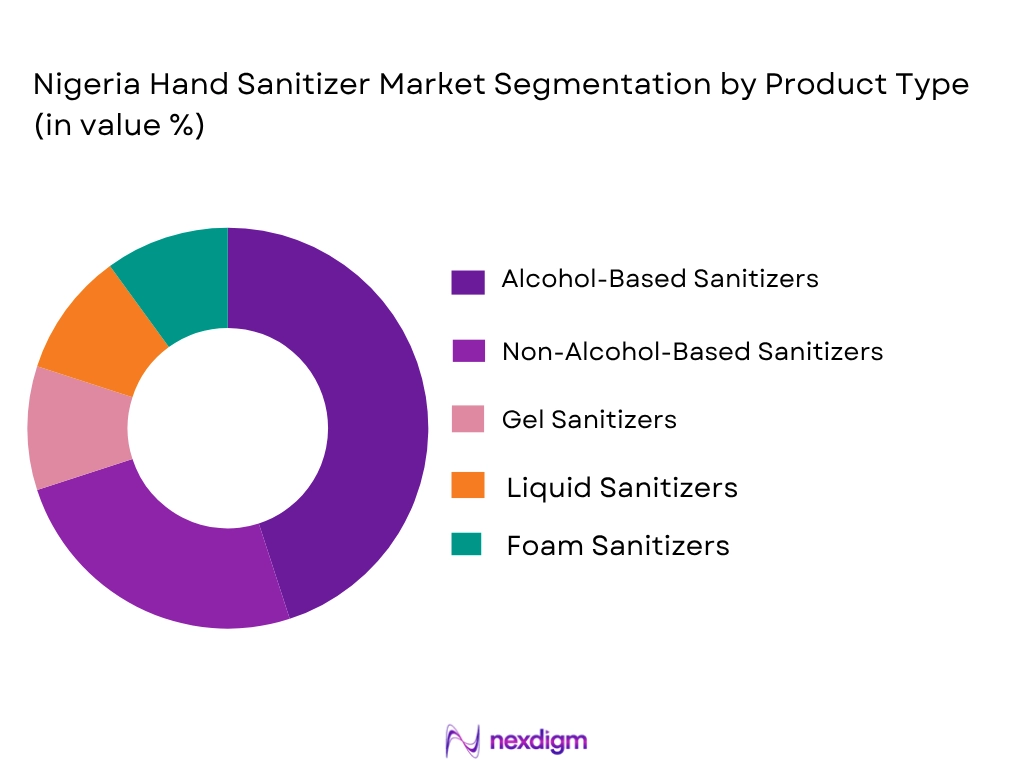
The Nigeria Hand Sanitizer Market is segmented by product type into alcohol-based sanitizers, non-alcohol-based sanitizers, gel sanitizers, liquid sanitizers, and foam sanitizers. Recently, alcohol-based sanitizers have been dominating the market due to the widespread preference for alcohol’s proven effectiveness in killing germs and viruses. The increased awareness about the importance of hygiene and the influence of public health campaigns during the pandemic have significantly bolstered the demand for alcohol-based solutions. Furthermore, alcohol-based sanitizers are considered more efficient and are favored in both consumer and institutional settings, driving their market dominance.
By Distribution Channel
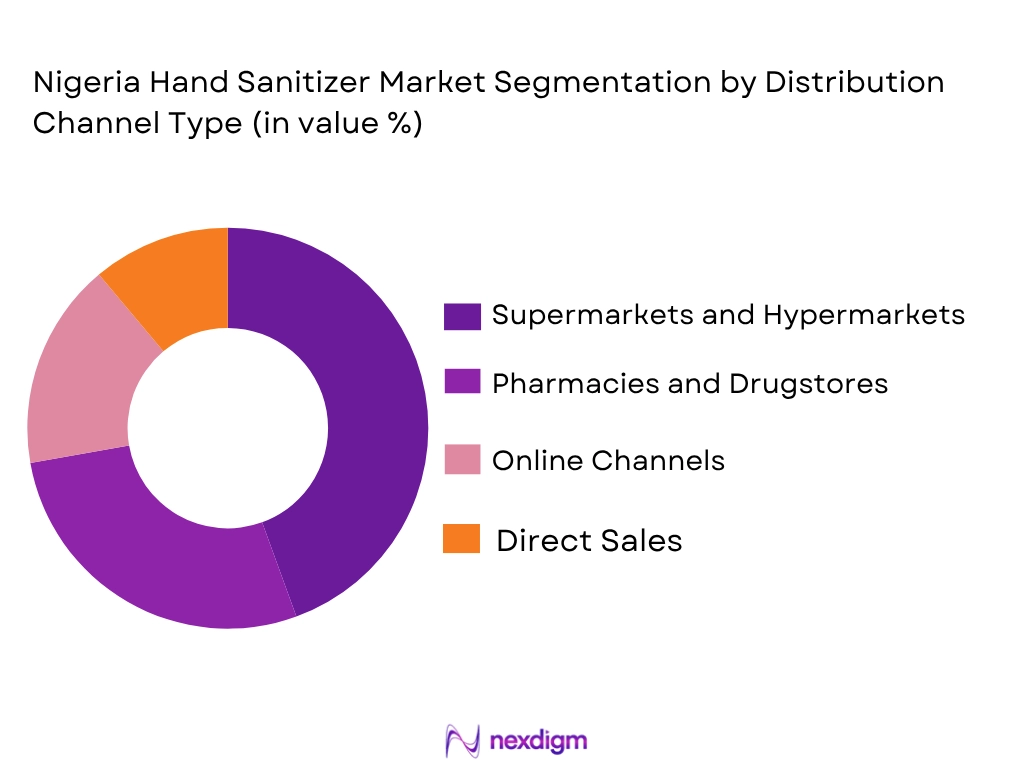
The market is segmented by distribution channel into supermarkets and hypermarkets, pharmacies and drugstores, online channels, direct sales, and retail stores. Supermarkets and hypermarkets dominate the market due to their widespread reach, convenience, and the ability to cater to a large number of consumers in both urban and rural areas. Their strategic locations in key commercial areas of Nigeria make them accessible to a broad demographic. Additionally, these retail giants often partner with trusted brands, enhancing product availability and consumer trust, which is crucial for mass adoption in the country.
Competitive Landscape
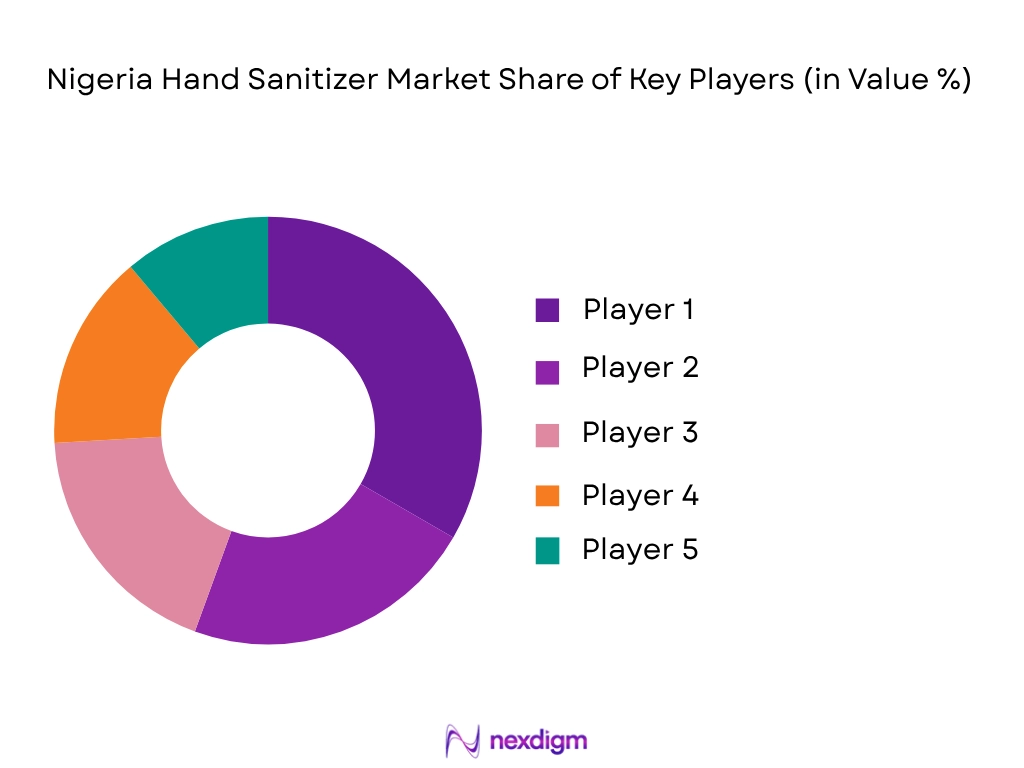
The Nigeria Hand Sanitizer Market has witnessed significant consolidation, with major global and local players influencing the landscape. Established brands dominate the market through extensive distribution networks and advertising campaigns that emphasize the importance of hygiene. While multinational companies hold a significant portion of the market share, local manufacturers are increasingly gaining ground by producing affordable alternatives tailored to the local consumer base. The market is characterized by competition based on price, brand recognition, and distribution reach, with companies also focusing on innovation in product formulations and packaging.
| Company Name | Establishment Year | Headquarters | Technology Focus | Market Reach | Key Products | Revenue | Market-Specific Parameter |
| Reckitt Benckiser | 1823 | UK | ~ | ~ | ~ | ~ | ~ |
| Procter & Gamble | 1837 | USA | ~ | ~ | ~ | ~ | ~ |
| Unilever | 1929 | UK/Netherlands | ~ | ~ | ~ | ~ | ~ |
| 3M | 1902 | USA | ~ | ~ | ~ | ~ | ~ |
| Henkel | 1876 | Germany | ~ | ~ | ~ | ~ | ~ |
Nigeria Hand Sanitizer Market Analysis
Growth Drivers
Increased Awareness of Hygiene Due to COVID-19
The COVID-19 pandemic has significantly increased public awareness regarding hygiene practices, particularly hand sanitization. In Nigeria, the pandemic led to widespread public health campaigns and government-led initiatives, highlighting the importance of hand hygiene. According to the World Health Organization (WHO), Nigeria saw a dramatic rise in hygiene awareness in 2020-2022, leading to increased use of hand sanitizers across healthcare and retail sectors. The pandemic triggered not only a surge in immediate demand but also created long-term hygiene habits among the population. With continuous government initiatives promoting hygiene, this behavior is expected to sustain beyond the pandemic. Furthermore, the Nigerian government’s efforts to expand public health infrastructure, as part of Vision 2025, align with these hygiene initiatives. This increased focus on hygiene has translated into continuous growth in sanitizer consumption, with Nigerians increasingly adopting hygiene products in daily routines.
Rising Health and Safety Concerns
Health and safety concerns in Nigeria have heightened in recent years, driven by rising disease outbreaks and urbanization. The Nigerian government has been focusing on public health campaigns to educate citizens about the importance of sanitation in preventing the spread of diseases such as cholera, malaria, and tuberculosis. According to the National Population Commission, urbanization rates in Nigeria have been steadily rising, with urban populations growing by 4.6% annually in 2022, driving the demand for hygiene products. In cities like Lagos and Abuja, the government has introduced health and safety protocols mandating the use of sanitizers in public spaces, further boosting demand for these products. The national health spending also witnessed an uptick, with Nigeria’s total health expenditure reaching USD 3.1 billion in 2022, a 5% increase from previous years, reinforcing the government’s commitment to health and safety, and supporting the continued use of hand sanitizers in public and corporate environments.
Market Challenges
High Competition and Price Sensitivity
The Nigerian hand sanitizer market is facing significant challenges due to high competition and price sensitivity among consumers. The market is flooded with both local and international brands, making it highly competitive. As the number of available options increases, price sensitivity becomes more pronounced, particularly in the lower-income segments of the population. This price sensitivity is compounded by the economic situation in Nigeria, where inflation has remained a concern, with inflation rates in 2022 reaching 17.7% as reported by Nigeria’s National Bureau of Statistics (NBS). As a result, consumers are more inclined to seek affordable alternatives, which pressures companies to reduce prices and cut costs, often at the expense of product quality or brand loyalty. Furthermore, counterfeit sanitizers, which are often priced lower than legitimate brands, flood the market, further exacerbating this issue. The prevalence of these low-cost alternatives complicates the efforts of established brands to maintain market share and revenue growth.
Raw Material Sourcing Challenges
One of the key challenges facing the Nigerian hand sanitizer market is the difficulty in sourcing raw materials, especially alcohol-based ingredients used in the production of sanitizers. Nigeria’s dependency on imported raw materials for sanitizer production exposes the market to supply chain disruptions and fluctuating prices. According to the Central Bank of Nigeria (CBN), the naira has depreciated by 12% against the US dollar in 2022, which has increased the cost of imports, including the raw materials necessary for sanitizer production. Furthermore, the global demand for ethanol and other key chemicals used in sanitizers has created additional competition for these supplies, further driving up costs. For local manufacturers, this reliance on imported raw materials has resulted in production delays and increased operational costs, making it difficult to compete with international brands who have more access to global supply chains and economies of scale. As raw material prices continue to rise, these challenges are likely to persist and will impact pricing and availability in the local market.
Opportunities
Growing Market for Eco-Friendly and Sustainable Sanitizer Products
Eco-friendly and sustainable products are gaining momentum in Nigeria, driven by both consumer demand and environmental awareness. Recent reports indicate a growing preference for products with minimal environmental impact, particularly in urban areas where awareness about sustainability is on the rise. According to Nigeria’s Environmental Protection Agency, plastic waste remains a significant concern, and efforts are being made to reduce plastic usage. In 2022, the government started initiatives to reduce plastic pollution, including mandating biodegradable packaging for certain products. This trend is shaping consumer behavior, with more individuals opting for hand sanitizers packaged in recyclable materials or biodegradable bottles. Major retail chains and pharmacies, especially in Lagos and Abuja, have started stocking such products to cater to this environmentally-conscious consumer base. This presents a significant opportunity for brands that are developing eco-friendly sanitizers, ensuring their growth in the Nigerian market.
Expanding Healthcare and Educational Sector
The Nigerian healthcare and educational sectors have been expanding, and this is creating a growing demand for hygiene products like hand sanitizers. The Nigerian government has been increasing its healthcare budget, with the Ministry of Health allocating more resources to improving infrastructure and healthcare services. In 2023, the Nigerian government’s health budget was increased by 8% to USD 5.6 billion, demonstrating the government’s focus on improving public health systems. Similarly, the educational sector in Nigeria has been increasing its emphasis on health and safety. Schools and universities across major cities are adopting hygiene measures, which include making hand sanitizers readily available in classrooms and public spaces. This growth is also influenced by the increased enrollment rates in schools, with Nigeria’s enrollment in primary education reaching over 90% in 2022. This trend of expanding healthcare facilities and institutions directly translates into an increase in demand for sanitizing products.
Future Outlook
Over the next five years, the Nigeria Hand Sanitizer Market is expected to continue its growth trajectory, driven by advancements in technology, regulatory support, and increasing demand for hygiene products across public and private sectors. With rising urbanization, increased awareness about personal hygiene, and the push for local manufacturing, the market will likely witness significant expansion. Technological innovations such as the development of alcohol-free and eco-friendly sanitizers are expected to attract more environmentally conscious consumers. Furthermore, regulatory frameworks supporting the production and distribution of hygiene products will likely bolster market growth, making hand sanitizers more accessible to a wider population.
Major Players
- Reckitt Benckiser
- Procter & Gamble
- Unilever
- 3M
- Henkel
- GOJO Industries
- Kimberly-Clark
- Johnson & Johnson
- Amity International
- Essity
- Medline Industries
- Diversey
- Clorox
- Kimberly-Clark
- Avon Products
Key Target Audience
- Investments and venture capitalist firms
- Government and regulatory bodies
- Pharmaceutical distributors
- Healthcare institutions
- Retail and e-commerce platforms
- Hygiene product manufacturers
- Industrial manufacturers
- Corporate offices
Research Methodology
Step 1: Identification of Key Variables
Key variables such as product type, distribution channels, and regional demand drivers are identified to form the basis of the research framework.
Step 2: Market Analysis and Construction
In-depth analysis of market size, growth trends, segmentation, and competitive landscape is conducted based on primary and secondary data sources.
Step 3: Hypothesis Validation and Expert Consultation
Consultations with industry experts and key stakeholders are used to validate initial hypotheses and refine research conclusions.
Step 4: Research Synthesis and Final Output
The research is synthesized into a comprehensive report, including actionable insights, trends, and forecasts for the Nigeria Hand Sanitizer Market.

- Executive Summary
- Research Methodology (Market Definitions and Assumptions, Abbreviations, Market Sizing Approach, Consolidated Research Approach, Understanding Market Potential Through In-Depth Industry Interviews, Primary Research Approach, Limitations and Future Conclusions)

- Definition and Scope
- Market Dynamics Overview
- Market Genesis
- Major Players and Market Timeline
- Business Cycle and Trends
- Supply Chain and Value Chain Analysis

- Growth Drivers
Increased Awareness of Hygiene Due to COVID-19
Rising Health and Safety Concerns
Government Initiatives and Regulations Promoting Sanitizer Use
Growing Retail and E-Commerce Networks
Increasing Usage in Corporate and Public Spaces - Market Challenges
High Competition and Price Sensitivity
Raw Material Sourcing Challenges
Regulatory Challenges and Product Standards Compliance
Availability of Counterfeit Products - Opportunities
Growing Market for Eco-Friendly and Sustainable Sanitizer Products
Expanding Healthcare and Educational Sector
Potential for Local Manufacturing and Innovation
Demand for Premium Sanitizer Products - Key Trends
Shift Toward Eco-Friendly and Organic Sanitizers
Growing Preference for Scented and Skin-Friendly Formulations
Innovation in Packaging (Portable, Refillable Bottles)
Increased Adoption in Public and Private Sectors
Rising Preference for Instant and Convenient Hand Hygiene Solutions - Government Regulations
Standards for Hand Sanitizer Manufacturing
Safety and Labeling Requirements
Impact of Regulations Post-COVID-19 - SWOT Analysis
- Porter’s Five Forces Analysis

- By Value, 2020–2025
- By Volume, 2020–2025
- By Average Price, 2020–2025

- By Product Type (In Value %)
Alcohol-Based Sanitizers
Non-Alcohol-Based Sanitizers
Gel Sanitizers
Liquid Sanitizers
Foam Sanitizers - By Distribution Channel (In Value %)
Supermarkets and Hypermarkets
Pharmacies and Drugstores
Online Channels
Direct Sales - By End-User (In Value %)
Healthcare
Educational Institutions
Corporate Offices
Hospitality
Household Use
Industrial and Manufacturing - By Region (In Value %)
Lagos
Abuja
Rivers
Kano
Ogun
Other Regions

- Market Share of Major Players by Value/Volume
- Market Share of Major Players by Product Type
- Cross Comparison Parameters(Company Overview, Business Strategies, Recent Developments, Strength, Weakness, Organizational Structure, Revenues, Revenues by Product Type, Number of Touchpoints, Distribution Channels, Number of Dealers and Distributors, Margins, Production Plant, Capacity, Unique Value Offering, and Others)
- SWOT Analysis of Major Players
- Pricing Analysis Based on Product Categories for Major Players
- Detailed Profiles of Major Companies
Reckitt Benckiser Group (Dettol)
Procter & Gamble (Safeguard)
Unilever Nigeria (Lifebuoy)
Kimberly-Clark Corporation (Purell)
3M Nigeria
Henkel Nigeria
Essity Nigeria
The Clorox Company (Clorox Hand Sanitizer)
GOJO Industries, Inc. (Purell)
Amity International

- Market Demand and Utilization
- Purchasing Power and Budget Allocations
- Regulatory and Compliance Requirements
- Needs, Desires, and Pain Point Analysis
- Decision-Making Process

- By Value, 2026–2035
- By Volume, 2026–2035
- By Average Price, 2026–2035


 Request a Sample
 Ask for Customization
 Get a Quote
 Enquire Now