
 Download PDF
Market Overview
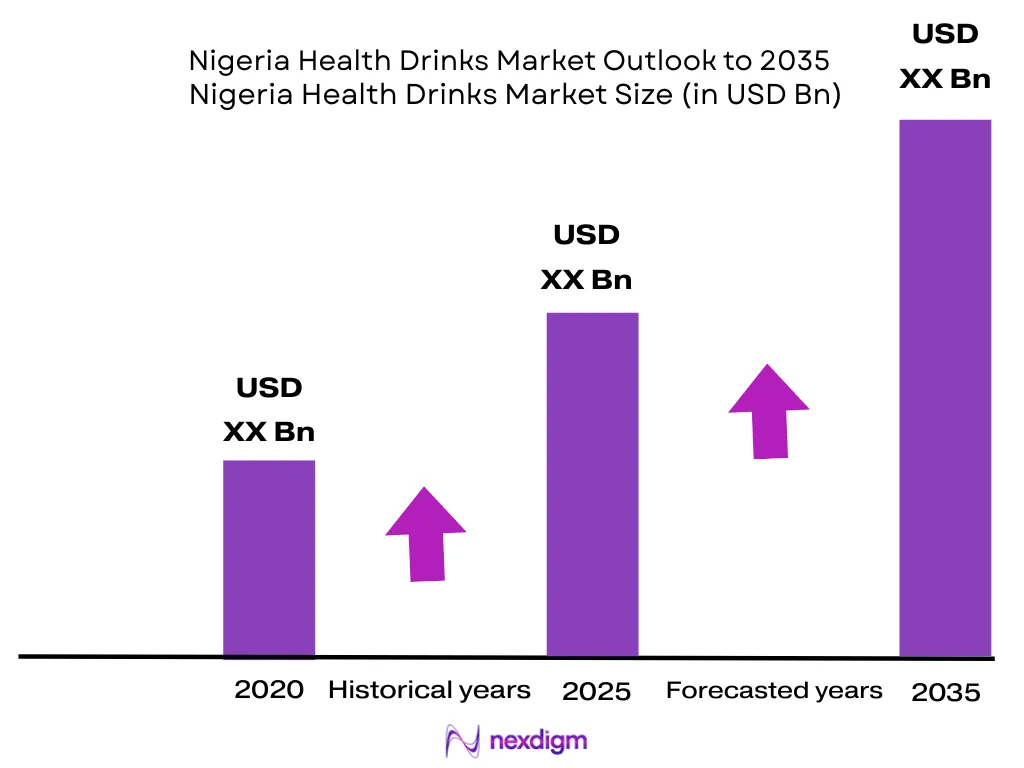
The Nigeria Health Drinks Market is valued at USD ~ billion, based on bottom-up triangulation of energy drinks, malt-based drinks, fortified juices, dairy-based wellness drinks, glucose drinks and functional water. Energy drinks provide a key anchor, with Nigeria’s energy drinks market reported at USD 255.50 million and forecasted at 6.20% CAGR. Demand is supported by Nigeria’s population of 233 million and GDP of USD 252.26 billion. Lagos, Abuja, Kano, Ibadan, Port Harcourt, Onitsha and Aba dominate the Nigeria Health Drinks Market because they concentrate open markets, ports, modern retail, kiosks, universities, transport hubs, gyms and distributor networks. Lagos leads because it is Nigeria’s commercial hub and the primary entry point for imported beverage inputs, while Abuja drives premium and institutional consumption. Nigeria’s GDP per capita is USD 1,084.2, making affordability and small-pack formats central to demand.
Market Segmentation
Product Type
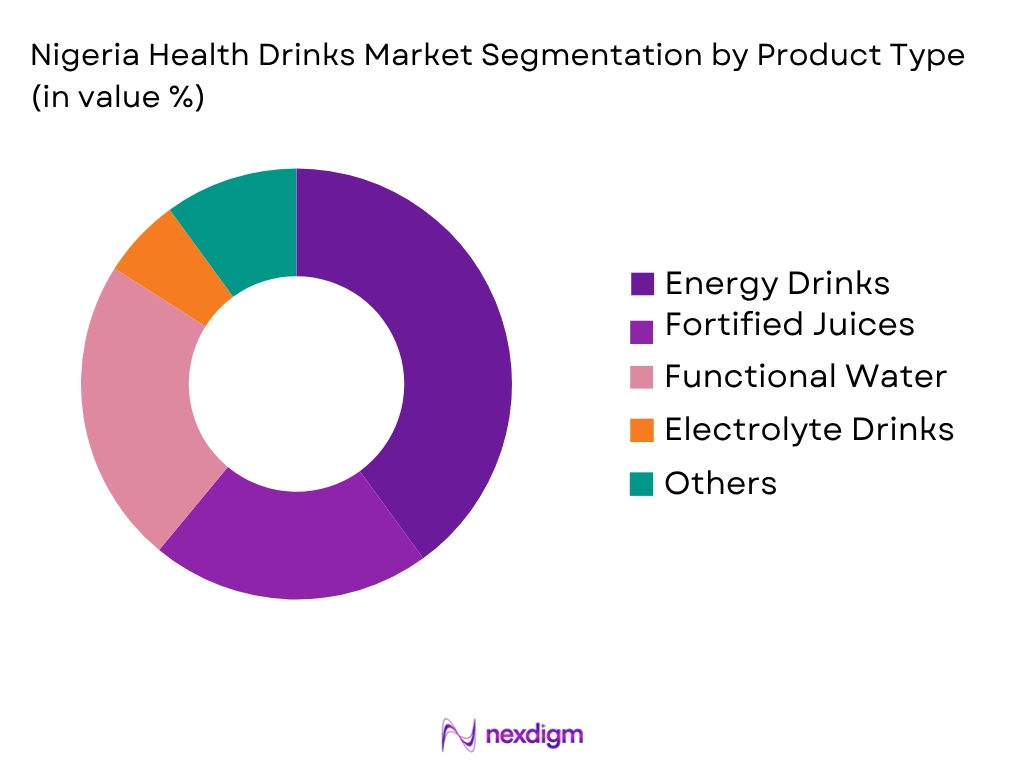
The Nigeria Health Drinks Market is segmented by product type into malt-based health drinks, energy drinks, fortified juices, dairy-based health drinks, glucose and electrolyte drinks, functional water, protein RTD drinks, and herbal or botanical drinks. Malt-based health drinks hold the dominant market share because malt beverages are embedded in Nigerian food culture and are consumed during meals, social gatherings, household occasions, campus consumption and family celebrations. Brands such as Maltina, Malta Guinness, Amstel Malta and other malt-based beverages have built strong recall across modern trade, kiosks, open markets, event channels and roadside coolers. The category benefits from non-alcoholic positioning, vitamin-fortification cues, family acceptance, glass-bottle familiarity and wide availability across Lagos, Abuja, Kano, Onitsha and Port Harcourt. Energy drinks are growing quickly, but malt drinks remain broader in household reach and consumption occasions.
By Distribution Channel
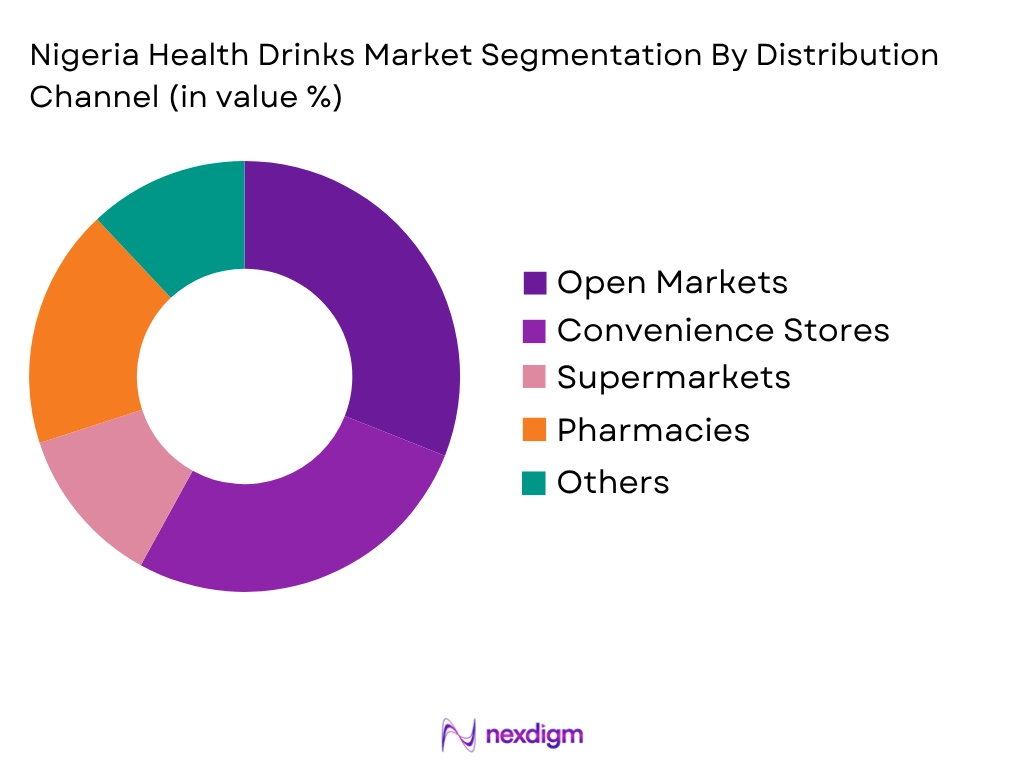
The Nigeria Health Drinks Market is segmented by distribution channel into open markets and wholesale hubs, traditional retail and kiosks, supermarkets and hypermarkets, convenience stores and petrol stations, pharmacies and health stores, gyms and sports clubs, e-commerce, and HoReCa. Open markets and wholesale hubs dominate because Nigeria’s beverage trade is highly distributor-led, with products moving from manufacturers and importers into Lagos markets, Onitsha, Kano, Aba, Ibadan and regional redistribution clusters. The channel supports both national and informal retail penetration, especially for malt drinks, PET energy drinks, glucose sachets, fortified juices and dairy drinks. Kiosks and roadside coolers depend on wholesale replenishment, while small traders prefer fast-moving SKUs with recognizable brands and affordable packs. Modern supermarkets are relevant for premium and imported products, but open-market trade remains central to volume distribution.
Competitive Landscape
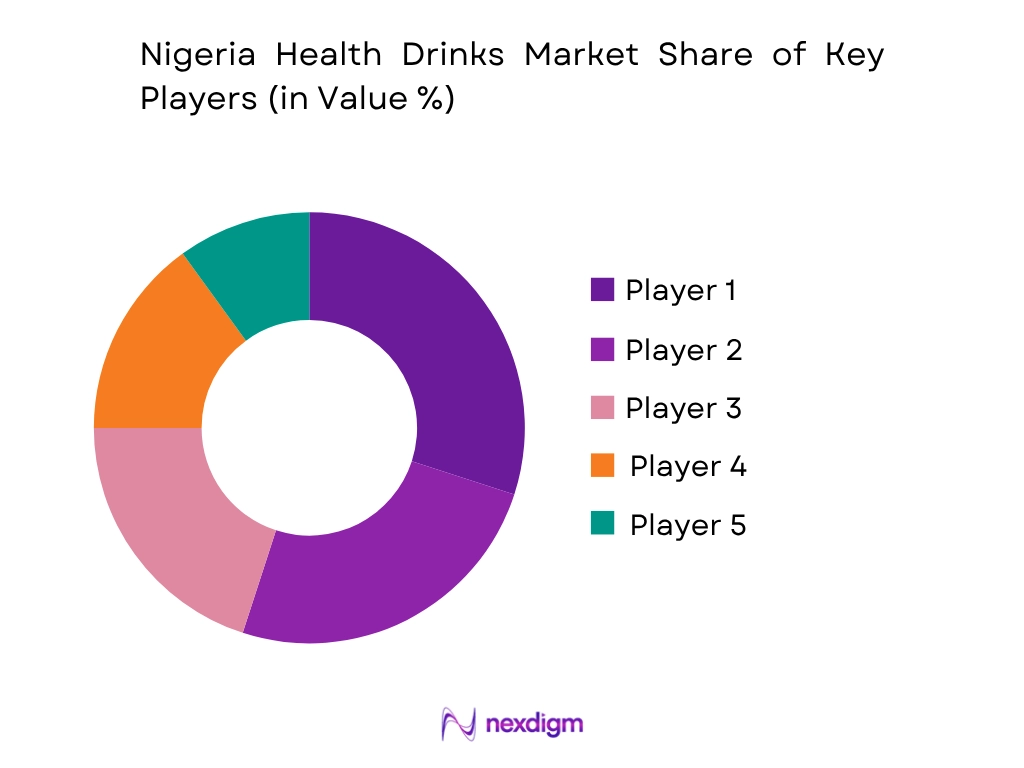
The Nigeria Health Drinks Market is led by malt beverage companies, dairy and juice manufacturers, energy drink bottlers, nutrition brands and multinational beverage companies. Nigerian Breweries, Guinness Nigeria, Nestlé Nigeria, Coca-Cola HBC Nigeria and Chi Limited have strong influence because they cover high-consumption categories such as malt drinks, fortified beverages, dairy drinks, glucose energy beverages, juices and functional refreshment. Competition is shaped by affordability, small-pack formats, open-market distribution, cold-chain availability, NAFDAC compliance, brand trust and regional wholesale penetration.
| Company | Establishment Year | Headquarters | Key Health Drinks Portfolio | Functional Positioning | Core Channel Strength | Pack Format Strength | Regulatory Strength | Nigeria Competitive Advantage |
| Nigerian Breweries | 1946 | Lagos, Nigeria | ~ | ~ | ~ | ~ | ~ | ~ |
| Guinness Nigeria | 1950 | Lagos, Nigeria | ~ | ~ | ~ | ~ | ~ | ~ |
| Nestlé Nigeria | 1961 | Lagos, Nigeria | ~ | ~ | ~ | ~ | ~ | ~ |
| Coca-Cola HBC Nigeria | 1951 | Lagos, Nigeria | ~ | ~ | ~ | ~ | ~ | ~ |
| Chi Limited | 1980 | Lagos, Nigeria | ~ | ~ | ~ | ~ | ~ | ~ |
Nigeria Health Drinks Market Analysis
Growth Drivers
Large consumer base supports mass-market demand for affordable fortified, malt, energy and hydration drinks
Nigeria Health Drinks Market is supported by one of the largest consumer bases in emerging markets, creating scale for malt-based drinks, fortified juices, dairy-based beverages, glucose drinks, electrolyte sachets and PET energy drinks. The World Bank reports Nigeria’s population at 232,679,478 people in 2024, giving beverage manufacturers a broad base for household, school, campus, workplace, transport and kiosk-led consumption. The same World Bank country data records Nigeria’s GDP at USD 252.26 billion and GDP per capita at USD 1,084.2, which explains why affordability, small packs, returnable bottles, sachets and open-market distribution are central to health-drink penetration. For the market, these indicators support products positioned as low-unit nutrition, refreshment with fortification, everyday energy and heat-replenishment beverages. Brands that can combine functional claims with familiar formats such as malt bottles, PET energy drinks, Tetra Pak fortified juices and sachet glucose drinks are better suited to Nigeria’s income structure and mass-consumption channels.
Digital connectivity and urban retail access expand online discovery and repeat replenishment
Nigeria Health Drinks Market is gaining support from mobile-led retail discovery, online grocery, social-commerce marketing and digital ordering of multipacks, especially in Lagos, Abuja, Port Harcourt, Ibadan and other urban centers. The Nigerian Communications Commission’s year-end performance report states that total active internet subscriptions stood at 139,282,108 subscriptions in December 2024, after 163,838,439 subscriptions in December 2023, showing that the country still has a very large digitally reachable consumer base despite SIM-registration adjustments. NBS telecoms data also reported 164,368,292 active internet subscribers in Q1 2024, up from 157,551,104 in Q1 2023. This matters for health drinks because product trial is increasingly influenced by mobile visibility, influencer promotions, quick ordering and digital comparison of functional claims. Energy drinks, protein RTDs, functional water, fortified dairy drinks and imported wellness beverages can use digital channels to overcome limited shelf space in smaller stores while supporting repeat urban replenishment.
Market Challenges
High food and non-alcoholic beverage inflation pressures consumer affordability and pack-size strategy
Nigeria Health Drinks Market faces pressure from inflation in the same consumer basket where many health drinks are purchased, making affordability and pack architecture critical. NBS reported that Food and Non-Alcoholic Beverages contributed 16.94 to the year-on-year headline index movement in September 2024, while Housing, Water, Electricity, Gas and Other Fuel contributed 5.47 and Transport contributed 2.13. The December 2024 CPI report also recorded food inflation at 39.84 on a year-on-year basis and 2.66 on a month-on-month basis, indicating continuing pressure on grocery and beverage budgets. For health drinks, this creates down-trading risk from premium protein RTDs, imported functional water and canned energy drinks toward cheaper PET bottles, malt returnable bottles, sachet glucose drinks and smaller dairy packs. Manufacturers must manage pack-size ladders carefully, because consumers prioritize affordability, availability and familiar brands when grocery spending is stretched by food, transport and household utility pressures.
Import dependence and foreign-trade exposure affect functional ingredients, packaging and product availability
Nigeria Health Drinks Market faces supply-chain risk because many functional beverage inputs depend on imports, including vitamins, whey protein, milk powder, fruit concentrates, flavors, caffeine, taurine, sweeteners, aluminum cans, specialty caps and processing materials. NBS foreign trade data shows total merchandise trade at ₦36,604.83 billion in Q4 2024, with imports at ₦16,590.51 billion during the same quarter. NBS also reported Q3 2024 imports at ₦14,674.05 billion, showing that imported goods remain a major part of Nigeria’s supply system. For beverage companies, this affects production planning, raw-material availability, port clearance, warehousing and distributor execution. Functional beverage launches are more exposed than basic soft drinks because they require compliant ingredients, stable shelf life, validated nutrition claims and specific packaging formats. Any disruption in imported inputs can delay fortified dairy drinks, protein beverages, glucose powders, energy drinks and functional juices before they reach open markets, supermarkets, pharmacies and kiosks.
Market Opportunities
Local manufacturing and open-market distribution can scale affordable functional nutrition
Nigeria Health Drinks Market has a strong opportunity in locally manufactured, affordability-led functional drinks that can move through open markets, wholesalers, kiosks, roadside coolers and traditional retail. World Bank data records Nigeria’s population at 232,679,478 people, while GDP per capita is USD 1,084.2, showing why mass-market success depends on high-reach, low-unit-pack products rather than narrow premium positioning. NBS foreign trade data shows Q4 2024 imports of ₦16,590.51 billion, reinforcing the commercial need for more local processing, local bottling, local dairy sourcing, local botanical ingredients and domestic pack-format development. Health-drink brands can use this environment to develop fortified malt drinks, glucose sachets, electrolyte powders, dairy-based wellness drinks, zobo and ginger-based beverages, and affordable PET energy drinks. The strongest opportunity is not only premium wellness; it is translating functional claims into formats that wholesalers and kiosk operators can replenish quickly and that consumers can buy frequently.
Regulatory formalization creates opportunity for compliant brands to win trust in fortified and wellness beverages
Nigeria Health Drinks Market has an opportunity for compliant, quality-led brands because NAFDAC formalization can differentiate registered products from unverified drinks in open markets and informal channels. NAFDAC states that its guidelines cover application, facility inspection, documentation, labelling, tariff-related requirements and timelines for regulated products. The agency’s regulatory resources also list food regulations covering pre-packaged food labelling and other product-category requirements, making claim discipline important for fortified juices, dairy beverages, glucose drinks, protein drinks and herbal health beverages. This opportunity is supported by the scale of Nigeria’s consumer economy: the World Bank reports GDP at USD 252.26 billion and population at 232,679,478 people, giving compliant brands a large base in which quality assurance can become a competitive advantage. Brands that invest in NAFDAC registration, clear expiry dates, nutrition panels, batch coding, manufacturing traceability and credible fortification claims can build trust with pharmacies, supermarkets, schools, institutional buyers and urban health-conscious consumers.
Future Outlook
The Nigeria Health Drinks Market is forecasted to grow at a CAGR of around 6.8% during 2026-2035, supported by energy drinks, fortified malt beverages, dairy-based wellness drinks, glucose hydration, functional juices and emerging reduced-sugar products. Growth will remain highly dependent on affordability, pack-size innovation, open-market distribution, and local manufacturing capability. Over the next phase, Nigeria’s health drinks market will be divided between mass-market nutrition and premium urban wellness. Mass-market growth will be led by malt drinks, fortified juices, glucose sachets, dairy-based drinks and PET energy drinks. Premium urban growth will come from protein RTDs, functional water, low-sugar energy drinks, imported wellness beverages and pharmacy-led hydration products.
Affordability will remain the central commercial variable. Consumers will continue to favor sachets, small PET bottles, returnable glass bottles, pouches and low-unit-price packs. This makes Nigeria different from premium-heavy markets where functional beverage growth is led by high-margin wellness drinks. In Nigeria, the winning model is likely to combine functional claims with familiar flavors, small pack economics and strong availability in open markets, kiosks, motor parks, schools and roadside coolers. Regulatory compliance will also shape the future landscape. NAFDAC registration, product labeling, nutrition claims, batch coding, expiry disclosure and import documentation will remain important for both local and imported health drinks. Brands competing in children’s nutrition, fortified beverages, dairy-based products and glucose drinks will need stricter claim substantiation and quality assurance.
Major Players
- Nigerian Breweries
- Guinness Nigeria
- Nestlé Nigeria
- Coca-Cola HBC Nigeria
- Seven-Up Bottling Company
- Rite Foods
- Chi Limited
- FrieslandCampina WAMCO Nigeria
- Promasidor Nigeria
- Fan Milk Nigeria
- Viju Industries Nigeria
- Suntory Beverage & Food Nigeria
- Red Bull Nigeria
- Monster Energy Nigeria
- CWAY Nigeria
Key Target Audience
- Health drink manufacturers and brand owners
- Beverage importers and distributors
- Open-market wholesalers and FMCG redistribution companies
- Supermarket, hypermarket and convenience retail chains
- Kiosk, roadside cooler and traditional trade operators
- Pharmacies, gyms, wellness stores and sports clubs
- Investments and venture capitalist firms
- Government and regulatory bodies (NAFDAC, Standards Organisation of Nigeria, Federal Competition and Consumer Protection Commission, Federal Ministry of Health and Social Welfare, Nigeria Customs Service)
Research Methodology
Step 1: Identification of Key Variables
The initial phase involves constructing an ecosystem map of the Nigeria Health Drinks Market, covering manufacturers, importers, distributors, wholesalers, retailers, kiosk operators, pharmacies, gyms, foodservice buyers and regulators. Key variables include product type, pack size, price-point architecture, channel type, health claim, cooling availability, regional penetration and NAFDAC compliance.
Step 2: Market Analysis and Construction
In this phase, historical data is compiled across malt drinks, energy drinks, fortified juices, dairy-based health drinks, glucose drinks, functional water and protein RTDs. Top-to-bottom analysis uses beverage category indicators and macroeconomic data, while bottom-to-top validation uses SKU mapping, retail checks, open-market interviews and distributor-level product movement analysis.
Step 3: Hypothesis Validation and Expert Consultation
Market hypotheses are validated through computer-assisted telephone interviews with manufacturers, beverage distributors, wholesale traders, supermarket category managers, pharmacy buyers, gym retailers and kiosk operators. These consultations help assess sell-through patterns, pack preferences, affordability pressure, regional channel performance, cooling constraints and functional-claim acceptance.
Step 4: Research Synthesis and Final Output
The final phase integrates secondary research, primary interviews, SKU benchmarking, regulatory review and channel triangulation. Direct engagement with beverage manufacturers and distributors helps validate product segmentation, competitive positioning and route-to-market assumptions. The final output provides market size, segmentation, competitive landscape, future outlook and strategic recommendations for the Nigeria Health Drinks Market.

- Executive Summary
- Research Methodology (Market Definitions and Assumptions, Health Drinks Inclusion and Exclusion Criteria, Abbreviations, Top-to-Bottom Market Sizing, Bottom-to-Top SKU Build-Up, Retail Audit Across Modern Trade and Open Markets, Kiosk and Roadside Cooler Checks, Distributor and Wholesale Interviews, Pharmacy and Gym Channel Validation, Online Grocery Tracking, NAFDAC Regulatory Review, Primary Research Approach, Limitations and Future Conclusions)

- Definition and Scope
- Overview Genesis
- Health Drinks Category Boundary
- Timeline of Major Players
- Business Cycle

- Growth Drivers (Young Population, Urbanization, Open-Market Penetration, Malt Drink Culture, Energy Drink Adoption, Hot Climate Hydration, Fitness Awareness, Fortified Dairy Demand)
- Market Challenges (Inflation Pressure, FX Volatility, Import Dependency, Cold Chain Gaps, Counterfeit Risk, NAFDAC Registration, Low Purchasing Power)
- Opportunities (Affordable Sachet Nutrition, Local Botanical Drinks, Reduced Sugar Energy, Glucose Hydration, Protein RTD, Fortified Dairy, Online Urban Replenishment)
- Market Trends (PET Energy Drinks, Malt Fortification, Sachet Glucose, Drinking Yoghurt, Local Herbal Claims, Online Grocery, Value Packs, Reduced Sugar Reformulation)
- SWOT Analysis
PESTLE Analysis - Porter’s Five Forces Analysis

- By Value (2020-2025)
- By Volume (2020-2025)
- By Average Selling Price (2020-2025)

- By Product Type (In Value %)
Malt-Based Health Drinks
Energy Drinks
Fortified Juices and Nectar-Based Drinks
Dairy-Based Health Drinks - By Packaging Format (In Value %)
PET Bottles
Cans
Glass Bottles
Tetra Packs and Cartons
Sachets and Powder Sticks - By Distribution Channel (In Value %)
Open Markets and Wholesale Hubs
Traditional Retail and Kiosks
Supermarkets and Hypermarkets
Convenience Stores and Petrol Stations
Pharmacies and Health Stores - By Region (In Value %)
Lagos
Abuja FCT
Kano and Northern Commercial Belt
Rivers and South-South Corridor
Oyo and South-West Corridor

- Market Share of Major Players on the Basis of Value and Volume
- Cross Comparison Parameters (Functional Product Portfolio Breadth, Small-Pack and Sachet Strength, Open-Market Distribution Reach, NAFDAC Registration Strength, Local Manufacturing and Co-Packing Capability, Cold Chain Capability, Affordability-Led Price-Pack Architecture, Imported Ingredient Exposure)
- SWOT Analysis of Major Players
- Pricing Analysis Basis SKUs for Major Players
- Detailed Profiles of Major Companies
Nigerian Breweries
Guinness Nigeria
Nestlé Nigeria
Coca-Cola HBC Nigeria
Seven-Up Bottling Company
Rite Foods
Chi Limited
FrieslandCampina WAMCO Nigeria
Promasidor Nigeria
Fan Milk Nigeria
Viju Industries Nigeria
Suntory Beverage & Food Nigeria
Red Bull Nigeria
Monster Energy Nigeria
CWAY Nigeria

- Students and Young Adults
- Working Professionals and Commuters
- Transport Workers and Drivers
- Families and Household Buyers
- Children and Teenagers

- By Value (2025-2035)
- By Volume (2025-2035)
- By Average Selling Price (2025-2035)


 Request a Sample
 Ask for Customization
 Get a Quote
 Enquire Now