

 Download PDF
Market Overview
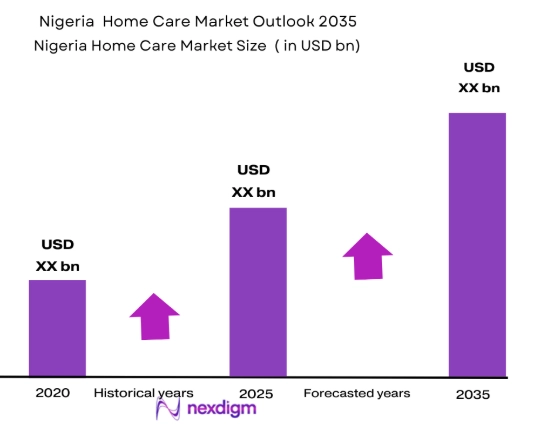
The Nigeria home care market is valued at approximately USD ~ billion in 2023, with strong growth projected in the coming years. The demand for home care products has been significantly driven by the rising urban population and the increasing disposable income of households. Urbanization in Nigeria, which is growing at a rate of 4.3% per year, is pushing the adoption of modern home care solutions in urban households. Furthermore, the growing awareness of hygiene, especially in the wake of the COVID-19 pandemic, has led to a boost in consumer demand for cleaning products, air fresheners, and sanitization solutions. This trend is further supported by consumer shifts toward premium and environmentally friendly home care products.
Lagos, Abuja, and Port Harcourt are the leading cities in Nigeria driving the home care market. Lagos, as the largest city in Africa, is the primary center for demand due to its large population, economic activity, and high level of industrialization. Abuja, the capital city, follows closely due to its growing affluence and rapid urbanization. Port Harcourt, a hub for the oil and gas industry, has seen an increase in disposable income and consumer demand. These cities dominate the market because they host a large consumer base with significant purchasing power and access to retail channels, both physical and digital.
Market Segmentation
By Product Type
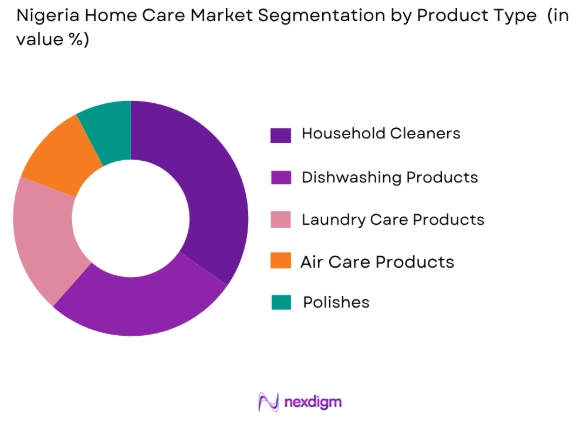
The Nigeria home care market is segmented by product type into household cleaners, dishwashing products, laundry care products, air care products, polishes, and toilet care products. Household cleaners hold a dominant share within this segment, primarily driven by the growing consumer awareness of hygiene and cleanliness. Household cleaners are considered essential, and the demand for multipurpose cleaners has surged as they offer convenience and effectiveness in a single product. The availability of branded products like Domestos, Omo, and Harpic in the Nigerian market has established their strong presence, further driving the dominance of this sub-segment.
By Distribution Channel
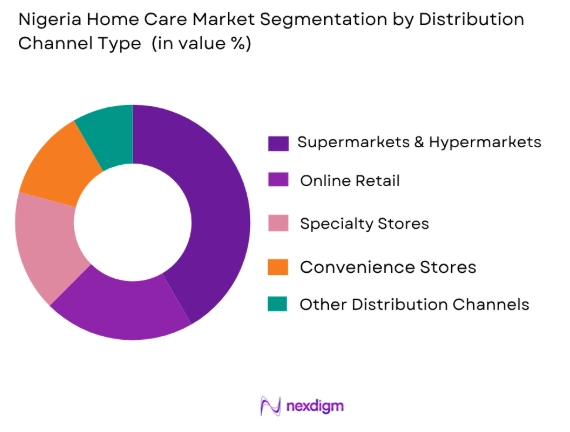
The market is also segmented by distribution channel into supermarkets & hypermarkets, online retail, specialty stores, and convenience stores. Supermarkets and hypermarkets dominate the distribution of home care products due to their widespread presence across Nigerian cities and their ability to cater to the mass market. These retail channels are essential for reaching middle- and upper-income consumers who seek a wide range of products at competitive prices. However, the rise of e-commerce is gradually altering the market dynamics, with more consumers turning to online platforms for convenience and accessibility to home care products.
Competitive Landscape
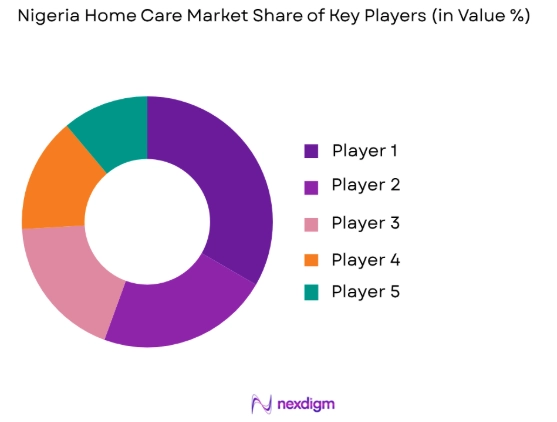
The Nigeria home care market is dominated by a mix of local and international players, including Unilever, Procter & Gamble, Reckitt Benckiser, and Amka Products. These major companies have established strong brand recognition and consumer loyalty due to their diverse product offerings and extensive distribution networks. Unilever’s brands like Omo and Sunlight have been staples in Nigerian households for decades, while newer entrants, such as Amka Products, are gaining traction with more affordable alternatives and localized marketing strategies.
| Company | Establishment Year | Headquarters | Product Innovation | Pricing Strategy | Market Reach | Sustainability Focus | Technology Integration | Brand Recognition | Regulatory Compliance |
| Unilever | 1929 | London, UK | ~ | ~ | ~ | ~ | ~ | ~ | ~ |
| Procter & Gamble | 1837 | Cincinnati, USA | ~ | ~ | ~ | ~ | ~ | ~ | ~ |
| Reckitt Benckiser | 1823 | Slough, UK | ~ | ~ | ~ | ~ | ~ | ~ | ~ |
| Amka Products | 1986 | Lagos, Nigeria | ~ | ~ | ~ | ~ | ~ | ~ | ~ |
| Henkel | 1876 | Düsseldorf, Germany | ~ | ~ | ~ | ~ | ~ | ~ | ~ |
Nigeria Home Care Market Analysis
Growth Drivers
Urbanization and Changing Lifestyles
Nigeria’s urbanization rate continues to rise, with over 50% of the population living in urban areas as of 2023. The rapid urbanization in cities like Lagos, Abuja, and Port Harcourt has led to significant shifts in consumer lifestyles. With growing numbers of dual-income households, urban Nigerians are adopting modern home care solutions for convenience and cleanliness. In addition, as cities expand, there is greater exposure to global trends, including an increasing preference for premium home care products. Urban consumers are also more likely to engage in online shopping, further fueling the demand for home care products.
Rising Demand for Hygiene and Sanitation Products
The growing awareness of hygiene, especially post-COVID-19, has increased consumer demand for home care products in Nigeria. The country’s public health campaigns and government initiatives to combat sanitation issues have contributed to a heightened awareness of cleanliness. For example, in 2023, the Nigerian government allocated over NGN 500 billion to improving public health and sanitation across the country, which has also influenced consumer spending on hygiene-related products like cleaning agents and sanitizers. These government initiatives combined with consumer trends indicate a continuous increase in demand for home care products.
Market Challenges
High Competition in Pricing
Nigeria’s home care market is highly competitive, with numerous local and international brands vying for market share. Major global companies like Unilever and Procter & Gamble dominate the market, but local players such as Amka Products have been expanding their footprint by offering affordable products. The presence of multiple brands forces companies to lower their prices to remain competitive, especially in lower-income urban areas. With inflation rates hovering around 15% in 2023, maintaining competitive pricing while balancing profitability becomes a significant challenge for home care manufacturers.
Distribution Network Limitations
Despite Nigeria’s growing consumer market, the country faces significant challenges with distribution networks. In 2023, only about 45% of Nigerian households had direct access to reliable retail channels in rural areas. The lack of efficient logistics infrastructure, including poor road networks and unreliable electricity, complicates the distribution of home care products to rural markets. These logistical challenges prevent home care companies from fully capitalizing on the growing demand in emerging cities and rural regions, affecting overall market reach.
Market Opportunities
Adoption of Eco-Friendly Products
Nigeria’s growing middle class is increasingly leaning toward eco-friendly and sustainable products, which has opened new opportunities for home care companies. In 2023, the Nigerian government introduced a national policy focused on promoting sustainability in consumer goods. The policy encourages the use of biodegradable materials and eco-friendly packaging in products, including home care items. As consumers become more environmentally conscious, particularly in urban centers, the demand for eco-friendly home care products is expected to increase. The growing emphasis on green products presents a unique opportunity for market players.
E-Commerce and Online Shopping Growth
The growth of e-commerce in Nigeria is creating new opportunities for the home care market. Nigeria’s e-commerce sector was valued at USD 5.7 billion in 2022 and continues to expand rapidly. With increasing internet penetration, particularly among younger consumers, more Nigerians are turning to online shopping platforms to purchase home care products. In 2023, approximately 40% of urban consumers reported shopping online for home goods, a trend that is expected to continue. This shift toward digital purchasing channels is transforming the retail landscape, offering opportunities for growth in the online home care market.
Future Outlook
Over the next five years, the Nigeria home care market is expected to witness significant growth driven by increasing urbanization, rising disposable incomes, and heightened awareness of hygiene. The adoption of eco-friendly and sustainable products will be a key growth driver as consumers become more conscious of environmental impact. Moreover, the growth of e-commerce will continue to reshape the retail landscape, providing new opportunities for home care brands to reach consumers directly. The growing middle class, particularly in urban areas, will continue to fuel demand for home care solutions that cater to convenience, cleanliness, and safety.
Major Players
- Unilever Nigeria
- Procter & Gamble Nigeria
- Reckitt Benckiser Nigeria
- Amka Products
- Henkel Nigeria
- Colgate-Palmolive Nigeria
- The Clorox Company
- Kimberly-Clark Nigeria
- Ecolab
- S.C. Johnson Professional
- Lion Corporation
- Kao Corporation
- Godrej Consumer Products
- SC Johnson
- PZ Cussons
Key Target Audience
- Investments and Venture Capitalist Firms
- Government and Regulatory Bodies
- Retailers and Distributors in Home Care Products
- E-Commerce Platforms
- Household Product Manufacturers
- Sustainable Product Manufacturers
- Environmental Agencies
- Consumer Goods Associations
Research Methodology
Step 1: Identification of Key Variables
This initial phase involves identifying the major factors that influence the Nigerian home care market, such as demographic shifts, economic factors, and consumer behavior trends. Secondary research will be conducted using government reports, industry publications, and market data to gather a comprehensive understanding of these variables.
Step 2: Market Analysis and Construction
During this phase, we will analyze historical data to assess the market’s current state, growth patterns, and distribution across various segments. This will include evaluating market penetration and identifying factors that may influence future growth.
Step 3: Hypothesis Validation and Expert Consultation
Hypotheses will be developed based on initial market research and validated through interviews with industry experts and key stakeholders, such as manufacturers, retailers, and government representatives. These consultations will ensure that the data gathered aligns with market realities.
Step 4: Research Synthesis and Final Output
The final phase involves synthesizing the findings into a detailed report. This will include validating key insights with real-time data and refining the market model to ensure its accuracy. The final report will present actionable insights on the market’s growth trajectory, challenges, and opportunities.

- Executive Summary
- Research Methodology (Definitions, Scope, Industry Assumptions, Market Sizing Approach, Primary & Secondary Research Framework, Data Collection & Verification Protocol, Analytic Models & Forecast Methodology, Limitations & Research Validity Checks)

- Market Definition and Scope
- Value Chain & Stakeholder Ecosystem
- Regulatory / Certification Landscape
- Sector Dynamics Affecting Demand

- Growth Drivers
Increasing Disposable Income
Urbanization and Changing Lifestyles
Rising Demand for Hygiene and Sanitation Products - Market Challenges
High Competition in Pricing
Distribution Network Limitations
Consumer Price Sensitivity - Market Opportunities
Adoption of Eco-Friendly Products
E-Commerce and Online Shopping Growth - Trends
Increased Popularity of Multi-Purpose Home Care Solutions
Consumer Shift Toward Premium Products - Government Regulations and Policies
Regulatory Environment for Home Care Products in Nigeria
Product Certification & Safety Standards
Environmental Regulations Impacting the Industry - SWOT Analysis
- Porter’s Five Forces

- By Market Value, 2020-2025
- By Market Volume, 2020-2025
- By Average Product Price, 2020-2025
- By Product Category, 2020-2025

- By Product Type (In Value%)
Household Cleaners
Dishwashing Products
Laundry Care Products
Air Care Products
Polishes
Toilet Care Products - By Distribution Channel (In Value%)
Supermarkets & Hypermarkets
Online Retail
Specialty Stores
Convenience Stores
Other Distribution Channels - By Consumer Demographics (In Value%)
Urban vs Rural
Income Level
Age Group
Household Size

- Market Share Analysis
- Competitive Positioning of Key Players
- Cross Comparison Parameters(Product Innovation, Pricing Strategy, Distribution Network, Regulatory Compliance, Brand Recognition and Consumer Loyalty,
Technology Integration (Smart Products, IoT-enabled Devices),
After-Sales Support & Customer Engagement, Sustainability Practices) - SWOT Analysis of Key Competitors
- Pricing & Procurement Analysis
- Key Players
Unilever Nigeria
Procter & Gamble Nigeria
Reckitt Benckiser Nigeria
Amka Products
Henkel Nigeria
Colgate-Palmolive Nigeria
The Clorox Company
Kimberly-Clark Nigeria
Ecolab
S.C. Johnson Professional

- Increasing Demand from Households
- Adoption of Home Care Products by Small and Medium Enterprises (SMEs)
- Growth of Online Marketplaces and Digital Consumers
- Influence of Changing Consumer Behavior on Product Preferences

- By Market Value, 2026-2035
- By Market Volume, 2026-2035
- By Average Product Price, 2026-2035
- By Product Category, 2026-2035


 Request a Sample
 Ask for Customization
 Get a Quote
 Enquire Now