

 Download PDF
Market Overview
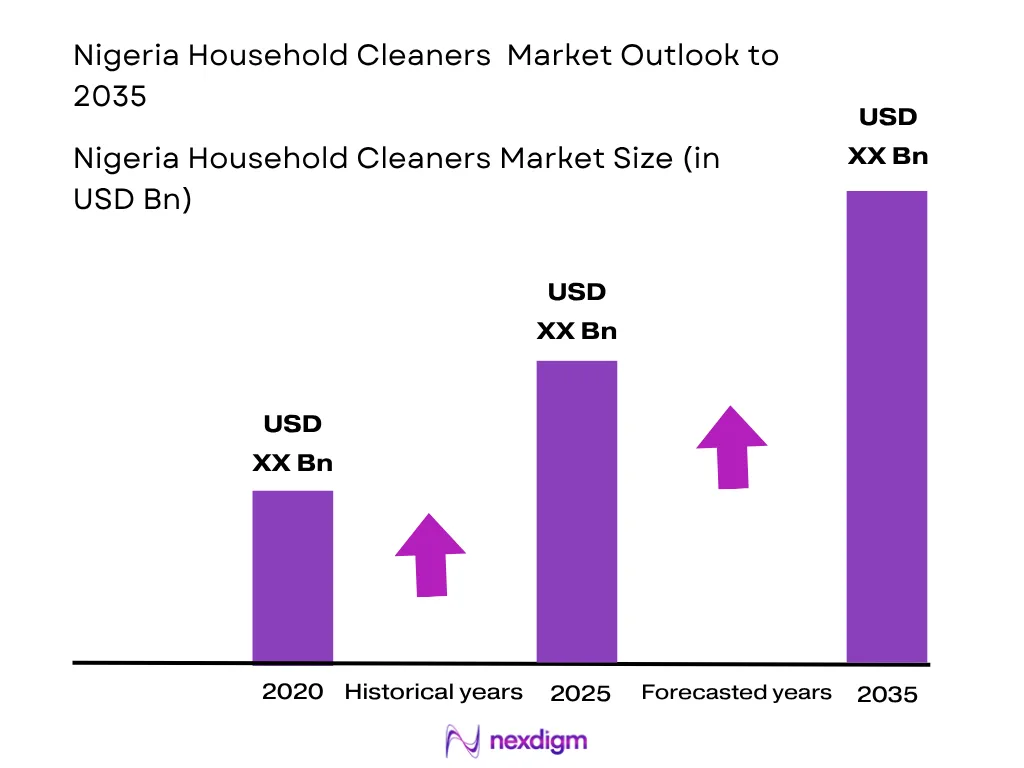
The Nigeria Household Cleaners Market is valued at approximately USD ~ billion in 2025. The market’s growth is largely driven by a rapidly increasing urban population, rising awareness regarding cleanliness, and a growing middle class with higher disposable income. Additionally, increasing health and hygiene consciousness post-pandemic, along with rising product innovations, has propelled market demand. This is further augmented by the expansion of modern retail networks, including supermarkets and e-commerce platforms. Data from industry reports and market surveys by sources such as Euromonitor and Statista substantiate this growth trajectory, placing the Nigerian household cleaner market in a favorable position for further expansion.
Lagos, Abuja, and Port Harcourt dominate the Nigeria Household Cleaners Market due to their high population density, robust infrastructure, and strong consumer purchasing power. Lagos, being the economic hub, drives significant demand for household products across both premium and budget segments. Abuja, the capital city, sees a surge in demand from both urban professionals and the growing expat community, while Port Harcourt’s industrial nature contributes to the steady consumption of household cleaners. The dominance of these cities can also be attributed to their extensive retail networks and the increasing use of online shopping platforms, which have made it easier for consumers to access various cleaning products.
Market Segmentation
By Product Type
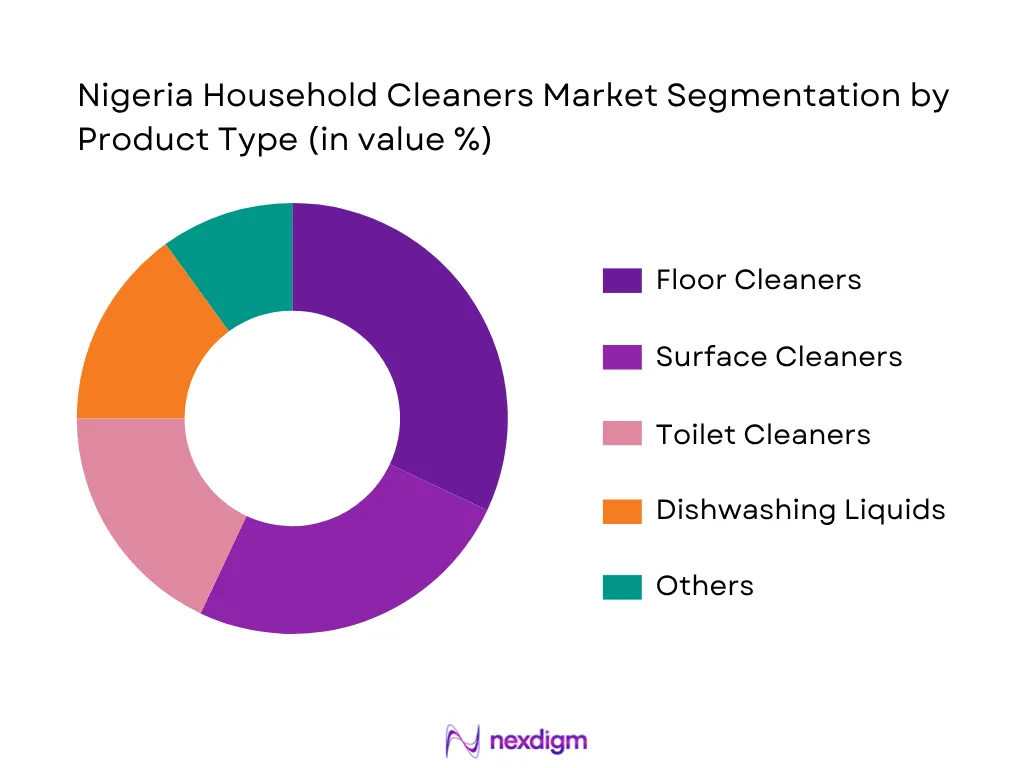
The Nigeria Household Cleaners Market is primarily segmented by product type into floor cleaners, surface cleaners, toilet cleaners, dishwashing liquids, laundry additives, and specialty cleaners. Floor cleaners and surface cleaners dominate the market due to their universal usage and essential roles in daily household chores. Consumers increasingly favor multipurpose surface cleaners, driven by their convenience and cost-effectiveness, as they are suitable for a wide range of surfaces like countertops, glass, and kitchen appliances. The growing trend of time-saving, multi-functional cleaning products further bolsters the demand for these sub-segments. Brands such as Unilever and P&G lead this category with their strong product portfolio and extensive distribution networks.
By Distribution Channel
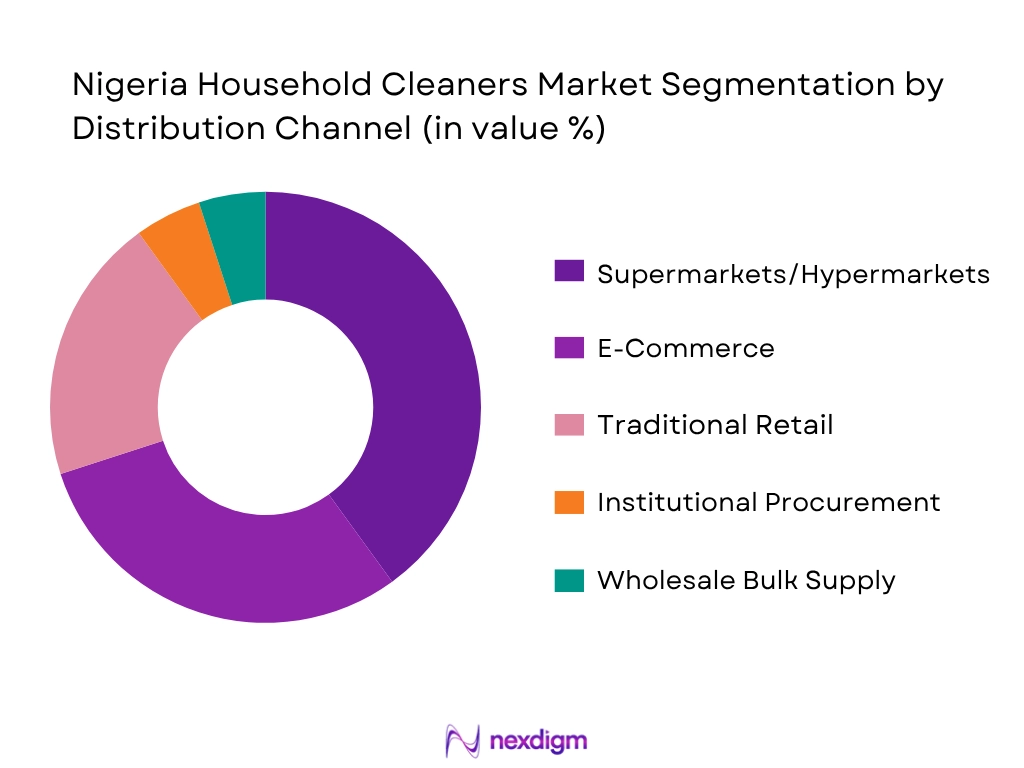
The market is also segmented by distribution channel, including supermarkets, hypermarkets, e-commerce platforms, traditional retail stores, and institutional procurement. Supermarkets and hypermarkets hold a significant share, primarily because they provide easy access to multiple cleaning products under one roof, offering both convenience and variety. Moreover, e-commerce platforms have seen a rapid increase in market penetration due to the rising trend of online shopping, especially in major urban areas. This channel’s growth is driven by the increasing comfort of digital payments and home delivery options, making it an attractive choice for consumers seeking convenience.
Competitive Landscape
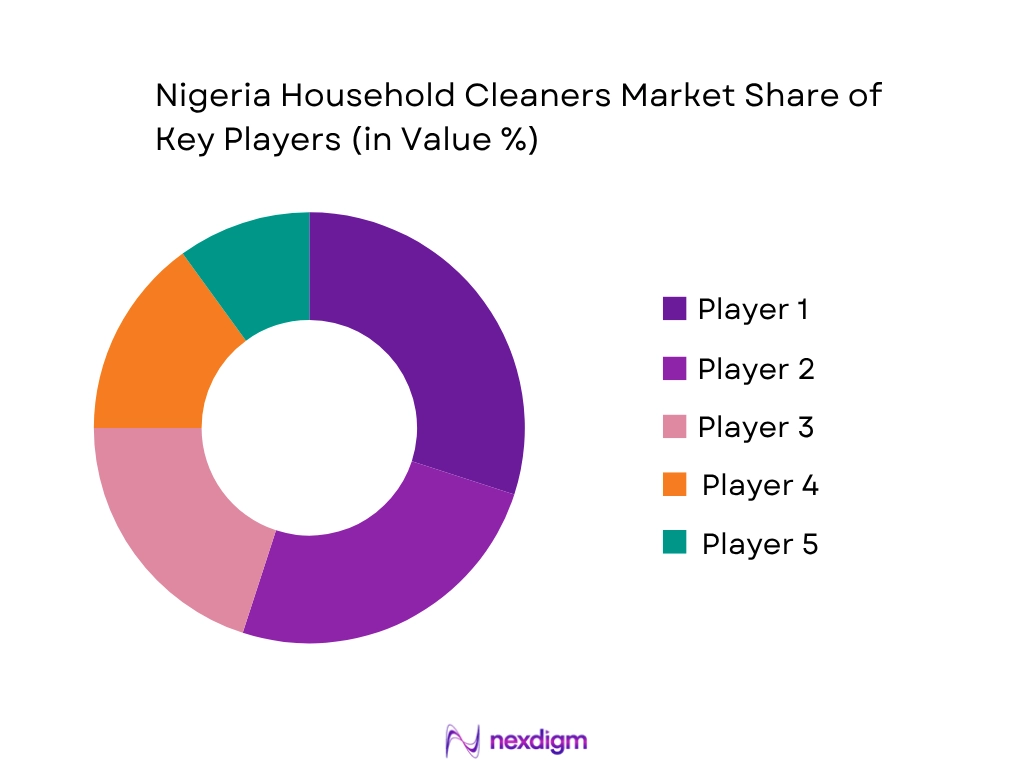
The Nigeria Household Cleaners Market is highly competitive, with both local and international players vying for market share. Key companies include global giants such as Unilever, P&G, and Henkel, as well as significant local manufacturers like Jostar Limited and Nichemtex Industries. These companies focus on product innovation, customer loyalty, and a strong presence across distribution channels to maintain their competitive edge. Additionally, competition is increasing with the entry of e-commerce-driven brands that focus on direct-to-consumer sales and offering niche, eco-friendly cleaning products.
| Company Name | Year Established | Headquarters | Market Focus | Brand Portfolio | Distribution Reach | Sustainability Initiatives |
| Unilever Nigeria | 1923 | Lagos, Nigeria | ~ | ~ | ~ | ~ |
| P&G Nigeria | 1992 | Lagos, Nigeria | ~ | ~ | ~ | ~ |
| Henkel Nigeria | 1982 | Lagos, Nigeria | ~ | ~ | ~ | ~ |
| Jostar Limited | 1995 | Lagos, Nigeria | ~ | ~ | ~ | ~ |
| Nichemtex Industries | 1993 | Lagos, Nigeria | ~ | ~ | ~ | ~ |
Nigeria Household Cleaners Market Analysis
Growth Drivers
Rising Urbanization
Urbanization in Nigeria is a critical factor driving the growth of the Household Cleaners Market. As of 2024, Nigeria’s urban population is expected to reach 108 million, with urbanization rates steadily increasing. According to the World Bank, Nigeria’s urban population growth rate is approximately 4.3% annually, much higher than the global average. This rapid shift towards urban areas fuels higher demand for household cleaning products, as urban populations tend to have more disposable income and are more aware of the importance of hygiene and cleanliness. The urbanization trend is supported by better infrastructure, access to modern retail stores, and the expansion of e-commerce platforms that cater to urban consumers. Furthermore, the urban workforce’s growing size and the increasing middle class, who are now able to afford branded household cleaners, further support the sector’s expansion. In Lagos alone, over 23 million people reside in the city, contributing significantly to the demand for household cleaners. As more Nigerians move to urban centers, the market for household cleaning products is projected to benefit from the need for efficiency and time-saving cleaning solutions.
Increasing Disposable Income
Nigeria’s growing disposable income is another driving force behind the market for household cleaning products. The World Bank reports that Nigeria’s GDP per capita in 2024 is expected to rise by 6% to reach approximately USD 2,700. This increase in disposable income is expected to lead to a higher purchasing power, allowing Nigerian households to invest in quality cleaning products. The rise in disposable income is particularly noticeable in urban areas where the middle class is expanding rapidly. As disposable income increases, consumers are more likely to purchase branded and premium household cleaning products rather than cheaper, unbranded alternatives. In fact, data from the National Bureau of Statistics highlights that consumer spending in Nigeria is expected to grow by 5.3% over the next few years, reflecting a greater capacity for discretionary spending. This trend toward higher spending on non-essential goods, including household cleaners, supports the continued growth of the market. Furthermore, with Nigeria’s GDP expected to grow by 3.2% in 2024, this trend of increased consumer spending is set to continue, making cleaning products more accessible to a broader demographic.
Market Challenges
Price Sensitivity
Price sensitivity remains one of the primary challenges facing the Nigerian Household Cleaners Market. Nigeria’s inflation rate for 2024 is forecasted to remain at around 20%, as reported by the Central Bank of Nigeria. This high inflation significantly impacts consumer purchasing power, especially in lower-income households. Price sensitivity has become more pronounced in a market where many consumers prioritize essential goods over non-essentials, including household cleaning products. This forces manufacturers to balance product quality and pricing strategies to attract cost-conscious consumers. While premium products have seen growth in more affluent areas, the vast majority of Nigerian households, particularly in rural regions, continue to seek more affordable alternatives. This price-driven demand leads to a fragmented market with a significant portion of consumers opting for smaller packaging or unbranded, cheaper products. As inflationary pressures continue, brands will need to reconsider their pricing strategies to remain competitive in the marketplace.
Import Dependency for Raw Materials
The Nigerian Household Cleaners Market faces significant challenges related to the import dependency for raw materials. The Nigerian economy relies heavily on imports for a wide range of raw materials, including the chemical compounds used in cleaning products. According to the Nigerian Customs Service, Nigeria imports over 80% of the raw materials used in the manufacturing of household cleaning products. This heavy reliance on imports exposes the market to exchange rate fluctuations, import duties, and supply chain disruptions. The devaluation of the Naira and global shipping issues have already had adverse effects on the cost structure of cleaning product manufacturers in Nigeria. Additionally, due to the ongoing import challenges, the prices of raw materials have become volatile, which in turn affects the pricing of finished products. These external economic factors can create barriers to the long-term profitability and sustainability of local manufacturers, forcing them to pass on the increased costs to consumers. The import dependency also delays the local availability of certain specialized ingredients used in premium cleaning products, further limiting market potential in Nigeria.
Market Opportunities
Eco-Friendly / Biodegradable Cleaners
There is an increasing demand for eco-friendly and biodegradable cleaning products in the Nigerian market, particularly in urban centers where consumers are becoming more environmentally conscious. According to a report by the Nigerian Environmental Standards Agency, about 38% of Nigerian consumers are willing to pay more for environmentally friendly products. This growing awareness is supported by the global shift towards sustainability, which is also being reflected in Nigeria. Brands that offer products with biodegradable ingredients and eco-friendly packaging are gaining traction among environmentally aware consumers. With the growing concerns about environmental pollution and waste management, Nigerian consumers are increasingly preferring products that do not harm the environment. In 2024, several local brands have already started launching eco-friendly alternatives to traditional cleaners, tapping into this trend. Additionally, the increasing availability of such products in major retail outlets, combined with growing online visibility, has facilitated their adoption. This is not only an opportunity for new entrants in the market but also for established brands to diversify their product lines to meet the rising demand for green product.
Private Label Growth by Retailers
The rise of private label products is another significant opportunity for growth in the Nigerian Household Cleaners Market. Retailers, particularly in the supermarket and hypermarket sectors, are increasingly developing their own private label brands to cater to cost-conscious consumers. In 2024, private label products are expected to account for a growing share of the household cleaners market, particularly in modern trade channels. As retailers look to expand their product portfolios, private labels offer them the ability to increase margins while offering competitively priced alternatives to branded products. The Nigerian retail landscape is becoming more organized with supermarkets and e-commerce platforms capturing larger shares of consumer spending. According to the Nigerian Bureau of Statistics, the retail sector in Nigeria has grown by 7% annually, with supermarkets accounting for a large portion of the household cleaners market share. As more Nigerian consumers shop in these retail outlets, the availability of high-quality, low-cost private label cleaning products is expected to increase. This trend is set to continue as both local and international retailers introduce new private label cleaning products to cater to evolving consumer preferences.
Future Outlook
Over the next 5 years, the Nigeria Household Cleaners Market is expected to experience robust growth, driven by increasing urbanization, consumer demand for convenience, and a shift towards sustainable and eco-friendly cleaning solutions. As consumers become more health-conscious, there is an increasing demand for products that cater to these preferences, such as natural and organic household cleaners. Moreover, innovations in packaging, such as refillable containers, are expected to gain traction. The market will continue to see strong competition among both global players and local manufacturers who will introduce new formulations and premium products to cater to evolving consumer needs.
Major Players
- Unilever Nigeria
- P&G Nigeria
- Henkel Nigeria
- Jostar Limited
- Nichemtex Industries
- Reckitt Benckiser Nigeria
- Oando Cleaning Solutions
- GSK Nigeria
- Palmolive Nigeria
- Clorox Nigeria
- Colgate-Palmolive Nigeria
- Roach Industries
- Spectrum Chemicals
- Reckitt Benckiser
- Ajao Group
Key Target Audience
- Investments and Venture Capitalist Firms
- Retailers and E-Commerce Platforms
- Cleaning Product Manufacturers
- Government and Regulatory Bodies
(National Agency for Food and Drug Administration and Control [NAFDAC], Standards Organization of Nigeria [SON]) - Distributors and Wholesalers
- Private Label Brands
- Large-Scale Commercial Enterprises
- Industrial and Institutional Procurement Agencies
Research Methodology
Step 1: Identification of Key Variables
The first phase includes identifying key drivers such as product types, consumer demographics, and distribution channels in the Nigeria Household Cleaners Market. This is achieved through a combination of secondary data analysis from market reports and government publications, alongside industry interviews to understand current trends and challenges.
Step 2: Market Analysis and Construction
In this step, we analyze the market size using both historical sales data and industry growth estimates. We evaluate key performance indicators such as penetration rates of product categories, consumer spending trends, and retail channel performance. This data is triangulated with information from retailers and suppliers.
Step 3: Hypothesis Validation and Expert Consultation
We conduct in-depth interviews with industry experts, manufacturers, and retail stakeholders to validate hypotheses about market trends, including shifts toward eco-friendly products and increased demand in certain regions. These consultations provide valuable qualitative insights to complement quantitative data.
Step 4: Research Synthesis and Final Output
In this phase, we consolidate findings from primary and secondary research, integrating them into actionable insights. The final output includes detailed analyses of market drivers, barriers, and forecasts, supported by expert insights and industry data.

- Executive Summary
- Research Methodology (Market Definitions and Scope, Terminologies and Abbreviations, Data Sources ; Primary & Secondary, Nigeria Market Sizing Approach, Value Chain Mapping Method, Demand Forecasting Methodology, Data Validation and Triangulation, Assumptions and Limitations)

- Definition and Market Boundaries
- Historical Development and Industry Genesis
- Nigeria Household Cleaners Demand Dynamics
- Product Categories and Functional Roles
- Household Cleaners Value Chain and Supply Flow
- End‑User Demand Ecosystem and Purchase Touchpoints

- Growth Drivers (Rising Urbanization, Consumer Awareness, Increasing Disposable Income, Hygiene Standards, Expansion of Organized Retail Network, Regulatory Push on Sanitation and Public Health)
- Market Challenges (Price Sensitivity and Informal Competition, Import Dependency for Raw Materials, Infrastructure Gaps Affecting Distribution)
- Market Opportunities(Eco‑Friendly / Biodegradable Cleaners, Private Label Growth by Retailers, Regional Manufacturing Hubs)
- Market Trends(Shift to Concentrated and Refillable Formats, Digital and E‑Commerce Adoption, Branding and Loyalty Programs)
- Regulatory Environment(Standards (SON, NAFDAC), Import Tariffs and Duties, Labeling and Consumer Safety Requirements)
- SWOT Analysis of Industry
- Stakeholder Ecosystem (Suppliers, Retailers, Distributors, Government)
- Competitive Landscape Overview
- Porter’s Five Forces Analysis
- Supply Chain Mapping and Cost Drivers

- By Value (2020-2025)
- By Volume (2020-2025)
- By Market Consumption Per Household (2020-2025)
- By Average Selling Price Analysis (2020-2025)
- By Urban vs Rural Consumption Patterns(2020-2025)

- By Product Type (In Value %)
Floor Cleaners (Concentrates, Ready‑to‑Use)
Surface Cleaners (Multipurpose Sprays, Wipes)
Dishwashing Liquid
Toilet Cleaners
Laundry Additives
Specialty Cleaners (Glass, Metal, Wood Specific) - By Distribution Channel (In Value %)
Modern Trade
Traditional Trade
E‑Commerce and Direct‑to‑Consumer
Institutional Procurement
Wholesale Bulk Supply - By Pricing Tier (In Value %)
Economy / Budget Segment
Mainstream / Mid‑Tier
Premium / Specialized Segment - By Packaging Format (In Value %)
Bottles
Sachets
Refillable Pouches
Bulk Containers - By Region (In Value %)
South West Nigeria
South East Nigeria
North West Nigeria
North East Nigeria
North Central Nigeria - By Consumer Demographics (In Value %)
Income Cohorts
Urban Households
Rural Households

- Market Shares of Leading Players (Value and Volume)
- Cross‑Comparison Parameters (Brand Portfolio Depth, SKU Count, Distribution Reach, Channel Coverage, Pricing Position, Product Innovation Index, Retailer Penetration, Advertising Spend, Retail Margin Structuring, NPD Frequency, Sustainability Index, Customer Satisfaction Score, Production Capacity, Import vs Local Production Ratio)
- SWOT Analysis of Key Competitors
- Pricing Analysis (Leading SKUs)(Retail price ranges for flagship products across major brands)
- Channel Presence Mapping (Supermarkets, Atacarejo, Traditional Trade, Pharmacies, Marketplaces, Quick Commerce)
- Brand Positioning Map (Economy, Mass, Premium, Eco/Natural, Heavy-Duty, Fragrance-Led)
- Detailed Profiles of Major Players
PZ Cussons Nigeria
Unilever Nigeria
Procter & Gamble Nigeria
Henkel Nigeria
Jostar Limited
Nivea / Beiersdorf Nigeria
Local Chemical Industries Limited
Dangote Industries (Cleaners Division)
Nichemtex Industries Limited
Kimberly‑Clark Nigeria
Dano Foods (Household Cleaners Line)
FrieslandCampina WAMCO (Hygiene Products)
Rite Foods (Cleaning Range)
Royal Chemical Industries
Bloom Nigeria Limited

- Customer Cohort Analysis (Eco-first buyers, disinfectant-first buyers, fragrance-first buyers, value-first buyers, pet households, premium surface-care buyers)
- Brand Awareness and Loyalty Patterns
- Price Elasticity and Sensitivity Metrics
- Consumer Needs, Desires, and Pain Points(Value-for-money and efficacy, Desire for multi-functionality and convenience (all-in-one cleaners), Environmental concerns)
- Household Budget Allocation Patterns (Consumer spending tiers, Price vs. quality trade-off among segments)
- Decision‑Making Process and Channel Preferences (Influencers, brand reputation, advertising, word-of-mouth, Role of promotions and loyalty programs in purchase decisions)

- By Value (2026–2035)
- By Volume (2026–2035)
- By Average Price (2026–2035)
- By Unit Sales (2026-2035)


 Request a Sample
 Ask for Customization
 Get a Quote
 Enquire Now