

 Download PDF
 Download PDF
Market Overview
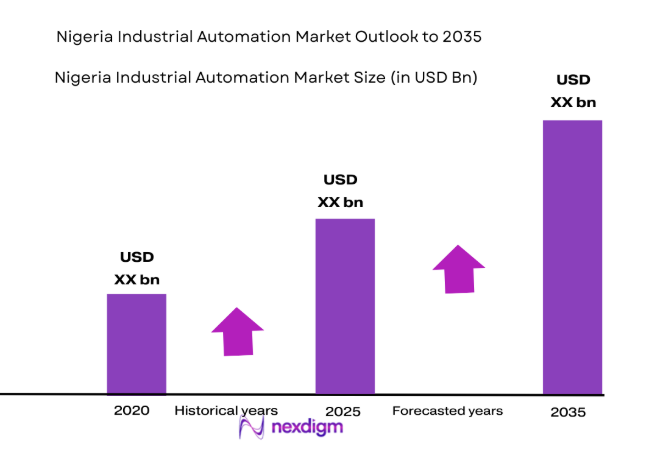
The Nigeria Industrial Automation market is driven by increasing investments in modern technologies and infrastructure. As of a recent historical assessment, the market value reached USD ~ billion, with substantial contributions from sectors such as manufacturing, oil & gas, and automotive. The market’s growth is propelled by the adoption of automation systems to increase productivity and reduce operational costs. The rise of Industry 4.0 has been particularly influential in automating industrial processes, which has further bolstered demand for robotic systems, sensors, and control systems. The market’s expansion is expected to continue as industries modernize their operations to meet global standards.
The dominance of cities such as Lagos, Port Harcourt, and Abuja in the industrial automation market is attributed to their concentration of manufacturing and energy sectors. Lagos, in particular, is a key business hub, with a high concentration of industries seeking automation solutions to enhance efficiency. Port Harcourt benefits from its role in the oil and gas sector, driving demand for specialized automation systems tailored to this industry. Abuja, as the political and regulatory capital, plays a critical role in fostering policies that support technological advancements and infrastructure growth, which facilitates the market’s expansion.
Market Segmentation
By Product Type
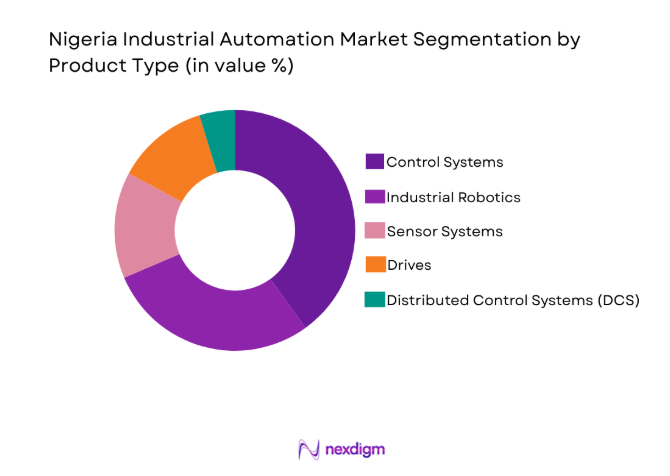
Nigeria’s Industrial Automation market is segmented by product type into control systems, industrial robots, sensors, and drives. Recently, the control systems sub-segment has dominated market share due to increasing adoption in manufacturing sectors to improve production efficiency and safety. This dominance is attributed to the demand for more precise and reliable automation systems to optimize production lines in sectors like automotive, food processing, and chemicals. Control systems allow for better data processing, remote monitoring, and integration with other industrial technologies, making them essential for modern industrial facilities.
By Platform Type
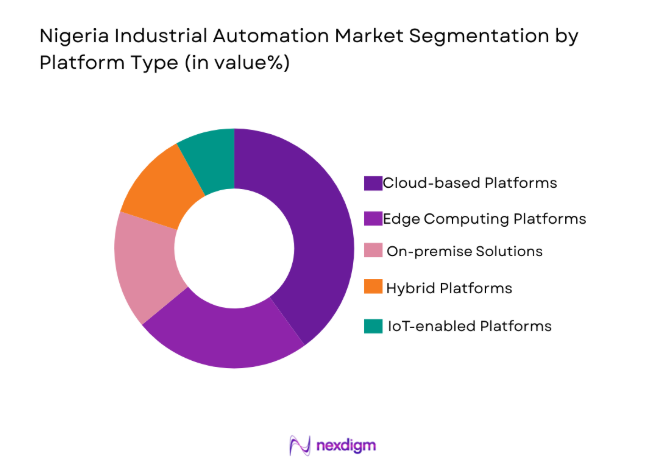
The market is segmented by platform type into cloud-based platforms, edge computing platforms, and on-premise solutions. Recently, cloud-based platforms have emerged as the dominant sub-segment due to the rapid rise of the Internet of Things (IoT) in industrial automation. The adoption of cloud solutions is driven by their scalability, flexibility, and cost-effectiveness. These platforms allow businesses to integrate remote monitoring, data analytics, and real-time decision-making, providing a competitive edge in operational management. The increased demand for seamless data flow across various industries has significantly contributed to the rise of cloud-based platforms.
Competitive Landscape
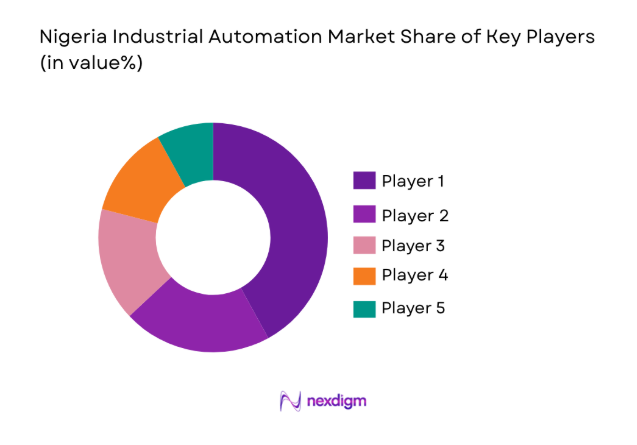
The Nigeria Industrial Automation market is marked by a few dominant players and is experiencing significant consolidation. Major players with robust technological capabilities are playing a crucial role in shaping the market’s competitive environment. These companies are focusing on expanding their market reach through strategic partnerships, collaborations, and technological advancements. The influence of global automation giants is also notable, driving innovation and ensuring competitive pricing. The market is becoming increasingly attractive to both local and international players due to its growth potential, especially in industries such as oil & gas, manufacturing, and automotive.
| Company Name | Establishment Year | Headquarters | Technology Focus | Market Reach | Key Products | Revenue (USD) | Additional Parameter |
| Siemens Nigeria | 1955 | Lagos, Nigeria | ~ | ~ | ~ | ~ | ~ |
| Schneider Electric Nigeria | 1985 | Lagos, Nigeria | ~ | ~ | ~ | ~ | ~ |
| Rockwell Automation | 1903 | Lagos, Nigeria | ~ | ~ | ~ | ~ | ~ |
| ABB Nigeria | 1980 | Lagos, Nigeria | ~ | ~ | ~ | ~ | ~ |
| Honeywell Nigeria | 1906 | Lagos, Nigeria | ~ | ~ | ~ | ~ | ~ |
Nigeria Industrial Automation Market Analysis
Growth Drivers
Technological Advancements in Robotics
The growing adoption of robotics in industries is a major growth driver for the Nigeria Industrial Automation market. As automation systems are designed to perform increasingly complex tasks, the demand for industrial robots is surging, particularly in manufacturing industries such as automotive and consumer goods. Robotics allows for greater precision, efficiency, and safety, improving productivity while reducing human labor. The integration of artificial intelligence (AI) in robotic systems also enhances their capability to perform autonomous functions, further driving their use in Nigerian industries. As industries seek ways to remain competitive, robots are being seen as a key enabler of operational efficiency, with Nigeria’s manufacturing sector heavily relying on these systems to modernize its production lines. The ongoing technological advancements in robotics are expected to sustain this growth, especially as more industries adopt automation to keep up with global trends.
Government Support for Automation
The Nigerian government has been instrumental in driving the growth of the industrial automation market by implementing supportive policies and regulations. Investment in the infrastructure needed for industrial automation is on the rise, and the government has incentivized businesses to adopt advanced manufacturing technologies through subsidies and tax rebates. With the government focusing on diversifying Nigeria’s economy and reducing its dependency on oil, industries such as manufacturing, agriculture, and energy are being encouraged to modernize. This has led to a surge in demand for automation systems in these sectors, as companies seek to improve productivity and competitiveness. With continued support from the government, the market for industrial automation is expected to grow significantly, attracting both local and foreign investments.
Market Challenges
High Initial Capital Investment
One of the primary challenges for the Nigeria Industrial Automation market is the high cost of automation systems. Industrial automation systems, including robotics and control systems, require substantial capital investments, which can be a barrier for small and medium-sized enterprises (SMEs) in Nigeria. While the long-term benefits of automation, such as increased productivity and efficiency, are well-established, the initial costs associated with procurement, installation, and maintenance can be prohibitive. Additionally, the scarcity of local suppliers for automation technologies means that companies often have to import expensive foreign systems, further driving up costs. This financial strain poses a significant challenge to businesses looking to adopt automation, especially in industries where margins are already tight. Overcoming this challenge will require strategic financial incentives, government subsidies, or innovative financing models to make automation more accessible.
Cybersecurity Threats
With the rise of automation and the growing interconnectedness of systems in industrial environments, cybersecurity risks have become a significant concern in the Nigeria Industrial Automation market. As automation systems are increasingly integrated with cloud platforms and IoT devices, they become vulnerable to cyberattacks, data breaches, and other security threats. The lack of robust cybersecurity frameworks in many Nigerian industries makes them particularly susceptible to these risks, which can disrupt operations, cause financial losses, and damage reputations. Furthermore, many automation systems are not designed with built-in cybersecurity measures, leaving them open to vulnerabilities that can be exploited by malicious actors. To mitigate these risks, businesses will need to invest in cybersecurity solutions and ensure that their automation systems are protected by comprehensive security protocols.
Opportunities
Smart Manufacturing Initiatives
Nigeria is witnessing a surge in smart manufacturing initiatives, creating significant opportunities in the industrial automation sector. As industries seek to reduce costs, improve quality, and increase production flexibility, smart manufacturing technologies that rely on IoT, data analytics, and AI are becoming increasingly attractive. These technologies enable manufacturers to optimize their processes, monitor real-time data, and make informed decisions that drive efficiency. With the Nigerian government’s emphasis on diversifying its economy, the push for smart manufacturing is expected to accelerate. Moreover, businesses are realizing the potential of integrating advanced automation systems into their production lines to achieve higher levels of customization and responsiveness to market demands. As the market for smart manufacturing grows, it is expected to boost the demand for industrial automation solutions.
Expansion of Renewable Energy
The renewable energy sector in Nigeria is rapidly growing, providing a unique opportunity for the industrial automation market. Automation technologies play a crucial role in enhancing the efficiency and performance of renewable energy systems, such as solar power, wind farms, and hydroelectric plants. As the country looks to diversify its energy sources and reduce dependence on fossil fuels, the demand for automated solutions in the energy sector is expected to rise. Automation systems can help optimize energy production, monitor system performance, and reduce downtime, making them a vital component of Nigeria’s renewable energy infrastructure. This shift toward renewable energy, coupled with the government’s commitment to sustainable development, will create significant opportunities for automation providers.
Future Outlook
The future of Nigeria’s Industrial Automation market looks promising, with continued growth expected in the coming years. Technological advancements, particularly in robotics, AI, and IoT, are likely to drive further adoption of automation systems across industries such as manufacturing, energy, and logistics. Regulatory support from the government, alongside a growing focus on infrastructure development, will also play a pivotal role in shaping the market’s trajectory. The shift towards smart manufacturing and increased investments in automation technologies are expected to enhance productivity, efficiency, and competitiveness across various sectors, propelling the market’s growth.
Major Players
- Siemens Nigeria
- Schneider Electric Nigeria
- Rockwell Automation
- Honeywell Nigeria
- Emerson Electric Co.
- Mitsubishi Electric Corporation
- ABB Nigeria
- Yokogawa Electric Corporation
- General Electric
- Bosch Rexroth Nigeria
- Omron Nigeria
- Phoenix Contact Nigeria
- Panasonic Corporation
- Siemens AG
- Festo Nigeria
Key Target Audience
- Investments and venture capitalist firms
- Government and regulatory bodies
- Manufacturing companies
- Energy sector companies
- Oil and gas companies
- Automakers
- Automation technology providers
Research Methodology
Step 1: Identification of Key Variables
The key variables driving the market, including technology trends, market size, and regulatory factors, are identified.
Step 2: Market Analysis and Construction
Data is collected from industry reports, surveys, and government sources to build a comprehensive market model.
Step 3: Hypothesis Validation and Expert Consultation
The model is validated through consultations with industry experts and market participants to refine predictions.
Step 4: Research Synthesis and Final Output
The collected data and insights are synthesized into a comprehensive market report, ready for presentation.

- Executive Summary
- Research Methodology
(Definitions, Scope, Industry Assumptions, Market Sizing Approach, Primary & Secondary Research Framework, Data Collection & Verification Protocol, Analytic Models & Forecast Methodology, Limitations & Research Validity Checks)

- Market Definition and Scope
- Value Chain & Stakeholder Ecosystem
- Regulatory / Certification Landscape
- Sector Dynamics Affecting Demand
- Strategic Initiatives & Infrastructure Growth

- Growth Drivers
Technological Advancements in Robotics
Rising Demand for Operational Efficiency
Increasing Adoption of Industry 4.0 - Market Challenges
High Initial Capital Investment
Lack of Skilled Workforce
Cybersecurity Concerns - Market Opportunities
Expansion of Smart Manufacturing Initiatives
Increasing Government Investments in Infrastructure
Growth in Renewable Energy Sector - Trends
Automation in Oil & Gas Sector
Integration of Artificial Intelligence in Manufacturing - Government Regulations
Regulations on Industrial Safety
Standards for Automation Systems
Incentives for Local Manufacturing - SWOT Analysis
- Porter’s Five Forces

- By Market Value, 2020-2025
- By Installed Units, 2020-2025
- By Average System Price, 2020-2025
- By System Complexity Tier, 2020-2025

- By System Type (In Value%)
Manufacturing Execution Systems (MES)
Programmable Logic Controllers (PLC)
Supervisory Control and Data Acquisition (SCADA)
Industrial Robots
Distributed Control Systems (DCS) - By Platform Type (In Value%)
Cloud-based Platforms
Edge Computing Platforms
On-premise Platforms
Hybrid Platforms
IoT-enabled Platforms - By Fitment Type (In Value%)
Retrofitted Solutions
New Installations
Hybrid Fitment Solutions
Modular Fitment Solutions - By End User Segment (In Value%)
Automotive Industry
Oil & Gas Industry
Food & Beverage Industry
Chemical Industry

- Market Share Analysis
- Cross Comparison Parameters
(System Type, Platform Type, Procurement Channel, End User Segment, Fitment Type, Material Technology, Regional Presence) - SWOT Analysis of Key Competitors
- Pricing & Procurement Analysis
- Key Players
Siemens Nigeria
Schneider Electric Nigeria
Rockwell Automation
Honeywell Nigeria
Emerson Electric Co.
Mitsubishi Electric Corporation
ABB Nigeria
Yokogawa Electric Corporation
General Electric
Bosch Rexroth Nigeria
Omron Nigeria
Phoenix Contact Nigeria
Panasonic Corporation
Siemens AG
Festo Nigeria

- Increasing Automation in Nigerian Manufacturing Sector
- Government Initiatives Supporting Automation in Key Industries
- Impact of Automation on the Nigerian Oil & Gas Industry
- Role of Automation in Boosting Nigeria’s Competitive Edge in Global Markets

- Forecast Market Value, 2026-2035
- Forecast Installed Units, 2026-2035
- Price Forecast by System Tier, 2026-2035
- Future Demand by Platform, 2026-2035


 Request a Sample
 Ask for Customization
 Get a Quote
 Enquire Now