

 Download PDF
 Download PDF
Market Overview
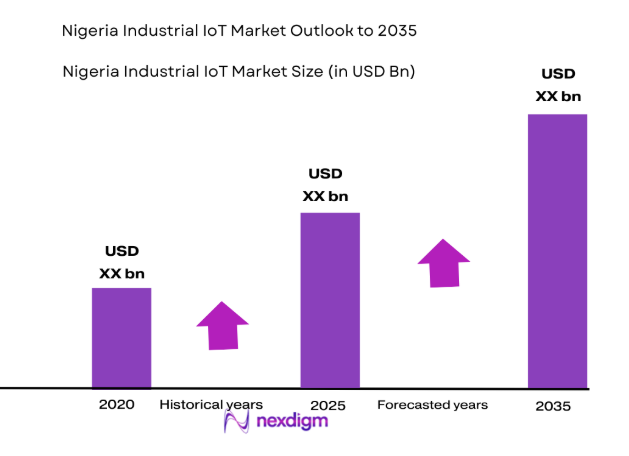
The Nigeria Industrial IoT market has experienced significant growth, driven by technological advancements in industrial automation and the increasing need for real-time data. With industries embracing digital transformation, the demand for IoT-enabled devices has surged, supporting industries such as manufacturing, agriculture, and energy. As of recent assessments, the market size has been projected at USD ~ billion, fueled by the country’s rising digital infrastructure investments and government initiatives aimed at enhancing industrial efficiency and competitiveness.
Nigeria, alongside other leading African nations, plays a crucial role in shaping the regional Industrial IoT market. Cities like Lagos, Abuja, and Port Harcourt are pivotal in driving the adoption of IoT solutions due to their concentration of industries and technology infrastructure. Government investments in smart city initiatives and infrastructure development are further propelling the adoption of connected technologies in sectors like energy, logistics, and manufacturing. These regions benefit from growing urbanization and the strategic location for IoT adoption across Sub-Saharan Africa.
Market Segmentation
By Product Type
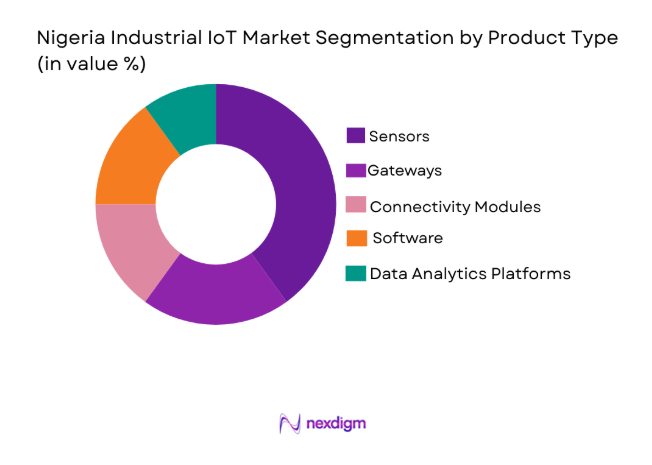
The Nigeria Industrial IoT market is segmented by product type into sensors, gateways, connectivity modules, software, and data analytics platforms. Sensors are the leading segment due to their role in providing critical data for real-time monitoring and predictive maintenance. Gateways and connectivity modules are crucial for facilitating communication between IoT devices. Software solutions enable data management and visualization, while data analytics platforms are gaining traction as they help businesses leverage big data to improve decision-making and operational efficiency.
By Platform Type
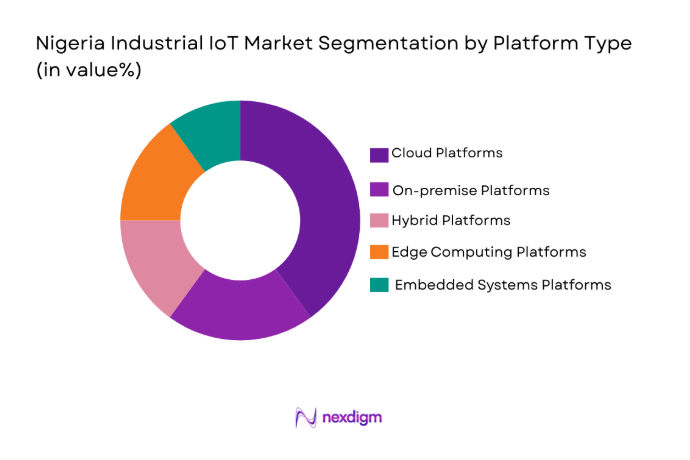
The Nigeria Industrial IoT market is segmented by platform type into cloud platforms, on-premise platforms, hybrid platforms, edge computing platforms, and embedded systems platforms. Cloud platforms dominate due to their scalability, cost-effectiveness, and ease of integration. These platforms enable businesses to store data, perform analytics, and scale operations with minimal upfront investment. Edge computing platforms are also gaining traction, especially for real-time applications requiring low latency. Additionally, embedded systems are being increasingly integrated into machinery for seamless communication and control.
Competitive Landscape
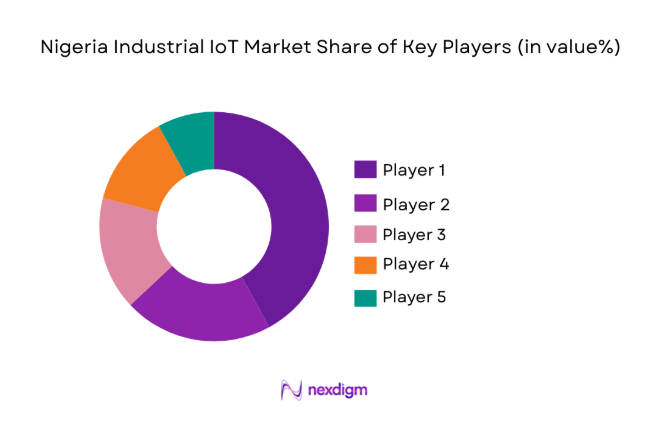
The competitive landscape of the Nigeria Industrial IoT market is characterized by a growing presence of global and regional players, with companies focusing on developing solutions that cater to the specific needs of the Nigerian market. Major players are increasingly investing in product innovation and strategic partnerships with local businesses to capitalize on the expanding industrial sector. Market consolidation has been evident, with established firms acquiring smaller IoT companies to expand their technology portfolios and strengthen their market position.
| Company Name | Establishment Year | Headquarters | Technology Focus | Market Reach | Key Products | Revenue | Deployment Scale |
| Siemens | 1847 | Germany | ~ | ~ | ~ | ~ | ~ |
| IBM | 1911 | USA | ~ | ~ | ~ | ~ | ~ |
| Schneider Electric | 1836 | France | ~ | ~ | ~ | ~ | ~ |
| Huawei | 1987 | China | ~ | ~ | ~ | ~ | ~ |
| Honeywell | 1906 | USA | ~ | ~ | ~ | ~ | ~ |
Nigeria Industrial IoT Market Analysis
Growth Drivers
Increased Adoption of Automation in Manufacturing
The growing demand for automation in manufacturing has been a key driver for the Nigeria Industrial IoT market. As industries look for ways to increase operational efficiency, reduce costs, and improve production quality, automation has become essential. IoT technologies enable real-time monitoring, predictive maintenance, and remote control of industrial equipment, which improves productivity and reduces downtime. Manufacturing sectors like automotive, food processing, and textiles are particularly benefitting from IoT technologies that enhance performance and competitiveness. The Nigerian government’s support for industrialization through policies and infrastructure projects has also contributed significantly to the expansion of industrial automation. Government incentives aimed at driving the adoption of automation technologies in key industrial sectors, alongside investment in digital infrastructure, are helping businesses embrace IoT-based automation to reduce dependency on manual labor. Furthermore, IoT solutions empower industries to make data-driven decisions, facilitating a more streamlined manufacturing process. With many local manufacturers facing increasing global competition, the ability to enhance product quality, reduce wastage, and streamline production timelines has led to widespread adoption of Industrial IoT across various Nigerian industries. Manufacturers are investing heavily in automation technology as they aim to become more agile, competitive, and cost-efficient in an ever-evolving global market.
Technological Advancements in IoT and AI Integration
The integration of Artificial Intelligence (AI) with Industrial IoT solutions is fueling market growth in Nigeria. AI enables IoT devices to analyze data, predict equipment failure, and optimize production schedules without human intervention. The growing interest in AI-powered automation is accelerating the demand for advanced IoT solutions that offer smarter decision-making capabilities. AI’s ability to enhance predictive maintenance and streamline operations is driving adoption across various sectors such as oil and gas, manufacturing, and energy. Nigerian businesses are investing in smart factory solutions powered by AI and IoT to reduce costs and improve operational efficiency. AI-powered IoT solutions also offer businesses the ability to identify emerging trends in data, optimizing resource allocation, and energy management. Moreover, AI-driven analytics enable predictive insights that improve the performance of industrial operations, minimizing downtime and maximizing output. The application of AI within IoT networks helps businesses anticipate potential failures in their systems, reducing maintenance costs and extending the lifespan of machinery. The adoption of AI in IoT-based solutions is helping Nigerian industries enhance their competitive edge, improve energy efficiency, and maintain more consistent product quality. As the technology continues to evolve, it is expected that AI and IoT will be integrated further into more industrial operations, creating a smarter and more efficient manufacturing environment.
Market Challenges
High Initial Capital Investment
A significant challenge faced by the Nigeria Industrial IoT market is the high capital required for initial investments in IoT infrastructure. Many industries are hesitant to adopt new technologies due to the upfront costs associated with setting up IoT systems, including sensors, connectivity devices, and platforms. This high cost of deployment is a barrier for small and medium-sized enterprises (SMEs) that cannot afford extensive capital expenditure. Despite the long-term benefits such as increased productivity and operational cost savings, the initial financial burden remains a significant deterrent for many Nigerian companies. The lack of access to affordable financing options further exacerbates this challenge, limiting IoT adoption. Many businesses, particularly SMEs, face difficulty in securing funding for industrial IoT solutions, resulting in delayed adoption and missed opportunities for operational optimization. Additionally, businesses in Nigeria often face challenges in obtaining the necessary technical expertise to manage and implement IoT technologies effectively. With the financial barrier being one of the key impediments to wide-scale IoT adoption, the Nigerian government and private financial institutions must play an important role in facilitating easier access to funding for IoT adoption. Without such initiatives, the economic growth driven by IoT advancements could be slowed down, particularly in key sectors such as manufacturing and agriculture.
Connectivity and Network Infrastructure Issues
Nigeria faces challenges related to unreliable connectivity and network infrastructure, which limits the effective deployment of Industrial IoT solutions. The lack of stable, high-speed internet in rural areas and limited mobile network coverage hinder the performance and scalability of IoT systems in Nigeria. For businesses to fully realize the potential of IoT, reliable internet connections and a robust network infrastructure are necessary for real-time data transmission and analytics. These infrastructure issues must be addressed to ensure the seamless integration of IoT solutions across industries and regions. Rural areas, in particular, face significant challenges in terms of network coverage, which prevents agricultural businesses from utilizing IoT technologies for precision farming and remote monitoring of environmental conditions. Furthermore, IoT devices often require a continuous and fast data stream, which is difficult to maintain in certain regions of the country. While urban areas like Lagos, Abuja, and Port Harcourt are more likely to benefit from advanced network infrastructure, many smaller towns and rural locations struggle to meet the connectivity demands required for successful IoT deployments. This gap in infrastructure needs to be addressed for Nigeria to realize the full benefits of IoT technologies across all sectors. The government’s investments in improving the telecommunications infrastructure will be crucial in overcoming this challenge.
Opportunities
Expansion of Smart City Initiatives
One of the major opportunities for the Nigeria Industrial IoT market is the government’s push towards smart city initiatives in urban areas. As the Nigerian population continues to grow, cities are becoming more congested, and there is an increasing need for smart technologies to manage infrastructure, traffic, and public services efficiently. IoT solutions are vital in optimizing the management of utilities such as water, electricity, and waste disposal, which is a critical component of smart city planning. As Nigerian cities like Lagos and Abuja expand, the adoption of IoT solutions for urban management will likely increase, driving the demand for connected technologies in the industrial sector. Smart city initiatives will leverage IoT technologies to optimize urban services and enhance the quality of life for residents by improving traffic flow, waste management, and energy consumption. The Nigerian government’s commitment to developing smart cities as a strategy to tackle urbanization challenges is opening up opportunities for industrial IoT applications. Additionally, IoT-powered solutions can help urban governments improve their ability to respond to critical issues such as traffic congestion, air quality monitoring, and public safety. As these initiatives gain momentum, Nigeria’s Industrial IoT market is poised to experience significant growth through the integration of smart technologies in urban infrastructure.
Agriculture and Precision Farming Growth
Agriculture is a key sector in Nigeria’s economy, and the growing adoption of IoT solutions for precision farming presents a significant opportunity for market growth. IoT devices such as sensors and GPS trackers are enabling farmers to monitor soil conditions, weather patterns, and crop health in real-time, improving yields and reducing resource waste. The Nigerian government’s focus on modernizing the agricultural sector through technology-driven solutions is further fueling IoT adoption in farming. As the demand for food continues to rise, the integration of IoT technologies in agriculture will play a critical role in enhancing productivity and sustainability, thus contributing to the overall growth of the Industrial IoT market. IoT solutions allow farmers to make data-driven decisions to optimize the use of water, fertilizers, and pesticides, helping them reduce costs while maximizing production. Furthermore, IoT systems can monitor livestock conditions, improving breeding and healthcare management. Given Nigeria’s large agricultural base, the adoption of precision farming powered by IoT offers a substantial growth opportunity for the market. Increased access to digital tools, government support, and international partnerships are also contributing to the rapid growth of IoT-based agriculture solutions. The opportunities presented by the agricultural sector are driving innovations in precision farming, making it a key area for the Industrial IoT market in Nigeria.
Future Outlook
The future outlook for the Nigeria Industrial IoT market is promising, with expected growth driven by increased adoption across sectors such as manufacturing, agriculture, and smart cities. Technological advancements, particularly in AI and 5G connectivity, are set to enhance the capabilities of IoT solutions, offering more robust, efficient, and scalable systems. Government support for digital infrastructure and smart city initiatives will further boost market growth. As Nigerian businesses continue to embrace automation and digital transformation, the demand for IoT devices and platforms will continue to rise. Over the next five years, technological innovation, coupled with an improving regulatory environment, is expected to play a pivotal role in shaping the market’s trajectory.
Major Players
- Siemens
- IBM
- Schneider Electric
- Huawei
- Honeywell
- Rockwell Automation
- Cisco
- General Electric
- ABB
- Oracle
- Mitsubishi Electric
- Yokogawa Electric
- Dell Technologies
- Texas Instruments
- Bosch
Key Target Audience
- Investments and venture capitalist firms
- Government and regulatory bodies
- Large-scale industrial manufacturers
- Energy and utilities companies
- Agricultural organizations
- Smart city developers
- Telecom providers
Research Methodology
Step 1: Identification of Key Variables
We begin by identifying the key variables driving the Nigeria Industrial IoT market, including technological trends, government initiatives, and industry-specific demands.
Step 2: Market Analysis and Construction
Market dynamics such as demand, growth drivers, challenges, and segmentation are analyzed to construct an accurate and comprehensive market model.
Step 3: Hypothesis Validation and Expert Consultation
Experts from various sectors are consulted to validate hypotheses, ensuring that the insights are market-relevant and grounded in industry expertise.
Step 4: Research Synthesis and Final Output
The collected data is synthesized to create a well-rounded market report, providing actionable insights and a clear outlook for the Nigeria Industrial IoT market.

- Executive Summary
- Research Methodology (Definitions, Scope, Industry Assumptions, Market Sizing Approach, Primary & Secondary Research Framework, Data Collection & Verification Protocol, Analytic Models & Forecast Methodology, Limitations & Research Validity Checks)

- Market Definition and Scope
- Value Chain & Stakeholder Ecosystem
- Regulatory / Certification Landscape
- Sector Dynamics Affecting Demand
- Strategic Initiatives & Infrastructure Growth

- Growth Drivers
Technological Advancements in IoT
Government Support for Smart Infrastructure
Growing Demand for Automation in Manufacturing - Market Challenges
High Capital Expenditure for IoT Infrastructure
Cybersecurity Risks
Technological Integration Issues - Market Opportunities
Increase in Adoption of AI and Machine Learning
Expansion of Smart Cities
Collaborations with Global IoT Providers - Trends
Rise in Adoption of Edge Computing
Integration of 5G Technology in IoT Systems - Government Regulations
Data Protection Regulations
Energy Efficiency Standards
Smart Infrastructure Policies - SWOT Analysis
- Porter’s Five Forces

- By Market Value, 2020-2025
- By Installed Units, 2020-2025
- By Average System Price, 2020-2025
- By System Complexity Tier, 2020-2025

- By System Type (In Value%)
Smart Sensors
Industrial Automation Systems
Data Analytics Platforms
Network Infrastructure
Edge Computing Systems - By Platform Type (In Value%)
On-premise Platforms
Cloud Platforms
Hybrid Platforms
Integrated Platforms
Mobile Platforms - By Fitment Type (In Value%)
Embedded Solutions
Standalone Solutions
Modular Solutions
Integrated Solutions - By End User Segment (In Value%)
Manufacturing
Energy & Utilities
Healthcare
Transportation & Logistics

- Market Share Analysis
- Cross Comparison Parameters (System Type, Platform Type, End User Segment, Fitment Type, Price, Demand, Technology)
- SWOT Analysis of Key Competitors
- Pricing & Procurement Analysis
- Key Players
Siemens
Schneider Electric
Honeywell
General Electric
Bosch
ABB
Rockwell Automation
Emerson Electric
Cisco Systems
IBM
Intel
Microsoft
SAP
Google
Huawei

- Manufacturing Industry’s Need for Real-time Data
- Energy & Utilities Sector’s Push for Efficiency
- Healthcare Sector’s Adoption of Remote Monitoring
- Transportation & Logistics Sector’s Need for Fleet Management

- Forecast Market Value, 2026-2035
- Forecast Installed Units, 2026-2035
- Price Forecast by System Tier, 2026-2035
- Future Demand by Platform, 2026-2035


 Request a Sample
 Ask for Customization
 Get a Quote
 Enquire Now