
 Download PDF
Market Overview
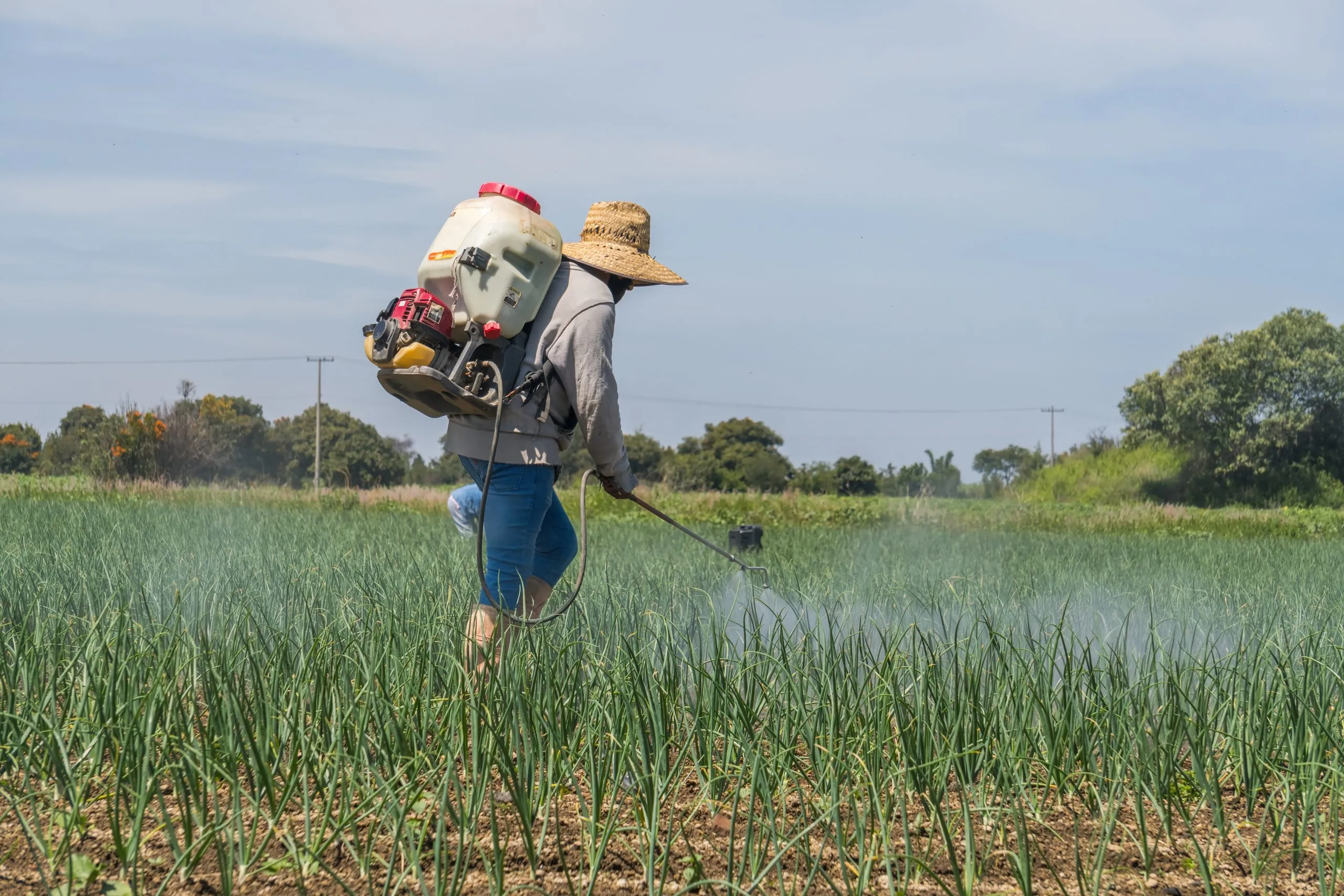
The Nigeria insecticide market is estimated at approximately USD ~ million in 2024, based on Nigeria’s insecticide import value of USD ~ million, historical pesticide consumption patterns, and the insecticide share within the national pesticide industry. Nigeria’s pesticide expenditure has been estimated at USD ~ million annually, with insecticides accounting for 16.6% of total pesticide consumption. Market expansion is driven by increasing cultivation of maize, rice, cassava, cocoa, and vegetables, rising fall armyworm infestations, and growing demand for mosquito and vector-control products across urban and rural households.
Market Segmentation
By Product Category
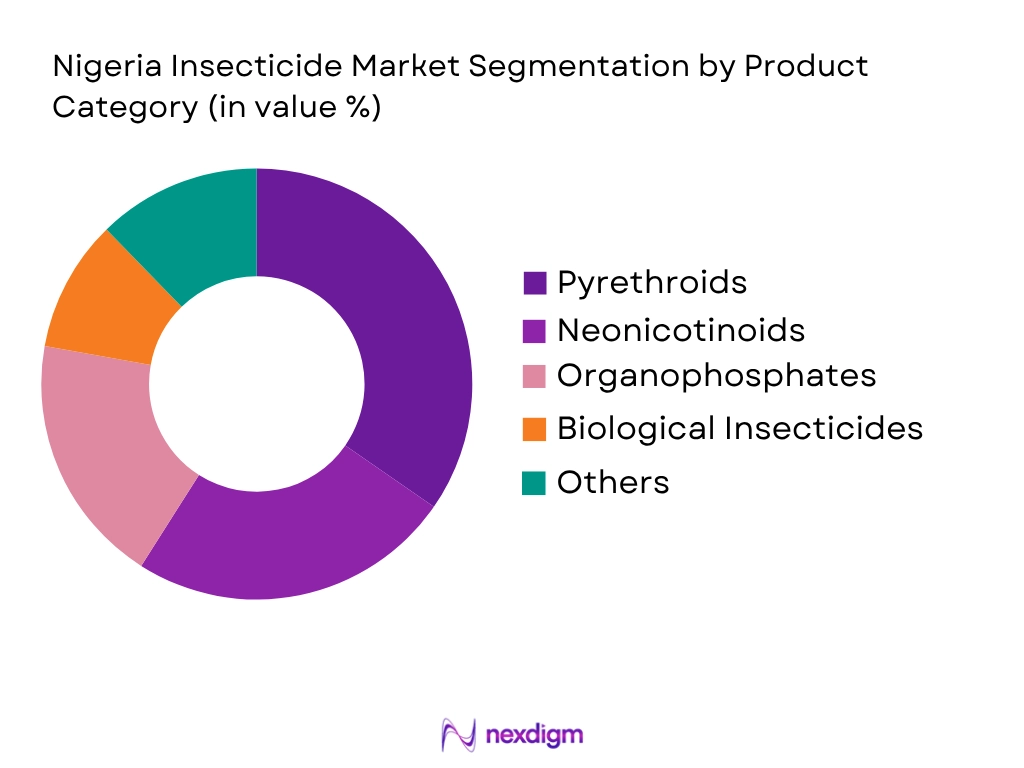
By product class, the Nigeria insecticide market is segmented into pyrethroids, neonicotinoids, organophosphates, biological insecticides, and others. Recently, pyrethroids have maintained the dominant market share due to their extensive use in both agricultural and public-health applications. Farmers widely adopt pyrethroid-based products because they offer broad-spectrum control against major pests affecting maize, rice, vegetables, and cocoa crops. Furthermore, pyrethroids are commonly utilized in mosquito-control products, household aerosols, coils, and residual sprays. Their relatively low application rates, fast knockdown effect, affordability, and widespread product availability through agro-dealer networks have reinforced their leadership position. Major manufacturers continue to expand pyrethroid-based formulations due to their proven efficacy and compatibility with integrated pest-management programs, supporting continued demand across commercial farms and smallholder agricultural operations.
By Crop Type
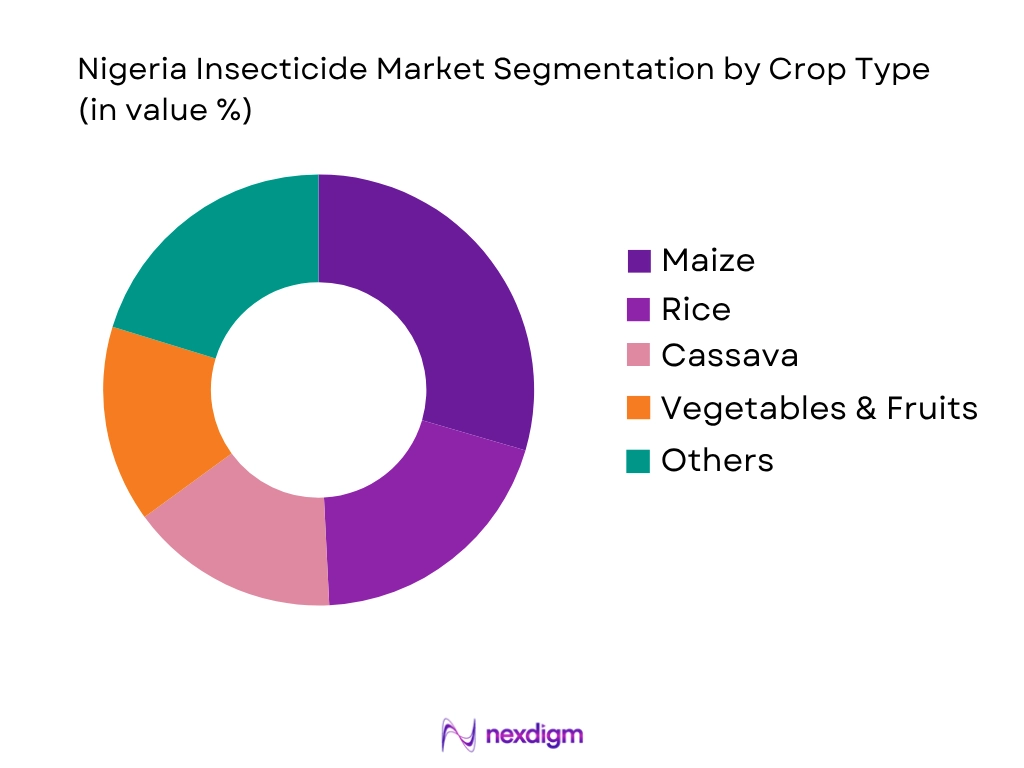
By crop type, the Nigeria insecticide market is segmented into maize, rice, cassava, cocoa, vegetables & fruits, and others. Recently, maize has accounted for the largest market share due to its position as one of Nigeria’s most widely cultivated staple crops. The crop experiences significant pest pressure from fall armyworms, stem borers, and leaf-feeding insects, creating consistent demand for insecticide applications throughout the growing season. Government food-security initiatives and increasing domestic maize consumption by feed mills, poultry producers, and food-processing industries further strengthen insecticide demand. Commercial farmers prioritize crop protection investments to reduce yield losses and maintain productivity. In addition, the expansion of improved seed varieties and intensified farming practices has increased the requirement for advanced insecticide programs. These factors collectively contribute to maize maintaining its leadership position within Nigeria’s insecticide consumption landscape.
Competitive Landscape
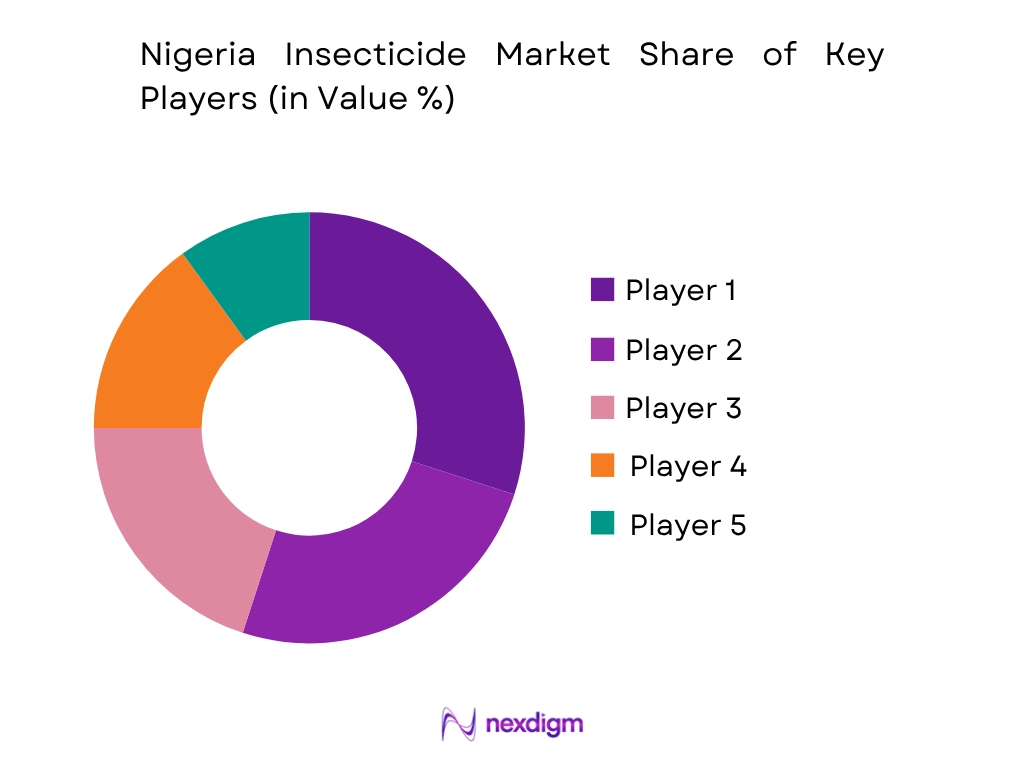
The Nigeria insecticide market is moderately concentrated and led by multinational agrochemical companies alongside regional distributors and formulators. Global companies such as Bayer, Syngenta, BASF, FMC, and UPL leverage strong distribution networks, diversified insecticide portfolios, and advanced research capabilities. Their presence is strengthened through partnerships with agro-dealers, farmer cooperatives, government agricultural initiatives, and commercial farming enterprises. Competition increasingly focuses on product efficacy, pest-resistance management, biological solutions, and distribution reach across underserved agricultural regions.
| Company | Establishment Year | Headquarters | Product Portfolio | Biological Products | Distribution Reach | Local Partnerships | Key Crops Served | Registration Strength |
| Bayer Crop Science | 1863 | ~ | ~ | ~ | ~ | ~ | ~ | ~ |
| Syngenta | 2000 | ~ | ~ | ~ | ~ | ~ | ~ | ~ |
| BASF | 1865 | ~ | ~ | ~ | ~ | ~ | ~ | ~ |
| FMC Corporation | 1883 | ~ | ~ | ~ | ~ | ~ | ~ | ~ |
| UPL Limited | 1969 | ~ | ~ | ~ | ~ | ~ | ~ | ~ |
Nigeria Insecticide Market Analysis
Growth Drivers
Expansion of Agricultural Production and Cultivated Land
Nigeria’s insecticide market is strongly supported by the scale of its agricultural sector and extensive crop cultivation activities. According to the Food and Agriculture Organization (FAO), Nigeria possesses 70.8 million hectares of agricultural land, making it one of Africa’s largest farming economies. Major crops such as maize, rice, cassava, yam, cocoa, and vegetables require continuous pest management, increasing insecticide consumption across farming regions. The World Bank reports that Nigeria had 36.87 million hectares of arable land available for cultivation, the highest in Africa. In addition, approximately 40 million households participate in agricultural activities, including crop and livestock production. Large-scale cultivation increases exposure to stem borers, armyworms, aphids, whiteflies, and storage pests, creating sustained demand for agricultural insecticides. Agriculture remains a major contributor to Nigeria’s economy and food supply chain. The large agricultural footprint, combined with the need to improve crop productivity and reduce pest-induced losses, continues to support adoption of insecticide products across commercial farms and smallholder farming systems.
Rising Food Security Requirements and Crop Protection Demand
Food security concerns are increasing the need for effective pest-control solutions across Nigeria’s agricultural sector. FAO data indicates that crop production represents 87.6 units out of every 100 units of agricultural output, highlighting the importance of protecting crops from insect infestations. Nigeria’s population exceeds 230 million people, creating substantial pressure on domestic food production systems. At the same time, agricultural exports reached USD 2.3 billion, while agricultural imports amounted to USD 6.6 billion, emphasizing the importance of improving local agricultural productivity and reducing crop losses. Pest outbreaks remain a major threat to staple crops. For example, corn production was expected to decline from 12 million metric tons to 11 million metric tons due to production challenges including pest pressure and input constraints. Farmers increasingly rely on insecticides to preserve yields and maintain food supply stability. The combination of rising food demand, export ambitions, and crop protection requirements is therefore a major growth catalyst for the Nigeria insecticide market.
Market Challenges
Dependence on Imported Active Ingredients and Foreign Exchange Volatility
Nigeria’s insecticide industry faces significant challenges due to dependence on imported active ingredients and formulation inputs. The country imported USD 6.6 billion worth of agricultural and related products, indicating continued reliance on foreign supply chains for agricultural inputs. Currency instability has increased procurement difficulties across the agricultural sector. Agricultural commodity reports show that foreign exchange shortages and currency depreciation significantly affected input accessibility and farm operations. Wheat imports declined to 4.4 million tons, while corn imports were projected at 90,000 tons, partly due to currency-related constraints. Since many insecticide active ingredients, intermediates, and formulation materials are sourced internationally, exchange-rate fluctuations directly affect inventory planning, supply continuity, and product availability. Import dependency also increases vulnerability to global logistics disruptions and regulatory changes in exporting countries. These factors create operational uncertainty for distributors, formulators, and agricultural retailers serving Nigeria’s insecticide market.
Low Agricultural Productivity and Smallholder Farming Structure
A major challenge for insecticide adoption in Nigeria is the predominance of smallholder farming systems. Research cited in agricultural studies indicates that more than 80 farmers out of every 100 farmers in Nigeria operate as smallholders with limited access to technology, mechanization, and modern crop-protection practices. Although Nigeria has 70.8 million hectares of agricultural land and 36.87 million hectares of arable land, productivity levels remain constrained by inadequate extension services, poor pest-monitoring systems, and fragmented farm structures. Small-scale farmers often face challenges in identifying pest infestations, selecting appropriate insecticide formulations, and implementing integrated pest management strategies. Limited technical knowledge can contribute to under-application or misuse of crop protection products. Consequently, despite substantial agricultural land resources, the conversion of potential insecticide demand into actual product adoption remains slower than in highly mechanized agricultural markets.
Market Opportunities
Expansion of Commercial Agriculture and Export-Oriented Crop Production
Nigeria’s agricultural modernization efforts present substantial opportunities for insecticide manufacturers. Agricultural exports increased to USD 2.3 billion, demonstrating growing participation in regional and international agricultural trade. Export-oriented crops such as cocoa, sesame, cashew, vegetables, and fruits require strict pest management to meet quality and phytosanitary requirements. The country’s 70.8 million hectares of agricultural land and 36.87 million hectares of arable land provide significant scope for expansion of commercial farming activities. Large-scale cultivation generally requires more structured crop protection programs, including preventive insecticide applications and integrated pest management solutions. As agribusiness investors focus on increasing yields and export competitiveness, demand is expected to shift toward advanced insecticide formulations, seed-treatment products, and precision pest-control technologies. This transition creates opportunities for suppliers offering differentiated products, biological insecticides, and resistance-management solutions tailored to commercial agricultural operations.
Adoption of Modern Crop Protection Technologies
Technology-driven agricultural transformation creates new opportunities for the insecticide market. Nigeria’s large agricultural base includes approximately 40 million agricultural households, providing a vast user base for modern crop-protection products and advisory services. Government initiatives supporting domestic agricultural production, including input-support programs and productivity enhancement measures, are encouraging greater adoption of advanced farming techniques. For example, wheat production support programs helped maintain production levels at 126,000 metric tons, demonstrating the role of agricultural input interventions. Increasing availability of digital agriculture platforms, mobile agronomy services, pest forecasting tools, drone-based crop monitoring, and integrated pest management systems can improve insecticide effectiveness and adoption. These developments create opportunities for manufacturers to introduce targeted formulations, bio-based insecticides, and precision application solutions that enhance pest control while supporting sustainable agricultural production practices.
Future Outlook
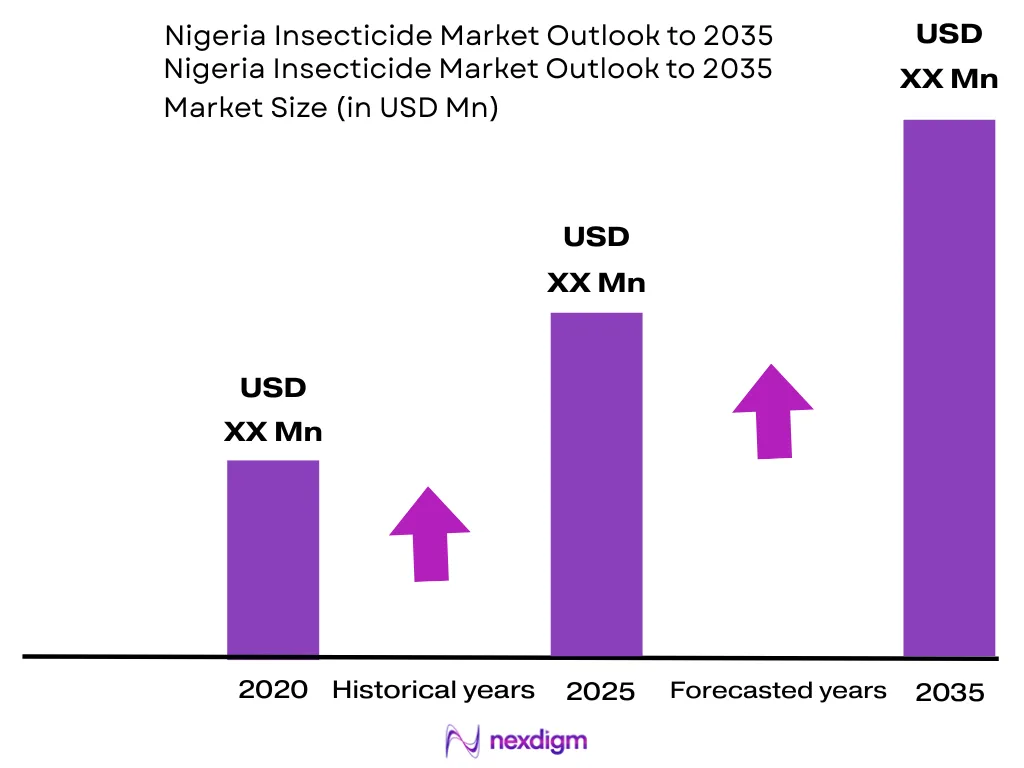
The Nigeria insecticide market is expected to witness sustained growth throughout the forecast period. Growth will be supported by rising food demand, expanding commercial agriculture, increasing pest outbreaks linked to climate variability, and government initiatives focused on agricultural productivity. The adoption of biological insecticides and integrated pest-management solutions is expected to accelerate as regulatory scrutiny on chemical residues increases. Additionally, investment in local formulation facilities, precision agriculture technologies, and digital agro-input distribution platforms will create new opportunities for manufacturers and distributors. The market is forecast to expand at a CAGR of approximately 5.2% during 2026–2035.
Major Players
- Bayer Crop Science
- Syngenta
- BASF
- FMC Corporation
- UPL Limited
- Corteva Agriscience
- Adama Agricultural Solutions
- Sumitomo Chemical
- Jubaili Agrotec
- OCP Africa
- WACOT Agrochemicals
- Greenlife Crop Protection Africa
- Notore Chemical Industries
- Indorama Agrochemicals
- Golden Fertilizer & Agro Allied
Key Target Audience
- Agrochemical Manufacturers
- Crop Protection Product Distributors
- Agricultural Cooperatives
- Commercial Farming Enterprises
- Plantation Owners and Agribusiness Groups
- Food Processing Companies
- Investment and Venture Capitalist Firms
- Government and Regulatory Bodies
Research Methodology
Step 1: Identification of Key Variables
The initial phase involves developing a comprehensive ecosystem map covering insecticide manufacturers, importers, formulators, distributors, agro-dealers, commercial farms, cooperatives, and government agencies. Extensive secondary research is conducted through trade databases, regulatory filings, agricultural production statistics, and company disclosures. The objective is to identify variables influencing insecticide demand, supply, pricing, and adoption
Step 2: Market Analysis and Construction
Historical data related to insecticide imports, pesticide consumption, agricultural acreage, pest infestation trends, and crop production volumes are analyzed. Both top-down and bottom-up methodologies are used to estimate market value and volume. Product class performance, crop-specific demand, and distribution channel penetration are incorporated into market calculations.
Step 3: Hypothesis Validation and Expert Consultation
Market assumptions are validated through interviews with agrochemical distributors, commercial farmers, agronomists, regulatory officials, and crop-protection specialists. Discussions focus on product demand trends, pest pressure, adoption of biological solutions, pricing developments, and future investment priorities.
Step 4: Research Synthesis and Final Output
Findings from primary and secondary research are consolidated and triangulated. Data is cross-verified using import statistics, industry publications, regulatory databases, and expert opinions. The final output provides a comprehensive assessment of market size, segmentation, competition, growth opportunities, and future outlook.

- Executive Summary
- Research Methodology (Market Definitions and Assumptions, Abbreviations, Market Sizing Framework, Bottom-Up Market Estimation, Top-Down Validation Approach, Primary Expert Interviews, Secondary Research Sources, Data Triangulation Model, Forecasting Methodology, Limitations and Future Conclusions)

- Definition and Scope
- Market Evolution and Industry Genesis
- Timeline of Regulatory and Industry Developments
- Agricultural Production Cycle and Pest Management Ecosystem
- Supply Chain Analysis
- Value Chain Analysis
- Trade Analysis
- Pest Pressure Assessment
- Crop Protection Ecosystem
- Pricing Value Chain Assessment

- Growth Drivers (Expansion of Maize and Rice Cultivation, Increasing Fall Armyworm Infestations, Rising Food Security Initiatives, Growth in Commercial Farming Operations, Government Agricultural Intervention Programs)
- Market Challenges (Counterfeit and Substandard Agrochemical Products, Foreign Exchange Volatility and Import Dependence, Limited Farmer Awareness of Proper Application, Pest Resistance Development, Distribution Inefficiencies in Rural Areas)
- Opportunities (Biological and Bio-Based Insecticides, Precision Agriculture Adoption, Expansion of Greenhouse Farming, Local Formulation and Manufacturing Facilities, Integrated Pest Management Programs)
- Market Trends (Transition Toward Low-Residue Crop Protection Products, Increased Use of Combination Insecticides, Digital Agrochemical Distribution Platforms, Drone-Based Crop Protection Applications, Sustainability and Environmental Stewardship Initiatives)
- Government Regulation (NAFDAC Registration Requirements, Federal Ministry of Agriculture Crop Protection Policies, Import Licensing Framework, Agrochemical Quality Control Measures, Environmental Protection Standards)
- SWOT Analysis
- Stakeholder Ecosystem
- Porter’s Five Forces
- Competition Ecosystem
- PESTLE Analysis

- By Value (2020-2025)
- By Volume (2020-2025)
- By Average Selling Price (2020-2025)

- By Product Category (In Value %)
Pyrethroids
Neonicotinoids
Organophosphates
Biological Insecticides
Others - By Crop Type (In Value %)
Maize
Rice
Cassava
Cocoa
Vegetables & Fruits
Others - By Formulation Type (In Value %)
Emulsifiable Concentrates (EC)
Suspension Concentrates (SC)
Wettable Powders (WP)
Water Dispersible Granules (WDG)
Ultra-Low Volume and Others - By Application Method (In Value %)
Foliar Spray
Seed Treatment
Soil Treatment
Aerial Application
Fumigation and Storage Protection - By End User (In Value %)
Smallholder Farmers
Commercial Farms
Plantation Agriculture
Agricultural Cooperatives
Government-Supported Agricultural Programs - By Region (In Value %)
North Central
North West
North East
South West
South South
South East

- Market Share of Major Players (Market share by value, volume, active ingredient portfolio, crop coverage, distributor reach, regional penetration)
- Cross Comparison Parameters (Product Portfolio Strength, Active Ingredient Portfolio, Local Formulation Capacity, Distribution Network Reach, Agro-Dealer Coverage, Crop-Specific Solutions, Biological Product Presence, Regulatory Compliance & Registration Portfolio)
- SWOT Analysis of Major Players
- Pricing Analysis Basis SKUs (Lambda-cyhalothrin, Imidacloprid, Chlorpyrifos alternatives, Spinosad, Emamectin Benzoate, Thiamethoxam, Deltamethrin, Abamectin, Bifenthrin, Biological formulations)
- Detailed Profiles of Major Companies
Syngenta Nigeria
Bayer Crop Science
BASF Nigeria
UPL Limited
FMC Corporation
Corteva Agriscience
Sumitomo Chemical
Adama Agricultural Solutions
Jubaili Agrotec
CP Africa
WACOT Agrochemicals
Notore Chemical Industries
Golden Fertilizer & Agro Allied
Greenlife Crop Protection Africa
Indorama Eleme Agrochemicals

- Crop Protection Demand Assessment
- Purchasing Power and Agrochemical Spending Patterns
- Insecticide Utilization Rates
- Farmer Pain Points and Adoption Barriers
- Decision-Making Framework for Product Selection
- Brand Awareness and Loyalty Assessment
- Insecticide Application Practices

- By Market Value (2026-2035)
- By Volume (2026-2035)
- By Average Selling Price (2026-2035)


 Request a Sample
 Ask for Customization
 Get a Quote
 Enquire Now