

 Download PDF
Market Overview
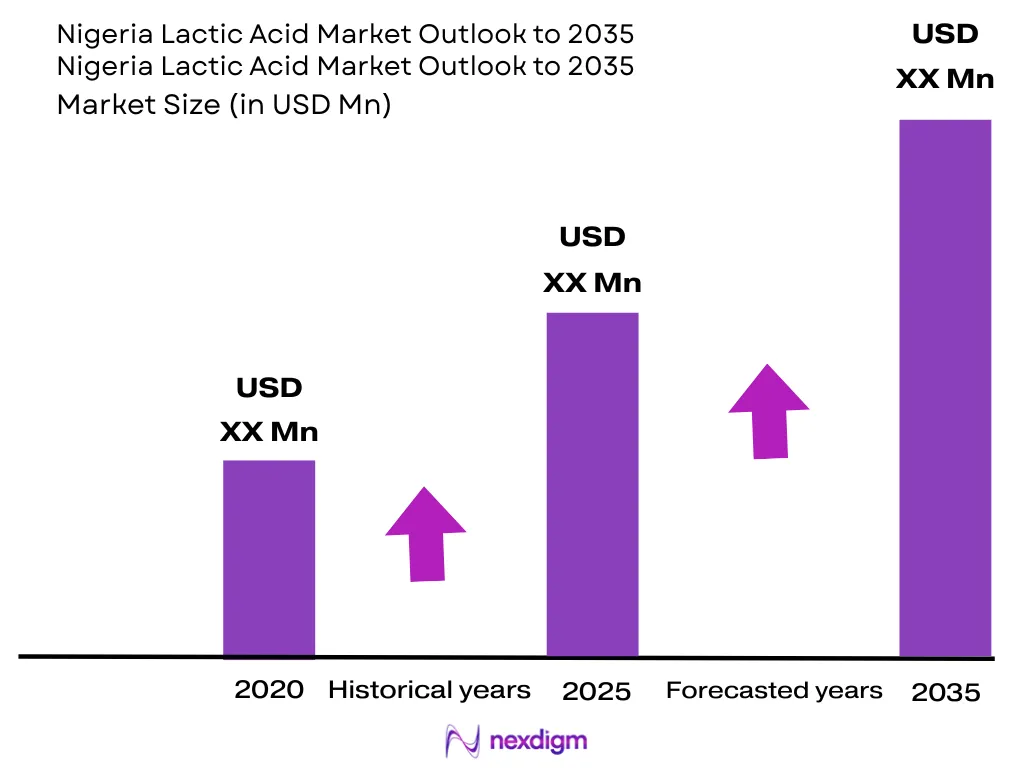
The Nigeria Lactic Acid Market was valued at USD ~ million in 2024, supported by growing demand from the country’s food processing, pharmaceutical, cosmetic, and industrial chemical sectors. According to the Food and Agriculture Organization (FAO), Nigeria remained the world’s largest cassava producer with annual production exceeding 63 million metric tons, while the National Bureau of Statistics reported continued expansion in domestic food manufacturing activities. The increasing utilization of acidulants, preservatives, and bio-based ingredients across processed food and pharmaceutical production has strengthened demand, although the market continues to rely heavily on imported lactic acid due to limited local manufacturing capacity.
Market Segmentation
By Raw Material
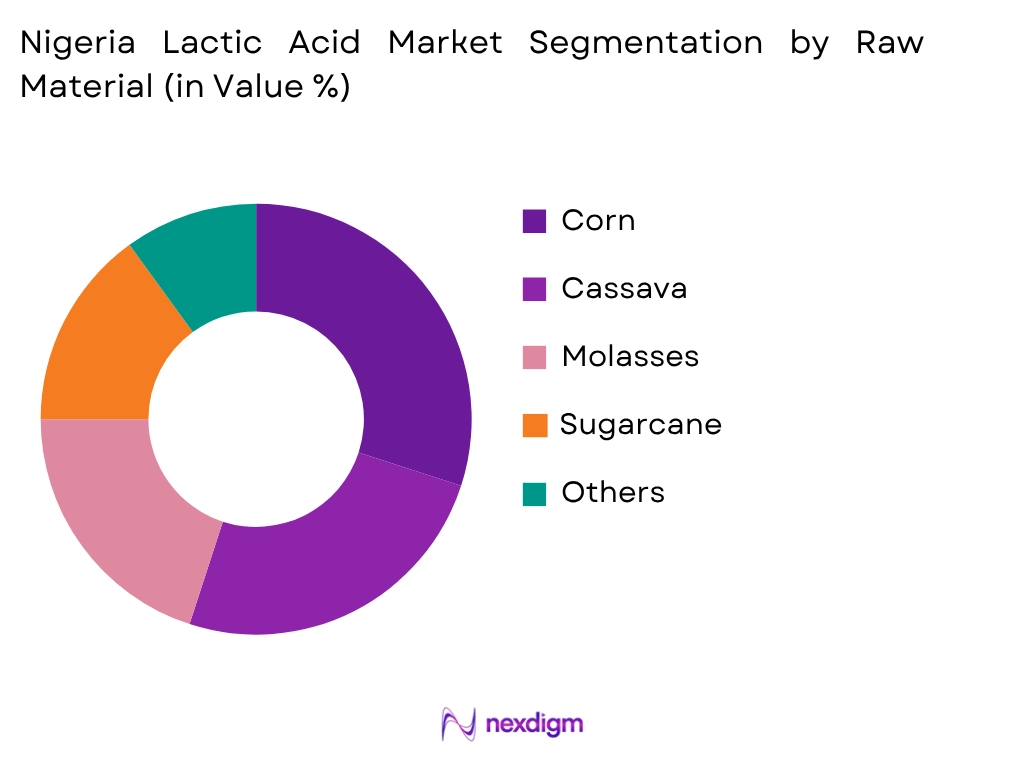
Corn (Maize) dominates the Nigeria Lactic Acid Market by raw material owing to its consistent starch availability, well-established industrial processing infrastructure, and suitability for high-yield microbial fermentation. Industrial manufacturers supplying Nigeria largely produce lactic acid from corn because it offers standardized carbohydrate content, stable fermentation efficiency, and lower processing variability than alternative feedstocks. Although Nigeria possesses one of the world’s largest cassava resources, commercialization of cassava-based lactic acid remains limited due to insufficient fermentation infrastructure and higher investment requirements. Imported corn-derived lactic acid therefore continues to dominate industrial procurement, particularly among food processors, pharmaceutical manufacturers, and beverage companies seeking consistent quality, regulatory compliance, and reliable year-round supply. Continued investments in Nigeria’s bioeconomy may gradually improve the competitiveness of cassava-derived production in the coming years.
By Application
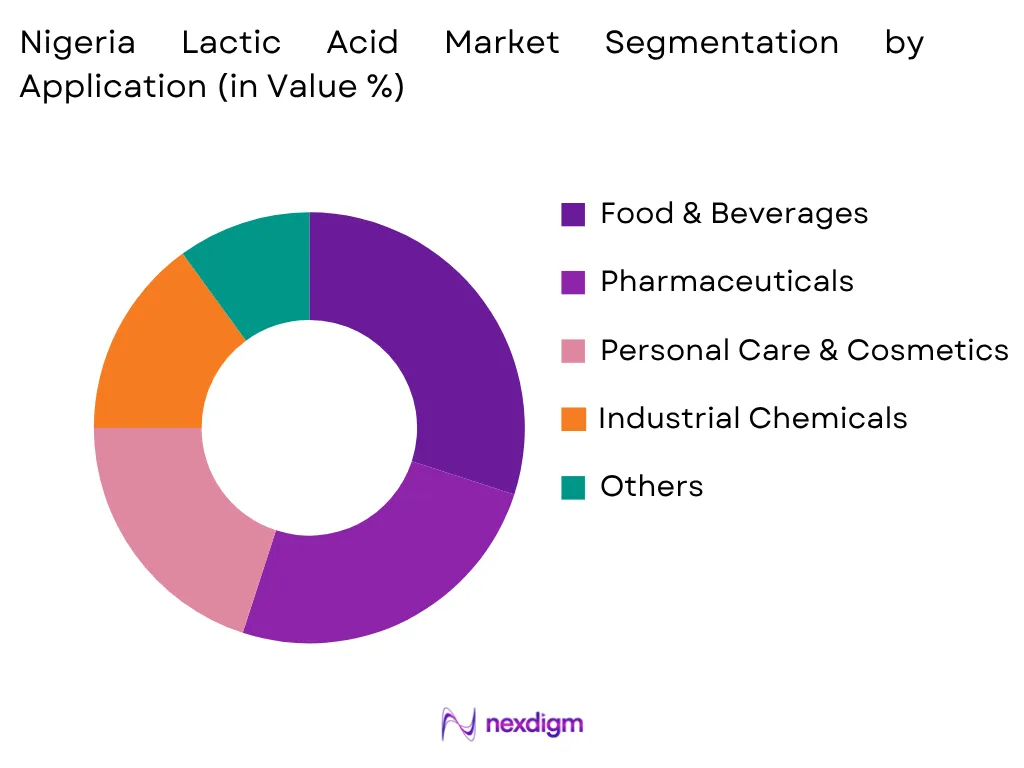
Food & Beverage is the dominant application segment in the Nigeria Lactic Acid Market because lactic acid serves multiple functional purposes including acidity regulation, preservation, flavor enhancement, microbial stability, and pH control. Nigeria’s expanding processed food industry, rising packaged beverage production, increasing dairy processing, and growing bakery sector continue to support robust industrial consumption. Lactic acid is widely incorporated into dairy products, confectionery, beverages, sauces, meat processing, canned foods, and bakery formulations due to its excellent preservative properties and regulatory acceptance as a food additive. Increasing consumer preference for longer shelf-life products and clean-label ingredients has further strengthened demand. Since domestic production remains limited, food manufacturers primarily source imported food-grade lactic acid from established global producers capable of maintaining consistent purity and food safety standards.
Competitive Landscape
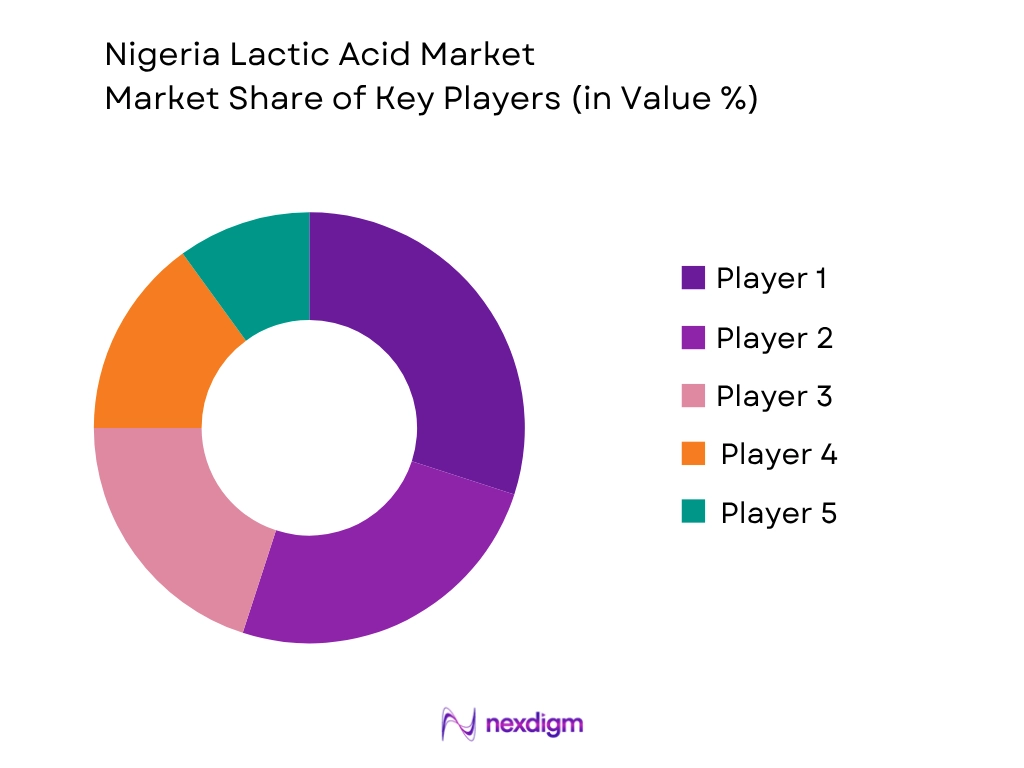
The Nigeria Lactic Acid Market is characterized by a relatively concentrated supply structure, with global fermentation companies supplying the majority of industrial demand through regional distributors and importers. Since domestic production remains limited, multinational manufacturers enjoy strong market positioning through extensive product portfolios, food and pharmaceutical certifications, high production capacities, and established logistics networks. Competition primarily revolves around product quality, purity levels, pricing, delivery reliability, technical support, and distributor partnerships rather than localized manufacturing.
| Company | Establishment Year | Headquarters | Primary Product Portfolio | Lactic Acid Portfolio
|
Manufacturing Presence | Major End-Use Industries | Key Strategic Focus | Certifications & Compliance |
| Corbion | 1919 | ~ | ~ | ~ | ~ | ~ | ~ | ~ |
| Jungbunzlauer | 1867 | ~ | ~ | ~ | ~ | ~ | ~ | ~ |
| Cargill | 1865 | ~ | ~ | ~ | ~ | ~ | ~ | ~ |
| Galactic | 1994 | ~ | ~ | ~ | ~ | ~ | ~ | ~ |
| Henan Jindan Lactic Acid Technology | 1984 | ~ | ~ | ~ | ~ | ~ | ~ | ~ |
Nigeria Lactic Acid Market Analysis
Growth Drivers
Expanding Food Processing Industry
Nigeria’s growing food and beverage manufacturing sector is a major driver for lactic acid consumption because the compound is widely used as an acidulant, preservative, pH regulator, and flavor enhancer across dairy products, beverages, processed meat, bakery products, confectionery, sauces, and packaged foods. According to the World Bank, Nigeria’s manufacturing sector continued to expand during 2024, supported by growth in domestic industrial production and value-added manufacturing activities. The IMF reported Nigeria’s nominal GDP at NGN 296.4 trillion in 2024, while non-oil GDP reached NGN 271.0 trillion, highlighting the increasing contribution of manufacturing and consumer industries to economic activity. The country’s large domestic consumer base of over 230 million people continues to support higher consumption of packaged food products requiring food-grade ingredients such as lactic acid. Nigeria also remains the largest economy in Africa by population, creating sustained demand for processed foods with improved shelf life and food safety standards. The increasing investments in domestic food manufacturing, expansion of beverage production facilities, and rising urban food consumption are encouraging greater utilization of fermentation-derived food additives. As multinational and indigenous food processors expand production capacities, procurement of food-grade lactic acid continues to rise to meet stricter quality, preservation, and formulation requirements across industrial food manufacturing.
Abundant Cassava Availability Supporting Bio-Based Fermentation
Nigeria possesses one of the world’s strongest feedstock advantages for future lactic acid production because it is the world’s largest producer of cassava, one of the primary carbohydrate sources used in microbial fermentation. According to the Central Bank of Nigeria, national cassava production exceeds 53 million metric tons annually, while the country still imports approximately USD 600 million worth of cassava derivatives each year despite abundant domestic production. The World Bank also highlights that Nigeria produced 55.6 million metric tons of cassava, accounting for around 21 million metric tons of global production, yet only about 10 million metric tons are currently directed toward industrial processing while the majority is consumed as food. This significant availability of starch-rich feedstock provides long-term opportunities for domestic lactic acid manufacturing through fermentation technologies. Expanding industrial utilization of cassava can reduce dependence on imported fermentation intermediates while creating higher value-added agricultural products. Growing policy emphasis on agro-processing, industrial diversification, and import substitution further supports investments in fermentation industries utilizing locally available cassava starch, making feedstock availability one of the strongest structural advantages for Nigeria’s future lactic acid industry.
Market Challenges
Heavy Dependence on Imported Lactic Acid and Industrial Inputs
Nigeria’s lactic acid market remains heavily dependent on imported finished products because domestic fermentation capacity is still underdeveloped. This dependence exposes manufacturers to foreign exchange volatility, international freight costs, supply chain disruptions, and import-related regulatory procedures. According to the IMF, Nigeria’s gross international reserves stood at approximately USD 33.3 billion during 2024 while external debt remained above USD 111 billion, reflecting continued pressure on foreign currency availability for industrial imports. The IMF also reported average consumer inflation of 26.3 during 2024, increasing procurement costs for imported industrial chemicals and food ingredients. Since food processors, pharmaceutical manufacturers, and cosmetic producers require high-purity food-grade and pharmaceutical-grade lactic acid that is largely sourced from international suppliers, import dependence continues to influence procurement strategies. Limited domestic production capacity also restricts supply flexibility during periods of global logistics disruptions. Until Nigeria establishes commercial-scale fermentation plants capable of producing internationally certified lactic acid, industrial consumers will remain exposed to exchange-rate risks, shipping delays, and higher import costs associated with sourcing fermentation-derived ingredients from overseas manufacturers.
Infrastructure and Energy Constraints Limiting Domestic Production
Commercial-scale lactic acid manufacturing requires uninterrupted electricity, reliable water supply, efficient logistics, and modern industrial fermentation infrastructure. Nigeria continues to face infrastructure limitations that constrain investment in biotechnology and fermentation-based chemical manufacturing. According to the World Bank, cassava processing and industrial agriculture continue to experience productivity constraints because of fragmented supply chains, inadequate processing facilities, and logistics inefficiencies. The report also notes that cassava yields remain around 8.2 metric tons per hectare, considerably below the global average of 12.8 metric tons per hectare, limiting raw material productivity for downstream industrial processing. Furthermore, the IMF projects private investment equivalent to 21.8 of GDP during 2024, indicating continued investment needs across industrial infrastructure and manufacturing. High dependence on captive power generation, rising energy costs, transportation bottlenecks, and inadequate cold-chain logistics increase operating expenses for industrial biotechnology projects. These structural challenges reduce the competitiveness of domestic fermentation facilities compared with large international producers operating in regions with more mature industrial infrastructure and integrated chemical manufacturing ecosystems.
Market Opportunities
Expansion of Domestic Bio-Based Chemical Manufacturing
Nigeria’s industrial diversification strategy and abundant agricultural resources present significant opportunities for expanding domestic bio-based chemical manufacturing, including lactic acid production. The country’s substantial cassava output provides an inexpensive renewable carbohydrate source suitable for microbial fermentation. According to the World Bank, cassava derivatives are increasingly attracting investor interest because of their applications across food processing, pharmaceuticals, textiles, animal feed, and industrial chemicals. The report also notes that more than 142 companies utilize cassava-derived industrial inputs across multiple manufacturing sectors. Meanwhile, the IMF projects nominal non-oil GDP of NGN 271.0 trillion during 2024, reflecting continued growth of manufacturing industries that consume specialty fermentation ingredients. Increasing localization of industrial raw materials aligns with Nigeria’s broader import substitution agenda and creates opportunities for investments in fermentation technology, starch processing, and downstream biochemical production. Domestic production of food-grade and industrial-grade lactic acid would strengthen supply chain resilience while reducing dependence on imported specialty chemicals, particularly as demand rises across food processing, pharmaceuticals, and biodegradable materials industries.
Rising Pharmaceutical and Personal Care Manufacturing
The continued expansion of Nigeria’s pharmaceutical and personal care industries creates strong long-term opportunities for higher lactic acid consumption. Lactic acid serves as an important pharmaceutical excipient, pH regulator, preservative, and active ingredient in topical formulations, while also being widely used in skincare, cosmetic formulations, and hygiene products. The World Bank highlights that pharmaceutical production in Nigeria has doubled between 2018 and 2024, while the number of pharmaceutical manufacturers increased from 115 companies to 186 companies during the same period. Government initiatives supporting healthcare value chain localization are encouraging greater domestic pharmaceutical manufacturing and reducing dependence on imported finished medicines. Increasing urbanization, expanding healthcare access, and higher demand for personal care products are driving greater utilization of pharmaceutical-grade and cosmetic-grade ingredients, including lactic acid. As manufacturers invest in local production facilities and product innovation, procurement of high-purity fermentation-derived ingredients is expected to strengthen further, creating attractive opportunities for global suppliers as well as future domestic fermentation producers entering the Nigerian market.
Future Outlook
The Nigeria Lactic Acid Market is expected to experience steady expansion throughout the forecast period as industrial diversification, food processing investments, and pharmaceutical manufacturing continue to grow. Rising interest in bio-based chemicals, sustainable packaging materials, and renewable feedstocks is likely to create additional demand for high-purity lactic acid. Increasing government focus on local manufacturing and value addition to agricultural commodities such as cassava may also encourage domestic fermentation investments. Improvements in industrial infrastructure, logistics, and biotechnology capabilities are anticipated to gradually reduce import dependence while creating opportunities for localized production of food-grade and industrial-grade lactic acid.
Major Players
- Corbion
- Jungbunzlauer
- Cargill
- Galactic
- Henan Jindan Lactic Acid Technology Co., Ltd.
- Foodchem International Corporation
- Musashino Chemical Laboratory
- BBCA Group
- Godavari Biorefineries Ltd.
- Futerro
- Cellulac plc
- Shandong Baisheng Biotechnology Co., Ltd.
- Vaishnavi Bio Tech International Ltd.
- BASF SE
- Merck KGaA
Key Target Audience
- Food & Beverage Manufacturers
- Pharmaceutical Manufacturers
- Cosmetic & Personal Care Manufacturers
- Bioplastics and Sustainable Packaging Companies
- Chemical Distributors and Industrial Ingredient Importers
- Investments and Venture Capitalist Firms
- Government and Regulatory Bodies (National Agency for Food and Drug Administration and Control (NAFDAC), Standards Organisation of Nigeria (SON), Federal Ministry of Industry, Trade and Investment)
- Industrial Biotechnology and Fermentation Technology Companies
Research Methodology
Step 1: Identification of Key Variables
The study begins by mapping the complete ecosystem of the Nigeria Lactic Acid Market, including raw material suppliers, fermentation technology providers, importers, distributors, manufacturers, regulators, and end-user industries. Extensive secondary research is conducted using industry databases, trade publications, customs statistics, company reports, and government publications to identify the primary variables influencing market growth, pricing, production, and consumption.
Step 2: Market Analysis and Construction
Historical market performance is analyzed by evaluating import volumes, domestic consumption, production capacity, application trends, pricing patterns, and industrial demand across key end-user sectors. Both top-down and bottom-up estimation techniques are employed to develop robust market sizing models while considering supply-demand dynamics, industrial output, and sector-wise utilization of lactic acid.
Step 3: Hypothesis Validation and Expert Consultation
Initial market assumptions are validated through structured interviews with manufacturers, distributors, importers, food ingredient suppliers, pharmaceutical companies, biotechnology experts, and industry associations. Computer-assisted interviews and expert consultations help verify production trends, procurement practices, pricing structures, regulatory developments, and future investment outlook, ensuring the credibility of market estimates.
Step 4: Research Synthesis and Final Output
The final stage integrates insights obtained from primary interviews with validated secondary research to generate comprehensive market intelligence. Market forecasts are developed through triangulation of demand-side and supply-side data, macroeconomic indicators, industrial production trends, technological developments, and investment activity, resulting in a reliable and actionable assessment of the Nigeria Lactic Acid Market.

- Executive Summary
- Research Methodology (Market Definitions and Assumptions, Abbreviations, Market Sizing Approach, Top-Down Analysis, Bottom-Up Analysis, Demand-Side Assessment, Supply-Side Assessment, Primary Industry Interviews, Secondary Research Validation, Data Triangulation, Forecasting Framework, Limitations and Future Conclusions)

- Definition and Scope
- Market Evolution and Industry Genesis
- Timeline of Major Industry Developments
- Lactic Acid Industry Value Chain Analysis
- Supply Chain Analysis

- Growth Drivers (Growing Processed Food Industry, Rising Demand for Natural Food Preservatives, Expansion of Pharmaceutical Manufacturing, Increasing Cosmetic Production, Growth in Biodegradable Packaging Demand, Industrial Fermentation Investments)
- Market Challenges (High Import Dependence, Limited Domestic Fermentation Capacity, Feedstock Price Volatility, Energy Supply Constraints, Foreign Exchange Fluctuations, Limited PLA Manufacturing Base)
- Market Opportunities (Cassava-Based Lactic Acid Production, Local Fermentation Industry Development, Pharmaceutical Ingredient Localization, Sustainable Packaging Demand, Export-Oriented Manufacturing, Bio-Based Chemical Investments)
- Market Trends (Clean Label Food Ingredients, Bio-Based Chemicals Adoption, Fermentation Technology Upgrades, Sustainable Packaging Materials, High Purity Food Grade Demand, Circular Bioeconomy Initiatives)
- Government Regulations (NAFDAC Regulations, SON Quality Standards, Import Tariff Structure, Food Additive Regulations, Pharmaceutical Excipient Standards, Environmental Compliance Requirements)
- Supply-Demand Gap Analysis (Domestic Production, Import Volume, Consumption Pattern, Capacity Utilization, Demand Deficit)
- Feedstock Availability Assessment (Cassava Production, Sugar Availability, Molasses Supply, Corn Production, Industrial Glucose Availability)
- Pricing Trend Analysis (Feedstock Cost Impact, Import Cost Structure, Freight Cost Influence, FX Impact, Grade-wise Pricing)
- SWOT Analysis
- PESTLE Analysis
- Porter’s Five Forces Analysis
- Stakeholder Ecosystem
- Competition Ecosystem

- By Market Value (2020-2025)
- By Volume Consumption (2020-2025)
- By Average Selling Price (2020-2025)

- By Raw Material (In Value %)
Sugarcane
Cassava
Corn (Maize)
Molasses
Sugar Beet
Wheat
Other Renewable Biomass - By Application (In Value %)
Food & Beverage
Pharmaceuticals
Personal Care & Cosmetics
Bioplastics (PLA Production)
Industrial Chemicals
Animal Feed
Textile Processing
Leather Processing
Cleaning Products
Agriculture - By End User Industry (In Value %)
Food Processing Companies
Beverage Manufacturers
Pharmaceutical Manufacturers
Cosmetic Manufacturers
Packaging Industry
Chemical Manufacturers
Agriculture Inputs Industry
Textile Industry
Leather Industry - By Distribution Channel (In Value %)
Direct Industrial Sales
Chemical Distributors
Ingredient Distributors
Importers
E-Commerce B2B Platforms - By Region (In Value %)
South West Nigeria
South South Nigeria
South East Nigeria
North Central Nigeria
North West Nigeria
North East Nigeria

- Market Share Analysis (By Value, Volume, Grade, Application, Distribution Network)
- Cross Comparison Parameters (Product Purity Portfolio, Fermentation Technology Capability, Food & Pharma Certifications, Production Capacity, Import Dependency Ratio, Feedstock Integration, Distribution Coverage Across Nigeria, PLA/Industrial Grade Product Availability)
- SWOT Analysis of Major Players
- Pricing Analysis (By Grade, Purity Level, Application and Bulk Purchase Volume)
- Capacity Expansion and Investment Analysis
- Distributor Network Analysis
- Detailed Profiles of Major Companies
Corbion
Jungbunzlauer
Cargill
Henan Jindan Lactic Acid Technology Co., Ltd.
Galactic
Foodchem International Corporation
Musashino Chemical Laboratory
Vaishnavi Bio Tech International Ltd.
BBCA Group
Shandong Baisheng Biotechnology Co., Ltd.
Cellulac plc
Godavari Biorefineries Ltd.
Futerro
BASF SE
Merck KGaA

- Consumption Pattern Assessment (Industrial Consumption, Food Ingredient Usage, Pharmaceutical Utilization, Cosmetic Ingredient Demand, Chemical Industry Consumption)
- Demand Analysis by Industry
- Procurement and Sourcing Strategy Analysis
- Import Purchasing Behavior
- Domestic vs Imported Product Preference
- Price Sensitivity Assessment
- Product Quality Preference Analysis (Purity, Optical Isomer, Shelf Life, Certification, Consistency)
- Buyer Pain Point Analysis
- Purchase Decision-Making Process
- Future Procurement Outlook

- By Market Value (2026-2035)
- By Volume Consumption (2026-2035)
- By Average Selling Price (2026-2035)


 Request a Sample
 Ask for Customization
 Get a Quote
 Enquire Now