

 Download PDF
 Download PDF
Market Overview
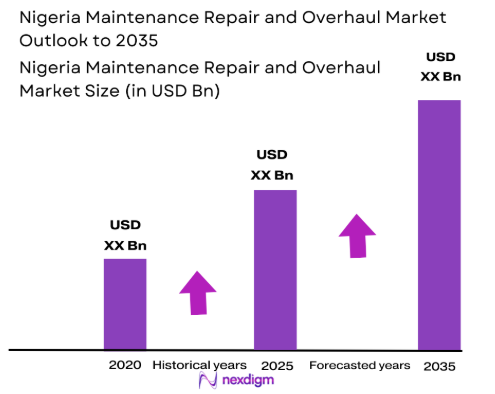
The Nigeria Maintenance Repair and Overhaul market is valued at approximately USD ~ billion based on a recent historical assessment. The market is driven by rising demand for air travel, expanding airline fleets, and increased focus on cost-efficient maintenance solutions. Additionally, regulatory pressures and the increasing need for advanced technology in aircraft repair services play a crucial role in its growth. Government investments in aviation infrastructure and a rise in private sector participation are key contributors to market expansion.
Dominant cities and countries driving the market include Lagos, Abuja, and Port Harcourt. These regions are witnessing significant growth due to the presence of major airlines, airports, and MRO facilities. Lagos, being the commercial hub, leads in aircraft operations, while Abuja and Port Harcourt are emerging as key centers for aviation infrastructure development. The strategic location of these cities, along with government policies supporting aviation, strengthens their role in the MRO sector.
Market Segmentation
By Product Type
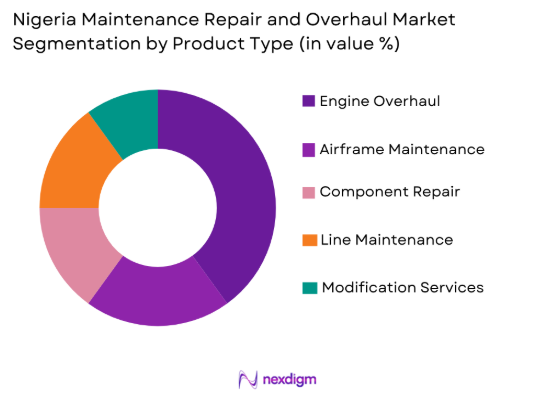
Nigeria’s Maintenance Repair and Overhaul market is segmented by product type into engine overhaul, airframe maintenance, component repair, line maintenance, and modification services. Recently, engine overhaul has a dominant market share due to factors such as the aging aircraft fleet and the need for routine engine checks to ensure operational efficiency and safety. With an increasing number of aircraft in service and growing concerns about fuel efficiency and emissions, engine maintenance has become crucial for airlines to reduce operational costs and avoid downtime.
By Platform Type
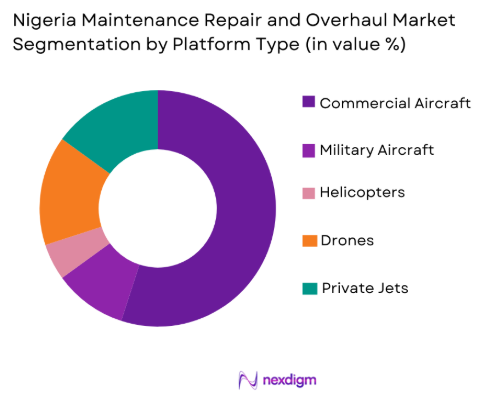
The Nigeria Maintenance Repair and Overhaul market is segmented by platform type into commercial aircraft, military aircraft, helicopters, drones, and private jets. Recently, commercial aircraft have a dominant market share due to the growing demand for air travel and the increasing number of aircraft operated by domestic and international airlines. The commercial aviation sector’s large fleet size, particularly in the face of rising passenger traffic, demands frequent maintenance services to ensure safety and operational reliability. The importance of maintaining the fleet to meet travel schedules and safety standards drives the commercial aircraft segment’s growth.
Competitive Landscape
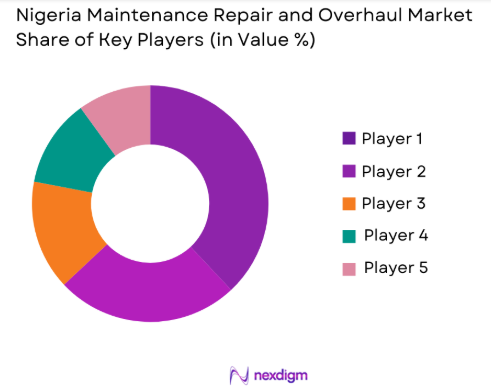
The competitive landscape in Nigeria’s MRO market is highly dynamic with a few major players dominating the scene. The market has seen a rise in partnerships between local and international firms to expand service capabilities. These collaborations, along with technological advancements, are enhancing the overall market offering. Key players influence market consolidation, with several of them having well-established service networks and strategic alliances.
| Company Name | Establishment Year | Headquarters | Technology Focus | Market Reach | Key Products | Revenue (USD) | Service Network Reach |
| Air Nigeria Maintenance Services | 2002 | Lagos, Nigeria | ~ | ~ | ~ | ~ | ~ |
| Aero Contractors | 1992 | Lagos, Nigeria | ~ | ~ | ~ | ~ | ~ |
| C & D Aviation Services | 2005 | Abuja, Nigeria | ~ | ~ | ~ | ~ | ~ |
| JetWest Aviation | 2010 | Lagos, Nigeria | ~ | ~ | ~ | ~ | ~ |
| Lufthansa Technik | 1951 | Germany | ~ | ~ | ~ | ~ | ~ |
Nigeria Maintenance Repair and Overhaul Market Analysis
Growth Drivers
Increased Demand for Air Travel
Increased demand for air travel in Nigeria is driving the maintenance repair and overhaul market. The expansion of domestic and international flight routes, coupled with a growing middle class, has led to a surge in passenger traffic. As airlines operate more frequent flights, the need for reliable maintenance services becomes critical to maintain safety standards and operational efficiency. With Nigeria’s position as a major regional air transport hub, this growth trend in air travel directly influences the MRO sector, propelling demand for engine overhauls, component repairs, and airframe maintenance. Airlines are also investing in improving fleet management systems, further expanding the need for MRO services. The Nigerian government’s support for the aviation industry, coupled with global air travel recovery post-pandemic, has significantly bolstered market growth.
Technological Advancements in MRO
Technological advancements are driving the Nigeria MRO market forward. Innovations such as predictive maintenance, the integration of IoT, and advanced diagnostic tools are enhancing the efficiency of MRO services. Airlines are increasingly adopting digital technologies to predict maintenance needs, allowing for proactive repairs and reducing downtime. The use of AI-driven software for fleet management, coupled with automation in parts inspection and engine diagnostics, enables MRO companies to provide faster, more cost-effective services. With these technologies, the MRO industry can offer higher precision and lower operational costs, making it more attractive for airlines and other platform operators in Nigeria. Additionally, the rise in unmanned aerial vehicle (UAV) maintenance technology has further advanced the MRO landscape, addressing the specific needs of new-age aircraft systems.
Market Challenges
High Operational Costs
High operational costs remain a significant challenge for Nigeria’s MRO market. The cost of maintaining aircraft, sourcing spare parts, and complying with stringent safety regulations continues to rise. The price volatility of raw materials and the dependency on international suppliers for key components add pressure to the industry. These cost constraints impact smaller MRO providers, making it difficult for them to remain competitive. With a lack of local production for certain critical parts, Nigerian MROs are dependent on imports, which adds to the overall operational expenses. Moreover, frequent changes in regulations and international standards for aircraft maintenance require constant investment in upgrading tools and training personnel, leading to financial strain for smaller players. This challenge forces many MRO providers to rely on costly imports or external partnerships.
Skills Shortage in MRO Industry
A shortage of skilled workers in the MRO industry poses a significant challenge to market growth in Nigeria. The demand for qualified engineers and technicians outpaces supply, resulting in a skill gap in the workforce. Additionally, the lack of specialized training programs tailored to new technologies in aircraft systems exacerbates this issue. MRO companies are facing difficulties in recruiting and retaining experienced personnel due to the long training periods required and competitive compensation offered by international companies. Without a consistent pipeline of well-trained professionals, Nigerian MRO companies struggle to meet the growing demand for maintenance services, especially as the fleet size increases. The need for specialized knowledge in aircraft diagnostics and repair further intensifies this challenge, leaving the market vulnerable to delays and reduced operational efficiency.
Opportunities
Expansion of MRO Facilities
The expansion of MRO facilities across Nigeria presents a significant opportunity for the market. With the increasing number of commercial and military aircraft, Nigeria’s demand for maintenance services is also growing. Establishing more MRO facilities, particularly in underserved regions, can alleviate the pressure on existing services and cater to a larger clientele. These new facilities could focus on providing more specialized services, such as advanced engine repairs, airframe maintenance, and the overhaul of components that require high-tech equipment. Strategic investments in these MRO facilities could help enhance Nigeria’s position as a regional hub for aviation services. This would also foster the development of a stronger supply chain for MRO services, benefiting both domestic airlines and international players operating in Nigeria.
Outsourcing MRO Services to Third Parties
The growing trend of outsourcing MRO services to third-party providers presents a considerable opportunity for Nigeria’s market. Airlines, especially those with smaller fleets, are increasingly seeking to reduce operational costs by outsourcing maintenance activities. Third-party providers can offer more cost-effective services compared to in-house operations, which require significant investments in facilities, tools, and personnel. This trend allows airlines to focus on their core operations while relying on specialized MRO providers for maintenance, repair, and overhaul tasks. In Nigeria, this outsourcing trend is particularly attractive to airlines looking for ways to minimize overhead and improve profitability. Additionally, it enables smaller regional carriers to access high-quality MRO services without the need for heavy capital investments.
Future Outlook
The Nigeria MRO market is expected to grow steadily over the next five years, driven by an expanding aviation sector and government investments in infrastructure. With increasing air traffic and an aging fleet of aircraft, the demand for maintenance services will rise, especially in engine overhaul and airframe repairs. Technological advancements, such as predictive maintenance and automation, will play a pivotal role in improving service efficiency and reducing operational costs. Regulatory support, along with growing private sector participation, will further fuel this market’s growth trajectory. Rising competition and market consolidation are expected to drive innovation and enhance service offerings across the sector.
Major Players
- Air Nigeria Maintenance Services
- Aero Contractors
- C & D Aviation Services
- JetWest Aviation
- Lufthansa Technik
- Qantas Airways
- Rolls-Royce
- GE Aviation
- Pratt & Whitney
- Safran Aircraft Engines
- ST Engineering Aerospace
- Boeing
- Airbus
- Embraer
- Ethiopian Airlines MRO
Key Target Audience
- Investments and venture capitalist firms
- Government and regulatory bodies
- Aircraft operators
- Airlines
- MRO service providers
- OEMs
- Aviation infrastructure developers
- Military and defense contractors
Research Methodology
Step 1: Identification of Key Variables
The key variables for this research include aircraft fleet size, maintenance frequency, technology adoption, and regulatory frameworks that influence MRO demand in Nigeria.
Step 2: Market Analysis and Construction
A comprehensive analysis was performed to construct the market landscape using primary data from industry experts, government sources, and financial reports of major players.
Step 3: Hypothesis Validation and Expert Consultation
The hypotheses formed during the initial phase were validated through discussions with MRO professionals, airline executives, and government representatives.
Step 4: Research Synthesis and Final Output
The findings were synthesized into actionable insights, forming the basis for the final market report, which includes forecasts, trends, and strategic recommendations.

- Executive Summary
- Research Methodology (Definitions, Scope, Industry Assumptions, Market Sizing Approach, Primary & Secondary Research Framework, Data Collection & Verification Protocol, Analytic Models & Forecast Methodology, Limitations & Research Validity Checks)

- Market Definition and Scope
- Value Chain & Stakeholder Ecosystem
- Regulatory / Certification Landscape
- Sector Dynamics Affecting Demand
- Strategic Initiatives & Infrastructure Growth

- Growth Drivers
Rising Demand for Air Traffic
Increasing Airline Fleets
Technological Advancements in MRO
Government Investments in Aviation Infrastructure
Rising Adoption of Digital MRO Solutions - Market Challenges
High Operational Costs
Skills Shortage in MRO Industry
Regulatory Compliance Issues
Logistics and Supply Chain Disruptions
Dependence on Imported Spare Parts - Market Opportunities
Expansion of MRO Facilities
Outsourcing MRO Services to Third Parties
Emerging Demand for Unmanned Aerial Vehicles (UAVs) Maintenance - Trends
Increased Adoption of Predictive Maintenance
Growth in Use of Drones in MRO Operations
Integration of AI and IoT in Aircraft Maintenance
Focus on Sustainability and Eco-friendly MRO Practices
Growing Integration of Robotics and Automation in MRO - Government Regulations & Defense Policy
Civil Aviation Safety and Standards
Government Aviation Infrastructure Development
Defense Sector MRO Regulations

- By Market Value, 2020-2025
- By Installed Units, 2020-2025
- By Average System Price, 2020-2025
- By System Complexity Tier, 2020-2025

- By System Type (In Value%)
Engine Overhaul
Airframe Maintenance
Component Repair
Line Maintenance
Modification Services - By Platform Type (In Value%)
Commercial Aircraft
Military Aircraft
Helicopters
Drones
Private Jets - By Fitment Type (In Value%)
Original Equipment Manufacturer (OEM) Services
Independent Maintenance, Repair, and Overhaul (MRO) Services
In-house Maintenance
Third-party MRO Providers
Regional Maintenance Networks - By EndUser Segment (In Value%)
Airlines
Aircraft Operators
Government / Military
OEMs
MRO Service Providers - By Procurement Channel (In Value%)
Direct Procurement
Tender Procurement
Third-party Distributors
Online Procurement Platforms
Bidding Platforms - By Material / Technology (in Value%)
Composite Materials
Advanced Engine Technologies
Aerostructures
Repair Tools & Equipment
Automation in MRO Processes

- Market structure and competitive positioning
- Market share snapshot of major players
- Cross Comparison Parameters (System Type, Platform Type, Procurement Channel, End User Segment, Fitment Type, Material/Technology, Regional Market Presence, Service Capabilities)
- SWOT Analysis of Key Players
- Pricing & Procurement Analysis
- Porter’s Five Forces
- Key Players
Air Nigeria Maintenance Services
Aero Contractors
C & D Aviation Services
DHL Aviation
Dunlop Aviation Services
JetWest Aviation
Lufthansa Technik
Qatar Airways MRO
ST Engineering Aerospace
African Aviation Services
Nigerian Air Force MRO
FAA-Approved Maintenance Facility
Nigerian Airlines Maintenance Unit
Nigeria Aviation Authority
Emirates Engineering Services
Air France Industries KLM Engineering

- Growing Airline Fleet Requirements
- Demand for Cost-effective MRO Services
- Military Demand for Aircraft Maintenance
- Expanding UAV Maintenance Requirements

- Forecast Market Value, 2026-2035
- Forecast Installed Units, 2026-2035
- Price Forecast by System Tier, 2026-2035
- Future Demand by Platform, 2026-2035


 Request a Sample
 Ask for Customization
 Get a Quote
 Enquire Now