

 Download PDF
 Download PDF
Market Overview
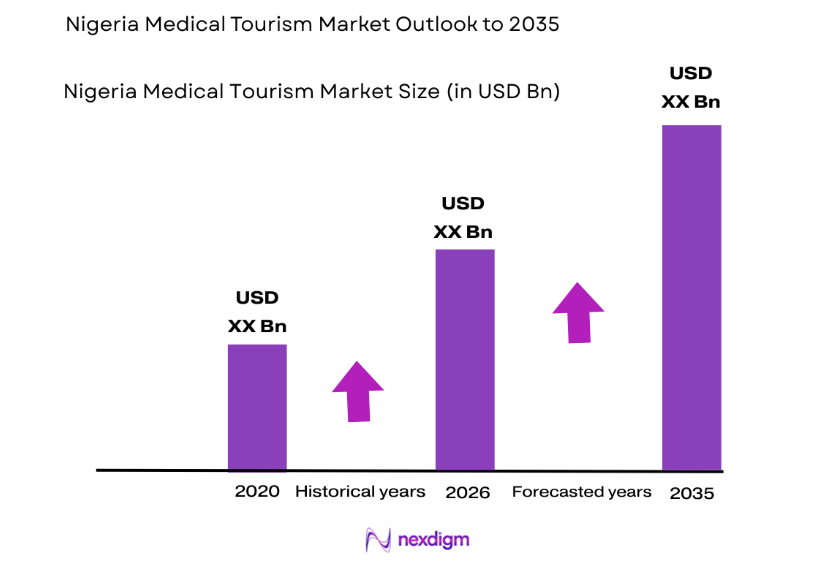
Nigeria’s medical tourism sector is gradually developing as healthcare providers strengthen specialized treatment capabilities and regional patients seek affordable medical services. Based on a recent historical assessment, the Nigeria medical tourism market is valued at approximately USD ~ billion according to healthcare spending analysis referenced by the World Health Organization and Nigeria’s Federal Ministry of Health. Growth is driven by the expansion of private tertiary hospitals, international healthcare partnerships, and increasing demand for specialized procedures such as cardiology, orthopedics, fertility treatment, and advanced diagnostic services.
Medical tourism activity is concentrated in major healthcare centers including Lagos, Abuja, and Port Harcourt, where internationally accredited hospitals and specialized clinics operate. These cities attract regional patients due to advanced hospital infrastructure, access to highly trained medical specialists, and proximity to international airports. Private healthcare institutions in these locations provide complex surgeries and specialized treatments that are less accessible in neighboring countries. Strong healthcare investments and the presence of modern medical facilities reinforce their role as leading medical tourism hubs.
Market Segmentation
By Treatment Type
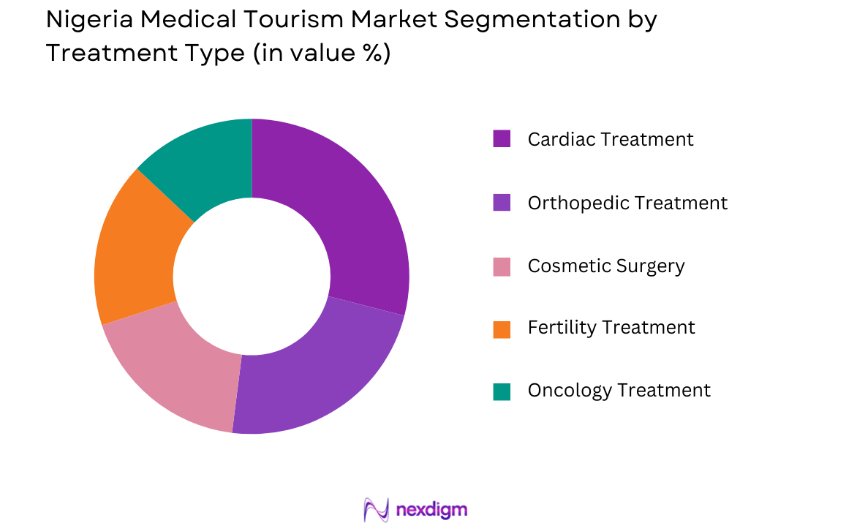
Nigeria Medical Tourism market is segmented by Treatment type into cardiac treatment, orthopedic treatment, cosmetic surgery, fertility treatment, and oncology treatment. Recently, cardiac treatment has a dominant market share due to factors such as increasing demand for cardiovascular procedures, the availability of specialized cardiology hospitals, and improved surgical infrastructure in private healthcare facilities. Cardiac procedures such as bypass surgery, angioplasty, and heart valve treatment attract regional patients seeking relatively affordable treatment compared to international medical tourism destinations. Additionally, the presence of experienced cardiologists and modern cardiac catheterization laboratories supports patient inflow. Private hospitals increasingly invest in cardiology departments and advanced cardiac imaging systems, strengthening Nigeria’s capability to perform complex cardiovascular procedures and improving patient confidence in domestic and regional cardiac treatment services.
By Service Provider
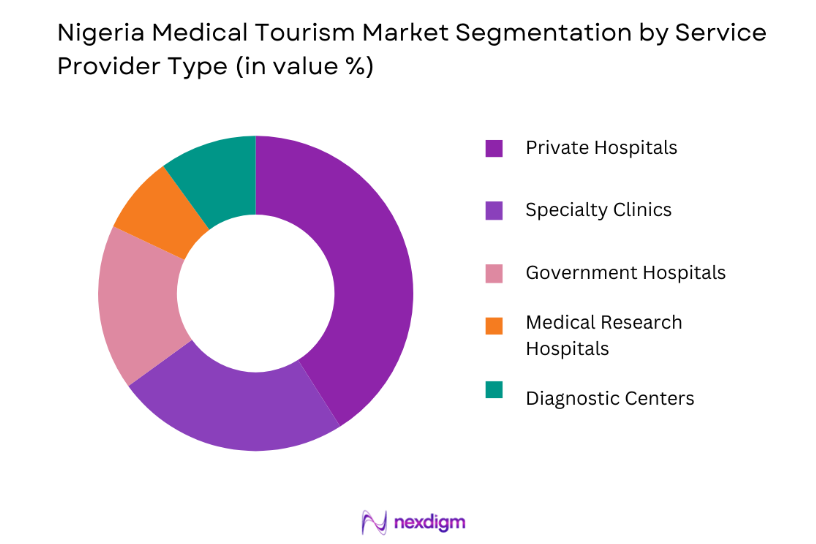
Nigeria Medical Tourism market is segmented by Service Provider into private hospitals, specialty clinics, government hospitals, medical research hospitals, and diagnostic centers. Recently, private hospitals have a dominant market share due to factors such as superior healthcare infrastructure, faster treatment availability, and international-standard medical equipment. Many private hospitals collaborate with international healthcare specialists and maintain advanced surgical facilities that attract patients from neighboring countries. These hospitals often provide personalized treatment packages that include consultation, surgery, and post-treatment care. Additionally, private healthcare institutions frequently adopt modern medical technologies and digital health systems, which improve treatment efficiency and patient experience. The ability to deliver high-quality healthcare services with shorter waiting periods makes private hospitals the preferred destination for international patients seeking specialized medical treatment in Nigeria.
Competitive Landscape
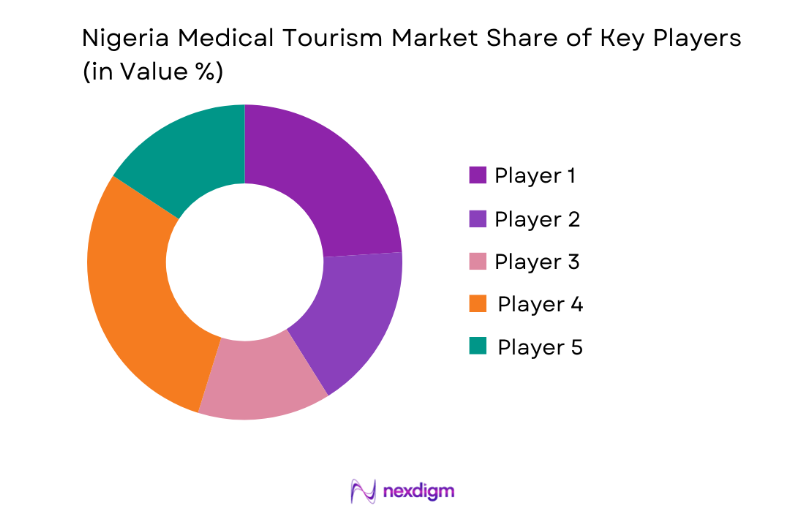
The Nigeria medical tourism market consists primarily of large private hospital groups and specialized healthcare institutions offering advanced medical treatments. Competition is influenced by hospital accreditation, specialist expertise, and the availability of modern medical technologies. Leading hospitals expand their capabilities by investing in advanced surgical equipment and international medical collaborations. Private hospital networks dominate the market due to their ability to provide comprehensive treatment services and attract regional patients seeking specialized medical procedures.
| Company Name | Establishment Year | Headquarters | Technology Focus | Market Reach | Key Products | Revenue | International Patient Programs |
| Reddington Hospital | 2006 | Lagos, Nigeria | ~ | ~ | ~ | ~ | ~ |
| Euracare Multi-Specialist Hospital | 2016 | Abuja, Nigeria | ~ | ~ | ~ | ~ | ~ |
| Lagoon Hospitals | 1986 | Lagos, Nigeria | ~ | ~ | ~ | ~ | ~ |
| Cedarcrest Hospitals | 2008 | Abuja, Nigeria | ~ | ~ | ~ | ~ | ~ |
| Evercare Hospital Lekki | 2021 | Lagos, Nigeria | ~ | ~ | ~ | ~ | ~ |
Nigeria Medical Tourism Market Analysis
Growth Drivers
Expansion of Private Tertiary Hospitals Offering Specialized Treatments
The growth of Nigeria’s medical tourism market is strongly influenced by the rapid expansion of private tertiary hospitals providing specialized healthcare services. Several private healthcare institutions have invested significantly in modern medical infrastructure, advanced surgical equipment, and specialized treatment departments that attract international and regional patients. These hospitals offer a range of complex procedures including cardiac surgery, orthopedic interventions, fertility treatments, and advanced diagnostic services. Regional patients often travel to Nigeria to access these services due to relatively lower treatment costs compared with international medical tourism destinations. Private hospitals also emphasize patient-centered healthcare experiences, offering integrated services such as medical consultation, treatment planning, and postoperative care. Furthermore, international healthcare collaborations allow Nigerian hospitals to adopt global clinical practices and training programs that improve treatment quality. The presence of internationally trained specialists further enhances patient confidence in Nigerian healthcare institutions. As hospital networks expand their specialty treatment capabilities and invest in modern healthcare technologies, Nigeria continues to strengthen its position as an emerging regional destination for specialized medical treatment services.
Increasing Regional Patient Mobility and Demand for Affordable Specialized Healthcare
The growing movement of patients across African countries in search of specialized healthcare services has become an important growth driver for Nigeria’s medical tourism industry. Many neighboring countries have limited access to advanced medical infrastructure or specialized healthcare professionals capable of performing complex procedures. As a result, patients travel to countries with better-equipped healthcare systems to receive treatment. Nigeria benefits from this trend because of its relatively advanced private hospital networks and specialized treatment centers located in major cities. Regional patients often seek services such as cardiac surgery, fertility treatment, and orthopedic procedures that may not be easily available in their home countries. Additionally, Nigeria offers competitive treatment costs compared to international medical tourism destinations in Europe, the Middle East, and Asia. Improved air connectivity and visa accessibility further facilitate cross-border medical travel. Hospitals also provide international patient assistance services, including travel coordination and accommodation support, which enhances the medical tourism experience for visiting patients.
Market Challenges
Limited Global Accreditation and International Recognition of Healthcare Facilities
One of the major challenges facing Nigeria’s medical tourism market is the relatively limited number of internationally accredited healthcare facilities. Global medical tourism destinations typically attract international patients through internationally recognized hospital certifications that demonstrate compliance with global healthcare standards. Many Nigerian hospitals operate with strong medical capabilities but lack widely recognized international accreditation frameworks. This limitation can influence patient perception regarding treatment quality and safety. International patients often rely on accreditation indicators when selecting medical tourism destinations for complex procedures. Without sufficient global recognition, hospitals may face difficulties competing with established medical tourism hubs such as India, Turkey, and the United Arab Emirates. Additionally, obtaining international accreditation requires significant investments in hospital infrastructure, clinical protocols, and staff training. Smaller healthcare institutions may struggle to allocate the resources required to achieve these certifications. Addressing this challenge will require coordinated efforts between healthcare providers, regulatory authorities, and accreditation bodies to enhance international confidence in Nigeria’s healthcare sector.
Infrastructure Constraints and Healthcare Resource Limitations in Certain Regions
Another major challenge affecting the Nigeria medical tourism market involves infrastructure limitations and uneven healthcare resource distribution across the country. While major cities possess modern hospitals and specialized clinics, many regions still face shortages of healthcare facilities, advanced equipment, and skilled medical professionals. Medical tourism relies heavily on reliable healthcare infrastructure, including high-quality hospitals, diagnostic laboratories, and rehabilitation centers. In some cases, limited availability of specialized medical equipment can restrict the types of treatments available to international patients. Healthcare facilities must also maintain consistent electricity supply, medical supply chains, and advanced diagnostic technologies to support complex medical procedures. Infrastructure challenges may reduce patient confidence in healthcare reliability and limit the country’s ability to expand its medical tourism services. Furthermore, international patients often expect seamless healthcare experiences that include accommodation, transportation, and medical coordination services. Strengthening healthcare infrastructure and improving service integration will therefore be essential for Nigeria to compete effectively in the global medical tourism market.
Opportunities
Development of Specialized Centers of Excellence for High-Demand Medical Procedures
The establishment of specialized medical centers focused on high-demand procedures presents a significant opportunity for Nigeria’s medical tourism market. Healthcare institutions can develop dedicated centers of excellence for cardiology, oncology, orthopedics, fertility treatment, and advanced diagnostics. These specialized centers concentrate medical expertise, advanced equipment, and research capabilities in specific healthcare disciplines. By offering highly specialized treatment services, hospitals can attract international patients seeking high-quality medical care at competitive costs. Centers of excellence also encourage knowledge exchange between international healthcare professionals and local specialists, strengthening clinical capabilities. Governments and private healthcare investors can collaborate to support the development of these centers through infrastructure investment and regulatory support. International partnerships with global healthcare institutions may further enhance training programs and technology transfer. As specialized treatment centers expand their capabilities, Nigeria can position itself as a regional hub for advanced medical procedures within West Africa.
Integration of Digital Health Platforms and Telemedicine for International Patient Engagement
Digital health technologies and telemedicine platforms offer significant opportunities for Nigeria’s medical tourism sector to attract international patients. Telemedicine consultations allow prospective patients to communicate with Nigerian medical specialists before traveling for treatment. These virtual consultations help patients understand treatment plans, evaluate hospital facilities, and build trust with healthcare providers. Hospitals can also use digital health platforms to coordinate medical records, schedule procedures, and monitor patient recovery remotely after treatment. Telemedicine integration improves accessibility and transparency in healthcare services for international patients. Digital health tools also support collaboration between Nigerian specialists and global medical experts, enabling second opinions and multidisciplinary consultations. As digital healthcare infrastructure continues to expand, Nigerian hospitals can strengthen their international patient outreach strategies and enhance the overall medical tourism experience.
Future Outlook
Nigeria’s medical tourism market is expected to grow steadily as private healthcare providers expand specialized treatment capabilities and invest in modern hospital infrastructure. Technological advancements in surgical equipment, digital health systems, and diagnostic technologies will enhance healthcare quality. Increasing regional patient mobility across West Africa will further support demand for specialized medical services. Government healthcare reforms and private investment in hospital infrastructure are likely to strengthen Nigeria’s healthcare ecosystem. These developments position the country as a potential regional hub for advanced medical treatment services.
Major Players
- Reddington Hospital
- Euracare Multi-Specialist Hospital
- Lagoon Hospitals
- Cedarcrest Hospitals
- Evercare Hospital Lekki
- St. Nicholas Hospital
- First Cardiology Consultants
- Nisa Premier Hospital
- Nordica Fertility Centre
- Kelina Hospital
- Bridge Clinic Nigeria
- Olive Branch Hospital
- Duchess International Hospital
- Medbury Medical Services
- Eko Hospital
Key Target Audience
- Private hospital networks
- Healthcare infrastructure investors
- Pharmaceutical and biotechnology companies
- Medical device manufacturers
- Health insurance providers
- Investments and venture capitalist firms
- Government and regulatory bodies
Research Methodology
Step 1: Identification of Key Variables
The research process begins by identifying the critical factors influencing the Nigeria medical tourism market, including healthcare infrastructure availability, patient mobility trends, treatment demand, and regulatory frameworks. These variables define the analytical scope used to evaluate industry development and market growth patterns.
Step 2: Market Analysis and Construction
Primary healthcare statistics and secondary industry data are analyzed to construct the market structure. Hospital capacities, specialized treatment services, and international patient inflows are examined to determine the composition of Nigeria’s medical tourism ecosystem.
Step 3: Hypothesis Validation and Expert Consultation
Industry assumptions are validated through consultations with hospital administrators, medical specialists, and healthcare policy experts. These expert perspectives help refine analytical models and ensure realistic representation of patient demand and healthcare service availability.
Step 4: Research Synthesis and Final Output
Validated insights from primary and secondary research are integrated into a structured market framework. The final report combines market segmentation, competitive analysis, and healthcare ecosystem evaluation to provide a comprehensive assessment of the Nigeria medical tourism market.

- Executive Summary
- Research Methodology (Definitions, Scope, Industry Assumptions, Market Sizing Approach, Primary & Secondary Research Framework, Data Collection & Verification Protocol, Analytic Models & Forecast Methodology, Limitations & Research Validity Checks)

- Market Definition and Scope
- Value Chain & Stakeholder Ecosystem
- Regulatory / Certification Landscape
- Sector Dynamics Affecting Demand

- Growth Drivers
Growing Investments in Private Healthcare Infrastructure
Increasing Demand for Affordable Specialized Treatments in Africa
Expansion of International Healthcare Partnerships and Referrals - Market Challenges
Limited Advanced Healthcare Infrastructure Compared to Global Destinations
Regulatory and Accreditation Barriers for International Medical Tourism
Perception Challenges Regarding Healthcare Quality Standards - Market Opportunities
Development of Specialized Treatment Centers for International Patients
Expansion of Regional Medical Tourism within West Africa
Adoption of Digital Platforms for International Patient Engagement - Trends
Growth of Cross-Border Healthcare Services within Africa
Increasing Private Sector Investment in Specialized Medical Facilities - Government Regulations
- SWOT Analysis
- Porter’s Five Forces

- By Market Value, 2020-2025
- By Installed Units, 2020-2025
- By Average System Price, 2020-2025
- By System Complexity Tier, 2020-2025

- By System Type (In Value%)
Cosmetic and Plastic Surgery Services
Cardiology Treatment Services
Orthopedic Treatment Services
Fertility and Reproductive Health Services
General Surgery and Specialized Treatment Services - By Platform Type (In Value%)
Private Multi-Specialty Hospitals
Specialized Medical Clinics
Diagnostic and Treatment Centers
Integrated Healthcare Tourism Facilities - By Fitment Type (In Value%)
Hospital-Based Medical Tourism Services
Clinic-Based Medical Tourism Services
Integrated Medical Tourism Packages
Cross-Border Referral Healthcare Services - By End User Segment (In Value%)
International Patients
Regional African Patients
Nigerian Diaspora Patients

- Market Share Analysis
- Cross Comparison Parameters (Treatment Specialization Breadth, International Accreditation Status, Healthcare Infrastructure Quality, Pricing Competitiveness, Partnership with Medical Tourism Agencies, International Patient Services, Hospital Capacity and Facilities)
- SWOT Analysis of Key Competitors
- Pricing & Procurement Analysis
- Key Players
Reddington Hospital
Eko Hospitals
Lagoon Hospitals
Evercare Hospital Lekki
St Nicholas Hospital
First Cardiology Consultants
Nisa Premier Hospital
Bridge Clinic
Euracare Multi-Specialty Hospital
Cedarcrest Hospitals
Kelina Hospital
Nordica Fertility Centre
Avon Medical Practice
Lifeline Children’s Hospital
Genesis Specialist Hospital

- Private Hospitals Targeting International and Diaspora Patients
- Regional African Patients Seeking Specialized Treatments in Nigeria
- Government Initiatives Supporting Healthcare Infrastructure Development
- Growing Partnerships Between Hospitals and International Medical Facilitators

- Forecast Market Value, 2026-2035
- Forecast Installed Units, 2026-2035
- Price Forecast by System Tier, 2026-2035
- Future Demand by Platform, 2026-2035


 Request a Sample
 Ask for Customization
 Get a Quote
 Enquire Now