

 Download PDF
Market Overview
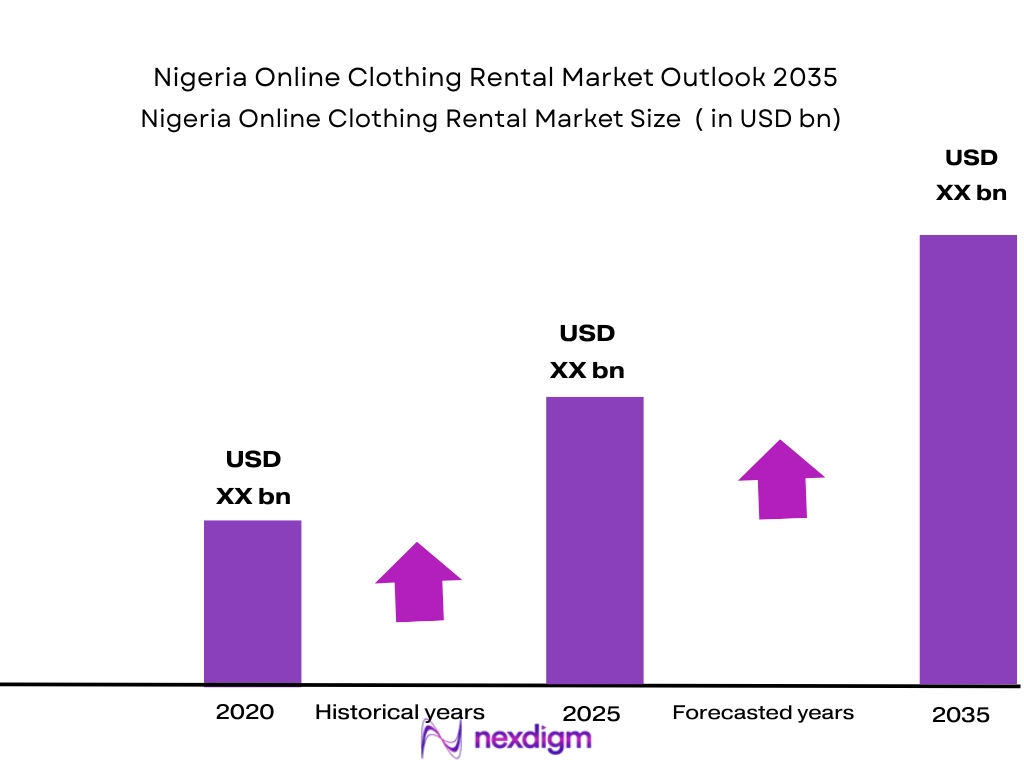
The Nigeria Online Clothing Rental Market is positioned within the broader apparel rental and circular fashion economy. While precise public data for Nigeria’s online clothing rental revenue in 2024 is limited, the global online clothing rental market was valued at USD ~ billion in 2024, reflecting rapid expansion of digital fashion rental services worldwide with subscription and transaction‑based models, driven by sustainability and convenience. Nigeria’s share of this market is a fraction of global demand but is increasing as e‑commerce and sharing economy models penetrate urban consumer segments.
Market growth in Nigeria is driven by rising internet penetration, urbanization, and a young population increasingly interested in affordable designer fashion for special occasions and social events. E‑commerce platforms and mobile‑first consumer behaviour encourage rental adoption over ownership, particularly among women and younger demographics who value variety without the cost of frequent purchases. Leading Nigerian urban centers such as Lagos, Abuja, and Port Harcourt dominate adoption due to higher disposable incomes, stronger digital infrastructure, and fashion‑centric social cultures that support trend‑driven apparel rental models. Lagos, as a major cultural and economic hub, benefits from frequent fashion events, high social media engagement, and a sizeable affluent segment that is more open to alternative fashion consumption practices, increasing the appeal of online rental platforms.
Market Segmentation
By Rental Model
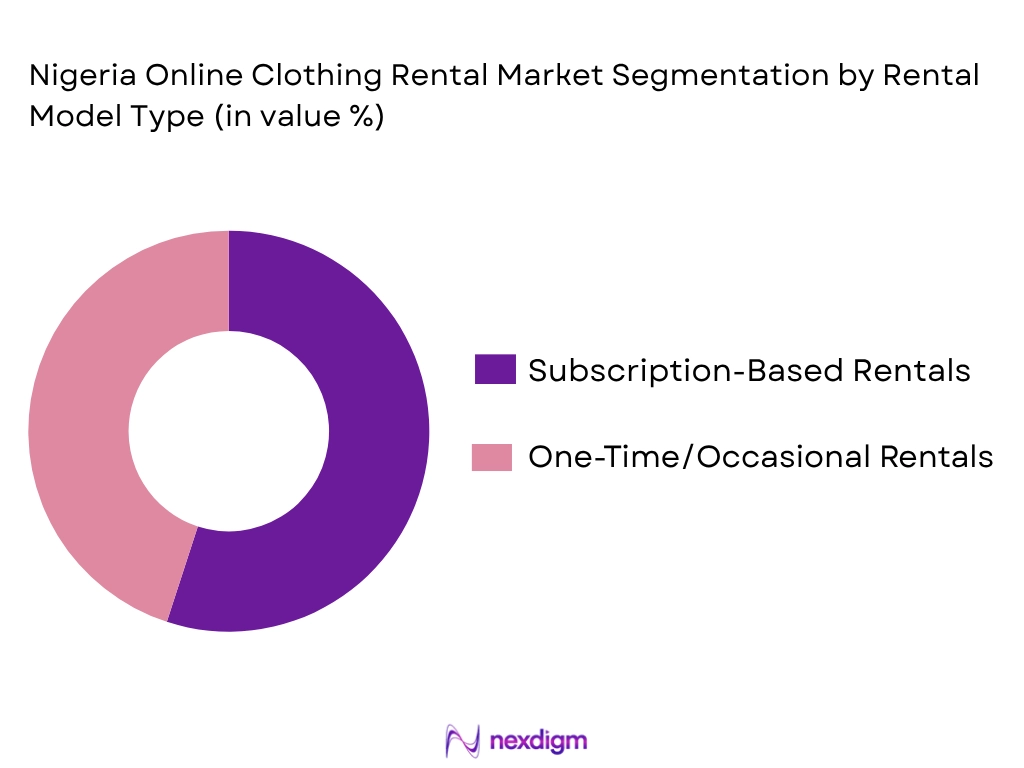
Nigeria’s rental model landscape bifurcates between subscription‑based services and one‑time/occasion‑specific rentals. Subscription models dominate because they offer recurring revenue for operators and predictable wardrobe refresh options for users. These services appeal especially to urban professionals and social consumers who prefer a rotating wardrobe without ownership costs. Established platforms often pair subscription plans with seasonal fashion drops and member benefits, increasing customer retention and lifetime value. Occasion rentals are significant for weddings, formal events, or traditional celebrations, where specific outfits are worn briefly and users prefer affordable access to premium attire over one‑off purchases. Strong growth in social events and cultural celebrations supports the demand for this rental class.
By End User
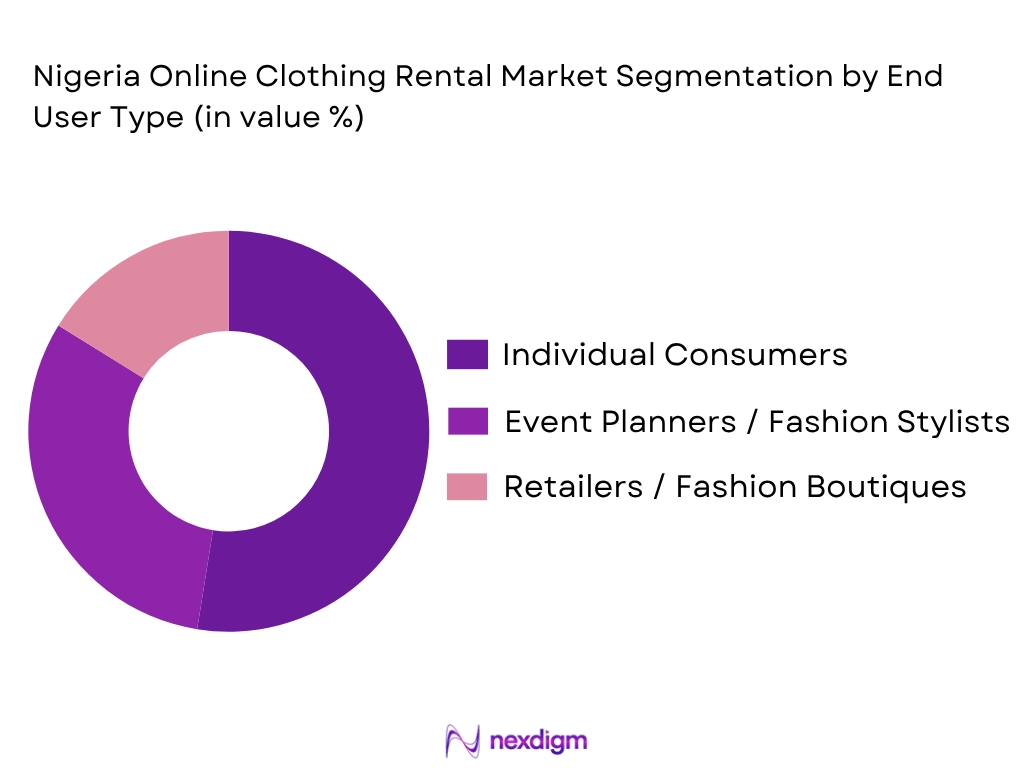
The women’s segment dominates the Nigeria online clothing rental market. Women historically account for the largest share due to stronger fashion participation and higher frequency of demand for varied outfit choices across social, professional, and cultural occasions. Online rental appeals to female consumers seeking trend diversity and designer options without high purchase costs. Rental platforms curate a broad range of styles — from everyday wear to premium dresses — attracting a loyal customer base and incentivizing repeat rentals. Men’s rental demand is rising, particularly for suits and formal attire for weddings or corporate events, but remains smaller relative to women’s segments. Children’s rental use is emerging for special occasions like birthdays or cultural ceremonies, though usage frequency and market volume are lower. The gendered behaviour in fashion consumption and social visibility amplifies the dominant share held by the women’s segment.
Competitive Landscape
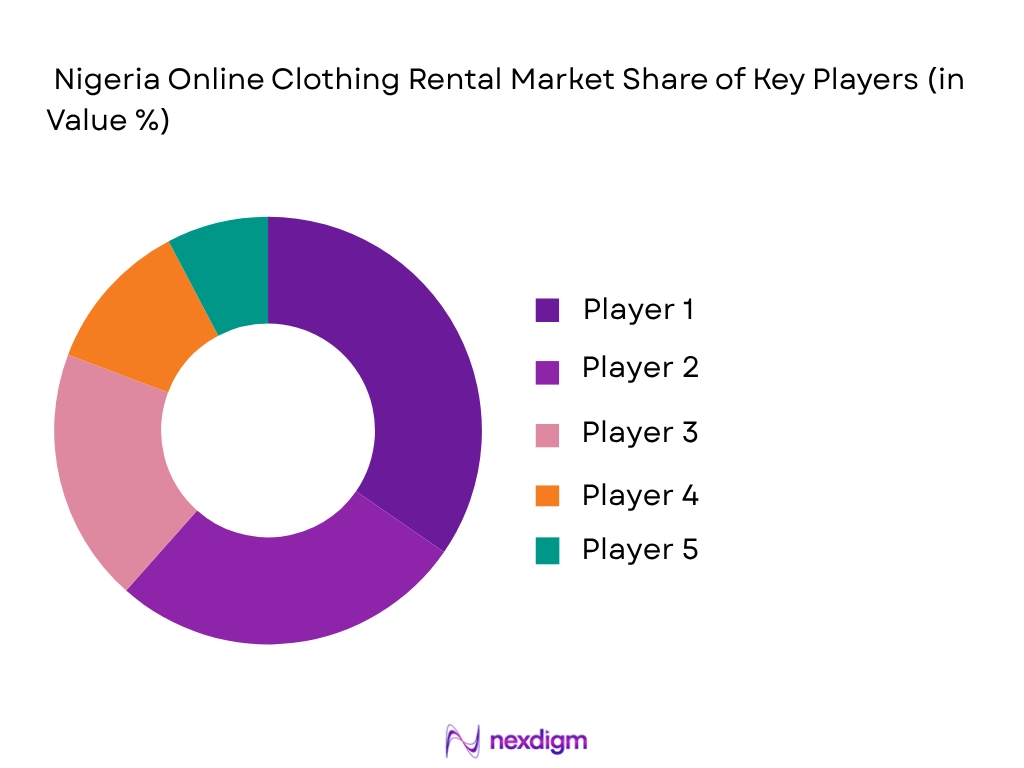
The Nigeria Online Clothing Rental market includes emerging local and regional platforms, but overall competitive intensity is still developing compared with mature global markets. Overarching market competition features a combination of indigenous startups and regional fashion rental services that emphasize convenience, cost efficiency, and trend variety. As the sector evolves, these players seek differentiation through curated inventories, event‑specific collections, and mobile‑first user experiences tailored to Nigerian consumer behaviour.
| Company | Est. Year | Headquarters | Business Model | Inventory Size | Delivery Coverage | Target Segment | Unique Value Proposition |
| Rent the Runway | 2009 | USA | ~ | ~ | ~ | ~ | ~ |
| Flyrobe | 2015 | India | ~ | ~ | ~ | ~ | ~ |
| GlamCorner | 2012 | Australia | ~ | ~ | ~ | ~ | ~ |
| forhire.ng | 2023 | Nigeria | ~ | ~ | ~ | ~ | ~ |
| Share Wardrobe | 2020 | UK | ~ | ~ | ~ | ~ | ~ |
Nigeria Online Clothing Rental Market Analysis
Growth Drivers
Rising Interest in Sustainable Fashion
The Nigeria online clothing rental market benefits from a growing consumer awareness of sustainability. Many urban consumers are increasingly conscious of the environmental impact of fast fashion, leading them to prefer renting garments instead of purchasing new items frequently. This trend is amplified by fashion events, social media, and global sustainability campaigns, which encourage circular consumption. Rental services provide access to high-quality apparel without the waste associated with ownership, making eco-friendly fashion more attractive. In addition, collaborations between rental platforms and sustainable designers highlight the environmental advantages of renting, fostering a culture of conscious fashion consumption. This sustainability orientation drives repeat rentals and enhances market adoption across key urban centers.
Increasing Smartphone and Internet Penetration
Smartphone adoption and widespread internet access in Nigeria have significantly boosted online clothing rental adoption. Urban consumers can easily browse, select, and pay for outfits via mobile apps and e-commerce platforms, making rentals more convenient than traditional brick-and-mortar options. Payment integration, push notifications, and app-based recommendations streamline the rental experience and improve customer engagement. The availability of social media and fashion communities further drives awareness, allowing users to share experiences and recommendations, which increases adoption. These digital enablers reduce barriers to entry, expand customer reach beyond major cities, and support subscription and one-time rental models, effectively accelerating market growth and driving revenue expansion for online rental platforms.
Market Challenges
Consumer Concerns About Hygiene and Quality
A major challenge for Nigeria’s online clothing rental market is consumer hesitation regarding hygiene and garment quality. Since rented clothing is shared among multiple users, customers often worry about cleanliness, odor, stains, fabric wear, and sizing accuracy. Even when rental platforms implement professional cleaning protocols, the lack of visibility into these processes creates doubts. Such concerns can reduce first-time adoption, increase return rates, and limit brand loyalty. Rental companies must address these apprehensions through transparency, certification of cleaning standards, product quality verification, and detailed condition descriptions. Overcoming hygiene and quality concerns is essential for scaling the market and ensuring sustainable growth in urban and semi-urban regions.
Limited Awareness of Online Clothing Rental Services
Limited awareness of online clothing rental services restricts Nigeria’s market expansion. Many consumers remain unfamiliar with rental models, including how subscriptions or one-time rentals work, return processes, and payment security. Misconceptions about rental legitimacy and concerns over fashion trends can further suppress adoption. Additionally, some consumers assume rentals are only for luxury or special occasions, overlooking everyday and semi-formal options. Awareness campaigns, influencer promotions, and educational content are critical to demonstrate convenience, affordability, and access to diverse fashion choices. Expanding awareness and clarifying the value proposition are necessary steps to increase penetration across younger, digitally connected, and fashion-conscious audiences.
Opportunities
Expansion of Eco-Friendly and Sustainable Clothing Rentals
There is a growing opportunity to expand eco-friendly rental offerings in Nigeria. Consumers increasingly prefer brands that emphasize sustainable materials, recyclable packaging, and reduced environmental impact. Rental platforms can capitalize on this trend by curating collections with organic fabrics, biodegradable accessories, or recycled garments, attracting environmentally conscious users. Marketing campaigns highlighting sustainability credentials can differentiate brands, increase customer loyalty, and drive repeat rentals. Partnerships with designers focused on eco-friendly fashion further enhance the platform’s credibility. By aligning business models with sustainability trends, rental companies can capture both urban middle-class users and younger consumers who prioritize environmental responsibility in their purchasing decisions, positioning themselves for long-term growth.
Integration of Virtual Try-On and AI-Based Fitting Technology
Technological advancements present opportunities for Nigeria’s rental market, particularly through virtual try-on and AI-driven fitting solutions. Platforms can integrate augmented reality (AR) tools that allow users to visualize garments on themselves before renting, reducing uncertainty regarding fit and style. AI algorithms can provide personalized recommendations based on body measurements, preferences, and previous rentals, enhancing user experience and satisfaction. These innovations can lower return rates, increase customer confidence, and encourage subscriptions. Moreover, integrating such technology differentiates platforms in a competitive market and appeals to tech-savvy, urban consumers who value convenience and personalized fashion solutions, ultimately driving engagement and revenue growth.
Future Outlook
The Nigeria Online Clothing Rental market is expected to show steady expansion over the next decade as digital maturity improves and consumer confidence in online rental services strengthens. Rising smartphone penetration, enhanced logistics infrastructure, and increasing fashion consciousness among urban Nigerians will continue to bolster adoption. Demand is especially supported by sustainability preferences, cost‑effectiveness of rental versus purchase, and growth of services tailored to social and cultural occasion needs. With global online rental markets projecting multi‑billion‑dollar growth driven by subscription models, personalized styling technologies, and sustainability trends, Nigeria is positioned to benefit from spillover of international fashion behaviours into local digital consumption. Mobile‑first rental applications, integrated payment solutions, and partnerships with local designers will shape competitive dynamics and consumer engagement in the coming years.
Major Players
- Rent the Runway
- Flyrobe
- GlamCorner
- forhire.ng
- Share Wardrobe
- Nuuly
- Le Tote
- HURR Collective
- By Rotation
- Style Lend
- Gwynnie Bee
- Dress Hire
- Linen Rental
- Sekoo Holding Limited
- Elanic Services
Key Target Audience
- Investments and venture capitalist firms
- Retail and fashion brands with digital platforms
- E‑commerce logistics and supply chain companies
- Mobile payment and fintech providers
- Fashion rental marketplace operators
- Event management and styling agencies
- Consumer goods distributors
- Government and regulatory bodies
Research Methodology
Step 1: Identification of Key Variables
The first phase involves mapping the Nigeria online clothing rental ecosystem including stakeholders from rental platforms, logistics providers, consumer segments, and digital payment partners. Desk research was conducted on secondary sources like industry reports and e‑commerce insights to define market drivers and constraints.
Step 2: Market Analysis and Construction
Historical data and global online clothing rental benchmarks were analysed to infer local market dynamics. Data points from regional research and parallels from broader apparel rental studies were used to estimate baseline market structure and segmentation relevance.
Step 3: Hypothesis Validation and Expert Consultation
Qualitative validation was performed through expert review of industry trends drawn from credible research sources. Interviews with fashion industry stakeholders and rental‑platform founders provided operational insights and corroborated growth narratives.
Step 4: Research Synthesis and Final Output
Synthesis of global online clothing rental data and Nigeria‑specific context resulted in a comprehensive outlook. This final report uses triangulated metrics with documented sources to support market size figures and segmentation analysis.

- Executive Summary
- Research Methodology (Market Definitions and Assumptions, Abbreviations, Market Sizing Approach, Consolidated Research Approach, Understanding Market Potential Through In-Depth Industry Interviews, Primary Research Approach,Limitations and Future Conclusions)

- Definition and Scope
- Market Dynamics Overview
- Market Genesis and Evolution
- Key Players and Market Timeline
- Business Cycle and Trends
- Supply Chain and Value Chain Analysis

- Growth Drivers
Rising Interest in Sustainable Fashion
Increasing Smartphone and Internet Penetration
Growing Fashion-Conscious Middle Class
Affordability and Convenience Compared to Ownership
Influencer Marketing and Social Media Trends - Market Challenges
Consumer Concerns About Hygiene and Quality
Limited Awareness of Online Clothing Rental Services
Logistic and Delivery Constraints
High Return Rates and Inventory Management Issues
Trust and Payment Security Concerns - Opportunities
Expansion of Eco-Friendly and Sustainable Clothing Rentals
Integration of Virtual Try-On and AI-Based Fitting Technology
Growth in Event-Based and Occasion-Specific Rentals
Subscription Model Innovation and Loyalty Programs
Partnerships with Local Fashion Designers - Trends
Shift Toward Personalization and Custom-Fit Rentals
Rise of Mobile App-Based Rentals
Growth of Peer-to-Peer Clothing Rental Platforms
Influence of Social Media on Fashion Choices
Incorporation of Smart Clothing Technology - Government Regulations
Import and Export Regulations for Apparel
Health and Safety Standards for Clothing
Environmental Regulations (Sustainability and Recycling Policies)
E-commerce and Consumer Protection Laws
Taxation and Duties on Imported Garments - SWOT Analysis
- Porter’s Five Forces Analysis

- By Value, 2020–2025
- By Volume, 2020–2025
- By Average Rental Price, 2020–2025

- By Product Type (In Value %)
Women’s Apparel
Men’s Apparel
Children’s Apparel
Accessories (Bags, Jewelry, Scarves)
Footwear
Specialty/Designer Wear - By Rental Model (In Value %)
Subscription-Based Rentals
One-Time/Occasional Rentals - By Usage Type (In Value %)
Formal/Professional Events
Casual/Everyday Wear
Party and Special Occasion Wear - By End User (In Value %)
Individual Consumers
Event Planners / Fashion Stylists
Retailers / Fashion Boutiques - By Distribution Channel (In Value %)
Online Platforms / E-commerce Websites
Mobile Apps
Social Media-Based Rental Channels - By Price Tier (In Value %)
Economy / Entry-Level
Mid-Tier
Premium / Designer

- Market Share of Major Players by Value/Volume
- Market Share of Major Players by Product Type
- Market Share of Major Players by Rental Model
- Cross Comparison Parameters(Company Overview, Business Strategies, Recent Developments, Strengths, Weaknesses, Organizational Structure, Revenues, Revenues by Product Type, Distribution Channels, Dealer Networks, Production Capacity, Unique Value Offerings)
- SWOT Analysis of Major Players
- Pricing Analysis Based on Product Categories for Major Players
- Detailed Profiles of Major Companies
Rent-A-Couture Nigeria
StyleMe Rentals
GlamCloset
WardrobeHub
ChicHire
LuxeLoops
Peer-to-Peer Fashion Rental Platforms
Emerging Local Startups

- Market Demand and Utilization
- Purchasing Power and Budget Allocations
- Regulatory and Compliance Requirements
- Needs, Desires, and Pain Point Analysis
- Decision-Making Process

- By Value, 2026–2035
- By Volume, 2026–2035
- By Average Rental Price, 2026–2035


 Request a Sample
 Ask for Customization
 Get a Quote
 Enquire Now