

 Download PDF
 Download PDF
Market Overview
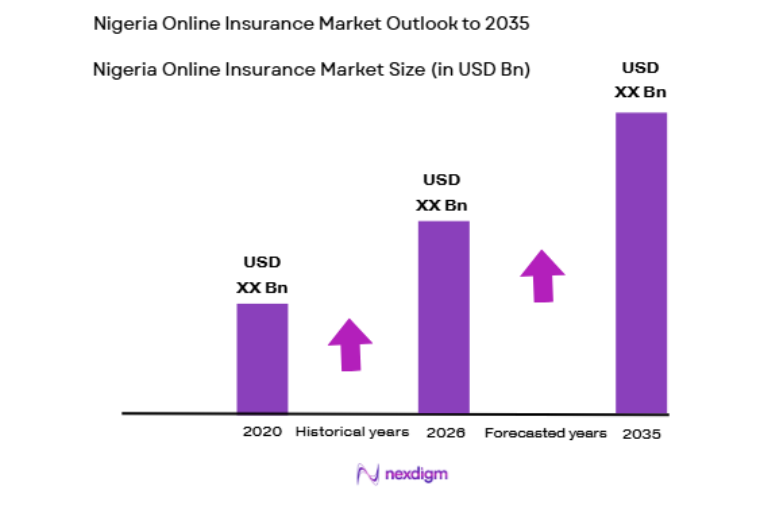
The Nigeria online insurance market is projected to reach a value of approximately USD ~ billion, driven by the increasing adoption of digital insurance platforms and the rising penetration of internet services across the country. The shift toward digital channels, coupled with enhanced customer awareness and convenience, has played a significant role in fostering market growth. Additionally, the government’s push for financial inclusion and digital transformation in the insurance sector further boosts the market dynamics.
The dominant regions for online insurance in Nigeria are Lagos, Abuja, and Port Harcourt. Lagos leads the market due to its status as the commercial and financial hub of the country, with a large population and a high concentration of technology-driven businesses. Abuja and Port Harcourt follow closely, driven by government policies aimed at increasing access to financial services and the growing adoption of digital platforms. These cities are key centers for both consumers and insurers seeking online solutions.
Market Segmentation
By Product Type
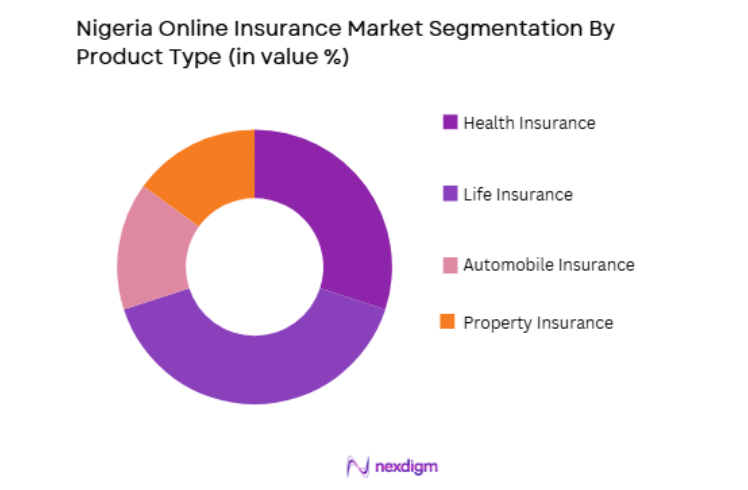
The Nigeria online insurance market is segmented by product type into health insurance, life insurance, automobile insurance, and property insurance. Health insurance holds a dominant market share, mainly due to the increasing awareness of the importance of healthcare coverage and the rising demand for affordable health plans. The growing prevalence of health-related issues, coupled with Nigeria’s push towards improving healthcare infrastructure, has made health insurance an essential product for Nigerians. The convenience of purchasing health insurance online has further contributed to its popularity, as consumers look for quick, accessible coverage.
By Distribution Channel
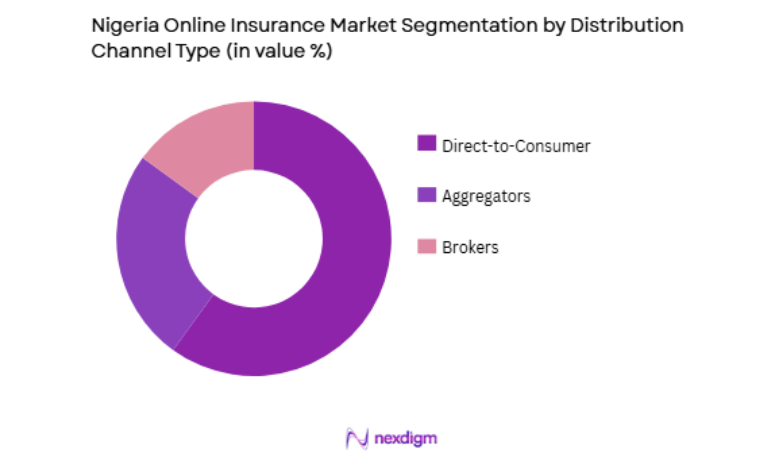
The Nigeria online insurance market is segmented by distribution channel into direct-to-consumer platforms, aggregators, and brokers. Direct-to-consumer platforms dominate the market, owing to their cost-effectiveness and ease of access. These platforms enable insurers to directly engage with consumers, eliminating intermediaries and reducing distribution costs. As the internet penetration rate continues to rise in Nigeria, more consumers are opting for direct digital channels to compare and purchase insurance products, thus increasing the market share of this distribution model.
Competitive Landscape
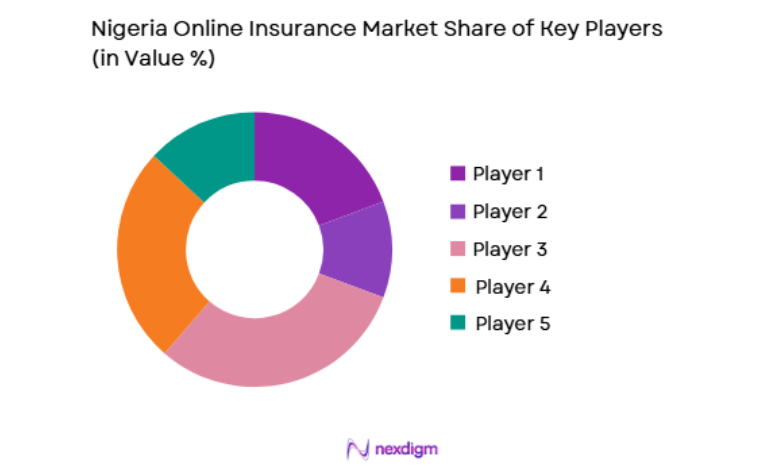
The Nigeria online insurance market is highly competitive, with a mix of established insurance companies and new fintech-driven startups vying for market share. Major players are increasingly adopting digital-first strategies, expanding their online platforms, and leveraging technology to enhance user experience. The competitive landscape is also marked by consolidation as larger insurers acquire smaller tech-driven startups to gain access to innovative technologies and customer bases.
| Company Name | Establishment Year | Headquarters | Technology Focus | Market Reach | Key Products | Revenue (USD Million) | Key Service Areas |
| AXA Mansard Insurance | 1989 | Lagos, Nigeria | ~ | ~ | ~ | ~ | ~ |
| Leadway Assurance | 1970 | Lagos, Nigeria | ~ | ~ | ~ | ~ | ~ |
| AIICO Insurance | 1963 | Lagos, Nigeria | ~ | ~ | ~ | ~ | ~ |
| Mutual Benefits | 1995 | Lagos, Nigeria | ~ | ~ | ~ | ~ | ~ |
| FBN Insurance | 2005 | Lagos, Nigeria | ~ | ~ | ~ | ~ | ~ |
Nigeria Online Insurance Market Analysis
Growth Drivers
Increasing Smartphone Penetration and Internet Access
The rapid increase in smartphone penetration and internet access is a primary growth driver for the Nigeria online insurance market. With the rise of affordable smartphones and improved internet infrastructure, more Nigerians are gaining access to online platforms where they can easily purchase insurance products. The growth of mobile internet subscriptions in Nigeria, driven by affordable data plans and network expansions, has facilitated the adoption of digital insurance platforms. As more consumers embrace the convenience of online transactions, insurers are optimizing their platforms to cater to the growing demand for digital insurance services. This increased digital access has expanded the market to previously underserved populations, enabling the sector to tap into a broader consumer base and increase overall insurance uptake in the country.
Government Support for Digital Financial Inclusion
The Nigerian government has been actively promoting financial inclusion through digital platforms, which has played a significant role in the growth of the online insurance market. Various policies and initiatives aimed at improving access to financial services, such as the National Financial Inclusion Strategy (NFIS), have enabled more Nigerians to access insurance products via online platforms. In addition, regulatory bodies such as the National Insurance Commission (NAICOM) are increasingly focused on encouraging the digital transformation of the insurance industry. The government’s endorsement of financial technology startups and the development of mobile banking platforms has created a favorable environment for digital insurance growth. These efforts not only provide greater access to insurance but also help foster trust and confidence among the Nigerian population in digital insurance solutions.
Market Challenges
Low Awareness and Trust in Digital Insurance Products
Despite the growing trend of digital adoption, low awareness and trust in online insurance products remain significant challenges. A considerable portion of the Nigerian population still prefers traditional insurance channels due to concerns about the security of digital transactions and the legitimacy of online providers. Many potential customers are unfamiliar with the various digital insurance products available and may lack the knowledge to differentiate between credible providers and fraudulent schemes. Overcoming this barrier requires education and consumer awareness campaigns, as well as increased efforts from insurers to build trust by offering transparent and reliable services. Additionally, the need for regulatory oversight and consumer protection frameworks is vital to address these trust issues and encourage wider adoption of online insurance in Nigeria.
Infrastructure and Payment System Challenges
While mobile internet penetration is increasing, challenges related to the country’s infrastructure, such as inconsistent electricity supply, limited internet connectivity in rural areas, and unreliable payment systems, remain significant. These barriers can hinder the smooth delivery of online insurance services and pose challenges to both insurers and consumers. Payment gateway issues, such as failed transactions or delays in processing payments, can deter customers from purchasing insurance online. To address this, stakeholders need to invest in improving digital infrastructure and the reliability of payment systems. Collaborative efforts between insurers, tech companies, and government agencies are essential to overcoming these infrastructural hurdles and ensuring the smooth functioning of digital insurance platforms.
Opportunities
Emerging Microinsurance Products
One of the key opportunities in the Nigeria online insurance market is the rise of microinsurance products tailored to low-income populations. Microinsurance offers affordable coverage for consumers who typically would not have access to traditional insurance due to high premiums. The growth of mobile payment platforms and the increased use of mobile phones for financial services in Nigeria make it easier to distribute these products. Microinsurance has the potential to significantly expand the insurance market, especially in rural areas, by offering flexible payment options, lower premiums, and coverage for essential needs such as health and agriculture. This product segment is expected to see rapid growth as insurance companies continue to innovate and find ways to reach underserved markets.
Integration of Artificial Intelligence in Insurance Processes
The integration of Artificial Intelligence (AI) and machine learning into the insurance process represents a major opportunity for the Nigerian online insurance market. AI can be leveraged to enhance customer service, streamline claims processing, and optimize underwriting processes. Additionally, AI-powered chatbots and virtual assistants can provide instant responses to customer inquiries, improving the overall user experience. These technologies enable insurers to offer more personalized services and more accurately assess risk, thus improving efficiency and reducing operational costs. As AI continues to evolve, it will play an increasingly critical role in making insurance products more accessible, affordable, and tailored to the needs of Nigerian consumers.
Future Outlook
The future outlook of the Nigeria online insurance market is optimistic, with steady growth projected over the next few years. Technological advancements, government support for digital financial inclusion, and the growing awareness of the benefits of insurance are expected to drive market expansion. Additionally, the adoption of AI and microinsurance products will further open up new opportunities, especially for underserved populations. Increased competition in the market will lead to more innovative products and improved customer service, helping to address challenges such as trust and awareness. The market is set to benefit from both increased urbanization and rural penetration as digital infrastructure continues to improve.
Major Players
- AXA Mansard Insurance
- Leadway Assurance
- AIICO Insurance
- Mutual Benefits
- FBN Insurance
- Old Mutual Nigeria
- Allianz Nigeria
- Prudential Nigeria
- Cornerstone Insurance
- Standard Alliance Insurance
- LASACO Assurance
- Niger Insurance
- Veritas Kapital Assurance
- Wapic Insurance
- Fidelity Insurance
Key Target Audience
- Investments and venture capitalist firms
- Government and regulatory bodies
- Financial institutions
- Insurance brokers
- Insurtech startups
- Corporations seeking insurance solutions
- Financial service providers
- Insurance aggregators
Research Methodology
Step 1: Identification of Key Variables
Key variables impacting the online insurance market in Nigeria include internet penetration, mobile usage rates, government policies, insurance literacy, and digital infrastructure. These variables are assessed through market research and consumer behavior analysis.
Step 2: Market Analysis and Construction
The market is segmented based on product types, distribution channels, and consumer demographics. A combination of qualitative and quantitative research methods is used to assess trends, market share, and growth drivers.
Step 3: Hypothesis Validation and Expert Consultation
Expert consultation is conducted with industry professionals, insurers, regulators, and technology providers to validate hypotheses and gain deeper insights into market dynamics and challenges.
Step 4: Research Synthesis and Final Output
The final report synthesizes the findings from primary and secondary research, providing a comprehensive analysis of market trends, challenges, opportunities, and the competitive landscape.

- Executive Summary
- Research Methodology (Definitions, Scope, Industry Assumptions, Market Sizing Approach, Primary & Secondary Research Framework, Data Collection & Verification Protocol, Analytic Models & Forecast Methodology, Limitations & Research Validity Checks)

- Market Definition and Scope
- Value Chain & Stakeholder Ecosystem
- Regulatory / Certification Landscape
- Sector Dynamics Affecting Demand

- Growth Drivers
Increasing Internet Penetration
Growth of the Middle Class
Government Support for Digital Insurance - Market Challenges
Low Awareness of Online Insurance
Cybersecurity Concerns
Regulatory Barriers - Market Opportunities
Integration with Mobile Financial Services
Expansion of Micro-Insurance
Adoption of AI for Personalization - Trends
Shift Toward Mobile-First Insurance Solutions
Growth of Peer-to-Peer Insurance Models - Government Regulations
- SWOT Analysis
- Porter’s Five Forces

- By Market Value, 2020-2025
- By Installed Units, 2020-2025
- By Average System Price, 2020-2025
- By System Complexity Tier, 2020-2025

- By System Type (In Value%)
Health Insurance
Life Insurance
Auto Insurance
Property Insurance
Travel Insurance - By Platform Type (In Value%)
Online Direct Platforms
Aggregator Platforms
Insurtech Platforms
B2B Platforms
Mobile-based Platforms - By Fitment Type (In Value%)
Individual Policies
Group Policies
Corporate Policies
Customized Insurance Packages - By End User Segment (In Value%)
Individual Consumers
Small and Medium Enterprises (SMEs)
Corporates

- Market Share Analysis
- Cross Comparison Parameters (Policy Type, Platform Type, Pricing Model, End User, Coverage Scope, Claims Processing Time, Payment Flexibility, Digital Integration, Customer Support Channels, Premium Payment Frequency)
- SWOT Analysis of Key Competitors
- Pricing & Procurement Analysis
- Key Players
AXA Mansard Insurance
AIICO Insurance
Leadway Assurance
Reliance Health
Nigerian Agricultural Insurance Corporation
Sanlam Insurance
Pula Advisors
Zeno Health
Hiscox Nigeria
Pecunia Insurance
Omni Insurance
FBN Insurance
Mutual Benefits Assurance
Guaranty Trust Life Insurance
Stanbic IBTC Insurance

- Rising Demand for Affordable Insurance
- Adoption of Tech-Enabled Insurance Solutions
- Growing Trust in Digital Transactions
- Awareness Campaigns for Online Insurance

- Forecast Market Value, 2026-2035
- Forecast Installed Units, 2026-2035
- Price Forecast by System Tier, 2026-2035
- Future Demand by Platform, 2026-2035


 Request a Sample
 Ask for Customization
 Get a Quote
 Enquire Now