
 Download PDF
Market Overview
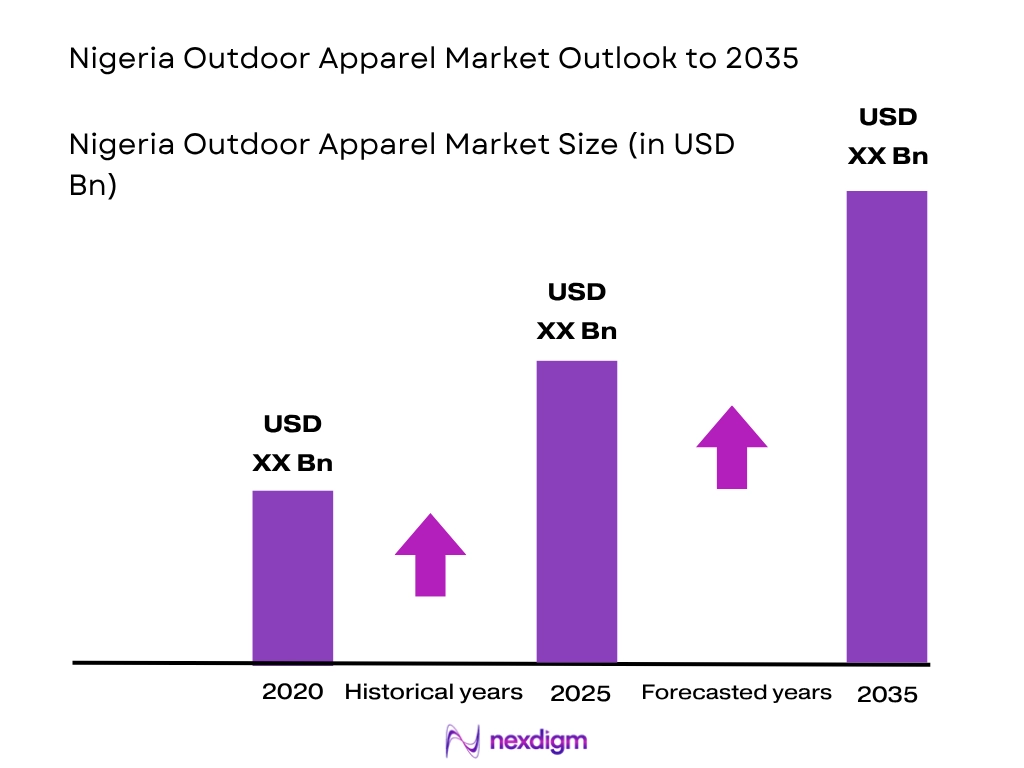
The Nigeria Outdoor Apparel Market is anchored within the broader sports & athleisure segment, with the Nigeria sports apparel & athleisure market valued at USD ~ billion based on a five‑year historical analysis reflecting demand for performance and outdoor‑oriented clothing. Growth drivers include rising health consciousness, urban fitness culture, and increased disposable income supporting broader outdoor apparel purchases.
International and domestic retail hubs such as Lagos, Abuja, Port Harcourt, and Kano dominate the consumption landscape due to higher urban population densities, greater retail infrastructure, and stronger brand penetration. These cities exhibit diversified retail channels and stronger e‑commerce logistics, making outdoor apparel more accessible to consumers with disposable income and active lifestyles.
Market Segmentation
By Product Category
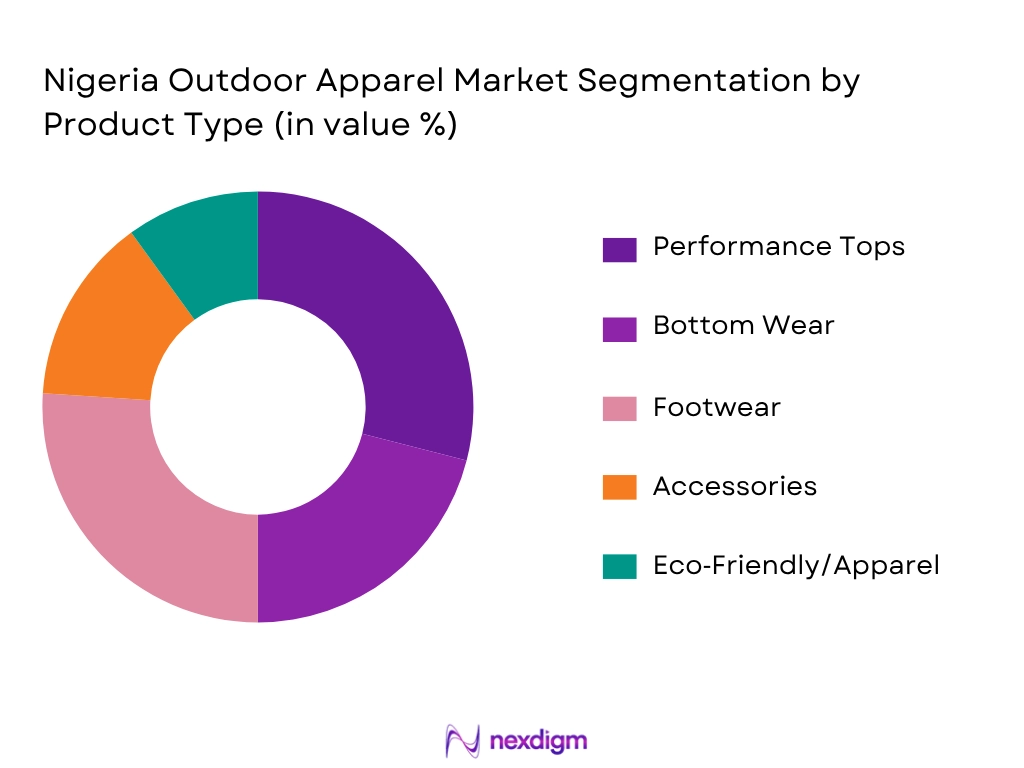
For Nigeria’s outdoor apparel spectrum, Performance Tops command the largest share due to their utility across multiple outdoor and fitness activities. These garments are essential for sweat wicking and comfort during workouts, running, trail activities, and casual outdoor use. Footwear also captures a substantial share, reflecting increased participation in fitness, jogging, and non‑professional outdoor activities where dedicated sports footwear is seen as necessary. Accessories like caps, gloves, and headgear are growing as supplementary purchases but remain smaller than primary clothing categories. Eco‑friendly apparel is emerging as consumer awareness around sustainability rises, supported by local and global brand offerings.
By Distribution Channel
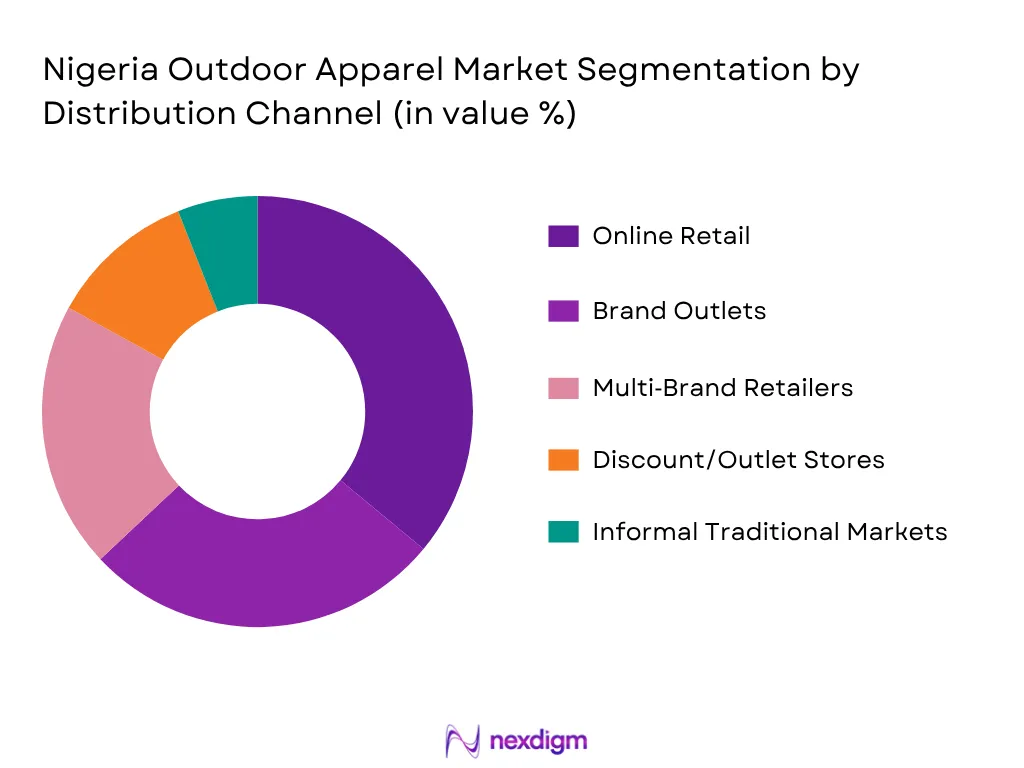
Online Retail dominates due to rising digital connectivity, logistical improvements, and convenience for urban consumers accessing both local and international brands. E‑commerce platforms (local such as Jumia, Konga, and direct brand sites) provide broader access to performance clothing often unavailable in traditional outlets. Brand Outlets and Multi‑Brand Retailers maintain a strong share due to established physical retail experience, enabling consumers to try apparel and footwear before purchase. Discount stores and informal markets play a meaningful but smaller role, catering to price‑sensitive segments given Nigeria’s inflationary pressures and preference for value buys.
Competitive Landscape
Nigeria’s outdoor apparel landscape consists of established international brands alongside growing local fashion houses and multi‑brand retailers. The competitive structure underscores global brand influence, customization of product portfolios for local climates, and online channel strength. The outdoor apparel segment in Nigeria is influenced heavily by global players due to their marketing scale, supply chains, and established brand equity. Domestic brands, while smaller, show increased traction by incorporating climate‑adapted designs and competitive pricing. E‑commerce and improved logistics have intensified competition between traditional retail and digital channels. This competitive table reflects leaders with strong brand portfolios, a mix of price tiers, and established distribution through digital and offline channels. Global brands benefit from marketing scale and diversified product lines, while Decathlon has carved a niche through value and functional segmented offerings.
| Company | Year Established | Headquarters | Online Penetration | Retail Footprint | Price Tier Coverage | Product Range Breadth | Local Partner/Distributor Presence |
| Nike, Inc. | 1964 | USA | ~ | ~ | ~ | ~ | ~ |
| Adidas AG | 1949 | Germany | ~ | ~ | ~ | ~ | ~ |
| Puma SE | 1948 | Germany | ~ | ~ | ~ | ~ | ~ |
| Under Armour, Inc. | 1996 | USA | ~ | ~ | ~ | ~ | ~ |
| Decathlon S.A. | 1976 | France | ~ | ~ | ~ | ~ | ~ |
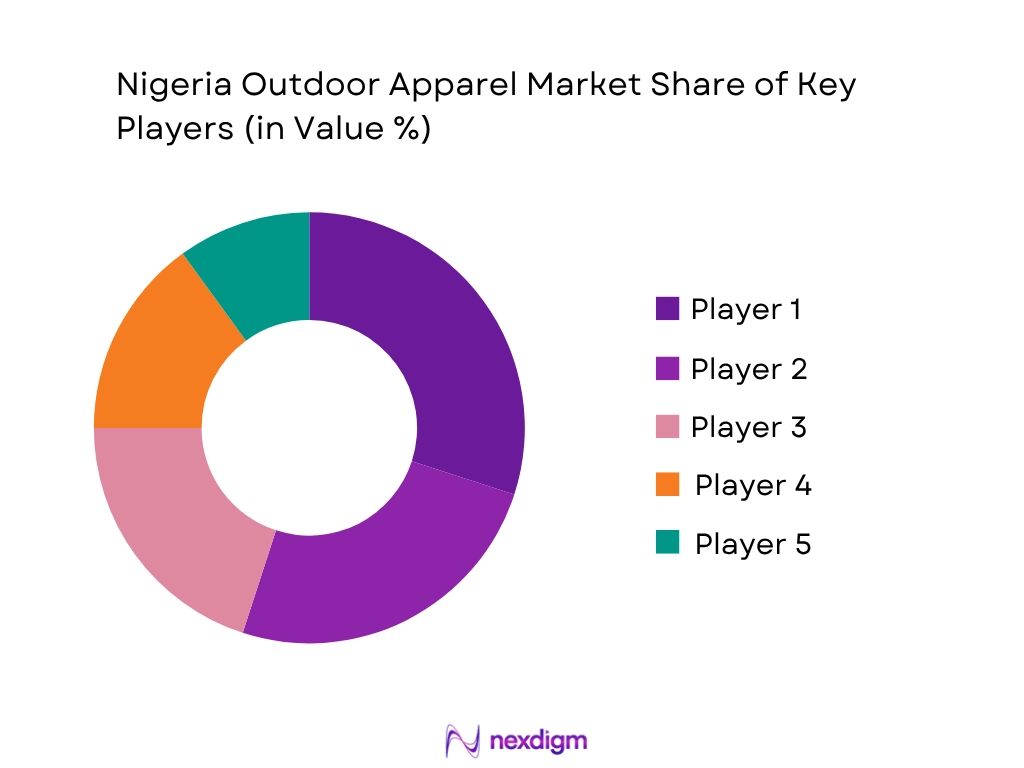
Nigeria Outdoor Apparel Market Analysis
Growth Drivers
Outdoor Participation
Nigeria’s demographic profile and youth engagement in physical activities provide a foundational impetus for outdoor apparel demand. According to the World Bank, Nigeria’s total population reached 232,679,478 in 2024, growing at 2.1 % annually, creating a large potential consumer base for sports and outdoor activities that require performance apparel and gear. Despite formal participation statistics in specific sporting activities not being comprehensively recorded, the National Sports Commission and sports development bodies actively encourage grassroots engagement, with initiatives aimed at increasing access to community and recreational facilities to support widespread participation by millions of Nigerians in physical activities and sports events. This underlying social dynamic is complemented by Nigeria’s representation at international competitions, for example, 88 Nigerian athletes competed across 12 sports at the 2024 Summer Olympics, underscoring the country’s broad engagement in competitive and outdoor sports, including athletics, cycling, and swimming, which drive interest in performance apparel. The increasing interest in fitness and sports at both community and national levels indirectly amplifies demand for outdoor and activewear choices among consumers.
Rising Income
Macroeconomic indicators reveal that Nigeria’s overall economic activity supports consumer spending potential relevant to outdoor apparel demand. World Bank data shows Nigeria’s nominal GDP at USD 252.26 billion in 2024 and a GDP per capita of USD 1,084.20, demonstrating an expanding economic base that underlies purchasing power for discretionary goods such as outdoor sports apparel. Additionally, personal remittances accounted for 8.4 % of GDP in 2024, indicating substantial income flows into households, which often translate into increased spending on lifestyle and leisure products. While consumer inflation remained elevated (33.2 % in 2024), rising aggregate income streams and remittance inflows support incremental growth in consumer expenditure beyond essential goods. Nigeria’s employment trends including a modeled unemployment rate of 3.1 % in 2025 suggest evolving labor engagement that can translate into disposable income for apparel purchases tied to lifestyle and recreational pursuits. These macroeconomic indicators imply that as more Nigerians participate in the formal economy and receive income from diverse sources, discretionary spending on performance and outdoor apparel is supported by broader economic activity.
Market Challenges
Import Reliance
The Nigeria outdoor apparel industry faces significant reliance on imported finished goods and textiles, which affects cost structures, availability, and industry resilience. According to National Bureau of Statistics (NBS) data compiled from the Foreign Trade in Goods Statistics report, Nigeria’s total merchandise trade through Q4 2024 rose sharply, with imports constituting a significant portion of imports growth by value, reflecting strong dependence on foreign supply chains for manufactured products, including apparel. Manufactured goods accounted for 44.2 % of Nigeria’s total import value of NGN 60.59 trillion in 2024, underscoring the heavy reliance on imported manufactured items to satisfy domestic demand. Furthermore, textile and textile articles imports reached N1.06 trillion in 2025, according to National Bureau of Statistics reports, indicating that a large share of apparel components and finished goods continues to be sourced internationally rather than produced locally. This high import dependence exposes the outdoor apparel market to foreign exchange volatility and global supply chain disruptions, which can impact retail pricing and inventory stability. Such import reliance constrains the development of local manufacturing ecosystems and heightens vulnerability to external economic shocks, particularly in apparel categories like technical outdoor wear that Nigeria’s local industry currently does not produce at scale.
Supply Chain Constraints
Nigeria’s broader macroeconomic context presents challenges to efficient supply chains that affect the outdoor apparel market’s ability to scale and serve consumers consistently. According to a BusinessDay Nigeria analysis, in 2024 the naira lost 40.9 % of its value against the US dollar, complicating import operations and raising input costs for businesses that rely on foreign raw materials and finished goods. These foreign exchange pressures occur alongside manufacturing sector constraints: data from the World Bank indicates that manufacturing’s value added in Nigeria amounted to approximately USD 25,364,113,924 in 2024, reflecting relatively limited manufacturing scale within the broader economy. Nigeria’s industrial sector, though significant, remains constrained by energy costs, foreign exchange volatility, and under‑utilization of capacity, which together limit domestic supply chain robustness for textile and apparel production. In addition, high logistics costs and infrastructure bottlenecks, such as road transport inefficiencies and power shortages, further impede the smooth movement of goods, affecting inventory and delivery timelines for retailers and brands. As a result, outdoor apparel providers often face increased lead times and operational costs that are passed on to consumers, impeding broader market uptake and consistent product availability.
Opportunities
Local Manufacturing
Despite supply chain challenges, evolving economic conditions present opportunities to expand local apparel production that can benefit the Nigeria outdoor apparel market. In 2024, Nigeria’s manufacturing sector generated over USD 25 billion in value added, according to World Bank indicators, highlighting an existing industrial base that can potentially absorb investments in textile and apparel-related manufacturing. Local production of outdoor apparel could help mitigate exposure to import reliance while creating employment and value addition within Nigeria’s economy. Government policies targeting industrial development and export diversification as outlined in the World Bank Nigeria Country Private Sector Diagnostic- emphasise expanding sectors such as manufacturing through enhanced infrastructure and access to finance, which could strengthen domestic apparel production capabilities if leveraged effectively. Furthermore, consumer demand for products tailored to local climatic conditions (e.g., lightweight, breathable fabrics suitable for Nigeria’s warm, humid environment) provides a niche for local manufacturers to innovate and differentiate their offerings from import‑dependent brands. This creates potential for clustered value chains around textile input supply, garment assembly, and finishing facilities that can serve both domestic and regional West African markets. Strengthening local manufacturing for outdoor apparel thus represents a strategic opportunity to build resilience, shorten supply chains, and capture value within the Nigerian market.
Sustainable Lines
Growing awareness of sustainability and environmentally conscious products offers a compelling pathway for differentiation within the Nigeria outdoor apparel market. As internet penetration and digital engagement expand with 41 % of Nigerians using the internet in 2024, according to World Bank data consumer exposure to global environmental trends and demand for eco‑friendly apparel grows concurrently. This trend aligns with broader shifts in retail where sustainability credentials are increasingly factored into purchase decisions, particularly among urban youth segments. Nigeria’s demographic profile, with a large proportion of the population under age 30, supports this potential shift toward sustainable apparel consumption as younger consumers are often more responsive to climate and ethical considerations in product choice. Moreover, local innovators and small‑scale manufacturers have opportunities to produce garments using sustainably sourced materials such as recycled polyester or cotton blends tailored to outdoor performance, appealing to both environmentally minded consumers and international buyers seeking regional sustainable production partnerships. Encouraging sustainable apparel lines not only aligns with global market trends but also supports Nigeria’s commitment to sustainable development, offering brands a platform to innovate responsibly while contributing to local economic value creation.
Future Outlook
Over the next decade, the Nigeria Outdoor Apparel Market is expected to expand steadily, supported by increasing health awareness and outdoor lifestyle adoption across urban centers. Improvements in e‑commerce logistics, coupled with rising disposable incomes, will continue to facilitate access to both performance and lifestyle‑oriented outdoor apparel. Consumer preference for technical fabrics and climate‑adaptive clothing will steer product innovation toward comfort, durability, and sustainability. Brands offering integrated online/offline shopping experiences and localized designs (adapted to Nigeria’s warm, humid conditions) are positioned to capture disproportionate market demand. Partnerships with local retailers and influencers will further catalyze market growth across both mainstream and niche segments. Overall, the outdoor apparel ecosystem is expected to evolve with an emphasis on diversification of offerings, digital adoption, and enhanced customer experience.
Major Players in the Market
- Nike, Inc.
- Adidas AG
- Puma SE
- Under Armour, Inc.
- Decathlon S.A.
- Reebok International Ltd.
- New Balance Athletics, Inc.
- ASICS Corporation
- The North Face (VF Corp.)
- Columbia Sportswear Co.
- Fila Holdings Corp.
- Li‑Ning Company Ltd.
- Skechers USA, Inc.
- Lululemon Athletica Inc.
- Local Nigerian Brands & Designers
Key Target Audience
- Sports & outdoor apparel retailers (multi‑brand and specialty stores)
- Apparel importers and distributors in Nigeria
- Retail brands and franchise investors
- Investments and venture capitalist firms (focused on retail & consumer goods)
- Government and regulatory bodies (e.g., Nigerian Investment Promotion Commission, National Agency for Food and Drug Administration and Control)
- E‑commerce platform operators in fashion and lifestyle segments
- Brand managers and product strategists in performance apparel
- Outdoor and fitness lifestyle event organizers
Research Methodology
Step 1: Identification of Key Variables
The initial phase involves mapping all critical market variables within Nigeria’s outdoor apparel space, including product categories, distribution channels, consumer behavior patterns, and competitive dynamics. This step draws on secondary sources (industry databases and published reports) to define parameters influencing market dynamics.
Step 2: Market Analysis and Construction
Historical data is compiled and analyzed to capture market size, revenue trends, product adoption, and distribution channel performance. Sources such as published apparel market reports and verified industry insights are utilized to assess revenue generation patterns and validate market sizing for 2023 and 2024.
Step 3: Hypothesis Validation and Expert Consultation
Market assumptions and trends are validated through consultations with industry experts, retail channel executives, and apparel distributors. These interactions provide qualitative and operational insights that refine the quantitative data and enhance the accuracy of forecasts.
Step 4: Research Synthesis and Final Output
The final phase synthesizes secondary and primary insights to generate a consolidated market analysis. This includes cross‑validation of external data sources to ensure a robust and accurate portrayal of Nigeria’s outdoor apparel market, consumer behaviors, and competitive landscape.

- Executive Summary
- Research Methodology (Market Definitions and Apparel Inclusion Criteria, Abbreviations, Top‑Down & Bottom‑Up Sizing Approach, Data Sources & Triangulation, Primary Research Protocol, Limitations and Data Validation Framework)

- Definition and Scope (Outdoor & Performance Apparel)
- Market Genesis and Adoption Patterns
- Consumer Lifestyle and Activity Drivers
- Outdoor Apparel Value Chain
- Regulatory, Standards and Trade Policy Landscape

- Growth Drivers (Outdoor Participation, Rising Income, Performance Innovation, Premiumization, E-Commerce Growth, Seasonal Demand, Health & Fitness Trends)
- Market Challenges (Import Reliance, Supply Chain Constraints, Informal Retail Competition, Counterfeits, Price Sensitivity, Seasonal Inventory, Limited Local Fabrics)
- Opportunities (Local Manufacturing, Sustainable Lines, Direct-to-Consumer, Customization, Adventure Tourism Partnerships, Rental/Resale, Influencer Collaborations, E-Commerce Penetration)
- Emerging Trends (Smart Fabrics, Hybrid Urban/Outdoor Apparel, Social Media Marketing, Capsule Collections, Sustainable Packaging, Activity-Based Personalization, Connected Apparel)
- Regulatory Environment (Textile & Labeling Standards, Import/Tariff Rules, Safety Compliance, Environmental & Labor Rules, OEKO-TEX/Global Certifications, Advertising Verification, Packaging Guidelines)
- Porter’s Five Forces Analysis (New Entrants, Supplier Power, Buyer Power, Substitutes, Rivalry)
- SWOT Analysis (Market Level) (Strengths: Brand Awareness, Urban Fitness, Import Quality; Weaknesses: Price Sensitivity, Logistics Gaps; Opportunities: D2C Channels, Local Manufacturing, Sustainable Adoption; Threats: Currency Volatility, Counterfeits, Competition)
- Value Chain & Supply Chain Analysis (Raw Materials – Cotton, Polyester, Nylon, Laminates, Recycled Fabrics; Local vs Imported Production; Production Capacity; Logistics & Distribution; Retail & E-Commerce Channels; Quality Certification; Returns & Reverse Logistics)
- Consumer Purchase Behavior & Retail Analytics (Purchase Frequency, Basket Affinity, Brand Loyalty, Online vs Offline Preference, Social Media Influence, Seasonal/Weather Buying, Willingness-to-Pay for Technical & Sustainable Features)

- By Market Value (2020-2025)
- By Volume (2020-2025)
- By Average Selling Prices (2020-2025)
- By Outdoor Apparel Imports vs. Local Production (2020-2025)

- By Product Category (In Value%)
Outdoor Performance Tops
Bottoms
Outerwear
Rainwear
Technical Gear - By End‑User (In Value%)
Men
Women
Youth/Children
Unisex - By Fabric & Technology (In Value%)
Moisture‑Wicking
UV Protection
Breathable Mesh
Eco/Sustainable Fabrics - By Distribution Channel (In Value%)
Brand Stores
Multi‑Brand Sports Retailers
E‑Commerce Platforms
Market Stalls & Informal Retail - By Price Tier (In Value%)
Economy
Mid‑Range
Premium
Professional
- By Activity Use Case (In Value%)
Hiking & Trekking
Fitness & Running
Camping & Adventure Travel
Outdoor Workwear
Daily Athleisure

- Market Share & Positioning (Revenue & Volume Share, Premium vs Mid/Low Tier Positioning, Urban vs Regional Reach, Brand Awareness Levels)
- Cross‑Comparison Parameters for Major Players (Company Overview, Brand Portfolio Depth, Retail Footprint, Distribution Network Density, Import vs Local Sourcing Ratio, Climate‑Adapted Product Lines, Online Penetration Index, Price Tier Coverage, After‑Sales Service Network)
- SWOT Analysis (Major Players)(Strengths: Brand Equity, Technical Performance; Weaknesses: Limited Local Production, Price Sensitivity; Opportunities: D2C Expansion, Sustainable Lines; Threats: Counterfeits, Currency Volatility, Competitive Saturation)
- Pricing Benchmarking (Retail Price by Category, Premium vs Mid vs Economy Tier, Promotional Practices, Online vs Offline Pricing, Seasonal Discount Patterns)
- Competitive Dynamics (Strategic Alliances, Market Entry/Expansion Moves, Product Innovation, Marketing & Brand Campaigns, Channel Expansion, E-Commerce Growth, Local vs Global Competition)
- Company Profiles of Key Players
Nike Inc.
Adidas AG
Puma SE
Under Armour Inc.
Reebok International Ltd.
New Balance Athletics, Inc.
ASICS Corporation
Decathlon S.A.
The North Face (VF Corporation)
Columbia Sportswear Company
Fila Holdings Corp.
Li‑Ning Company Limited
Skechers USA, Inc.
Lululemon Athletica Inc.
Local Nigerian Brands & Apparel Designers

- Demographics & Socio-Economic Profiles (Age Groups, Gender, Income Tiers, Urban vs Rural, Education Level)
- Lifestyle & Activity Insights (Fitness & Outdoor Recreation Participation, Weekend & Adventure Activities, Athleisure Adoption, Travel & Adventure Trends)
- Purchase Behavior (Frequency of Purchase, Basket Affinity & Cross-Selling, Brand Loyalty, Repeat vs One-Time Buyers, Seasonal Buying Patterns)
- Channel Preferences (Offline Retail – Brand Stores, Multi-Brand Retailers, Informal Markets; Online Retail – E-Commerce Platforms, Social Commerce, Direct-to-Consumer Websites)
- Influence & Awareness Drivers (Social Media & Influencer Impact, Peer Recommendations, Advertising Recall, Product Reviews & Ratings, Lifestyle Branding Influence)
- Price Sensitivity & Willingness-to-Pay (Economy vs Premium Segments, Technical & Performance Features, Sustainability Premium, Discounts & Promotions Effect)
- Trends in Consumer Expectations (Technical Fabrics, Climate-Adaptive Apparel, Customization, Eco-Friendly Products, Omni-Channel Purchase Experience, Quick Delivery & Returns)
- Decision-Making Factors (Brand Reputation, Product Performance, Price vs Value, Availability, Peer & Online Reviews, Activity Suitability)

- By Value (2026-2035)
- By Volume (2026-2035)
- By ASP (2026-2035)
- By Channel‑Wise Forecast (2026-2035)


 Request a Sample
 Ask for Customization
 Get a Quote
 Enquire Now