

 Download PDF
Market Overview
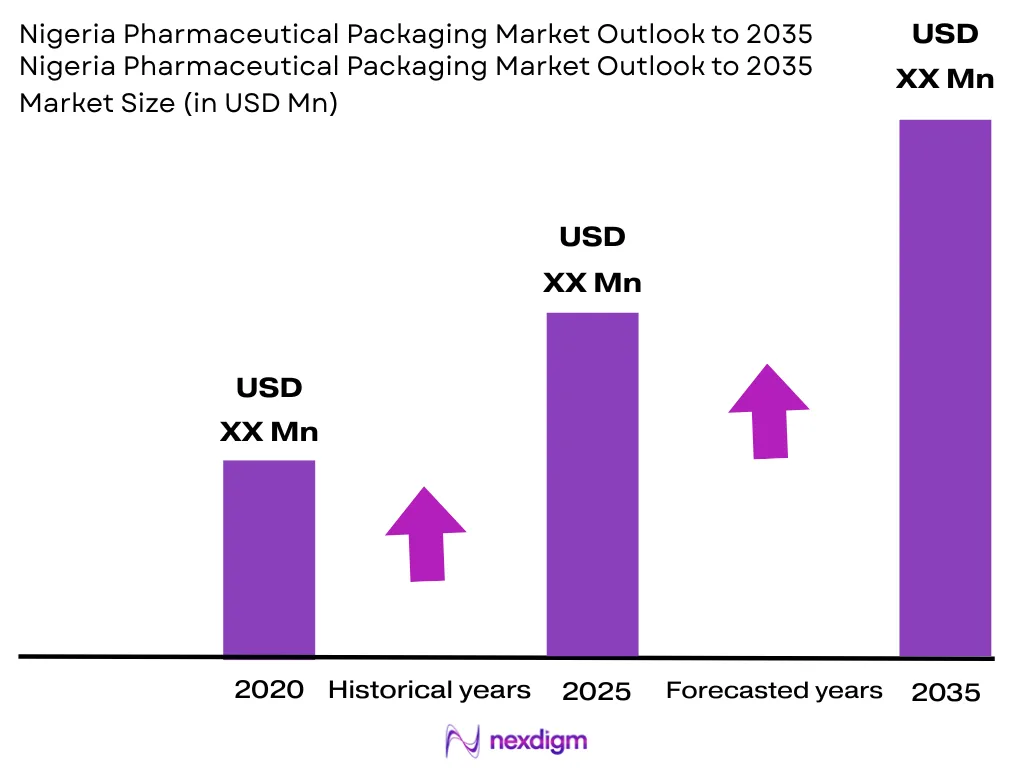
The Nigeria Pharmaceutical Packaging Market was valued at USD ~ Million in 2024 and is anticipated to expand at a CAGR of ~ % during 2026–2035. The market is primarily driven by rising domestic generic drug manufacturing, growing foreign investment in local pharmaceutical production, and expanding antiretroviral and public health programs. According to Coherent Market Insights, the Nigeria pharmaceutical market is projected to grow from USD 3,342.7 million in 2026 to USD 5,824.4 million by 2033, registering a CAGR of 9.5 percent, with generic drugs expected to hold approximately 79.2 percent of market share by 2026. Nigeria’s pharmaceutical serialization rules, which took effect in 2024, have directly raised demand for blister packs equipped with inline vision systems, sustaining consistent demand for compliant, high-performance packaging across the country’s oral drug, injectable, and public health program segments.
Market Segmentation
By Material
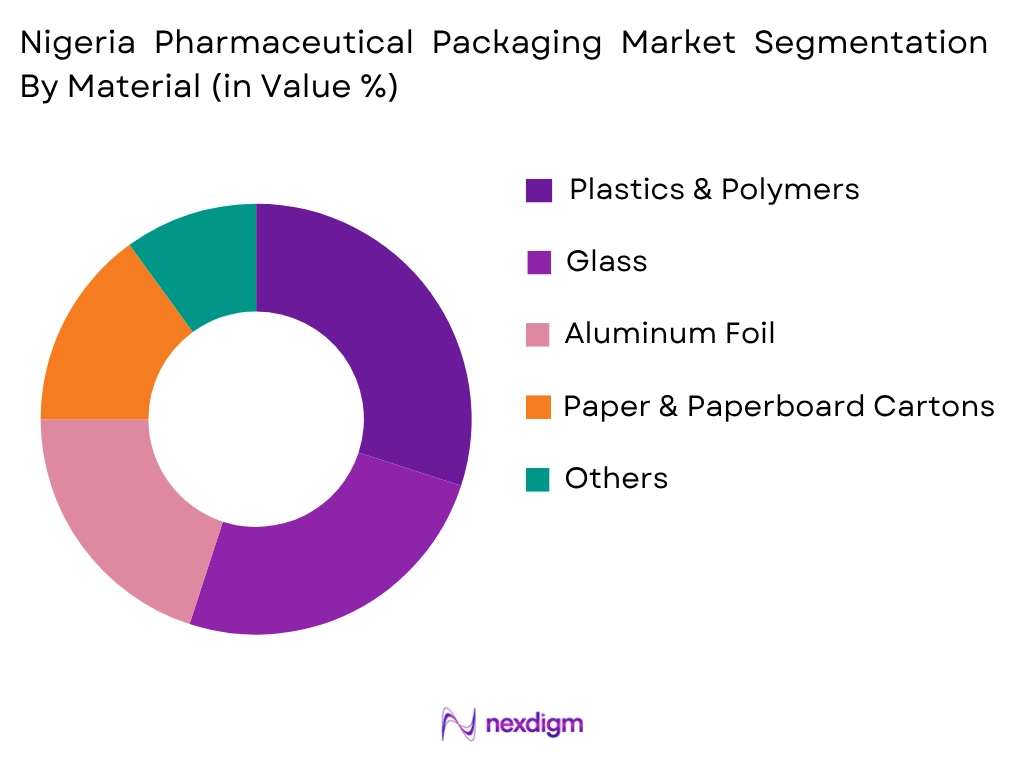
Among these, Plastics & Polymers hold the largest share of the Nigeria Pharmaceutical Packaging Market, driven by widespread use of polyethylene terephthalate bottles, high-density polyethylene containers, and blister packaging films across the country’s generics manufacturing base. Nigeria’s broader packaging market, of which pharmaceutical packaging forms a growing outlet, was valued at approximately USD 1.94 billion in 2024 and is projected to reach USD 3.54 billion by 2032, according to Verified Market Research, with plastic materials retaining significant share across all major end-use industries. Glass packaging remains essential for injectable and vaccine formats, supported by domestic manufacturers such as Beta Glass Plc, one of Nigeria’s leading glass packaging producers. At the same time, Nigeria’s pharmaceutical serialization rules, effective from 2024, are accelerating investment in blister packaging films with inline vision inspection systems designed to detect counterfeit and substandard products before they reach patients.
By Application
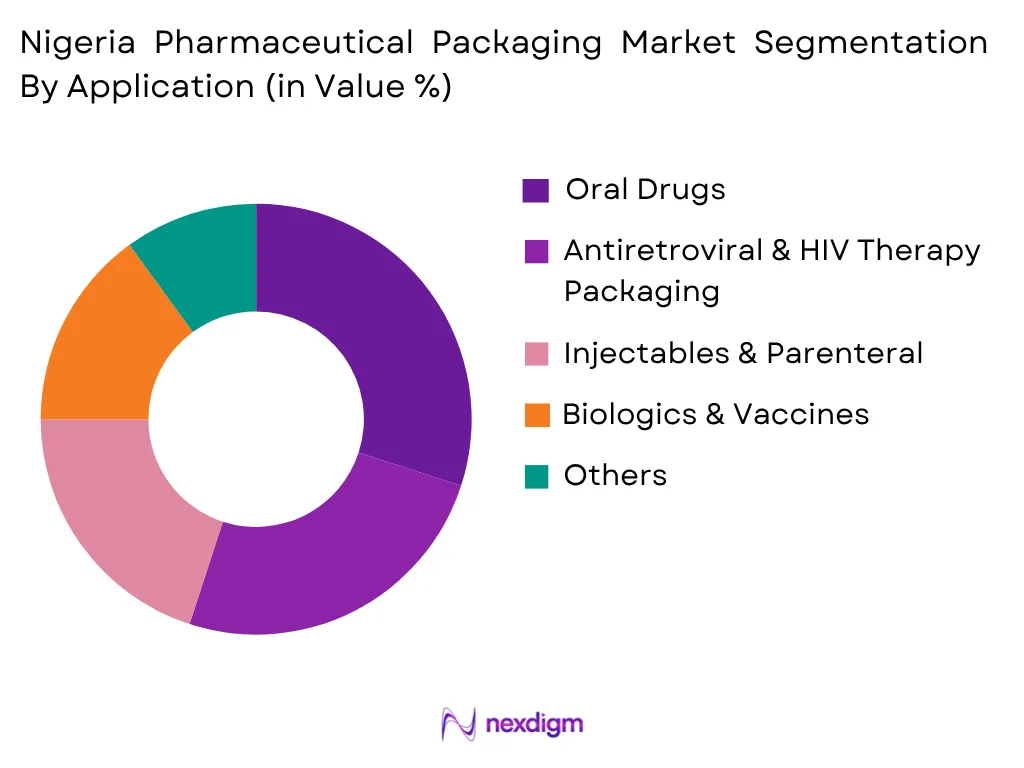
The Oral Drugs segment holds the largest share, reflecting Nigeria’s pharmaceutical market structure in which generic drugs are projected to hold approximately 79.2 percent of market share by 2026, primarily due to their affordability, accessibility, and alignment with the country’s medicine access programs, according to Coherent Market Insights. This is reinforced by Nigeria’s out-of-pocket health expenditure, which accounts for approximately 70 to 75 percent of total healthcare spending, increasing the necessity for affordable, high-volume generic medicines packaged in bottles and blister packs. Antiretroviral and HIV Therapy Packaging also represents a distinctive and significant application category in Nigeria, which had over 5 million people receiving antiretroviral therapy under state-funded programs as of 2023 according to the Africa Pharmaceutical Market report, requiring reliable, tamper-evident, and affordable packaging formats to support the country’s large-scale public health treatment programs.
Competitive Landscape
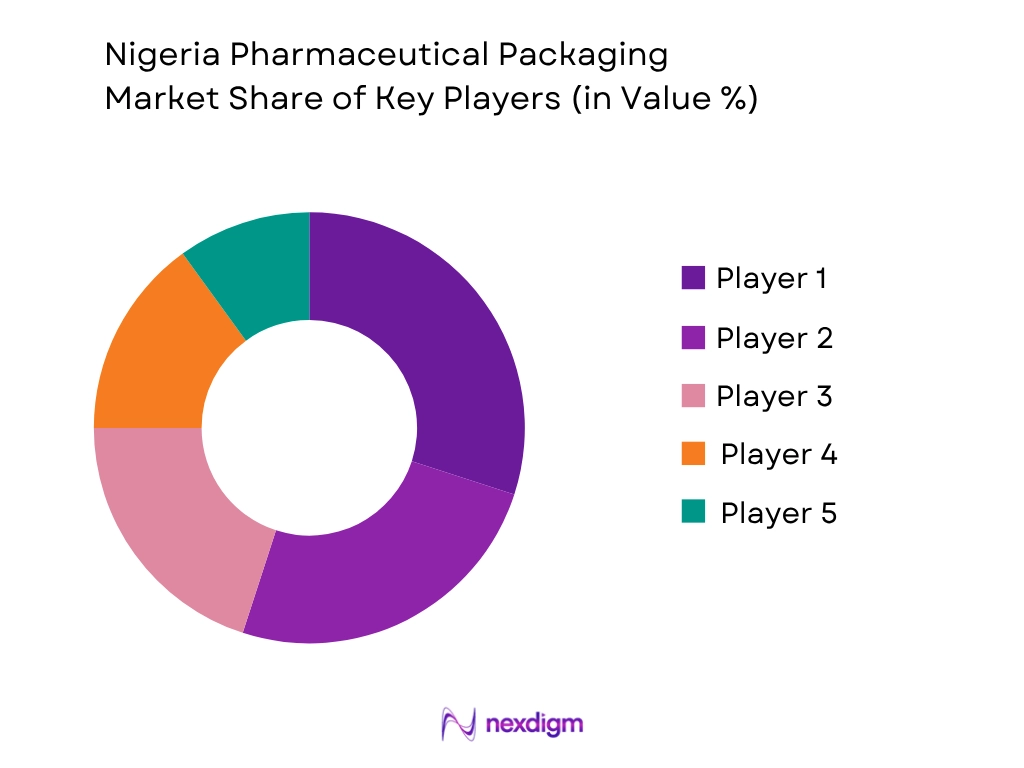
The Nigeria Pharmaceutical Packaging Market is moderately fragmented, with domestic converters, regional West African manufacturers, and multinational packaging companies competing across plastic, glass, and paperboard formats. Nigeria’s pharmaceutical manufacturing industry itself is fragmented at every level, with approximately 200 active manufacturing and packaging firms concentrated mostly in Lagos, Onitsha, and Kano, operating in a state of moderate competition where robust local manufacturers coexist alongside multinational corporations, according to Coherent Market Insights. Domestic companies benefit from regulatory support from the National Agency for Food and Drug Administration and Control (NAFDAC) and industry associations such as the Pharmaceutical Manufacturers Group of Manufacturers Association of Nigeria (PMG-MAN). Foreign investment continues to reshape the competitive landscape, exemplified by Micro Labs Ltd.’s October 2024 acquisition of Swipha, designed to solidify its foothold in Nigeria and boost local manufacturing capacity, streamlining supply chains and improving medicine accessibility and affordability.
| Company | Establishment Year | Headquarters | Primary Product Portfolio | Pharmaceutical Packaging Portfolio
|
Manufacturing Presence | Major End-Use Industries | Key Strategic Focus | Certifications & Compliance |
| Nampak Nigeria | 1968 | ~ | ~ | ~ | ~ | ~ | ~ | ~ |
| Beta Glass Plc | 1976 | ~ | ~ | ~ | ~ | ~ | ~ | ~ |
| Avon Crowncaps & Containers Nigeria Limited | 1961 | ~ | ~ | ~ | ~ | ~ | ~ | ~ |
| Greif, Inc. | 1877 | ~ | ~ | ~ | ~ | ~ | ~ | ~ |
| Twinstar Industries Limited | 1995 | ~ | ~ | ~ | ~ | ~ | ~ | ~ |
Nigeria Pharmaceutical Packaging Market Analysis
Growth Drivers
Rising Domestic Generic Manufacturing and Foreign Investment
Nigeria’s pharmaceutical packaging market is experiencing sustained growth due to rising domestic generic drug manufacturing and growing foreign investment in local pharmaceutical production. Micro Labs Ltd.’s October 2024 acquisition of Swipha underscores the rising tide of foreign investment flowing into Nigeria’s pharmaceutical industry, while also fostering the expansion of drug production within the country, according to Coherent Market Insights. Domestic companies, bolstered by regulatory support from NAFDAC and industry associations such as PMG-MAN, hold a strong position within the market, competing on pricing, product availability, and distribution network reach. Trade Economics data indicates that Nigeria spent approximately USD 642.98 million on pharmaceutical product imports in 2024, reflecting the country’s continued reliance on imported, predominantly small-molecule drugs, which sustains parallel demand for both imported finished-product packaging and expanding domestic packaging manufacturing capacity.
Expanding Public Health Programs and Urban Retail Growth
The expansion of Nigeria’s public health programs and rapid urban population growth remain major drivers for pharmaceutical packaging consumption. Nigeria’s National Department of Health data shows that over 5 million people were receiving antiretroviral therapy under state-funded programs as of 2023, significantly boosting medication consumption and sustaining demand for reliable, tamper-evident packaging across public health distribution channels. Abuja’s population is expected to approach 5.5 million by the end of 2024, growing at an annual rate of roughly 8 to 10 percent, with the city’s status as a political and economic hub driving a 12 to 15 percent increase in demand for packaging materials, particularly in the food, beverage, and pharmaceutical sectors, according to Verified Market Research. Community and retail pharmacies, along with patent medicine practitioners, remain the most easily accessible points of care for basic ailments for the majority of Nigerians, sustaining consistent demand for affordable, high-volume pharmaceutical packaging formats across the country’s expanding urban centers.
Market Challenges
Import Dependency and Foreign Exchange Volatility
Despite steady demand growth, the Nigeria pharmaceutical packaging market remains heavily constrained by dependency on imported packaging materials and specialty resins, exposing manufacturers to significant foreign exchange volatility. Nigeria’s reliance on imported, predominantly small-molecule pharmaceutical products, reflected in the USD 642.98 million spent on pharmaceutical imports in 2024, extends to the packaging materials required to support both imported and domestically manufactured medicines. GlaxoSmithKline’s August 2023 exit from the Nigerian pharmaceutical market after more than 51 years of presence, attributed to a combination of foreign exchange complexities, security concerns, and high operational costs, illustrates the scale of macroeconomic pressure affecting multinational pharmaceutical and packaging supply chains operating in Nigeria. These structural challenges require continuous currency risk management and supply chain diversification for packaging manufacturers operating within Nigeria’s pharmaceutical industry.
Regulatory Compliance Complexity and Industry Fragmentation
Nigeria’s evolving regulatory framework for pharmaceutical serialization presents a significant compliance challenge for packaging manufacturers. Pharmaceutical serialization rules that took effect in 2024 have raised demand for blister packs with inline vision systems, requiring manufacturers to invest in new quality inspection and traceability infrastructure to comply with NAFDAC requirements. Nigeria’s pharmaceutical manufacturing industry remains fragmented at every level, with approximately 200 active manufacturing and packaging firms operating mostly in Lagos, Onitsha, and Kano, according to Mobility Foresights, creating inconsistent quality standards across the industry. High taxes, high energy costs, poor infrastructure, insecurity, poor funding, and unfavorable policy changes continue to present political, socioeconomic, financial, and regulatory barriers that government, regulators, and industry stakeholders must address to strengthen Nigeria’s pharmaceutical manufacturing and packaging capacity.
Market Opportunities
Rising Investment in Domestic Serialization and Blister Packaging Capacity
Nigeria’s 2024 pharmaceutical serialization rules create significant opportunities for investment in domestic blister packaging and inline vision inspection capacity. As manufacturers work to comply with new track-and-trace requirements, companies offering advanced serialization technology and quality inspection systems are positioned to capture growing demand from both domestic generics manufacturers and multinational companies expanding local production. Micro Labs Ltd.’s acquisition of Swipha in October 2024 illustrates the broader trend of foreign investment flowing into Nigeria’s pharmaceutical manufacturing capacity, streamlining supply chains and creating parallel demand for expanded domestic packaging capabilities. As Nigeria continues strengthening its domestic pharmaceutical manufacturing base to reduce import dependency, packaging manufacturers investing early in serialization-compliant technology are well positioned to capture compliance-driven demand from both established and newly invested pharmaceutical companies.
Expansion of Public Health Program and Export-Oriented Packaging
Nigeria’s large-scale public health programs and growing regional trade position create substantial long-term opportunities for pharmaceutical packaging manufacturers. With over 5 million people receiving antiretroviral therapy under state-funded programs, sustained demand for affordable, tamper-evident packaging continues to support both domestic manufacturers and international suppliers serving Nigeria’s public health distribution networks. Nigeria’s position as a significant player in the broader Africa pharmaceutical market, driven by its vast population and high disease burden, creates favorable conditions for packaging manufacturers to expand production capacity serving both domestic retail and cross-border export demand across the Economic Community of West African States (ECOWAS) region. Continued investment in local manufacturing incentives and public health program packaging further strengthens long-term opportunities for companies serving Nigeria’s pharmaceutical packaging industry.
Future Outlook
The Nigeria Pharmaceutical Packaging Market is expected to witness sustained expansion over the forecast period, supported by continued growth in domestic generic drug manufacturing, expanding foreign investment in local pharmaceutical production, and increasing regulatory pressure to adopt serialization and track-and-trace packaging technologies. Continued investment in blister packaging capacity, public health program packaging, and domestic manufacturing incentives will further accelerate innovation across the industry. The market is also likely to benefit from Nigeria’s position as a significant player in the broader Africa pharmaceutical market, enabling greater investment in advanced, compliant packaging technologies capable of serving both domestic healthcare needs and regional export markets across West Africa.
Major Players
- Nampak Nigeria
- Beta Glass Plc
- Avon Crowncaps & Containers Nigeria Limited
- Greif, Inc.
- Twinstar Industries Limited
- PrimePak Industries Nigeria Ltd
- Flexipack Plastics Ltd
- Quantum Plastic Nigeria Ltd
- Tempo Paper Pulp & Packaging Ltd
- Amcor plc
- Gerresheimer AG
- Schott AG
- AptarGroup, Inc.
- West Pharmaceutical Services, Inc.
- Berry Global Group, Inc.
Key Target Audience
- Pharmaceutical Packaging Manufacturers
- Pharmaceutical and Generic Drug Manufacturers
- Contract Packaging Organizations
- Hospitals, Clinics and Public Health Program Distributors
- Retail Pharmacies and Patent Medicine Stores
- Investment and Venture Capitalist Firms
- Government and Regulatory Bodies (National Agency for Food and Drug Administration and Control (NAFDAC), Pharmaceutical Manufacturers Group of Manufacturers Association of Nigeria (PMG-MAN), Standards Organisation of Nigeria (SON))
- Packaging Material Suppliers and Industrial Raw Material Distributors
Research Methodology
Step 1: Identification of Key Variables
The research process begins with identifying the complete ecosystem of the Nigeria Pharmaceutical Packaging Market, including raw material and resin suppliers, packaging converters and manufacturers, pharmaceutical manufacturers, contract packaging organizations, distributors, and regulatory authorities. Extensive secondary research is conducted using company annual reports, government publications, trade associations, customs statistics, industry journals, and proprietary databases to determine the variables influencing market demand, pricing, production, consumption, and technological developments.
Step 2: Market Analysis and Construction
Historical market information is collected and analyzed to estimate market size, production volumes, import-export activity, application-wise demand, and pricing trends. A combination of top-down and bottom-up approaches is used to estimate market revenues and validate segment-level performance. Consumption patterns across oral drugs, antiretroviral therapy, injectables, and biologics are evaluated to establish an accurate representation of the industry.
Step 3: Hypothesis Validation and Expert Consultation
The preliminary findings are validated through Computer-Assisted Telephone Interviews (CATIs) and structured discussions with pharmaceutical packaging manufacturers, procurement managers, regulatory affairs experts, quality assurance professionals, and senior executives operating within the Nigerian pharmaceutical packaging industry. These interviews help verify market assumptions, competitive developments, technology adoption trends, pricing dynamics, and future investment opportunities while refining the overall market estimates.
Step 4: Research Synthesis and Final Output
The final stage integrates insights obtained from primary interviews with quantitative information collected through secondary sources. Data triangulation techniques are applied to reconcile differences between supply-side and demand-side estimates, ensuring robust market forecasting. The report is then reviewed through multiple quality assurance checkpoints to deliver a comprehensive analysis covering market size, segmentation, competitive landscape, future outlook, and strategic recommendations for industry stakeholders.

- Executive Summary
- Research Methodology (Market Definitions and Assumptions, Abbreviations, Market Sizing Approach, Top-Down Analysis, Bottom-Up Analysis, Demand-Side Assessment, Supply-Side Assessment, Primary Industry Interviews, Secondary Research Validation, Data Triangulation, Forecasting Framework, Limitations and Future Conclusions)

- Definition and Scope
- Market Evolution and Industry Genesis
- Timeline of Major Industry Developments
- Pharmaceutical Packaging Industry Value Chain Analysis
- Supply Chain Analysis

- Growth Drivers (Rising Domestic Generic Drug Manufacturing, Growth of Foreign Investment in Local Pharmaceutical Production, Expanding Antiretroviral and Public Health Programs, Increasing Urban Population and Retail Pharmacy Growth, Government Push for Local Pharmaceutical Manufacturing Capacity, Rising Out-of-Pocket Healthcare Spending)
- Market Challenges (Heavy Dependence on Imported Pharmaceutical Packaging Materials, Volatility in Foreign Exchange and Import Costs, Regulatory Compliance Complexity Under NAFDAC Serialization Rules, Fragmented Domestic Packaging Industry Structure, High Operational Costs and Infrastructure Constraints, Multinational Market Exits Affecting Supply Chain Stability)
- Market Opportunities (Investment in Domestic Blister Packaging and Serialization Capacity, Growth in Antiretroviral and Public Health Program Packaging, Expansion of Contract Packaging Organizations, Local Manufacturing Incentives Attracting Foreign Investment, Smart and Anti-Counterfeiting Packaging Technologies, Export-Oriented Packaging Manufacturing for West Africa)
- Market Trends (Rising Adoption of Blister Packs with Inline Vision Systems, Growth in Foreign Acquisition of Domestic Pharmaceutical Manufacturers, Increasing Localization of Packaging Production, Smart Packaging with Track-and-Trace Features, Expansion of Contract Packaging Organizations, Industry Consolidation Through Investment)
- Government Regulations (National Agency for Food and Drug Administration and Control (NAFDAC) Requirements, Pharmaceutical Serialization Rules (Effective 2024), Pharmaceutical Manufacturers Group of Manufacturers Association of Nigeria (PMG-MAN) Standards, Standards Organisation of Nigeria (SON) Requirements, National Health Insurance Authority (NHIA) Oversight, Import Compliance and Labelling Requirements)
- Import and Export Analysis (Trade Volume, Major Import Sources, Export Destinations, HS Code Analysis, Trade Balance)
- Raw Material Availability Analysis (Pharmaceutical-Grade Resins, Glass, Aluminium Foil, Elastomeric Closures, Paperboard)
- Technology Landscape (Blister Packaging and Inline Vision Systems, Serialization and Track-and-Trace Systems, Sachet Filling and Sealing Technology, Vial and Ampoule Manufacturing, Smart and Anti-Counterfeiting Packaging)
- Sustainability Assessment (Recyclability and Post-Consumer Recycled Content, Carbon Footprint Reduction, Plastic Waste Reduction, Local Sourcing Initiatives, Circular Economy Integration)
- PESTLE Analysis
- SWOT Analysis
- Porter’s Five Forces Analysis
- Stakeholder Ecosystem
- Competition Ecosystem

- By Market Value (2020-2025)
- By Volume Consumption (2020-2025)
- By Average Selling Price (2020-2025)

- By Material (In Value %)
Plastics & Polymers
Glass
Paper & Paperboard
Aluminium Foil
Other Materials - By Product Type (In Value %)
Bottles
Blister Packs
Sachets & Pouches
Vials & Ampoules
Strip Packaging - By Application (In Value %)
Oral Drugs
Antiretroviral & HIV Therapy Packaging
Injectables & Parenteral
Biologics & Vaccines
Topical Formulations - By End Use (In Value %)
Pharmaceutical Manufacturers
Contract Packaging Organizations
Hospitals & Clinics
Retail Pharmacies & Patent Medicine Stores - By Region (In Value %)
Lagos & South West
Onitsha & South East
Kano & North
Abuja & North Central
Rest of Nigeria

- Market Share of Major Players (By Value, Volume, Material Type, Application Industry, Product Category)
- Cross Comparison Parameters (Material Portfolio Breadth, Sterile & Aseptic Packaging Capability, Drug Delivery Device Portfolio, Application Technical Support Capability, Manufacturing Capacity, Regulatory Compliance & Certifications, Pharmaceutical Customer Base, Innovation & New Product Launch Frequency)
- SWOT Analysis of Major Players
- Pricing Analysis by Product Category and SKU
- Production Capacity Analysis
- Manufacturing Footprint Analysis
- Distribution Network Analysis
- Innovation Benchmarking
- Detailed Profiles of Major Companies
Nampak Nigeria
Beta Glass Plc
Avon Crowncaps & Containers Nigeria Limited
Greif, Inc.
Twinstar Industries Limited
PrimePak Industries Nigeria Ltd
Flexipack Plastics Ltd
Quantum Plastic Nigeria Ltd
Tempo Paper Pulp & Packaging Ltd
Amcor plc
Gerresheimer AG
Schott AG
AptarGroup, Inc.
West Pharmaceutical Services, Inc.
Berry Global Group, Inc.

- Consumption Pattern Analysis (Industrial Usage, Batch Size, Product Category Penetration, Seasonal Demand, Reformulation Activity)
- Purchasing Criteria (Affordability, Barrier Performance, Regulatory Compliance, Sterility Assurance, Tamper-Evidence, Cost Efficiency)
- Procurement and Supplier Selection Analysis
- Sustainable Packaging Adoption Assessment
- Premium vs Conventional Packaging Demand
- Product Attribute Preference Analysis (Barrier Properties, Tamper-Evidence, Child-Resistance, Affordability, Print and Traceability Quality, Shelf Stability in Tropical Climate)
- Patient Safety and Counterfeit Prevention Influence on Packaging Design
- Pain Point Analysis
- Decision-Making Process

- By Market Value (2026-2035)
- By Volume Consumption (2026-2035)
- By Average Selling Price (2026-2035)


 Request a Sample
 Ask for Customization
 Get a Quote
 Enquire Now