
 Download PDF
Market Overview
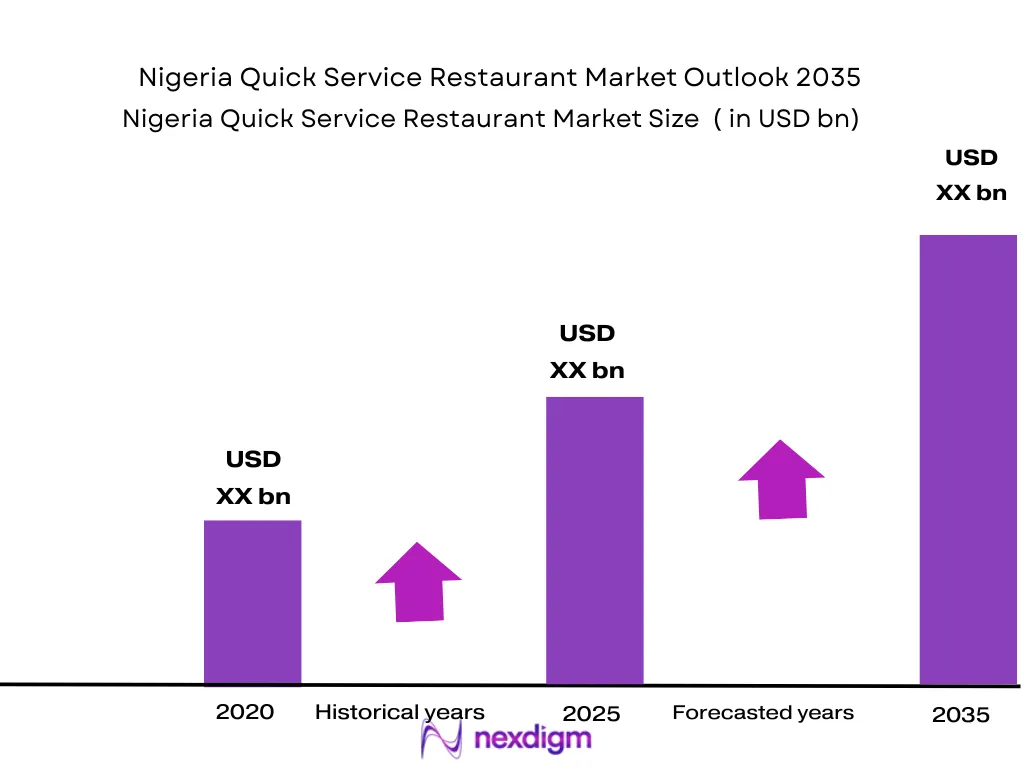
The Nigeria Quick Service Restaurant market is valued at USD ~ billion in 2024, with a forecasted CAGR of around 11.5% during 2024–2030. Growth is driven by rising urban food consumption, young population demographics, affordable meal demand, delivery platform adoption, and the expansion of organised fast-food chains. Nigeria’s foodservice market was valued at USD 9.26 billion in 2024, while QSR remained the largest foodservice type, supported by standardised menus, quick service, and price-sensitive urban demand.
Lagos, Abuja, Kano, Ibadan, Port Harcourt, Benin City, Enugu, Kaduna, and Onitsha dominate QSR demand due to dense populations, commercial activity, universities, retail clusters, transport hubs, and expanding delivery coverage. Lagos recorded around 15,388,000 residents, Kano 4,910,000, Ibadan 3,649,000, Abuja 2,690,000, and Port Harcourt 2,120,000, while Nigeria’s urban population reached 125,447,884, supporting strong fast-food transaction density in major cities.
Market Segmentation
By Product Type
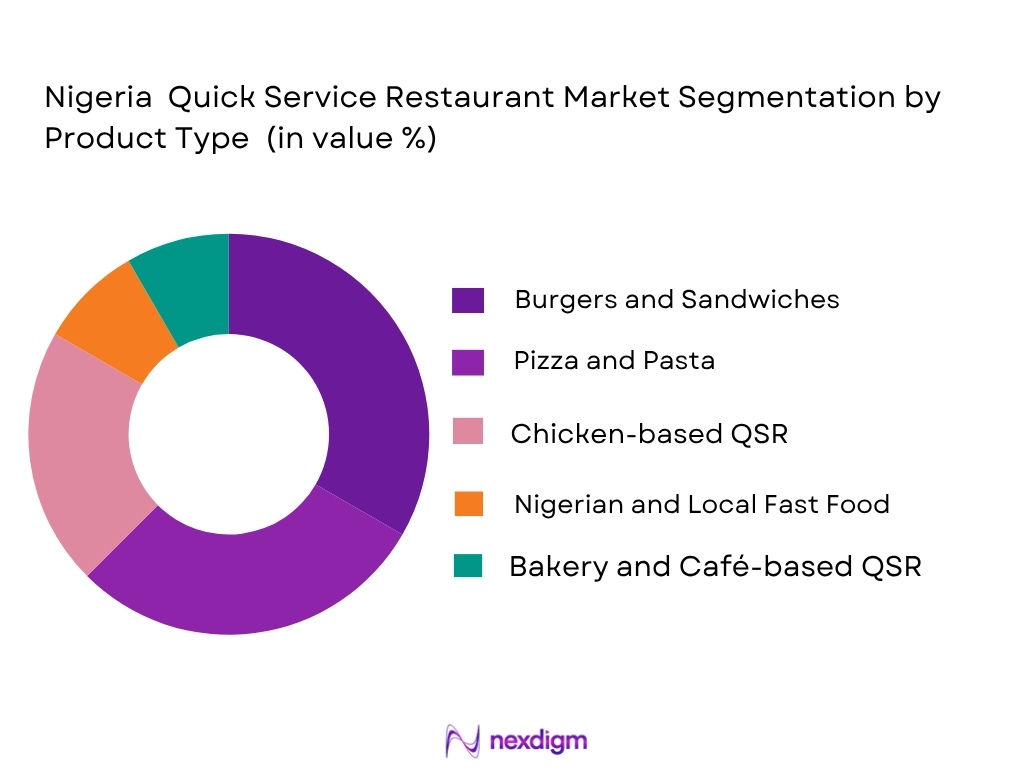
The Nigeria Quick Service Restaurant market is segmented by product type into chicken-based QSR, burgers and sandwiches, pizza, Nigerian fast food and local meals, bakery, snacks and beverages, and others. Chicken-based QSR holds the dominant market share under product type because fried chicken, grilled chicken, rice-and-chicken meals, spicy sauces, and family packs align strongly with Nigerian consumer preferences. Brands such as Chicken Republic, KFC, Kilimanjaro, The Place, Tantalizers, and local chicken-focused outlets have built strong visibility across malls, high streets, transport corridors, and delivery platforms. The segment benefits from affordability, familiarity, ease of localisation, and suitability for lunch, dinner, family meals, office orders, and student consumption. Chicken meals also allow operators to offer value bundles with rice, chips, drinks, sauces, and local sides, which helps attract price-sensitive consumers while maintaining order frequency across urban and semi-urban locations.
By Service Type
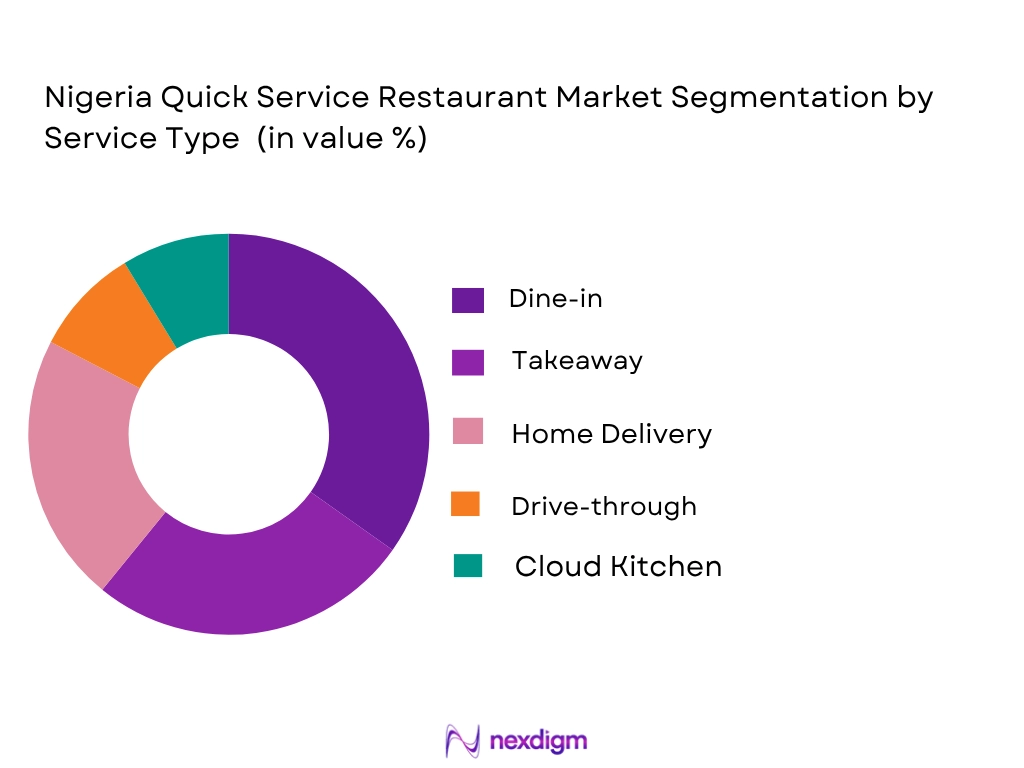
The Nigeria Quick Service Restaurant market is segmented by service type into dine-in, takeaway, delivery, drive-thru, and app-based pickup or click-and-collect. Dine-in dominates the service type segment because Nigerian QSR consumption remains closely linked with malls, office districts, universities, transport corridors, shopping plazas, and social dining occasions. Consumers often use QSR outlets as affordable and accessible eating spaces, especially in Lagos, Abuja, Port Harcourt, Ibadan, and Kano. Dine-in also supports higher order value through beverages, sides, desserts, combo meals, and impulse purchases. Delivery is growing quickly through platforms and brand-owned ordering channels, but dine-in remains important because it strengthens brand visibility, improves customer experience, and supports high-footfall restaurant locations. Many operators are now developing hybrid outlets that combine seated dining, takeaway counters, app pickup, and delivery dispatch.
Competitive Landscape
The Nigeria Quick Service Restaurant market is competitive and led by a mix of domestic chains, international franchise brands, chicken specialists, pizza operators, bakery-led fast-food brands, and delivery-enabled restaurant groups. Chicken Republic, KFC, Domino’s Pizza, Pizza Hut, Kilimanjaro, The Place, Tantalizers, Sweet Sensation, Mr Bigg’s, and Cold Stone Creamery compete across malls, high streets, transport hubs, business districts, and residential catchments. Competition is shaped by price, store network, menu localisation, delivery partnerships, brand trust, product consistency, and ability to manage food-cost inflation.
| Company | Establishment Year | Headquarters | Core Cuisine | Business Model | Digital Ordering Strength | Delivery Presence | Localisation Strategy | Key Competitive Advantage |
| Chicken Republic | 2004 | Lagos, Nigeria | ~ | ~ | ~ | ~ | ~ | ~ |
| KFC Nigeria | 1952 | Louisville, United States | ~ | ~ | ~ | ~ | ~ | ~ |
| Domino’s Pizza Nigeria | 1960 | Michigan, United States | ~ | ~ | ~ | ~ | ~ | ~ |
| Kilimanjaro Restaurant | 2004 | Port Harcourt, Nigeria | ~ | ~ | ~ | ~ | ~ | ~ |
| The Place Restaurant | 2006 | Lagos, Nigeria | ~ | ~ | ~ | ~ | ~ | ~ |
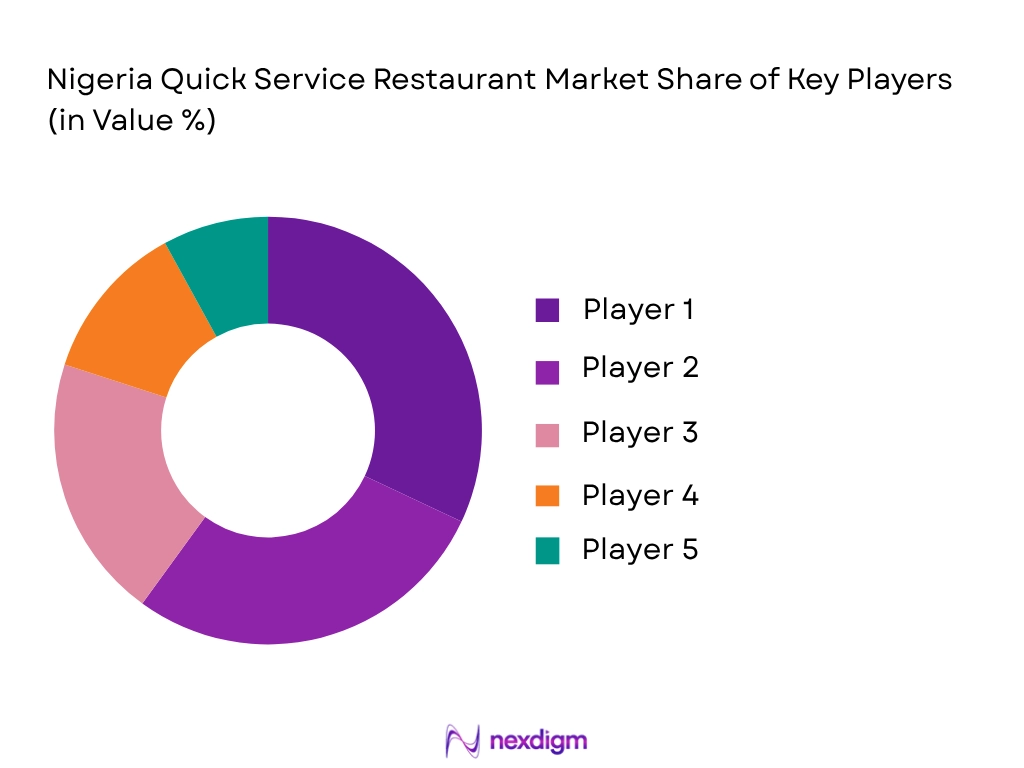
Nigeria Quick Service Restaurant Market Analysis
Growth Drivers
Growing Urbanization and Young Consumer Population
The Nigeria quick service restaurant market is supported by rapid urbanization and a large young consumer population. Cities such as Lagos, Abuja, Port Harcourt, Ibadan, and Kano are seeing rising demand for quick, accessible, and affordable food options. Young consumers, students, working professionals, and commuters often prefer QSR outlets for snacks, lunch, dinner, and takeaway meals. This group is also more familiar with mobile ordering, social media promotions, delivery platforms, and branded foodservice experiences. Busy urban routines, longer commute times, expanding retail zones, and changing eating habits are increasing dependence on convenient meals. QSR brands that offer value pricing, local flavors, fast service, and digital accessibility can attract frequent visits and build strong loyalty among younger urban consumers.
Expansion of Domestic and International QSR Chains
The expansion of domestic and international QSR chains is a key growth driver in Nigeria. Local brands understand Nigerian tastes, pricing expectations, and regional food preferences, while international chains bring global recognition, standardized operations, and established franchise systems. This combination is helping organized QSR formats gain visibility across malls, high streets, business districts, airports, and residential areas. Expansion by branded chains also improves consumer trust through better hygiene standards, consistent food quality, professional service, and recognizable menus. Franchise and company-owned models allow operators to scale across major cities and emerging urban markets. As consumers increasingly seek reliable and convenient eating options, QSR chains that balance affordability with strong brand identity are likely to benefit from rising demand.
Market Challenges
Power Supply Disruptions and Generator Dependence
Power supply disruptions are a major challenge for Nigeria’s quick service restaurant market. QSR outlets require reliable electricity for refrigeration, cooking equipment, lighting, point-of-sale systems, ventilation, digital ordering, and food storage. Frequent outages can interrupt operations, delay service, damage perishable inventory, and create food safety risks. Many operators depend on diesel or petrol generators to maintain business continuity, which increases fuel, maintenance, and equipment costs. Smaller restaurants and franchisees may struggle more with these expenses, especially when consumer pricing remains highly competitive. Generator dependence also reduces operational efficiency and adds pressure to already thin margins. To manage this issue, QSR brands must invest in backup power, energy-efficient equipment, and better inventory planning.
Currency Volatility and Import Cost Pressure
Currency volatility and import cost pressure significantly affect QSR operators in Nigeria. Many restaurants depend directly or indirectly on imported ingredients, equipment, packaging materials, technology systems, spare parts, sauces, beverages, and frozen products. When the naira weakens or foreign exchange availability becomes limited, procurement costs rise and planning becomes more difficult. This creates pressure on menu pricing, supplier contracts, expansion budgets, and profitability. Operators may not be able to pass the full increase to customers because many consumers are highly price-sensitive. As a result, QSR brands must look for local sourcing alternatives, simplify menus, renegotiate supplier terms, and improve cost control. Managing foreign exchange exposure is important for maintaining affordability, consistency, and long-term business stability.
Opportunities
Adoption of Digital Ordering and Mobile Payment Systems
Digital ordering and mobile payment systems offer strong opportunities for Nigeria’s QSR market. Smartphone usage, fintech adoption, bank transfers, mobile wallets, and app-based payments are changing how urban consumers buy food. QSR brands can use websites, mobile apps, WhatsApp ordering, QR codes, and delivery platforms to make ordering faster and more convenient. Digital channels also help restaurants reduce queues, improve order accuracy, track customer preferences, and promote repeat purchases through discounts or loyalty rewards. Mobile payments can support faster checkout and reduce dependence on cash handling. For operators, transaction data can improve menu planning, demand forecasting, and targeted marketing. Brands that combine digital convenience with affordable meals can strengthen customer engagement and improve sales efficiency.
Growth of Localized Nigerian-inspired Menus
Localized Nigerian-inspired menus present a major opportunity for QSR brands in Nigeria. Consumers often prefer familiar flavors, spices, rice-based meals, grilled chicken, meat pies, jollof rice, suya-inspired items, plantain sides, pepper sauces, and regional snacks. QSR operators that adapt menus to Nigerian taste preferences can compete more effectively with local eateries and street food vendors. Localization also helps international brands improve acceptance while allowing domestic chains to strengthen differentiation. Affordable Nigerian-style combos, family meals, and snack options can attract both daily customers and group orders. Success depends on consistent taste, reliable sourcing, hygiene, and pricing that matches local expectations. Brands that combine quick service with familiar flavors can build stronger loyalty and wider market relevance.
Future Outlook
The Nigeria Quick Service Restaurant market is expected to grow strongly over the next five years, supported by urbanisation, young consumer demand, expanding delivery platforms, organised chain growth, and rising preference for convenient meals. Operators are expected to focus on affordable combos, chicken innovation, rice-based meals, local menu adaptation, digital ordering, delivery-ready kitchens, and compact outlets. Lagos and Abuja will remain the primary growth hubs, while Kano, Ibadan, Port Harcourt, Benin City, Enugu, Kaduna, and Onitsha will offer expansion opportunities.
Major Players
- Chicken Republic
- KFC Nigeria
- Domino’s Pizza Nigeria
- Pizza Hut Nigeria
- Kilimanjaro Restaurant
- The Place Restaurant
- Tantalizers
- Sweet Sensation
- Mr Bigg’s
- Mega Chicken
- Cold Stone Creamery Nigeria
- Burger King Nigeria
- Debonairs Pizza Nigeria
- Sooyah Bistro
- Chicken Capitol
Key Target Audience
- Quick Service Restaurant Chains
- Fast Casual Restaurant Operators
- Franchise Owners and Multi-unit Operators
- Food Delivery and Aggregator Platforms
- Commercial Real Estate Developers
- Food and Beverage Manufacturers
- Investments and Venture Capitalist Firms
- Government and Regulatory Bodies
Research Methodology
Step 1: Identification of Key Variables
The initial phase involves constructing an ecosystem map covering major stakeholders in the Nigeria Quick Service Restaurant market. This includes QSR chains, franchise operators, delivery platforms, mall developers, food suppliers, packaging providers, payment companies, and regulators. The objective is to identify variables that influence market size, pricing, outlet expansion, product demand, service model mix, and consumer behaviour.
Step 2: Market Analysis and Construction
In this phase, historical market data is compiled and analysed across product type, service type, ownership model, region, outlet format, and consumer behaviour. Revenue generation is assessed through outlet density, order frequency, average transaction value, delivery contribution, dine-in demand, takeaway demand, and app-based ordering penetration. The analysis also evaluates organised foodservice growth, city-level demand concentration, and chain expansion patterns.
Step 3: Hypothesis Validation and Expert Consultation
Market hypotheses are validated through structured interviews with restaurant operators, franchise managers, foodservice suppliers, delivery partners, technology vendors, and commercial real estate stakeholders. These discussions help verify assumptions related to pricing, menu performance, consumer preferences, delivery economics, labour pressure, food input costs, and outlet-level margins. Expert inputs are used to refine segmentation, competitive analysis, and growth expectations.
Step 4: Research Synthesis and Final Output
The final phase involves synthesising desk research, company-level information, public foodservice data, and expert insights into a structured market report. The output includes market size, segmentation, competitive landscape, future outlook, major players, key target audience, methodology, and FAQs. This step ensures consistency between top-down foodservice indicators and bottom-up company and channel-level findings.

- Executive Summary
- Research Methodology (Market Definitions and Assumptions, Abbreviations, Market Sizing Approach, Consolidated Research Approach, Understanding Market Potential Through In-Depth Industry Interviews, Primary Research Approach, Limitations and Future Conclusions)

- Definition and Scope
- Market Dynamics Overview
- Market Genesis
- Major Players and Market Timeline
- Business Cycle and Trends
- Supply Chain and Value Chain Analysis

- Growth Drivers
Rising Demand for Affordable and Convenient Meals
Expansion of Food Delivery Platforms
Growing Urbanization and Young Consumer Population
Growth of Shopping Malls and Modern Retail Formats
Expansion of Domestic and International QSR Chains
Rising Demand for Local and International Fast Food Options - Market Challenges
High Food Ingredient and Operating Costs
Power Supply Disruptions and Generator Dependence
Price Sensitivity among Consumers
Currency Volatility and Import Cost Pressure
Intense Competition from Local Eateries and Street Food Vendors
Food Safety and Hygiene Compliance Requirements - Opportunities
Expansion in Tier 2 Cities and Urban Residential Areas
Growth of Delivery-only and Cloud Kitchen Models
Adoption of Digital Ordering and Mobile Payment Systems
Expansion of Value Meals and Affordable Combo Offers
Growth of Localized Nigerian-inspired Menus
Partnerships with Food Delivery Aggregators - Key Trends
Growing Preference for Localized Fast Food Menus
Rising Popularity of App-based Food Ordering
Expansion of Takeaway and Delivery Services
Increasing Demand for Value Meals and Promotions
Use of Technology for Ordering, Payments, and Customer Engagement
Focus on Local Sourcing and Menu Innovation - Government Regulations
- SWOT Analysis
- Porter’s Five Forces

- By Value, 2020–2025
- By Number of Outlets, 2020–2025
- By Average Order Value, 2020–2025

- By Product Type (In Value %)
Burgers and Sandwiches
Pizza and Pasta
Chicken-based QSR
Nigerian and Local Fast Food
Bakery and Café-based QSR
Others - By Service Model (In Value %)
Dine-in
Takeaway
Home Delivery
Drive-through
Cloud Kitchen - By Outlet Type (In Value %)
Standalone Outlets
Mall and High Street Outlets
Food Court Outlets
Travel Hub Outlets
Kiosks and Cloud Kitchens - By Ownership Model (In Value %)
Company-owned Outlets
Franchise Outlets - By Ordering Channel (In Value %)
In-store Ordering
Mobile Applications
Online Websites
Third-party Food Delivery Platforms
Self-service Kiosks - By End-User (In Value %)
Students and Young Adults
Working Professionals
Families
Tourists and Travellers
Others - By Region (In Value %)
Lagos
Abuja
South West
South East
South South
North Central
North West
North East

- Market Share of Major Players by Value/Outlet Count
- Market Share of Major Players by Cuisine Type
- Market Share of Major Players by Service Model
- Cross Comparison Parameters (Company Overview, Business Strategies, Recent Developments, Strengths, Weaknesses, Organizational Structure, Revenues, Revenues by Cuisine Type, Number of Outlets, Franchise Network, Distribution and Delivery Channels, Average Order Value, Margins, Unique Value Offering, and Others)
- SWOT Analysis of Major Players
- Pricing Analysis Based on Menu Categories for Major Players
- Detailed Profiles of Major Companies
Chicken Republic
Kilimanjaro Restaurant
Mr Bigg’s
Tantalizers
Sweet Sensation
The Place Restaurant
Domino’s Pizza Nigeria
KFC Nigeria
Burger King Nigeria
Pizza Hut Nigeria
Cold Stone Creamery Nigeria
Mega Chicken
Chicken Capitol
So Fresh
Food Concepts Plc
Eat’N’Go Limited
Sundry Foods Limited
Genesis Restaurant

- Consumer Demand and Dining Preferences
- Spending Power and Frequency of Visits
- Cuisine Preferences and Dietary Requirements
- Needs, Desires, and Pain Point Analysis
- Decision-Making Proces

- By Value, 2026–2035
- By Number of Outlets, 2026–2035
- By Average Order Value, 2026–2035


 Request a Sample
 Ask for Customization
 Get a Quote
 Enquire Now