
 Download PDF
Market Overview
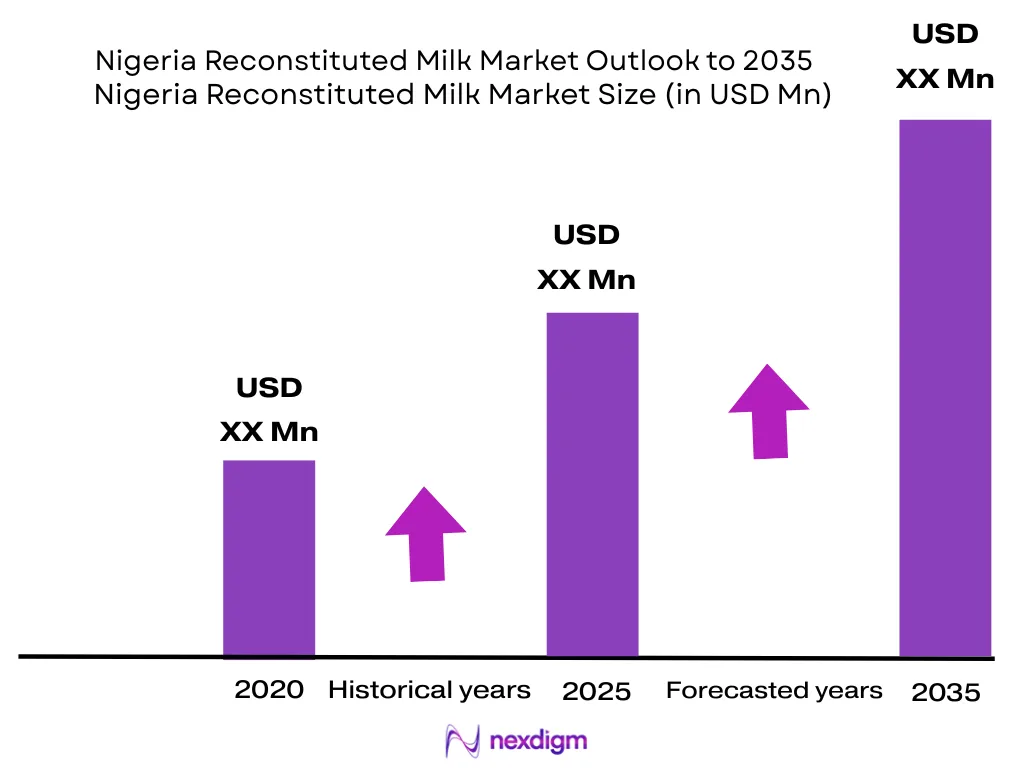
Nigeria Reconstituted Milk Market is valued at USD ~ million, based on imported powdered milk and cream used as the closest published proxy for reconstituted dairy products. The market is driven by household powder reconstitution, fat-filled milk powder, open-market retailing and imported dairy dependence. Nigeria’s dairy imports were USD 568 million in the preceding annual base, while around 80% of dairy consumed domestically is imported, showing strong reliance on powder-based supply. Lagos, Abuja, Kano, Kaduna, Oyo and Port Harcourt dominate Nigeria Reconstituted Milk Market due to urban demand, open-market wholesaling, modern retail, institutional consumption and local dairy programmes.
Lagos leads through importer concentration, Apapa/Tincan port access and national redistribution; Kano and Kaduna are relevant due to northern dairy belts and milk collection initiatives. Nigeria’s GDP reached USD 252.26 billion, GDP per capita stood at USD 1,084.2, and GDP growth reached 4.1 in the current World Bank data cycle.
Market Segmentation
By Product Type
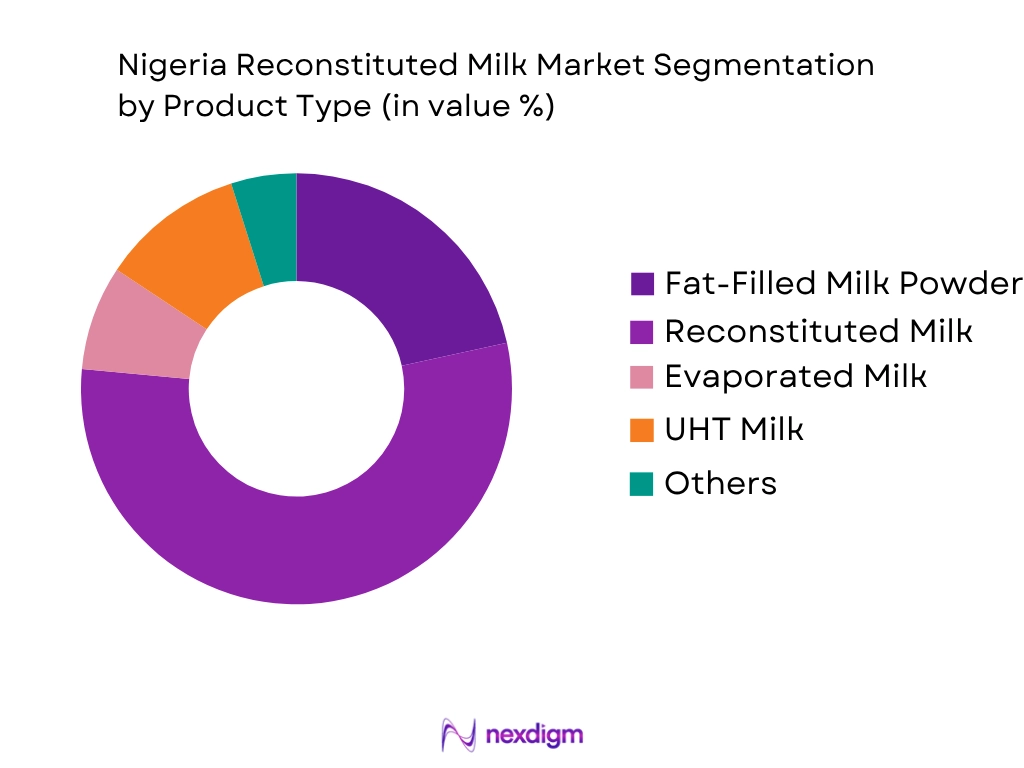
Nigeria Reconstituted Milk Market is segmented by product type into fat-filled milk powder, powdered reconstituted milk, recombined evaporated milk, recombined UHT milk and flavoured reconstituted dairy drinks. Recently, fat-filled milk powder has a dominant market share in Nigeria under the product type segmentation because it is the most affordable and widely used base for household tea whitening, family milk drinks, repacking, sachet sales and foodservice dairy preparation. USDA FAS notes that Nigeria is price-sensitive and importers prefer fat-filled milk powder because it gives a favourable retail price. This fits Nigeria’s mass-market structure, where consumers often buy sachets and refill packs instead of chilled liquid milk. Fat-filled milk powder also works well in informal retail because it is shelf-stable, easy to transport, and does not require cold-chain handling across open markets, kiosks and neighbourhood stores.
By Distribution Channel
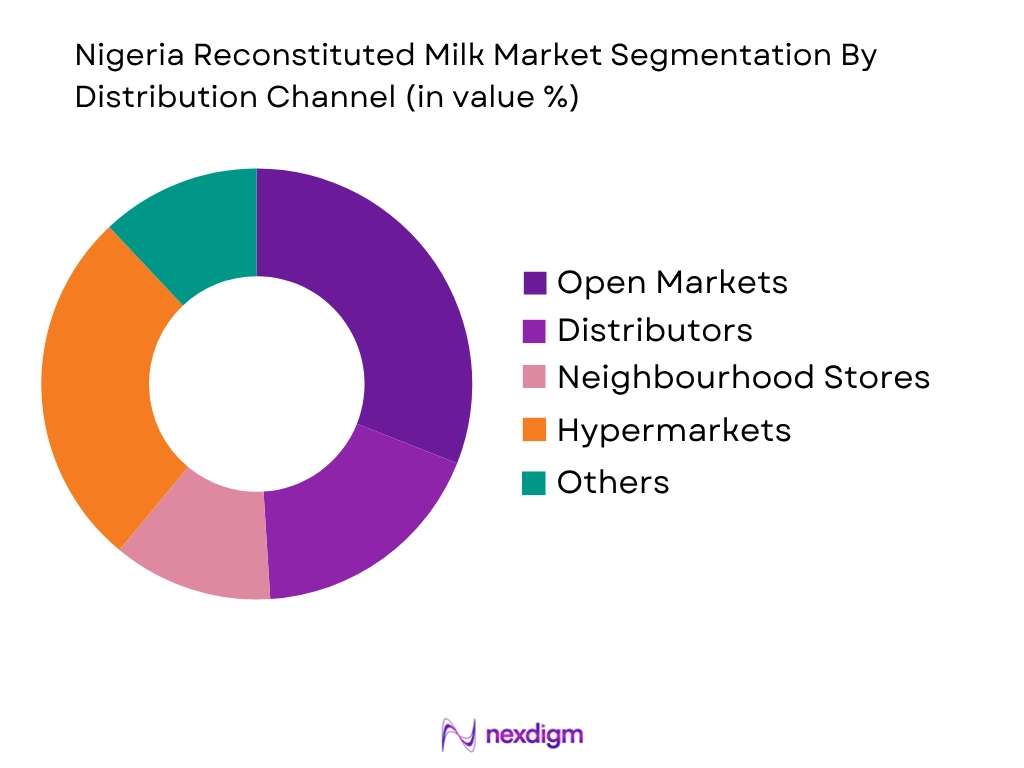
By Distribution Channel: Nigeria Reconstituted Milk Market is segmented by distribution channel into open markets, wholesalers and distributors, neighbourhood stores/kiosks, supermarkets and hypermarkets, and foodservice/institutional distributors. Recently, open markets have a dominant market share in Nigeria under the distribution channel segmentation because imported milk powder, fat-filled milk powder and repacked dairy products move heavily through traditional wholesale clusters before reaching kiosks, tabletop retailers and informal neighbourhood stores. Nigeria’s reconstituted milk consumption is highly price-sensitive, and USDA FAS highlights that powdered milk and cream imports are reconstituted into diverse dairy products, supporting traditional retail flows. Open markets also dominate because they aggregate stock from importers, repackers and distributors and redistribute into urban and semi-urban locations. Modern trade is important for tins, family packs, UHT milk and premium dairy brands, but the strongest volume movement remains linked to informal and wholesale-led channels.
Competitive Landscape
Nigeria Reconstituted Milk Market is led by multinational dairy groups, local processors, powder milk importers, repackers and backward-integration dairy projects. FrieslandCampina WAMCO, Promasidor Nigeria, Nestlé Nigeria, Arla Foods Nigeria and Fan Milk are among the most influential players because they operate across powder milk, dairy beverages, fortified nutrition, local milk development and national distribution. Competition is shaped by import access, sachet portfolio strength, open-market reach, local milk collection, brand trust, NAFDAC compliance and powder formulation capability.
| Company | Establishment Year | Headquarters | Reconstituted Milk Presence | Key Brands/Business Lines | Import/Ingredient Linkage | Local Dairy Development | Distribution Strength | Market-Specific Position |
| FrieslandCampina WAMCO Nigeria PLC | 1973 | Lagos, Nigeria | ~ | ~ | ~ | ~ | ~ | ~ |
| Promasidor Nigeria Limited | 1993 | Isolo, Lagos | ~ | ~ | ~ | ~ | ~ | ~ |
| Nestlé Nigeria PLC | 1961 | Lagos, Nigeria | ~ | ~ | ~ | ~ | ~ | ~ |
| Arla Foods Nigeria | 2010s local presence; farm opened 2023 | Lagos/Kaduna operations | ~ | ~ | ~ | ~ | ~ | ~ |
| Fan Milk PLC | 1961 | Ibadan/Lagos operations | ~ | ~ | ~ | ~ | ~ | ~ |
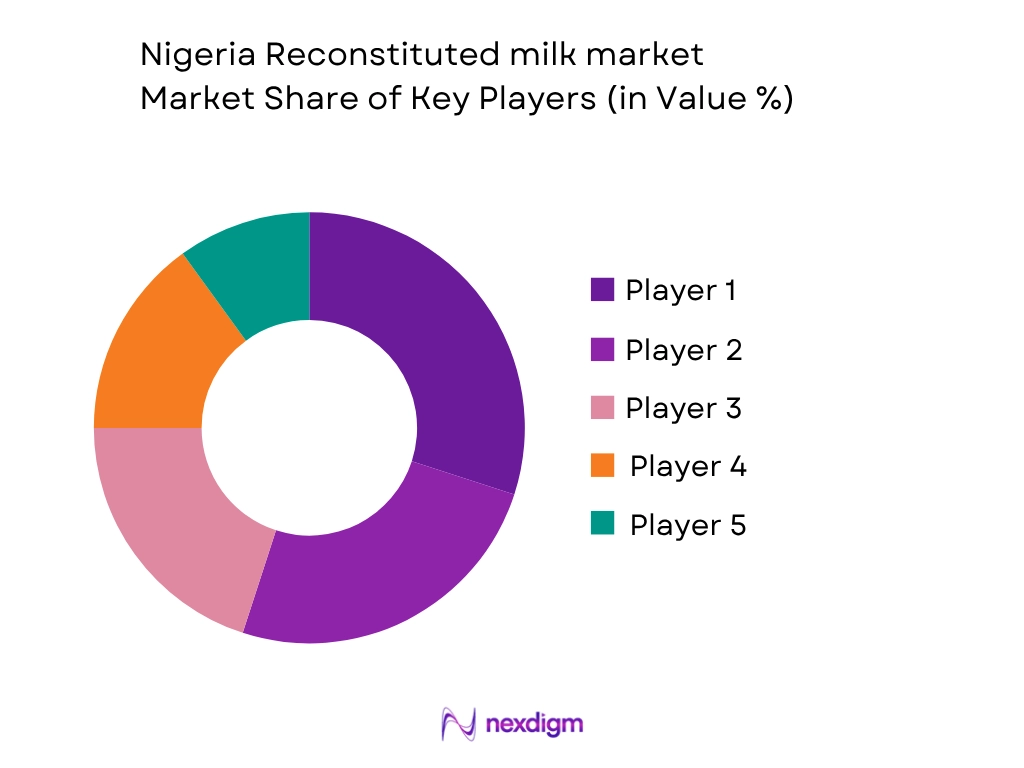
Nigeria Reconstituted Milk Market Analysis
Growth Drivers
High Dependence on Powdered Milk for Reconstituted Dairy Production
Nigeria Reconstituted Milk Market is driven by the country’s structural reliance on powdered milk and cream for dairy processing. USDA FAS states that most of Nigeria’s USD 267 million dairy imports in 2024 entered as powdered milk and cream, which are reconstituted into diverse dairy products; the same report notes that powder is sometimes mixed with water and branded as liquid milk. Nigeria’s population reached 232,679,478 in 2024, while GDP was USD 252.26 billion, according to the World Bank. This large consumer base supports household powder reconstitution, sachet milk, recombined evaporated milk and B2B dairy formulations.
Large Mass-Market Consumer Base Supporting Sachet and Value-Pack Dairy
Nigeria Reconstituted Milk Market benefits from a large mass-market consumer base where sachets, refill packs and fat-filled milk powder are suited to daily tea whitening, cereal use and household nutrition. World Bank data shows Nigeria’s population at 232,679,478 people, GDP per capita at USD 1,084.2, and GDP growth at 4.1 in 2024, creating a high-volume but value-sensitive dairy market. USDA FAS states that Nigerian importers prefer fat-filled milk powder because the market is price-sensitive. This supports reconstituted dairy formats that can be sold through open markets, kiosks, neighbourhood stores and wholesalers without chilled storage.
Market Challenges
Import Dependence and Foreign Exchange Exposure in Dairy Inputs
Nigeria Reconstituted Milk Market is challenged by heavy import dependence for powder-based dairy ingredients. USDA FAS reports Nigeria’s dairy imports at USD 568 million in 2023 and states that approximately 80 out of every 100 dairy products consumed domestically are imported. The same report notes that companies outside the eligible FX allocation list previously sourced foreign exchange in parallel markets at rates 30 to 40 higher than official rates. IMF states that Nigeria’s inflation averaged 31 in 2024 under the rebased CPI index, while World Bank reports consumer inflation at 33.2 in 2024, increasing pressure on imported milk powder affordability and distributor working capital.
Weak Local Milk Collection and Raw Milk Supply Infrastructure
Nigeria Reconstituted Milk Market is constrained by limited domestic raw milk availability and weak collection infrastructure. Nigeria’s National Dairy Policy states that Nigerian cattle contribute approximately 570 million litres to annual milk supply against an annual requirement of 1.6 billion litres, leaving the balance to imports. The same policy notes that pastoralists hold about 95 of the national dairy herd, while commercial dairy farmers hold about 5, creating fragmented supply and quality-control challenges. IMF reports that agriculture remained subdued in 2024 because of security challenges and sliding productivity, directly affecting milk aggregation, chilling-centre utilization and local blending for reconstituted dairy processors.
Market Opportunities
Local Milk Aggregation for Reconstituted and Recombined Dairy Factories
Nigeria Reconstituted Milk Market has a growth opportunity in local milk aggregation because the National Dairy Policy explicitly promotes milk collection centres near processing factories for aggregation, quality control, input supply, extension and veterinary services. The same policy applies a progressive minimum locally sourced milk requirement for reconstituted and recombination factories to substitute importation. This is relevant because domestic cattle supply is only 570 million litres against 1.6 billion litres of annual requirement. World Bank records Nigeria’s population at 232,679,478 in 2024, supporting future demand for hybrid products that combine imported powder with locally collected raw milk.
Fortified Powder-Based Milk for Family Nutrition and Urban Retail Channels
Nigeria Reconstituted Milk Market has an opportunity in fortified reconstituted milk because powder-based dairy can be formulated with protein, calcium and vitamins, then distributed through sachets, refill packs, tins and family packs. World Bank records life expectancy at 55 years, population at 232,679,478, and internet use at 41 in 2024, supporting both physical retail and digital product discovery for branded dairy nutrition. USDA FAS notes that most 2024 dairy imports entered as powdered milk and cream for reconstitution, while fat-filled milk powder is preferred in price-sensitive channels. This creates room for affordable fortified products across Lagos, Abuja, Kano and Kaduna.
Future Outlook
Over the next decade, Nigeria Reconstituted Milk Market is expected to grow steadily as imported powder, fat-filled dairy bases, fortified milk products and local milk aggregation remain central to the country’s dairy structure. Growth will be driven by mass-market sachets, household tea whitening, bakery and confectionery demand, school nutrition potential, and the gradual development of milk collection centres. The outlook is also shaped by policy shifts. USDA FAS reported that Nigeria lifted foreign exchange restrictions on dairy imports in 2024, meaning all importers became eligible to source foreign exchange for dairy imports. This improves access to powdered milk, cream and dairy ingredients used for reconstitution, although processors remain exposed to foreign exchange volatility and import clearance constraints. Local dairy development will be another major theme. Nigeria’s National Dairy Policy states that imported milk powder accounts for over 75% of processing inputs for local dairy foods and beverages, and that many processors import and repackage milk powders or reconstitute imported milk powder into liquid milk. This creates a large opportunity for hybrid models that combine imported milk powder with locally collected raw milk. The market will remain price-sensitive because consumers use milk powder in small daily quantities for beverages, cereals and family nutrition. Companies with strong sachet portfolios, anti-counterfeit packaging, local sourcing partnerships, import resilience and strong open-market distributor relationships are likely to outperform. The forecasted CAGR benchmark for the 2026-2035 period is 3.7%, aligned with the published global reconstituted milk outlook.
Major Players
- FrieslandCampina WAMCO Nigeria PLC
- Promasidor Nigeria Limited
- Nestlé Nigeria PLC
- Arla Foods Nigeria
- Fan Milk PLC
- Chi Limited / Hollandia
- Integrated Dairies Limited
- L&Z Integrated Farms Nigeria Limited
- Shonga Farms Holdings Limited
- Nagari Integrated Dairy Farm
- Viju Industries Nigeria Limited
- TG Arla Dairy Products LFTZ Enterprise
- Nutricima Limited
- Milcopal Nigeria Limited
- Dala Foods Nigeria Limited
Key Target Audience
- Dairy processors and milk powder repackers
- Fat-filled milk powder importers and distributors
- Open-market wholesalers and FMCG distributors
- Supermarket, hypermarket and neighbourhood retail chains
- Foodservice, bakery and beverage manufacturing companies
- Investments and venture capitalist firms
- Government and regulatory bodies (NAFDAC; Standards Organisation of Nigeria; Federal Ministry of Livestock Development; Central Bank of Nigeria; Nigeria Customs Service; Federal Ministry of Agriculture and Food Security)
- Dairy processing, packaging and cold-chain infrastructure companies
Research Methodology
Step 1: Identification of Key Variables
The initial phase involves constructing an ecosystem map for Nigeria Reconstituted Milk Market, covering milk powder exporters, importers, repackers, blenders, open-market distributors, modern retailers, foodservice buyers and local milk collection hubs. The objective is to identify variables such as import value, fat-filled milk powder use, sachet penetration, reconstitution applications and local milk aggregation.
Step 2: Market Analysis and Construction
In this phase, historical dairy import data, powdered milk consumption, reconstituted dairy applications, retail channel participation and company product portfolios are compiled. The market is constructed through a top-down import-based approach and a bottom-up assessment of SKUs, channel flows, distributor reach and processor-level product participation.
Step 3: Hypothesis Validation and Expert Consultation
Market hypotheses are validated through CATI interviews with dairy processors, milk powder importers, open-market wholesalers, foodservice distributors, packaging suppliers and institutional buyers. These consultations help verify assumptions around fat-filled powder demand, sachet sales, local milk blending, reconstitution ratios, pricing pressure and regional distribution.
Step 4: Research Synthesis and Final Output
The final phase integrates secondary data, company benchmarking, trade indicators and primary validation into a structured market model. The final output captures market size, forecast trajectory, segmentation, competitive positioning and strategic recommendations for stakeholders operating in Nigeria’s reconstituted, recombined and powder-based dairy ecosystem.

- Executive Summary
- Research Methodology (Market Definitions and Assumptions, Reconstituted Milk and Recombined Milk Scope, Fat-Filled Milk Powder Inclusion Criteria, SMP/WMP Conversion Ratios, Milk Solids-Not-Fat Assumptions, Powder-to-Liquid Yield Assumptions, Retail SKU Mapping, Distributor and Open-Market Audit, Import-Export Triangulation, Bottom-Up Processor Assessment, Top-Down Dairy Consumption Analysis, CATI Interviews with Dairy Processors and Importers, Limitations and Forecast Sensitivities)

- Definition and Scope
- Market Genesis and Evolution
- Role of Reconstituted Milk in Nigeria’s Dairy Consumption
- Timeline of Major Dairy Players
- Business Cycle and Consumption Seasonality

- Growth Drivers (Urban Household Dairy Demand, Powder Milk Convenience, Sachet Affordability, Tea and Beverage Consumption, Foodservice Growth, Local Dairy Development Programmes, Retail Expansion, School Feeding Potential)
- Market Challenges (Foreign Exchange Constraint, Imported Powder Exposure, Weak Cold Chain, Low Local Milk Yield, Informal Cattle System, Adulteration Risk, Counterfeit Packs, Consumer Price Sensitivity)
- Market Opportunities (Local Milk Aggregation, Fortified Reconstituted Milk, School Feeding Supply, B2B Dairy Ingredients, Affordable Sachets, Cold Hub Investment, Private Label Dairy, Regional Exports)
- Market Trends (Fat-Filled Powder Popularity, Sachet-Led Retailing, Fortified Family Milk, Local Sourcing Partnerships, Powder-to-Liquid Reconstitution, Online Grocery Growth, Foodservice Bulk Demand, Traceable Dairy Supply)
- SWOT Analysis
- Porter’s Five Forces
- PESTLE Analysis

- By Value (2020-2025)
- By Volume (2020-2025)
- By Average Realization per Kilogram/Litre (2020-2025)

- By Product Type (In Value %)
Powdered Reconstituted Milk
Liquid Reconstituted Milk
Fat-Filled Milk Powder
Recombined Evaporated Milk
Recombined UHT Milk
- By Distribution Channel (In Value %)
Open Markets
Wholesalers and Distributors
Supermarkets and Hypermarkets
Neighbourhood Stores
Kiosks and Tabletop Retailers - By Packaging Type (In Value %)
Sachets
Pillow Packs
Tins and Composite Cans
Cartons
Pouches
Aseptic Packs - By Region (In Value %)
Lagos and South West
Abuja and North Central
Kano and North West
Kaduna and Dairy Belt
Plateau and Jos Corridor

- Market Share of Major Players (Value Share, Volume Share, Powder Milk Share, Fat-Filled Milk Powder Share, Recombined Dairy Share, Retail Shelf Presence, Open-Market Presence)
- Cross Comparison Parameters (Milk Powder Import and Sourcing Network, Fat-Filled Milk Powder Portfolio Strength, Local Milk Collection and Backward Integration Capability, Sachet and Low-Unit-Pack Penetration, Open-Market and Wholesale Distribution Reach, NAFDAC/SON Compliance and Anti-Counterfeit Controls, Reconstitution and Blending Capability, Institutional and B2B Dairy Supply Exposure)
- Pricing Analysis by SKU
- SWOT Analysis of Major Players
- Detailed Profiles of Major Companies
FrieslandCampina WAMCO Nigeria PLC
Promasidor Nigeria Limited
Nestlé Nigeria PLC
Arla Foods Nigeria
Fan Milk PLC
Chi Limited
Integrated Dairies Limited
L&Z Integrated Farms Nigeria Limited
Shonga Farms Holdings Limited
Nagari Integrated Dairy Farm
Viju Industries Nigeria Limited
TG Arla Dairy Products LFTZ Enterprise
Nutricima Limited
Milcopal Nigeria Limited
Dala Foods Nigeria Limited

- Household Consumers
- Foodservice Buyers
- Bakery and Confectionery Manufacturers
- Beverage and Dairy Drink Manufacturers
- Institutional and Public Procurement Buyers

- By Value (2026-2035)
- By Volume (2026-2035)
- By Average Realization per Kilogram/Litre (2026-2035)


 Request a Sample
 Ask for Customization
 Get a Quote
 Enquire Now