
 Download PDF
 Download PDF
Market Overview
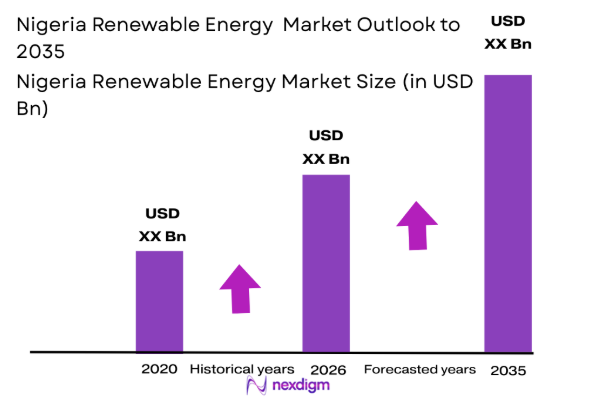
The Nigerian renewable energy market is projected to experience significant growth in the coming years, driven by increasing demand for clean and sustainable energy solutions. With rising energy consumption and the government’s commitment to reducing carbon emissions, the market size for renewable energy in Nigeria is estimated at USD ~ billion. This growth is further fueled by investments in solar, wind, and biomass energy projects, alongside increasing foreign direct investment in the country’s green energy sector. Additionally, government incentives and a favorable policy environment support the market’s expansion, further attracting investments into renewable energy technologies.
Nigeria’s dominance in the renewable energy market is primarily driven by its large population, industrial sector, and governmental commitment to reducing reliance on fossil fuels. Cities such as Lagos, Abuja, and Port Harcourt are key players in the adoption of renewable energy technologies, particularly in off-grid solutions, due to their high energy demand. Lagos, with its commercial and industrial significance, leads the way in solar energy integration. In contrast, Abuja’s push for a greener future and Port Harcourt’s strategic location for renewable energy distribution further solidify their roles in the nation’s renewable energy landscape.
Market Segmentation
By System Type
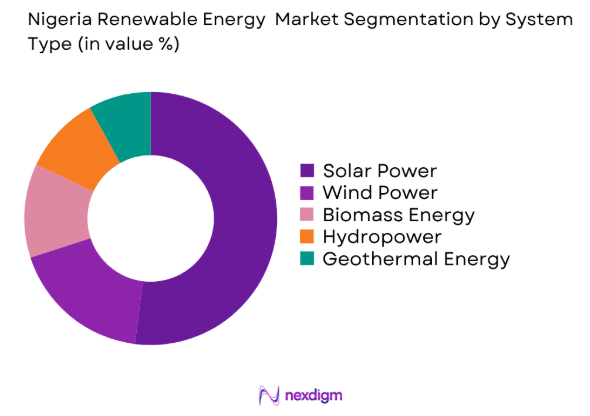
The Nigerian Renewable Energy market is segmented by system type into solar, wind, biomass, hydropower, and geothermal energy. Recently, solar power has garnered the largest share, driven by its cost-effectiveness, scalability, and suitability for Nigeria’s climate. The demand for solar energy solutions, particularly off-grid solar systems, has surged due to power shortages in rural and urban areas. Solar systems are easier to install and maintain, making them highly attractive for both residential and industrial applications. Additionally, governmental incentives, like subsidies for solar projects, have further accelerated market adoption.
By Platform Type
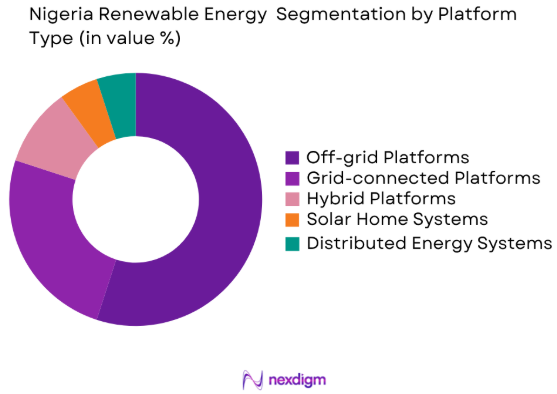
The Nigeria Renewable Energy market is segmented by platform type into grid-connected platforms, off-grid platforms, hybrid platforms, solar home systems, and distributed energy systems. Off-grid platforms currently dominate due to the lack of reliable electricity infrastructure in rural areas. Off-grid systems provide decentralized, efficient, and affordable electricity solutions, especially in underserved regions. The Nigerian government has also supported the development of off-grid solutions as part of its rural electrification programs, further boosting their growth. These platforms are gaining traction as they enable local communities to achieve energy independence and improve their standard of living.
Competitive Landscape
The Nigerian renewable energy market is characterized by both local and international players vying for dominance. While the market is still developing, there has been increasing consolidation as major players partner with governments and local companies to implement large-scale renewable energy projects. Major international firms are investing heavily in the market, leveraging their expertise in large-scale renewable energy generation. Additionally, Nigerian companies are focusing on expanding their portfolios to cater to the growing demand for sustainable energy solutions across the country.
| Company Name | Establishment Year | Headquarters | Technology Focus | Market Reach | Key Products | Revenue | Market-Specific Parameter |
| Seplat Energy | 2009 | Lagos, Nigeria | ~ | ~ | ~ | ~ | ~ |
| Oando | 1956 | Lagos, Nigeria | ~ | ~ | ~ | ~ | ~ |
| TotalEnergies | 1924 | Paris, France | ~ | ~ | ~ | ~ | ~ |
| JinkoSolar | 2006 | Shanghai, China | ~ | ~ | ~ | ~ | ~ |
| GE Renewable Energy | 1892 | Boston, USA | ~ | ~ | ~ | ~ | ~ |
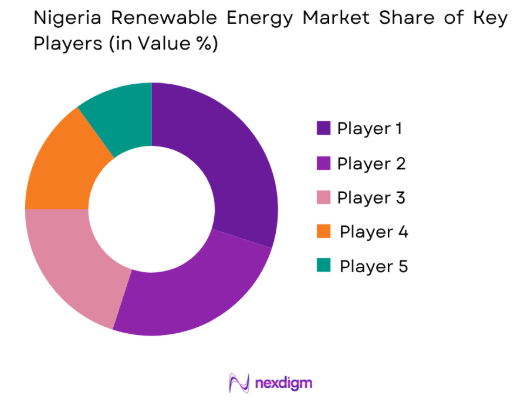
Nigeria Renewable Energy Market Analysis
Growth Drivers
Government Support for Renewable Energy Projects
The Nigerian government has taken significant steps to support the renewable energy sector by offering tax incentives, subsidies, and grants to attract both local and international investments. These efforts have encouraged increased participation in solar and wind energy projects. Furthermore, the government’s long-term renewable energy policy, which focuses on electrifying rural areas through off-grid solutions, has further accelerated sector growth. This supportive policy framework creates a favorable environment for private companies, enabling them to expand operations and contribute to building a more sustainable energy infrastructure. As a result, the renewable energy market in Nigeria is poised for continued development, benefiting from both government backing and private sector involvement.
Technological Advancements in Energy Storage
The rapid development of energy storage systems is a key growth driver in Nigeria’s renewable energy market. Advances in battery technology, especially lithium-ion and solid-state batteries, have significantly improved energy storage capabilities. These innovations enable the efficient storage of surplus electricity, which can be used during periods of low generation, thus enhancing the stability and reliability of renewable energy systems. This progress has made renewable energy solutions more attractive to both consumers and businesses by ensuring a consistent power supply. As energy storage technology continues to improve, it plays a critical role in expanding the adoption of renewable energy in Nigeria, particularly in off-grid and grid-connected systems.
Market Challenges
Lack of Robust Infrastructure
A major challenge hindering the growth of Nigeria’s renewable energy market is the lack of robust infrastructure. The existing power grid is outdated and unreliable, preventing efficient distribution of renewable energy. Additionally, the absence of essential infrastructure, such as electric vehicle charging stations and smart grids for energy management, limits the effectiveness and scalability of renewable energy systems. These gaps make it difficult for renewable energy solutions to reach their full potential, especially in remote and underserved areas. To drive broader adoption of renewable energy, addressing these infrastructure deficiencies is crucial, requiring significant investments in grid modernization and supporting technologies to enhance the country’s energy distribution capabilities.
High Initial Investment Costs
Although the costs of renewable energy technologies, such as solar and wind, have decreased, the initial capital required for their installation remains a significant barrier. This is especially true for individuals and small businesses in rural areas where income levels are lower. The high upfront investment, along with long payback periods, discourages many from adopting renewable energy solutions. To overcome this challenge, innovative financial models, such as microfinancing and government-backed loans, are essential. These models can provide the necessary capital to make renewable energy systems more accessible, helping to accelerate their adoption across Nigeria and facilitate the transition to cleaner energy sources.
Opportunities
Expansion of Off-Grid Solar Solutions
Nigeria’s off-grid solar solutions market holds substantial growth potential, especially in rural and underserved areas where over 40% of the population lacks reliable electricity. Off-grid solar systems, including home solar kits, community-based solar solutions, and mini-grids, provide an affordable and sustainable energy alternative. These solutions are ideal for addressing the energy needs of remote populations, offering reliable power without the need for extensive infrastructure. The Nigerian government’s commitment to rural electrification and the declining costs of solar technology make off-grid systems increasingly accessible. This combination of supportive policies and affordable technology positions off-grid solar as a key growth opportunity in the market.
Increased Investment in Green Energy Financing Models
Green energy financing models offer significant growth potential in Nigeria’s renewable energy market. As both local and international investors focus on sustainable energy, innovative financing options like green bonds, crowdfunding, and climate finance are gaining momentum. These models enable renewable energy projects to secure the capital required for development, while also providing attractive returns for investors. With improved access to financing, the market’s funding gap can be addressed, facilitating the expansion of renewable energy infrastructure across the country. The rise of these financing models plays a crucial role in accelerating the adoption of clean energy solutions and ensuring long-term sustainability in Nigeria’s energy sector.
Future Outlook
The future of Nigeria’s renewable energy market looks promising, with continued growth expected due to increasing technological advancements, government support, and evolving financing mechanisms. As global trends continue to favor sustainable energy solutions, Nigeria is poised to expand its renewable energy capacity through large-scale solar, wind, and off-grid projects. Regulatory reforms, infrastructure development, and innovative financing models will likely drive further investments, making renewable energy more accessible across the country.
Major Players
- Seplat Energy
- Oando
- TotalEnergies
- JinkoSolar
- GE Renewable Energy
- SolarCentric Energy
- First Solar
- Siemens Gamesa
- Vestas
- Enel Green Power
- Schneider Electric
- SunPower
- Trina Solar
- Canadian Solar
- Risen Energy
Key Target Audience
- Investments and venture capitalist firms
- Government and regulatory bodies
- Energy infrastructure developers
- Power utilities
- Renewable energy project developers
- Technology development firms
- Commercial and industrial energy users
- Financial institutions
Research Methodology
Step 1: Identification of Key Variables
The initial phase of the research involved identifying the key variables influencing the Nigerian renewable energy market, such as government policies, technological advancements, and market demand patterns.
Step 2: Market Analysis and Construction
The market analysis involved constructing the renewable energy market framework based on historical data, current market trends, and future growth drivers.
Step 3: Hypothesis Validation and Expert Consultation
Expert consultations and hypothesis validation were carried out through interviews with industry experts, government representatives, and market players to refine the market outlook and projections.
Step 4: Research Synthesis and Final Output
The final synthesis phase focused on compiling all gathered data into a coherent market report, supported by key insights, charts, and recommendations.

- Executive Summary
- Research Methodology (Definitions, Scope, Industry Assumptions, Market Sizing Approach, Primary & Secondary Research Framework, Data Collection & Verification Protocol, Analytic Models & Forecast Methodology, Limitations & Research Validity Checks)

- Market Definition and Scope
- Value Chain & Stakeholder Ecosystem
- Regulatory / Certification Landscape
- Sector Dynamics Affecting Demand
- Strategic Initiatives & Infrastructure Growth

- Growth Drivers
Increased Government Investment in Renewable Energy
Technological Advancements in Energy Storage Solutions
Rising Global Demand for Clean Energy - Market Challenges
Regulatory and Policy Barriers
High Initial Capital Investment for Infrastructure
Lack of Skilled Workforce - Market Opportunities
Growth in Rural Electrification Projects
Integration of Smart Grid Technologies
Expansion of Renewable Energy Financing Models - Trends
Increased Adoption of Off-Grid Solar Systems
Technological Integration in Wind Energy
Focus on Sustainable Energy Practices - Government Regulations
- SWOT Analysis of Key Competitors
- Porter’s Five Forces

- By Market Value, 2020-2025
- By Installed Units, 2020-2025
- By Average System Price, 2020-2025
- By System Complexity Tier, 2020-2025

- By System Type (In Value%)
Solar Power
Wind Power
Hydropower
Biomass Energy
Geothermal Energy - By Platform Type (In Value%)
Grid-connected Platforms
Off-grid Platforms
Hybrid Platforms
Solar Home Systems
Distributed Energy Systems - By Fitment Type (In Value%)
On-premise Solutions
Cloud-based Solutions
Hybrid Solutions
Modular Solutions
Integrated Solutions - By End User Segment (In Value%)
Residential
Commercial
Industrial
Government
Utility - By Procurement Channel (In Value%)
Direct Procurement
Government Tenders
Private Sector Procurement
Online Bidding Platforms
Third-party Distributors

- Market Share Analysis
- Cross Comparison Parameters (System Type, Platform Type, Procurement Channel, End User Segment, Fitment Type, Geographic Region, Technology Adoption, Financing Models, Market Maturity, Policy Support)
- SWOT Analysis of Key Competitors
- Pricing & Procurement Analysis
- Key Players
Seplat Energy
Oando
TotalEnergies
Nigerian National Petroleum Corporation
Lagos State Electricity Board
Eko Electricity Distribution Company
JinkoSolar
Enel Green Power
GE Renewable Energy
Siemens Gamesa
Vestas
SolarCentric Energy
Worley
First Solar
Schneider Electric

- Government Incentives for Renewable Energy Adoption
- Private Sector Interest in Green Energy Solutions
- Increase in Energy Access for Rural Populations
- Expansion of Industrial Renewable Energy Solutions

- Forecast Market Value, 2026-2035
- Forecast Installed Units, 2026-2035
- Price Forecast by System Tier, 2026-2035
- Future Demand by Platform, 2026-2035


 Request a Sample
 Ask for Customization
 Get a Quote
 Enquire Now