

 Download PDF
Market Overview
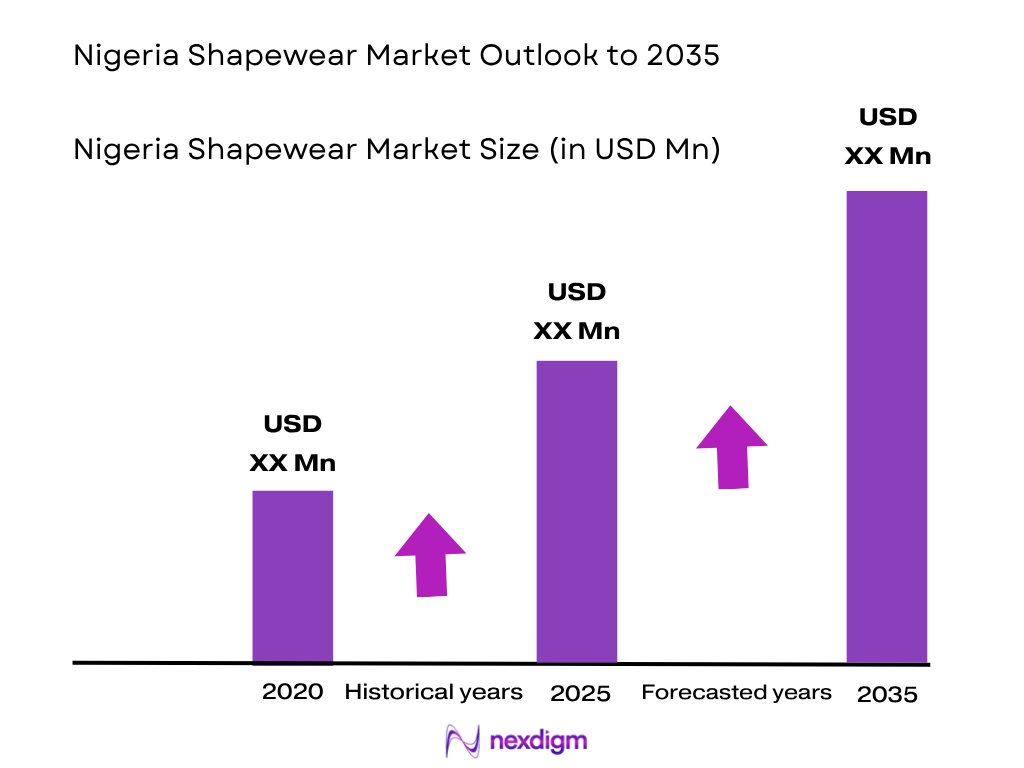
The Nigeria shapewear market was valued at USD ~ million in 2025, driven by growing demand for body-contouring solutions among the urban female population. Shapewear products, such as waist trainers, full-body suits, and post-surgical garments, are increasingly popular due to heightened awareness around body image and the growing trend of fitness and wellness. The demand for shapewear is also propelled by a strong online retail ecosystem, social media influence, and rising disposable incomes in key urban centers like Lagos and Abuja. Additionally, the market benefits from the increasing acceptance of shapewear in various social and professional settings, further boosting consumer adoption. The market is expected to continue its growth trajectory in the coming years.
The dominant cities driving the shapewear market in Nigeria are Lagos, Abuja, and Port Harcourt. Lagos, being the commercial hub of Nigeria, holds the largest share due to its diverse and affluent population, with a significant portion of disposable income being spent on fashion and personal care. Abuja, the capital city, exhibits a growing trend in fashion-conscious consumers, while Port Harcourt contributes due to its rising middle class and increasing consumer awareness of fitness products. These cities also benefit from the strong online retail presence and extensive distribution networks that facilitate easy access to shapewear brands.
Market Segmentation
By Product Type
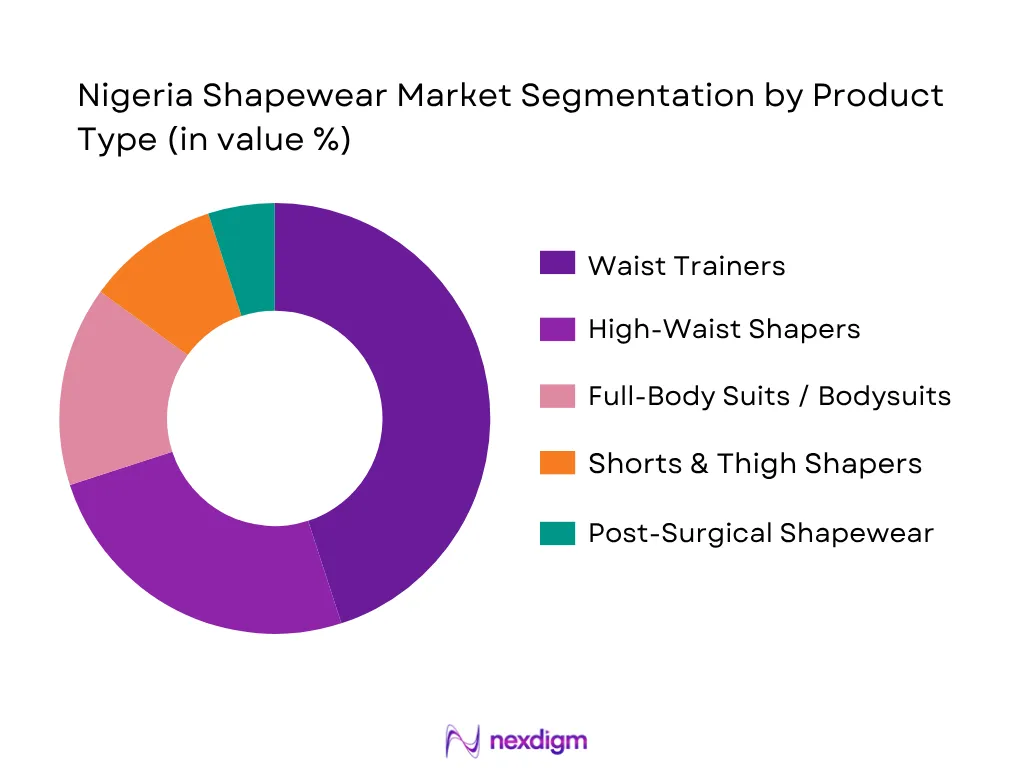
The Nigeria shapewear market is segmented by product type, including waist trainers, high-waist shapers, full-body suits, shorts & thigh shapers, and post-surgical compression wear. Among these, waist trainers currently hold the dominant market share due to their widespread popularity across various age groups and body types. This segment is favored for its effectiveness in achieving an hourglass figure, which is a widely sought-after body shape in the Nigerian fashion market. Key brands have capitalized on the social media-driven fitness trends, using influencers and fitness enthusiasts to promote waist trainers, which has led to consistent demand for this product. Additionally, waist trainers are easily available across online platforms, contributing to their dominance.
By Material Technology
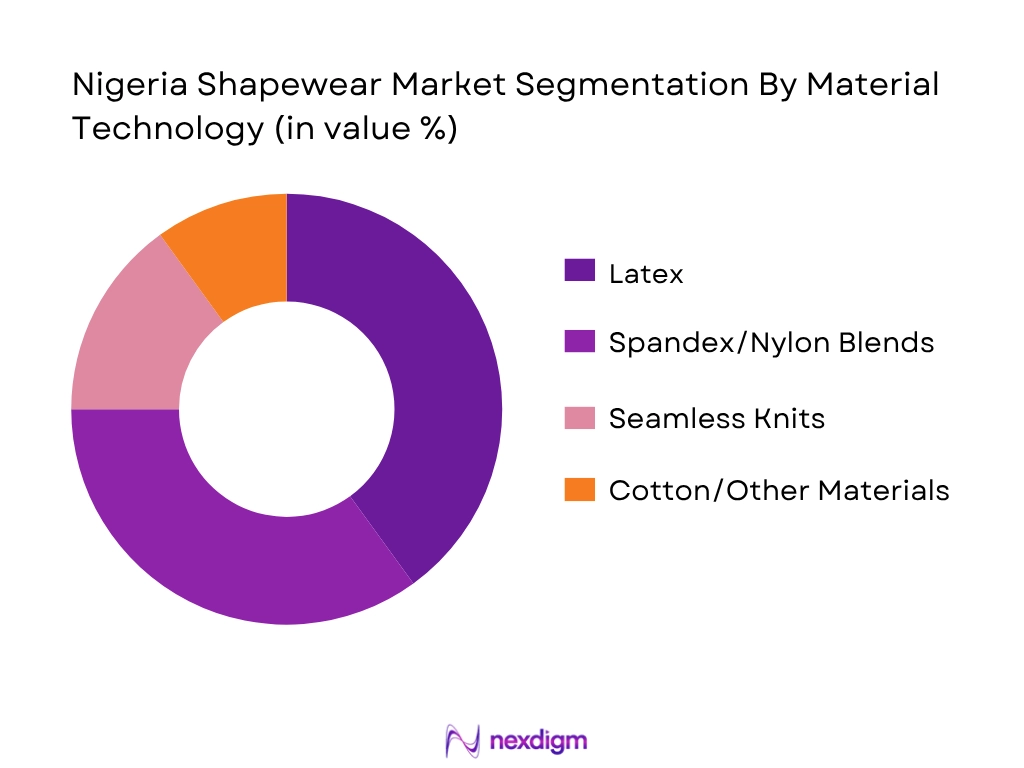
The market is also segmented by material technology, where materials such as latex, nylon, spandex blends, and seamless knit fabrics are commonly used. Latex-based shapewear has a significant market share due to its durability, elasticity, and effectiveness in providing a firm and slimming effect. Latex products, particularly waist trainers, are highly sought after in the Nigerian market due to their ability to help shape the body while offering a high level of comfort. The latex material also offers moisture-wicking properties, making it suitable for the Nigerian climate. As fitness culture continues to rise, demand for these materials remains strong, solidifying latex’s dominance in the market.
Competitive Landscape
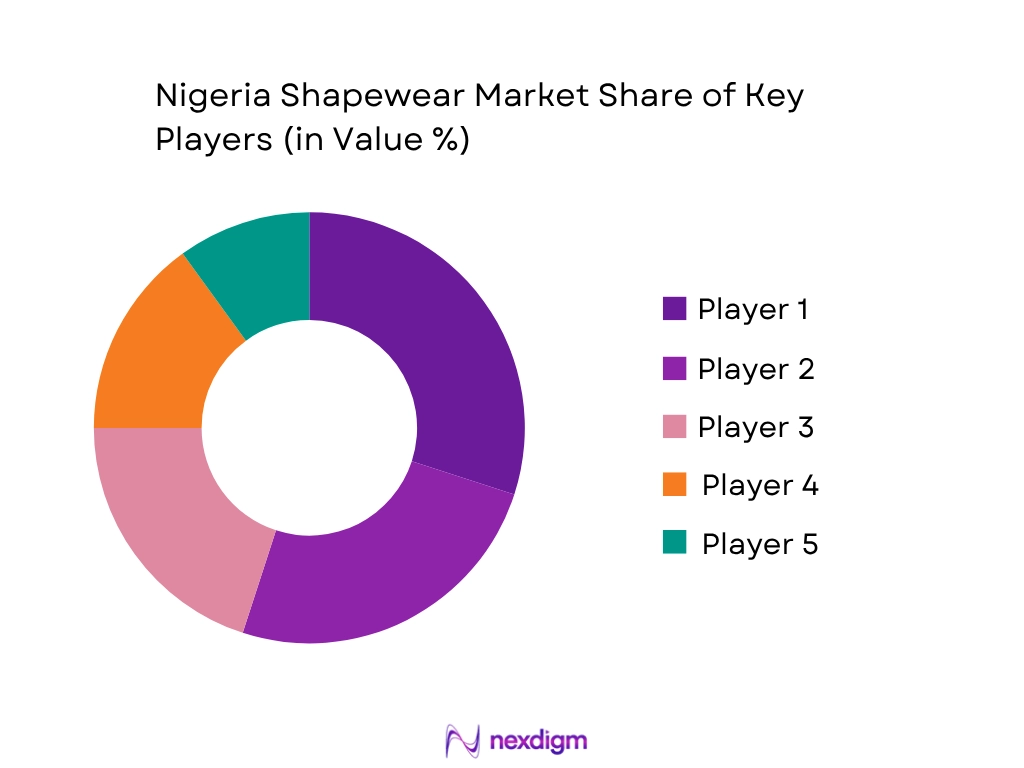
The Nigeria shapewear market is characterized by the presence of both local and international players. International brands such as Spanx and Shapermint have made significant inroads into the Nigerian market due to their strong brand reputation and innovative product offerings. Local brands, such as Shapewear Nigeria and Vedette, cater to the specific body shapes and preferences of Nigerian women, offering a competitive advantage through localized marketing and distribution channels.
| Company | Establishment Year | Headquarters | Product Portfolio | Material Technology Focus | Distribution Channels | Price Tiering |
| Spanx | 2000 | USA | ~ | ~ | ~ | ~ |
| Shapewear Nigeria | 2010 | Nigeria | ~ | ~ | ~ | ~ |
| Vedette | 2015 | USA/Nigeria | ~ | ~ | ~ | ~ |
| Yummie | 2008 | USA | ~ | ~ | ~ | ~ |
| Shapermint | 2014 | USA | ~ | ~ | ~ | ~ |
Nigeria Shapewear Market Analysis
Growth Drivers
Rising Urban Female Disposable Income
Nigeria’s urban female population is experiencing an increase in disposable income, supported by the nation’s ongoing economic recovery. The International Monetary Fund (IMF) forecasts Nigeria’s GDP growth to be approximately 3.4% in 2024, indicating a stable economic environment that is gradually boosting consumer purchasing power. As a result, urban dwellers in cities like Lagos and Abuja are spending more on non-essential goods such as fashion and personal care, which includes shapewear products. This growing disposable income directly contributes to higher demand for premium and mid-range shapewear, which is now considered an essential part of fashion for many urban women. According to the World Bank, Nigeria’s poverty rate is expected to decline by 1.1% annually, which further supports an increase in disposable income.
E-Commerce Expansion & Social Selling Platforms
The Nigerian e-commerce sector is booming, with online shopping becoming increasingly popular due to improved internet connectivity and smartphone penetration. As of 2024, Nigeria has over 150 million internet users, with the majority being active on social platforms such as Instagram and Facebook, where shapewear brands are seeing increased sales. The rise of social selling platforms has further enhanced product discovery and purchasing, making it easier for consumers to access shapewear directly from influencers or brand pages. E-commerce sales are projected to increase as more businesses establish their online presence, allowing both local and international brands to expand their reach. The Nigerian Communications Commission (NCC) reported a 20% increase in e-commerce transactions in 2023, which supports this trend in consumer behavior.
Market Constraints
Price Sensitivity and Elasticity in Value Segment
Despite the rising disposable income in urban areas, a large portion of Nigeria’s population remains price-sensitive, especially in lower-income segments. As inflation continues to affect the cost of living, Nigerian consumers, particularly those in the middle-class range, are highly sensitive to price fluctuations. According to the Central Bank of Nigeria (CBN), the inflation rate in Nigeria is projected to be around 17.2% in 2024, which could drive price sensitivity. Consumers, especially in the value segment, are seeking affordable alternatives, making it challenging for premium brands to penetrate certain segments of the market. Furthermore, the influx of low-cost, unbranded shapewear from informal channels like markets and street vendors puts further pressure on pricing strategies, making it difficult for brands to maintain consistent profit margins in the value segment.
Sizing Standard Inconsistencies
Sizing inconsistencies remain a major challenge for the Nigerian shapewear market. With a wide variety of body types in Nigeria, especially across different ethnic groups, standardization of sizes has become an issue. This challenge is compounded by the lack of regulatory oversight in labeling and sizing across brands, leading to consumer dissatisfaction. The National Agency for Food and Drug Administration and Control (NAFDAC) has been advocating for more standardized practices in product labeling to avoid confusion in the market. As of 2024, there has been a push for clearer guidelines to help shape the bodywear market in Nigeria. This lack of standardization reduces consumer trust and creates logistical hurdles for brands attempting to establish their presence.
Market Opportunities
Inclusive Size & Custom Shaping Solutions
With Nigeria’s diverse population, the demand for inclusive size shapewear is steadily rising. Nigeria’s population in 2024 stands at over 223 million people, with a growing number of consumers seeking shapewear options that cater to a wide range of body types. As body diversity becomes more accepted and celebrated, brands have the opportunity to tap into the plus-size and custom-fit market. According to the National Population Commission (NPC), the percentage of women aged 18–44, who make up a significant proportion of shapewear consumers, is expected to continue growing. In response, local and international brands are already introducing custom sizing options and expanded size ranges, reflecting the broader trend of inclusivity in the global fashion industry. As the Nigerian consumer market becomes more attuned to inclusive fashion, this shift presents a significant opportunity for companies that can offer products catering to a variety of body shapes.
Omni-Channel Retail Expansion Strategies
As Nigeria’s retail environment continues to evolve, there is increasing demand for an integrated approach that combines both physical and digital retail channels. In 2024, Nigeria’s online retail penetration stands at around 16%, with expectations of continued growth due to the increasing internet and smartphone penetration. With more consumers shifting towards online purchasing for convenience, brands now have the opportunity to expand their presence via omni-channel retail strategies. By offering a seamless shopping experience across physical stores, e-commerce platforms, and social media, brands can tap into a broader consumer base. Retailers are also leveraging mobile payment systems, which are growing in popularity across Nigeria. The ability to bridge the gap between traditional brick-and-mortar stores and online platforms presents significant opportunities for brands to capture the attention of tech-savvy Nigerian consumers, especially the urban middle-class.
Future Outlook
Over the next 5 years, the Nigeria shapewear market is expected to show significant growth driven by continuous urbanization, the rise of fitness and wellness culture, and expanding e-commerce platforms. As disposable income rises among Nigeria’s urban population, particularly in cities like Lagos, Abuja, and Port Harcourt, demand for shapewear is anticipated to increase. This growth will also be supported by the increasing focus on body positivity, with more Nigerian consumers investing in shapewear as part of their fashion and wellness routines. Innovations in product materials and designs that cater to diverse body types will also enhance market growth. Brands offering more inclusive sizing and sustainable materials will likely capitalize on emerging consumer preferences.
Major Players in Nigeria Shapewear Market
- Spanx
- Shapewear Nigeria
- Vedette
- Yummie
- Shapermint
- Leonisa
- Ann Chery
- Maidenform
- Squeem
- Skims
- Jockey
- Urban Body
- Fitshapers
- Voodoo Shapewear
- Salma Bodywear
Key Target Audience
- Investments and Venture Capitalist Firms
- Government and Regulatory Bodies (Nigerian Consumer Protection Council, Nigerian Standards Organization)
- Local and International Retailers
- Fitness and Wellness Companies
- Fashion Designers and Apparel Brands
- Health and Wellness Influencers
- Shapewear Manufacturers and Suppliers
- E-Commerce Platforms and Marketplaces
Research Methodology
Step 1: Identification of Key Variables
The initial phase involves identifying key stakeholders within the Nigerian shapewear ecosystem. Extensive desk research will be conducted using proprietary databases and secondary sources to map out critical variables influencing market dynamics. The focus will be on gathering insights about the demand drivers, key product categories, and consumer behavior patterns.
Step 2: Market Analysis and Construction
This phase will analyze historical data regarding market size, segmentation, and regional demand for shapewear products. Data will be collected on consumer purchasing behavior and the penetration of local and international brands in the Nigerian market. This analysis will form the basis for estimating future market trends.
Step 3: Hypothesis Validation and Expert Consultation
To validate market hypotheses, industry experts representing manufacturers, retailers, and logistics providers will be interviewed. Their insights will help refine the market data and ensure accuracy in estimating future trends and growth drivers.
Step 4: Research Synthesis and Final Output
The final research phase will involve synthesizing the findings from various data sources and expert consultations. The data will be cross-referenced, and any discrepancies will be addressed. The final report will present an accurate market forecast, complete with detailed segmentation and competitive insights.

- Executive Summary
- Research Methodology (Market Definitions and Assumptions, Abbreviations, Market Sizing Methodology, Volume vs Revenue Estimation Approaches, Primary & Secondary Data Validation, Price Benchmarking Approach, Import/Export Data Methodology, Research Limitations and Data Confidence Levels)

- Industry Definition and Scope
- Market Genesis & Evolution of Body‑Contouring Apparel
- Consumer Perception & Cultural Adoption Dynamics
- Local Manufacturing vs Import Penetration Analysis
- Shapewear Value Chain and Retail Supply Chain Mapping

- Growth Drivers (Rising Urban Female Disposable Income, E‑Commerce Expansion & Social Selling
- Platforms, Body‑positivity & Fitness‑influenced Adoption, Local Tailoring & Custom Fit Tailored Demand)
- Market Constraints (Price Sensitivity and Elasticity in Value Segment, Sizing Standard Inconsistencies, Counterfeit / Informal Market Impact)
- Market Opportunities (Inclusive Size & Custom Shaping Solutions, Omni‑channel Retail Expansion Strategies, Collaboration with Local Textile & Footwear Clusters)
- Emerging Market Trends( Fabric Technology Innovation (Seamless, Compression), Social & Influencer‑led Marketing, Cross‑selling with Fitness & Wellness Segments)
- Regulatory Environment and Standards (Textile & Apparel Import Regulations (Tariffs / Duties), Product Safety Standards & Consumer Protection)
Porter’s Five Forces for Nigeria Shapewear (Competitive Rivalry Intensity, Threat of New Entrants (Barriers & Capital Intensity), Supplier Bargaining Power (Fabric / Materials), Buyer Bargaining Power (Retailers / E‑Tailers), Threat of Substitutes)

- By Revenue (2020-2025)
- By Unit Volume (020-2025)
- By Average Unit Retail Price (2020-2025)
- By Channel (2020-2025)
- By Regional Demand Intensity (2020-2025)

- By Product Type (In Value%)
Waist Trainers & Body Cinchers
High‑Waist Shapers
Full Body Suits / Bodysuits
Shorts & Thigh Shapers
Post‑Surgical / Compression Shapewear - By Material Technology (In Value %)
Nylon / Elastane Blend
Latex & Spandex
Seamless Knits (Flat Knit)
Cotton‑Blend Breathable Fabrics
Sustainable / Recycled Materials - By Price Tier (In Value %)
Premium Fashion & Designer
Affordable Mid‑Tier
Value / Mass Market - By Distribution Channel (In Value %)
E‑Commerce & DTC Platforms
Specialty Boutiques & Fashion Stores
Modern Retail
Traditional Marketplaces (e.g., Ariaria, Balogun)
Social Commerce & Marketplace Sellers - By Consumer Demographic (In Value %)
Women (18–35)
Women (36–55)
Plus‑Size / Inclusive Sizing Cohort
Post‑natal / Medical Use Consumers
Men’s & Gender‑Neutral Products

- Market Share Analysis by Revenue & Volume
- Cross‑Comparison Parameters (Product Portfolio Breadth, Retail / Distribution Footprint, Price Tier Coverage, Brand Equity & Consumer Awareness, Marketing Channel Effectiveness, Sourcing & Supplier Network, Import vs Local Manufacturing Ratios, Size Inclusivity Range Availability)
- SWOT Analysis of Major Players
- Pricing Analysis (by product SKU and brand positioning)
- Competitor Benchmarking Matrix (Quantitative & Qualitative)
- Detailed Profiles of Key Shapewear Market Players
Shapewear Nigeria
Plus Size Shapewear Suppliers Nigeria
Vedette Shapewear (International Brand)
Spanx
Ann Chery
Squeem
Yummie by Heather Thomson
Skims
Leonisa
Maidenform
Jockey
Shapermint
Libby & Liem
BBoard
Urban Body

- Segmented Consumer Demand Profiles
- Buying Triggers & Pain Points (Fit, Comfort, Price)
- Channel Preference & Conversion Patterns
- Seasonal & Occasional Purchase Cycles
- Post‑Purchase Feedback & Repeat Purchase Indicators

- By Value (2026-2035)
- By Volume (2026-2035)
- By Average Selling Price per Garment (2026-2035)
- By Branded and Private Label (2026-2035)


 Request a Sample
 Ask for Customization
 Get a Quote
 Enquire Now