

 Download PDF
Market Overview
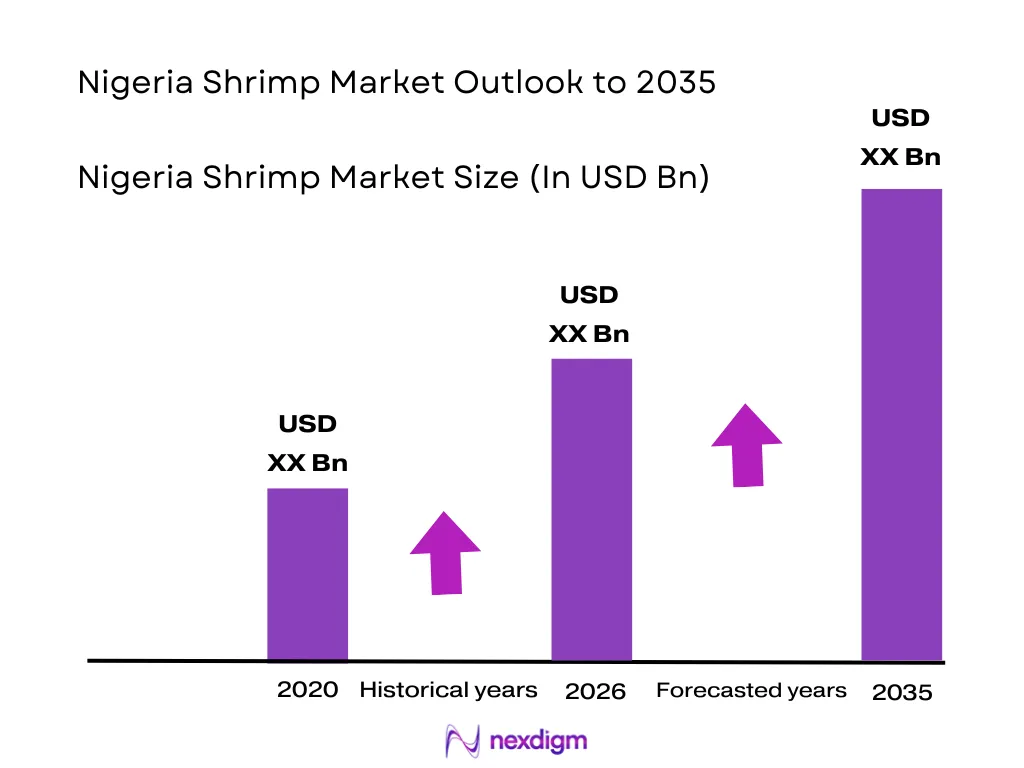
The Nigeria Shrimp Market is valued at approximately USD ~ million, supported by increasing seafood exports, abundant coastal resources, and the expansion of fisheries and aquaculture activities. Nigeria’s shrimp sector benefits from approximately 853 km of coastline and extensive brackish-water ecosystems suitable for shrimp harvesting and cultivation. Nigeria exported around 4.33 million kilograms of frozen shrimps and prawns valued at more than USD 50 million, supported by demand from international seafood markets. Increasing focus on blue economy development, seafood processing infrastructure, and export diversification continues to strengthen the country’s shrimp industry.
Coastal regions including Rivers, Bayelsa, Delta, Akwa Ibom, Cross River, and Lagos dominate the Nigeria Shrimp Market due to favorable marine ecosystems, access to Atlantic fishing grounds, and availability of seafood processing infrastructure. The Niger Delta region contains one of Africa’s largest mangrove ecosystems, supporting natural shrimp habitats and commercial fishing operations. These regions benefit from established seafood landing facilities, proximity to ports, and export logistics networks, making them key hubs for shrimp harvesting, processing, and distribution across domestic and international markets.
Market Segmentation
By Production Source
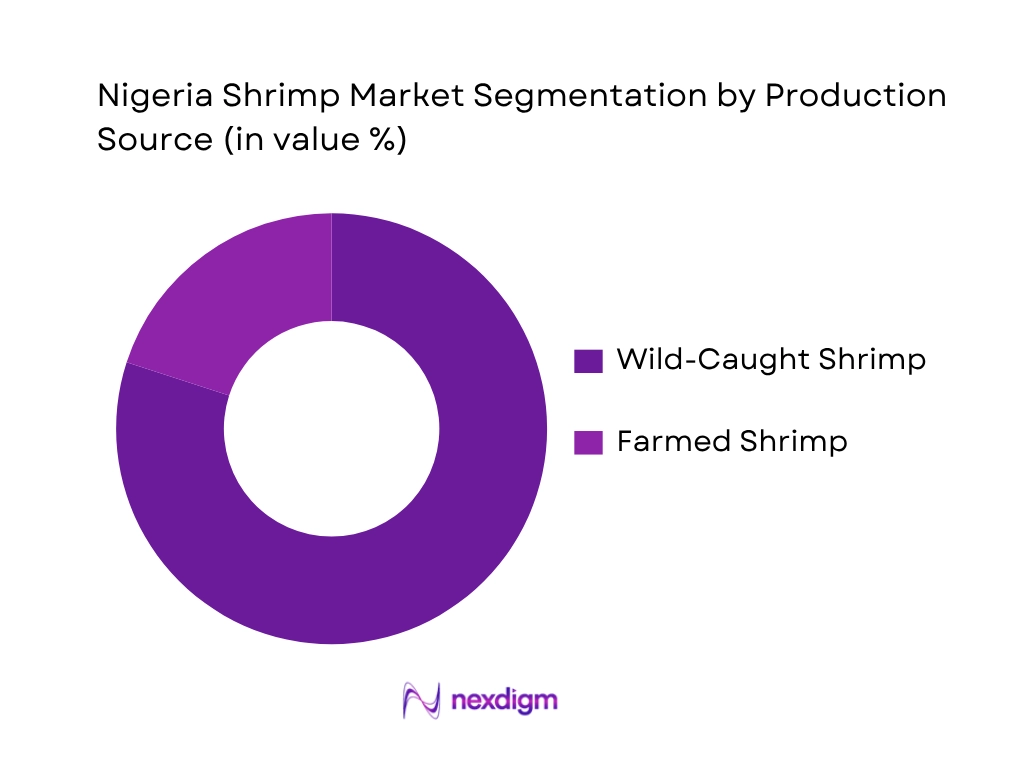
The Nigeria Shrimp Market is segmented by production source into Wild-Caught Shrimp and Farmed Shrimp. Wild-caught shrimp dominates the Nigeria Shrimp Market under production source segmentation due to the country’s strong dependence on marine capture fisheries and availability of extensive coastal ecosystems. Nigeria’s Atlantic coastline and Niger Delta mangrove environment provide natural breeding grounds for commercially important shrimp species. Established fishing fleets, seafood landing points, and export-oriented processing facilities have historically been developed around wild shrimp harvesting. Farmed shrimp production is gradually expanding with increasing interest in aquaculture investments; however, limited hatchery infrastructure and commercial-scale farming facilities have kept capture fisheries as the leading production source. Strong international acceptance of Nigerian wild shrimp products and existing export networks further support the dominance of this segment.
By Product Form
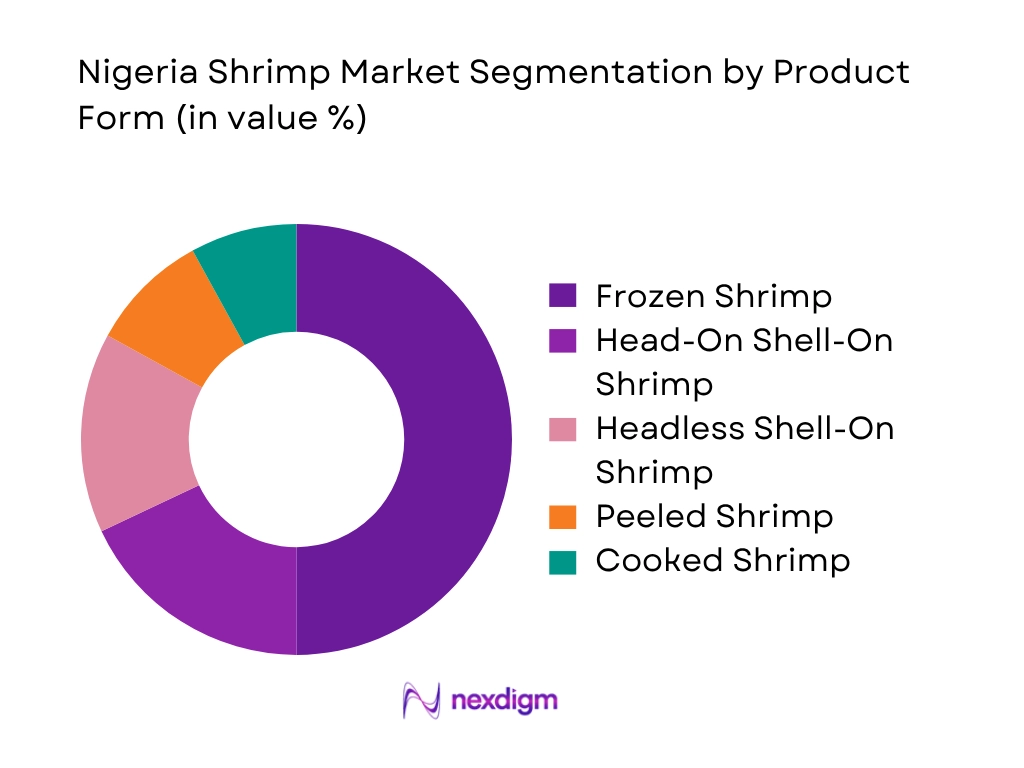
The Nigeria Shrimp Market is segmented by product form into Frozen Shrimp, Head-On Shell-On Shrimp, Headless Shell-On Shrimp, Peeled Shrimp, Cooked Shrimp, and Value-Added Shrimp Products. Frozen shrimp dominates the Nigeria Shrimp Market under product form segmentation because it is the preferred format for export-oriented seafood trade. Shrimp requires strict temperature management to maintain freshness, quality, and compliance with international food safety requirements. Processing facilities across Nigeria’s coastal regions primarily focus on freezing, grading, and packaging activities before shipment to overseas buyers. Frozen shrimp enables longer shelf life, easier transportation, and reduced spoilage risk across global supply chains. Demand from international importers has encouraged processors to prioritize frozen shrimp production over fresh or highly processed formats. Increasing investment in cold-chain facilities and export infrastructure continues to strengthen the position of frozen shrimp within Nigeria’s seafood industry.
Competitive Landscape
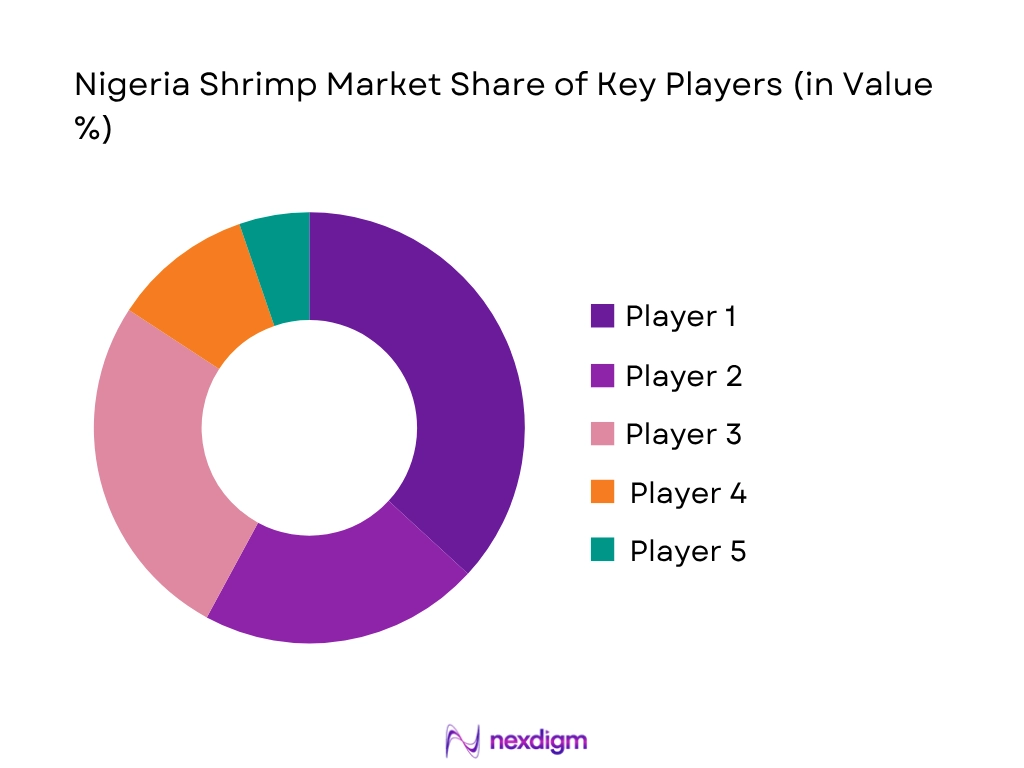
The Nigeria Shrimp Market is moderately fragmented, with companies competing across seafood harvesting, processing, cold-chain management, aquaculture development, and export operations. Competitive advantage is determined by access to fishing resources, processing facilities, quality certifications, export relationships, and logistics capabilities. Industry participants are increasingly focusing on improving traceability systems, upgrading processing standards, and expanding export readiness to meet international seafood regulations.
| Company | Establishment Year | Headquarters | Core Business | Export Capability | Processing Infrastructure | Cold Chain Strength | Aquaculture Presence | Certification Capability |
| Atlantic Shrimpers Limited | 1989 | Lagos, Nigeria | ~ | ~ | ~ | ~ | ~ | ~ |
| Fishguard Processing & Packaging Company Limited | 1994 | Lagos, Nigeria | ~ | ~ | ~ | ~ | ~ | ~ |
| Oceanic Foods Limited | 1997 | Lagos, Nigeria | ~ | ~ | ~ | ~ | ~ | ~ |
| Triton Group Nigeria | 2001 | Lagos, Nigeria | ~ | ~ | ~ | ~ | ~ | ~ |
| Premium Aquaculture Limited | 2008 | Rivers, Nigeria | ~ | ~ | ~ | ~ | ~ | ~ |
Nigeria Shrimp Market Analysis
Growth Drivers
Rising Shrimp Export Demand from International Markets
Nigeria’s shrimp industry is supported by increasing demand from global seafood importing countries. The country exported approximately 4.33 million kilograms of frozen shrimps and prawns valued at over USD 50 million, compared with nearly 2.93 million kilograms during the previous reporting period, reflecting stronger acceptance of Nigerian shrimp in international markets. The country’s Atlantic coastline supports export-oriented seafood operations through access to major maritime routes. Growing global seafood consumption and diversification of sourcing destinations by international buyers continue to encourage investments in seafood processing, quality compliance systems, and export-focused shrimp operations.
Expanding Domestic Seafood Consumption Supported by Population Growth
Nigeria’s expanding population base continues to strengthen demand for protein-rich food products, including shrimp and other seafood categories. The country’s population reached approximately 232 million people, creating one of the largest consumer markets in Africa. Rising urbanization across cities such as Lagos, Port Harcourt, and Calabar has increased demand for frozen and processed seafood through retail stores, restaurants, and food-service operators. Growing preference for convenient seafood products and increasing availability of cold-chain distribution channels are supporting shrimp consumption across urban households and commercial buyers.
Market Challenges
Inadequate Cold Chain and Seafood Infrastructure
Cold-chain infrastructure remains a major challenge for the Nigeria Shrimp Market because shrimp products require continuous temperature-controlled handling from harvesting to consumption. Limited availability of reliable refrigeration facilities, processing infrastructure, and refrigerated transportation affects seafood preservation across several coastal regions. Electricity access constraints also create operational difficulties for processors dependent on freezing and storage systems. These infrastructure limitations increase post-harvest losses and restrict the ability of exporters to consistently meet international quality standards required by premium seafood markets.
Climate and Environmental Risks Affecting Coastal Production
Nigeria’s shrimp industry is highly dependent on coastal ecosystems that are vulnerable to environmental changes. Flooding, coastal erosion, mangrove degradation, and changing water conditions create risks for shrimp breeding habitats and aquaculture operations. Recent flood events affected more than 1 million people across impacted regions, highlighting the vulnerability of coastal and riverine environments. Changes in water quality and ecosystem balance can reduce natural shrimp availability, increase disease risks, and create uncertainty for producers relying on both wild-caught and farmed shrimp production systems.
Market Opportunities
Expansion of Commercial Shrimp Aquaculture and Import Substitution
Commercial shrimp aquaculture presents strong opportunities due to Nigeria’s extensive coastal resources and rising seafood demand. With a population exceeding 232 million people, domestic demand for affordable protein sources continues to expand. Development of modern shrimp farms, hatcheries, feed systems, and biosecure aquaculture practices can increase production reliability and reduce dependence on capture fisheries. Investments in aquaculture infrastructure can also improve year-round shrimp availability, strengthen export competitiveness, and support the broader development of Nigeria’s fisheries sector.
Growing Access to High-Value International Seafood Markets
Increasing global seafood demand creates opportunities for Nigeria to strengthen its position in international shrimp trade. Global shrimp trade volumes exceed 1 million tonnes annually, creating demand opportunities for countries with strong coastal production capabilities. Nigeria’s existing export relationships and Atlantic trade access provide advantages for expanding seafood exports. Improvements in traceability systems, processing standards, cold-chain logistics, and sustainability certifications can help producers access premium markets and increase competitiveness within international shrimp supply chains.
Future Outlook
The Nigeria Shrimp Market is expected to experience steady development supported by rising seafood demand, expansion of commercial aquaculture, and improvements in export infrastructure. Growing adoption of modern farming practices, hatchery systems, and seafood processing technologies is expected to enhance production efficiency. Increased focus on quality certification, traceability, and sustainable harvesting practices will improve competitiveness in international markets. Investments in cold-chain networks and value-added seafood processing are expected to create new opportunities across the shrimp value chain.
Major Players
- Atlantic Shrimpers Limited
- Oceanic Foods Limited
- Fishguard Processing & Packaging Company Limited
- Triton Group Nigeria
- Lagos Seafood Company Limited
- West African Fish Company (WAFCO)
- Premium Aquaculture Limited
- Durante Fish Industries Limited
- Niger Delta Aquaculture Farms Limited
- Zartech Aquaculture Limited
- Aller Aqua Nigeria
- Skretting Nigeria
- Thai Union Group
- Devi Sea Foods Limited
- Apex Frozen Foods Limited
Key Target Audience
- Shrimp Farming Companies
- Seafood Processing Companies
- Seafood Exporters and Trading Companies
- Cold Chain and Refrigerated Logistics Operators
- Food Manufacturing Companies Utilizing Seafood Ingredients
- Investments and Venture Capitalist Firms
- Government and Regulatory Bodies
- International Seafood Importers and Procurement Organizations
Research Methodology
Step 1: Identification of Key Variables
The initial stage involved developing an ecosystem map covering shrimp producers, processors, exporters, aquaculture operators, logistics providers, and regulatory stakeholders within the Nigeria Shrimp Market. Extensive secondary research was conducted through fisheries databases, trade statistics, government publications, and industry documents to identify variables influencing production, demand, and trade dynamics.
Step 2: Market Analysis and Construction
Historical shrimp production patterns, export flows, domestic consumption trends, and processing activities were analyzed to construct the market framework. A bottom-up assessment approach was used by evaluating seafood supply chains, production sources, distribution networks, and industry operations to develop reliable market insights.
Step 3: Hypothesis Validation and Expert Consultation
Market assumptions were validated through interactions with shrimp producers, seafood processors, exporters, and aquaculture industry participants. These discussions provided insights regarding operational challenges, production practices, export requirements, investment opportunities, and future development trends influencing the Nigeria Shrimp Market.
Step 4: Research Synthesis and Final Output
The final stage involved consolidating primary and secondary research findings into a complete industry assessment. Data validation techniques were applied across production statistics, trade indicators, and stakeholder insights to ensure accurate analysis of market dynamics, competitive environment, and future opportunities.

- Executive Summary
- Research Methodology (Market Definitions and Assumptions, Abbreviations, Research Framework, Bottom-Up Market Estimation, Top-Down Validation, Production Mapping, Export Flow Assessment, Aquaculture Capacity Assessment, Primary Interviews with Shrimp Farmers and Processors, Forecasting Model, Limitations and Assumptions)

- Definition and Scope
- Evolution of Nigeria Shrimp Industry
- Industry Ecosystem and Stakeholder Mapping
- Supply Chain and Value Chain Analysis
- Shrimp Fisheries and Aquaculture Ecosystem
- Hatchery and Seed Supply Landscape
- Processing and Export Infrastructure Analysis

- Growth Drivers
Rising Shrimp Export Demand from International Markets
Expanding Domestic Seafood Consumption Supported by Population Growth
Growth in Seafood Processing Infrastructure
Government Focus on Non-Oil Export Diversification
Expansion of Commercial Aquaculture Projects - Market Challenges
Inadequate Cold Chain and Seafood Infrastructure
Climate and Environmental Risks Affecting Coastal Production
Disease Outbreak Risks in Shrimp Farming
Feed Supply Constraints and Input Dependency
Export Compliance and Traceability Requirements - Market Opportunities
Expansion of Commercial Shrimp Aquaculture and Import Substitution
Growing Access to High-Value International Seafood Markets
Expansion of Value-Added Shrimp Processing
Certification-Based Premium Export Opportunities
Adoption of Intensive and Biosecure Farming Systems - Market Trends
Transition Toward Intensive Shrimp Farming
Expansion of Frozen Shrimp Processing Capacity
Increasing Adoption of Traceability Systems
Investment in Hatchery Development
Growing Focus on Sustainable Aquaculture Practices - Government Regulations
Federal Fisheries Regulations
Aquaculture Licensing Framework
Export Certification Requirements
Food Safety and Processing Standards
Environmental and Coastal Resource Regulations
Seafood Inspection and Quality Standards - Porter’s Five Forces Analysis
- PESTLE Analysis
- Demand-Supply Gap Analysis
- Production Economics Analysis
- Import-Export Analysis
- Pricing Analysis
- Competition Ecosystem

- By Value, 2020-2025
- By Volume, 2020-2025
- By Average Realization Price, 2020-2025
- By Domestic Consumption Volume, 2020-2025
- By Export Volume, 2020-2025

- By Species Type (in Value %)
Black Tiger Shrimp (Penaeus monodon)
Whiteleg Shrimp (Litopenaeus vannamei)
Pink Shrimp
Brown Shrimp
Deep Water Shrimp
Other Penaeid Shrimp Species - By Production Source (in Value %)
Wild-Caught Shrimp
Farmed Shrimp - By Farming System (in Value %)
Extensive Farming
Semi-Intensive Farming
Intensive Farming
Super-Intensive Farming
Recirculating Aquaculture Systems (RAS) - By Product Form (in Value %)
Frozen Shrimp
Head-On Shell-On Shrimp
Headless Shell-On Shrimp
Peeled Shrimp
Cooked Shrimp
Value-Added Shrimp Products - By End User (in Value %)
Household Consumers
Hotels, Restaurants and Cafés (HoReCa)
Seafood Processors
Food Manufacturing Industry
Export Buyers - By Distribution Channel (in Value %)
Traditional Seafood Markets
Seafood Wholesalers
Modern Retail Stores
Food Service Distributors
Online Seafood Platforms
Direct Export Channels - By Geography (in Value %)
Lagos
Rivers
Bayelsa
Delta
Akwa Ibom
Cross River
Ondo
Other Coastal States

- Market Share Analysis of Major Players on the Basis of Revenue and Volume
- Cross Comparison Parameters(Company Overview, Shrimp Production Capacity, Aquaculture Farm Area, Annual Production Volume, Export Volume, Export Destinations, Processing Capacity, Cold Storage Capacity, Hatchery Capability, Product Portfolio Mix, Certification and Traceability Standards, Distribution Network, Sustainability Initiatives, Strategic Partnerships, EBITDA Margins, Expansion Strategy)
- Competitive Benchmarking Matrix
- SWOT Analysis of Major Players
- Pricing Analysis by Product Form and Export Grade
- Detailed Profiles of Major Companies
Atlantic Shrimpers Limited
Oceanic Foods Limited
Fishguard Processing & Packaging Company Limited
Triton Group Nigeria
Lagos Seafood Company Limited
West African Fish Company (WAFCO)
Premium Aquaculture Limited
Durante Fish Industries Limited
Niger Delta Aquaculture Farms Limited
Zartech Aquaculture Limited
Aller Aqua Nigeria
Skretting Nigeria
Thai Union Group
Devi Sea Foods Limited
Apex Frozen Foods Limited

- Consumption Pattern Analysis
- Seafood Spending and Basket Analysis
- Procurement and Vendor Selection Criteria
- Quality and Traceability Preference Mapping
- Export Buyer Preference Analysis
- Purchase Decision Parameters

- By Value, 2026-2035
- By Volume, 2026-2035
- By Average Realization Price, 2026-2035
- By Domestic Consumption Volume, 2026-2035
- By Export Volume, 2026-2035


 Request a Sample
 Ask for Customization
 Get a Quote
 Enquire Now