

 Download PDF
 Download PDF
Market Overview
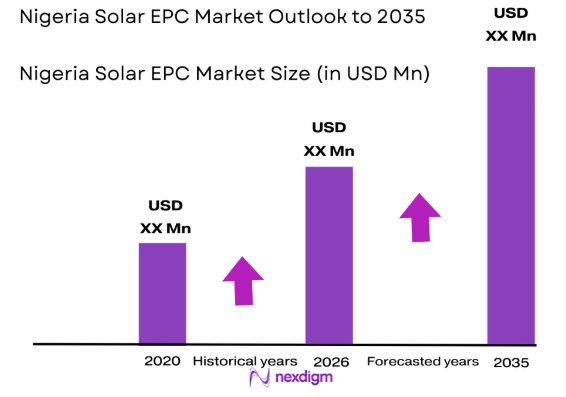
The Nigeria Solar EPC market is experiencing significant growth, driven by increasing demand for renewable energy solutions and government incentives aimed at promoting clean energy. Based on a recent historical assessment, the market is valued at USD ~ million. This growth is fueled by several factors, including technological advancements in solar energy systems, cost reductions in solar panel manufacturing, and increased awareness of environmental sustainability. Solar energy’s ability to reduce energy costs, especially in off-grid regions, is making it an attractive solution for both businesses and consumers.
Nigeria’s dominance in the solar EPC sector is primarily concentrated in urban centers such as Lagos, Abuja, and Port Harcourt, which benefit from better infrastructure, government support, and investment opportunities. The nation’s vast solar potential, combined with the government’s push to diversify energy sources, makes these cities central to solar energy adoption. The rural areas, despite challenges, are also becoming increasingly important as the government and international organizations target off-grid solutions to improve electricity access.
Market Segmentation
By System Type
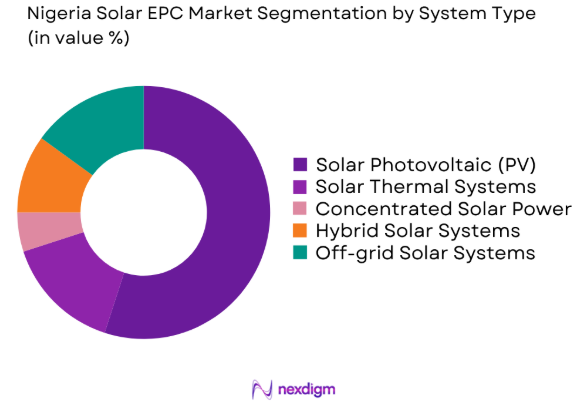
The Nigeria Solar EPC market is segmented by system type into solar photovoltaic (PV) systems, solar thermal systems, concentrated solar power (CSP), hybrid solar systems, and off-grid solar systems. Recently, solar photovoltaic systems have dominated the market share due to factors such as affordability, ease of installation, and scalability. As the cost of PV panels continues to decrease and efficiency improves, they remain the preferred choice for residential and commercial installations, driving widespread adoption across the country.
By Platform Type
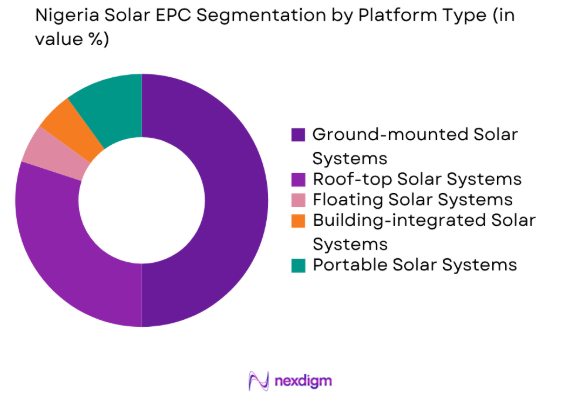
The Nigeria Solar EPC market is also segmented by platform type into ground-mounted solar systems, roof-top solar systems, floating solar systems, building-integrated solar systems, and portable solar systems. Ground-mounted solar systems have a dominant market share, particularly in large-scale commercial and industrial projects. These systems are favored due to their scalability, higher energy generation capacity, and minimal space requirements, making them ideal for both urban and rural installations.
Competitive Landscape
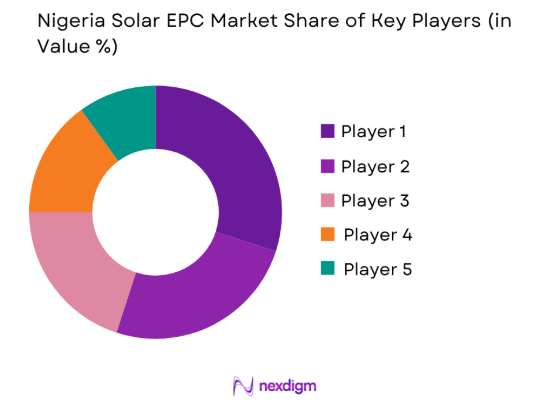
The Nigeria Solar EPC market is becoming increasingly competitive with both local and international players vying for market share. Major players include solar energy companies, EPC contractors, and system integrators that provide end-to-end solutions, from design and procurement to installation and maintenance. The market is characterized by a mix of consolidation and innovation, with large companies expanding their footprints through partnerships, while smaller players focus on niche applications and regional development. As the demand for solar energy continues to rise, these companies are focusing on expanding their service offerings and improving technological integration to stay competitive.
| Company Name | Establishment Year | Headquarters | Technology Focus | Market Reach | Key Products | Revenue (USD Million) | Additional Parameter |
| SolarTech Solutions | 2005 | Lagos, Nigeria | ~ | ~ | ~ | ~ | ~ |
| GreenVolt Energy | 2010 | Abuja, Nigeria | ~ | ~ | ~ | ~ | ~ |
| PowerGen Renewable Energy | 2012 | Port Harcourt, Nigeria | ~ | ~ | ~ | ~ | ~ |
| EnergyCo Ltd. | 2008 | Lagos, Nigeria | ~ | ~ | ~ | ~ | ~ |
| SunShine Power | 2015 | Lagos, Nigeria | ~ | ~ | ~ | ~ | ~ |
Nigeria Solar EPC Market Analysis
Growth Drivers
Government Initiatives
Government policies and initiatives are vital to the growth of the Nigeria Solar EPC market. These policies, including financial incentives, tax breaks, and subsidies, make solar energy more affordable for businesses and residential consumers. The government is significantly investing in clean energy to diversify its energy mix and reduce dependence on fossil fuels. Programs that promote solar adoption in both urban and rural areas are creating a favorable environment for growth. As the government continues to support solar energy through various incentives and infrastructure development, the market is poised for substantial expansion, particularly in off-grid regions where solar solutions are critical for energy access.
Technological Advancements
Another crucial growth driver is the ongoing advancement in solar technology. Innovations in solar panel efficiency, energy storage solutions, and system integration are enhancing the reliability and cost-effectiveness of solar energy. Advances in energy storage technologies, in particular, are improving the efficiency of solar installations, enabling them to deliver consistent power, even in off-grid regions. These developments allow solar energy systems to become more viable for a broader range of applications, including residential, commercial, and industrial sectors. As these technologies continue to evolve and become more accessible, they are expected to drive further growth in the market by addressing the increasing demand for renewable energy solutions.
Market Challenges
High Initial Capital Costs
A major challenge facing the Nigeria Solar EPC market is the high upfront cost of solar installations. Despite the long-term savings and environmental benefits, many potential customers are discouraged by the initial investment needed. Although the cost of solar panels has decreased over time, installation and maintenance expenses remain relatively high. This financial barrier makes it difficult for small businesses, households, and rural communities to afford the transition to solar energy. While subsidies and incentives can help reduce the burden, the significant initial costs continue to hinder widespread adoption, particularly in underserved areas where solar solutions could have the most impact.
Regulatory Barriers
Despite the Nigerian government’s support for renewable energy, regulatory barriers remain a challenge for the market’s growth. Inconsistent policies and regulations surrounding solar energy systems often lead to delays in project approvals and increase the complexity of deployment. These regulatory uncertainties can also deter foreign investments, slowing the overall pace of market expansion. The lack of a clear and stable regulatory framework makes it difficult for both local and international players to navigate the market, particularly in rural and underserved areas where solar energy could provide significant benefits. Addressing these regulatory challenges is crucial for accelerating solar adoption and attracting investment in the sector.
Opportunities
Off-grid Solar Systems
A key opportunity in the Nigeria Solar EPC market is the development and adoption of off-grid solar systems. With a large portion of the population residing in rural areas without access to the national grid, off-grid solar solutions offer a reliable and cost-effective means of power generation. The government’s increasing focus on rural electrification, coupled with support from international aid organizations, creates a favorable environment for the growth of off-grid solar projects. This presents a significant opportunity for solar companies to expand their reach into underserved regions, providing sustainable energy solutions while contributing to economic development and improved living standards in rural areas.
Solar Storage Integration
Another significant opportunity in the Nigerian Solar EPC market is the integration of solar energy systems with energy storage solutions. As solar adoption grows, the demand for energy storage systems capable of storing excess energy for later use becomes increasingly critical. With Nigeria’s rising interest in renewable energy, there is a substantial opportunity for companies that can offer efficient and affordable storage solutions. Combining solar generation with storage will ensure a consistent and reliable energy supply, particularly in off-grid and remote areas where grid access is limited. This integration will enhance the effectiveness of solar systems and drive broader adoption, meeting the energy needs of underserved regions.
Future Outlook
The Nigeria Solar EPC market is expected to experience steady growth over the next five years, driven by increasing demand for clean energy solutions and strong government support. Technological advancements, falling costs of solar panels, and the growth of off-grid systems will continue to propel the market. Moreover, expanding regulatory frameworks aimed at supporting renewable energy projects will further boost market confidence. As solar energy adoption increases, it is anticipated that the Nigerian solar market will become one of the largest in Africa.
Major Players
- SolarTech Solutions
- GreenVolt Energy
- PowerGen Renewable Energy
- EnergyCo Ltd.
- SunShine Power
- Helios Power Systems
- Afrisolar Energy
- Global Green Energy
- SunPower Technologies
- SolarAfrica
- Redstone Solar
- NextGen Solar Systems
- PowerMax Energy Solutions
- Horizon Solar
- Clean Power Solutions
Key Target Audience
- Investments and venture capitalist firms
- Government and regulatory bodies
- Energy providers and utilities
- EPC contractors
- Renewable energy consultants
- Financial institutions and banks
- Large enterprises focusing on sustainability
- Residential and commercial property developers
Research Methodology
Step 1: Identification of Key Variables
This step involves identifying the primary drivers, challenges, and opportunities that impact the market, followed by the collection of primary and secondary data sources.
Step 2: Market Analysis and Construction
In this stage, we analyze collected data to construct market size, trends, and growth projections based on historical and current data.
Step 3: Hypothesis Validation and Expert Consultation
Experts are consulted to validate hypotheses and gain insights into market dynamics and emerging trends.
Step 4: Research Synthesis and Final Output
The final report is synthesized, incorporating expert insights, quantitative data, and market projections to deliver an actionable report.

- Executive Summary
- Research Methodology (Definitions, Scope, Industry Assumptions, Market Sizing Approach, Primary & Secondary Research Framework, Data Collection & Verification Protocol, Analytic Models & Forecast Methodology, Limitations & Research Validity Checks)

- Market Definition and Scope
- Value Chain & Stakeholder Ecosystem
- Regulatory / Certification Landscape
- Sector Dynamics Affecting Demand
- Strategic Initiatives & Infrastructure Growth

- Growth Drivers
Increase in Government Investment in Solar Energy
Technological Advancements in Solar Energy Systems
Rising Electricity Demand and Energy Shortages - Market Challenges
High Initial Capital Cost for Solar Installations
Lack of Skilled Workforce for Solar Energy Projects
Inadequate Infrastructure for Solar Distribution - Market Opportunities
Expansion of Solar Projects in Off-grid Regions
Partnerships with Private Sector for Technological Advancements
Growth in Solar Energy Storage Solutions - Trends
Rise in Distributed Solar Power Systems
Increased Focus on Sustainability and Green Energy
Adoption of Solar Energy by Corporations for Sustainability Goals - Government Regulations
- SWOT Analysis of Key Competitors
- Porter’s Five Forces

- By Market Value, 2020-2025
- By Installed Units, 2020-2025
- By Average System Price, 2020-2025
- By System Complexity Tier, 2020-2025

- By System Type (In Value%)
Solar Photovoltaic (PV) Systems
Solar Thermal Systems
Concentrated Solar Power (CSP)
Hybrid Solar Systems
Off-grid Solar Systems - By Platform Type (In Value%)
Ground-mounted Solar Systems
Roof-top Solar Systems
Floating Solar Systems
Building Integrated Solar Systems
Portable Solar Systems - By Fitment Type (In Value%)
On-grid Solutions
Off-grid Solutions
Hybrid Solutions
Integrated Solutions
Standalone Systems - By End User Segment (In Value%)
Residential
Commercial
Industrial
Government
Agricultural - By Procurement Channel (In Value%)
Direct Procurement
Government Tenders
Private Sector Procurement
Online Bidding Platforms
Third-party Distributors

- Market Share Analysis
- Cross Comparison Parameters (System Type, Platform Type, Procurement Channel, End User Segment, Fitment Type, Installation Scale, Region, Technology Integration, Cost Structure, Financing Options)
- SWOT Analysis of Key Competitors
- Pricing & Procurement Analysis
- Key Players
Sungrow Power Supply Co., Ltd.
First Solar, Inc.
JA Solar Technology Co., Ltd.
LONGi Solar
Trina Solar Limited
Canadian Solar Inc.
Risen Energy Co., Ltd.
Siemens Gamesa Renewable Energy
Vestas Wind Systems
Enel Green Power
Schneider Electric
GCL-Poly Energy Holdings Limited
Windlab Limited
Seraphim Solar System Co., Ltd.
SunPower Corporation

- Rising Adoption of Solar Energy in Rural Areas
- Commercial Sector Emphasis on Solar Energy for Cost Reduction
- Government and NGO-led Solar Energy Initiatives
- Technological Innovations for Industrial Solar Adoption

- Forecast Market Value, 2026-2035
- Forecast Installed Units, 2026-2035
- Price Forecast by System Tier, 2026-2035
- Future Demand by Platform, 2026-2035


 Request a Sample
 Ask for Customization
 Get a Quote
 Enquire Now