
 Download PDF
Market Overview
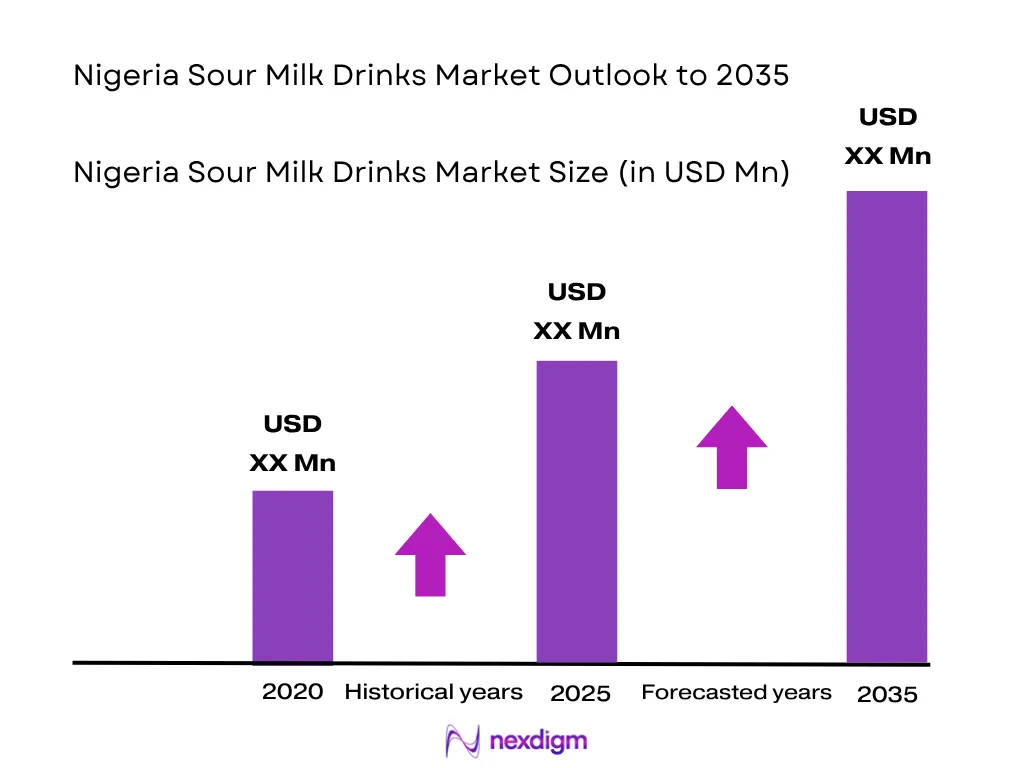
The Nigeria Sour Milk Drinks Market is valued at USD ~ million, based on a historical industry assessment, while the immediately preceding published baseline for local milk production stood at 526,502 tonnes before rising to 527,765 tonnes. Demand is driven by fermented dairy consumption across nono, fura da nono, kefir-style drinks, cultured buttermilk and drinking yoghurt, with growth supported by urban snack occasions, probiotic positioning, school-channel packs, and the gradual shift from loose traditional products to packaged dairy drinks.
Lagos, Abuja/FCT, Kano, Kaduna, Ibadan and Port Harcourt dominate the Nigeria Sour Milk Drinks Market because they combine dense retail networks, school and office consumption, distributor depots, dairy-processing presence and traditional fermented milk demand. Nigeria’s population expanded from 227,882,945 to 232,679,478, while urban population rose from 120,696,717 to 125,447,884. This enlarges the addressable consumer base for single-serve PET bottles, sachets, chilled yoghurt drinks and informal nono/fura da nono vending.
Market Segmentation
By Product Type
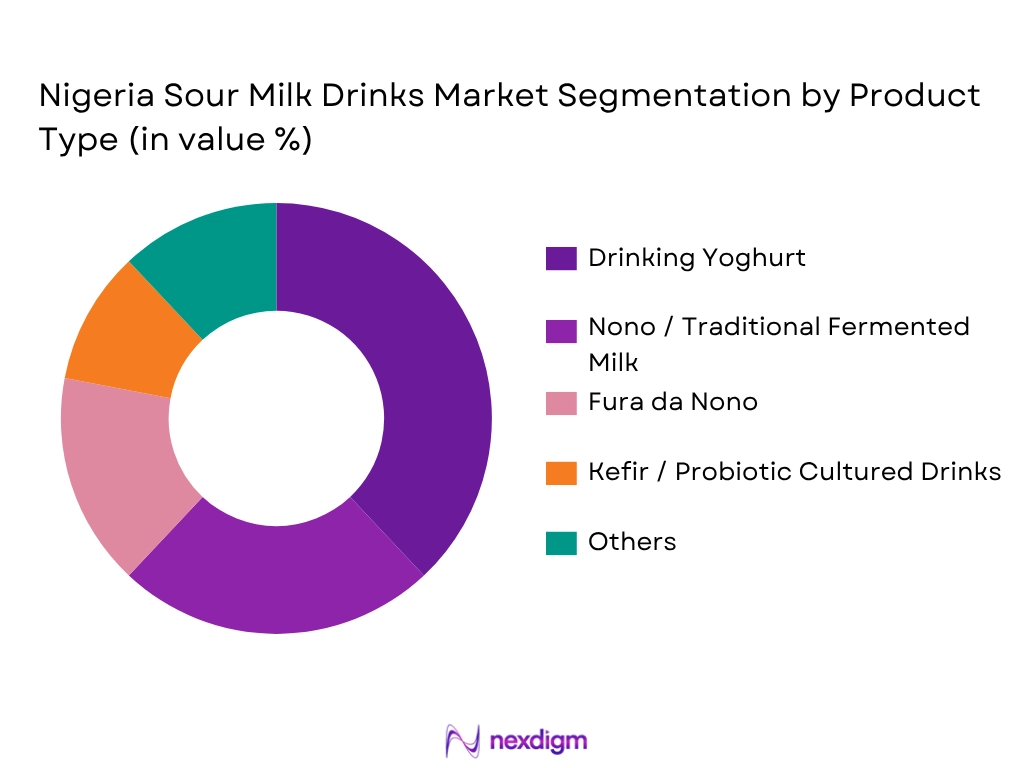
Nigeria Sour Milk Drinks Market is segmented by product type into drinking yoghurt, nono/traditional fermented milk, fura da nono, kefir/probiotic cultured drinks, cultured buttermilk/laban-style drinks and others. Drinking yoghurt holds the dominant share because it is the most formalized and scalable part of the category. It benefits from branded portfolios such as Hollandia Yoghurt, Peak Yoghurt Drink, FanYogo, Nutri-Yo and Viju yoghurt, which are visible in supermarkets, provision stores, kiosks and online grocery platforms. Its dominance also comes from PET and carton packaging, flavored variants, child-friendly positioning and wider cold-chain acceptance in major cities. Traditional nono and fura da nono remain culturally important, especially in northern Nigeria, but much of their trade is informal, unbranded and fragmented, limiting formal market capture compared with packaged drinking yoghurt.
By Distribution Channel
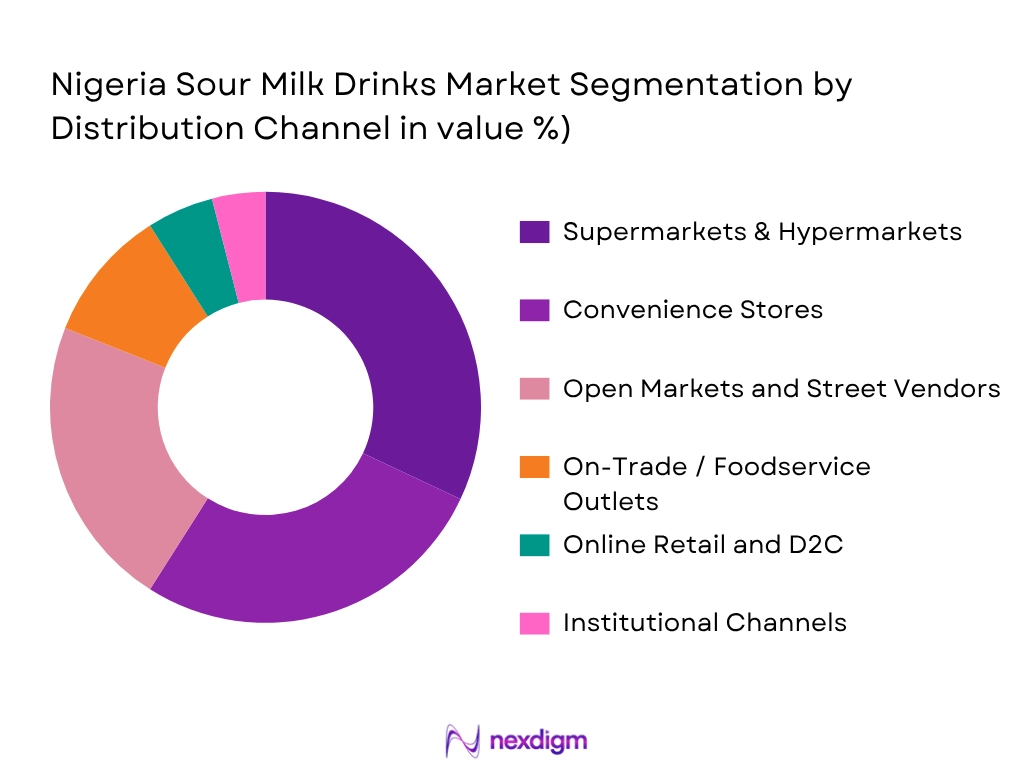
Nigeria Sour Milk Drinks Market is segmented by distribution channel into supermarkets and hypermarkets, convenience stores/traditional stores, open markets and street vendors, on-trade/foodservice outlets, online retail/D2C and institutional channels. Supermarkets and hypermarkets lead the formal market because branded sour milk drinks require refrigerated display, visible SKU assortment, family packs, impulse packs and consumer trust around product safety. Chains and organized grocery outlets in Lagos, Abuja, Port Harcourt and Ibadan provide better cold-chain compliance and allow premium products to communicate claims such as probiotics, calcium, vitamins and low-fat formulation. Traditional stores and street vendors remain crucial for volume access, particularly for low-cost packs and nono/fura da nono, but formal-value capture is stronger in supermarkets due to branded shelf space and higher average selling prices.
Competitive Landscape
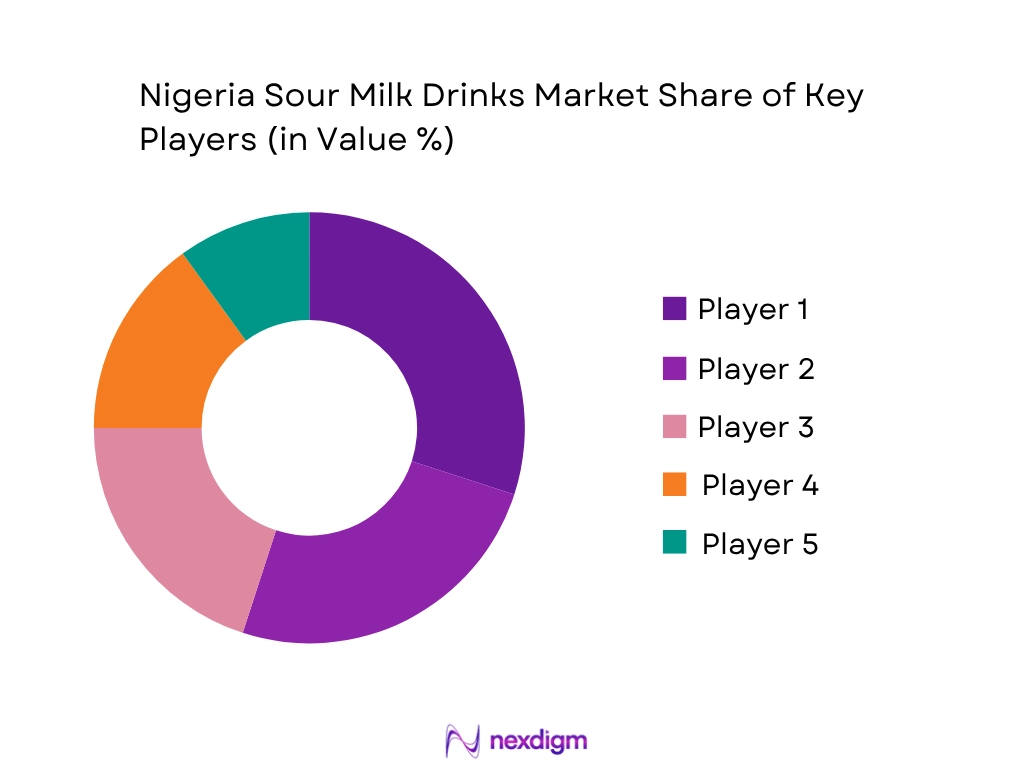
The Nigeria Sour Milk Drinks Market is moderately consolidated in branded drinking yoghurt but fragmented in traditional sour milk drinks. Hollandia, Peak, FanYogo, Nutri-Yo and Viju hold strong visibility in packaged yoghurt drinks, while nono and fura da nono remain driven by regional vendors, Fulani milk aggregators and small processors. Competition is shaped by pack affordability, flavor portfolio, cold-chain reach, NAFDAC registration, local milk sourcing and ability to penetrate both modern and general trade.
| Company | Establishment Year | Headquarters | Key Sour Milk Drink Brands | Product Positioning | Pack Architecture | Route-to-Market Strength | Milk-Sourcing / Formulation Model | Competitive Edge |
| Chivita|Hollandia / CHI Limited | 1980 | Lagos, Nigeria | ~ | ~ | ~ | ~ | ~ | ~ |
| FrieslandCampina WAMCO Nigeria PLC | 1973 | Lagos, Nigeria | ~ | ~ | ~ | ~ | ~ | ~ |
| Fan Milk PLC / Danone | 1961 | Ibadan, Nigeria | ~ | ~ | ~ | ~ | ~ | ~ |
| CWAY Food & Beverages | 2000s | Lagos, Nigeria | ~ | ~ | ~ | ~ | ~ | ~ |
| Viju Industries Nigeria Limited | 2004 | Lagos, Nigeria | ~ | ~ | ~ | ~ | ~ | ~ |
Nigeria Sour Milk Drinks Market Analysis
Growth Drivers
Urban On-the-Go Consumption
Urban on-the-go consumption is a core growth driver for the Nigeria Sour Milk Drinks Market because packaged drinking yoghurt, sour milk beverages, fura da nono in sealed packs, and probiotic dairy drinks fit daily commute, school, office, roadside retail, petrol-station and kiosk consumption. Nigeria’s addressable consumer base is structurally large: World Bank data records a population of 232,679,478 and GDP of USD 252.26 billion, while urban population data records 128,043,517 people living in cities. For sour milk drinks, this matters because urban consumers have greater access to refrigerators, supermarkets, provision stores, traffic-point kiosks, petrol stations and foodservice outlets than rural consumers. Lagos, Abuja, Kano, Kaduna, Ibadan and Port Harcourt concentrate route-to-market infrastructure for small PET bottles, pouch formats, chilled yoghurt drinks and branded dairy beverages. The macroeconomic base also supports wider distribution planning: World Bank records GDP per capita at USD 1,084.2, while IMF records Nigeria’s country population at 242.578 million in its latest country profile, indicating continued scale for single-serve dairy beverages. For sour milk drink processors, urbanization converts traditional fermented milk behavior into packaged, impulse-led consumption occasions, particularly where products can be sold in 125 ml, 200 ml, 300 ml and 500 ml formats through general trade and modern retail. The driver is market-specific because sour milk drinks depend on high-frequency purchase, product visibility, safe packaging and accessible cooling points; these conditions are more available in Nigerian cities than in dispersed rural settlements.
Children’s Nutrition
Children’s nutrition supports the Nigeria Sour Milk Drinks Market because sour milk drinks sit between refreshment and nutrition, offering a dairy-based format for school snacks, breakfast pairing, household consumption and fortified beverage positioning. The demand base is large: World Bank-linked data records 95,430,802 Nigerians aged 0–14, while Nigeria’s total population is recorded at 232,679,478. UNICEF reports that around 11 million Nigerian children under five experience severe child food poverty, and UNICEF Nigeria also states that an estimated 2 million children suffer from severe acute malnutrition. These numbers create a nutrition-sensitive context where parents, schools and institutions can view packaged yoghurt drinks, pasteurized nono and fortified fermented dairy as safer alternatives to carbonated drinks and informal street beverages. The market relevance is not that sour milk drinks solve malnutrition alone, but that they can participate in a broader affordable nutrition basket through calcium, protein, vitamin fortification and controlled pack sizes. Nigeria’s school-age population also makes small dairy beverage packs commercially relevant for canteens, provision stores and neighborhood kiosks. UNICEF notes that only 18 out of every 100 children aged 6–23 months receive the minimum acceptable diet, reinforcing the need for diversified, nutrient-bearing food and beverage formats. For producers, this supports child-focused SKUs, low-sugar variants, fortified drinking yoghurt, clean-label positioning and safer packaging for traditional fermented milk formats.
Market Challenges
Cold Chain, Power Cost
Cold chain and power availability remain major challenges for the Nigeria Sour Milk Drinks Market because yoghurt drinks, pasteurized nono, probiotic fermented drinks and fresh fura da nono require controlled handling after production. The challenge is market-specific: sour milk drinks can spoil, separate, over-ferment or lose sensory quality when refrigeration is unreliable across depots, retail fridges, kiosks and last-mile delivery. Nigeria’s electricity statistics explain the constraint. NERC reports 28 grid-connected power plants in 2024/Q4, average available generation capacity of 5,296.89 MW, average hourly generation of 4,207.41 MWh/h and total quarterly generation of 9,289.95 GWh. In the same quarter, the national grid recorded three total collapses and two partial collapses. These operational numbers affect the dairy beverage chain directly because chilled products need continuous refrigeration at processing plants, cold rooms, delivery vans and retail points. A processor serving Lagos, Abuja, Kano, Port Harcourt and Ibadan must therefore design around electricity interruptions, backup generation, insulated distribution and shorter delivery cycles. The challenge becomes sharper when set against Nigeria’s population of 232,679,478 and urban population of 128,043,517, because the consumer base is large but reliable cold-chain penetration is uneven. This creates an advantage for larger players with depots, refrigerated trucks and retailer freezer/fridge programs, while smaller processors and informal nono vendors face higher spoilage, inconsistent quality and limited geographic reach.
Raw Milk Seasonality
Raw milk seasonality is a structural challenge for the Nigeria Sour Milk Drinks Market because nono, fura da nono, pasteurized sour milk, fresh yoghurt and locally sourced fermented dairy depend on steady milk availability, consistent quality and manageable microbial load. FAOSTAT-linked data records Nigeria’s total milk production at 527,765 tonnes, compared with 526,502 tonnes in the preceding annual baseline, showing that the supply base remains relatively tight for a population of 232,679,478. This matters because sour milk drink demand is increasingly urban and branded, but raw milk supply is still heavily linked to pastoral and agro-pastoral systems, which are exposed to rainfall, pasture availability, animal movement, dry-season feed constraints and regional security conditions. FAO’s Nigeria livestock material identifies three dairy cattle production systems in Nigeria: extensive or traditional, semi-intensive agro-pastoral and intensive modern systems. For processors, the problem is not only annual milk quantity; it is the uneven flow of collection volumes across the year, variable fat and solids content, inconsistent hygiene at farmgate, and long distances from northern and central milk belts to southern consumption centers. Seasonality also pushes manufacturers toward recombined milk powder, which can reduce supply risk but weakens local-sourcing claims and increases dependence on imported dairy inputs. In traditional nono and fura da nono channels, seasonality affects vendor availability, taste consistency and consumer trust. For formal brands, it complicates production planning, fermentation control, shelf-life management and NAFDAC-compliant quality assurance.
Opportunities
Pasteurized Nono
Pasteurized nono is a strong opportunity in the Nigeria Sour Milk Drinks Market because it converts a familiar traditional fermented milk product into a safer, scalable and branded dairy beverage. Nono already has strong cultural acceptance in northern Nigeria and among consumers who understand sour milk, fura da nono and fermented cow milk. The opportunity is to formalize that behavior through pasteurization, sealed packaging, NAFDAC registration, controlled acidity, standardized taste and urban distribution. Nigeria’s milk base gives processors a platform: FAOSTAT-linked data records 527,765 tonnes of total milk production, while World Bank records 232,679,478 people and 128,043,517 urban residents. A pasteurized nono proposition can therefore serve two demand pools: traditional consumers seeking safer versions of familiar products and urban consumers seeking authentic Nigerian dairy drinks. NAFDAC’s milk and dairy regulation provides the compliance pathway by defining milk, milk products and pasteurization requirements; the regulation states pasteurization can involve heating milk at 63°C to 66°C for not less than 30 minutes, or 71.5°C for not less than 15 seconds, followed by rapid cooling below 4°C. This is commercially important because informal nono is frequently sold loose, while pasteurized nono can be sold in PET bottles, cups, sachets and foodservice packs. The product can also be positioned around freshness, local sourcing, northern dairy heritage, school safety and household consumption, provided processors manage cold chain and taste authenticity.
Ambient Drinking Yoghurt
Ambient drinking yoghurt is a market opportunity because it directly addresses the refrigeration barrier that limits chilled sour milk drink penetration outside strong cold-chain corridors. Nigeria’s urban population is recorded at 128,043,517, while total population is recorded at 232,679,478, creating a large consumer base beyond the best-served modern retail areas. NERC’s 2024/Q4 data shows why ambient formats are relevant: average available generation capacity stood at 5,296.89 MW, average hourly generation was 4,207.41 MWh/h, total generation was 9,289.95 GWh, and the national grid recorded three total collapses plus two partial collapses in the quarter. Ambient drinking yoghurt can reduce dependence on uninterrupted retail refrigeration, making it more suitable for provision stores, kiosks, rural wholesalers, school channels, open-market distributors and long-haul routes into northern, eastern and south-south states. The opportunity is market-specific because Nigerian sour milk drinks are still split between informal fresh products and branded chilled yoghurt drinks; ambient technology can bridge the gap by delivering dairy taste, fermented positioning and longer shelf stability in a format that works across uneven infrastructure. It also supports smaller pack sizes for price-sensitive consumers without forcing every outlet to operate chilled cabinets. For manufacturers, ambient drinking yoghurt can improve depot reach, reduce product returns linked to temperature abuse, and enable broader distribution to regions where nono and fura da nono are culturally relevant but formal chilled retail is limited.
Future Outlook
The Nigeria Sour Milk Drinks Market is expected to expand steadily, supported by urbanization, formalization of traditional fermented milk, better cold-chain penetration and rising demand for functional beverages. The country-level sour milk drinks forecast indicates a CAGR of 5.19% over the published forecast window, while adjacent yoghurt drink sources indicate stronger momentum for packaged yoghurt beverages. Growth will be strongest where companies combine affordability, product safety, flavor innovation and regional distribution. Over the forecast period, drinking yoghurt will continue to anchor formal market growth because it offers the most scalable branded format. However, a major opportunity lies in commercializing pasteurized nono and packaged fura da nono for urban northern consumers, school canteens and diaspora-style ethnic food channels. Fortified, low-sugar and probiotic variants will gain attention among middle-income consumers in Lagos, Abuja and Port Harcourt, while sachets and mini PET packs will remain essential for price-sensitive shoppers.
Major Players
- Chivita|Hollandia / CHI Limited
- FrieslandCampina WAMCO Nigeria PLC
- Fan Milk PLC / Danone
- CWAY Food and Beverages Nigeria Company Limited
- Viju Industries Nigeria Limited
- Olam Packaged Foods / FreshYo
- Integrated Dairies Limited
- Niyya Food & Drinks Company Limited / Farm Pride
- Cedar Dairies Manufacturing Limited / CEDAA
- Arla Foods Nigeria Limited
- L&Z Integrated Farms Nigeria Limited
- Dansa Foods Limited
- Kaduna Federation of Milk Producers Cooperative Association Limited / MILCOPAL
- Habib Yoghurt and Fura
- Bobo Food and Beverages Limited
Key Target Audience
- Dairy drink manufacturers and processors
- Packaged food and beverage companies
- Dairy ingredient suppliers and starter culture suppliers
- Retail chains, supermarkets and modern grocery operators
- Cold-chain logistics and refrigerated warehousing companies
- Investments and venture capitalist firms
- Government and regulatory bodies (NAFDAC, Standards Organisation of Nigeria, Federal Ministry of Livestock Development, Federal Ministry of Health and Social Welfare)
- Packaging companies and PET/carton/sachet material suppliers
Research Methodology
Step 1: Identification of Key Variables
The initial phase involves constructing an ecosystem map of the Nigeria Sour Milk Drinks Market, covering dairy processors, traditional nono vendors, milk aggregators, branded yoghurt drink manufacturers, retail chains, kiosks, cold-chain operators and regulators. The objective is to identify demand, supply, compliance, pricing and channel variables that influence packaged and informal sour milk drink consumption.
Step 2: Market Analysis and Construction
Historical market data is compiled from country-level sour milk drink sources, dairy production indicators, urban population movement, company portfolios, retail listings and branded SKU availability. The analysis evaluates organized and informal value pools, product-form penetration, price-pack architecture and channel-wise revenue generation to construct a structured market model.
Step 3: Hypothesis Validation and Expert Consultation
Market hypotheses are validated through interviews with dairy processors, distributors, supermarket buyers, provision store owners, school-canteen suppliers, cold-chain operators and regional fermented milk vendors. These consultations help refine assumptions around off-take volume, informal substitution, brand visibility, price elasticity, channel margins and refrigerated distribution constraints.
Step 4: Research Synthesis and Final Output
The final phase integrates desk research, channel checks, competitor benchmarking and expert validation into a consolidated report. Product-level insights are triangulated across drinking yoghurt, nono, fura da nono, kefir-style drinks and cultured buttermilk to build a validated market outlook, segmentation analysis, competitive landscape and actionable recommendations.

- Executive Summary
- Research Methodology (Market Definitions and Assumptions, Abbreviations, Market Sizing Approach, Top-Down Approach, Bottom-Up Approach, Trade-Led Demand Estimation, Retail Audit Approach, Distributor and Depot Mapping, Informal Vendor Validation, Primary Interviews with Dairy Processors and Channel Partners, Limitations and Future Conclusions)

- Definition and Scope
- Overview Genesis
- Timeline of Major Players
- Business Cycle
- Supply Chain and Value Chain Analysis
- Value Pool Analysis
- Demand Heat Map

- Growth Drivers (Urban On-the-Go Consumption, Children’s Nutrition, Probiotic Awareness, Affordable Pack Sizes, Local Dairy Development, Modern Retail Expansion)
- Market Challenges (Cold Chain, Power Cost, Raw Milk Seasonality, FX Exposure, Informal Hygiene, Sugar Scrutiny)
- Opportunities (Pasteurized Nono, Ambient Drinking Yoghurt, Low-Sugar SKUs, Fortified Dairy, Regional Expansion)
- Market Trends (Fresh-Milk Claims, Ambient Lines, Flavor Innovation, Premium Greek Yoghurt, WhatsApp Commerce, Route-to-Market Optimization)
- Government Regulations and Standards (NAFDAC Registration, Milk and Dairy Product Regulations, Labelling, Food Claims, SON/NIS, Cold-Chain Hygiene)
- SWOT Analysis (Local Milk Advantage, Brand Trust, Cold-Chain Weakness, Informal Substitution, Premiumization Opportunity)
- Stakeholder Ecosystem (Dairy Farmers, Fulani Aggregators, Milk Collection Centers, Processors, Packaging Suppliers, Starter Culture Suppliers, Cold-Chain Operators, Distributors, Informal Vendors, Modern Retailers, Regulators)
- Porter’s Five Forces Analysis (Supplier Power, Buyer Power, Threat of Substitutes, Threat of New Entrants, Competitive Rivalry)
- Competition Ecosystem (Industrial Brands, Regional Dairy Plants, Local Artisanal Vendors, Premium D2C Yoghurt Makers, Imported Fermented Dairy Alternatives)

- By Value (2020-2025)
- By Volume (2020-2025)
- By Average Selling Price (2020-2025)
- By Per Capita Consumption (2020-2025)
- By Organized versus Informal Market Contribution (2020-2025)

- By Product Form (In Value % )
Nono
Fura da Nono
Drinking Yoghurt
Kindirmo / Laban-Style Sour Milk
Probiotic / Kefir-Style Cultured Drinks
Greek / Thick Pourable Yoghurt Drinks - By Processing Model (In Value %)
Artisanal Raw-Milk Fermented Drinks
Semi-Industrial Pasteurized Fermented Drinks
Industrial Chilled Yoghurt Drinks
Ambient / UHT Drinking Yoghurt
Recombined Milk Powder-Based Yoghurt Drinks
Fresh-Milk / Backward-Integrated Dairy Drinks - By Flavor and Sweetener (In Value %)
Plain Unsweetened / Sour
Sweetened Plain
Strawberry
Vanilla
Chocolate
Tropical Fruit Flavors
Millet-Cereal Blended
Low-Sugar / Sugar-Free - By Fat and Fortification (In Value %)
Full Cream
Low Fat / Fat-Free
Vitamin and Mineral Fortified)
High-Protein / Greek-Style
Probiotic / Gut-Health Positioning - By Packaging Type (In Value % )
PET Bottles
HDPE Bottles
Aseptic Cartons
Cups
Pouches / Sachets
Bulk Jerrycans / Reusable Vessels - By Pack Size (In Value % )
Up to 200 ml
201–350 ml
351–500 ml
501 ml–1 Litre
Above 1 Litre
Bulk Foodservice Packs - By Distribution Channel (In Value %)
Open Markets and Street Vendors
Provision Stores and Kiosks
Supermarkets and Hypermarkets
Convenience Stores and Petrol Stations
Schools, Canteens and Foodservice
D2C, Online and WhatsApp Commerce
Distributor and Depot Route Sales - By Region (In Value %)
North West
North East
North Central / FCT
South West
South South
South East (Onitsha, Aba, Enugu; Distributor-Led Packaged Dairy Penetration) - By Consumer Group / Occasion (In Value %)
Children and School Snacks
Students and Youth
Commuters and On-the-Go Consumers
Health and Gut-Health Focused Adults
Households and Family Consumption
Foodservice Smoothies, Desserts and Meal Pairing

- Market Share of Major Players (Value Share, Volume Share, Organized Retail Share, Informal Channel Approximation, Product Form, Channel, Pack Size, Region)
- Cross Comparison Parameters (Company Overview, Brand Portfolio, Product Form Coverage, Business Strategies, Recent Developments, Strengths, Weaknesses, Revenues, Distribution Channels, Number of Depots, Number of Dealers and Distributors, Production Plant, Capacity, Retail Touchpoints, Margins, Unique Value Proposition, Sourness/Acidity Profile, Live-Culture/Probiotic Claim, NAFDAC Registration and Label Compliance, Raw Milk Sourcing Model, Cold-Chain Reach, Pack-Size Affordability Ladder, Northern Nono/Fura Route-to-Market, Flavor and Fortification Architecture)
- SWOT Analysis of Major Players (Fresh-Milk Integration, Ambient Capability, Brand Equity, Informal Market Exposure, Cold-Chain Dependence)
- Pricing Analysis by SKU (125 ml, 200 ml, 300 ml, 500 ml, 1 Litre, Family Packs, Bulk Foodservice Packs, PET Bottles, Pouches, Aseptic Cartons, Chilled versus Ambient)
- Product Benchmarking of Major Players (Texture, Viscosity, Sourness, Sweetness, Fortification, Shelf Life, Packaging Durability, Retail Availability)
- Channel Benchmarking of Major Players (Modern Trade, General Trade, Street Vendors, Depot Distribution, Schools, Petrol Stations, D2C Delivery)
- Detailed Profiles of Major Companies
Chi Limited / Chivita Hollandia
FrieslandCampina WAMCO Nigeria PLC
Fan Milk PLC / Danone
Nutri-Yo
Viju Industries Nigeria Limited
Olam Nigeria (FreshYo Drinking Yoghurt)
Bobo Food and Beverages Limited
CEDAA Yoghurt, Zoi Dairy Fresh
Integrated Dairies Limited
Niyya Food & Drinks Company Limited / Niyya Farm Group
Arla Foods Nigeria Limited (Dano Cool Cow / Cool Cow Yoghurt)
L&Z Integrated Farms Nigeria Limited
Dansa Foods Limited
Kaduna Federation of Milk Producers Cooperative Association Limited / MILCOPAL
Habib Yoghurt and Fura

- Market Demand and Utilization (Daily Refreshment, Meal Replacement, Breakfast Pairing, School Snack, Iftar Drink, Smoothie Base)
- Purchasing Power and Budget Allocation (Small-Pack Affordability, Family-Pack Value, Premium Thick Yoghurt, Informal Vendor Pricing)
- Consumer Needs and Pain Points (Freshness, Safety, Sourness Balance, Creaminess, Sugar Level, Cooling Availability, Pack Leakage, Shelf Life)
- Decision-Making Process (Taste Trial, Price Point, Brand Trust, NAFDAC Number, Retail Availability, Chilled Condition, Word-of-Mouth)
- B2B End User Requirements (HoReCa Bulk Packs, Cafeteria Supply, School Canteen Compliance, Distributor Credit, Refrigerated Storage)
- Consumer Cohort Mapping (Northern Traditional Consumers, Urban Mass Consumers, Premium Wellness Consumers, Children’s Nutrition Buyers, On-the-Go Youth)

- By Value (2026-2035)
- By Volume (2026-2035)
- By Average Selling Price (2026-2035)
- By Per Capita Consumption (2026-2035)
- By Organized versus Informal Market Contribution (2026-2035)


 Request a Sample
 Ask for Customization
 Get a Quote
 Enquire Now