
 Download PDF
Market Overview
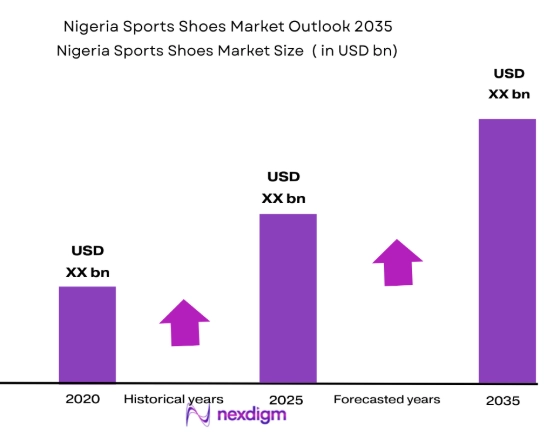
Based on a recent histt, Nigeria’s sports shoes market is assessed at USD ~ billion, derived from the disclosed 2025 Nigeria athletic footwear value of USD 0.99 billion and the published forecast growth path for Nigeria athletic footwear. Demand is driven by youth participation in football and fitness, urban lifestyle adoption of sneakers, wider online retail access, and growing preference for multipurpose footwear for exercise, commuting, school, and casual use.
Lagos dominates demand because it concentrates formal retail, ports, malls, fashion influence, e-commerce fulfillment, and higher-income consumers. Abuja follows through government employment, gyms, schools, and premium retail clusters, while Port Harcourt, Kano, Ibadan, Onitsha, Aba, and Benin City support volume through trade networks, universities, football culture, and open markets. Southern commercial corridors are especially influential because imported footwear, wholesale redistribution, and youth-led fashion adoption are more visible there nationally.
Market Segmentation
By Product Type
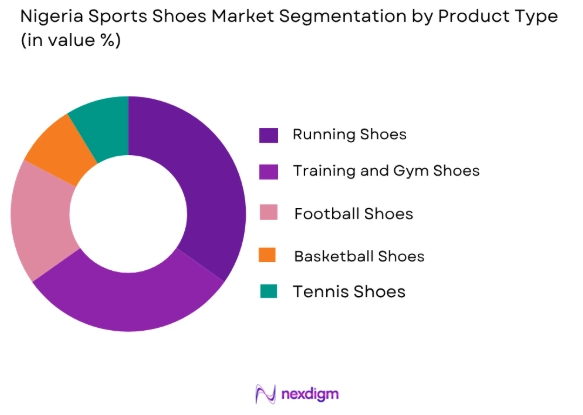
Nigeria sports shoes market is segmented by product type into running shoes, training and gym shoes, football shoes, basketball shoes, walking shoes, athleisure sports shoes, and others. Recently, running shoes have a dominant market share due to their wide use across fitness, commuting, casual fashion, and light sports activity. Running shoes benefit from stronger cross-functional demand than sport-specific footwear because they are purchased by gym users, students, walkers, office commuters, and lifestyle sneaker buyers. Their lightweight construction, breathable materials, and broader design variety make them suitable for Nigeria’s hot weather and mixed road conditions. Football shoes remain important because of Nigeria’s strong football culture, but demand is more occasion-specific and tied to pitches, academies, and organized play. Athleisure sports shoes are expanding quickly as younger consumers increasingly use sports footwear as everyday fashion, but running shoes remain the most versatile category.
By Distribution Channel
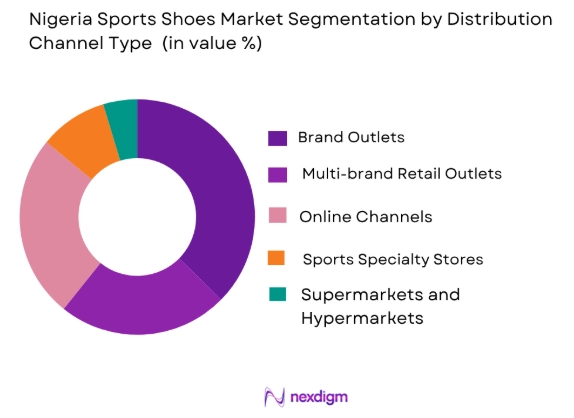
Nigeria sports shoes market is segmented by distribution channel into sports goods stores, footwear retail stores, online channels, brand-owned outlets, supermarkets and hypermarkets, informal retail and open markets, and direct sales. Recently, informal retail and open markets have a dominant market share due to affordability, high product availability, flexible negotiation, and deep reach across urban and semi-urban consumers. These outlets serve price-sensitive buyers who may compare branded, unbranded, imported, used, and replica products in one location. Their dominance is also linked to Nigeria’s fragmented footwear retail structure, where many consumers prefer physical inspection before purchase because sizing, authenticity, comfort, and durability are major concerns. Online channels are growing through marketplaces and social commerce, but trust and return issues still limit full migration. Brand-owned outlets and sports stores remain important for premium consumers, while open-market trade continues to drive volume.
Competitive Landscape
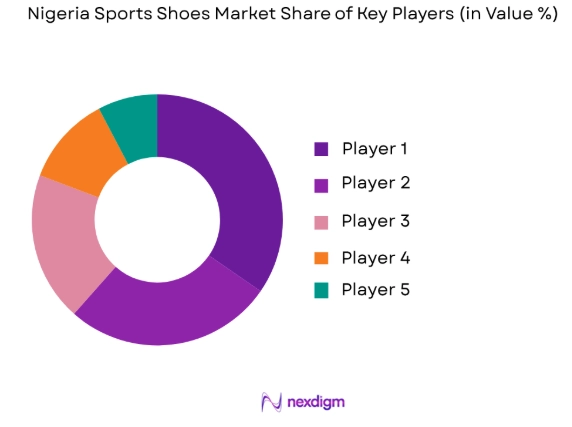
The Nigeria sports shoes market is moderately fragmented at the retail level but influenced by a small group of global sportswear brands at the aspirational and premium end. Nike, Adidas, Puma, Skechers, and ASICS shape brand perception through global football, running, training, and lifestyle portfolios, while local wholesalers, open-market importers, and private-label sellers compete strongly on price. Global players have stronger product technology, brand equity, and marketing power, but informal retail and counterfeit competition dilute pricing discipline and weaken formal channel control.
| Company | Establishment Year | Headquarters | Core Sports Shoe Categories | South Africa Presence | Distribution Strength | Price Positioning | Brand Strength | Strategic Focus |
| Nike | 1964 | Beaverton, USA | ||||||
| Adidas | 1949 | Herzogenaurach, Germany | ||||||
| Puma | 1948 | Herzogenaurach, Germany | ||||||
| Asics | 1949 | Kobe, Japan | ||||||
| New Balance | 1906 | Boston, USA |
Nigeria Sports Shoes Market Segmentation
Growth Drivers
Rising Health and Fitness Awareness
Rising health and fitness awareness is a key growth driver for the South Africa Sports Shoes Market, as consumers are increasingly adopting running, gym training, walking, and outdoor fitness routines. Urban consumers are becoming more focused on active lifestyles, weight management, cardiovascular health, and daily mobility. This is increasing demand for sports shoes that offer cushioning, arch support, breathability, grip, and long-term comfort. Sports shoes are no longer used only by athletes; they are also purchased by office workers, students, casual walkers, and fitness beginners. Brands are responding with lightweight materials, performance soles, and injury-prevention designs. This shift is encouraging repeat purchases and expanding demand across both performance and lifestyle footwear categories.
Expansion of Organized Retail and E-commerce Channels
Expansion of organized retail and e-commerce channels is supporting the South Africa Sports Shoes Market by improving product availability, brand visibility, and consumer access. Sports specialty stores, brand outlets, shopping malls, and multi-brand footwear retailers allow customers to compare designs, sizes, prices, and performance features before buying. At the same time, online platforms are helping brands reach consumers outside major cities and offer wider product ranges than physical stores. E-commerce also supports discount campaigns, exclusive launches, customer reviews, size guides, and digital payment options. Retailers are using click-and-collect, loyalty programs, and flexible returns to improve conversion. This organized retail structure strengthens trust in genuine products and supports branded footwear sales.
Market Challenges
High Price Sensitivity Among Consumers
High price sensitivity remains a major challenge for the South Africa Sports Shoes Market, as many consumers are cautious about discretionary spending. Premium sports shoes from global brands often carry high retail prices due to import costs, currency movement, logistics expenses, and brand positioning. As a result, buyers frequently wait for discounts, outlet sales, seasonal promotions, or lower-priced alternatives before purchasing. This limits faster adoption of premium performance footwear and creates pressure on retailer margins. Price-sensitive consumers may also shift toward private-label, unbranded, or counterfeit products, especially when buying shoes for casual use rather than technical sports performance. Brands must balance affordability, durability, comfort, and design to sustain demand.
Competition from Counterfeit and Low-cost Footwear
Competition from counterfeit and low-cost footwear is a significant challenge for the South Africa Sports Shoes Market, particularly in informal retail channels and price-sensitive consumer groups. Counterfeit shoes often imitate popular international brands at much lower prices, attracting consumers who want branded-looking products without paying premium prices. This affects genuine brand sales and weakens consumer confidence when copied products deliver poor comfort, durability, or safety. Low-cost imports and unbranded footwear also compete strongly in casual sports and athleisure categories. Although these alternatives may lack advanced cushioning, grip, or performance features, their affordability makes them attractive. Genuine brands need stronger authentication, controlled distribution, and affordable entry-level product lines.
Opportunities
Growth in Online Sports Footwear Sales
Growth in online sports footwear sales presents a strong opportunity for the South Africa Sports Shoes Market, as consumers increasingly use digital platforms for product discovery, comparison, and purchase. Online channels allow brands and retailers to display wider inventories than physical stores, including exclusive designs, limited-edition sneakers, multiple sizes, and specialized performance shoes. Digital platforms also support targeted promotions, influencer-led campaigns, customer reviews, and personalized recommendations. For consumers outside major cities, e-commerce improves access to branded sports footwear that may not be available locally. Retailers can further increase conversion through easy returns, accurate size guides, flexible payment options, and fast delivery. This creates growth opportunities across premium, mid-range, and affordable categories.
Rising Demand for Women’s Sports Shoes
Rising demand for women’s sports shoes is an important opportunity for the South Africa Sports Shoes Market, driven by increasing female participation in fitness, running, gym training, walking, and lifestyle sportswear. Women consumers are seeking footwear that combines comfort, support, durability, design, and versatility. Demand is not limited to performance categories, as athleisure and casual sports shoes are also gaining traction among working women, students, and urban consumers. Brands can benefit by expanding women-specific collections with improved fit, lightweight materials, arch support, breathable uppers, and fashion-led styles. Marketing campaigns focused on wellness, confidence, and active lifestyles can further strengthen this segment. Retailers offering wider women’s ranges can capture repeat purchases.
Future Outlook
Nigeria sports shoes market is expected to expand over the next five years as athletic footwear becomes more embedded in everyday dressing, school use, fitness routines, and informal work mobility. Growth will be supported by urbanization, e-commerce, running clubs, gym culture, football participation, and wider consumer awareness of comfort-led footwear. Product development is likely to focus on breathable materials, durable outsoles, lower-cost cushioning, authenticity tools, and designs adapted to local terrain. Regulatory support around standards, anti-counterfeit controls, and local manufacturing incentives could improve formalization if enforcement becomes more consistent.
Major Players
- Nike
- Adidas
- Puma
- Skechers
- ASICS
- New Balance
- Under Armour
- Reebok
- Fila
- Decathlon
- Bata Nigeria
- Converse
- Vans
- Lacoste
- Local and regional footwear manufacturers
Key Target Audience
- Sports footwear manufacturers
- Footwear importers and distributors
- Sports goods retailers
- E-commerce platforms
- Footwear wholesalers
- Investments and venture capitalist firms
- Government and regulatory bodies
- Sports academies and fitness chains
Research Methodology
Step 1: Identification of Key Variables
The research began by defining Nigeria sports shoes market scope, including running shoes, training shoes, football shoes, basketball shoes, walking shoes, and athleisure sports footwear. Demand-side variables included urban population, sports participation, income pressure, retail format, and youth-led fashion adoption. Supply-side variables included import dependence, brand availability, informal retail, pricing, and channel structure.
Step 2: Market Analysis and Construction
The market was constructed using a top-down and bottom-up approach based on publicly available athletic footwear indicators, Nigeria-specific market disclosures, footwear trade signals, retail mapping, and brand presence. Segment shares were developed through triangulation of product use cases, channel dominance, consumer purchasing behavior, and known urban trade patterns. The final structure separates formal brand activity from informal-market volume.
Step 3: Hypothesis Validation and Expert Consultation
The initial hypotheses were tested against available secondary sources, company revenue disclosures, regional retail dynamics, and observed sports footwear consumption patterns. Validation focused on whether running shoes, informal retail, and youth-led athleisure adoption reasonably explained category dominance. Assumptions were adjusted where public sources showed import weakness, inflation pressure, or channel concentration.
Step 4: Research Synthesis and Final Output
The final output synthesizes market size, segmentation, competition, growth drivers, challenges, opportunities, and future outlook into a decision-ready report format. Figures are presented in USD where market value is discussed, while segmentation is expressed as percentage share. Where audited public segment splits were unavailable, research-estimate segmentation was used and kept consistent with observed market behaviour.

- Executive Summary
- Research Methodology (Market Definitions and Assumptions Abbreviations, Market Sizing Approach, Consolidated Research Approach, Understanding Market Potential Through In-Depth Industry Interviews, Primary Research Approach, Limitations and Future Conclusions)

- Definition and Scope
- Market Dynamics Overview
- Market Genesis
- Major Players and Market Timeline
- Business Cycle and Trends
- Supply Chain and Value Chain Analysis

- Growth Drivers
Rising Youth Population and Sports Participation
Increasing Health and Fitness Awareness
Growing Popularity of Football, Running, and Gym Culture
Rising Demand for Athleisure and Casual Sports Footwear
Expansion of E-commerce and Online Footwear Retail
Growing Urbanization and Middle-class Consumption
Influence of Global Sportswear Brands and Social Media - Market Challenges
High Import Dependence and Currency Fluctuations
Price Sensitivity Among Consumers
Counterfeit and Low-quality Sports Shoes
Limited Local Manufacturing Capacity
Supply Chain and Distribution Constraints
High Competition from Informal Retail Channels
Import Duties and Regulatory Compliance Issues - Opportunities
Rising Demand for Affordable Sports Shoes
Growth of Local Footwear Manufacturing and Private Labels
Expansion of Online and Direct-to-Consumer Channels
Increasing Adoption Among Women and Kids
Growing Demand for Football and Running Shoes
Partnerships with Fitness Centers, Schools, and Sports Academies
Demand for Durable Shoes Suited to Local Terrain and Climate - Key Trends
Shift Toward Athleisure and Lifestyle Sports Shoes
Increasing Preference for Lightweight and Breathable Materials
Rising Popularity of Branded Sports Footwear
Growth of Online Sneaker Culture and Influencer-led Purchases
Demand for Affordable Imported Sports Shoes
Expansion of Sports Shoe Product Lines by Leading Brands
Sustainable and Recycled Material-based Footwear - Government Regulations
Import Regulations and Customs Duties
Product Quality and Safety Standards
Labeling and Packaging Requirements
Local Manufacturing Incentives
Anti-counterfeit Regulations
Trade Policies Affecting Footwear Imports - SWOT Analysis
- Porter’s Five Forces

- By Value, 2020–2025
- By Volume, 2020–2025
- By Average Price, 2020–2025

- By Product Type (In Value %)
Running Shoes
Training and Gym Shoes
Football Shoes
Basketball Shoes
Tennis Shoes
Walking Shoes
Athleisure Sports Shoes
Others - By End User (In Value %)
Men
Women
Kids
Professional Athletes
Fitness Enthusiasts
Casual Users - By Price Range (In Value %)
Mass/Economy Sports Shoes
Mid-range Sports Shoes
Premium Sports Shoes
Luxury/High-performance Sports Shoes - By Material Type (In Value %)
Synthetic Sports Shoes
Leather Sports Shoes
Mesh Sports Shoes
Textile Sports Shoes
Rubber-based Sports Shoes
Others - By Distribution Channel (In Value %)
Direct Sales
Sports Goods Stores
Footwear Retail Stores
Supermarkets and Hypermarkets
Online Channels
Brand-owned Outlets
Informal Retail and Open Markets - By Region (In Value %)
North Central
North East
North West
South East
South South
South West
Lagos
Rest of Nigeria

- Market Share of Major Players by Value/Volume
- Market Share of Major Players by Product Type
- Market Share by Distribution Channel
- Cross Comparison Parameters (Company Overview, Business Strategies, Recent Developments, Strength, Weakness, Organizational Structure, Revenues, Revenues by Product Type, Number of Touchpoints, Distribution Channels, Number of Dealers and Distributors, Margins, Production Plant, Capacity, Unique Value Offering and Others)
- SWOT Analysis of Major Players
- Pricing Analysis Based on Product Categories for Major Players
- Detailed Profiles of Major Companies
Nike
Adidas
Puma
Skechers
New Balance
Under Armour
Reebok
Asics
Fila
Decathlon
Bata Nigeria
Lacoste
Converse
Vans
Local and Regional Footwear Manufacturers

- Market Demand and Utilization
- Purchasing Power and Budget Allocations
- Consumer Preferences by Age Group
- Brand Loyalty and Purchase Frequency
- Needs, Desires, and Pain Point Analysis
- Decision-Making Process

- By Value, 2026–2035
- By Volume, 2026–2035
- By Average Price, 2026–2035


 Request a Sample
 Ask for Customization
 Get a Quote
 Enquire Now