

 Download PDF
Market Overview
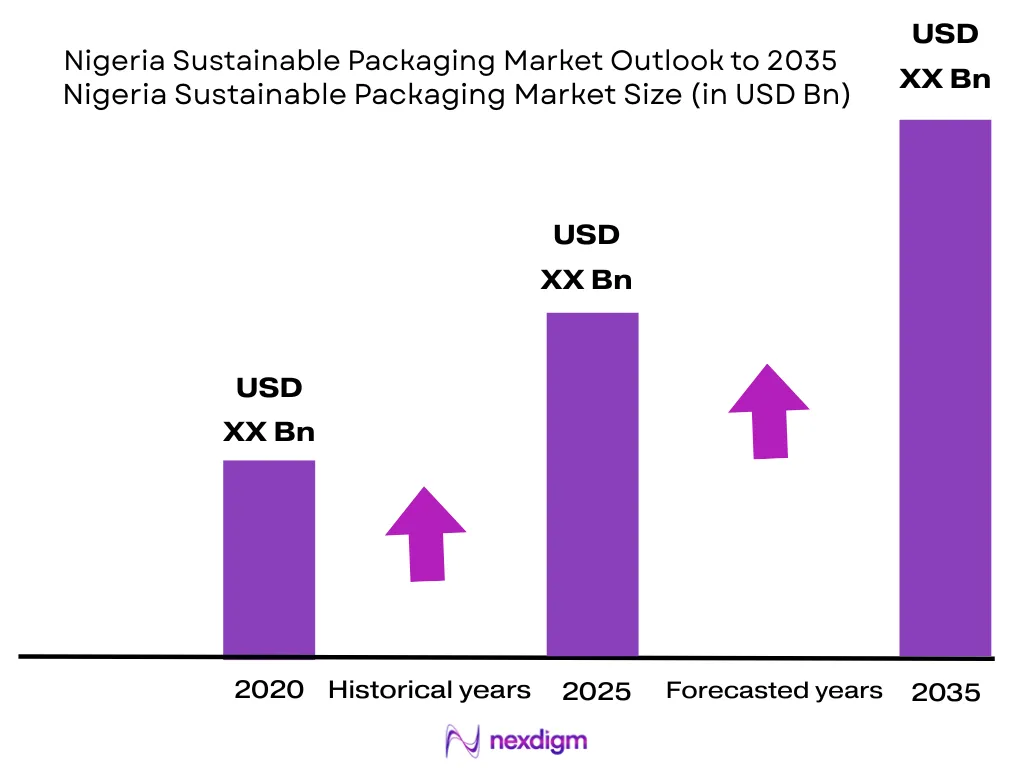
The Nigeria Sustainable Packaging Market is valued at approximately USD ~ billion, based on historical packaging consumption and converter activity, and is forecast to expand at a CAGR of % during 2026–2035. The latest two population readings increased from 227.88 million to 232.68 million people, while GDP per capita reached approximately USD 1,084. Demand is supported by packaged water, beverages, food processing, personal care, pharmaceuticals, retail, e-commerce, agriculture, and packaging EPR implementation. Lagos, Ogun, Ibadan, Port Harcourt, Abuja, Kano, Kaduna, Aba, Onitsha, and Benin City dominate the Nigeria Sustainable Packaging Market. Lagos and Ogun contain the largest concentration of consumer-goods manufacturers, packaging converters, beverage plants, recyclers, ports, warehouses, and retail distribution centres. Port Harcourt supports industrial and chemical packaging, while Kano and Kaduna serve northern food and agricultural supply chains. Aba and Onitsha contribute through manufacturing, trade, printing, and regional distribution.
Market Segmentation
By Material Type
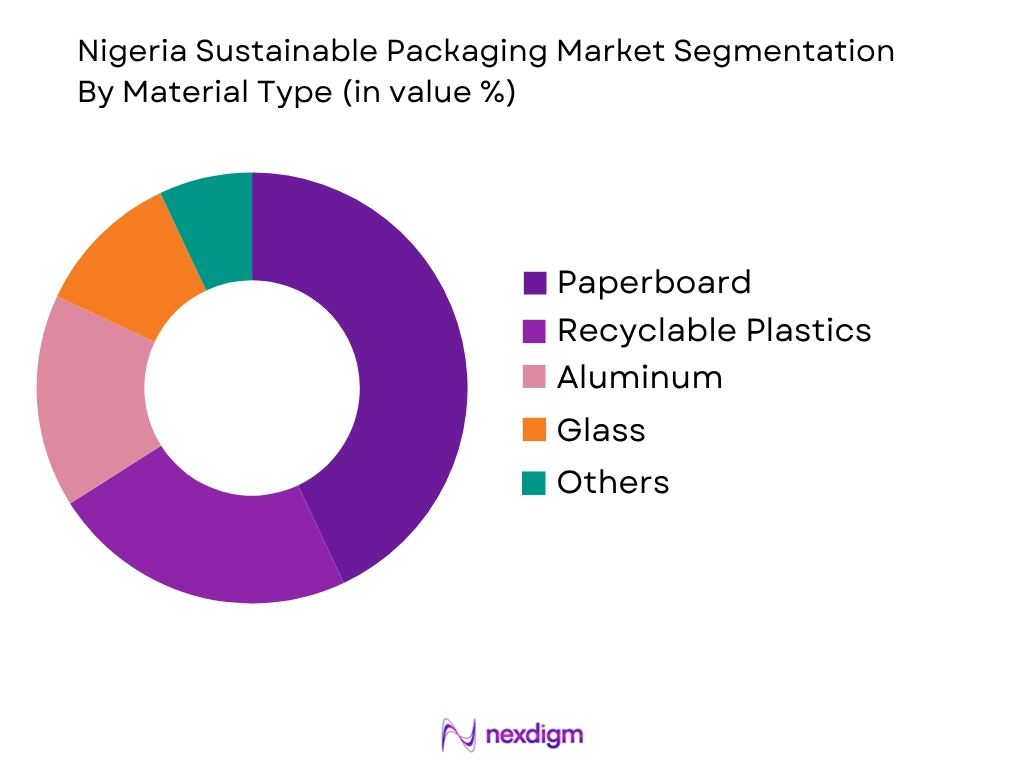
The Nigeria Sustainable Packaging Market is segmented into recycled and recyclable plastics, paper and paperboard, glass, aluminum and steel, molded fiber, bio-based and compostable materials, wood, and sustainable multi-material packaging. Recycled and recyclable plastics hold the dominant position because packaged water, carbonated beverages, edible oils, household products, personal care, pharmaceuticals, food ingredients, and industrial chemicals rely heavily on PET, HDPE, LDPE, and polypropylene formats. PET bottles have comparatively established collection value, while rigid plastic containers are widely used because they are lightweight, resealable, moisture resistant, and compatible with local filling systems. Nigeria also has substantial flexible-packaging demand for water sachets, snacks, detergents, grains, noodles, confectionery, and personal-care products. Sonnex Packaging operates across flexible packaging, rigid packaging, and recycled PET, demonstrating increasing integration between conversion and secondary-material use. Paper and paperboard remain significant in corrugated transport cases, cartons, paper bags, agricultural boxes, and e-commerce mailers. Glass maintains a strong role in alcoholic beverages, soft drinks, food, pharmaceuticals, and cosmetics because it offers strong product protection and can be repeatedly recycled where cullet collection is available.
By End-Use Industry
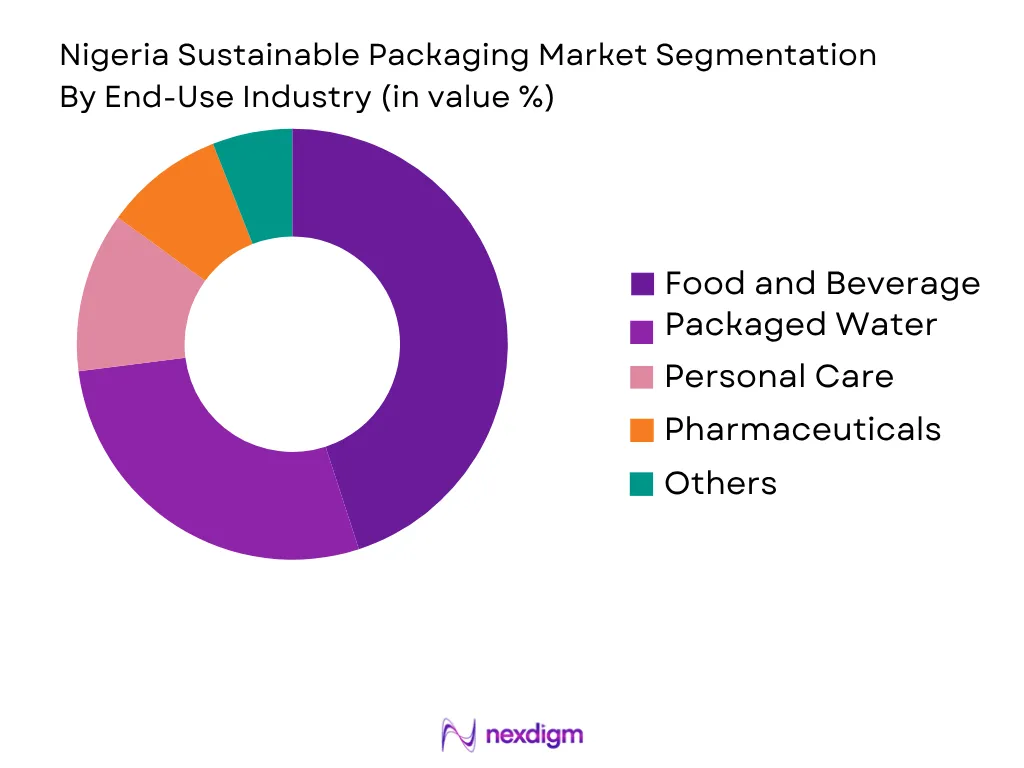
The Nigeria Sustainable Packaging Market is segmented into food and beverage, packaged water, personal and household care, healthcare and pharmaceuticals, retail and e-commerce, agriculture, foodservice, industrial goods, and other applications. Food and beverage hold the dominant position because Nigeria’s large population creates recurring demand for bottled water, water sachets, soft drinks, malt beverages, beer, dairy products, noodles, bakery products, snacks, confectionery, edible oils, condiments, staple foods, and processed agricultural products. These categories use PET bottles, flexible pouches, sachets, cartons, cans, glass bottles, labels, closures, corrugated boxes, and shrink films. Packaged water is particularly influential because consumers rely on PET bottles, polyethylene sachets, and large refillable containers across formal and informal retail channels. NESREA’s circular-economy work has identified water-sachet packaging as a priority area for reuse models, eco-design, producer responsibility, and community-owned alternatives. Personal care and household products represent another major segment because detergents, cosmetics, disinfectants, lubricants, and cleaning products require rigid bottles, pouches, tubes, labels, and closures.
Competitive Landscape
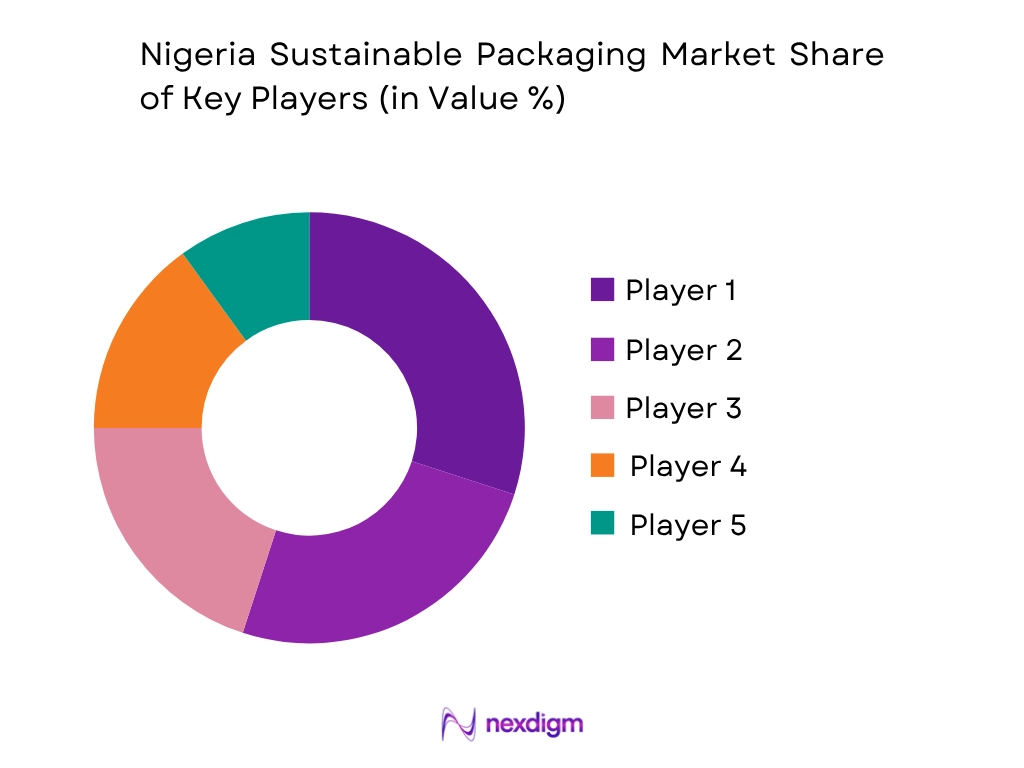
The Nigeria Sustainable Packaging Market contains local flexible-packaging converters, rigid-plastic manufacturers, glass-container producers, metal-packaging companies, carton suppliers, recycled-PET operators, and multinational food-processing and packaging providers. Competitive advantage increasingly depends on domestic manufacturing capacity, access to recycled feedstock, food-contact compliance, package lightweighting, print capability, flexible order quantities, EPR partnerships, and the ability to serve multinational brand owners. Lagos and Ogun remain the main competitive centres because they combine ports, industrial estates, major customers, recyclers, logistics networks, and technical labour.
| Company | Establishment Year | Headquarters | Sustainable Portfolio | Material Capability | Principal End Uses | Nigeria Footprint | Circularity Capability | Strategic Differentiation |
| Beta Glass | 1974 incorporation heritage | Lagos, Nigeria | ~ | ~ | ~ | ~ | ~ | ~ |
| Sonnex Packaging Nigeria | Group heritage from 1966 | Lagos–Ogun industrial corridor | ~ | ~ | ~ | ~ | ~ | ~ |
| Flexipack Plastics | Not publicly disclosed | Agbara, Ogun State | ~ | ~ | ~ | ~ | ~ | ~ |
| PrimePak Industries Nigeria | Not publicly disclosed | Lagos, Nigeria | ~ | ~ | ~ | ~ | ~ | ~ |
| Tetra Pak West Africa | 1992 Nigerian incorporation | Ikeja, Lagos, Nigeria | ~ | ~ | ~ | ~ | ~ | ~ |
Nigeria Sustainable Packaging Market Analysis
Growth Drivers
Expansion of Packaged Consumer Goods and Urban Distribution
Nigeria’s expanding consumer base is increasing demand for recyclable PET bottles, corrugated cartons, lightweight flexible films, refill pouches, returnable glass, aluminum cans, molded-fiber trays, paper delivery bags, and reusable transport containers. The World Bank recorded a national population of approximately 232.68 million people in 2024, increasing to 237.53 million people in 2025. Current-dollar GDP stood at approximately USD 252.26 billion in 2024 and increased to USD 290.79 billion in 2025, while GDP per capita moved from approximately USD 1,084 to USD 1,224. These indicators support continued movement of packaged water, beverages, noodles, dairy products, edible oils, pharmaceuticals, cosmetics, household cleaners, agricultural products, and online retail orders through formal and informal distribution systems. The market is concentrated around Lagos, Ogun, Ibadan, Abuja, Port Harcourt, Kano, Kaduna, Onitsha, Aba, and Benin City, where manufacturers, ports, warehouses, retailers, logistics providers, and packaging converters are clustered. Packaged water is particularly relevant to sustainable packaging because Nigeria uses PET bottles, polyethylene water sachets, and large refillable containers across supermarkets, roadside retail, offices, schools, hospitals, transport terminals, and residential communities. Food and beverage manufacturers also require secondary packaging such as corrugated cases, shrink film, labels, closures, pallets, and protective inserts. As volumes increase, brand owners can reduce material intensity through lighter bottles, thinner films, optimized carton dimensions, reusable beverage crates, concentrated household products, and packaging designed around pallet and vehicle utilization.
Extended Producer Responsibility and Plastic-Waste Regulation
Nigeria’s regulatory framework is moving sustainable packaging from a voluntary brand initiative toward formal producer accountability. The National Environmental Standards and Regulations Enforcement Agency maintains a national guideline for extended producer responsibility for packaging and administers environmental regulations covering packaging, plastics, waste recovery, recycling, and producer obligations. In 2026, NESREA listed the National Environmental Plastic Waste Control Regulations, establishing a more current legal basis for controlling the production, importation, distribution, use, collection, recycling, and disposal of plastic products. The regulations increase the importance of packaging registration, material declarations, take-back systems, recycler contracts, collection evidence, and product design. Nigeria’s plastic-waste challenge provides the market-specific justification for stronger regulation. A World Bank solid-waste assessment published in 2025 reported that Nigeria generates approximately 2.5 million metric tonnes of plastic waste annually, while Lagos produces more than 13,500 metric tonnes of total solid waste per day. The scale of the waste stream makes packaging a priority because PET bottles, water sachets, shopping bags, food pouches, detergent packs, disposable foodservice products, and household containers form visible and widely distributed material flows. The federal EPR framework requires producers to assume greater responsibility for these products after consumer use instead of transferring the entire burden to municipalities and informal collectors.
Market Challenges
Fragmented Collection and Contaminated Recycled Feedstock
Nigeria’s sustainable packaging market is restricted by fragmented collection networks, limited source separation, dependence on informal recovery, and inconsistent feedstock quality. The country’s population exceeded 232.68 million people in 2024, but collection systems differ substantially between Lagos, Ogun, Abuja, Port Harcourt, Kano, other urban centres, small towns, and rural communities. Lagos alone generates more than 13,500 metric tonnes of solid waste per day, creating large volumes of mixed food waste, plastics, paper, metal, glass, textiles, and organic material. When packaging is combined with wet waste, sand, oil, medical waste, and other contaminants, its suitability for recycling declines. High-value materials such as transparent PET bottles, aluminum cans, steel containers, corrugated cardboard, and selected rigid plastics are more likely to be recovered because collectors can identify buyers. Low-density films, water sachets, multilayer food pouches, small caps, black plastics, laminated paper, and contaminated takeaway containers are more difficult to aggregate. A single water sachet contains little material, meaning that collectors must retrieve, clean, dry, and transport very large numbers before producing a commercially useful bale. The same issue applies to snack wrappers and small personal-care sachets.
Technical Conversion, Power Reliability, and Compliance Capability
Sustainable packaging conversion in Nigeria requires more than replacing plastic with paper or adding recycled material to an existing container. Packaging must withstand heat, humidity, poor road conditions, extended storage, inconsistent cold chains, manual handling, and high levels of distribution vibration. Flexible packs used for noodles, snacks, milk powder, seasonings, detergent, and personal-care products may contain several layers of polyethylene, polypropylene, PET, polyamide, aluminum, inks, and adhesives. These structures provide oxygen, aroma, moisture, light, puncture, and sealing performance, but their mixed composition makes conventional recycling difficult. Switching to a mono-material pouch can improve recyclability but may reduce product protection or require changes to filling and sealing equipment. Paper packaging can replace selected trays, cartons, and bags, but coatings needed for oil, grease, and moisture resistance can reduce repulpability. Recycled resin may alter colour, odour, bottle clarity, tensile strength, processing behaviour, and closure performance. Lightweight bottles may deform during filling or transport, while downgauged films can tear during retail handling.
Market Opportunities
Food-Grade Recycled PET and Digitally Traced Collection Systems
Nigeria has a significant opportunity to develop closed-loop PET bottle recycling supported by automated sorting, digital collection records, food-grade decontamination, and long-term beverage-company offtake. PET bottles are more suitable for structured recovery than many small flexible formats because consumers and collectors can identify them, compact them, and sell them into established markets. Packaged water, soft drinks, malt beverages, edible oils, household products, and personal care generate recurring PET volumes across cities and commercial distribution networks. The market opportunity is supported by Nigeria’s population of approximately 232.68 million people in 2024 and 237.53 million people in 2025. Even without using speculative future consumption figures, this population base creates sufficient recurring packaging throughput to justify specialized collection and recycling assets when producers and recyclers enter stable contracts. Current-dollar GDP also increased from approximately USD 252.26 billion to USD 290.79 billion, strengthening the industrial and consumer base that places bottles and other rigid containers into circulation.
Community Recovery Hubs and Alternatives to Water Sachets
Nigeria’s widespread use of small-format water and consumer-product packaging creates an opportunity to develop community recovery hubs, refill systems, reusable water containers, locally sourced fiber products, and recyclable mono-material films. The opportunity is especially relevant because conventional waste systems struggle to capture low-weight items such as water sachets, shopping bags, seasoning pouches, shampoo sachets, detergent packs, and snack wrappers. NESREA’s 2026 circular-plastics initiatives specifically address plastic pollution, safe drinking-water access, EPR schemes, eco-design, reuse, and community-based models. Nigeria generates approximately 2.5 million metric tonnes of plastic waste annually, while Lagos produces more than 13,500 metric tonnes of total solid waste per day. These current figures demonstrate that future market development can be supported by existing waste volumes rather than hypothetical projections. Recovery hubs can aggregate packaging from markets, schools, transport stations, residential estates, hotels, hospitals, food vendors, religious centres, and local retailers.
Future Outlook
The Nigeria Sustainable Packaging Market is expected to develop substantially during 2026–2035 as packaging EPR, plastic-waste regulation, food and beverage demand, packaged-water reform, recycling investment, e-commerce, and local material innovation influence packaging procurement. Development will not be uniform across materials. PET bottles, corrugated cases, glass containers, metal cans, and selected rigid plastics are likely to advance faster because they have clearer collection value and established end markets. Nigeria’s population reached approximately 232.68 million people, creating a large and expanding base of packaged-product users. Real GDP growth reached 3.84 percentage points in the final quarter of 2024, after expansion of 3.19 percentage points in the second quarter. The service economy, manufacturing, trade, transport, telecommunications, agriculture, and consumer-goods sectors generate substantial requirements for primary, secondary, and tertiary packaging.
Major Players
- Sonnex Packaging Nigeria
- Beta Glass
- Avon Crowncaps and Containers Nigeria
- Flexipack Plastics
- PrimePak Industries Nigeria
- Quantum Packaging Nigeria
- Veevee Paper Products
- Nampak Nigeria
- Greif Nigeria
- Twinpak Industries
- Tetra Pak West Africa
- Tripple Gee and Company
- Speciality Pulp and Paper
- OK Plast Nigeria
- Alltime Packaging
Key Target Audience
- Packaging material manufacturers and converters
- Food, beverage, packaged-water, personal-care, and pharmaceutical producers
- Retailers, e-commerce platforms, and food-delivery operators
- Agricultural processors and exporters
- Recyclers, aggregators, producer-responsibility organisations, and waste collectors
- Investments and venture capitalist firms
- Private-equity and strategic packaging investors
- Government and regulatory bodies
Research Methodology
Step 1: Identification of Key Variables
The initial phase constructs an ecosystem map covering raw-material suppliers, packaging converters, producers, importers, retailers, informal collectors, aggregators, recyclers, producer-responsibility organisations, regulators, and end users. Key variables include material type, packaging weight, recycled content, recyclability, converter capacity, food-contact requirements, collection value, regulatory exposure, and end-market availability.
Step 2: Market Analysis and Construction
Historical information is compiled by packaging material, format, end-use industry, region, sustainability strategy, and recovery route. The bottom-up model evaluates converter shipments, material consumption, package units, recycled-feedstock use, and customer procurement. The top-down model reviews manufacturing, food and beverage output, trade, population, company revenue, imports, and recycling activity.
Step 3: Hypothesis Validation and Expert Consultation
Market hypotheses are validated through computer-assisted telephone interviews with packaging engineers, converters, packaged-water producers, beverage companies, recyclers, aggregators, retailers, procurement teams, producer-responsibility organisations, and regulatory professionals. Interviews evaluate packaging qualification, feedstock quality, EPR implementation, collection economics, import dependence, and customer switching behaviour.
Step 4: Research Synthesis and Final Output
Supply-side and demand-side findings are triangulated to reconcile domestic production, imports, package consumption, recovered-material supply, and recycling output. Segment shares and forecasts are tested against material tonnage, unit volumes, converter capacity, regulatory developments, collection infrastructure, macroeconomic conditions, and expert feedback.

- Executive Summary
- Research Methodology (Market Definitions and Assumptions, Sustainable Packaging Inclusion and Exclusion Criteria, Abbreviations, Market Sizing Approach, Top-Down Analysis, Bottom-Up Analysis, Packaging Volume Conversion Model, Material Flow Analysis, Demand-Side Assessment, Supply-Side Assessment, Converter Capacity Assessment, Primary Industry Interviews, Data Triangulation, Regulatory Scenario Modelling, Forecasting Framework, Limitations and Future Conclusions)

- Definition and Scope
- Market Evolution and Industry Genesis
- Transition from Conventional Packaging to Circular Packaging Systems
- Development of Lightweight and Resource-Efficient Packaging
- Evolution of Recycled-Content Packaging
- Expansion of Paper, Paperboard and Molded-Fiber Packaging
- Development of Reusable and Refillable Packaging Systems
- Growth of Bio-Based and Compostable Packaging
- Evolution of Plastic Packaging Restrictions

- Growth Drivers (Packaging EPR Enforcement, Urban Consumer Demand, Food and Beverage Manufacturing, E-Commerce Expansion, Packaged-Water Consumption, Retail Modernization, Plastic Restrictions and Corporate Circularity Commitments)
- Market Challenges (Weak Municipal Collection, Informal Recovery Dependence, Electricity and Fuel Reliability, Recycled Feedstock Contamination, Flexible Packaging Recovery Gaps, Water Sachet Waste, Foreign-Exchange Exposure and Capital-Intensive Conversion)
- Market Opportunities (Food-Grade Recycled PET, Mono-Material Flexible Packaging, Molded Fiber, Cassava-Based Packaging, Community Collection Hubs, Digital Recycling Platforms, Reusable Water Systems and Closed-Loop Brand Partnerships)
- Market Trends (Paperization, Lightweighting, High-PCR Packaging, Refill Pouches, Returnable Glass, Recyclable Laminates, Fiber-Based Foodservice Packaging, Digital EPR Traceability, Locally Sourced Biomaterials and Packaging Carbon Disclosure)
- SWOT Analysis
- Porter’s Five Forces Analysis
- PESTLE Analysis

- By Market Value (2020-2025)
- By Packaging Volume (2020-2025)
- By Packaging Unit Shipments (2020-2025)

- By Material Type (In Value %)
Paper and Paperboard
Corrugated Board
Molded Fiber
Recycled Plastic
Bio-Based Plastic
Biodegradable Plastic
Steel and Tinplate - By End-Use Industry (In Value %)
Food and Beverage
Personal Care and Cosmetics
Household Care
Healthcare and Pharmaceuticals
E-Commerce
Retail and Consumer Goods
Foodservice and Hospitality - By Distribution Channel (In Value %)
Direct Sales to Brand Owners
Packaging Distributors
Contract Packaging Companies
Digital Packaging Platforms
Industrial Wholesalers - By Region (In Value %)
South West
South East
South South
North Central
North West
North East

- Market Share of Major Players (By Value, Packaging Volume, Material Type, Packaging Format, End-Use Industry and Region)
- Cross Comparison Parameters (Sustainable Material Portfolio Breadth, Post-Consumer Recycled Content Capability, Mono-Material and Design-for-Recycling Expertise, Nigeria Manufacturing and Conversion Footprint, Food-Contact and Product-Conformity Capability, EPR Collection and Recovery Partnership Capability, End-Use Industry Coverage, Packaging Innovation and Commercialization Speed)
- SWOT Analysis of Major Players
- Detailed Profiles of Major Companies
Sonnex Packaging Nigeria
Beta Glass
Avon Crowncaps and Containers Nigeria
Flexipack Plastics
PrimePak Industries Nigeria
Quantum Packaging Nigeria
Veevee Paper Products
Nampak Nigeria
Greif Nigeria
Twinstar Industries
Tetra Pak West Africa
Printbox Nigeria
Speciality Pulp and Paper
OK Plast Nigeria
Alltime Packaging

- Food and Beverage Brand Analysis
- Packaged-Water Producer Analysis
- Beverage Producer Analysis
- Grocery Retailer Analysis
- E-Commerce and Marketplace Analysis

- By Market Value (2026-2035)
- By Packaging Volume (2026-2035)
- By Packaging Unit Shipments (2026-2035)


 Request a Sample
 Ask for Customization
 Get a Quote
 Enquire Now